
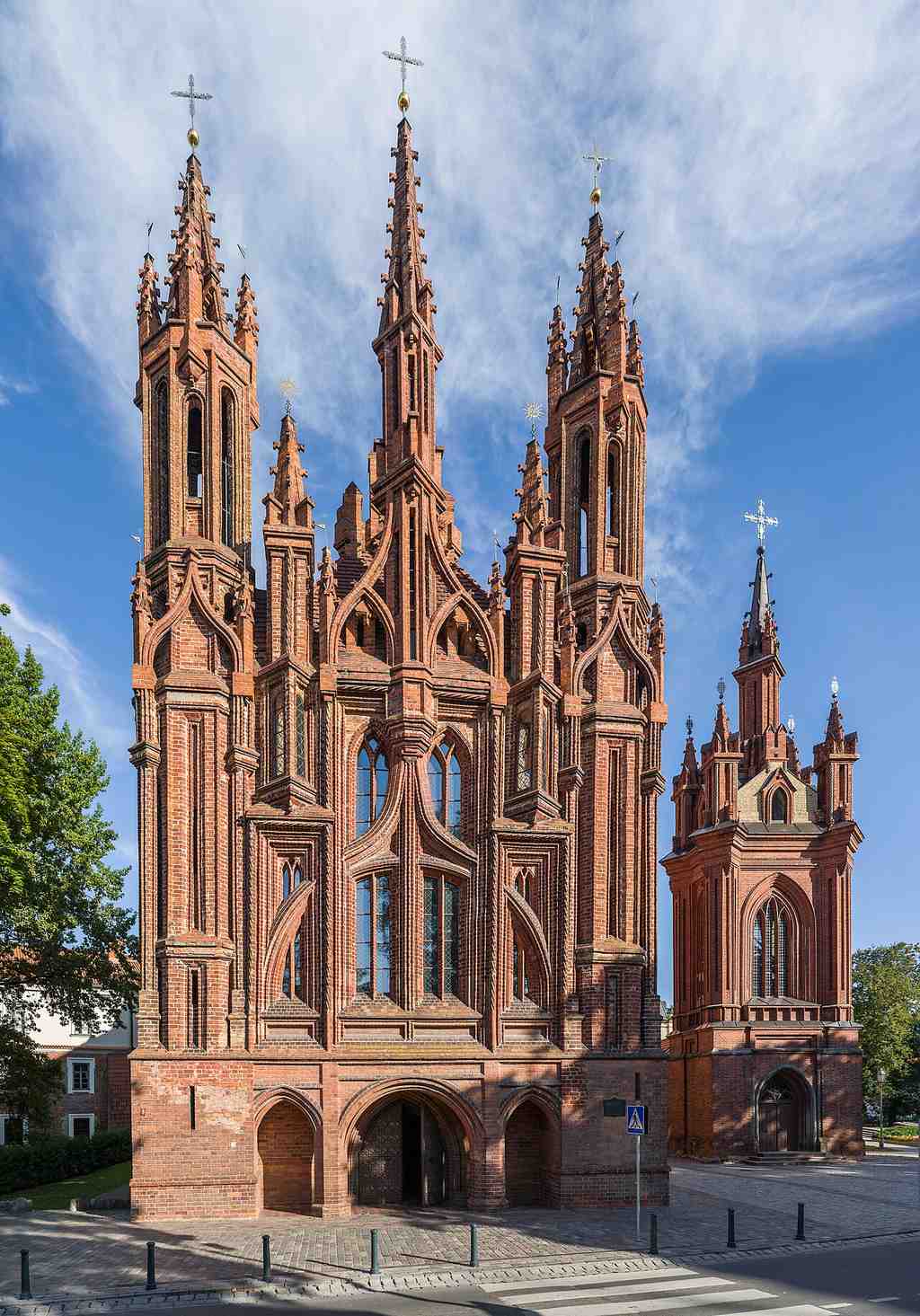
On your right, look for a red brick church with a tall, narrow Gothic facade, pointed arches, and lace-like vertical towers that seem almost too delicate to be made of clay.
St. Anne’s has that rare trick of looking both precise and improbable... as if someone sketched a prayer in brick and then somehow persuaded it to stand up for more than five centuries. This church rose here around fourteen ninety-five to fifteen hundred, when Alexander Jagiellon, King of Poland and Grand Duke of Lithuania, backed the construction of the present building. Remarkably, the exterior you’re seeing has changed very little since then. In a city that has been burned, rebuilt, renamed, argued over, and prayed through, that is no small achievement.
The first church here had been wooden, built for Anna, Grand Duchess of Lithuania, the first wife of Vytautas the Great. Fire destroyed it in fourteen nineteen. After that, things became a little murky in the most Vilnius way possible: sixteenth-century Vilnius may have had two or even three churches dedicated to St. Anne, including one inside the castle walls. So later writers argued for centuries over which Anne was which, who founded what, and who actually designed this one. Historians do love a tidy answer... Vilnius does not always provide one.
Before I go on, take a moment and study the facade. Let your eyes climb the repeated brick patterns, the pointed arches, the narrow vertical lines that pull everything upward. The rhythm is so intricate that the whole front seems to tremble, almost like movement frozen in place. If you want a closer look at those patterns, there’s a good detail shot on your screen.
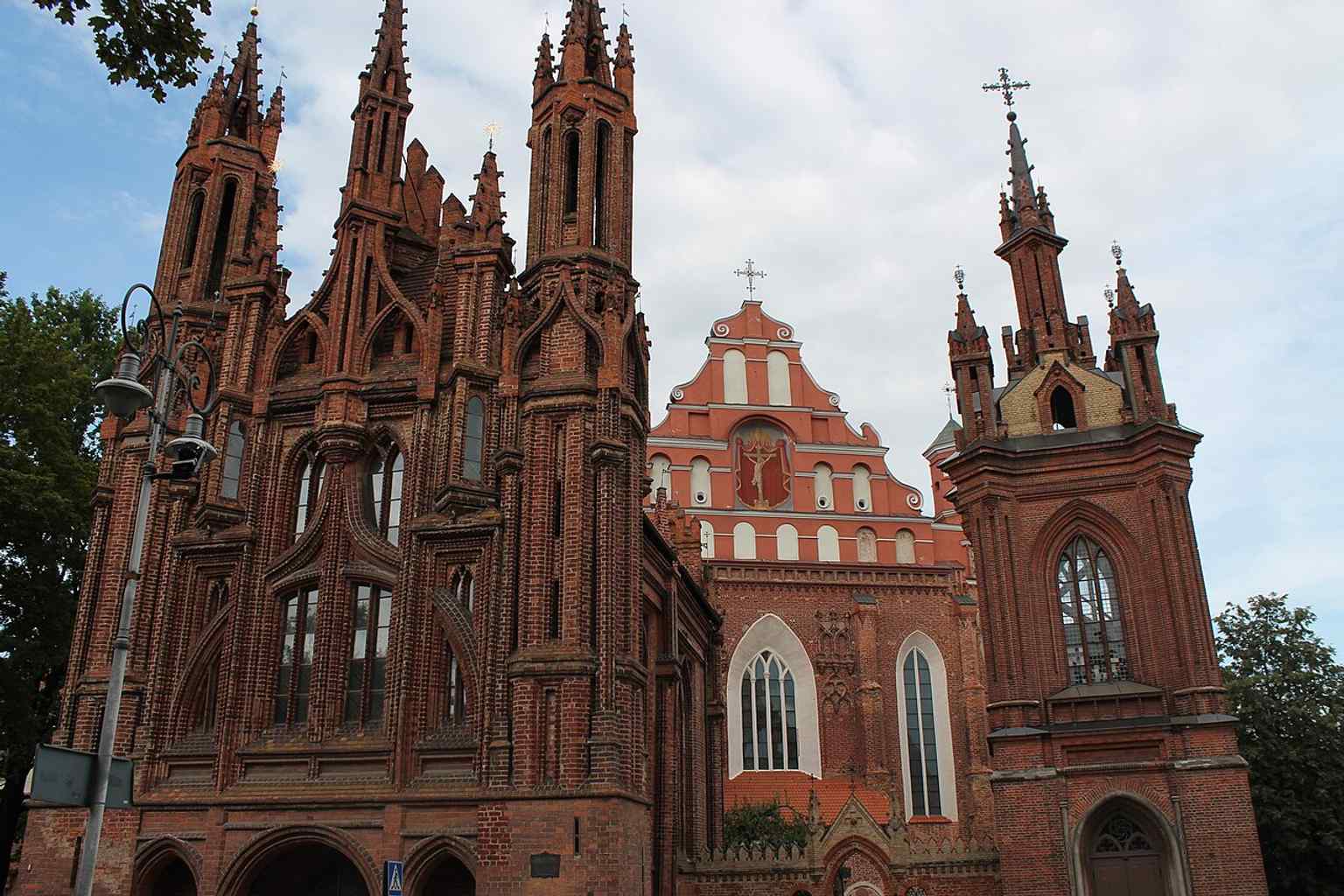
Architects call this Brick Gothic, and here it turns flamboyant - meaning more ornate, more playful, more daring than the stern Gothic you might expect. The builders used thirty-three different kinds of clay bricks, framing Gothic arches inside rectangular shapes so the front feels both symmetrical and alive. Lithuanian art historian Vladas Drėma even saw echoes here of the Columns of Gediminas, one of Lithuania’s old dynastic symbols. So this facade is not just decorative; it quietly speaks the language of power as well as faith.
And then there is Napoleon. Legend says that when he saw St. Anne’s in eighteen twelve, he wished he could carry it back to Paris in the palm of his hand. Lovely line... probably polished later by writer Adam Honory Kirkor. The less romantic truth is that Napoleon’s retreating soldiers used the church as a warehouse and burned its wooden furnishings, damaging the stone altars. So no, he did not pocket it like a souvenir. The church stayed, scarred but standing, which feels more impressive anyway.
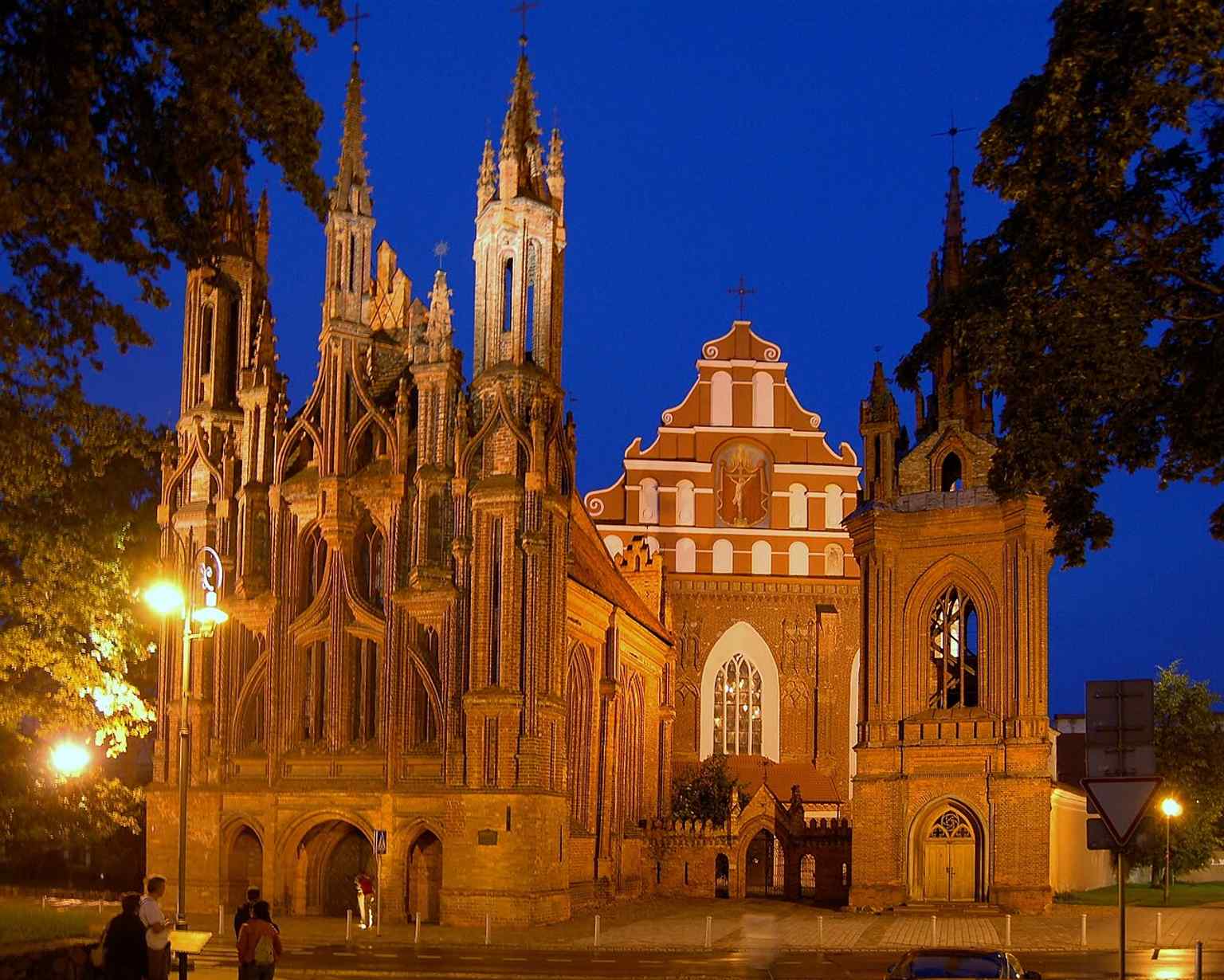
If you’re curious, the before-and-after image in the app shows how the churchyard and its surroundings changed while the facade kept calmly stealing the show.
That persistence mattered later too. During Soviet occupation, when many Catholic churches fell silent, St. Anne’s remained open. And in nineteen eighty-seven, near this church and the Adam Mickiewicz monument, protesters with the Lithuanian Liberty League publicly demanded the withdrawal of Soviet troops and the return of independence. Even here, beauty did not retire from history; it kept its place in the argument.
Now we head toward Vilnius Cathedral, about an eight-minute walk away, where the city’s sacred heart and ceremonial center come fully into view. If you want to come back inside St. Anne’s later, it generally opens from four to seven P-M on weekdays and from nine A-M to five P-M on weekends.






.jpg)