AudaTours logoAudaTours

Stop 15 of 17

Palace of the Grand Dukes of Lithuania

headphones 04:02 Buy tour to unlock all 19 tracks
Palace of the Grand Dukes of Lithuania
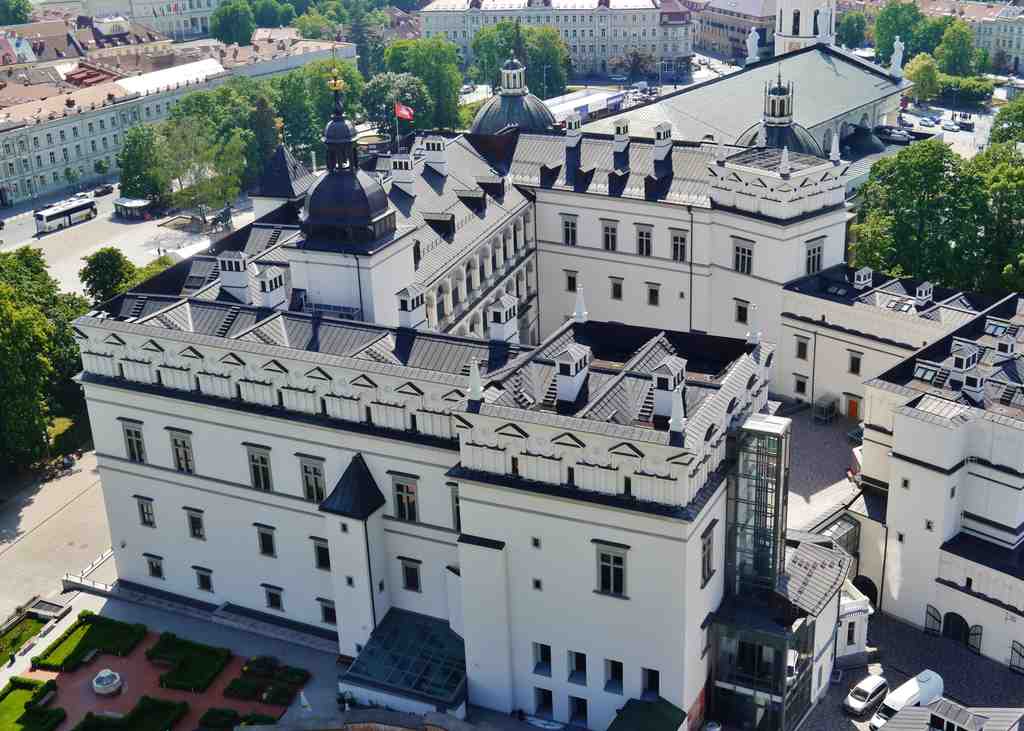
Palace of the Grand Dukes of LithuaniaPhoto: Zairon, Wikimedia Commons, CC BY-SA 4.0. Cropped & resized.

On your right, look for the broad pale-plastered palace with its rectangular wings, rows of evenly spaced windows, and a square corner tower that gives the whole façade a calm, official look.

This is one of Vilnius's boldest historical arguments: can a building be genuine if the present rebuilt it to restore what the past erased?

For centuries, the answer here would have seemed simple. The rulers of the Grand Duchy of Lithuania lived and governed on this site from the fifteenth century on. Grand Duke Alexander Jagiellon moved his residence here and received ambassadors. Then Sigismund the Old expanded the palace in a new Renaissance style, the style of measured symmetry and classical order. He spent one hundred thousand gold ducats on it - an enormous sum by any standard. In other words, this was not a modest home improvement.

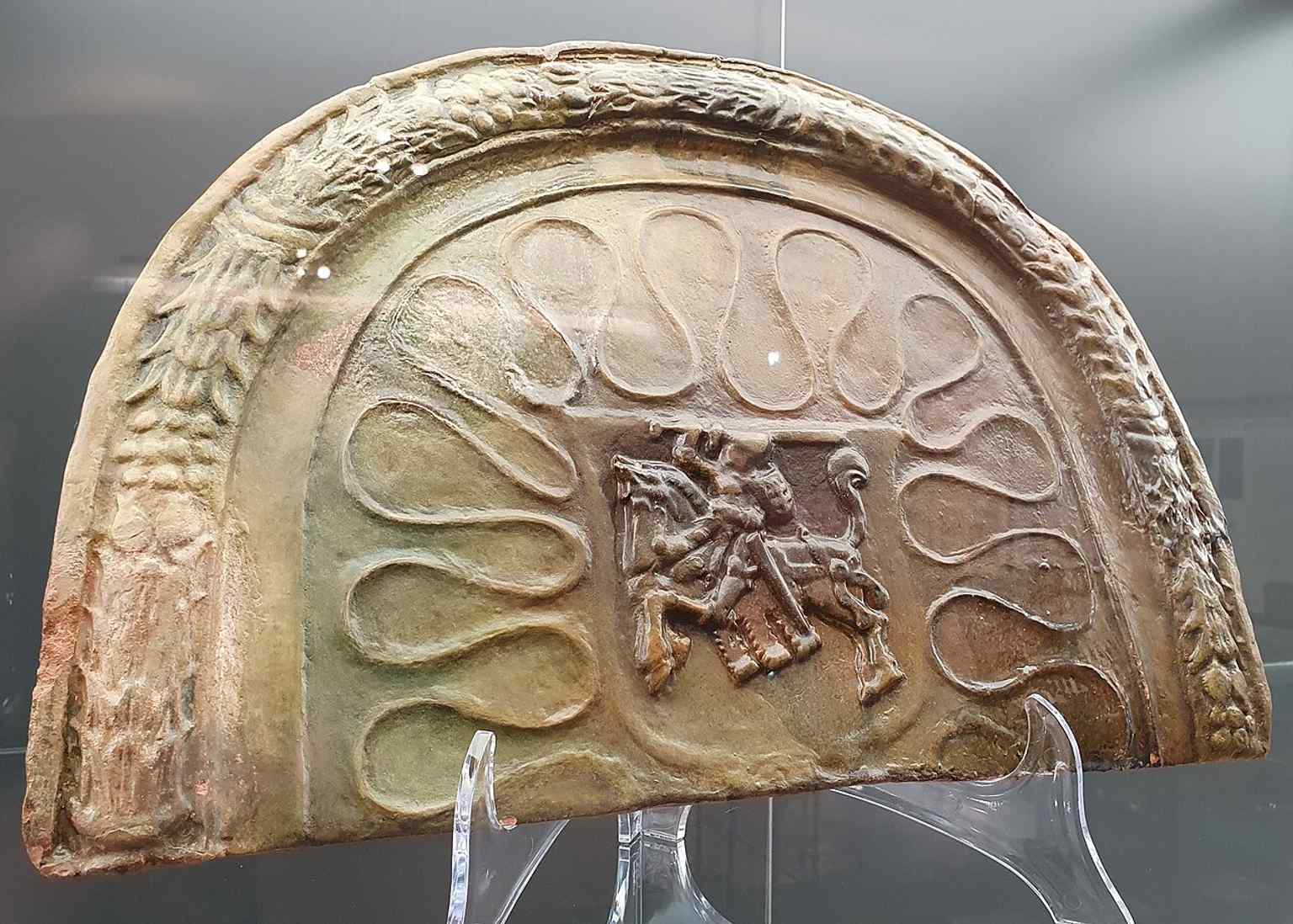
His queen, Bona Sforza, still feels oddly close. She wrote in fifteen thirty-nine about the palace garden, and archaeologists later found a stove tile here bearing her serpent coat of arms. That matters. It means the story is not just patriotic imagination with good lighting. The soil answered back.

And the soil answered with even older news. Most visitors never realize that this ground mattered long before any palace stood here. Archaeologists trace a fortified wooden settlement on this site to the early medieval period, long before any palace stood here. So beneath the royal residence, and beneath the modern museum, lies an even earlier seat of power... timber, earth, defense, survival.

If you glance at your screen, that old drawing gives you the ghost of the lost palace before it vanished from the cityscape.

The original residence grew splendid. Sigismund the Second Augustus was crowned Grand Duke of Lithuania here in fifteen twenty-nine. Courtiers filled the rooms with books, tapestries, diplomats, and ceremony. Later, the Vasa rulers added early Baroque flair, and the palace even hosted Lithuania's first opera. Then came disaster: war, fire, plunder, abandonment. By eighteen oh one, officials under the Russian Empire ordered the remains demolished and sold off as brick and stone. A palace that had staged crowns and operas ended as building material. History can be efficient that way.

The rebuilt palace you see now rose only after independence returned. Archaeologists dug, argued, uncovered basements, walls, painted plaster, and fragments of later buildings. Critics said a reconstruction without complete visual evidence would fake the past. Supporters said the absence itself had been political, the result of conquest and erasure. So Lithuania rebuilt it between two thousand two and two thousand eighteen, partly folding surviving older fragments into the eastern wing.

That makes this place more than a replica. It is a statement about who gets to restore a broken historical memory, and on what evidence. Like the M-O Museum used modern architecture to make culture present, this palace uses reconstruction to make statehood visible again.

If you look at the aerial image on your phone, you can see how firmly the palace now anchors the lower castle landscape. And that is your cue for the final climb: head up to Gediminas's Tower, about an eight-minute walk away, where these layers of hill, court, church, ruin, and rebuilding come together in one view. If you want to return inside later, the museum is generally open daily from ten to six, with later hours until eight from Thursday through Saturday.
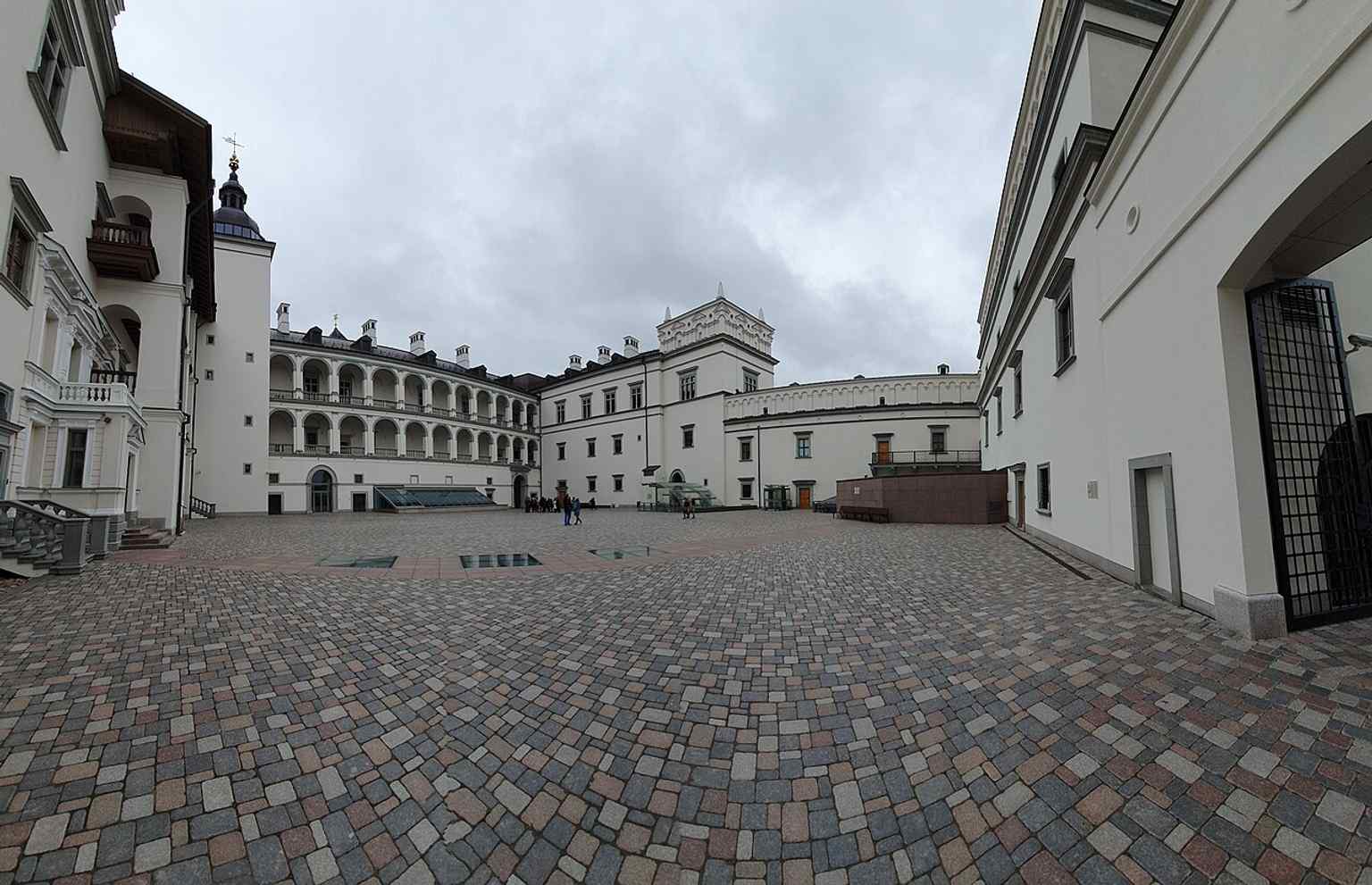
A wide panorama of the Grand Courtyard, the ceremonial heart of the rebuilt palace complex used for major state events.
A wide panorama of the Grand Courtyard, the ceremonial heart of the rebuilt palace complex used for major state events.Photo: Pofka, Wikimedia Commons, CC BY-SA 4.0. Cropped & resized.
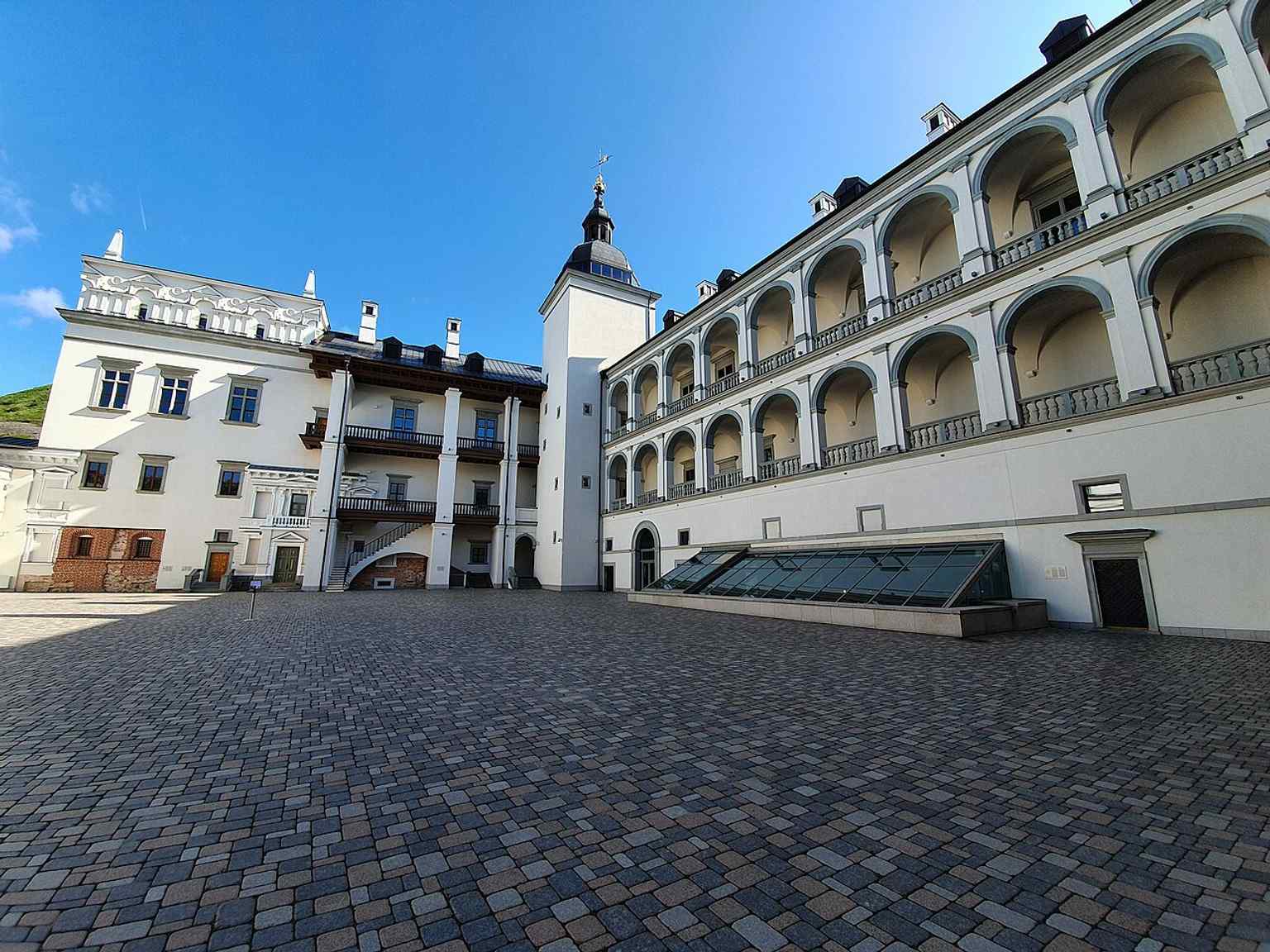
The Grand Courtyard framed by the palace wings and balconies — a strong image of the 2018 reconstruction in Renaissance style.
The Grand Courtyard framed by the palace wings and balconies — a strong image of the 2018 reconstruction in Renaissance style.Photo: Pofka, Wikimedia Commons, CC BY-SA 4.0. Cropped & resized.
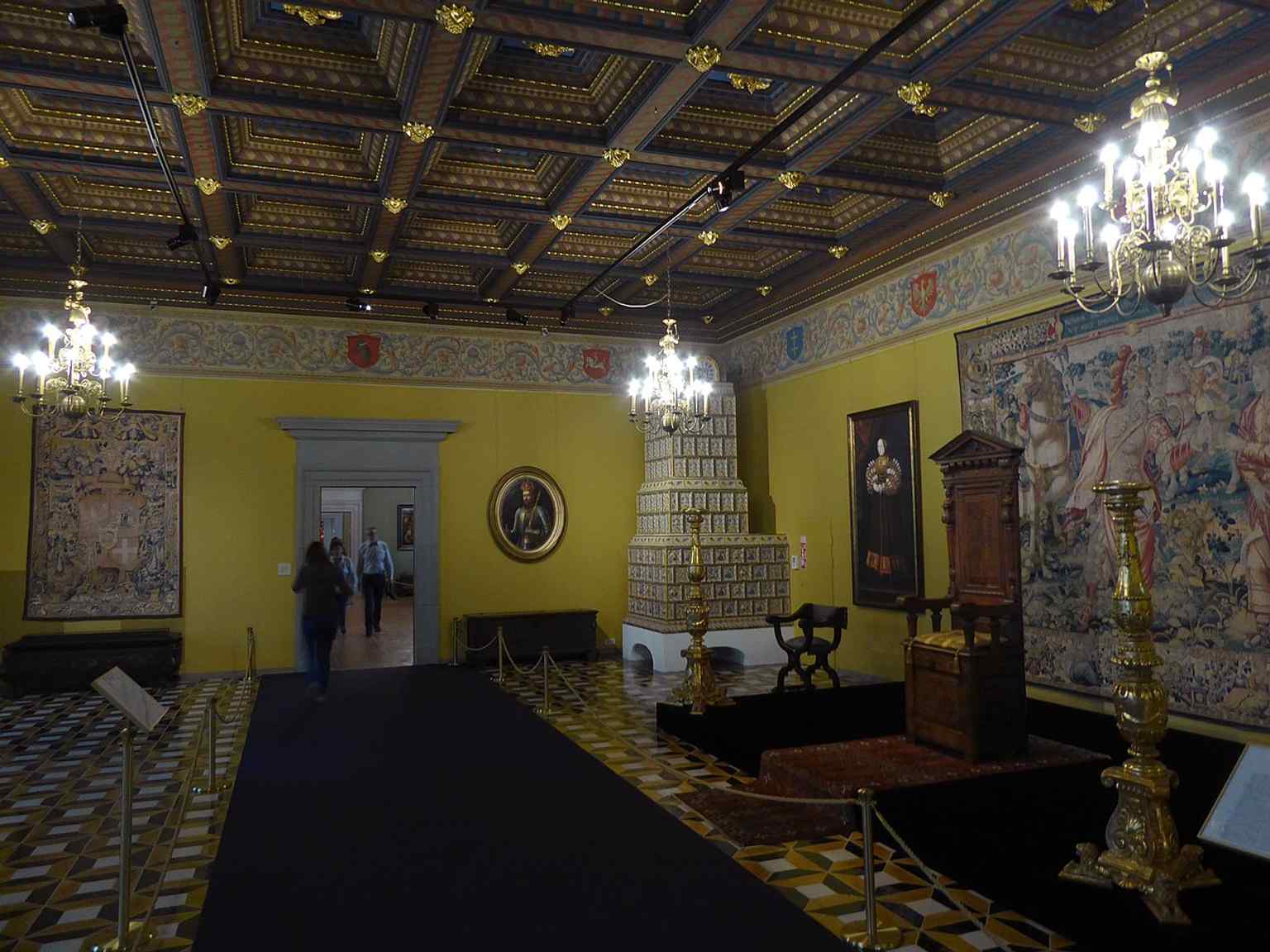
A formal state room with a throne-like setting, echoing the palace’s role as the political center of the Grand Duchy of Lithuania.
A formal state room with a throne-like setting, echoing the palace’s role as the political center of the Grand Duchy of Lithuania.Photo: Syrio, Wikimedia Commons, CC BY-SA 4.0. Cropped & resized.
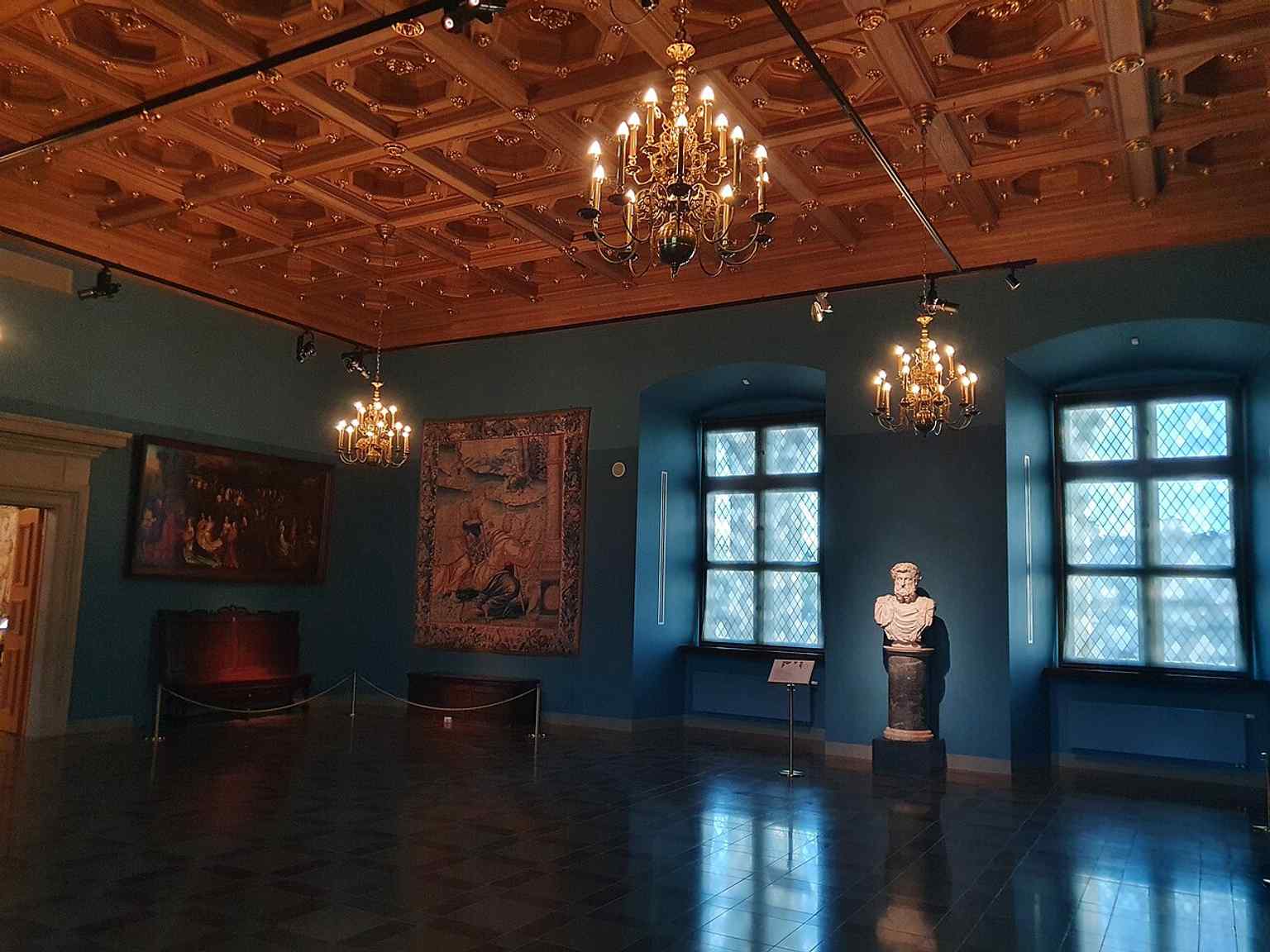
The Blue Room, decorated to evoke the royal residence’s luxury and the splendor described in accounts of Sigismund II Augustus’s court.
The Blue Room, decorated to evoke the royal residence’s luxury and the splendor described in accounts of Sigismund II Augustus’s court.Photo: Pofka, Wikimedia Commons, CC BY-SA 4.0. Cropped & resized.
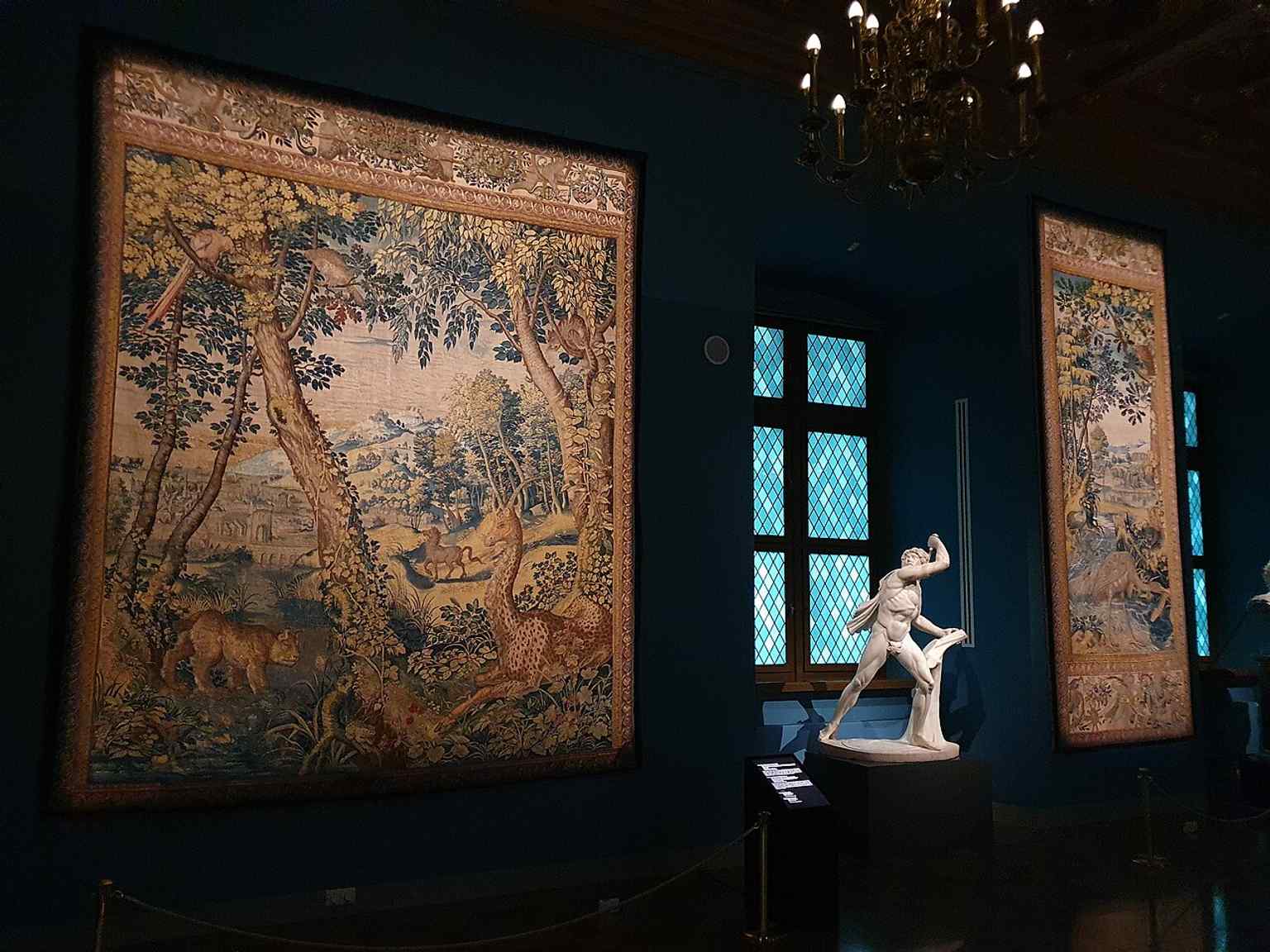
The Blue Room filled with Jagiellonian tapestries, recalling Sigismund II Augustus’s legendary collection of textiles.
The Blue Room filled with Jagiellonian tapestries, recalling Sigismund II Augustus’s legendary collection of textiles.Photo: Pofka, Wikimedia Commons, CC BY-SA 4.0. Cropped & resized.
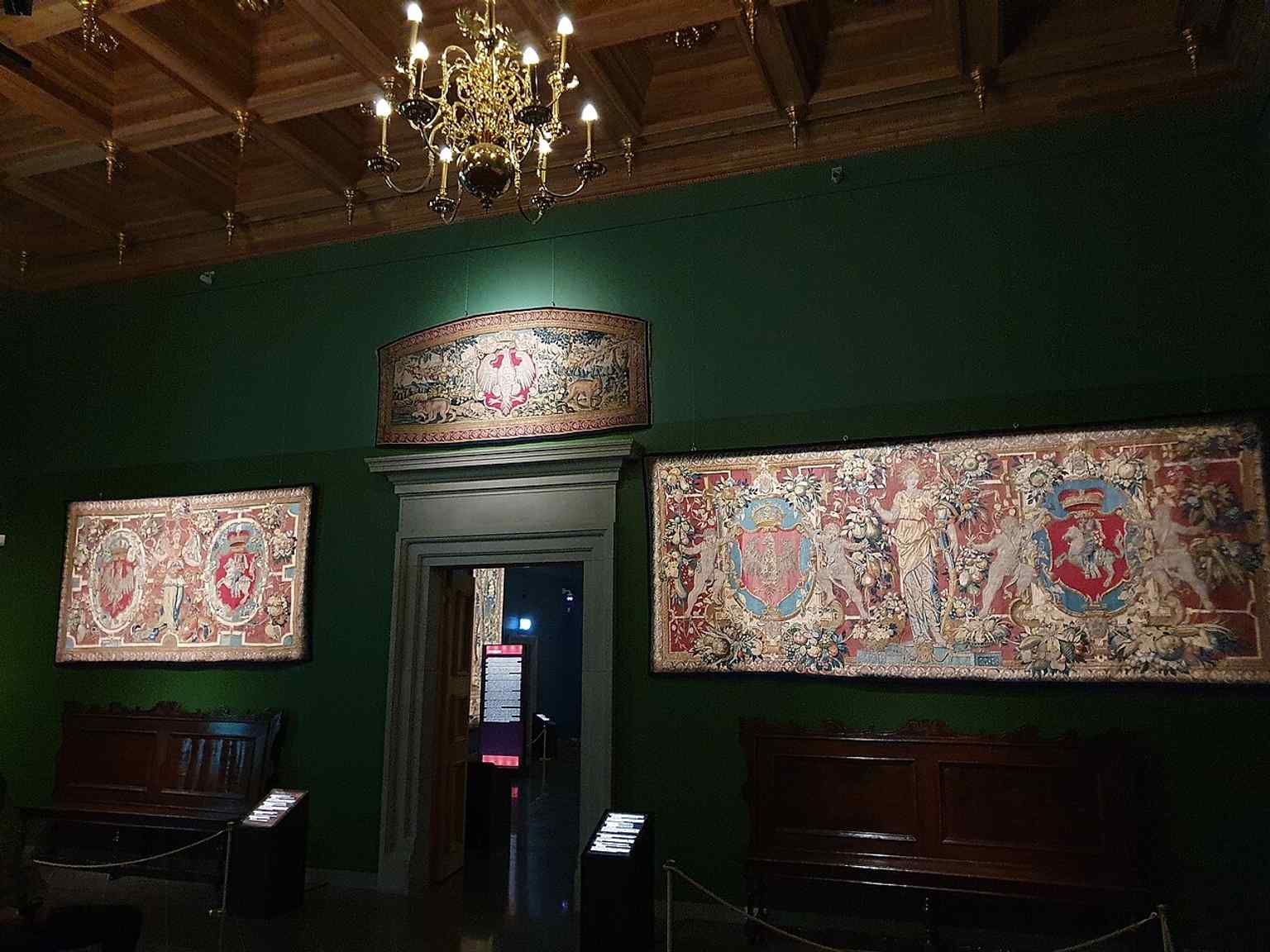
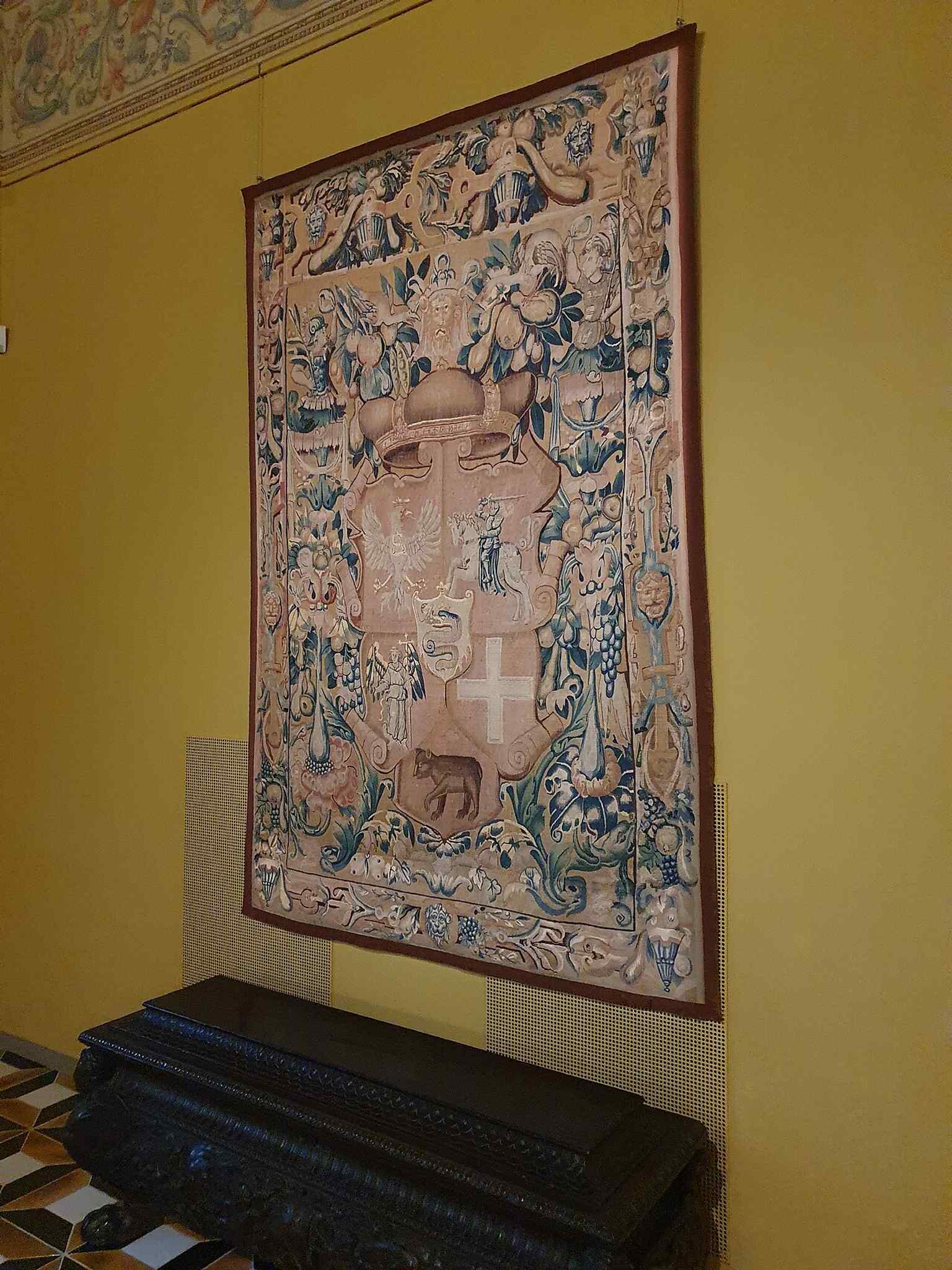
The Green Room’s tapestry display highlights the Polish Eagle and Lithuanian Vytis, symbols central to the Polish–Lithuanian Commonwealth.
The Green Room’s tapestry display highlights the Polish Eagle and Lithuanian Vytis, symbols central to the Polish–Lithuanian Commonwealth.Photo: Pofka, Wikimedia Commons, CC BY-SA 4.0. Cropped & resized.
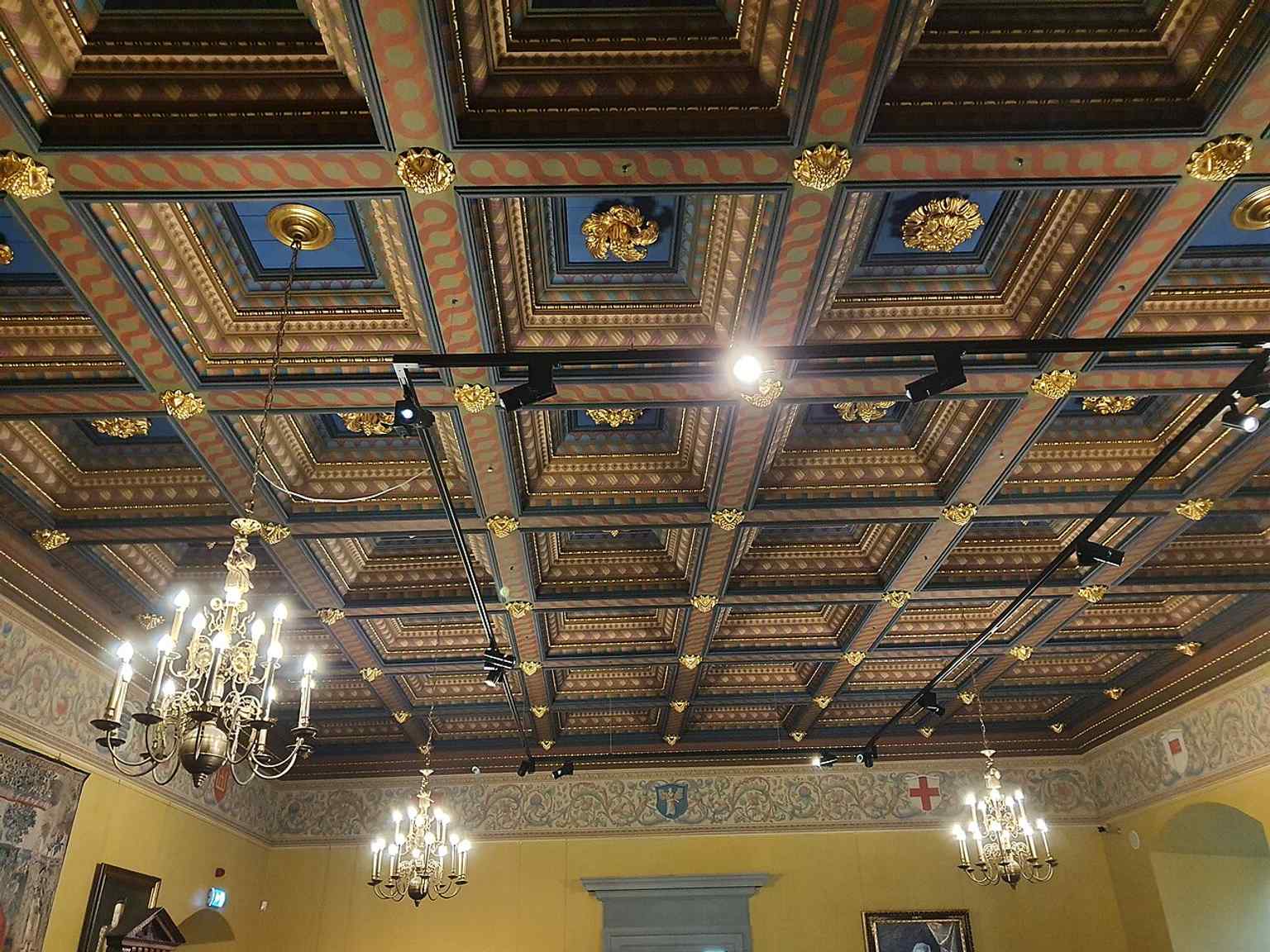
The coffered ceiling in the Lower Representative Hall shows the Renaissance-inspired finish used in the rebuilt palace interiors.
The coffered ceiling in the Lower Representative Hall shows the Renaissance-inspired finish used in the rebuilt palace interiors.Photo: Pofka, Wikimedia Commons, CC BY-SA 4.0. Cropped & resized.
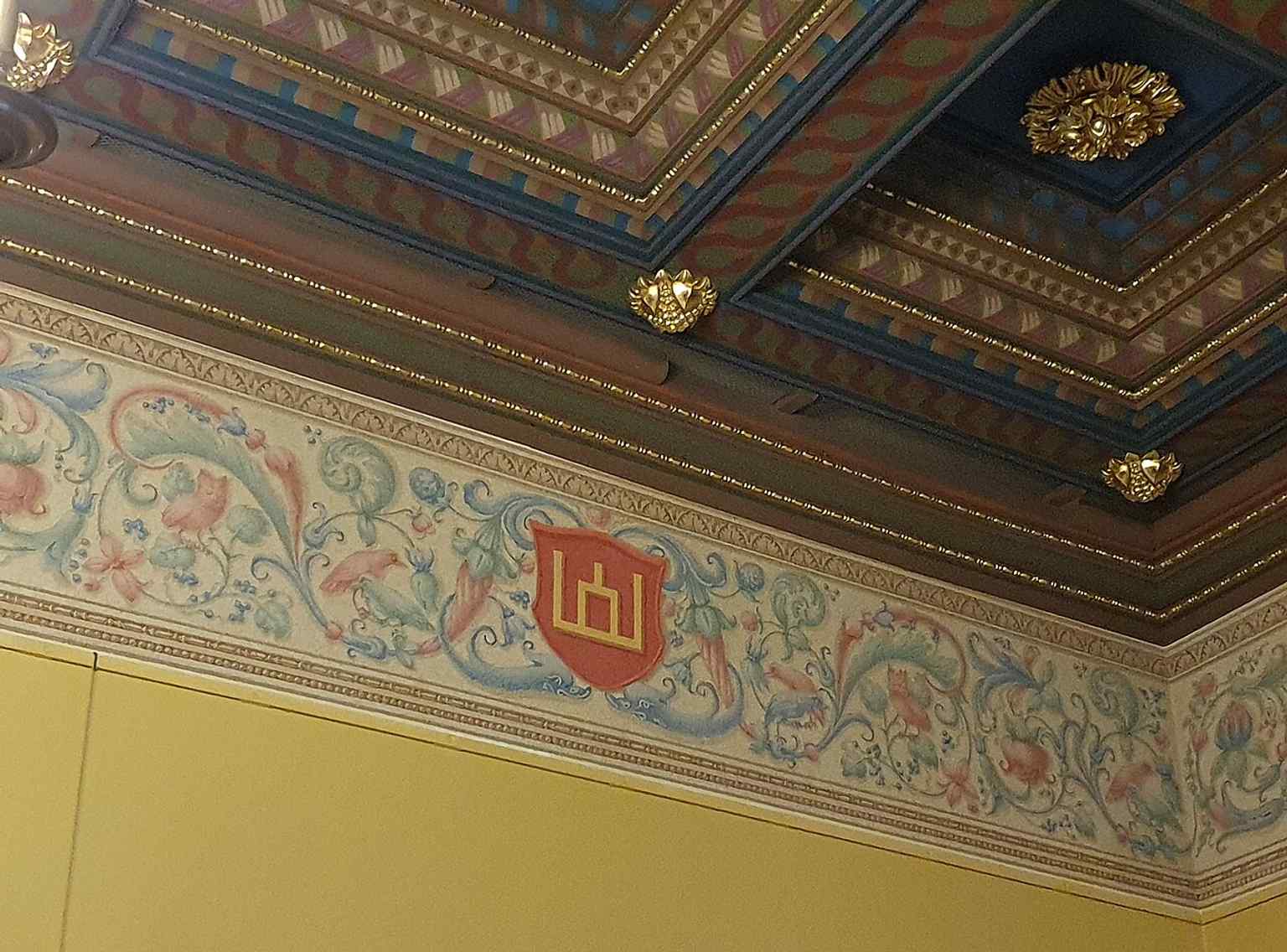
A wall with the Columns of Gediminas, a dynastic symbol tied to Lithuanian rulers and the palace’s historic identity.
A wall with the Columns of Gediminas, a dynastic symbol tied to Lithuanian rulers and the palace’s historic identity.Photo: Pofka, Wikimedia Commons, CC BY-SA 4.0. Cropped & resized.
An authentic Jagiellonian tapestry from the 16th century, the kind of treasure that made the palace famous across Europe.
An authentic Jagiellonian tapestry from the 16th century, the kind of treasure that made the palace famous across Europe.Photo: Pofka, Wikimedia Commons, CC BY-SA 4.0. Cropped & resized.
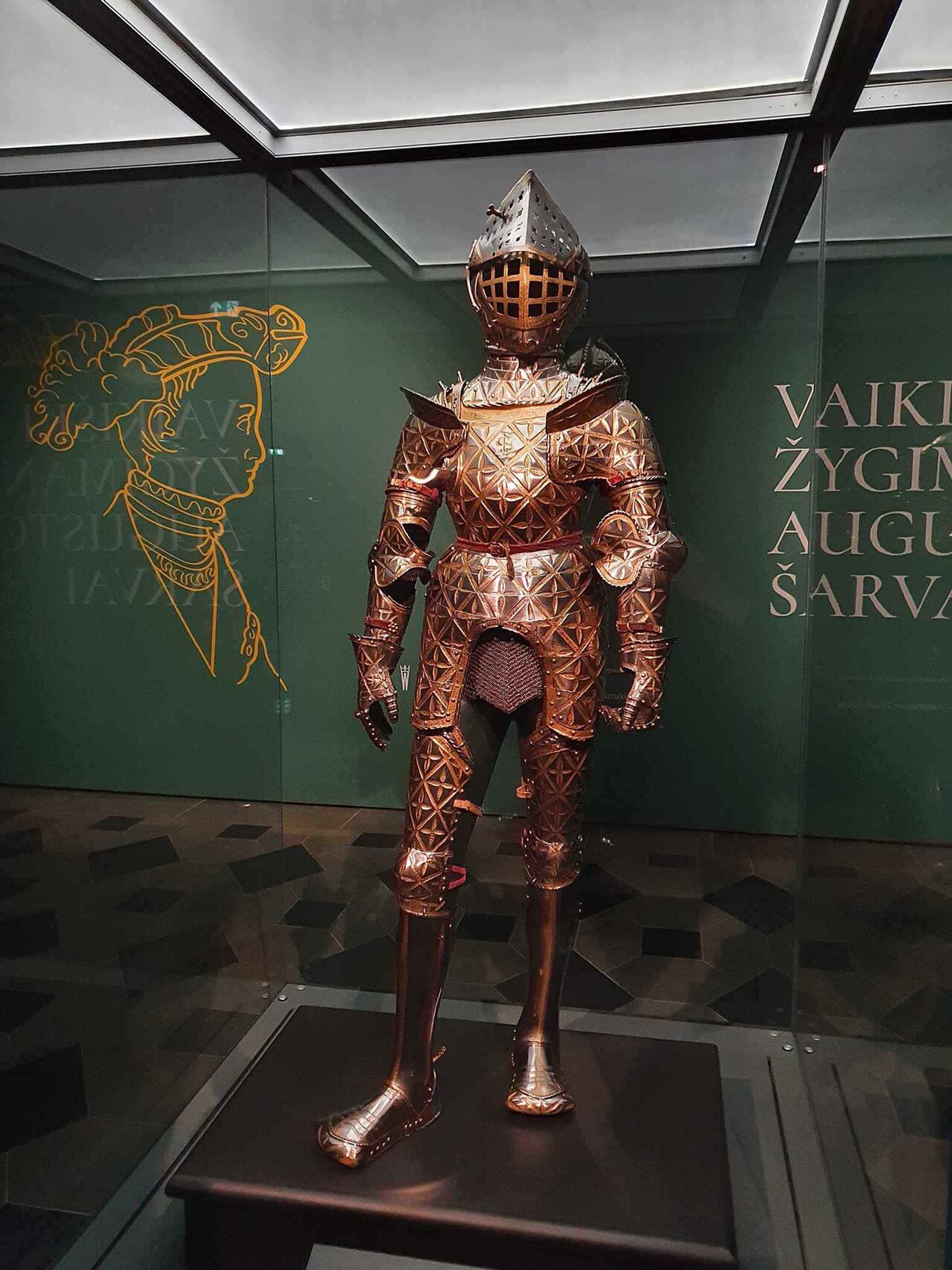
Child armor of Sigismund II Augustus, reminding us that the palace housed royal courts from an early age of dynastic power.
Child armor of Sigismund II Augustus, reminding us that the palace housed royal courts from an early age of dynastic power.Photo: Pofka, Wikimedia Commons, CC BY-SA 4.0. Cropped & resized.
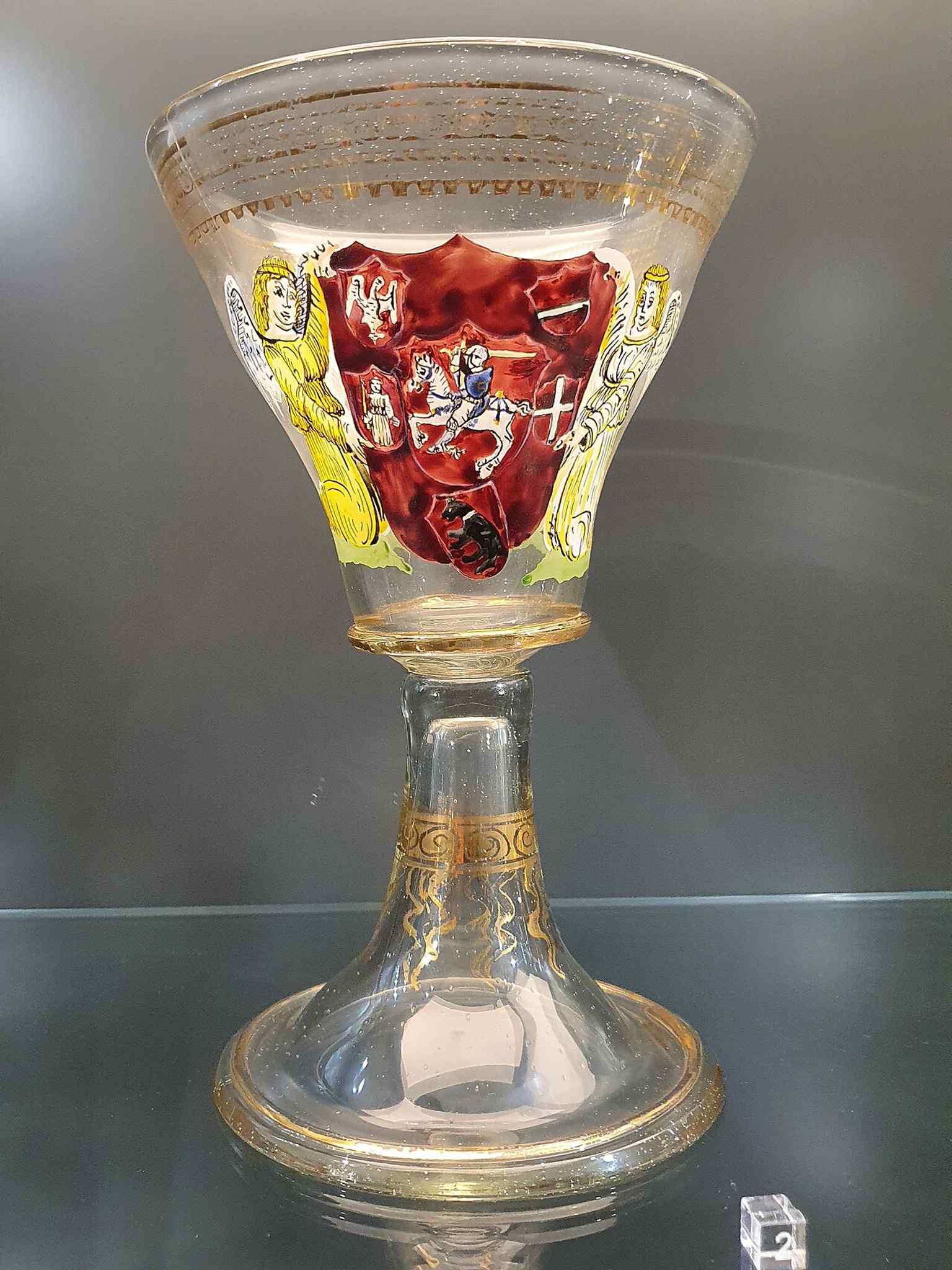
A copy of Alexander Jagiellon’s goblet bearing the Lithuanian Vytis, linking the palace to its late-15th-century royal residents.
A copy of Alexander Jagiellon’s goblet bearing the Lithuanian Vytis, linking the palace to its late-15th-century royal residents.Photo: Pofka, Wikimedia Commons, CC BY-SA 4.0. Cropped & resized.
A 16th-century stove tile with the Lithuanian Vytis, a small object that reflects the richly finished palace interiors.
A 16th-century stove tile with the Lithuanian Vytis, a small object that reflects the richly finished palace interiors.Photo: Pofka, Wikimedia Commons, CC BY-SA 4.0. Cropped & resized.
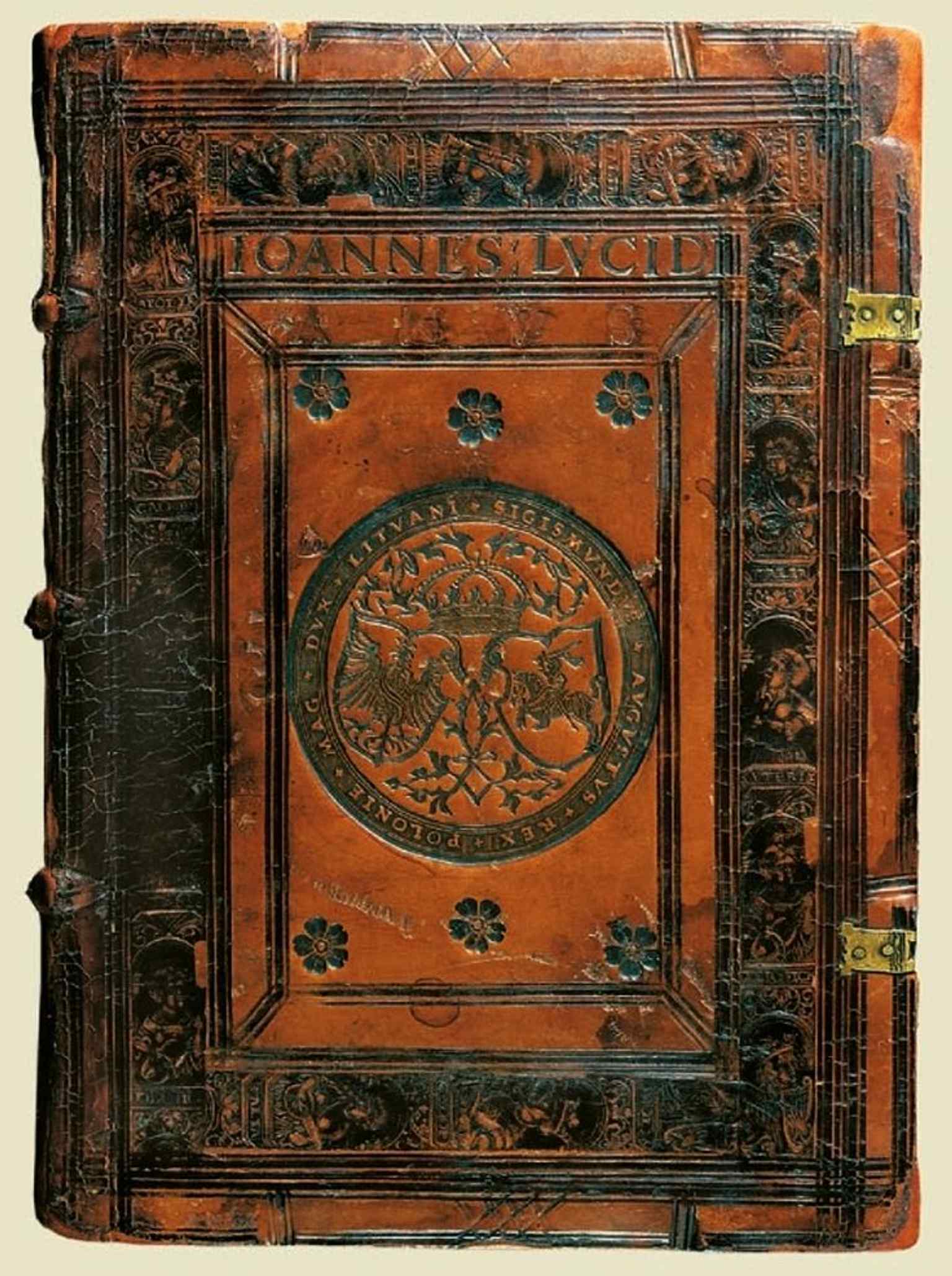
A book cover from Sigismund II Augustus’s former library, evoking the palace’s reputation as a center of learning and court culture.
A book cover from Sigismund II Augustus’s former library, evoking the palace’s reputation as a center of learning and court culture.Photo: Unknown authorUnknown author, Wikimedia Commons, Public domain. Cropped & resized.
arrow_back Back to Vilnius Highlights Audio Tour: Architectural and Historical Treasures
Loved by travellers

Thousands of tours started.
Plenty of opinions.

4.8 across the App Store and Google Play. Here's a few we keep coming back to.

starstarstarstarstar
This was a solid way to get to know Brighton without feeling like a tourist. The narration had depth and context, but didn't overdo it.
Christoph
Christoph
Brighton Tour
starstarstarstarstar
Started this tour with a croissant in one hand and zero expectations. The app just vibes with you, no pressure, just you, your headphones, and some cool stories.
download Get the app

Pop your headphones in.
Step outside.

Free to download. Tours in every city. Start in 60 seconds — no account, no card.

Download on the App StoreGet it on Google Play
starstarstarstarstar_half
4.8
AudaTours app icon
headphones
~ 4 min until your first tour starts
public
1,000+ cities worldwide
all_inclusive
AudaTours
Unlimited

Every tour. Every city. One subscription.

3101 tours2271 cities138 countries50+ languages