
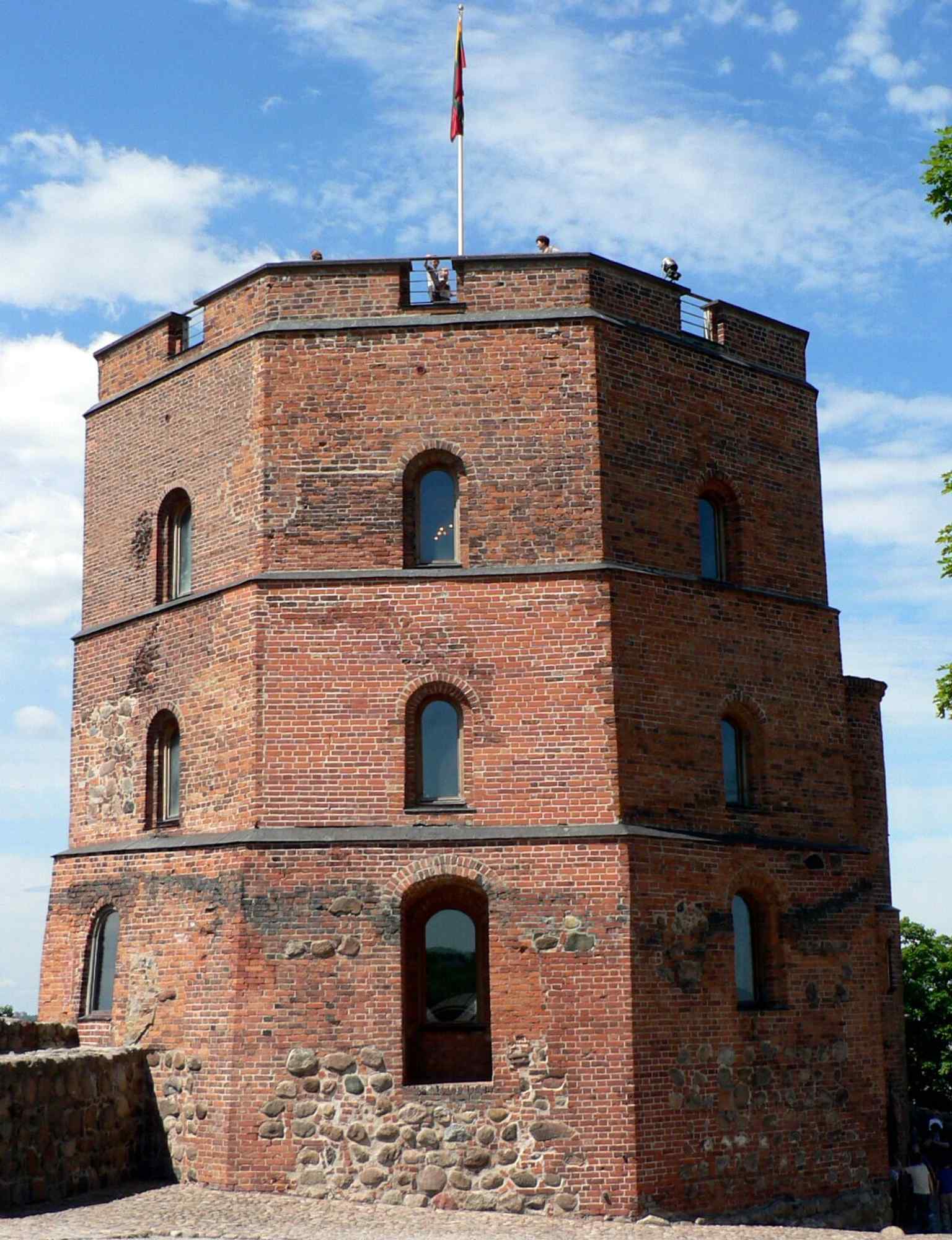
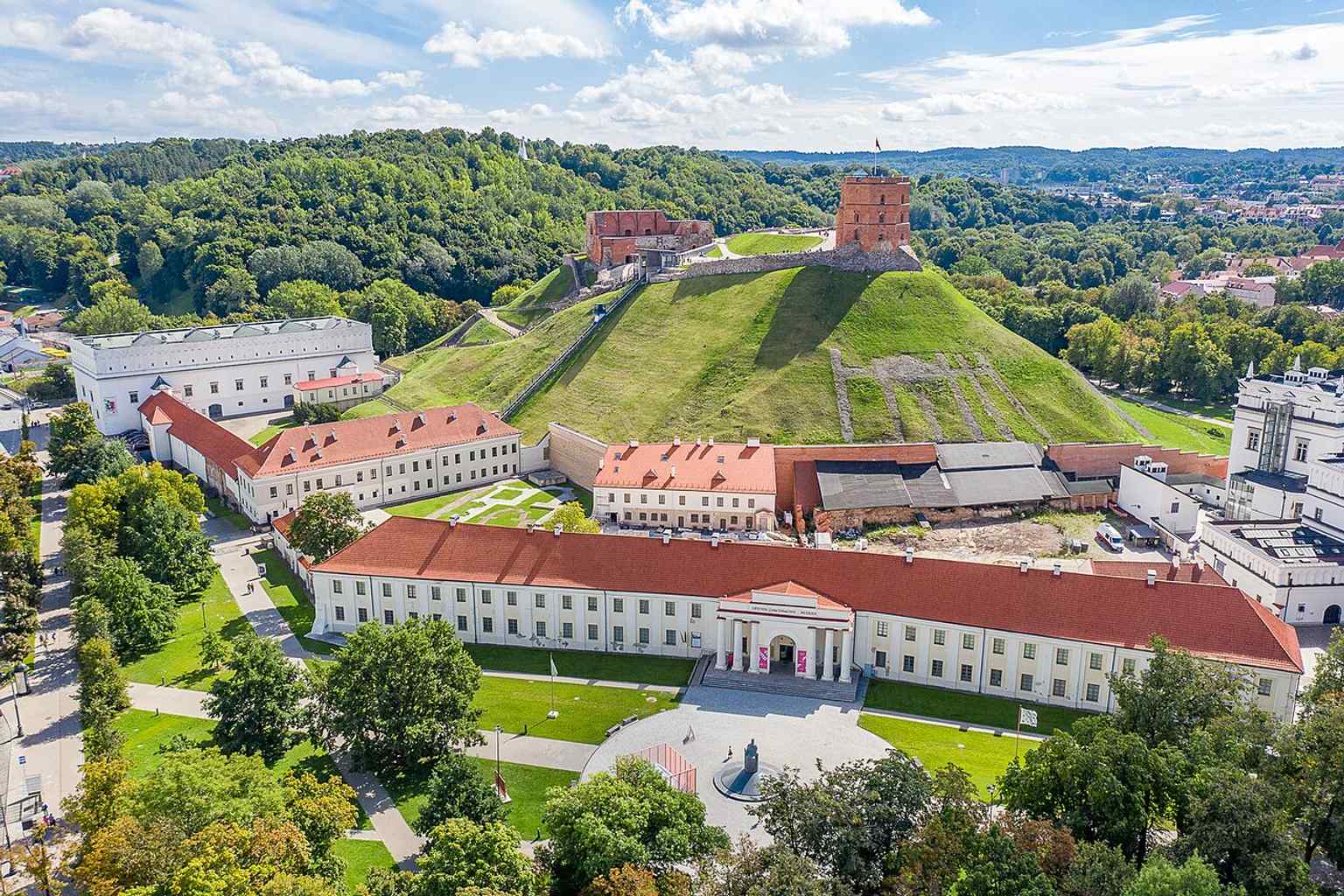
On your right, Gediminas’s Tower is a sturdy red-brick cylinder with a square upper section and a crenellated lookout that makes it look like the last surviving tooth of a vanished castle.
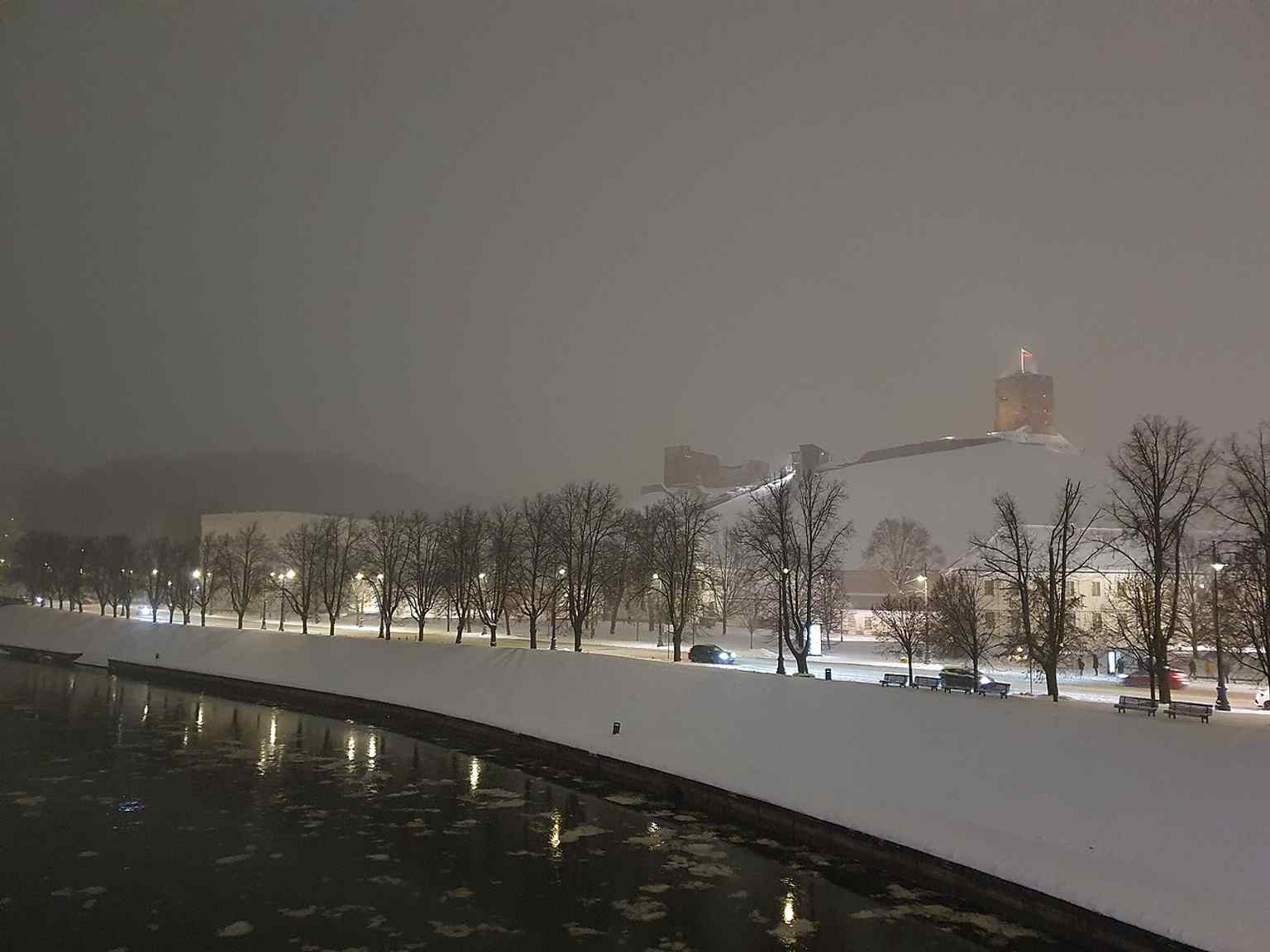
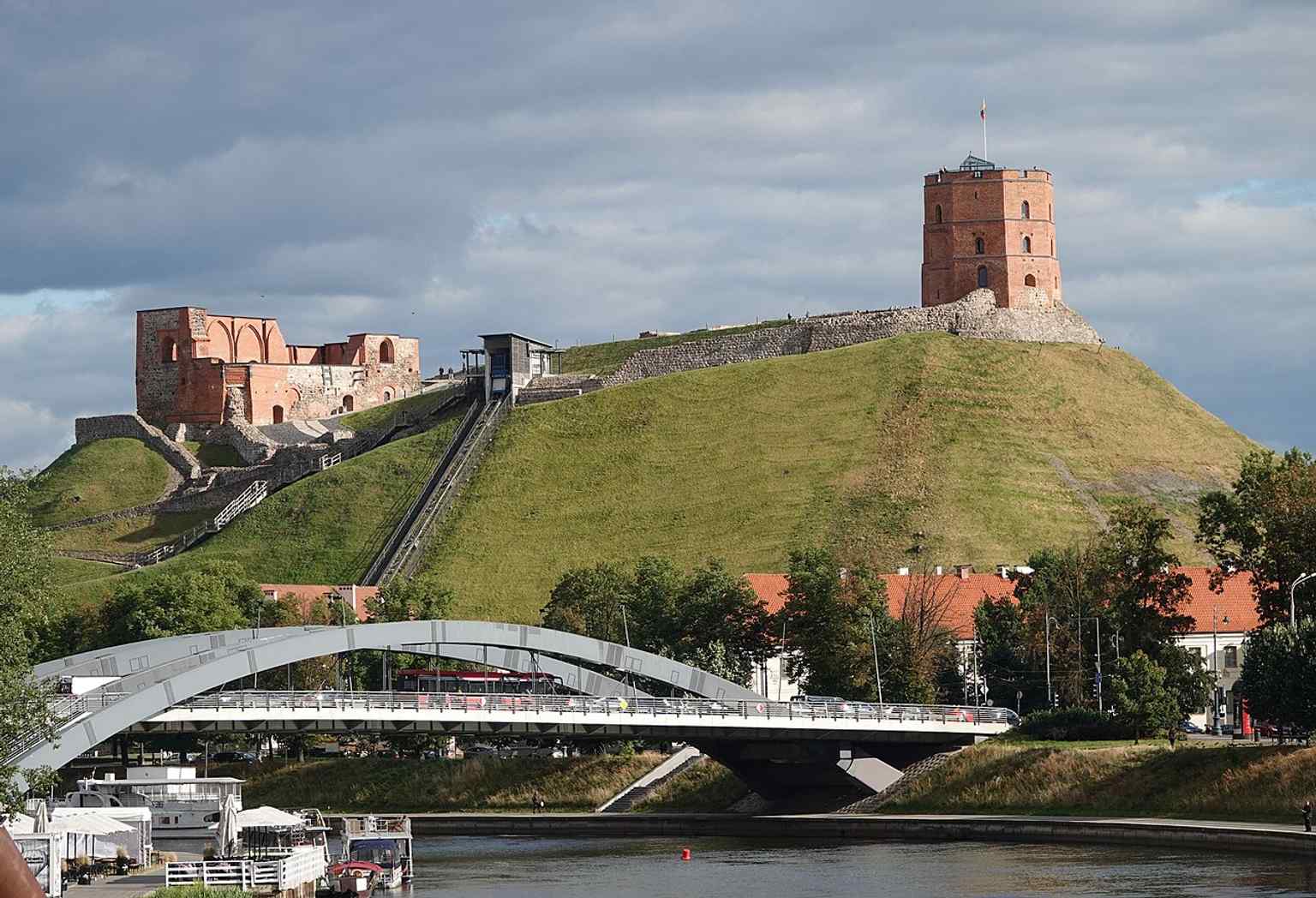
This is what remains of the Upper Castle, perched on Gediminas Hill like Vilnius’s oldest witness. Grand Duke Gediminas began with wooden fortifications here in the fourteenth century, and Grand Duke Vytautas followed with the first brick castle, completed in fourteen oh nine. What you see now carries another layer: in nineteen thirty-three, the Polish architect Jan Borowski rebuilt the upper part into the familiar three-story tower. If you want a quick visual of that change, take a look at the before-and-after image in the app... it shows how the ruined top became today’s crenellated lookout.
The legend, naturally, refuses to be modest. Gediminas camped here after a hunt and dreamed of an iron wolf howling like a hundred wolves. His pagan court interpreter, Lizdeika, told him the dream meant he should build a city here, one whose fame would travel far. Not a bad piece of career advice.
But this hill never belonged only to legend. The tower served as a military lookout, yes, but also as a prison for troublesome nobles and rebels... the sort of people rulers preferred to keep close and quiet. And here’s the part most visitors miss: archaeologists uncovered the remains of twenty men on this summit, tied to the uprising of eighteen sixty-three to eighteen sixty-four against Russian rule. Some had been buried face-down, their hands bound, lime scattered over them to erase them faster. Instead, history dragged them back into view. In twenty nineteen, people reburied them with honors at Rasos Cemetery, and the tower exhibition now tells their story under the title Unforgotten Rebels.
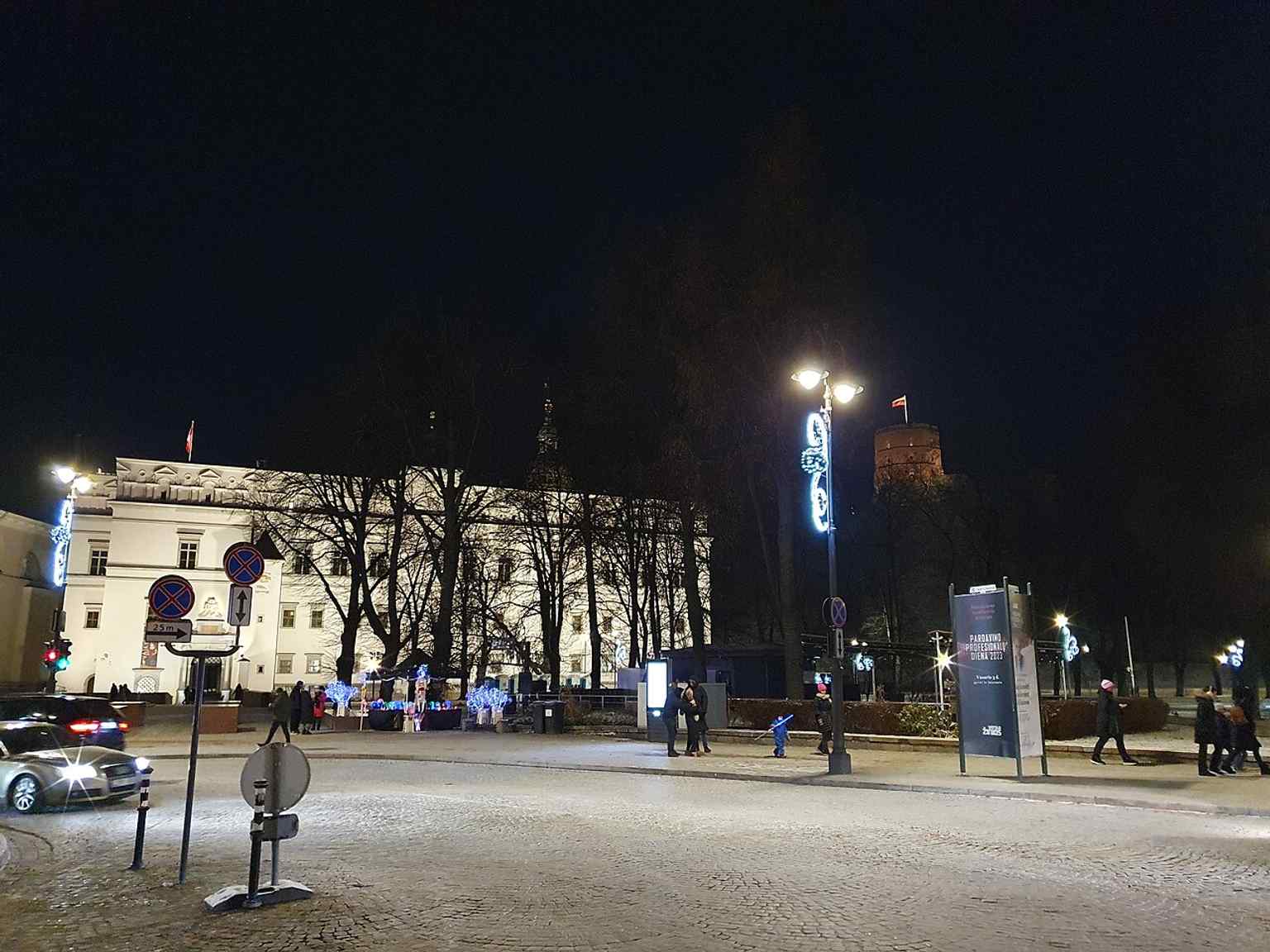
If you glance at the image of the tower with the Palace of the Grand Dukes below, you can see how power gathered around this hill and kept changing costumes.
One man fixed that symbolism forever. On the first of January, nineteen nineteen, Kazys Škirpa led Lithuanian volunteers up here and raised the tricolor. They fired gun salutes and sang the anthem. Five days later, Bolshevik forces took Vilnius and tore away the yellow and green, leaving only the red stripe. That brief moment became almost mythic. The flag returned here in nineteen eighty-eight during the independence movement, and in nineteen eighty-nine the Baltic Way turned this tower into part of a public declaration of unity.
Even the hill remains unstable, with landslides and repairs reminding everyone that symbols need maintenance... literally.
So from here, which Vilnius feels strongest to you: the fortress, the city of church towers, the seat of state power, the scholarly capital, or the city marked by losses you cannot see, like the vanished Great Synagogue? The best answer is probably all of them at once. From this height, Vilnius stops looking like separate monuments and starts reading as one living body, stitched together from stone, absence, defiance, and memory.
If you want to go inside later, the tower museum is open every day from ten in the morning until eight in the evening.






.jpg)

.02.jpg)
