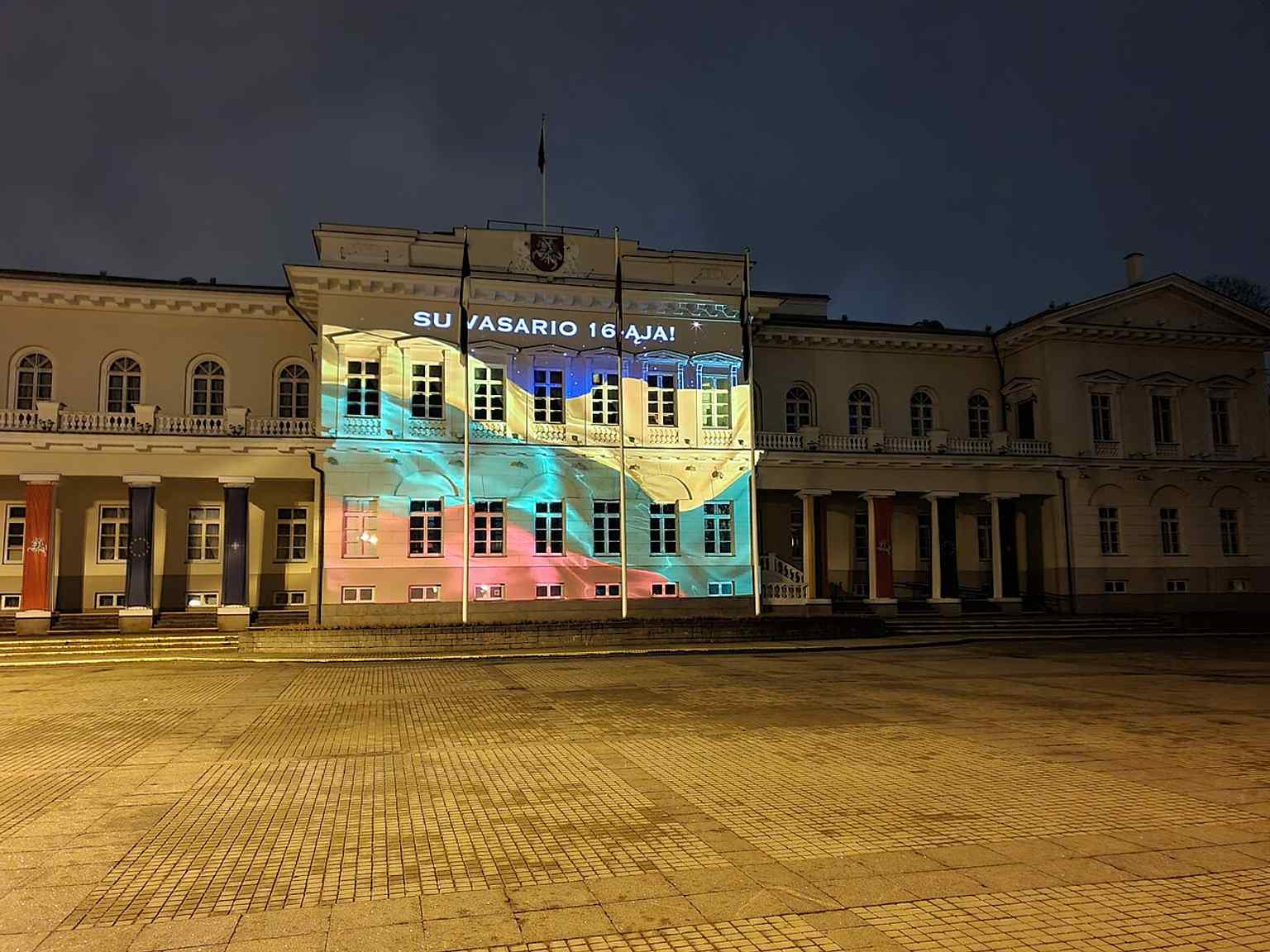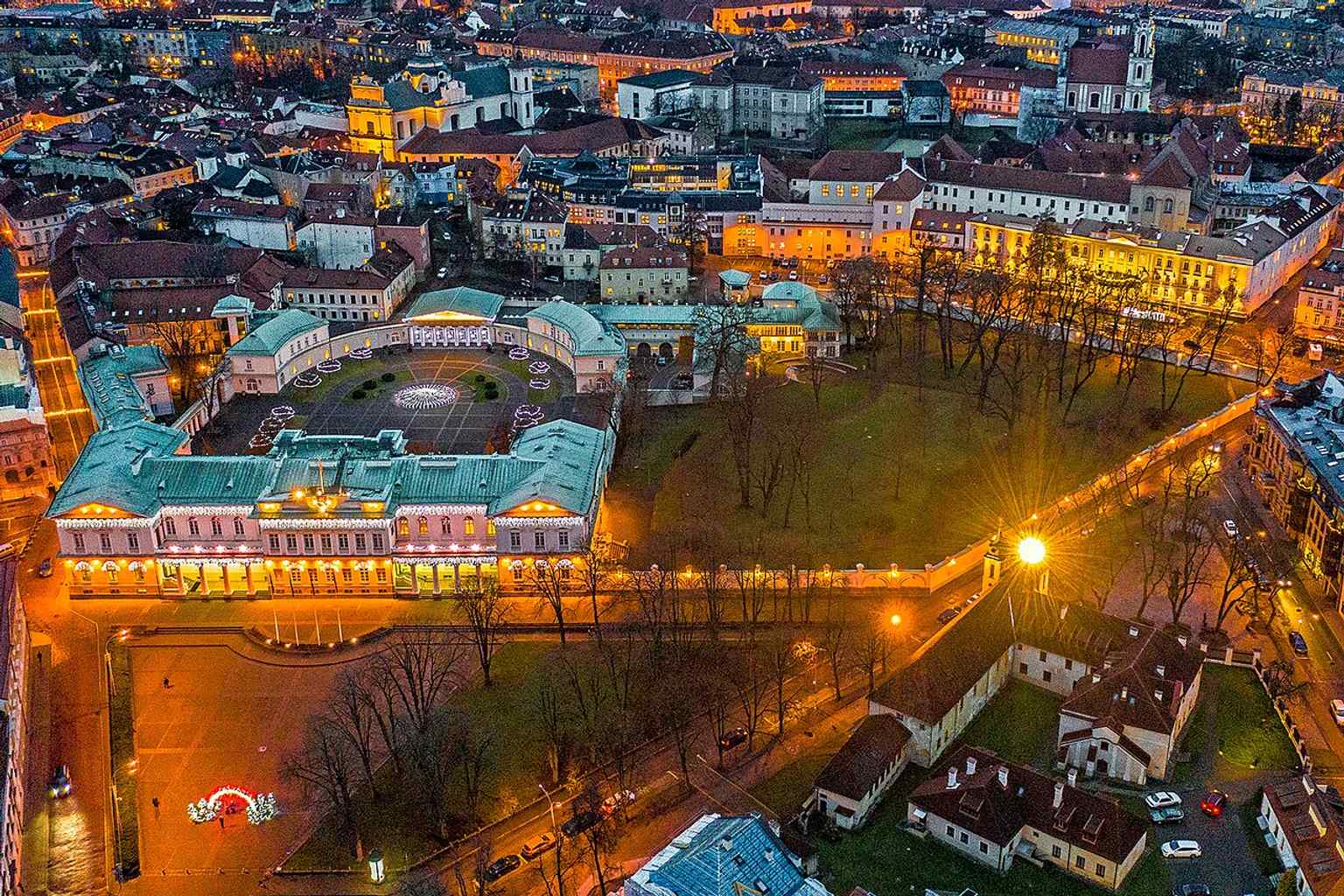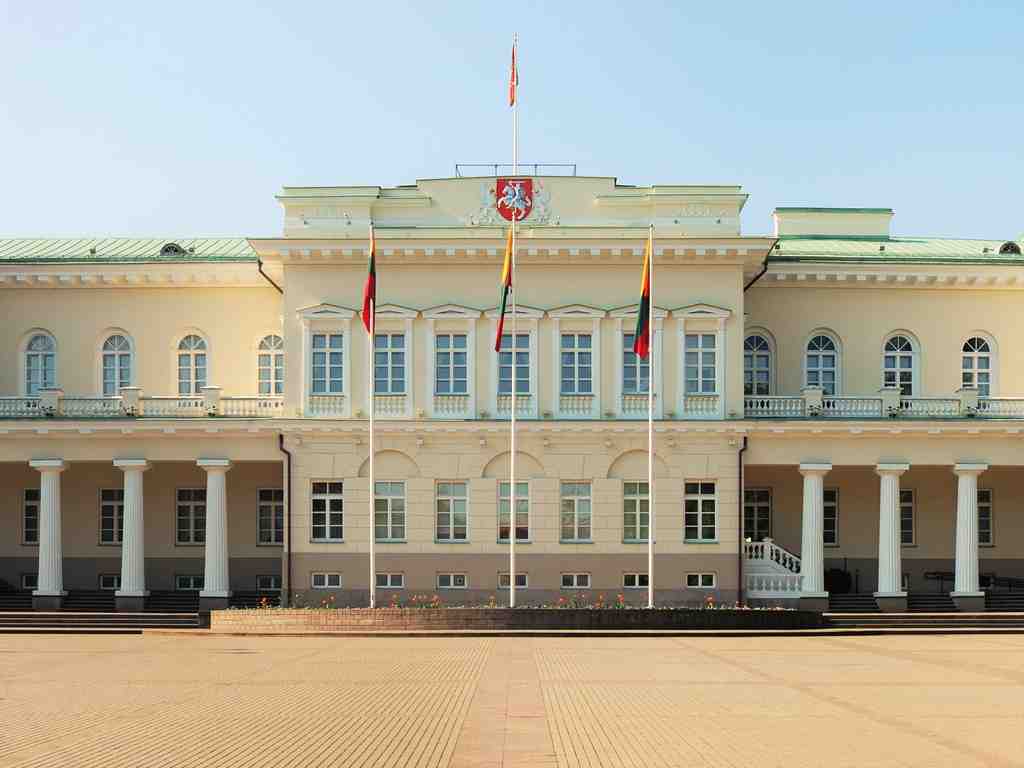
On your left stands a pale stucco palace, broad and symmetrical, marked by a central row of white columns beneath a triangular pediment.
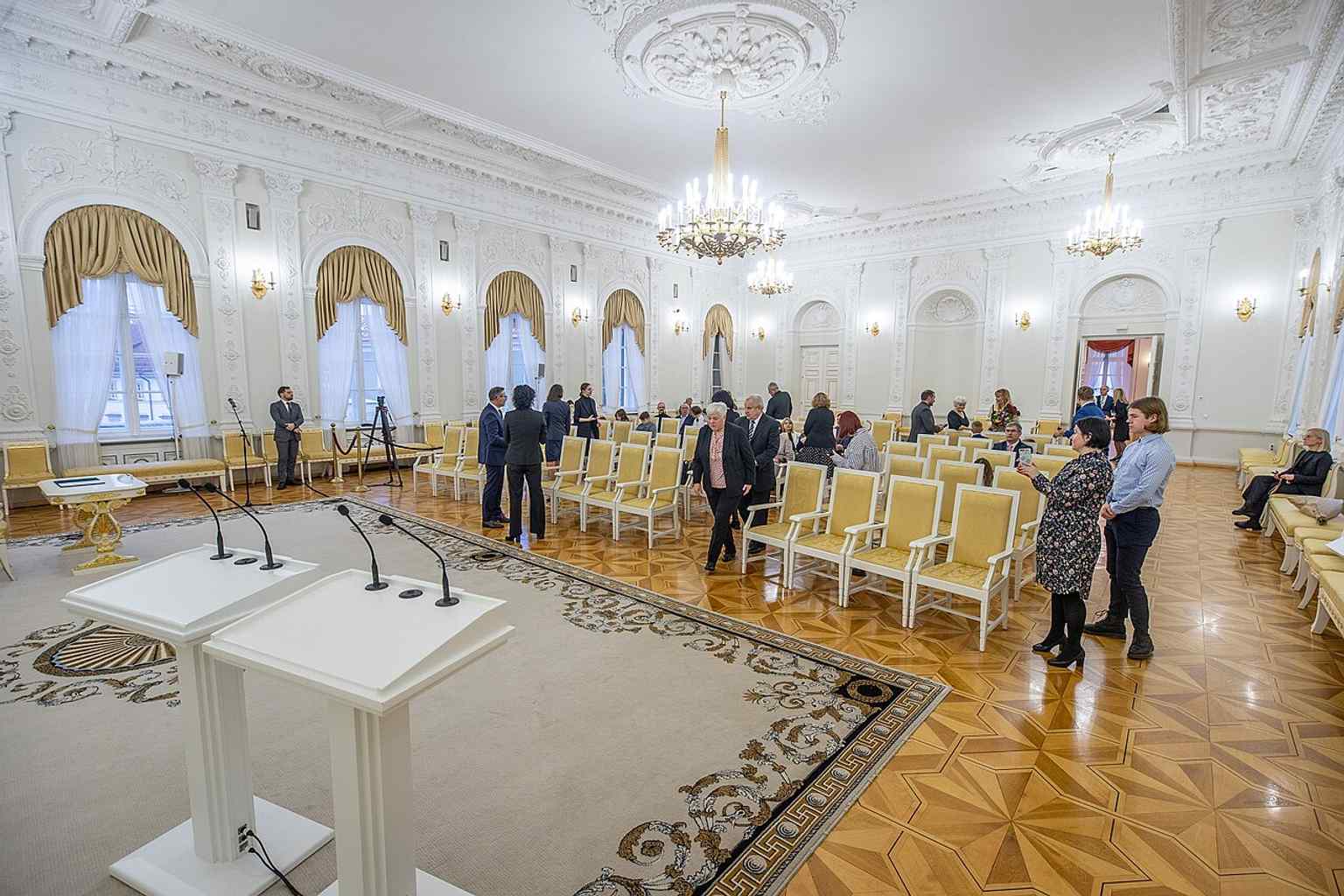
This is the Presidential Palace, and it is very much alive as statehood, not a museum piece pretending to be important after retirement. Lithuania’s president works here, receives guests here, and lets the building keep doing what this site has done for centuries: turn authority into architecture.
That story starts deep in the medieval city. In the fourteenth century, Jogaila, Grand Duke of Lithuania, gave this land to the Vilnius diocese, and the first bishop of Vilnius, Andrzej Jastrzębiec, began building a residence here. So before it became a palace of presidents, it was a bishops’ palace. Power in Vilnius did not move neatly from sacred to secular... it kept reusing the same addresses.
Even the square helps tell that story. You are standing by Simonas Daukantas Square, named for Simonas Daukantas, a Vilnius University alumnus who wrote the first history of Lithuania published in Lithuanian in the nineteenth century. A palace of rulers facing a square named for a historian... that is a very Vilnius arrangement.
This plot had political weight long before modern Lithuania. Earlier Goštautas residences stood here in the sixteenth century. Later, kings of the Polish-Lithuanian Commonwealth, Russian emperors, and even the future French king Louis the Eighteenth all passed through. Then came Napoleon, who gives the place its sharpest human profile. In eighteen twelve, after entering Vilnius through the Gate of Dawn and ordering a pontoon bridge when the Russians burned the Green Bridge, he stayed in the city for nineteen days and moved into this palace. Rumor said the Russians had mined it. They had not. A nice change of pace for an invading emperor.
From here, Napoleon organized Lithuanian military units, received noblemen and officials, and staged the rituals of command. But outside the ceremony, the city paid. Residents faced extra taxes and requisitions, churches turned into food stores, monasteries into hospitals. Here again, rule and belief did not replace one another; they collided in the same streets.
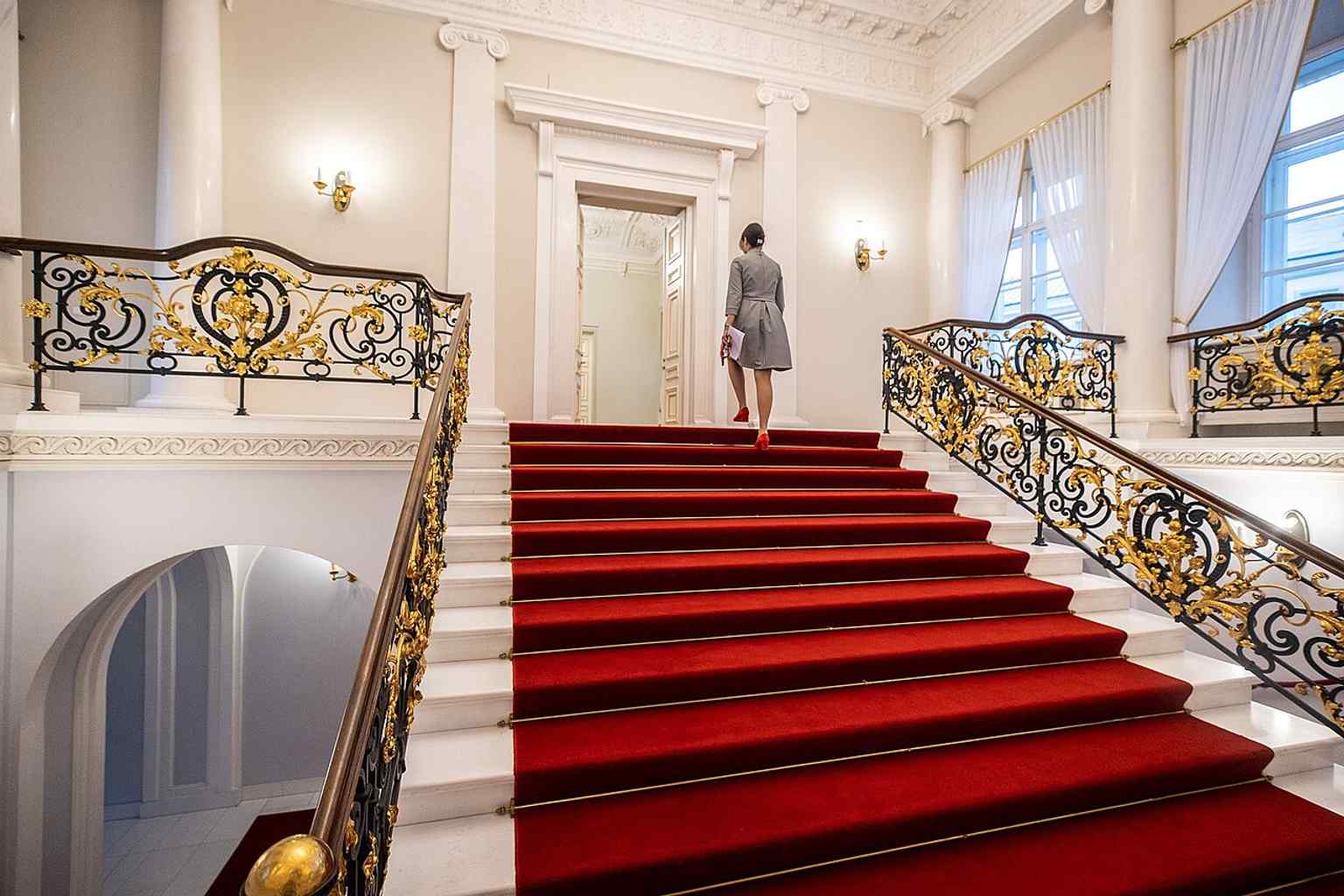
After fires in the eighteenth century damaged the older residence, architects including Laurynas Gucevičius helped reshape it, and in the nineteenth century Vasily Stasov gave it the Empire-style form you see now, especially those colonnades across the façade. If you check the image on your screen, the older view shows that imperial posture before the building became a modern presidency. And the grand staircase inside makes the point even more plainly: authority likes an entrance.
After Lithuania regained independence in nineteen eighteen, the palace housed the Foreign Ministry and the E-L-T-A news agency. After war and occupation, it served military officers, then artists. Since nineteen ninety-seven, it has been the official presidential seat. Algirdas Mykolas Brazauskas became the first Lithuanian president to actually live and work here, and Lithuanians even use the word Prezidentūra to mean not just the building, but the presidency itself.
On Sundays at noon, the Honour Guard raises the presidential flag here wearing reconstructed medieval armor. It is a wonderfully direct message: the modern republic keeps its paperwork, but it has not forgotten its dukes.
Next, another form of authority steps forward: learning, argument, and the making of minds. Walk about five minutes to the Church of Saint Johns. If you plan to return, the palace keeps regular weekday office hours from eight to five and is closed on weekends outside special events.