
On your right is Saint Johns Church, and it does not behave like a modest university chapel. It dominates the whole ensemble, as if scholarship itself needed a stage set. For centuries, this church and Vilnius University worked as one machine: students prayed here, theologians preached here, theses were defended here, and rulers were greeted here. In other words, learning in Vilnius did not hide in libraries. It spoke out loud.
The church began in the late fourteenth and early fifteenth centuries, and its bones are still Gothic: a tall hall church, meaning one broad interior with three naves, or aisles, and a slightly irregular string of chapels. Then the Jesuits took that structure and turned it into something more ambitious. They used this place for sermons, public debates, diploma ceremonies, even performances. Faith, rhetoric, prestige... all under one roof. Very efficient.
Take a moment and look up at the tower. It rises in five narrowing sections and reaches about sixty-nine meters, one of the tallest bell towers in Vilnius Old Town. If you open the app image, you can see how completely it commands the university courtyards. That was the point. The church did not merely stand beside learning; it visually ruled the campus.
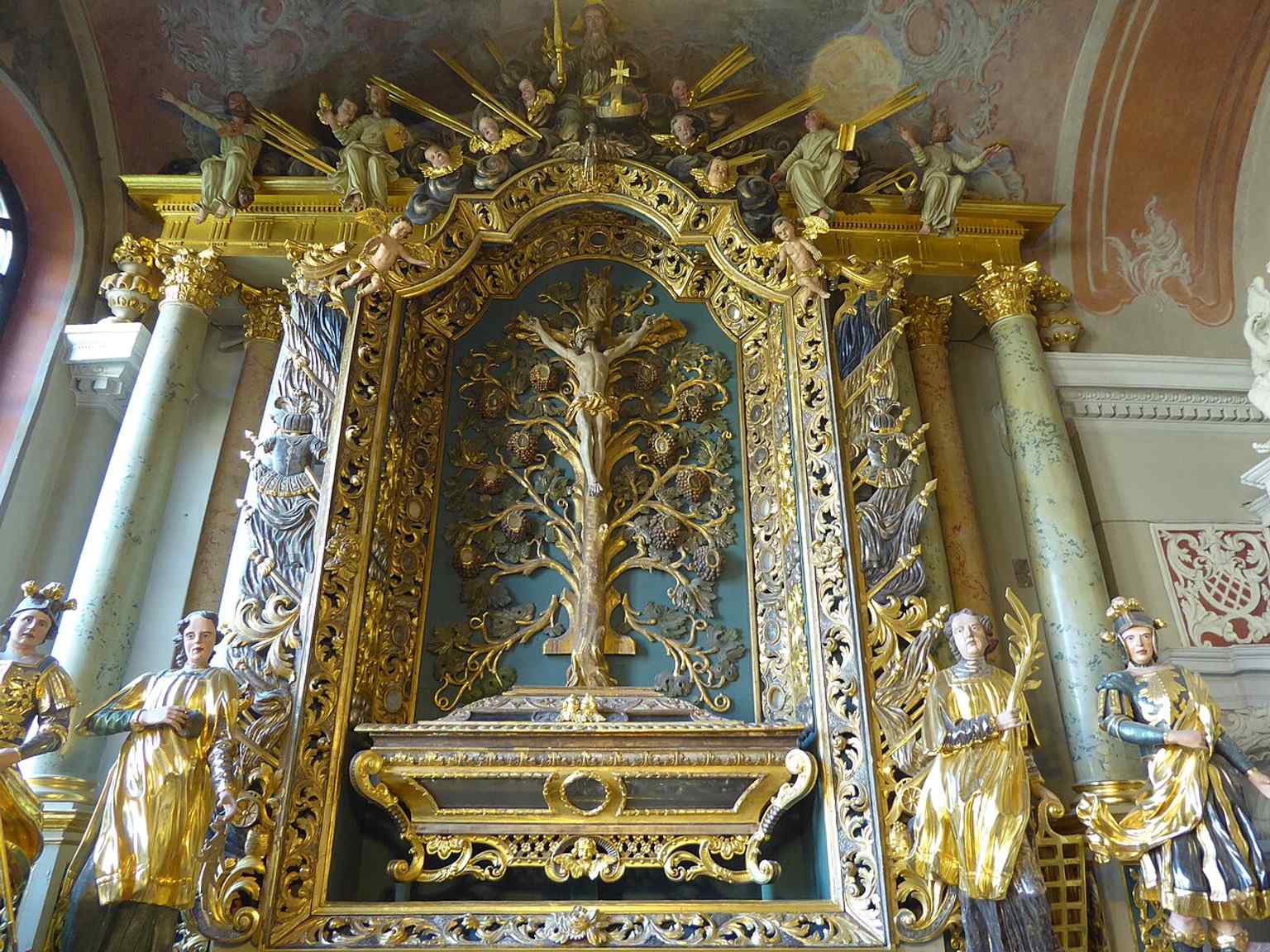
But here is the turn in the story. What you see is not one untouched masterpiece. It is a survivor with stitched scars. In sixteen fifty-five, Moscow's army devastated the church during its assault on Vilnius. After the great fire of seventeen thirty-seven, architect Johann Christoph Glaubitz rebuilt it as late Baroque, adding a grand organ loft, side chapels, and a theatrical sanctuary of altars. If you glance at the interior image on your screen, you can feel that Baroque confidence still at work.
Then, in eighteen twenty-seven and eighteen twenty-eight, architect Karol Podczaszynski stripped much of that interior away. Cartloads of broken altars, stucco, and sculpture went off to the dump. Restoration, apparently, can be very good at destroying things.
One person to remember here is Father Alfonsas Lipniunas. During the Nazi occupation, he preached rebellious sermons from this pulpit. Later the Nazis imprisoned him in Stutthof, where he died. So this church was not only a place where ideas were polished for applause. It was also a place where words carried risk.
That is what makes Saint Johns so important. It holds prayer, performance, war damage, censorship, rescue, and return. Even its great organ migrated here from Polotsk in the nineteenth century and only sounded again after restoration in two thousand.
Now we step deeper into the same world. The church is one chamber; the university is the larger instrument. Walk on to Vilnius University, just a minute away.







%2C%201794.jpg)