
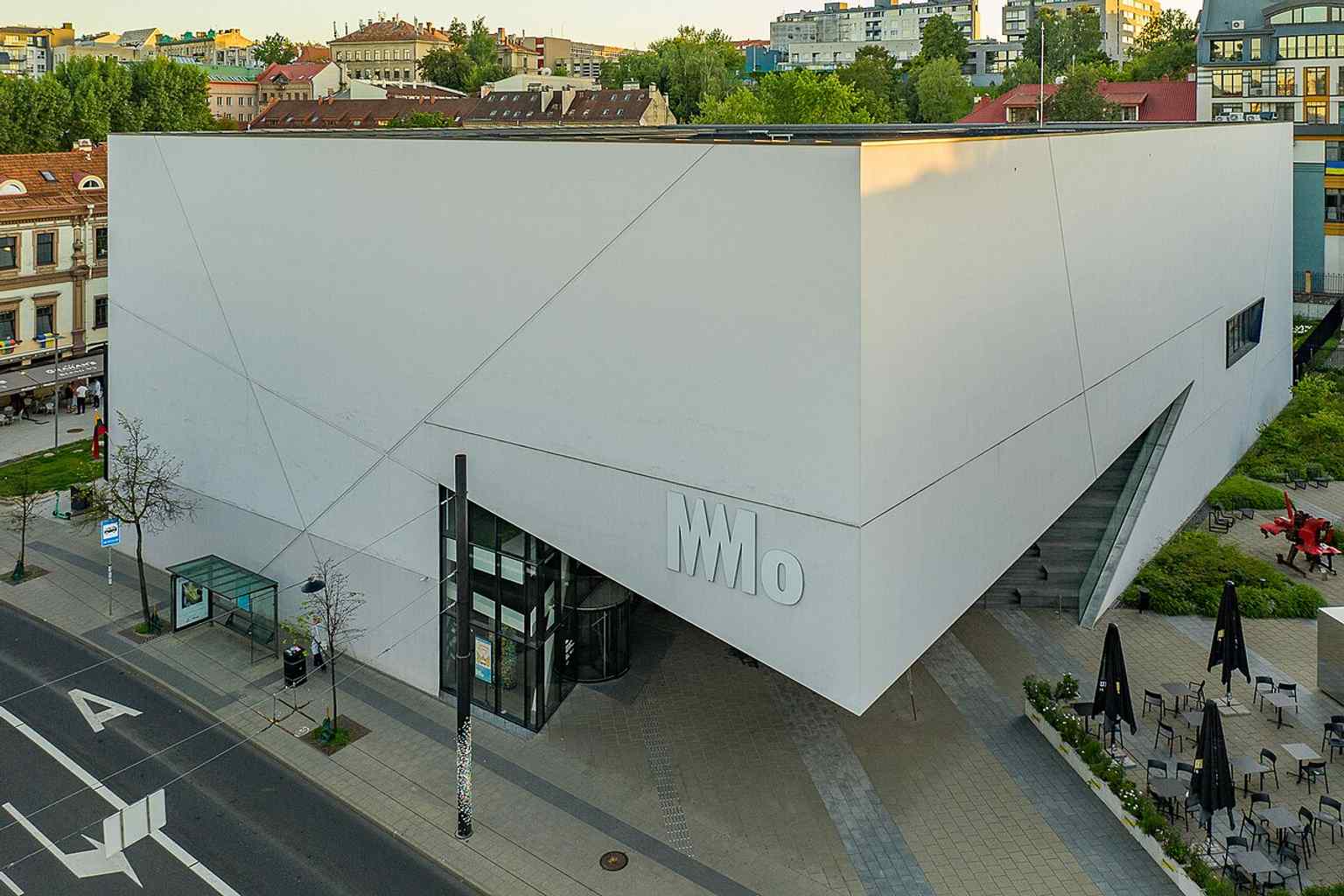
On your left is a bright white, angular concrete-and-glass building pierced by a broad arched opening, a clean modern block with a gateway carved straight through its middle.
This is the M-O Museum, and it matters because it proves Vilnius did not stop making itself once the churches, squares, and old institutions were finished. It is a bridge to modern Vilnius... not just preserving memory, but choosing, funding, and arguing over what deserves to join it.
That choice starts with two people: Danguolė Butkienė and Viktoras Butkus, Lithuanian scientists and philanthropists who began collecting art in two thousand and eight. With art historian Raminta Jurėnaitė and other critics, they built a collection that paid serious attention to Lithuanian art from the nineteen sixties onward, especially the long cultural loosening after Stalin. Some of these works had been ignored or pushed aside in Soviet times because they did not fit the approved line. So this museum is not only about taste. It is also about recovery.
Before this building existed, their project lived for about a decade as a museum without walls through the Modern Art Centre, or M-M-C. They published more than thirty art books, sent a traveling museum into schools and communities, and treated education as part of the mission, not a decorative extra. A surprisingly radical idea for a museum... namely, helping people actually use it.
The site itself came with an argument. The old Lietuva Cinema stood here before the museum. When demolition plans appeared, citizens protested, signed petitions, and even won a court stop for a time. The cinema did not vanish quietly. Eventually the site was cleared, a time capsule went into the ground in two thousand and seventeen, and the museum opened on the eighteenth of October, two thousand and eighteen. The founders called it a gift to everyone and said they had spent nearly twenty million euros creating it, one of the first private cultural patronage projects of this scale in independent Lithuania.
Architect Daniel Libeskind designed the building with Do Architects, and he later said that although this was his smallest project, it was one of his favorites. He also used a circular form here for the first time, in the museum’s interior spiral staircase. If you glance at the aerial image on your screen, you can see how the building works almost like an urban passage rather than a sealed box. That was intentional: a symbolic gate between the medieval Old Town and the newer city beyond.
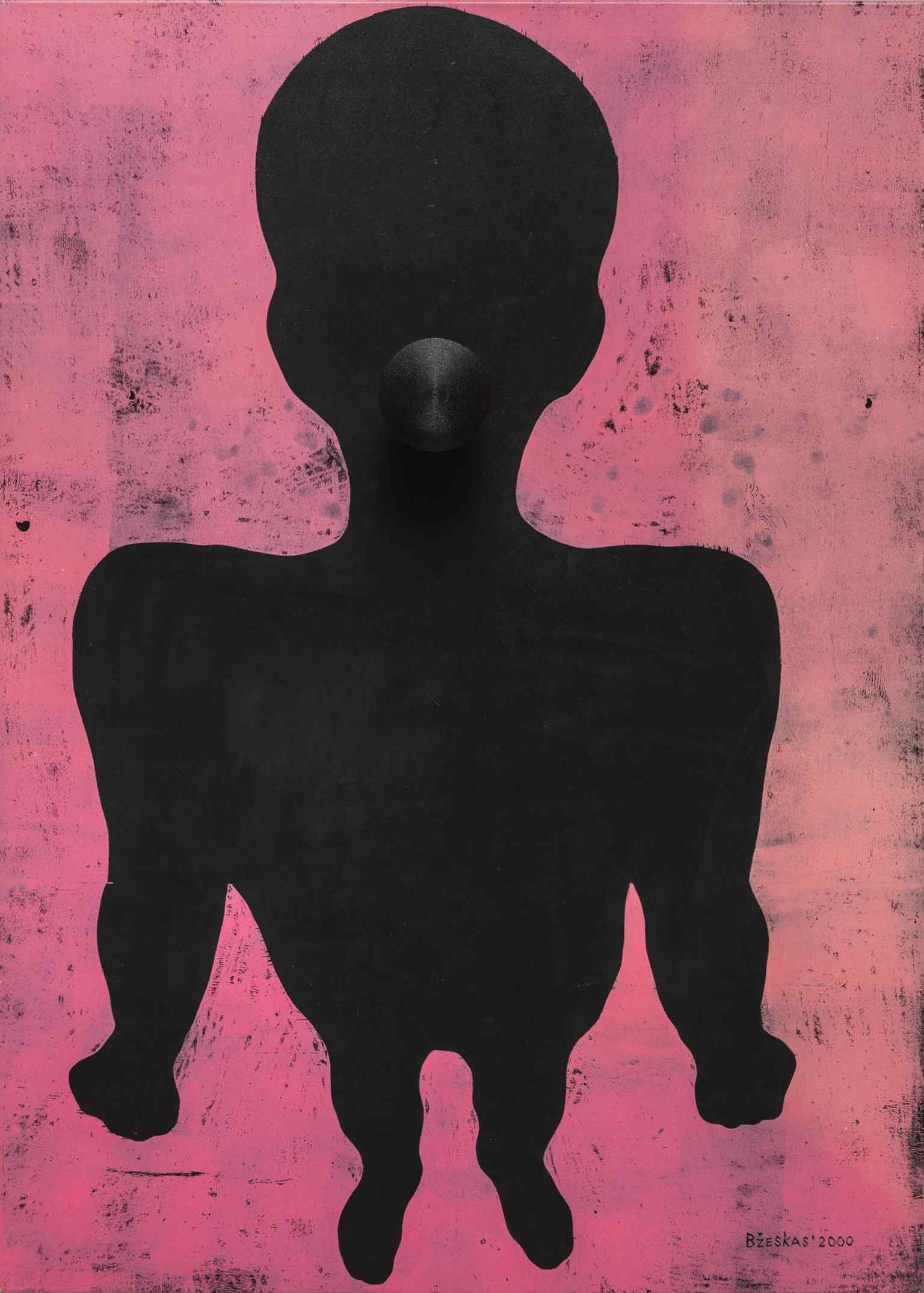
Inside, the collection now holds about six thousand works, from painting and photography to sculpture and video, tracing Lithuanian modern and contemporary art across censorship, independence, and reinvention. If you check the artwork image in the app, you get a small taste of that range. And the museum has not acted shyly since opening: in its first year it ran more than eight hundred tours, two hundred and eighty film screenings, and educational activities for nearly seven thousand children. By two thousand and twenty-four, it was partnering with the Centre Pompidou in Paris to place Lithuanian contemporary art into a much wider conversation.
So when we return to older seats of authority next, keep this place in mind. Every age redesigns what a city wants to remember... and who gets to do the choosing. The Presidential Palace is about an eleven-minute walk from here. If you want to come back inside later, the museum is open from ten in the morning to eight at night most days, and closed on Tuesdays.






