
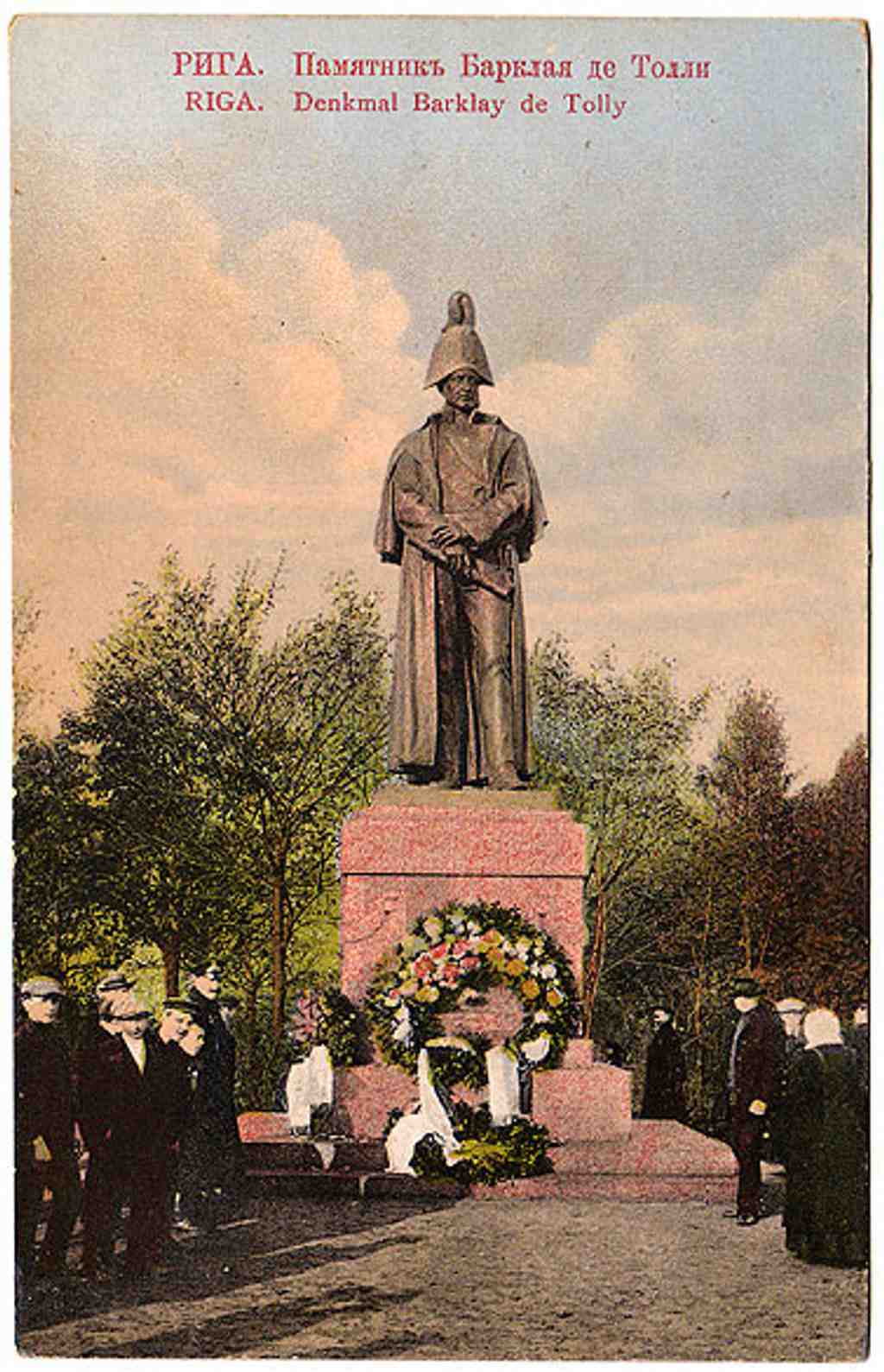
On your left, look for the light-grey granite pedestal that once carried a full-length bronze field marshal, recognisable in older views by his plumed tricorne hat and the baton in his right hand.
If you cannot see the figure itself, there is a reason: Riga removed the statue in late October twenty twenty-four. That absence is now part of the story.
This monument honoured Mikhail Barclay de Tolly, the Russian field marshal and war minister who helped break Napoleon’s advance. Riga chose him very deliberately. City leaders argued that Barclay belonged, in part, to this place: his family had deep ties to Riga and Livland. One cousin, August, served the city and later became burgomaster. His grandfather worked as a legal officer for the magistrate. Barclay himself even wrote, more than once, that he came from Riga, though historians still debate the exact place of his birth.
The idea for a monument took shape under Mayor George Armitstead, whom we met earlier in bronze. The city gave twenty-five thousand rubles, and public donations matched it, together a sum roughly equal to several hundred thousand euros today. Then Riga held an international competition. Forty-three designs arrived from Saint Petersburg, Moscow, Paris, Riga, and several German cities. The jury, led by city architect Reinhold Schmeling, chose the Berlin sculptor Wilhelm Wandschneider.
His Barclay stood upright, calm, and thoughtful. Experts at the Saint Petersburg Academy of Arts suggested one crucial change: replace the sword with a marshal’s baton, a ceremonial staff that signals command and authority rather than combat. It softened the message. Not conquest, but control. Not fury, but duty. The monument opened in October nineteen thirteen, one hundred years after the end of the war against Napoleon. The granite pedestal came from Finland; the bronze figure came from a German foundry.
The image on your screen shows that original nineteen thirteen monument before history swallowed it. In July nineteen fifteen, as the First World War pressed toward Livland, officials evacuated monuments, factories, schools, and archives. They sent Barclay away by rail, intending to store him in Moscow. He never arrived, or if he did, no record survived. The statue vanished somewhere in war, revolution, or the confusion between the two.
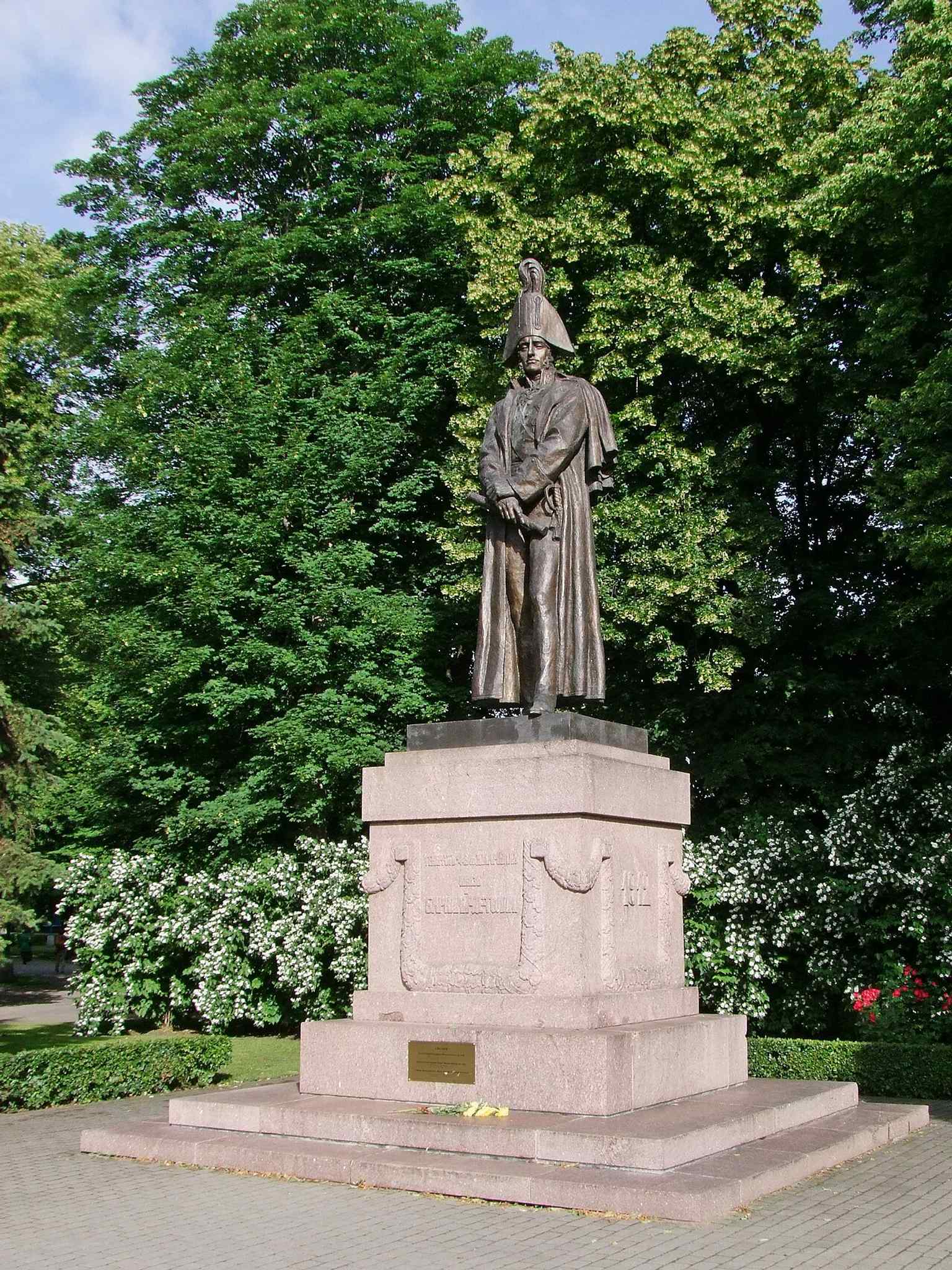
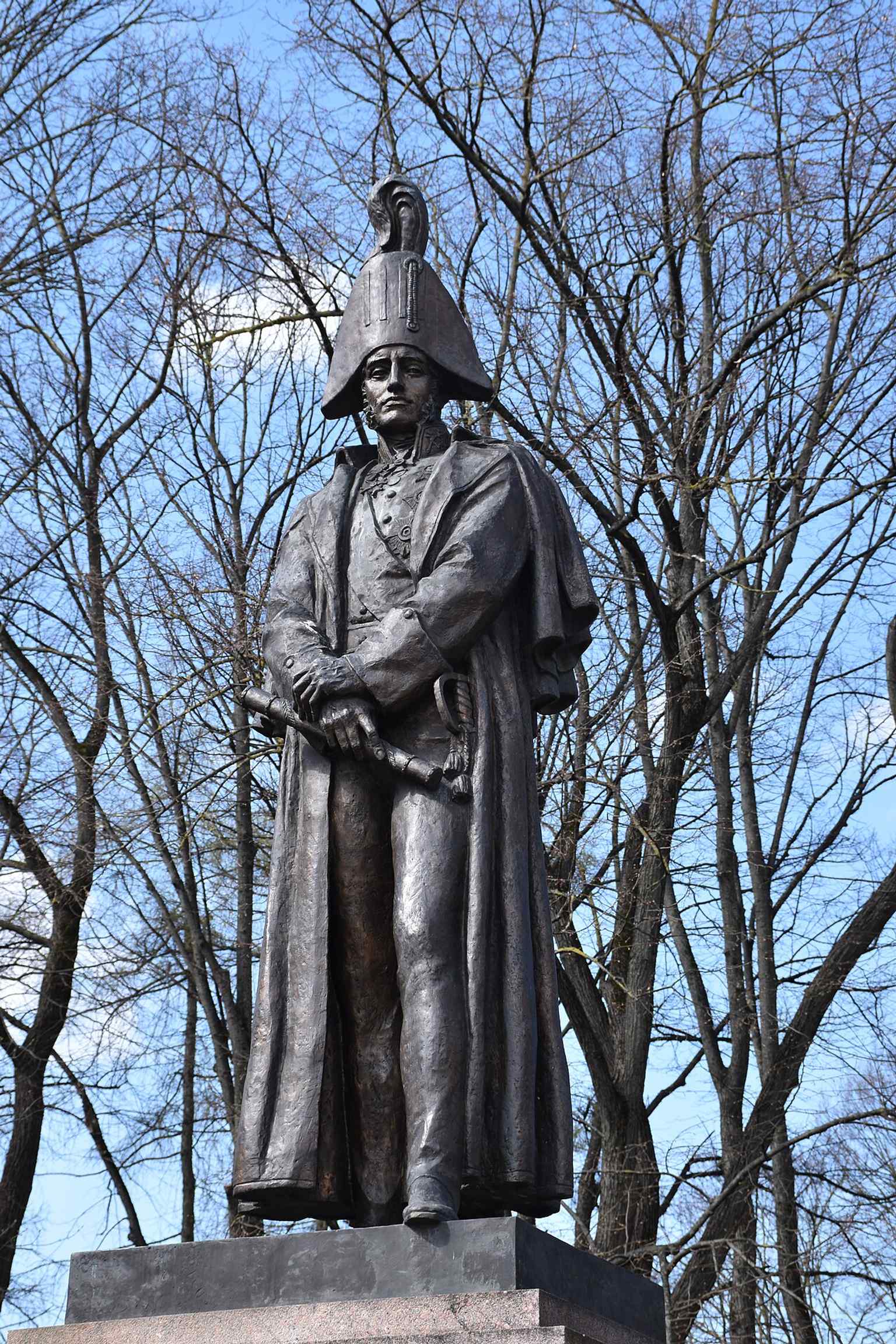
For decades, only the pedestal and the memory remained. Then, in two thousand and one, the entrepreneur and patron Yevgeny Gomberg paid for a precise reconstruction. A small plaster model preserved in the Museum of the History of Riga and Navigation gave sculptor Alexei Murzin extraordinary detail. Murzin did not simply copy the old bronze. He made Barclay younger, and gave the surface a more living texture, with subtle marks of the sculptor’s hand. You can compare that revived version on your screen as well. The replica went up in July two thousand and two as a temporary installation, but public support kept it in place for more than two decades. Then politics shifted. In October twenty twenty-four, after protests, committee votes, and sharp public argument about empire and memory, the city ordered its removal. Overnight, the statue disappeared once again.
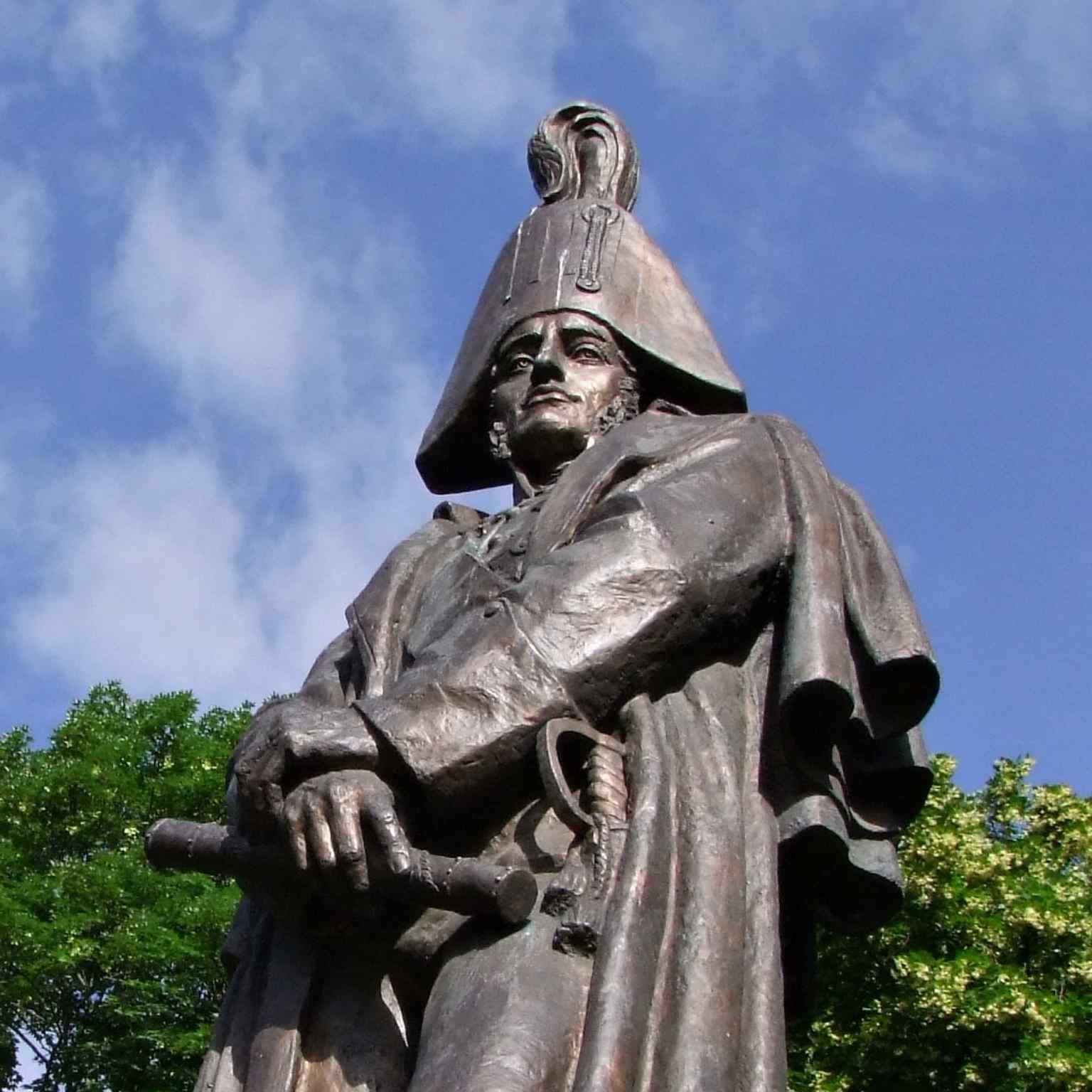
As part of the Esplanade, you can visit this site at any time.
So this is no longer only a monument to Barclay de Tolly, but a monument to how cities argue with their own past.
When you are ready, continue toward the Art Academy, where stone and imagination take up the conversation anew.






.jpg)