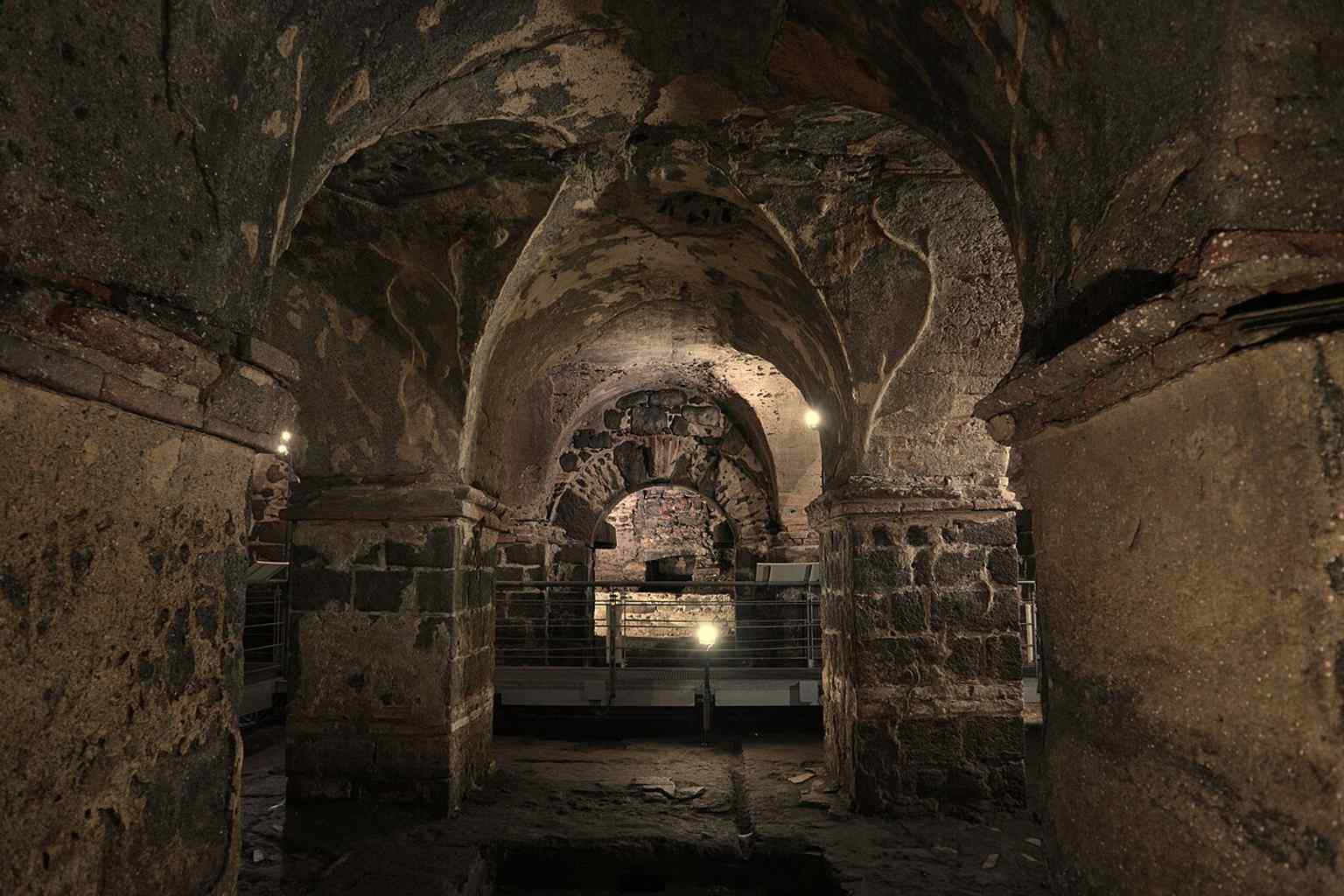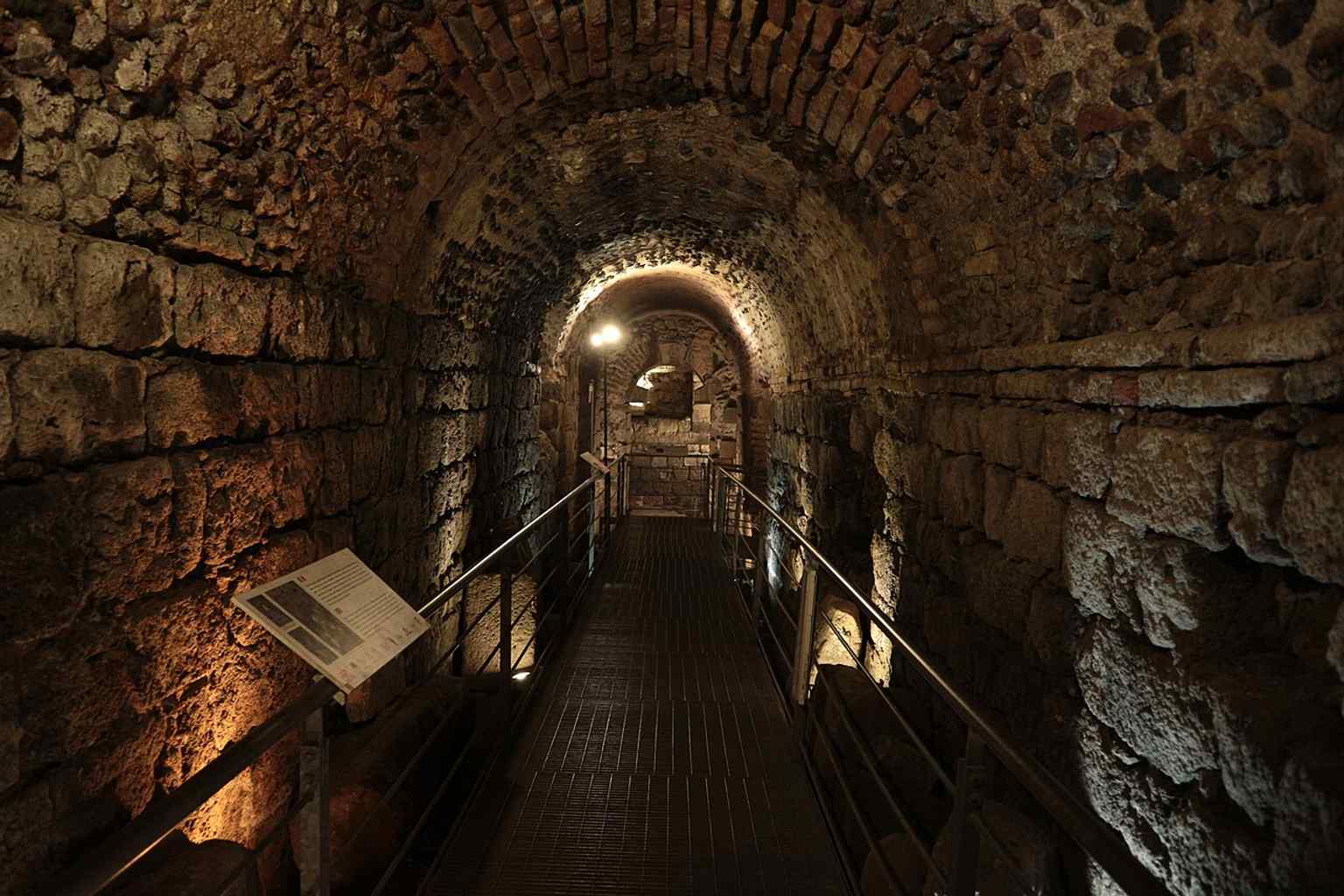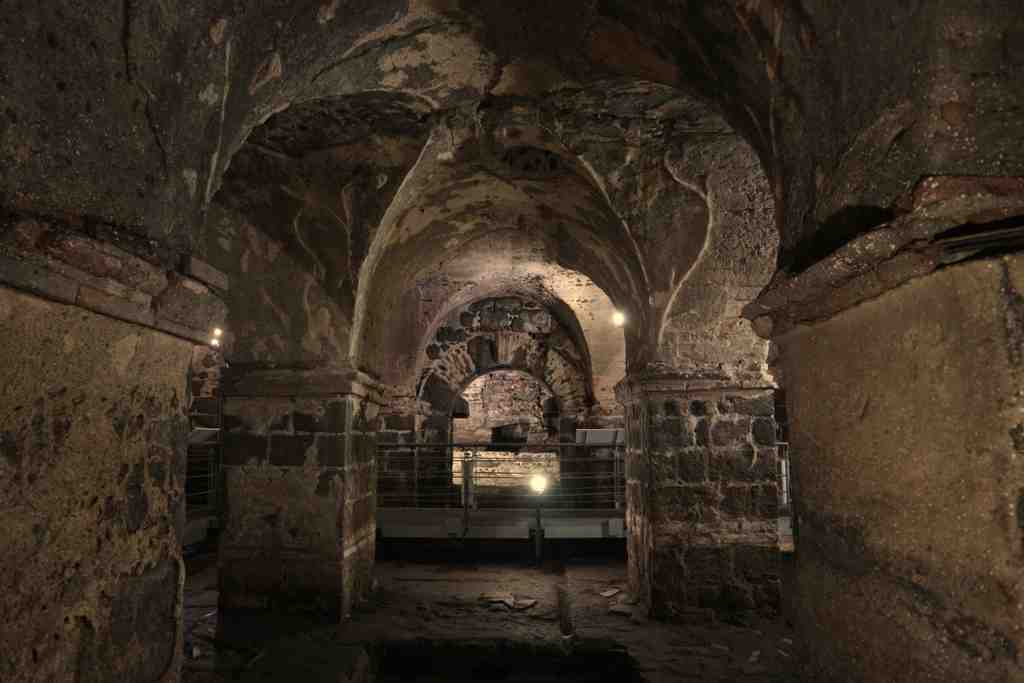
On your left, look for the stone ramp descending beside the cathedral into a narrow barrel-vaulted passage, a curved tunnel cut beneath the great church above.
This is one of Catania’s most startling truths made physical: Roman baths below, cathedral above. The Achillian Baths date from roughly the fourth or fifth century, though some scholars suspect parts may be even older, perhaps from the third. What survives is only a fragment, tucked under Piazza del Duomo, but even that fragment changes how you read this square. The Christian city did not clear the Roman one away; it settled over it, claimed its ground, and gave old prestige a new sacred purpose. That happened all across the Mediterranean, but here the layering is almost indecently direct.
In the year ten eighty-eight, Bishop Ansgerio chose this very area for Catania’s cathedral and monastery. By ten ninety-four, the cathedral stood here, quite literally occupying the old thermal enclosure. Sacred meaning rose on top of imperial infrastructure. The result is not neat replacement, but coexistence.
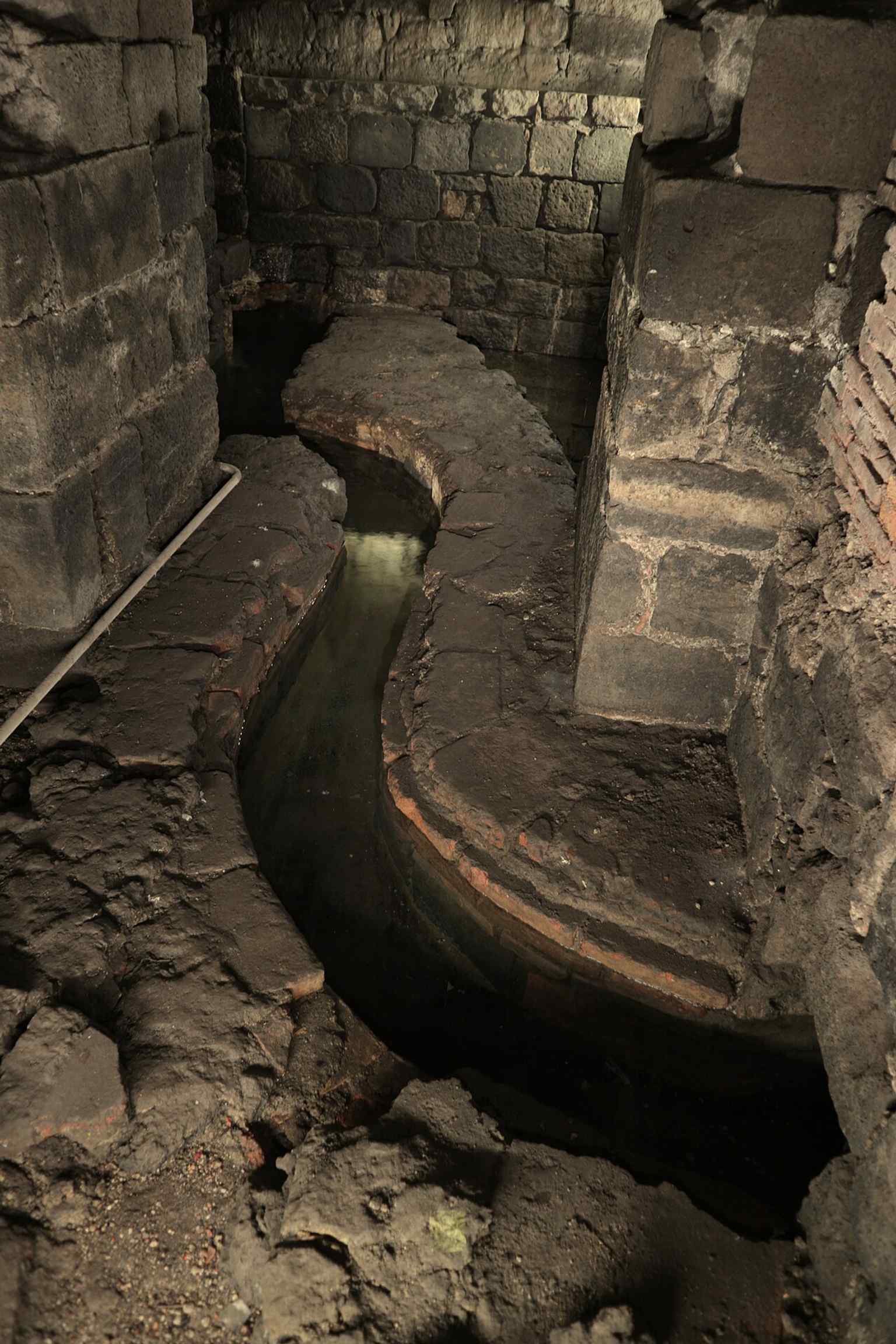
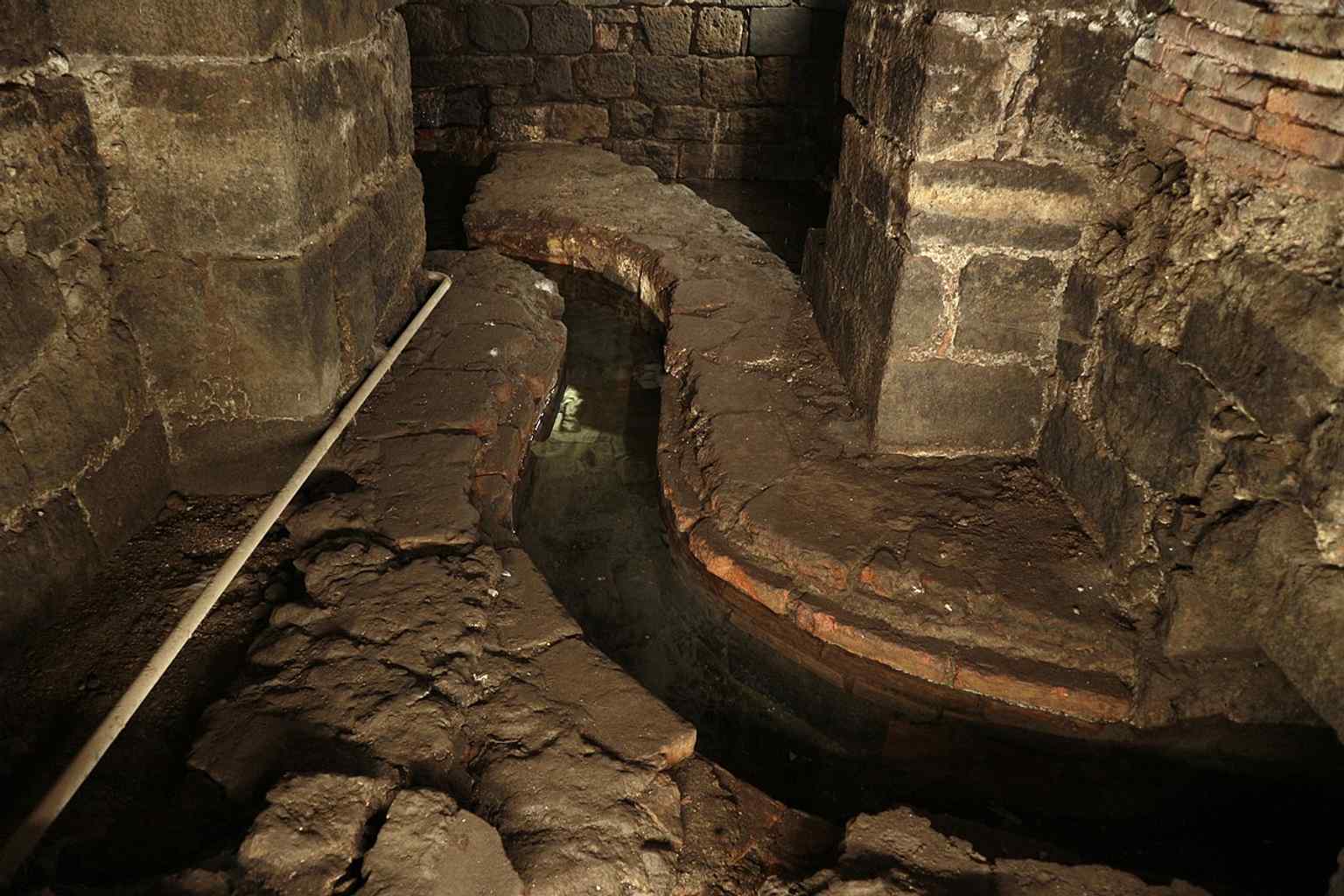
In the image on your screen, you can see the access corridor: a long, dim barrel vault threading between the cathedral foundations and the baths. It leads to the best-preserved chamber, probably a frigidarium, the cold room, where a cross-vaulted ceiling rests on four square pillars. At the centre sits a small square basin, once faced with marble. Roman engineers fed and filtered water through parallel basins and channels, including an elegant S-shaped conduit uncovered in deeper excavation. Another room, the tepidarium, the warm room, used air channels for heat and even had a double-flight staircase rising to an upper level.
Most visitors never hear the old local version of the name. Scholars trace “Achillian” to a Greek inscription on a great marble slab, now in the civic museum at Castello Ursino, pieced together from fragments found over centuries. But older Catanesi preferred a livelier tale: they said the baths were named because a colossal statue of Achilles had been discovered in the depths and then lost again. One rather likes that. In Catania, myth clings to masonry with admirable stubbornness.
The man who dragged these baths back into view was Ignazio Paternò Castello, Prince of Biscari, who financed and directed the excavations in the eighteenth century. He found the complex buried under almost five metres of mud, lava grit, and wreckage left by the eruption of sixteen sixty-nine and the earthquake of sixteen ninety-three. He pushed on, then stopped in frustration when the tunnels ran under the heavy foundations of the cathedral and the Senate building. Dig further, and he feared he might bring the city above crashing down.
That danger never entirely left. The underground Amenano kept invading the site. After a restoration in nineteen ninety-seven, the water rose so abruptly it drowned the new walkways almost at once. Only the major engineering works completed in two thousand and six, including a massive steel plate beneath the square, finally gave these corridors some peace. If you want a closer look at the surviving masonry and the stubborn world of water management here, the app image is rather telling.
Now lift your gaze back to the open square above: church, palace, authority, ceremony. All of it stands over baths, channels, and buried stone. When you are ready, head toward Elephant Palace, about two minutes away. If you hope to go inside the baths later, opening hours are limited and vary by day, generally in the late morning with a few afternoon openings.