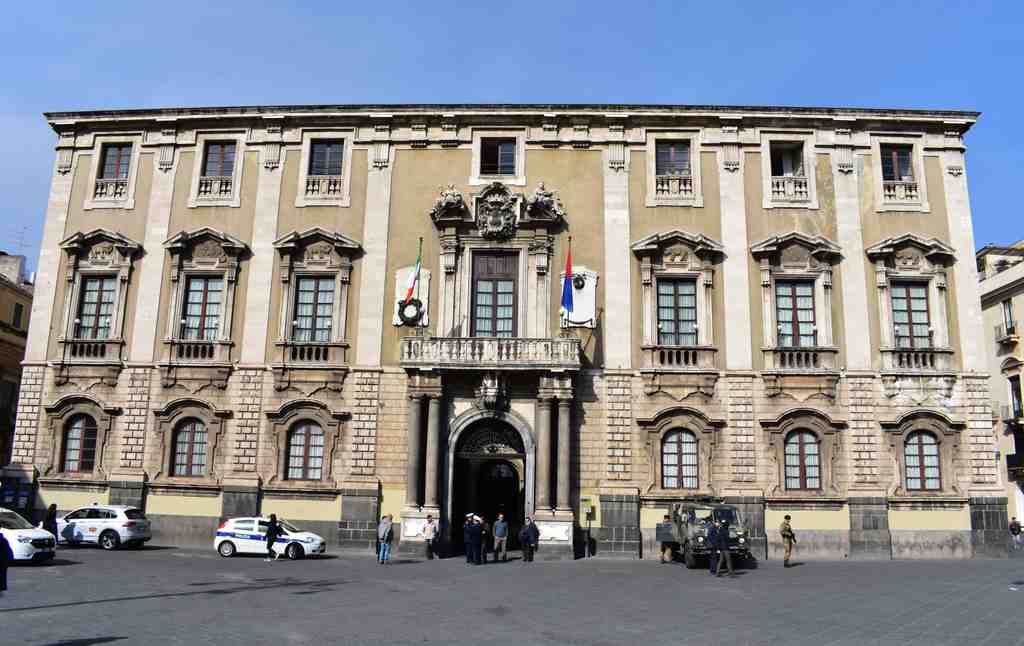
On your right, look for a pale Baroque palace with three storeys, a portal framed by paired granite columns, and a central balcony carrying the city’s coat of arms beneath statues of Justice and Faith.
This is the Palazzo degli Elefanti, Catania’s town hall, and municipal government is rarely modest about where it lives. Churches kept one kind of continuity in this city; the municipality kept another. Catania’s civic power and municipal identity lived here in decrees, ceremonies, records, arguments, and in the stubborn claim that the city could govern itself, even when everything around it lurched into crisis.
Before this palace stood here, the city’s rulers met in an older Aragonese building called the Loggia Senatoria. It mattered enough that the Sicilian parliament gathered there more than once between the thirteenth and sixteenth centuries. Then the earthquake of sixteen ninety-three flattened it. The civic leaders decided not merely to rebuild, but to answer disaster with a new public face.
That ambition quickly turned combative. The city wanted its new seat of power to stand up, visually and politically, to the great Seminary Palace across the square, the stronghold of ecclesiastical authority under Bishop Riggio. So this building became part town hall, part statement of intent.
The trouble, rather predictably, was money. The master builder Giovan Battista Longobardo began the work, but by seventeen oh one the funds had evaporated and construction stopped with the palace barely risen beyond its first level. For decades, civic pride had to wait for cash. Then, in seventeen thirty-two, the young architect Giovanni Battista Vaccarini took charge. He brought a more theatrical Baroque language, shaped by Bernini’s Rome, and he gave the noble floor balconies their distinctive elephant sculptures. That choice, together with the lava-stone Liotru that Vaccarini set in the square, persuaded the people of Catania to drop the old name Palazzo Senatorio and call it the Elephant Palace instead.
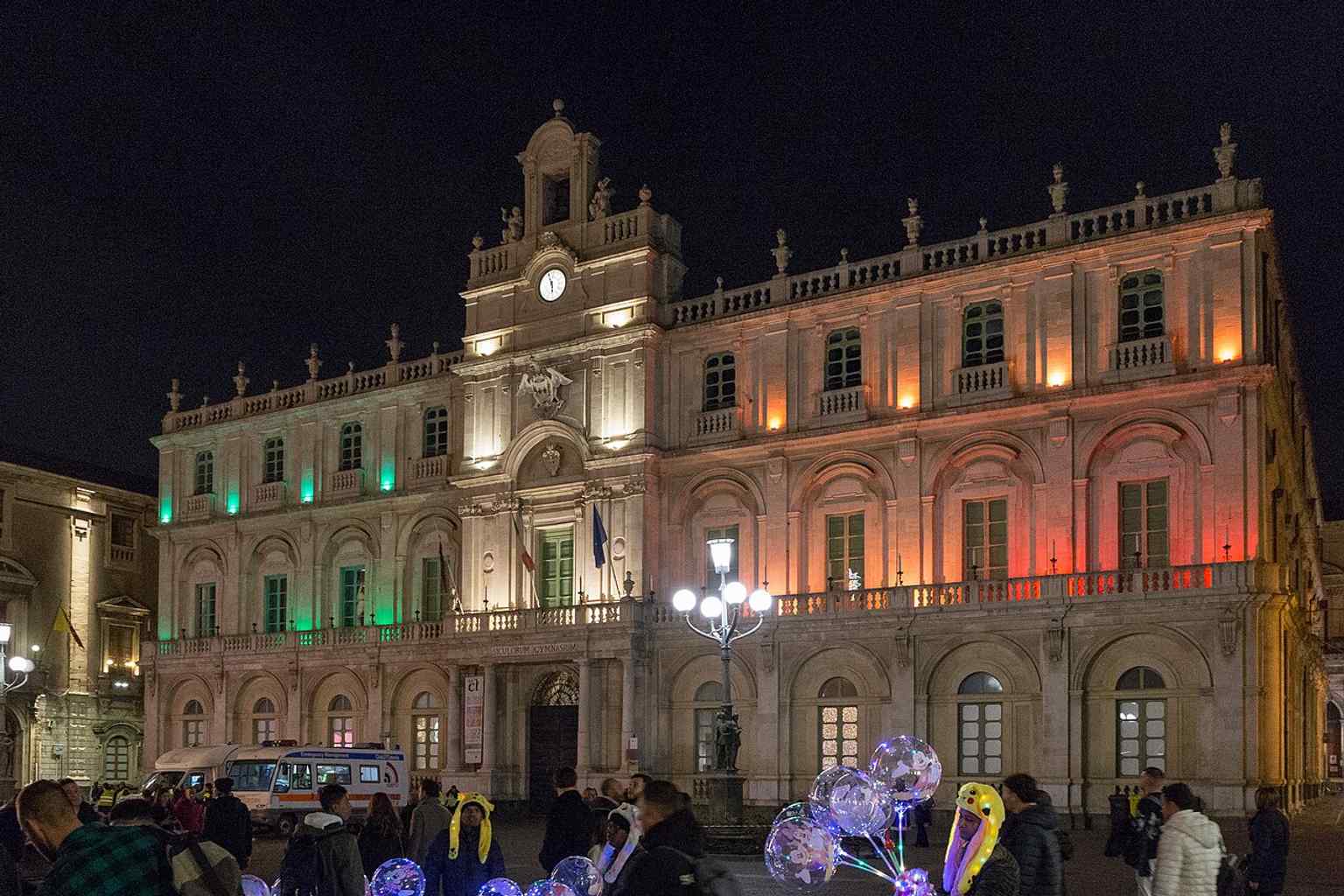
If you open the exterior image in the app, you can read the whole façade more clearly and catch how firmly it faces the square. Notice the stern rusticated lower level - stone blocks cut to look tough and weighty - softened above by pale plaster and white limestone trim.
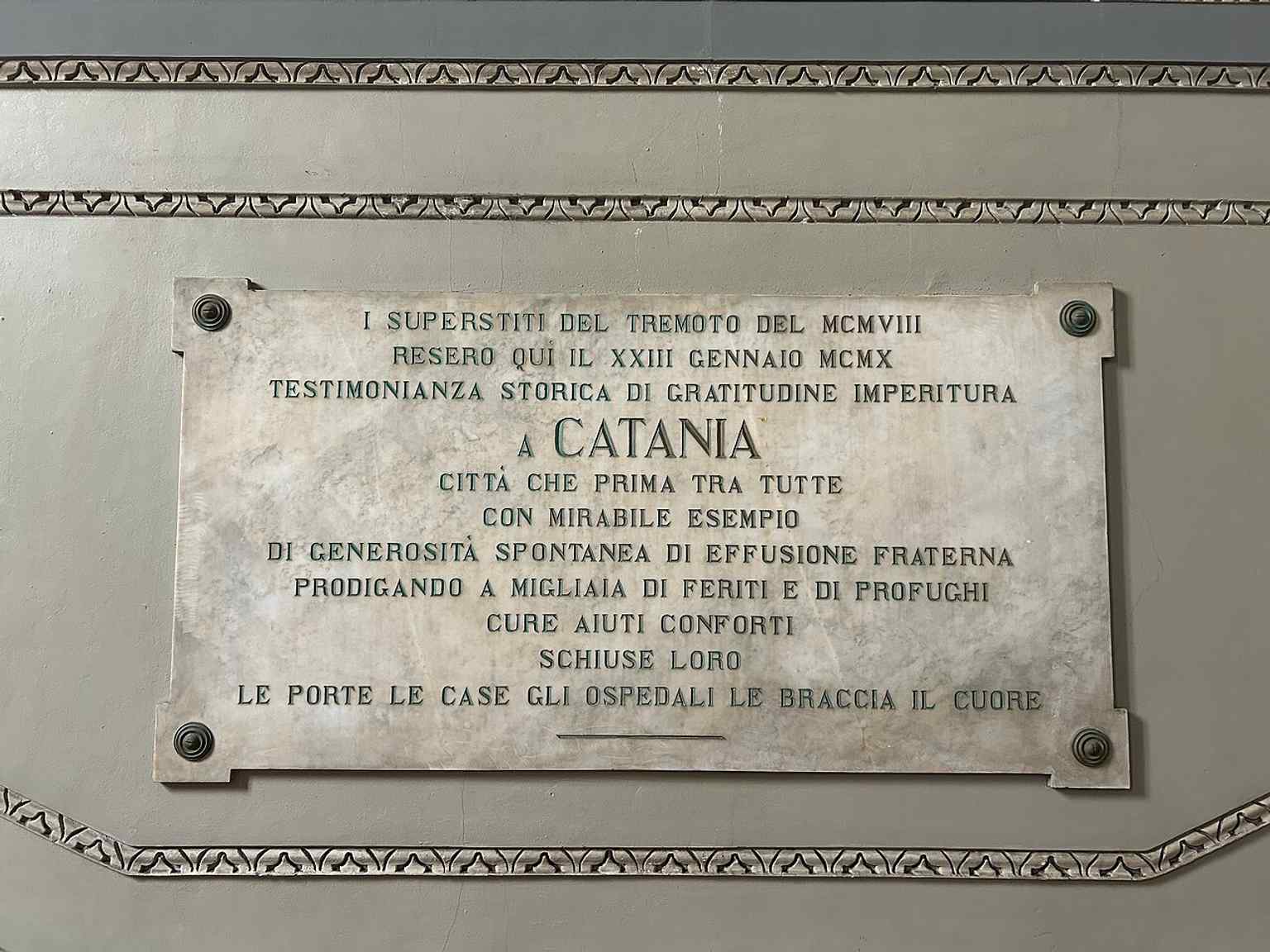
Now for the part most visitors miss. This square looks serenely Baroque, but on the fourteenth of December, nineteen forty-four, a crowd of young anti-conscription protesters stormed this palace and set it on fire. Many were furious at being forced into military service after believing the war was effectively over for Sicily. The blaze destroyed the city archives, centuries of civic memory, and treasures from the Museum of the Risorgimento kept inside. If you glance at the staircase plaque on your screen, you are looking at the sort of object that survives as witness when paper does not.
The interiors were furnished again in their original style, and the palace reopened on the anniversary of the fire in nineteen fifty-two, returning to use as city hall the following year. That, too, tells you something about Catania: public authority here has had to rebuild not only rooms, but trust.
Soon, we leave the council chamber behind and head toward an older civic stage, where a city once tested itself through spectacle rather than votes: the Greek-Roman Theatre, about four minutes away. If you plan to come back later, the palace area is generally open from morning into the evening, with longer hours on Saturdays and Sundays.