
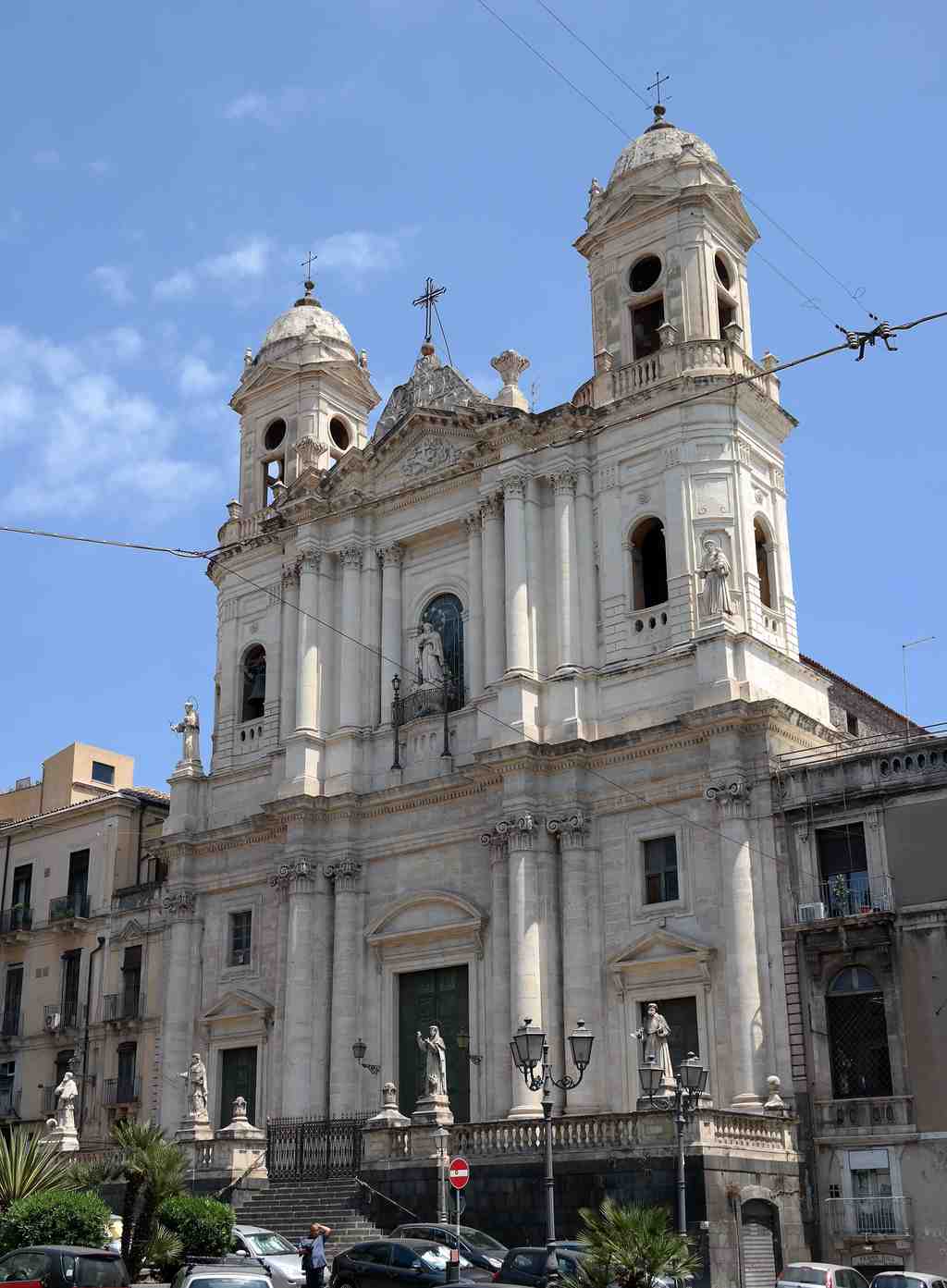
On your right rises a pale limestone façade above a broad dark lava-stone staircase, with three doorways and two square little turrets capped by domes near the top.
This church carries sorrow very quietly. At first glance, it looks like a confident nineteenth-century front: sixteen half-columns, statues along the balustrade, and, above, the signs of Saint Francis carved into the pediment beneath an iron cross. But the ground under it has changed faiths, rulers, and meanings for centuries.
Long before any friar prayed here, this site held a pagan sanctuary linked to Demeter, the goddess of grain and the turning of life and death. So even here, in the middle of Christian Catania, the older sacred map never entirely vanished. One devotion settled over another.
The Franciscans arrived in Catania in the mid-thirteenth century, first near San Michele by Castello Ursino. Then, around twelve sixty, they moved here, where a church called the Speranza, or Hope, already stood. Hope is a rather apt predecessor, because the person who gave this place its defining shape came here not from triumph, but from loss.
Queen Eleonora d’Angiò enters this story in thirteen twenty-nine. Etna threatened the region that year, and she made a vow of thanks to the Virgin after escaping danger. Yet the deeper force behind her gift was grief. She had lost her husband, King Frederick the Third of Sicily, and two of her young children. After that, the queen withdrew from courtly splendour and intrigue and spent her final years in prayer and penitence. Instead of jewels and ceremony, she chose patronage. Instead of a private shrine of mourning, she gave Catania a convent and a church.
That is the turn in the tale: a royal wound became public architecture.
When Eleonora died in August of thirteen forty-one, people carried her body here with solemn honour. Her great marble tomb stood inside for more than three centuries, a monument not only to a queen but to the Aragonese presence in Sicily. In the image in your app, you can see how firmly the church still holds its square. Imagine that same authority once continued inside, where her tomb dominated the space.
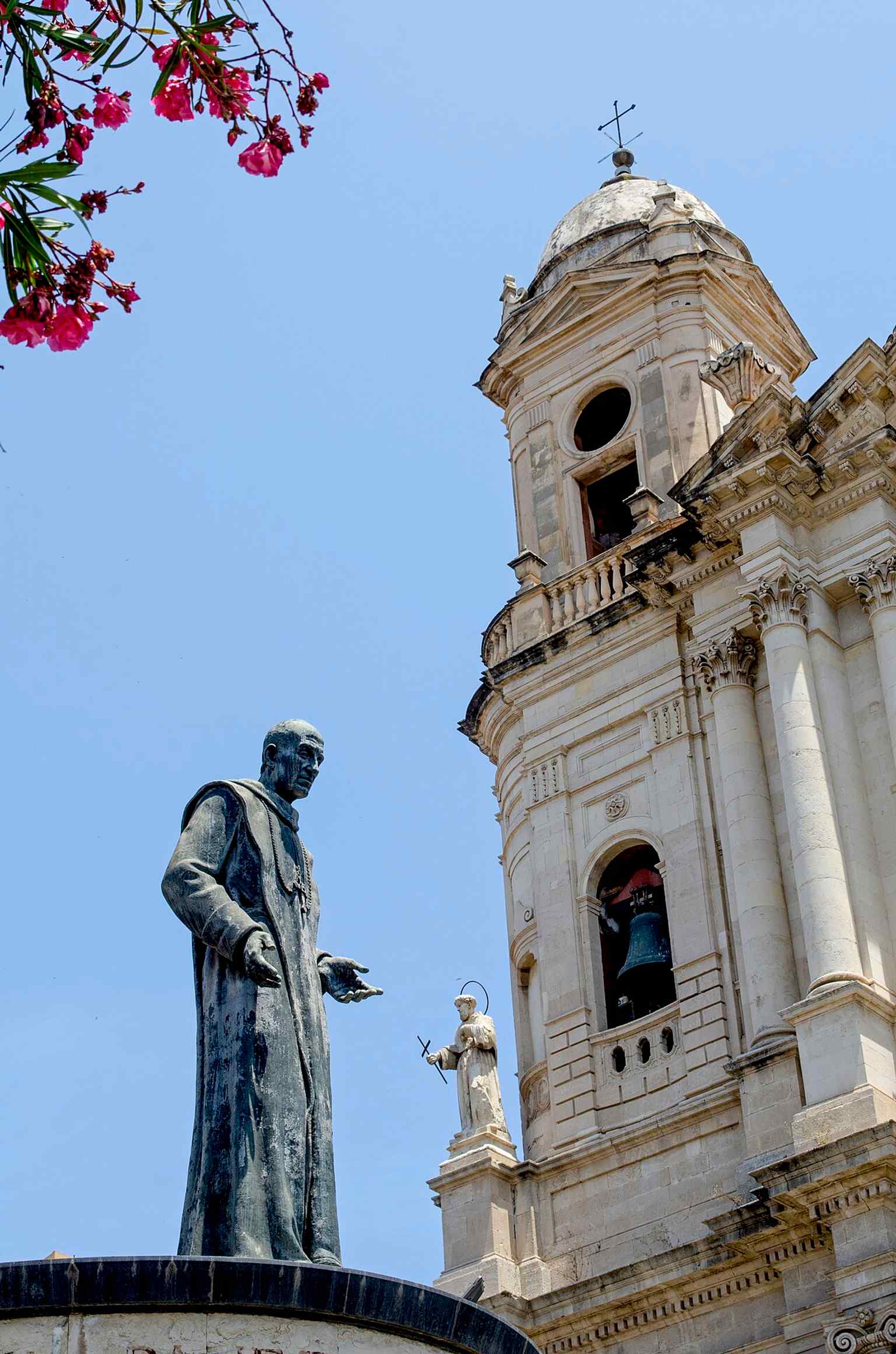
Then came the earthquake of sixteen ninety-three. It did not merely damage the church. The roofs crashed down onto Eleonora’s tomb and smashed the marble monument to pieces. Only a fragment of the front slab survives. Local legend says the friars hid her true remains within the rebuilt walls, as if the city could not bear to lose her twice.
What you see now rose from that ruin in late Baroque form, not as a fresh beginning, but as a careful act of recovery. Later, in the seventeenth century, the city senate even named the Immaculate a co-patron alongside Saint Agatha, binding Catania’s civic identity to this Franciscan church. Personal grief had widened into shared devotion.
In a moment, we’ll head to our next stop, where faith becomes almost theatrical in stone and space. Our next stop is the Church of San Giuliano, about three minutes away.





