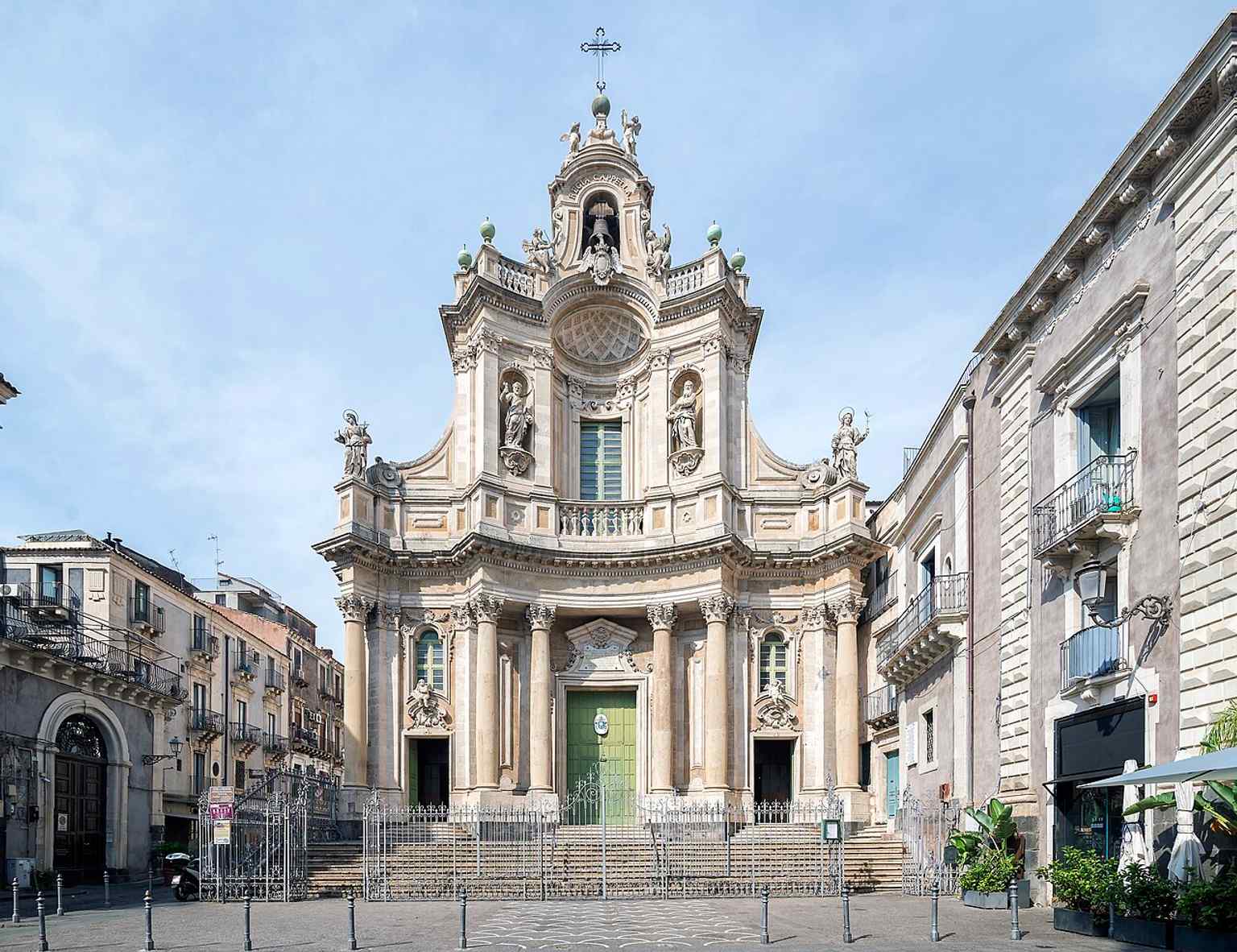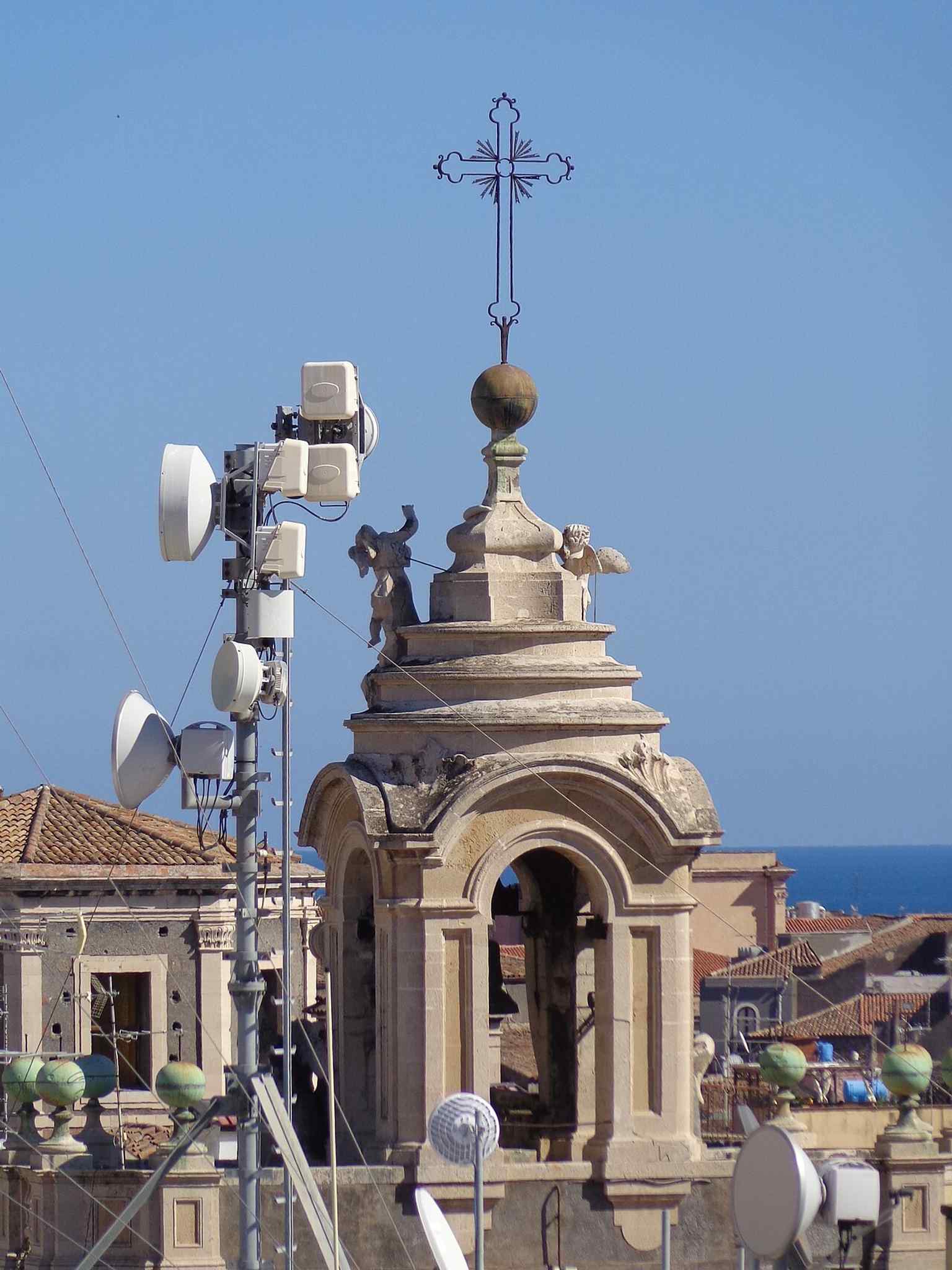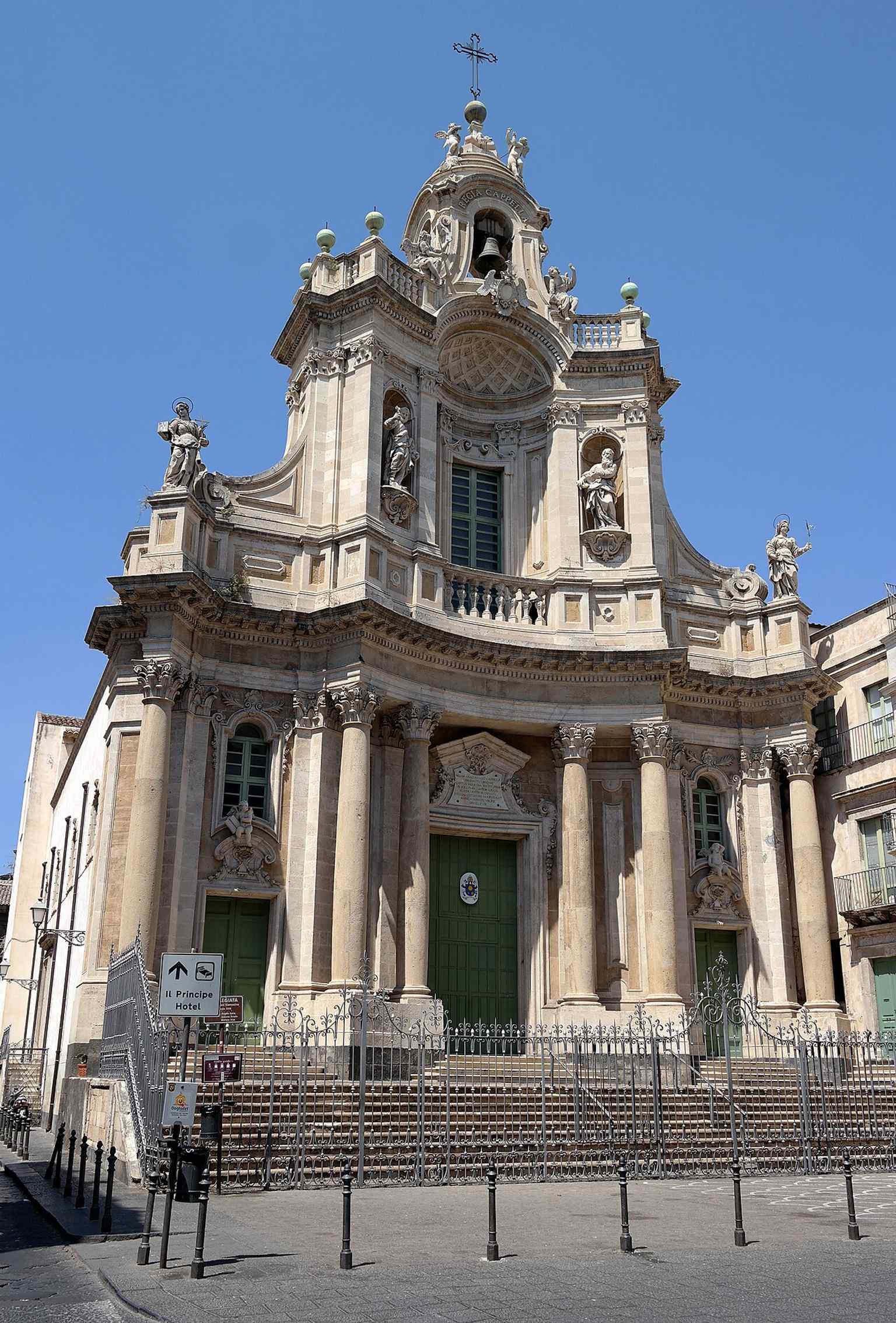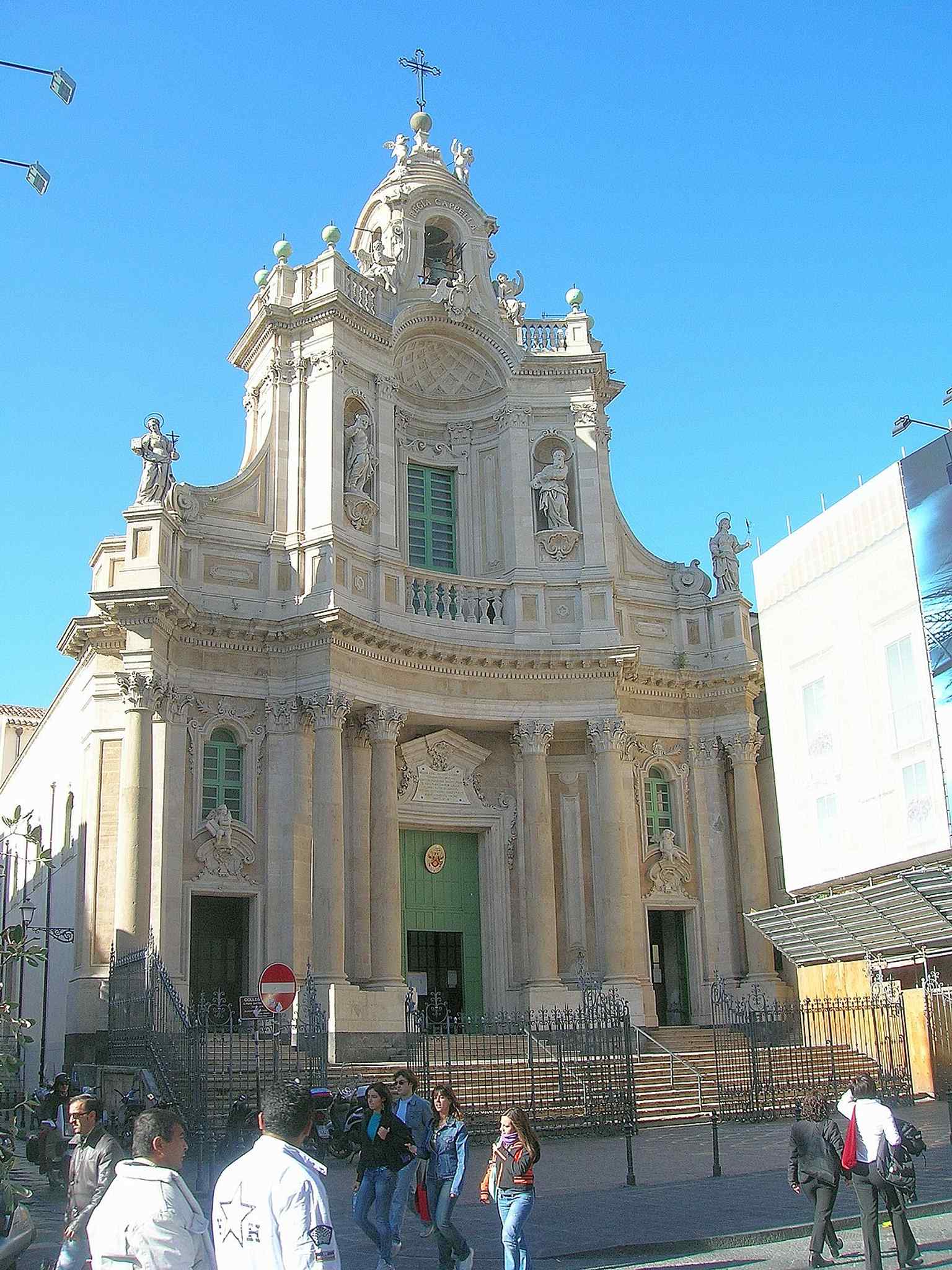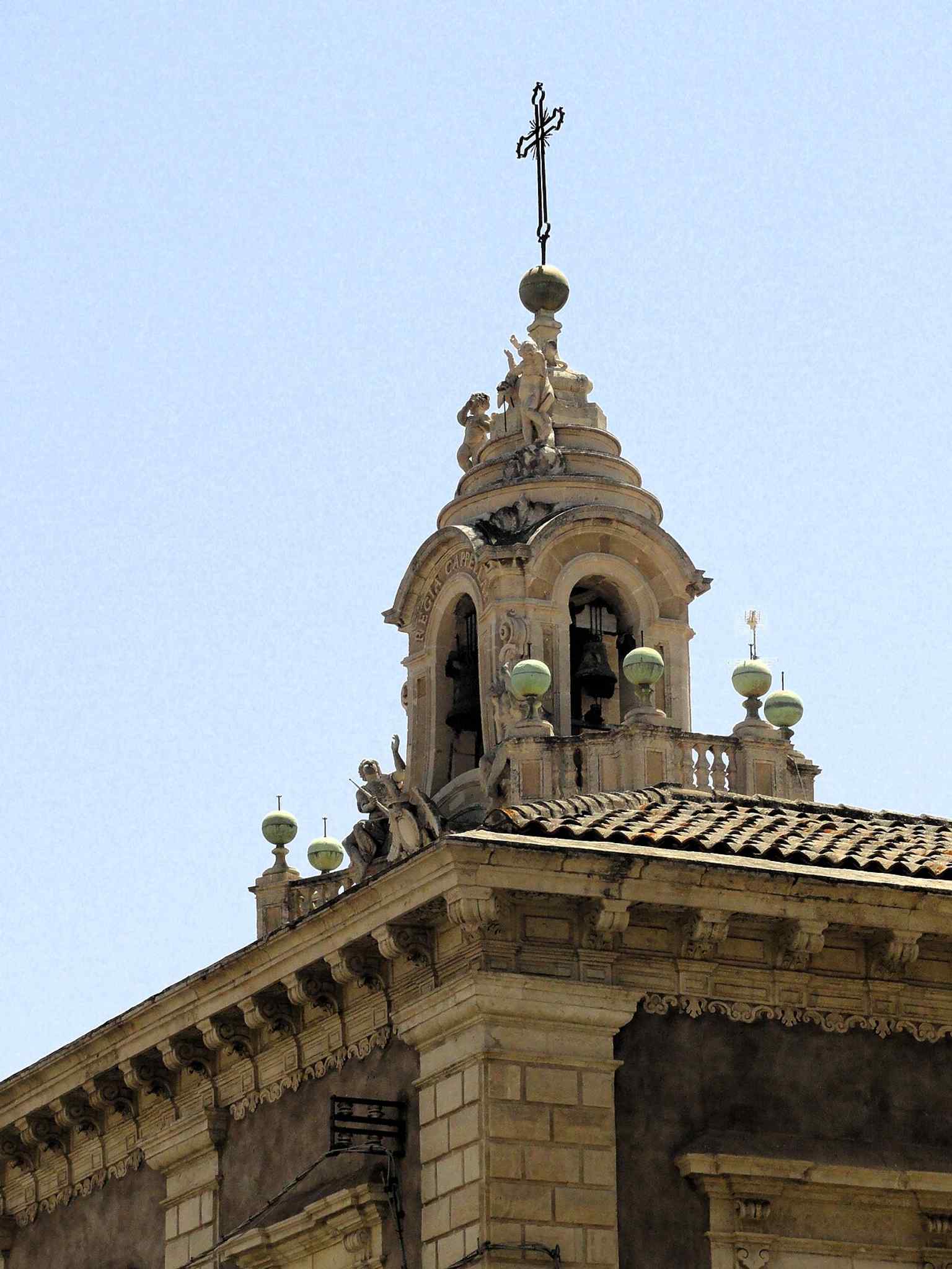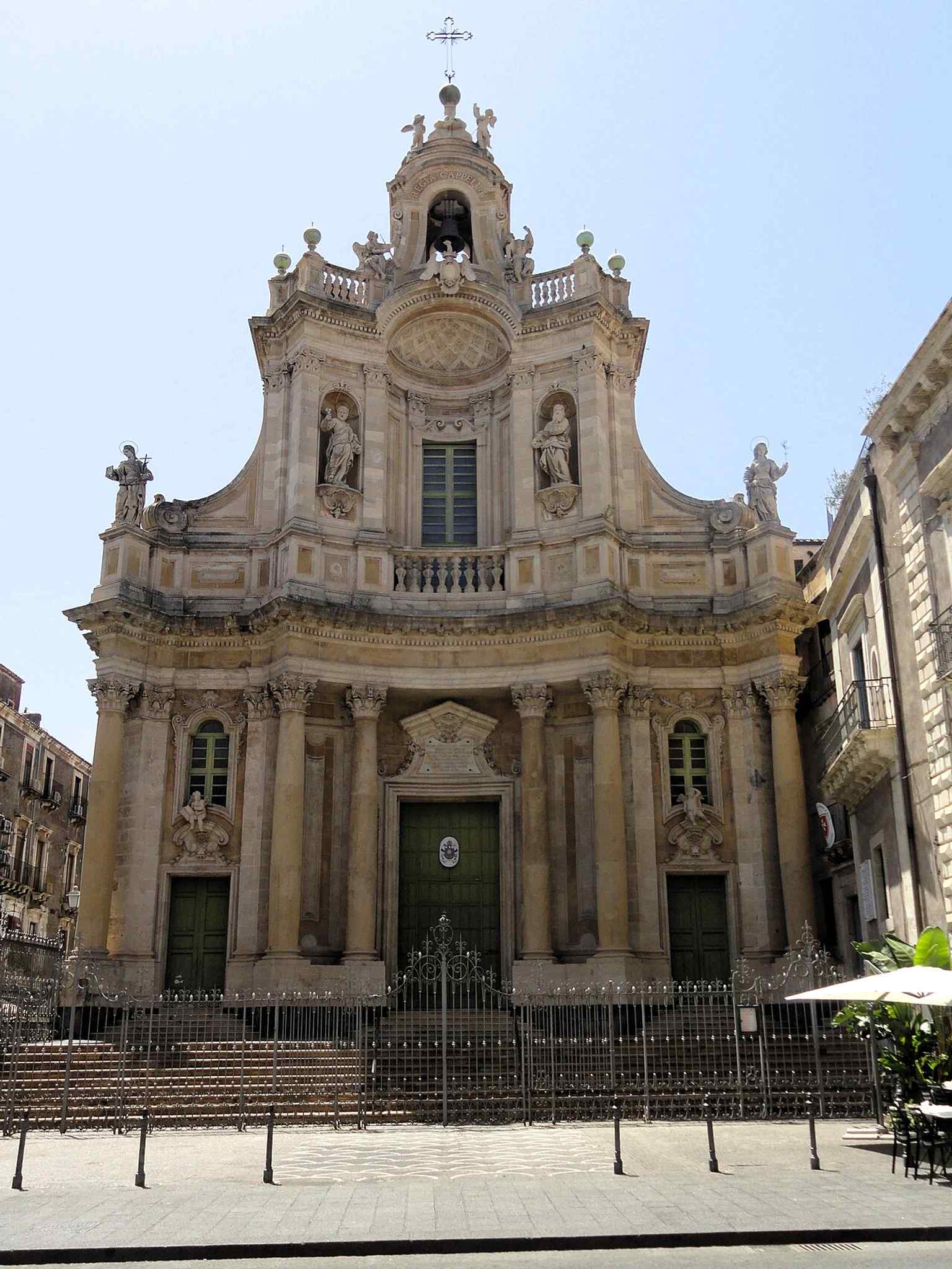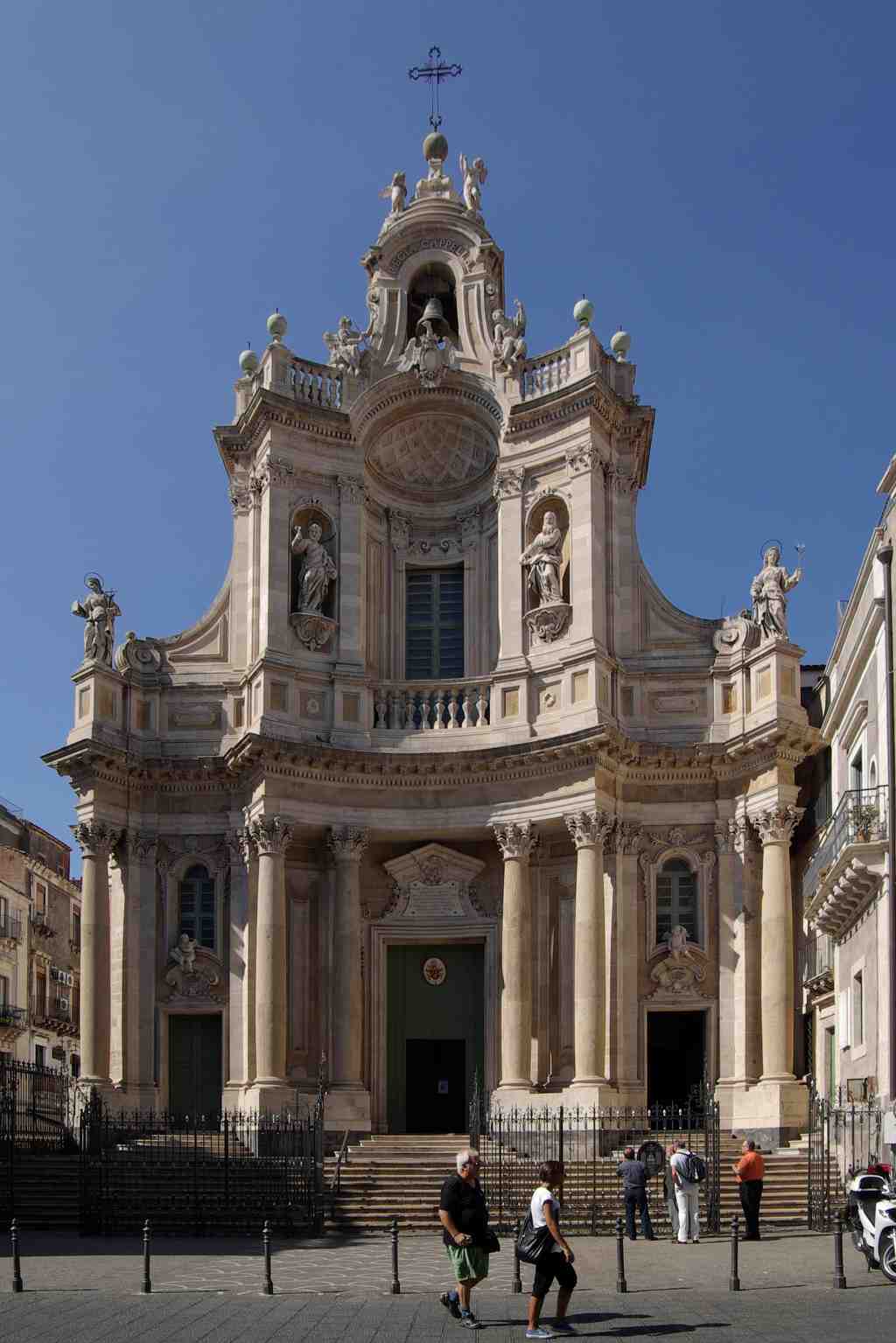
On your left, look for a pale limestone façade with flowing curved tiers, a broad staircase, and a small central bell crown topped by an iron cross.
This basilica carries one of Catania’s gentlest stories. Before it became this late-Baroque showpiece, this ground had already lived several lives, each one leaving a different religious memory behind.
Its title, dell’Elemosina, sounds as though it belongs to alms or charity, but it actually reaches back to a Byzantine image of the Madonna Eleùsa, meaning the Merciful Virgin. In fourteen eighty-two, Albanian refugees fleeing the Ottoman advance from Scutari brought that icon into Sicily. The old legend says they camped at a place called Callicari, near Catania, and hung the image on a fig tree for the night. By morning, the branches had grown around it so tightly that no one could free it. The refugees read that not as an obstacle, but as a decision. The Madonna, they believed, had chosen to remain on this island.
The original icon stayed in the place of the miracle and helped give rise to Biancavilla, where it became a patron image. But this church adopted the same title and placed a faithful copy on its high altar. That matters in a city like Catania. Here, belonging is not always secured by papers or boundaries. Sometimes it survives because a community keeps telling one story, carrying one image, repeating one act of devotion.
Then came the Val di Noto earthquake of sixteen ninety-three, the catastrophe that shattered much of south-eastern Sicily. Here in Catania it levelled this church, along with much of the city, and forced people to rebuild not only walls but the very order of streets. The new plan widened the main routes and drew them straighter, so the rebuilt church turned to face the city’s great spine, Via Etnea, instead of keeping its old orientation.
In the image on your screen, you can see how Stefano Ittar later gave that new front a remarkable sense of movement, almost like a giant pipe organ worked into stone. Above, an inscription still remembers the church’s older dignity as the Regia Cappella, the Royal Chapel of the kings of Sicily.
And yet rebuilding here did not proceed nobly and smoothly. Don Michelangelo Paternò Castello, Baron of Sigona, fought the new campanile, the bell tower, with extraordinary persistence. He claimed the bells would disturb the peace of his household. He sued, appealed, and kept appealing, until work on the church was suspended and an order even arrived from Rome to demolish the entire fabric. Only after the baron died in seventeen sixty-nine did the crisis loosen its grip, allowing Ittar to complete the façade before you.
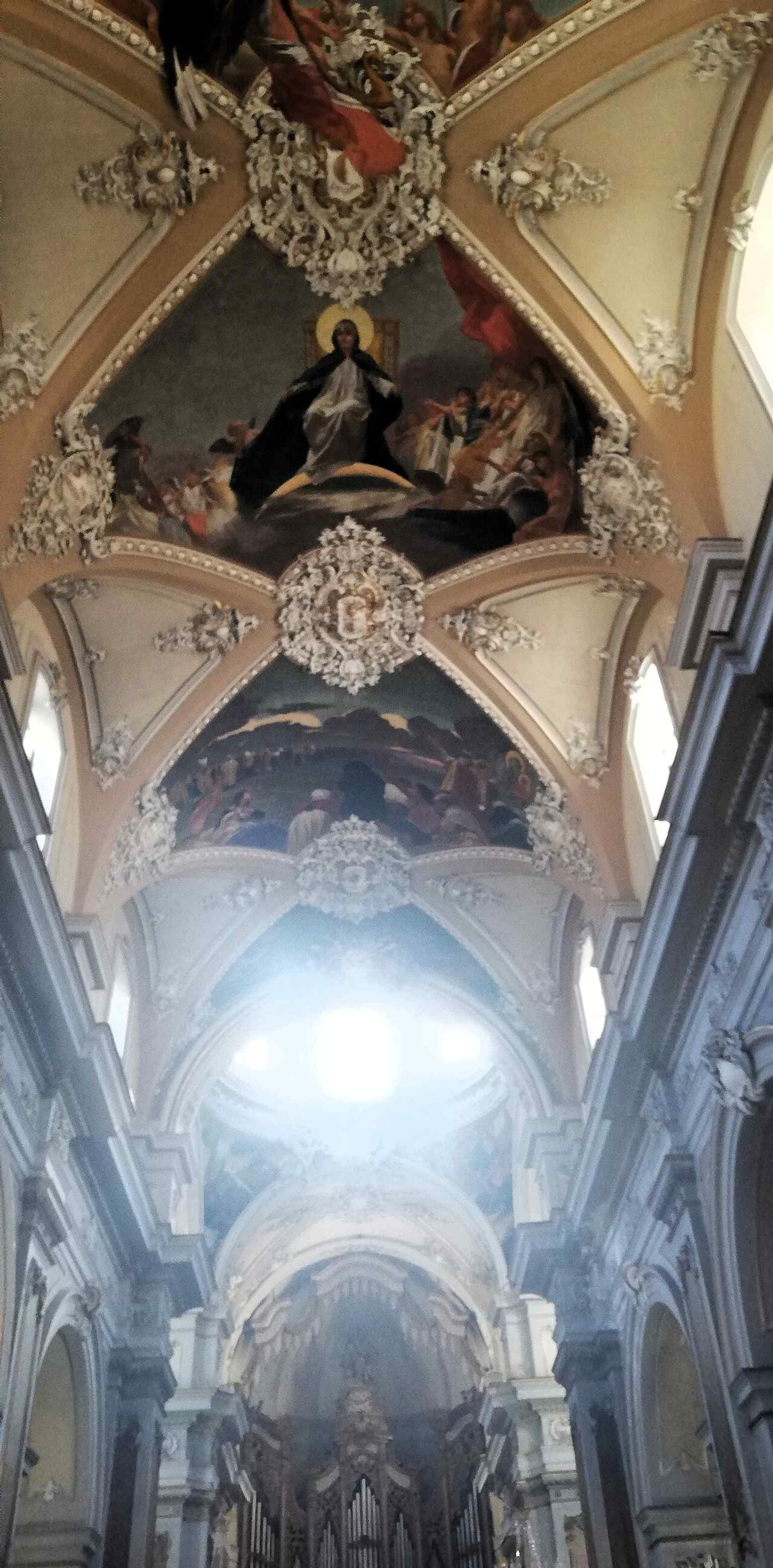
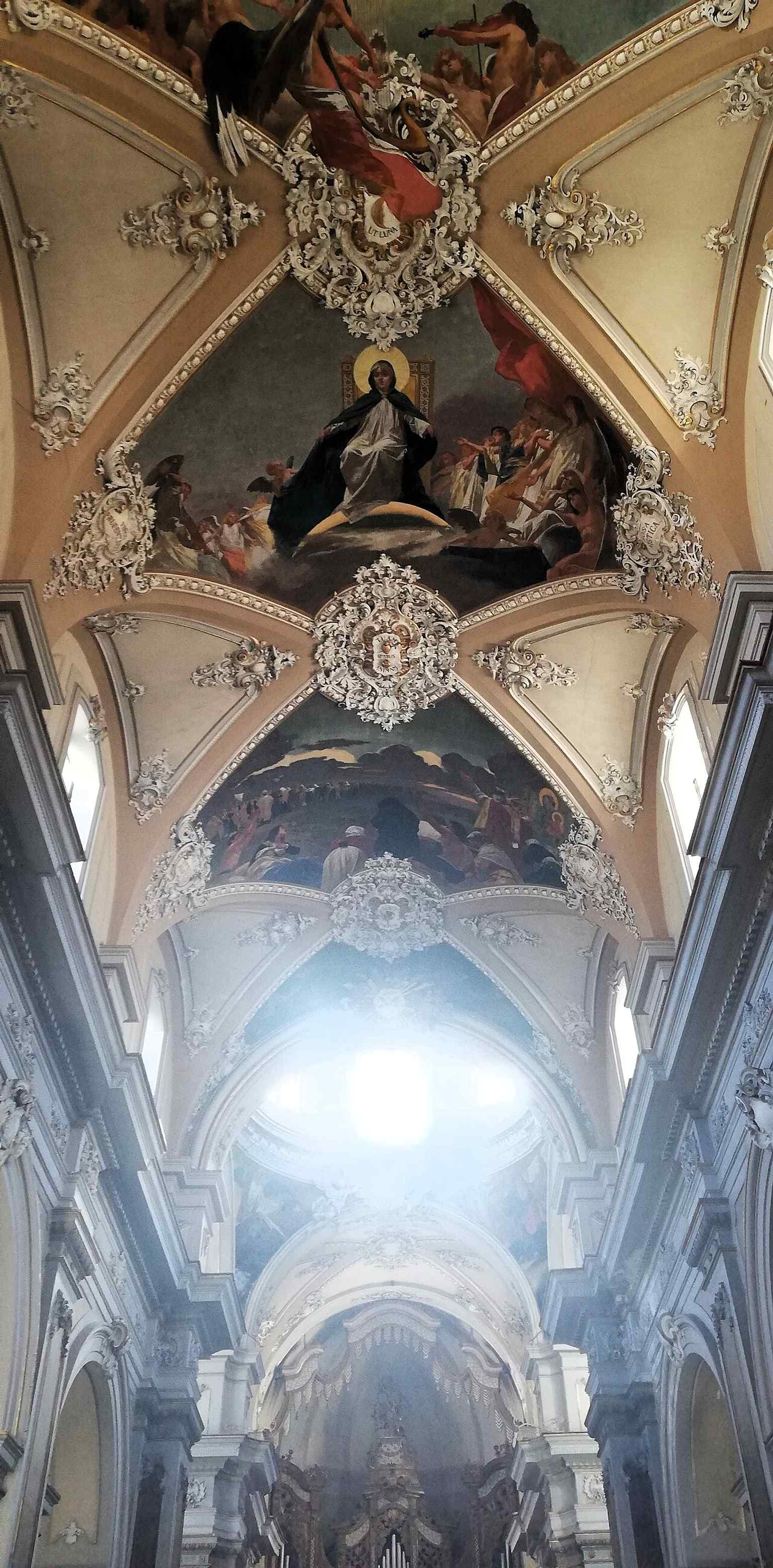
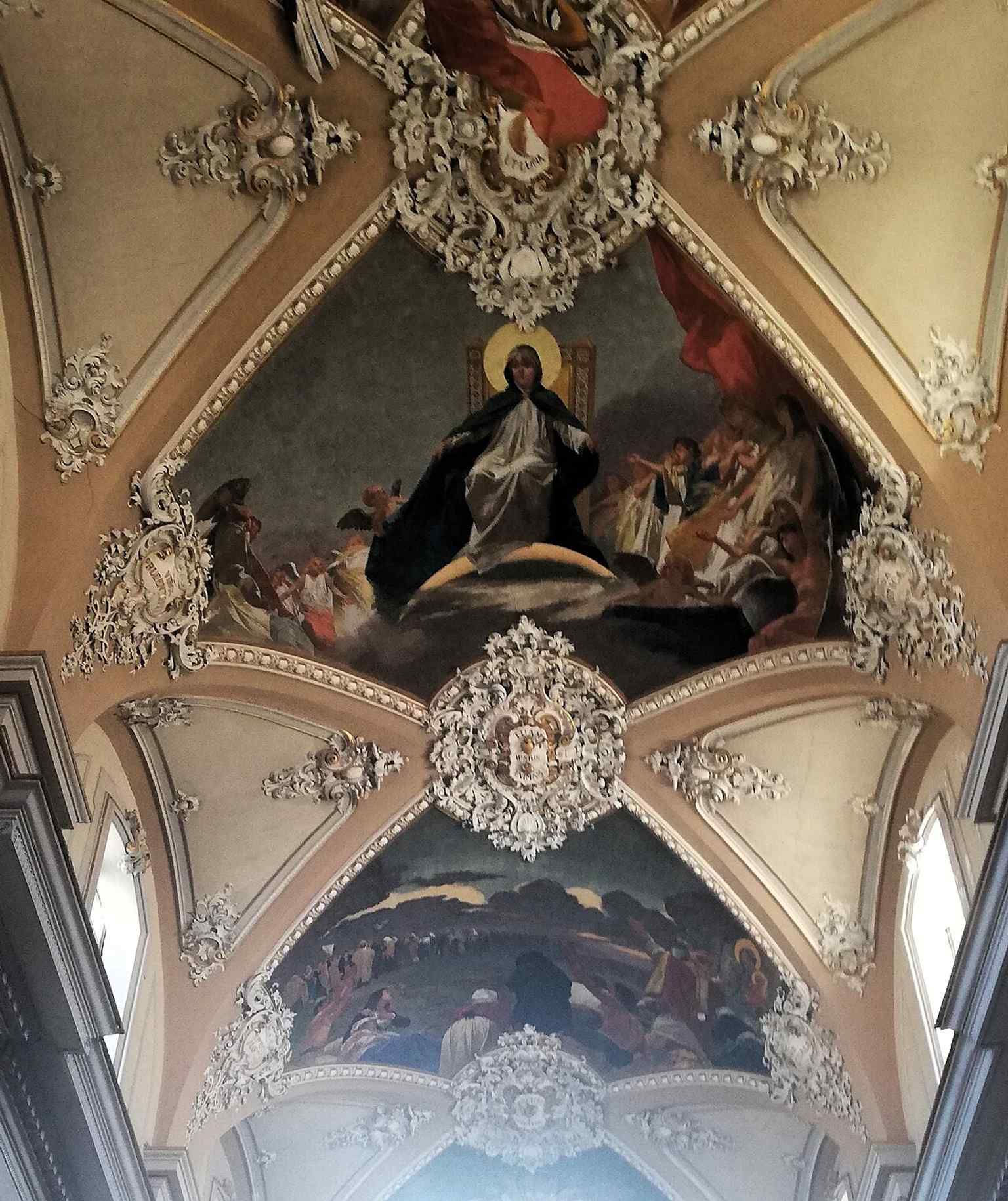
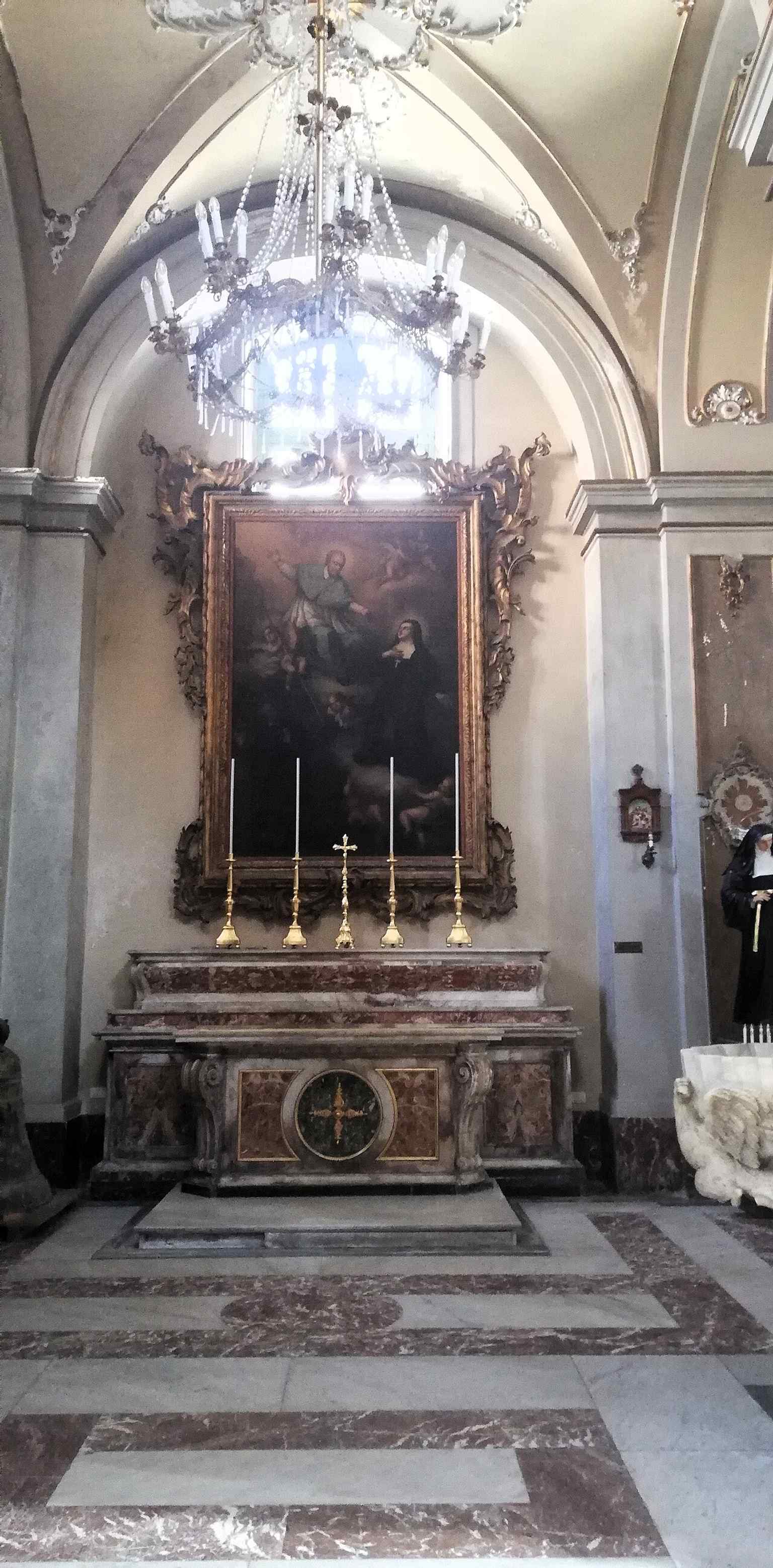
If you open the interior view on your phone, the long central hall leads your eye toward the high altar, where the copied icon of the Madonna dell’Elemosina still gives the whole building its heart.
And notice this quiet hint of what comes next: Sant’Agata stands on the façade too. If one image of the Virgin could anchor a scattered people, one saint could anchor an entire city. We’ll meet her properly at the cathedral, only a short walk from here.
If you want to return for the interior, the basilica is usually open Tuesday to Sunday from nine to noon and from four to eight, and it stays closed on Monday.