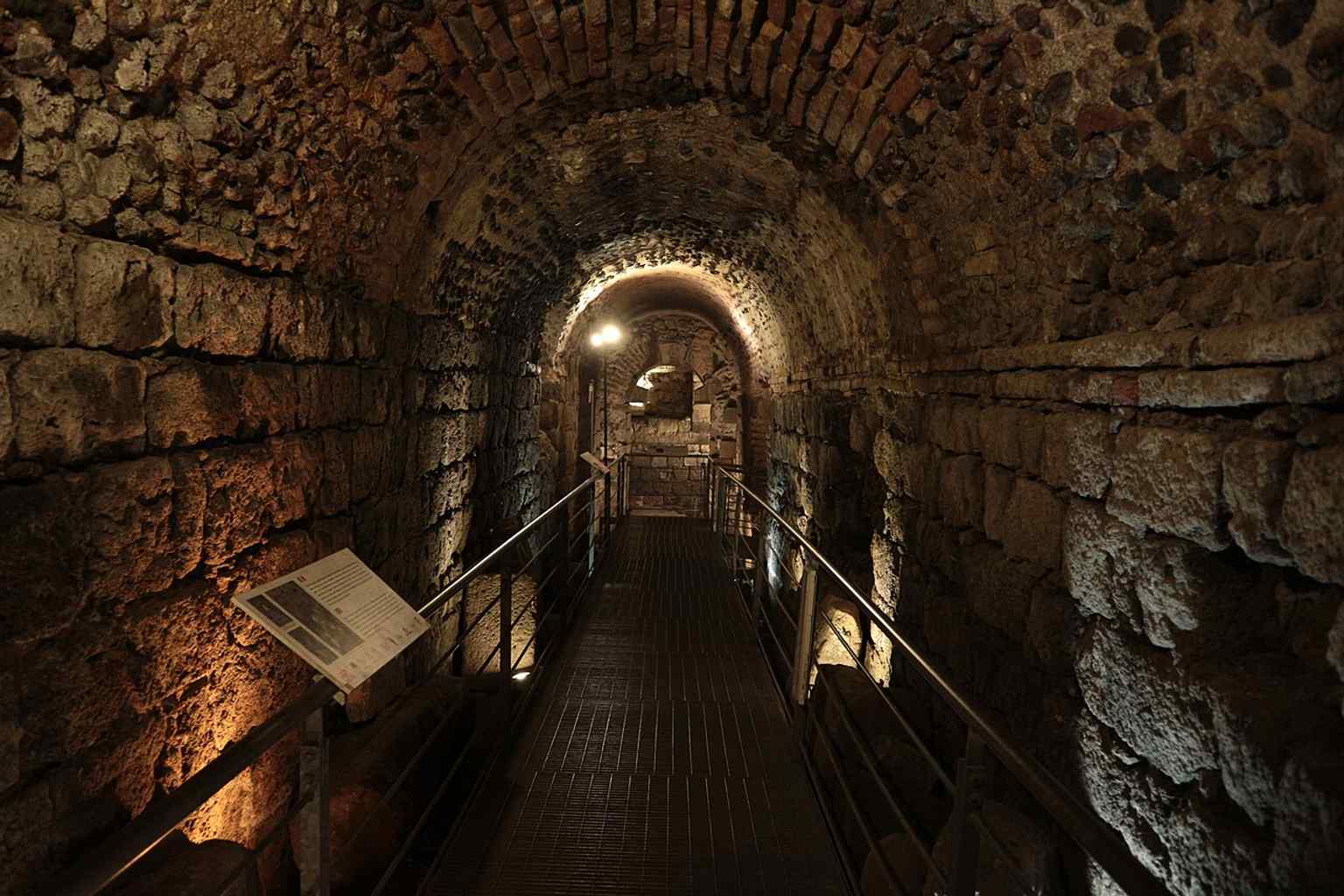
Look to your left for the descending stone ramp and the narrow arched entry that slips below Piazza del Duomo into the underground baths.
This is one of Catania’s most secretive places: a Roman bath complex, mostly hidden below the square, with the surviving section dating from about the fourth or fifth century after Christ, and perhaps even earlier. What people visit today is only a small fragment of something much larger, a place that once stretched under much of this part of the city.
Its name, Achillian Baths, comes from a Greek inscription carved on a long slab of pale Lunense marble. The inscription survives in fragments and now rests at Castello Ursino. But Catania loved a better story: locals once said the baths took their name from a gigantic lost statue of Achilles found in the depths below. It is the kind of legend a city keeps because it feels too good to let go.
The baths changed over time. Scholars believe officials resized the complex around the year four hundred thirty-four to save wood for the heating system under the floors. Then, in the year ten eighty-eight, Bishop Ansgerio chose this very area for the cathedral and monastery. The sacred city rose above the Roman one.
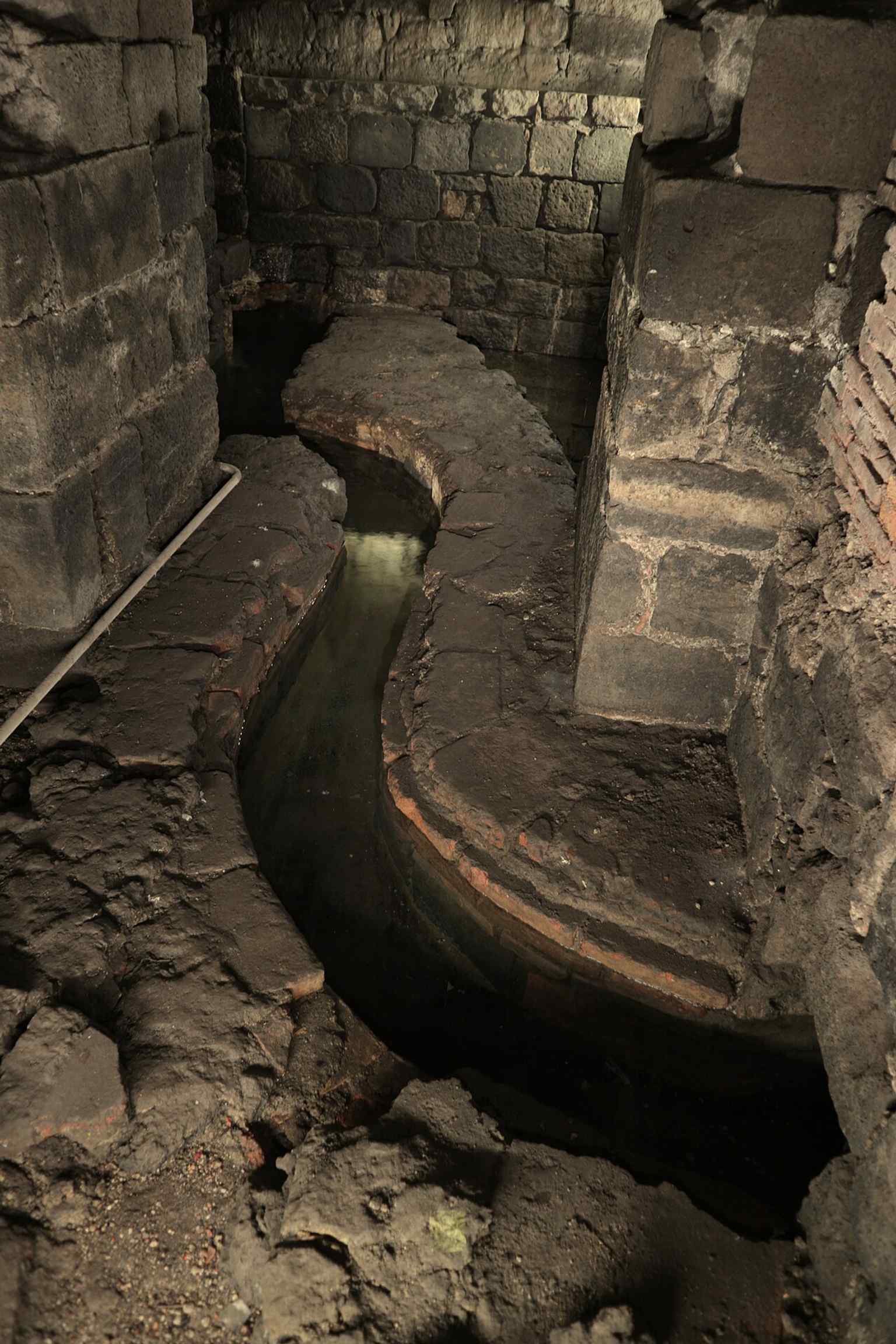
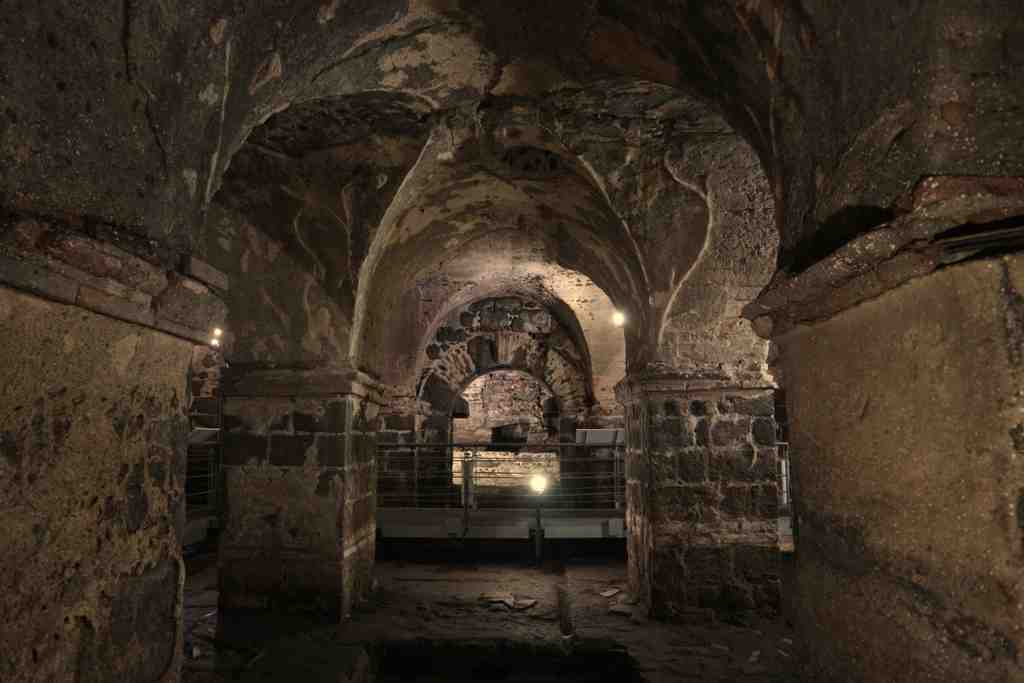
What lies down there is hauntingly elegant. If you glance at your screen, you can see the surviving chamber: a cold room, or frigidarium, with a vaulted ceiling carried by four square pillars. A long corridor leads in, and beyond it runs a careful system of basins, channels, and filters that managed the water. There was even an S-shaped channel feeding the complex. On another image, you can see part of that waterwork more clearly.
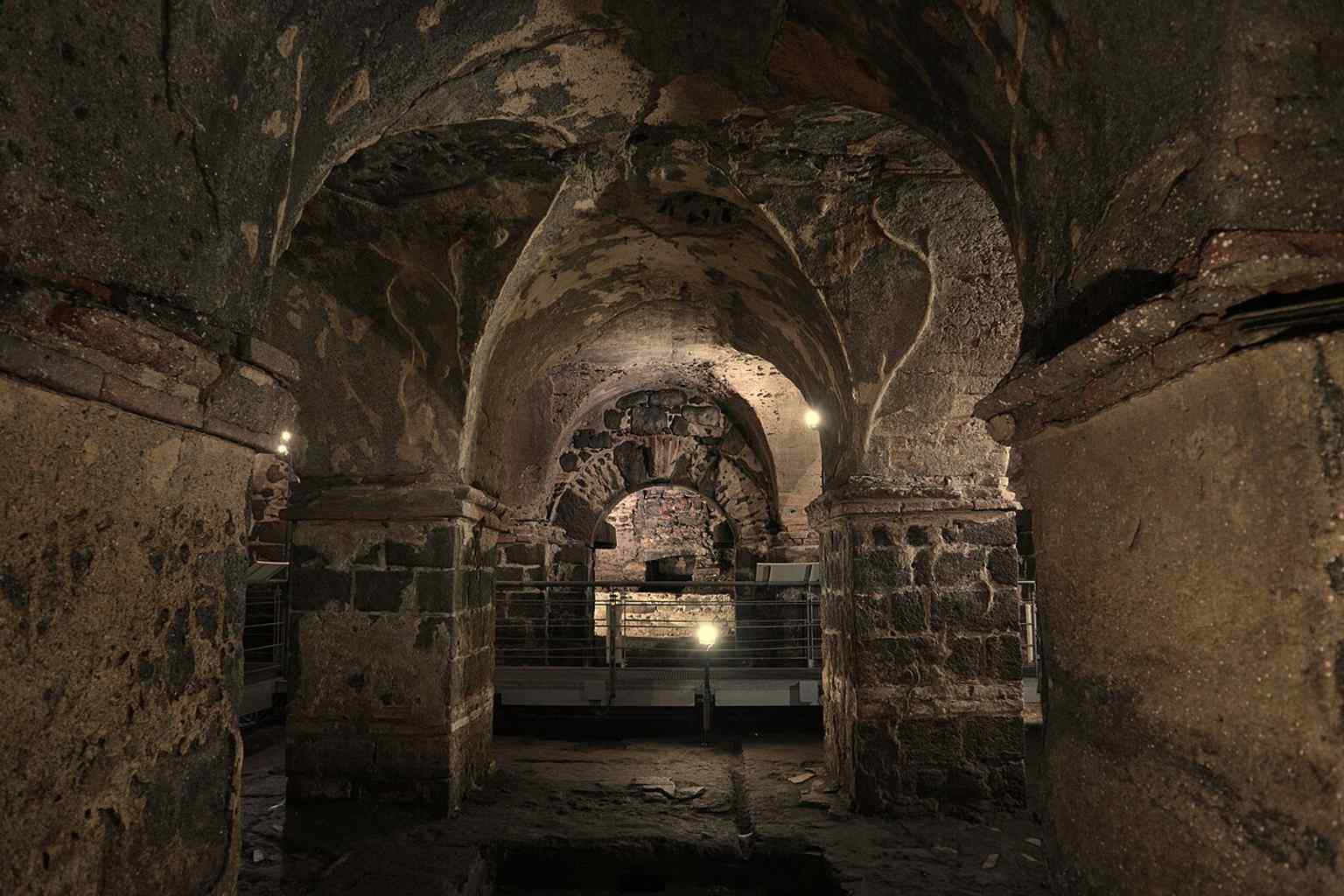
Once, the floors shone with marble cut into patterned pieces, and the ceiling carried painted stucco with little cupids, vines, and grapes. In the eighteenth century, the French artist Jean Houël entered by torchlight, felt the strange beauty of the place, and convinced himself he had found a temple of Bacchus instead of baths.
The baths nearly vanished for good. Earthquakes buried them deeper, and after the eruption of sixteen sixty-nine and the earthquake of sixteen ninety-three, Prince Biscari dug through almost five meters of mud, lava fragments, and rubble to find them again. He had to stop when the tunnels ran too close beneath the cathedral and the old Senate building. Then the underground Amenano River caused fresh trouble: after a restoration in nineteen ninety-seven, the water suddenly rose and swallowed the walkways. Only after a huge steel plate reinforced the piazza in two thousand and six did the site finally find some peace.
If you hope to go inside later, the baths usually open in short morning hours, with Tuesday and Thursday also reopening in mid-afternoon.
Here, Catania feels layered like memory itself. When you’re ready, continue on to Elephant Palace.