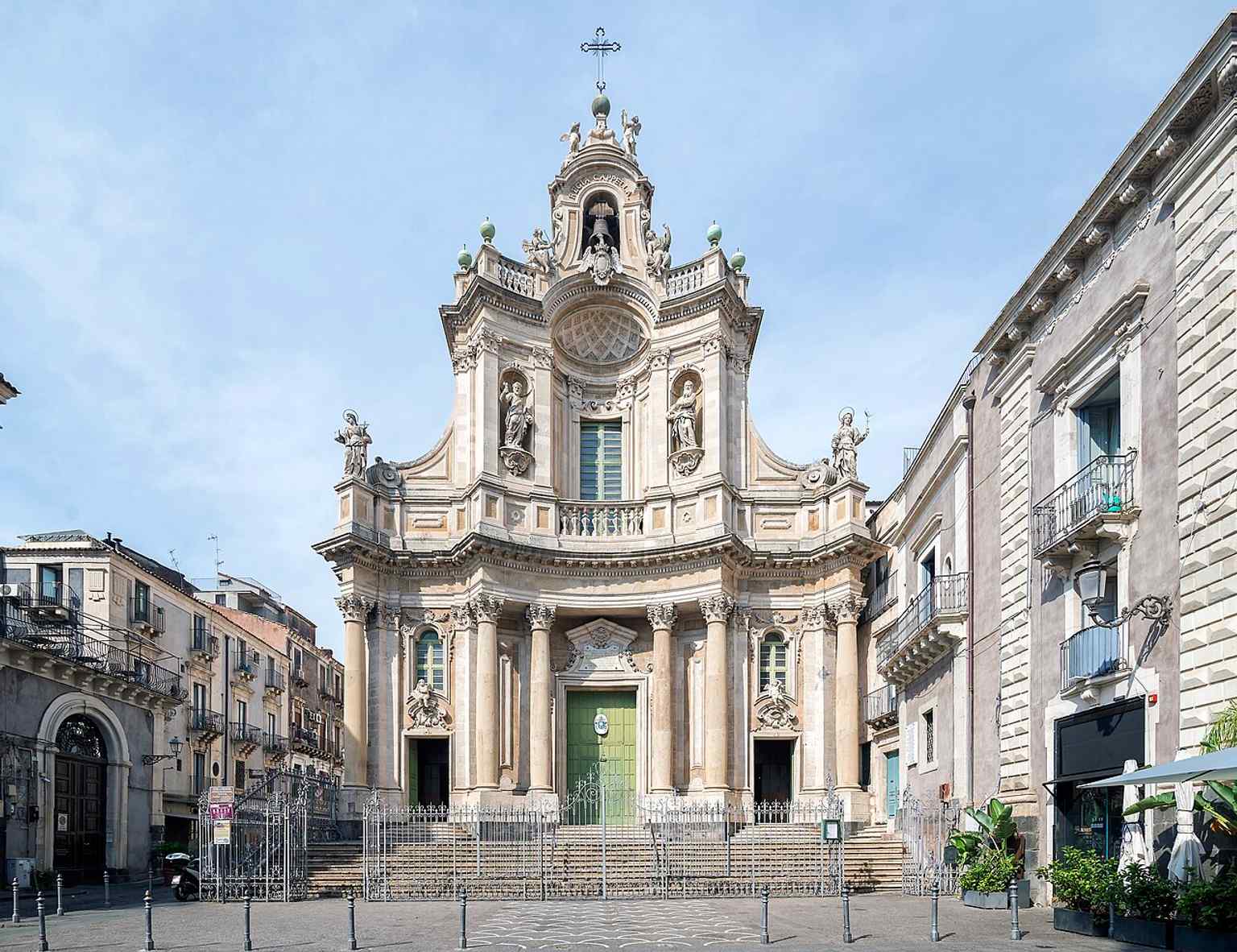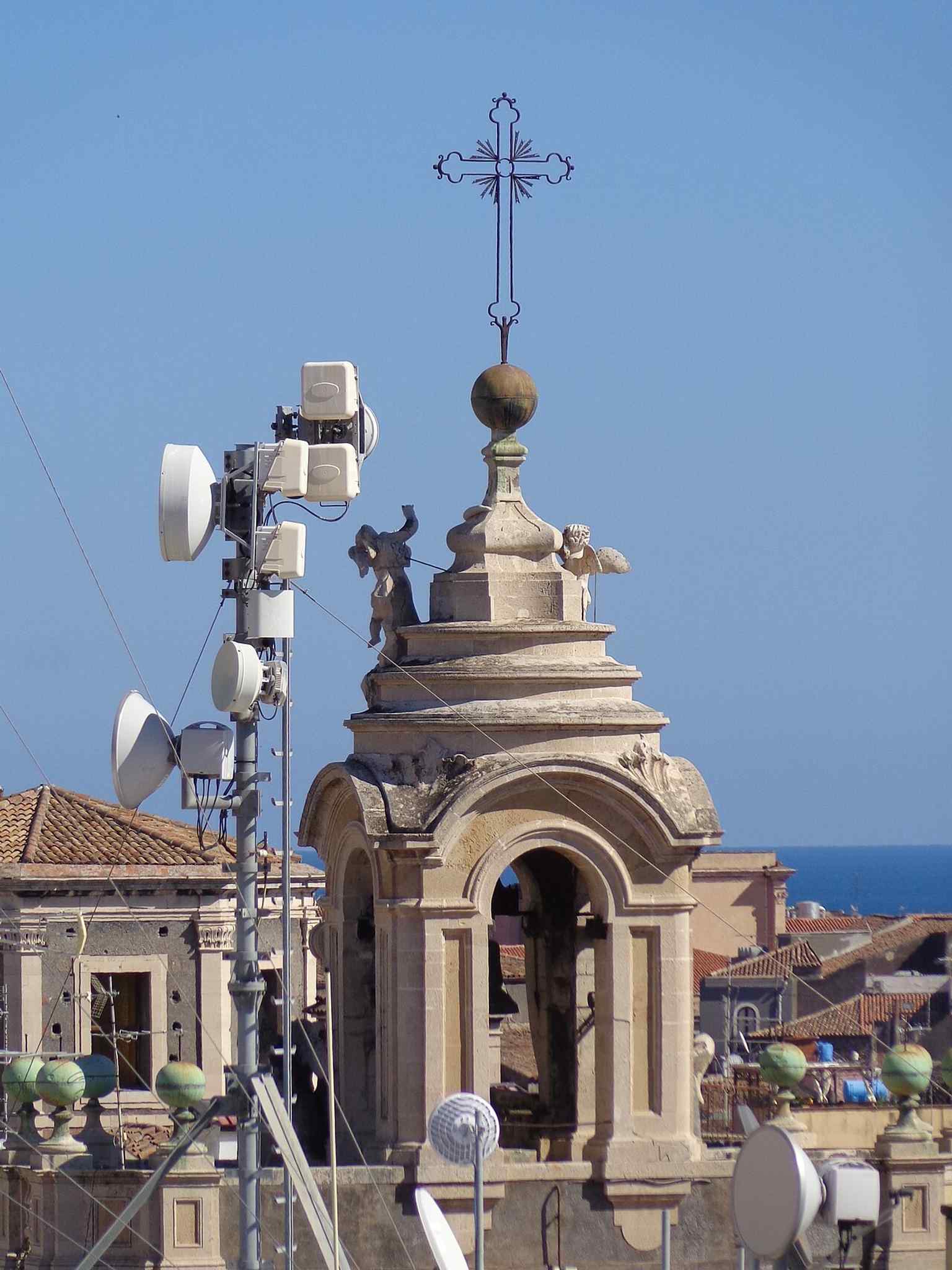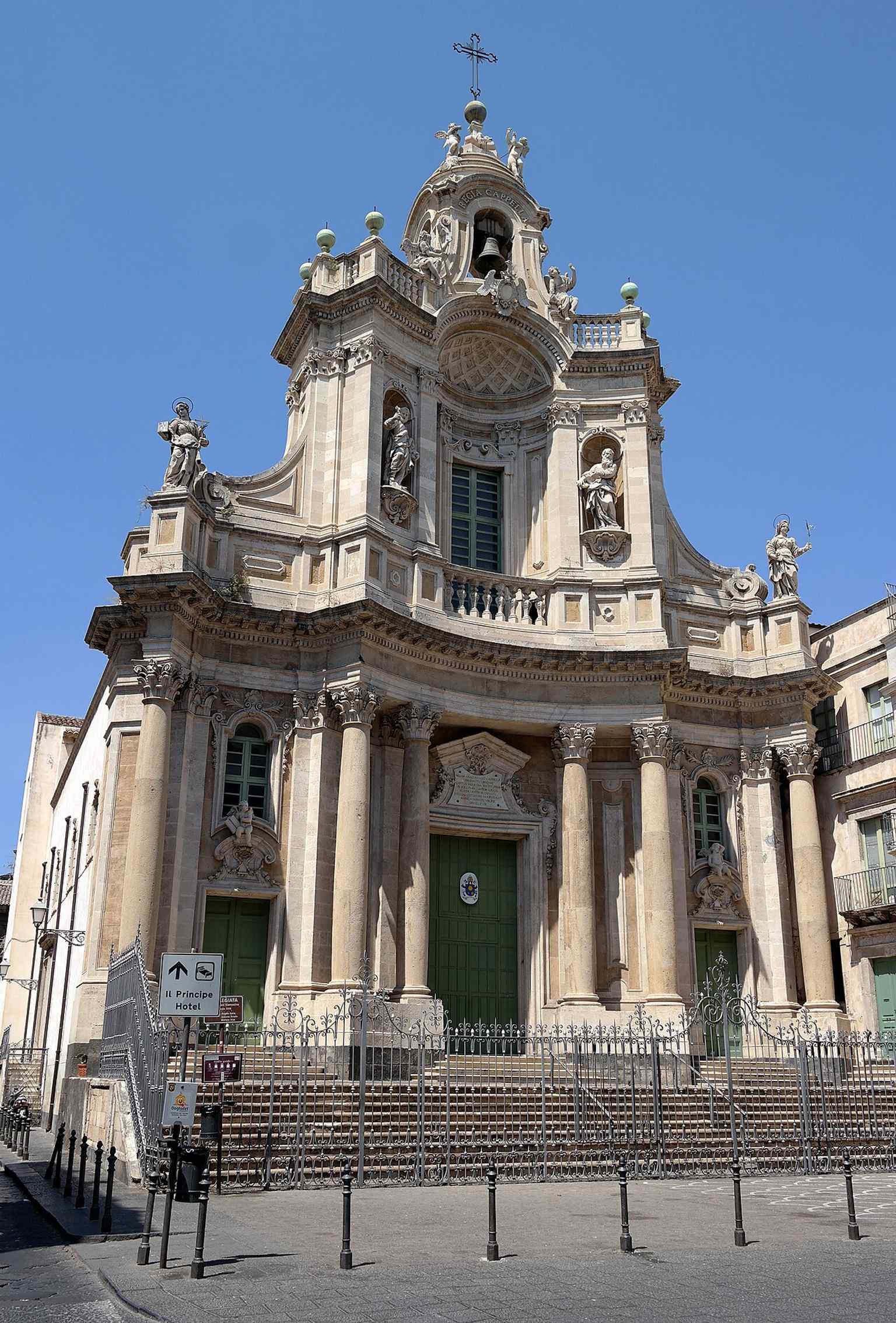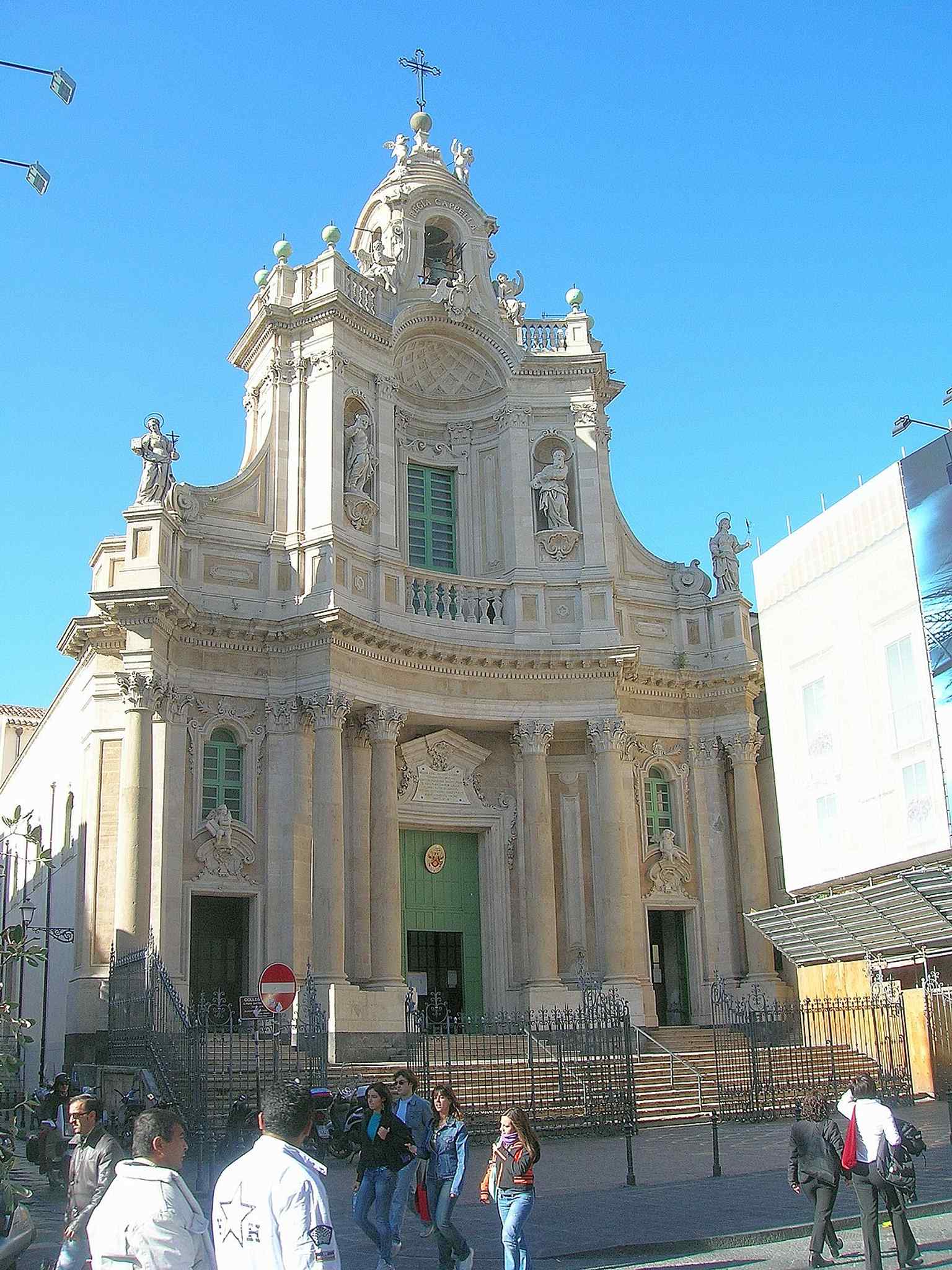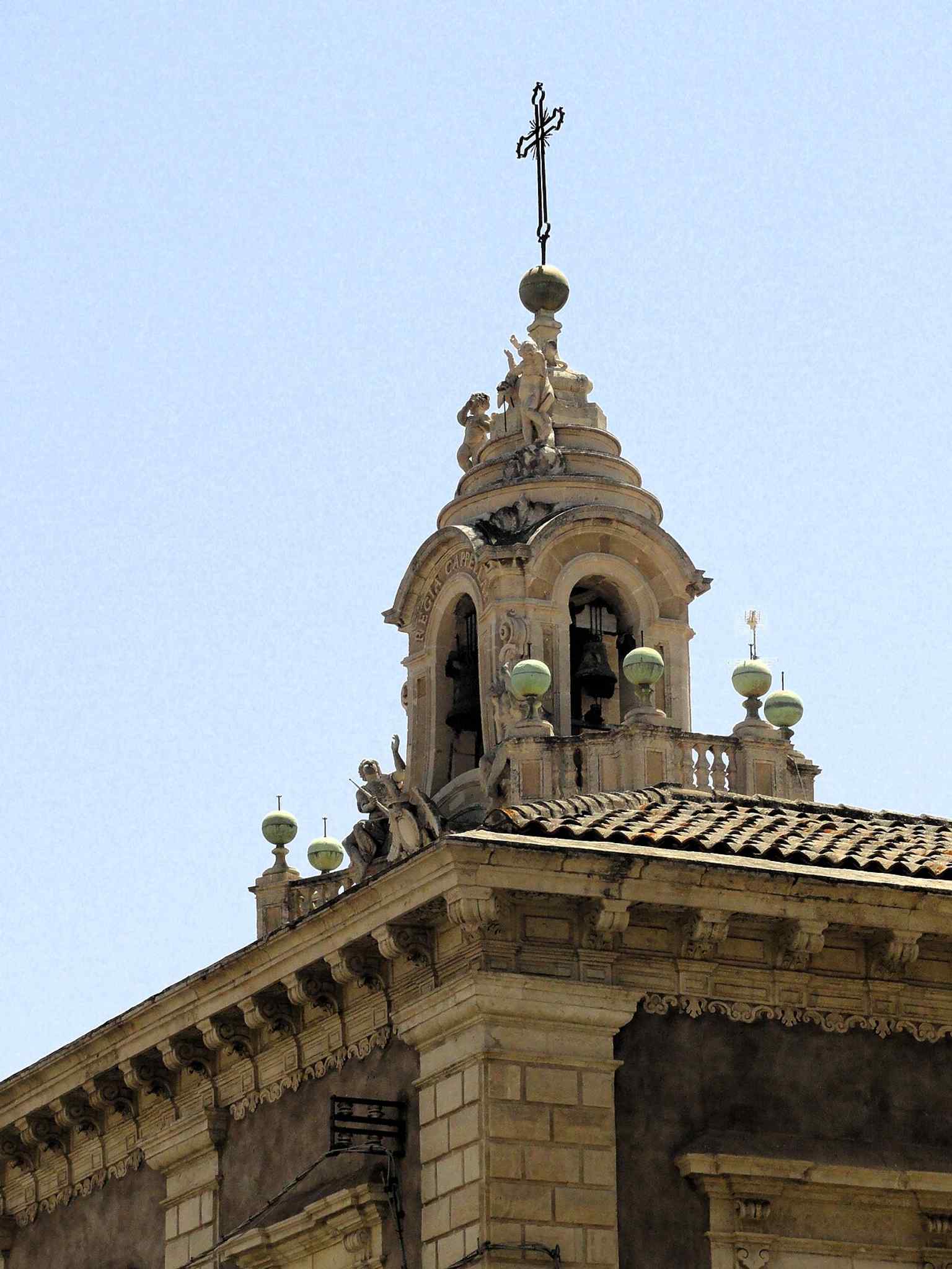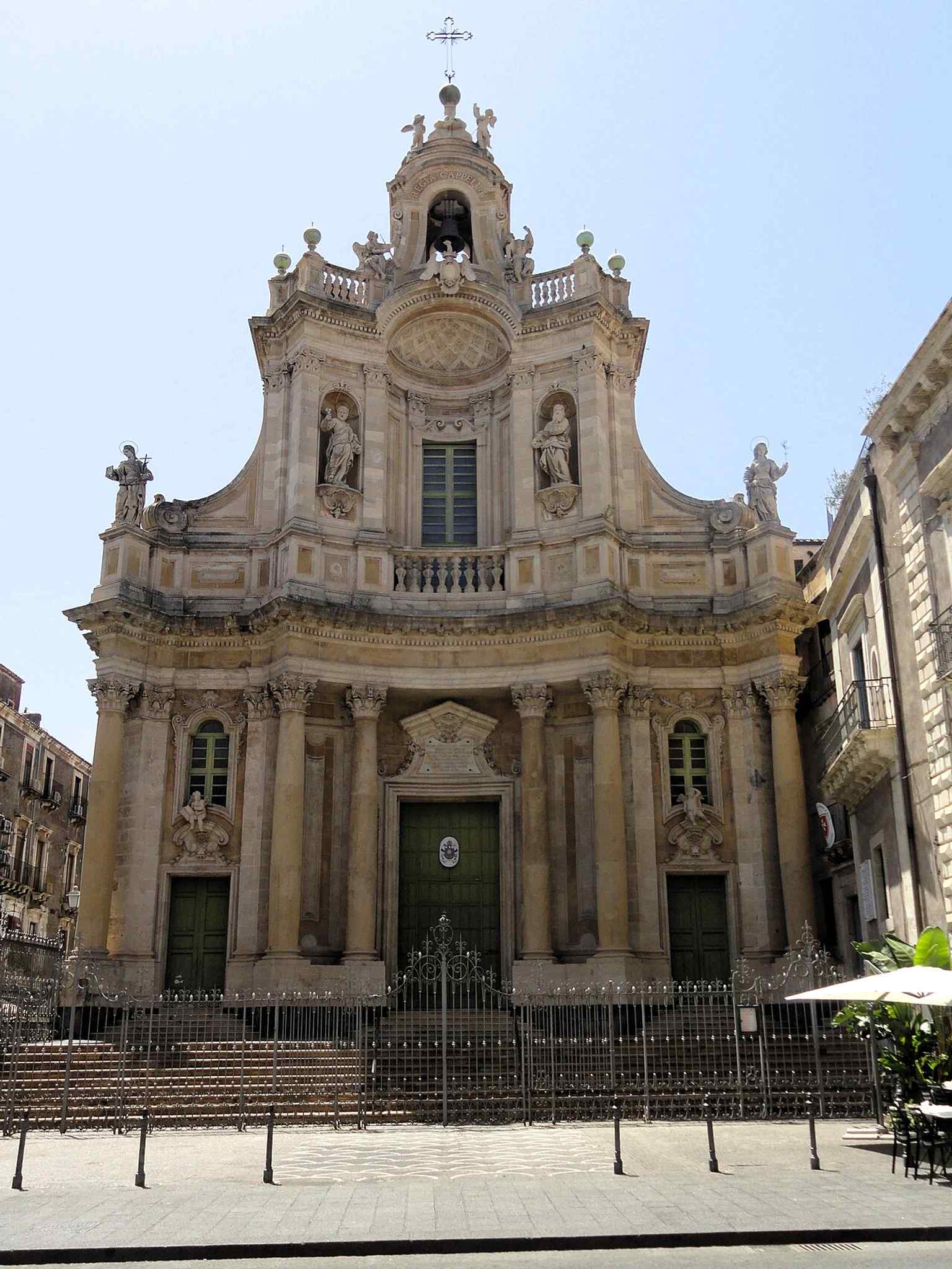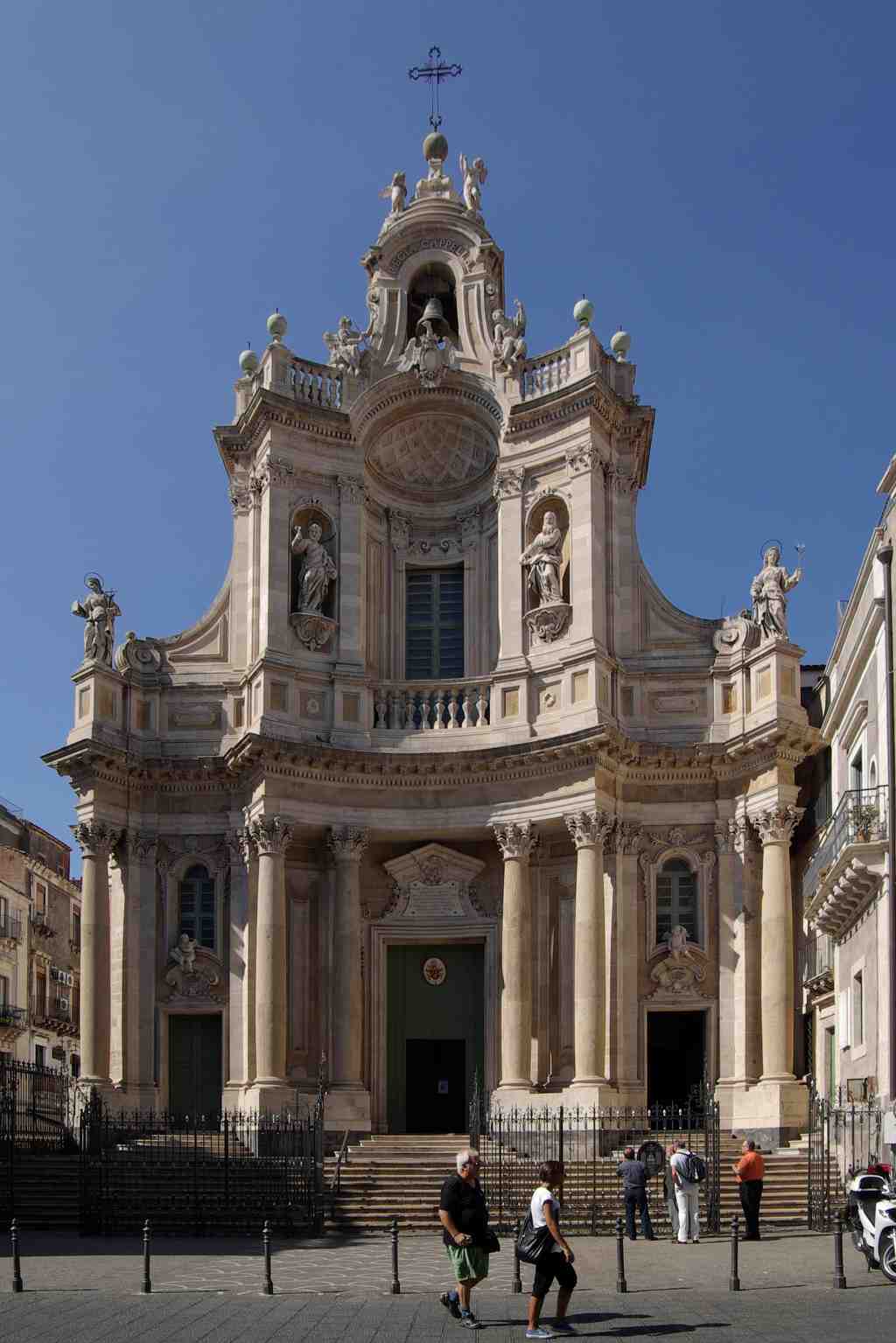
On your right, look for a pale limestone façade above a wide staircase, its surface folding in soft baroque curves and ending in a little bell crown topped by an iron cross.
This is the Basilica della Collegiata, formally the Basilica di Maria Santissima dell'Elemosina, and under all that elegance lives a very stubborn story. Long before this church, people worshipped here in a pagan temple to Proserpina. Then early Christians raised a small church to Mary, and over time devotion gathered around a tender title: dell'Elemosina, which people often took to mean charity or alms.
But the heart of that name comes from something older and more intimate: a Byzantine image of the Virgin Eleusa, meaning the Merciful One. In fourteen eighty-two, Albanian refugees fleeing the Ottoman advance carried that icon into Sicily. Legend says they stopped near Catania, hung it on a fig tree, and when they tried to leave, the branches had wrapped around it so tightly they could not take it back. People read that as Mary choosing this land for herself. The original icon stayed elsewhere, later in Biancavilla, but this church placed a faithful copy on its high altar and tied its whole identity to that miracle.
Then power stepped in. Sicilian kings living at Castello Ursino chose this church as their private royal chapel. That title, Regia Cappella, royal chapel, still clings proudly to the building. It gained privileges so broad that it almost acted like its own little diocese, and that set off centuries of bitter rivalry with the cathedral. At one point, churchmen even argued over who had the right to hold a bishop’s staff during ceremonies. Catania could turn dignity into a full-contact sport.
Then came the earthquake of sixteen ninety-three, which leveled the church along with much of the city. During the rebuilding, the designers turned the whole church around so it would face the new main street, today’s Via Etnea. If you glance at the image on your screen, you can really see Stefano Ittar’s trick: the façade swells and dips like the pipes of a giant organ. Those statues above you, including Saint Agatha and Saint Apollonia, give the stone a kind of watchful life.
Even rebuilding had drama. A neighboring baron fought the bell tower in court, insisting the bells disturbed his household peace. He lost, appealed, and kept fighting until his death finally let the project breathe again.
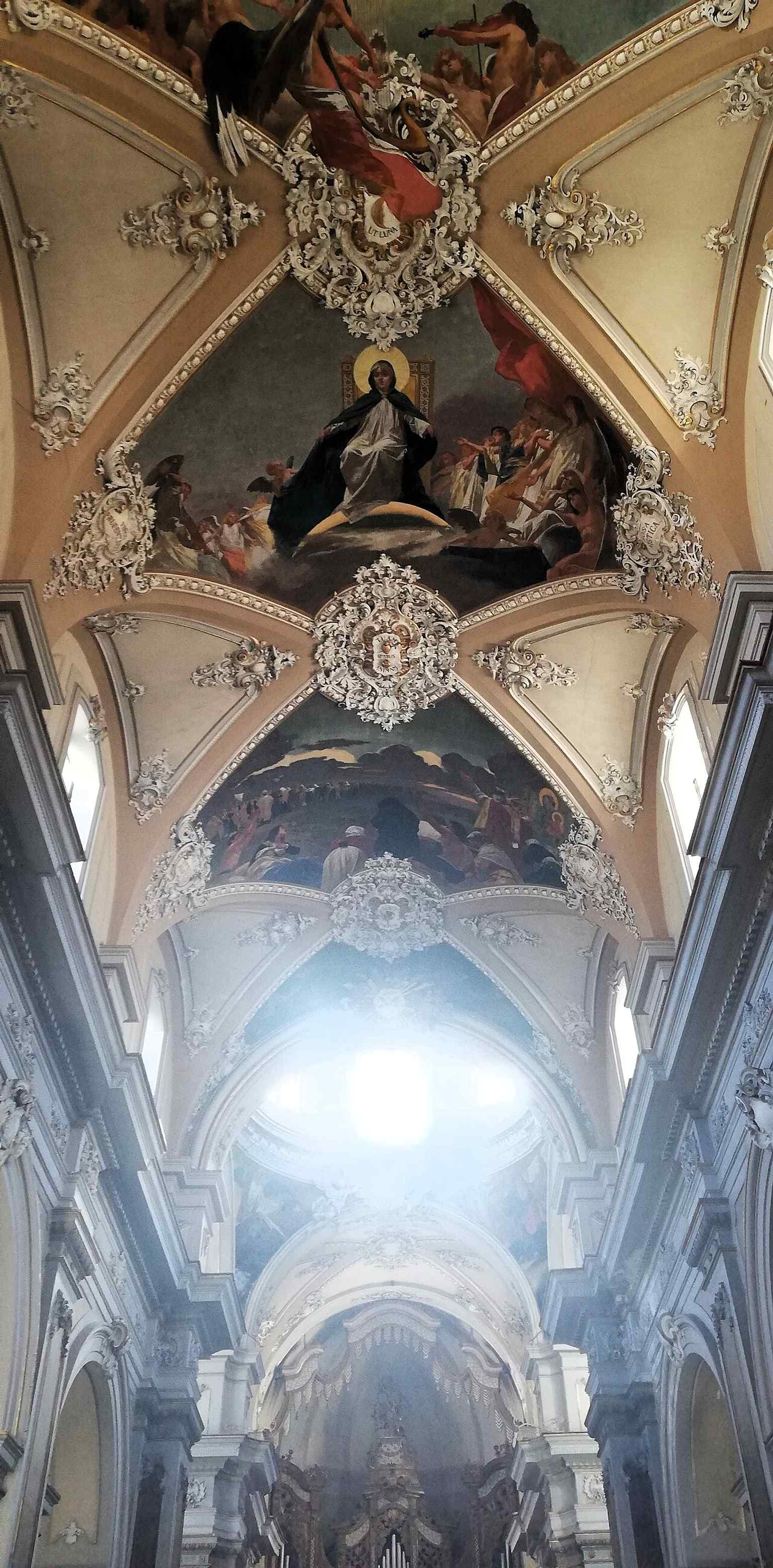
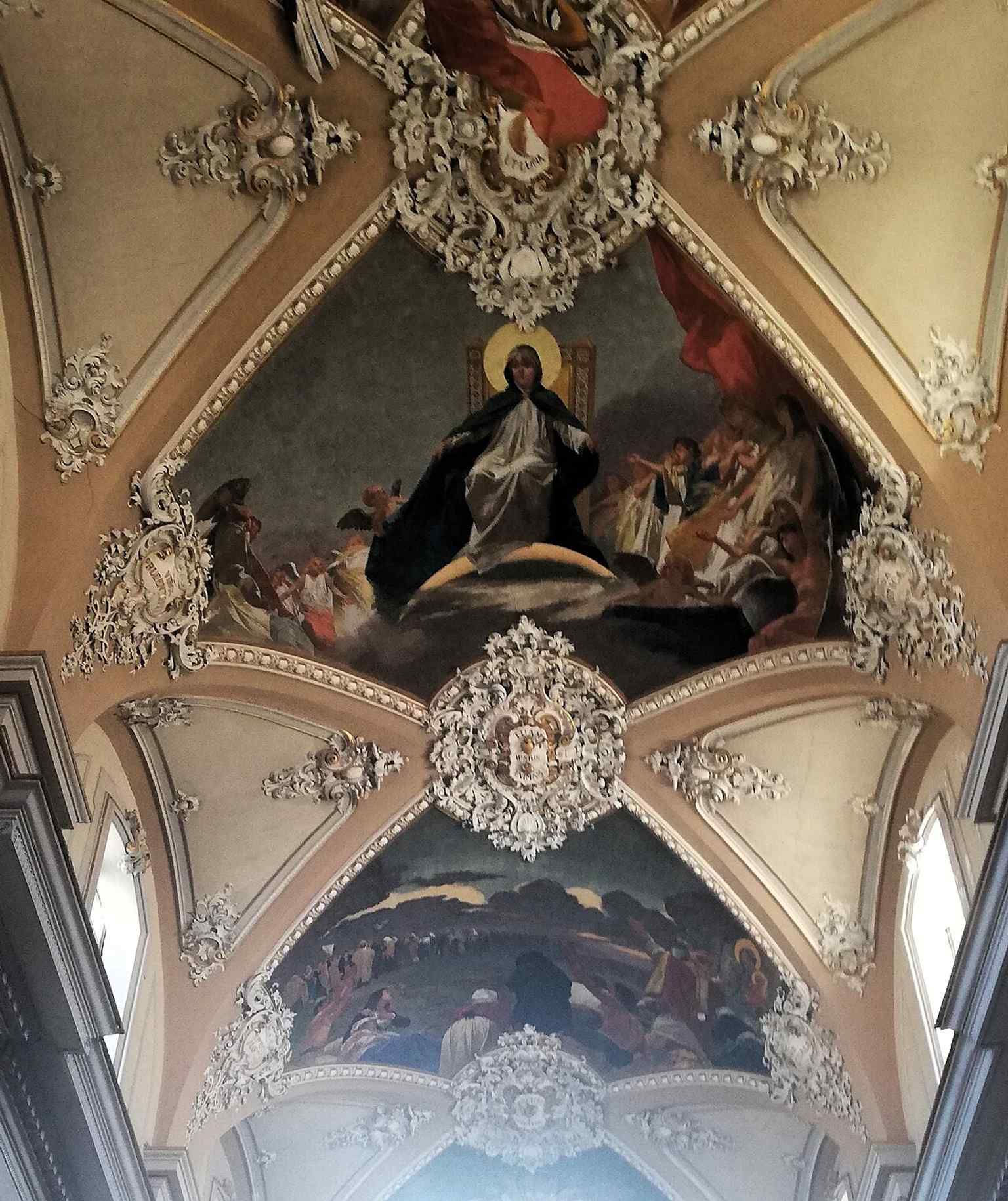
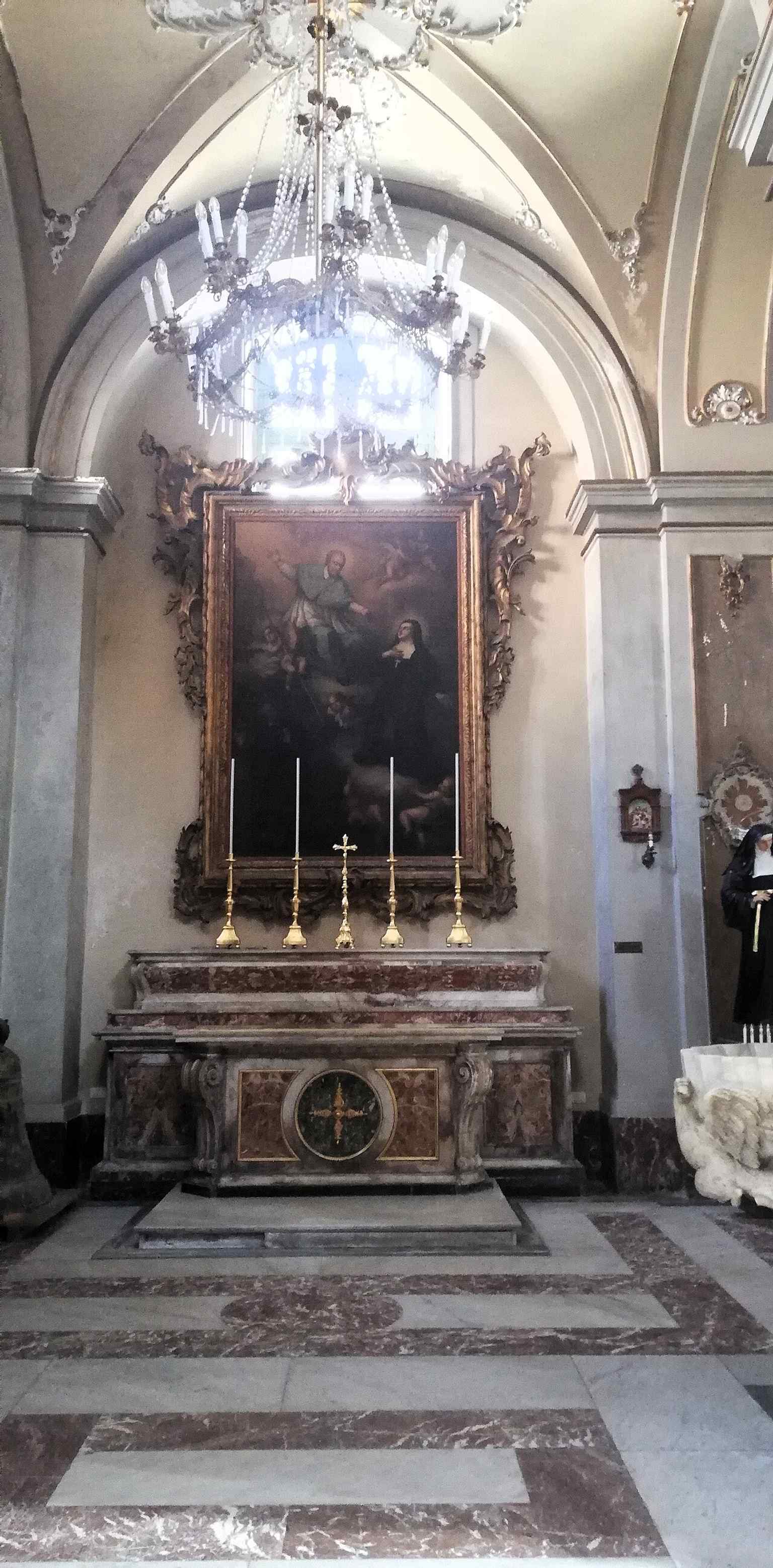
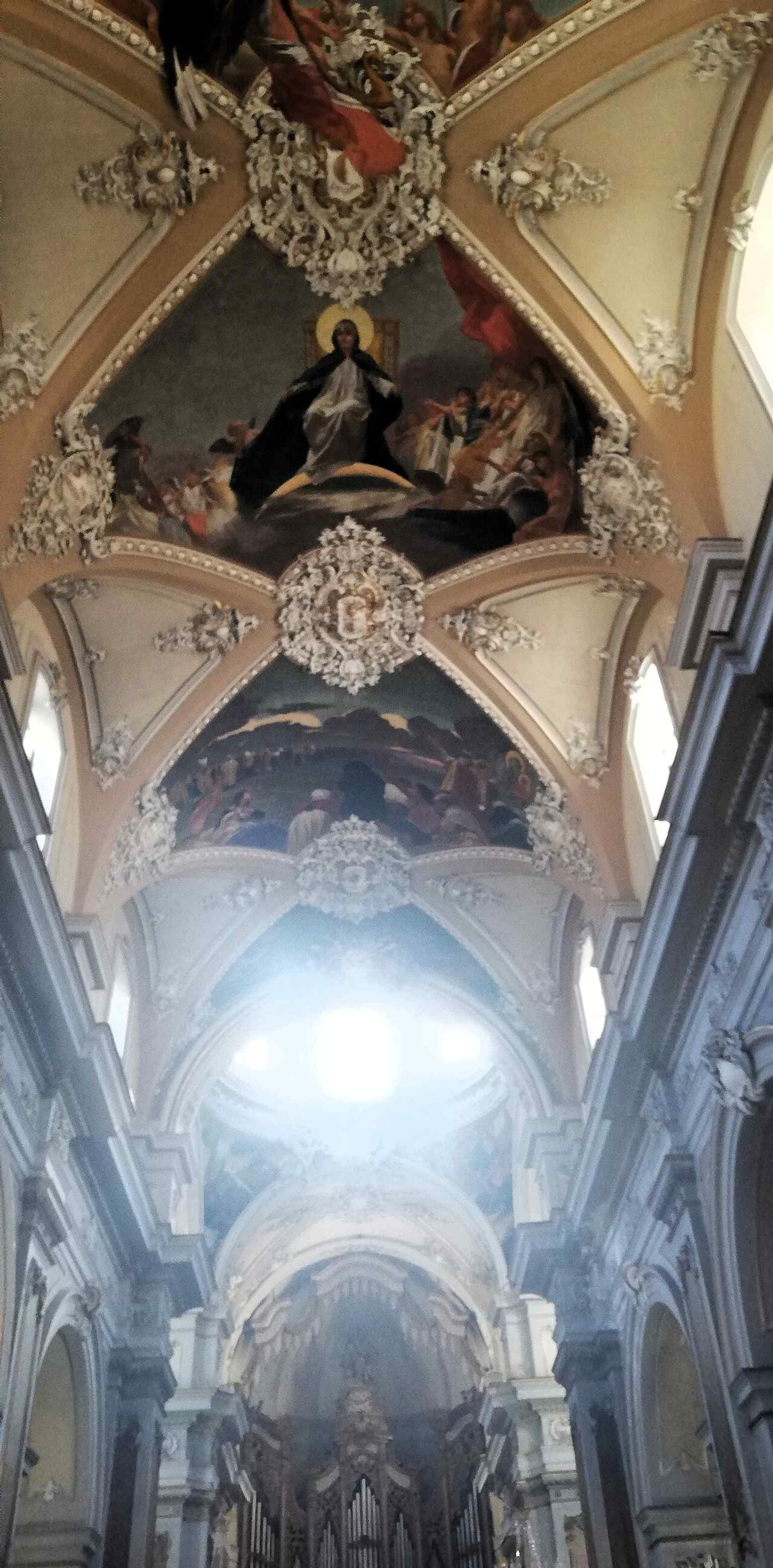
Inside, the church opens into three aisles, marble altars, and a long choir for the canons. If you peek at the interior image, you’ll see how Giuseppe Sciuti later filled the vault with sweeping biblical scenes, turning the ceiling into a theater of light and mercy.
If you want to step inside later, it usually opens Tuesday through Sunday, from nine to noon and again from four to eight, and stays closed on Monday.
This church feels like Catania itself: wounded, proud, devout, and beautifully unwilling to give up. When you’re ready, continue on and let the next stone in the city tell you its piece of the story.