AudaTours logoAudaTours

Stop 7 of 14

Palazzo degli Elefanti

Palazzo degli Elefanti
Elephant Palace
Elephant PalacePhoto: Francesco Lombardi, Wikimedia Commons, CC BY-SA 4.0. Cropped & resized.

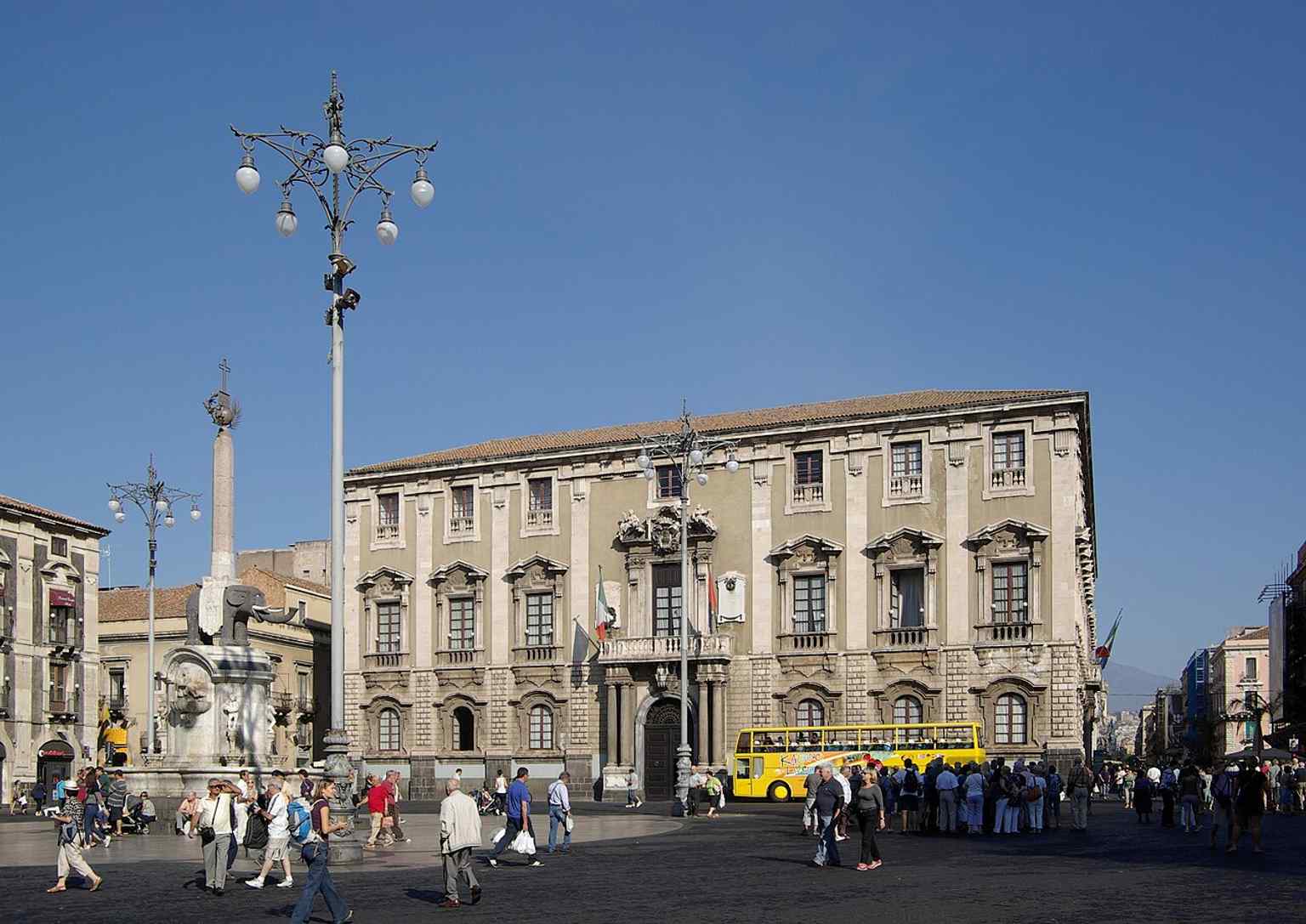
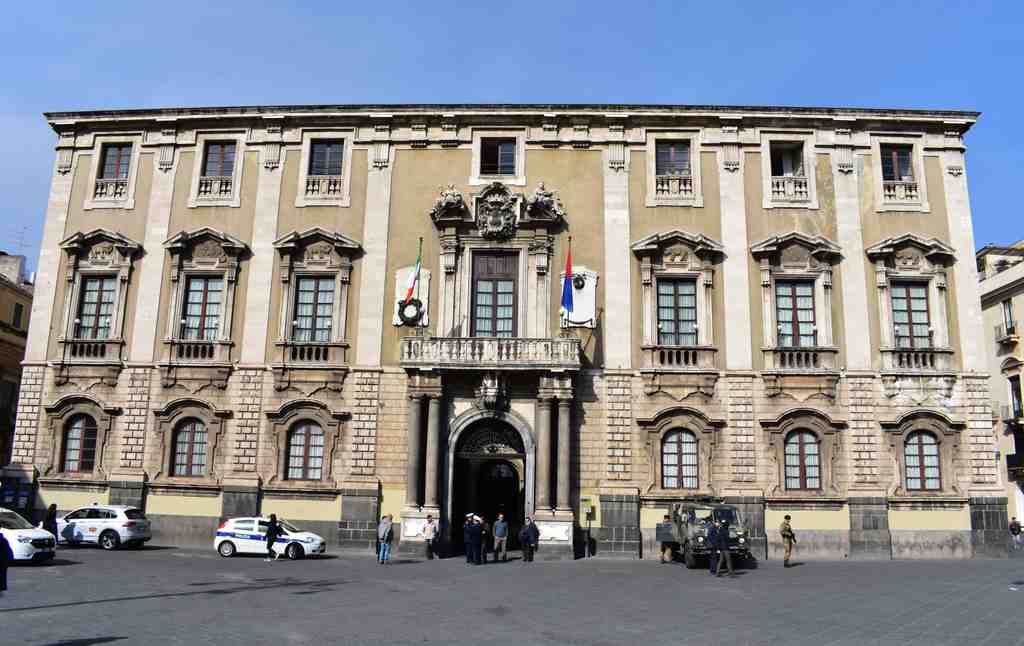
On your left, look for a long baroque facade of pale limestone and warm stucco, three stories high, with a granite-columned central portal and small elephant sculptures set above the grand balconies.

This is Palazzo degli Elefanti, Catania’s city hall... and its name carries a little local affection. Before this palace took shape, the city’s leaders met in an older Aragonese building called the Loggia Senatoria, a place so important that the Sicilian parliament gathered there several times between the thirteenth and sixteenth centuries. Then the earthquake of sixteen ninety-three struck and erased that older seat of power.

Catania’s civic leaders did not want a modest replacement. They wanted a palace that could stand proudly in Piazza Duomo and answer, almost face to face, the religious authority across from it, especially the Seminary of the Clerics. So the new town hall began as a political statement as much as an office.

Master builder Giovan Battista Longobardo started the work, but in seventeen oh one the public money ran dry, and the project stopped with only the first level completed. Years later, in seventeen thirty-two, the city gave the unfinished palace to a young architect, Giovanni Battista Vaccarini. He brought with him a dramatic baroque vision inspired by Bernini, the great Roman master, and he added the detail that changed everything: elephant sculptures above the balconies on the noble floor, the palace’s main ceremonial level. Those carvings, together with the lava-stone elephant fountain, the Liotru, in the square, led the people of Catania to stop calling this the Palazzo Senatorio and start calling it the Elephant Palace instead.

Take in the front of it now. The lower level feels firm and protective, with stone cut into raised blocks that catch the light and shadow. Higher up, the building softens into elegant white limestone trim and warmer plaster surfaces. At the main entrance, pairs of granite columns lift the central balcony, and above it stand two figures, Justice and Faith, with the city’s coat of arms between them... a whole philosophy of government in one small stage set.

Inside, the grand staircase gives you a taste of the ceremonial world beyond this facade; Stefano Ittar added it in the nineteenth century, and it turns a municipal building into something almost theatrical.
The grand staircase itself — one of the palace’s key ceremonial spaces and a highlight of the 19th-century interior makeover.
The grand staircase itself — one of the palace’s key ceremonial spaces and a highlight of the 19th-century interior makeover.Photo: GiovanniPen, Wikimedia Commons, CC BY-SA 4.0. Cropped & resized.

But this palace also carries grief. On the fourteenth of December, nineteen forty-four, young protesters furious about forced conscription set the town hall on fire. Many believed the war should already have been over for Sicily, and they could not bear the thought of being sent north to fight again. The flames destroyed municipal archives, museum objects, furniture, and books... centuries of the city’s memory gone in a single terrible night. Catania restored the rooms and reopened them on the same date in nineteen fifty-two. You can see that careful rebirth in one of the interior images in the app.
An interior view that helps convey the palace’s restored historic rooms after the 1944 fire.
An interior view that helps convey the palace’s restored historic rooms after the 1944 fire.Photo: Pymouss, Wikimedia Commons, CC BY-SA 4.0. Cropped & resized.

And deeper inside the courtyard, the palace protects another fierce memory: the Pietra del Malconsiglio, a lava block tied to a bloody ambush of rebels in fifteen sixteen, later rescued from neglect thanks to schoolchildren from Librino in two thousand and fourteen. Even here, the city keeps choosing remembrance over ruin.

If you’d like to return and go inside, the palace generally opens daily from nine in the morning, with later closing on weekends.

Palazzo degli Elefanti feels like Catania’s public heart, scarred, proud, and still speaking.

When you’re ready, continue on to the Greek-Roman Theatre, where the city’s story slips from civic power into ancient performance.
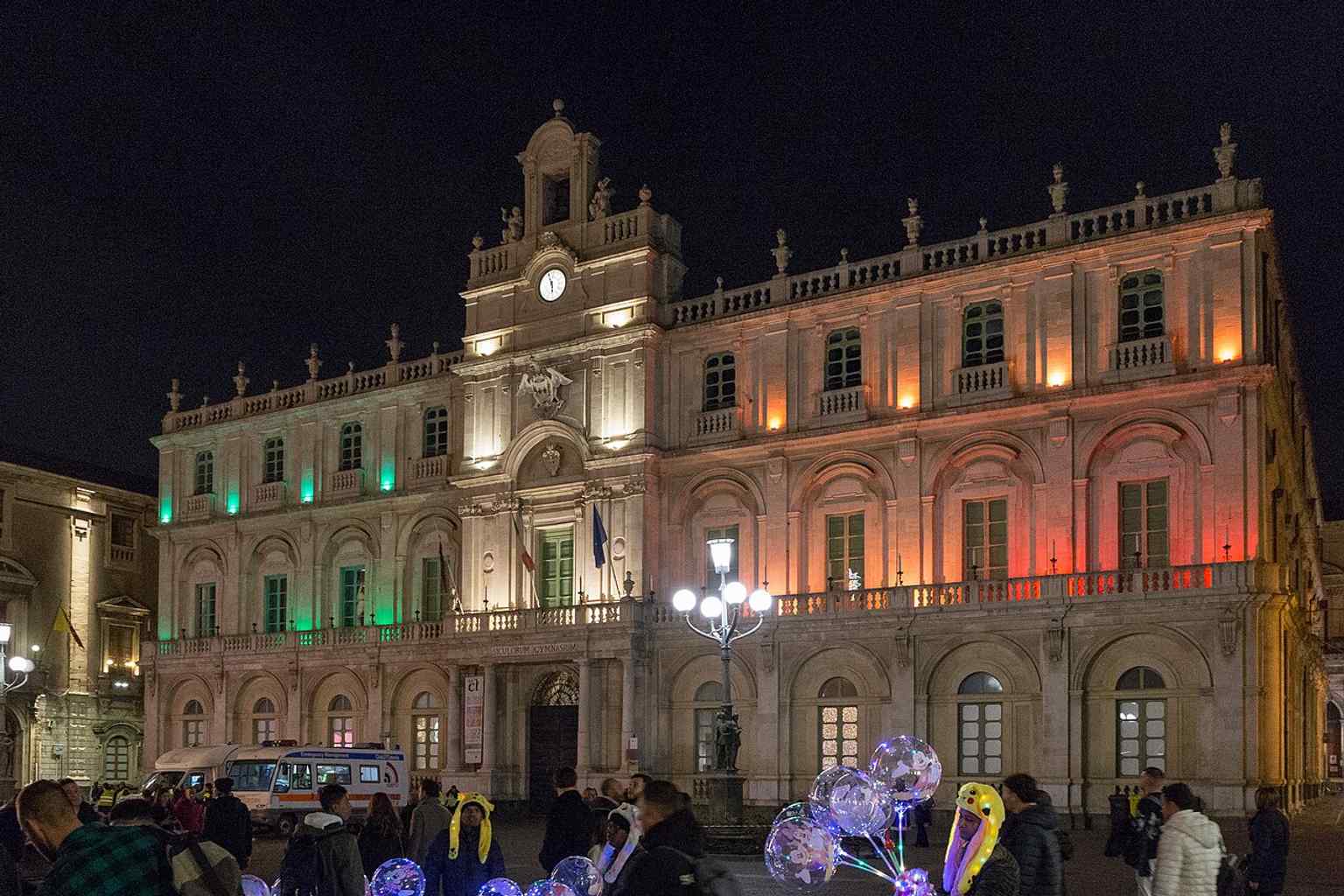
A broad view of Elephant Palace on Piazza Duomo, showing the baroque civic façade that was rebuilt after the 1693 earthquake.
A broad view of Elephant Palace on Piazza Duomo, showing the baroque civic façade that was rebuilt after the 1693 earthquake.Photo: Pymouss, Wikimedia Commons, CC BY-SA 4.0. Cropped & resized.
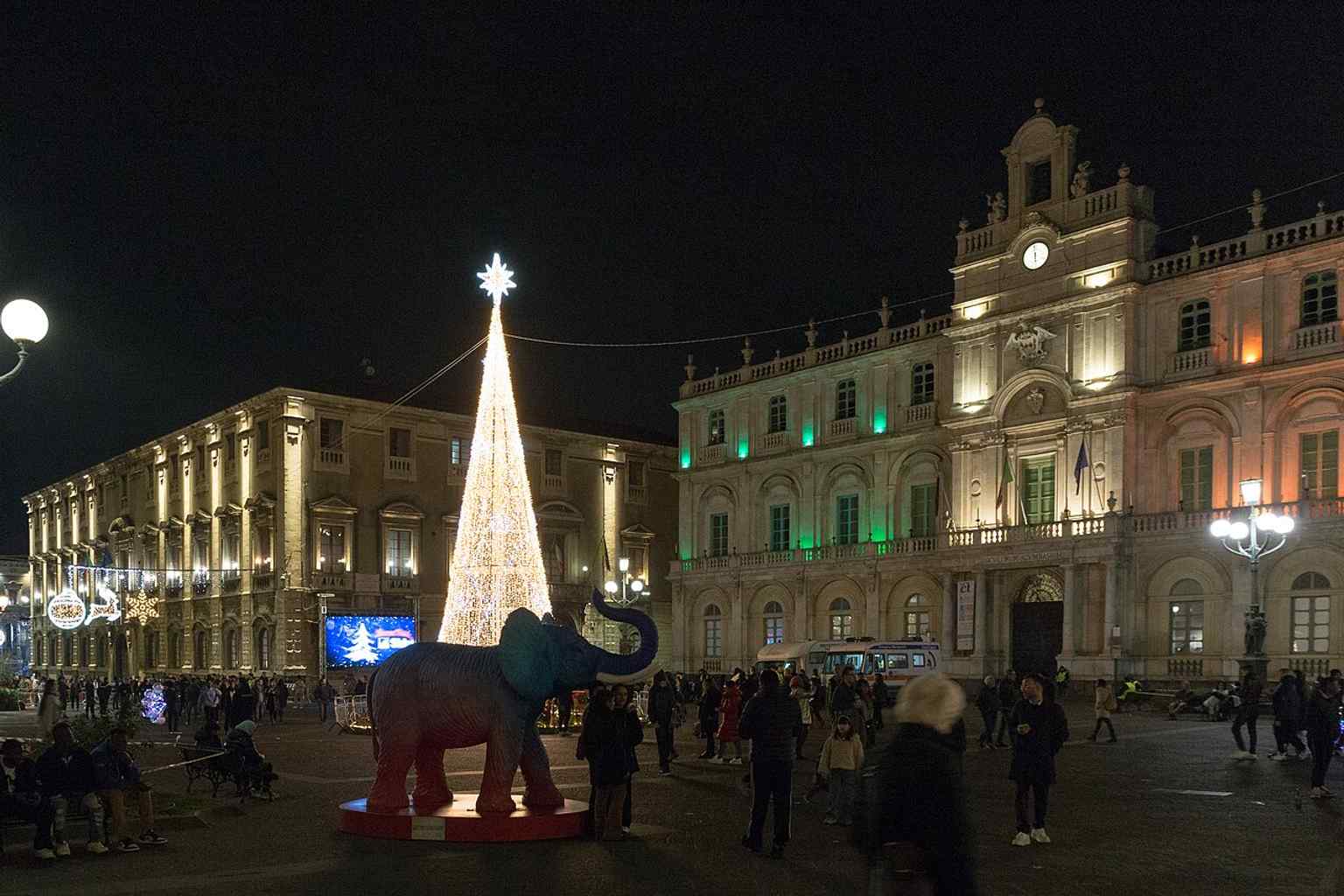
Elephant Palace beside the University building — a useful comparison of Catania’s civic and academic baroque landmarks.
Elephant Palace beside the University building — a useful comparison of Catania’s civic and academic baroque landmarks.Photo: Pymouss, Wikimedia Commons, CC BY-SA 4.0. Cropped & resized.
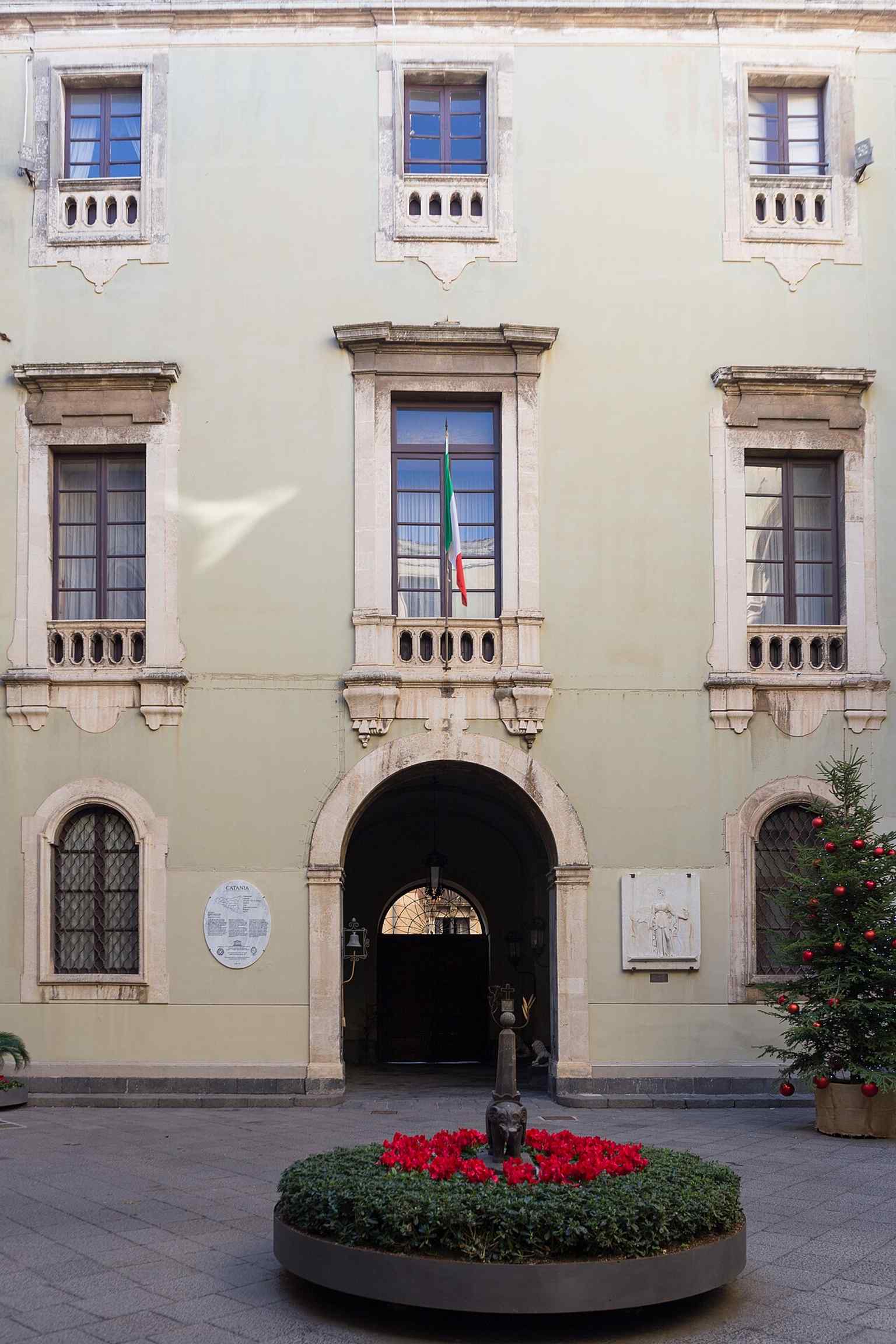
A crisp modern view of the palace frontage, useful for introducing the building as Catania’s current town hall.
A crisp modern view of the palace frontage, useful for introducing the building as Catania’s current town hall.Photo: Pymouss, Wikimedia Commons, CC BY-SA 4.0. Cropped & resized.
A recent full-height view of Elephant Palace, ideal for showing its three-level façade and strong urban presence.
A recent full-height view of Elephant Palace, ideal for showing its three-level façade and strong urban presence.Photo: Effems, Wikimedia Commons, CC BY-SA 4.0. Cropped & resized.
The main stair landing at the entrance, a later 19th-century addition by Stefano Ittar that connects the exterior to the ceremonial interior.
The main stair landing at the entrance, a later 19th-century addition by Stefano Ittar that connects the exterior to the ceremonial interior.Photo: GiovanniPen, Wikimedia Commons, CC BY-SA 4.0. Cropped & resized.
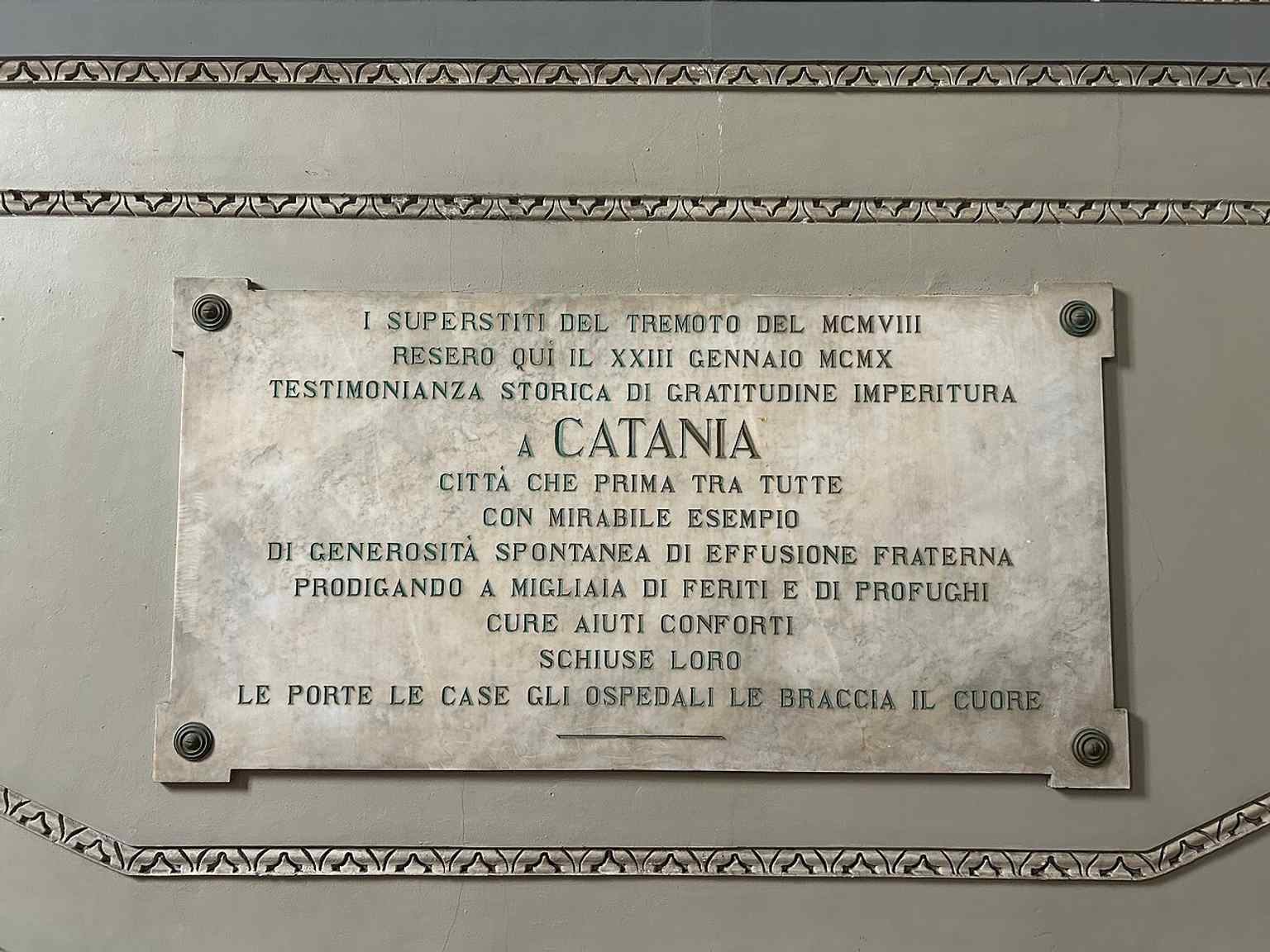
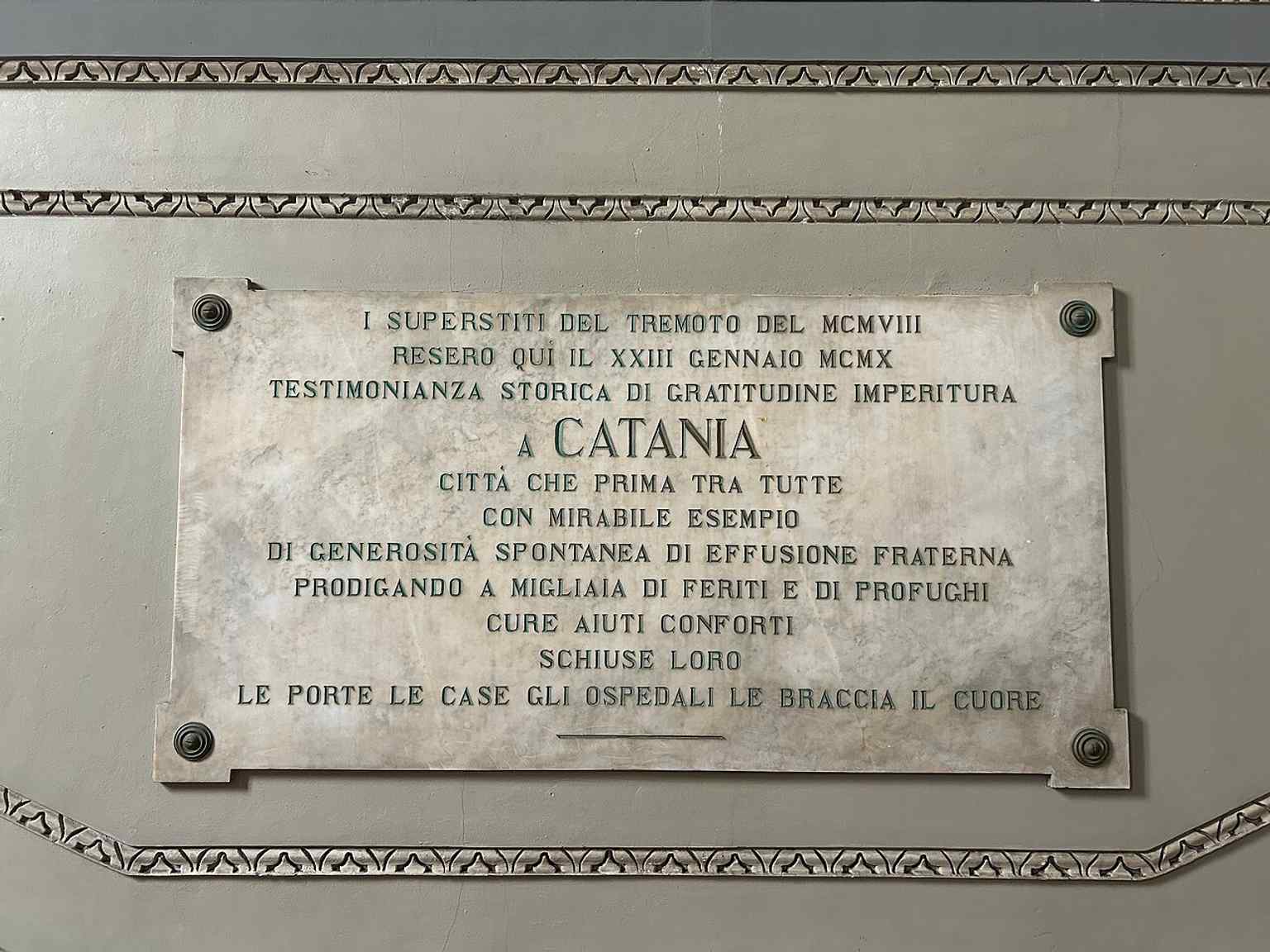
The commemorative plaque on the staircase, a small but telling detail from the palace’s layered civic history.
The commemorative plaque on the staircase, a small but telling detail from the palace’s layered civic history.Photo: GiovanniPen, Wikimedia Commons, CC BY-SA 4.0. Cropped & resized.
The atrium inside Elephant Palace, showing the public interior where the city’s political life still unfolds.
The atrium inside Elephant Palace, showing the public interior where the city’s political life still unfolds.Photo: Ivan Ruggiero, Wikimedia Commons, CC BY-SA 4.0. Cropped & resized.
Another atrium view, useful for capturing the palace’s internal volume and municipal atmosphere.
Another atrium view, useful for capturing the palace’s internal volume and municipal atmosphere.Photo: Ivan Ruggiero, Wikimedia Commons, CC BY-SA 4.0. Cropped & resized.
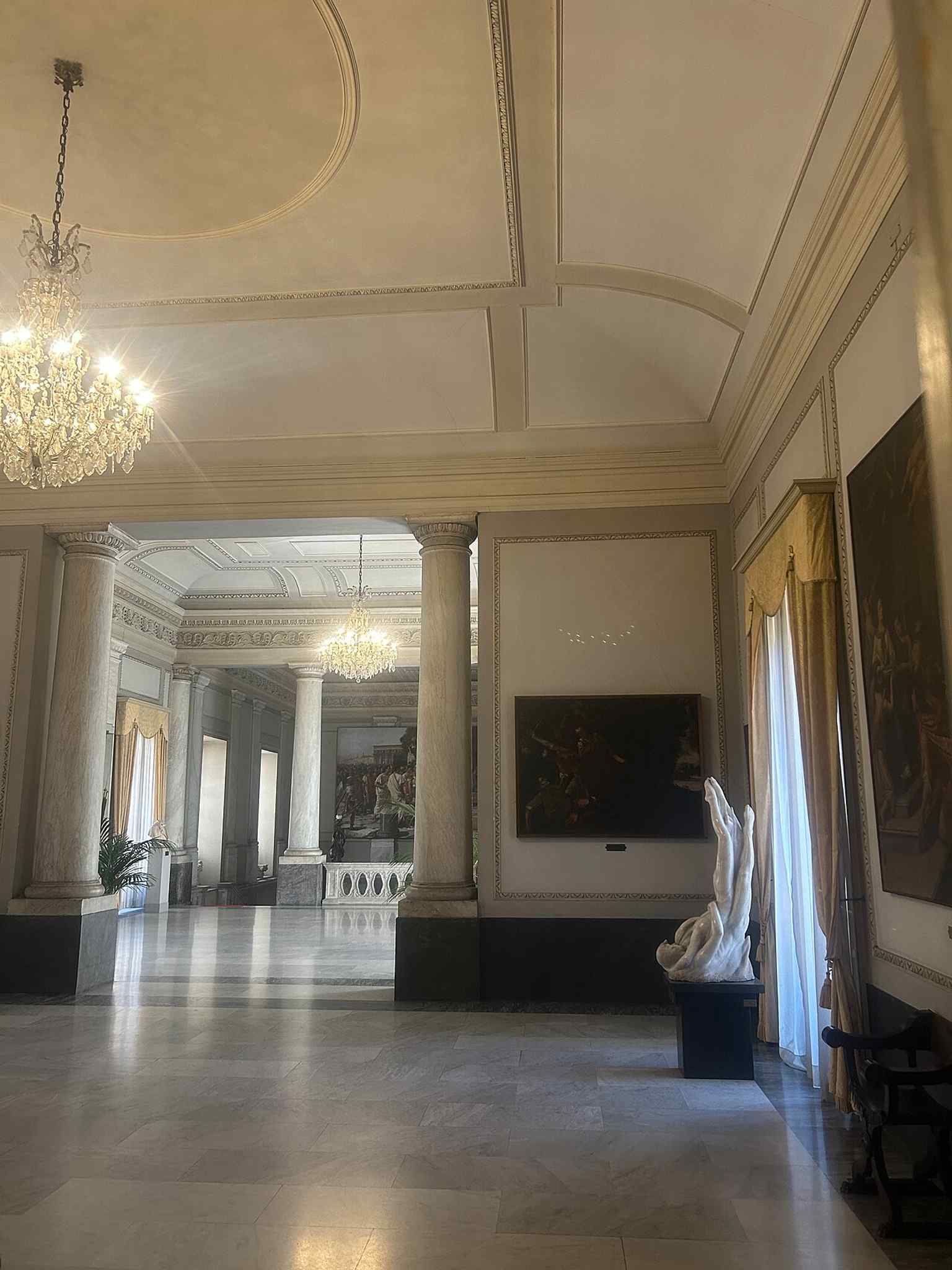
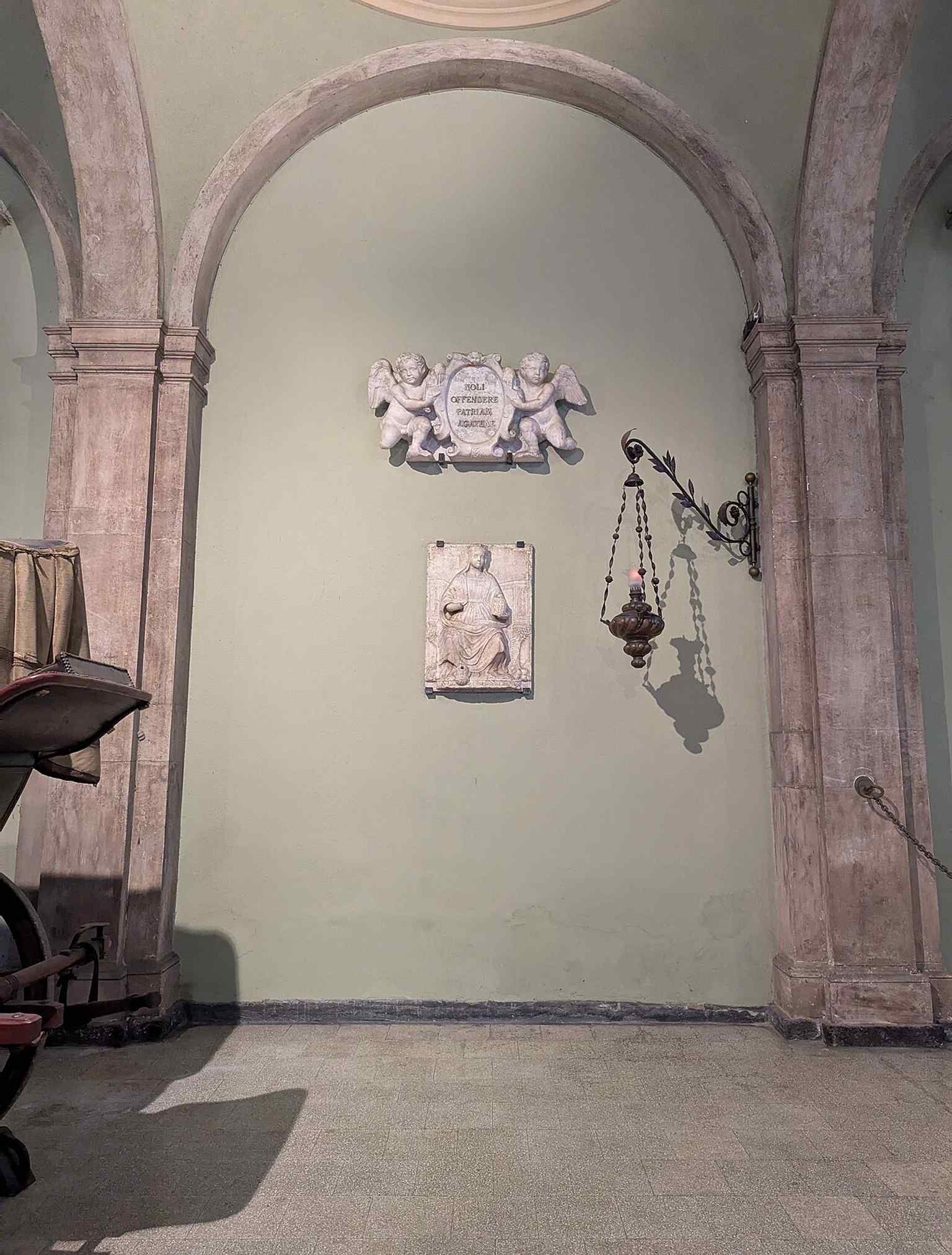
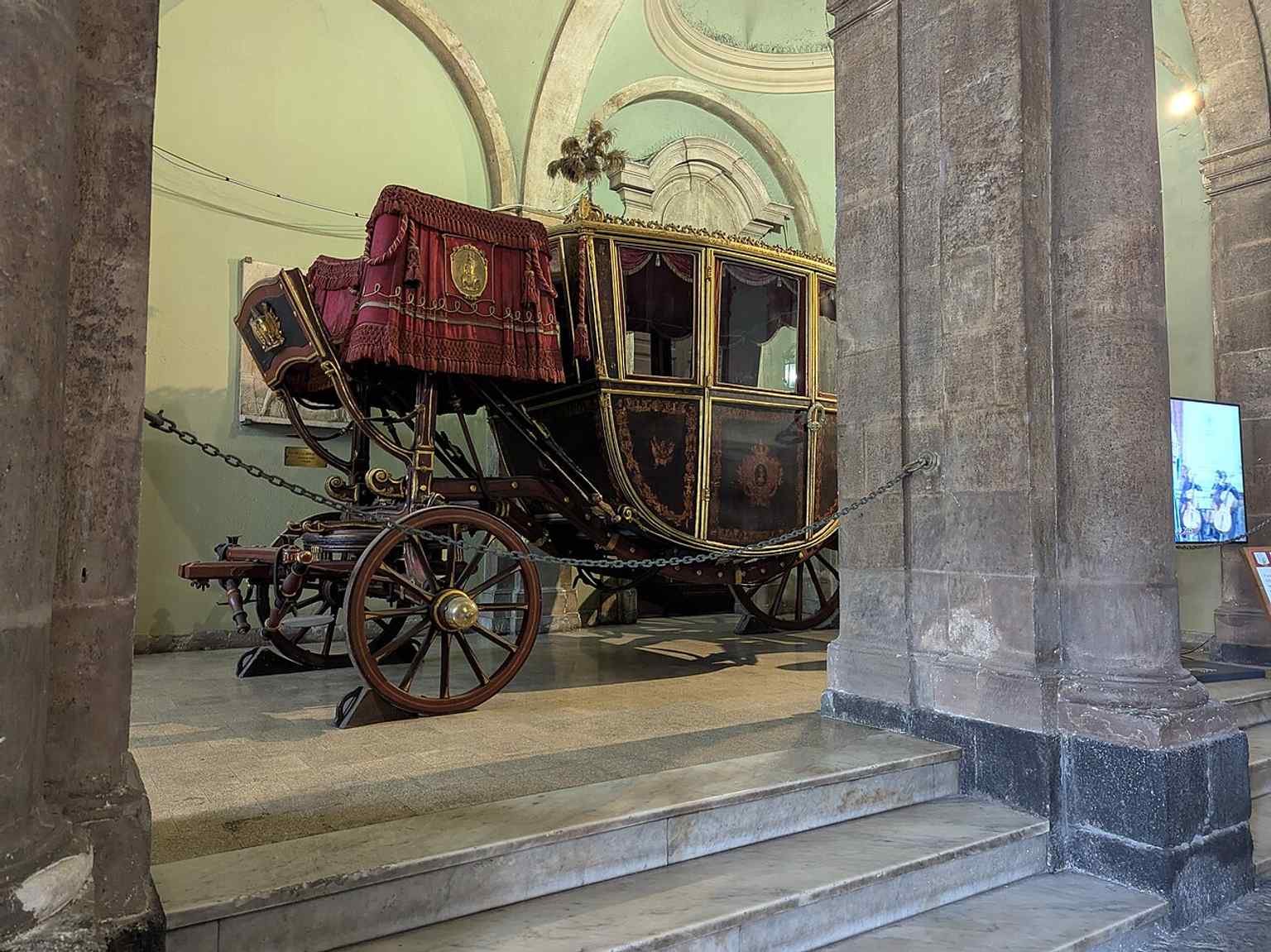
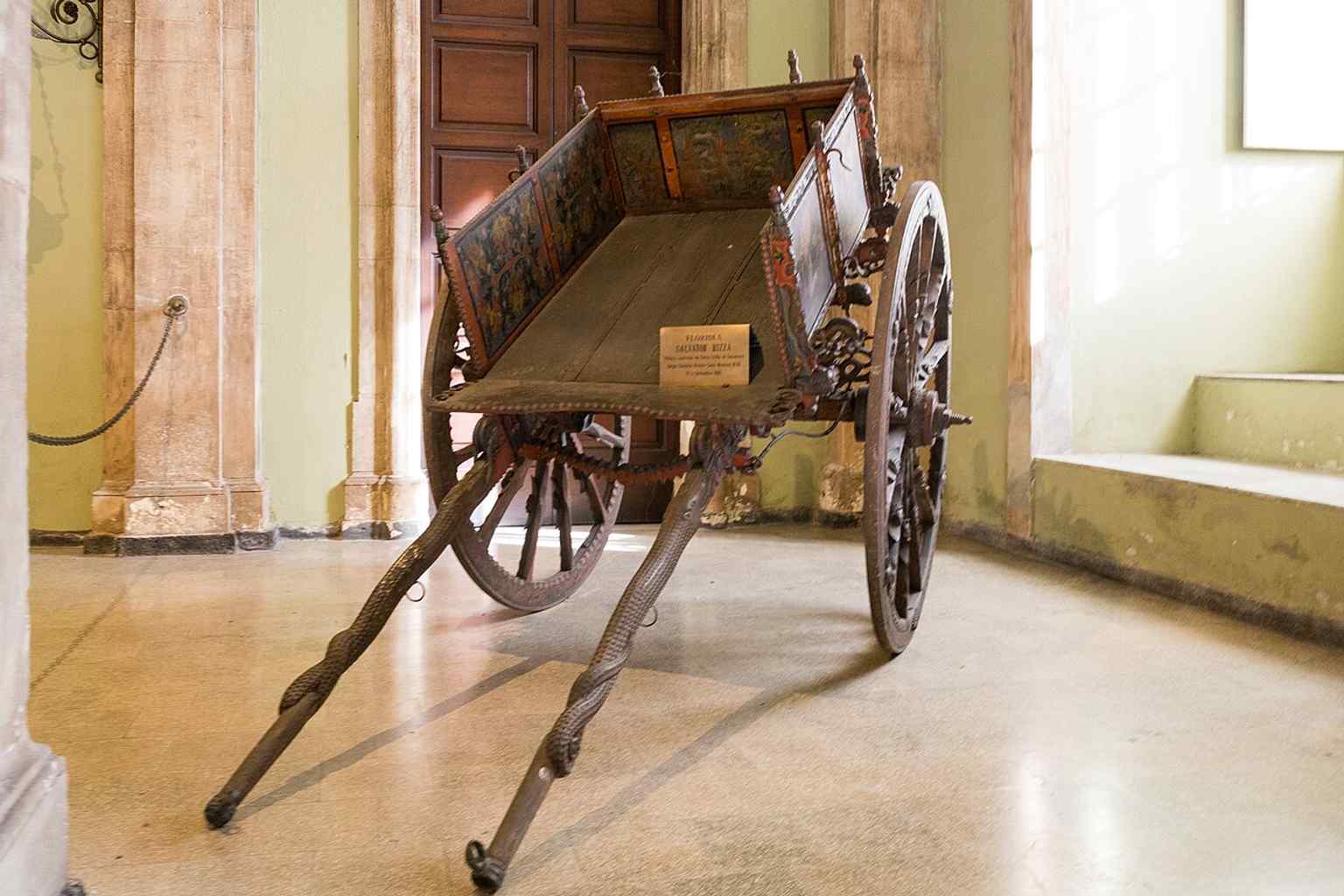
A second interior angle, adding variety to the sequence of the palace’s furnished civic spaces.
A second interior angle, adding variety to the sequence of the palace’s furnished civic spaces.Photo: Pymouss, Wikimedia Commons, CC BY-SA 4.0. Cropped & resized.
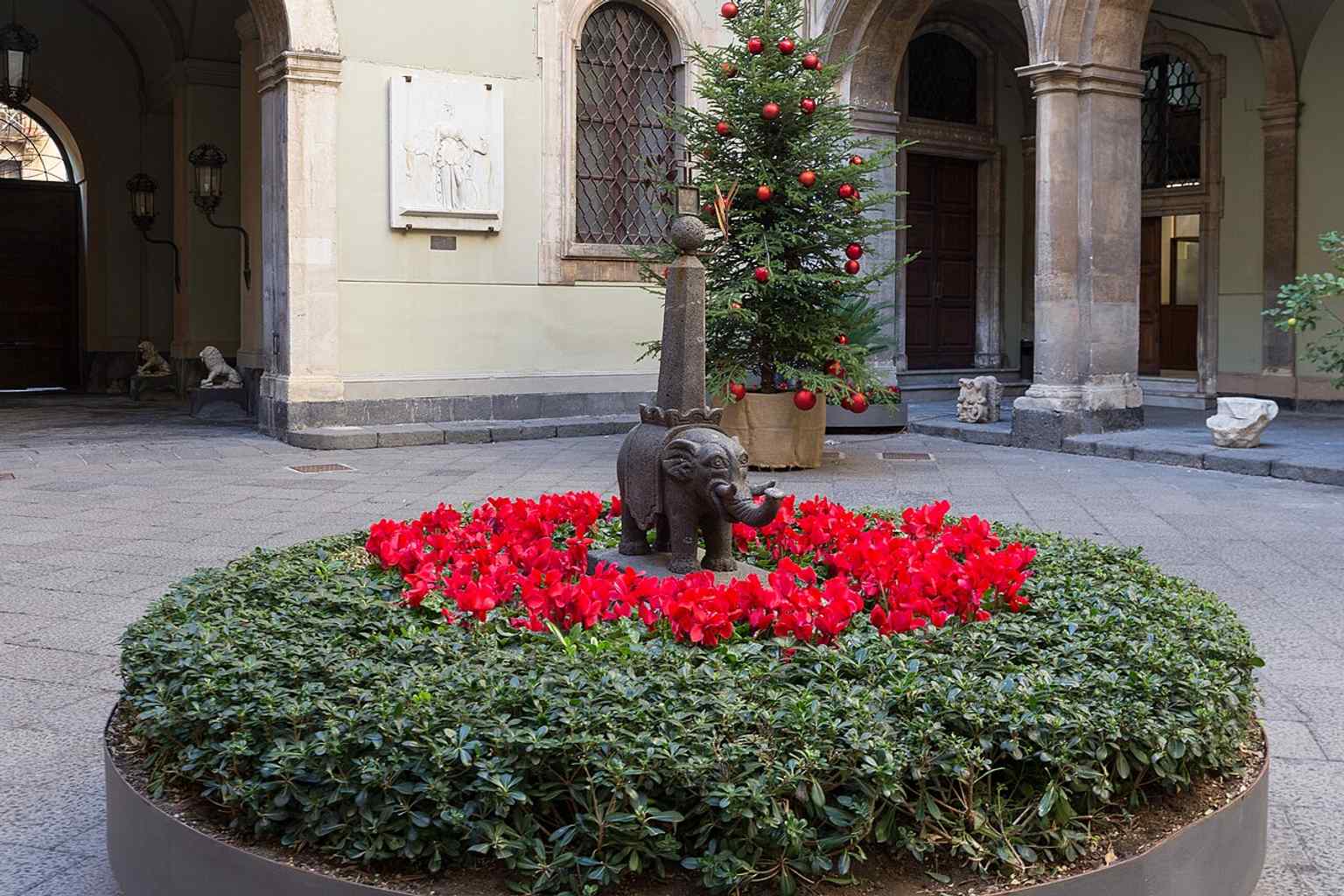
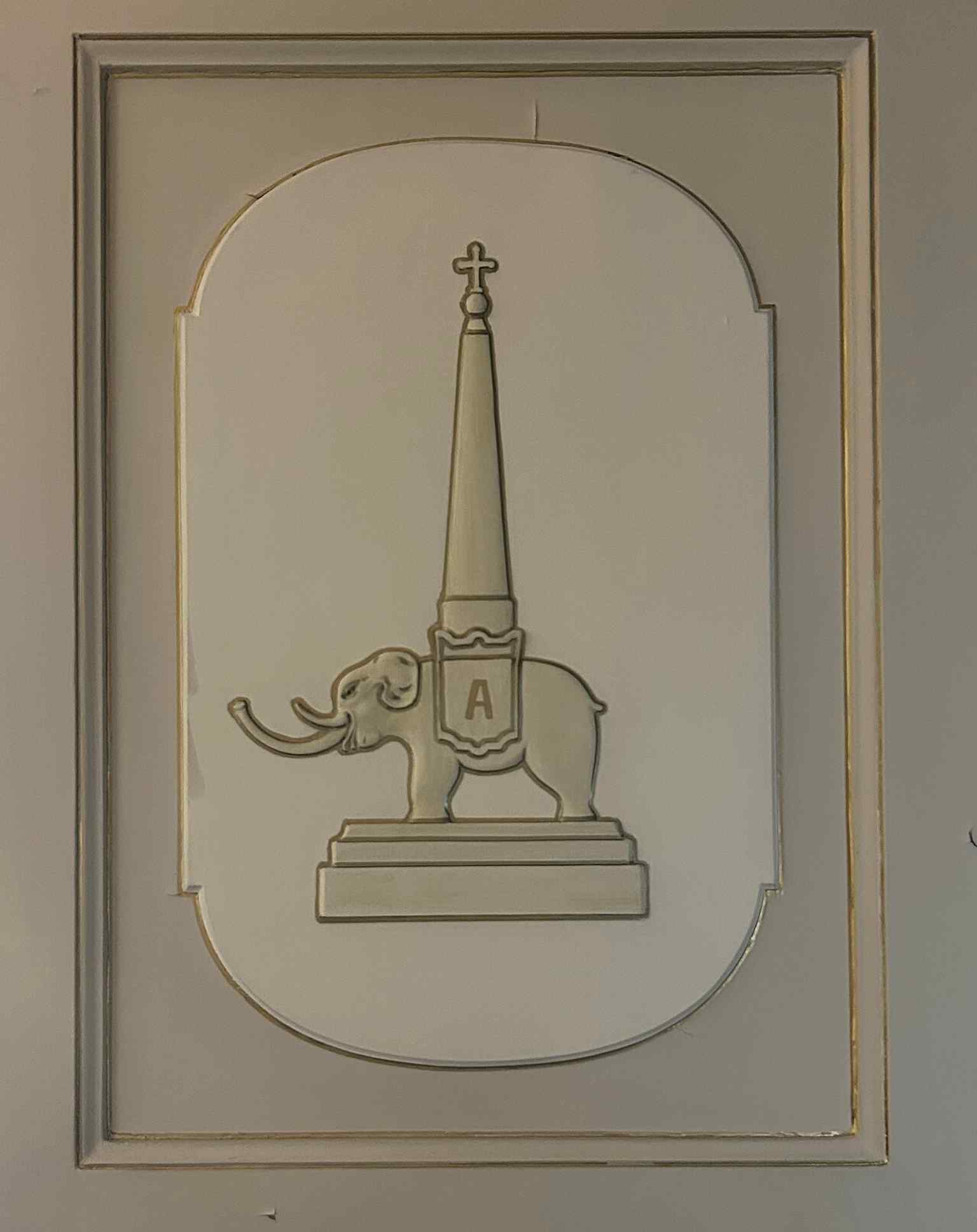
A detail of the elephant-themed civic setting in front of the palace, echoing the Liotru symbol that gave the building its name.
A detail of the elephant-themed civic setting in front of the palace, echoing the Liotru symbol that gave the building its name.Photo: Berthold Werner, Wikimedia Commons, CC BY-SA 3.0. Cropped & resized.
A carved elephant motif on a wooden door, a subtle reminder of the symbol that defines the palace’s identity.
A carved elephant motif on a wooden door, a subtle reminder of the symbol that defines the palace’s identity.Photo: GiovanniPen, Wikimedia Commons, CC BY-SA 4.0. Cropped & resized.
arrow_back Back to Catania Audio Tour: Legends, Learning and Lava Stones
Loved by travellers

Thousands of tours started.
Plenty of opinions.

4.8 across the App Store and Google Play. Here's a few we keep coming back to.

starstarstarstarstar
This was a solid way to get to know Brighton without feeling like a tourist. The narration had depth and context, but didn't overdo it.
Christoph
Christoph
Brighton Tour
starstarstarstarstar
Started this tour with a croissant in one hand and zero expectations. The app just vibes with you, no pressure, just you, your headphones, and some cool stories.
download Get the app

Pop your headphones in.
Step outside.

Free to download. Tours in every city. Start in 60 seconds — no account, no card.

Download on the App StoreGet it on Google Play
starstarstarstarstar_half
4.8
AudaTours app icon
headphones
~ 4 min until your first tour starts
public
1,000+ cities worldwide
all_inclusive
AudaTours
Unlimited

Every tour. Every city. One subscription.

3101 tours2271 cities138 countries50+ languages