AudaTours logoAudaTours

Stop 9 of 14

Church of St. Francis of Assisi 'all'Immacolata'

Church of St. Francis of Assisi 'all'Immacolata'
Church of St. Francis of Assisi at the Immaculate Conception
Church of St. Francis of Assisi at the Immaculate ConceptionPhoto: Luca Aless, Wikimedia Commons, CC BY-SA 4.0. Cropped & resized.

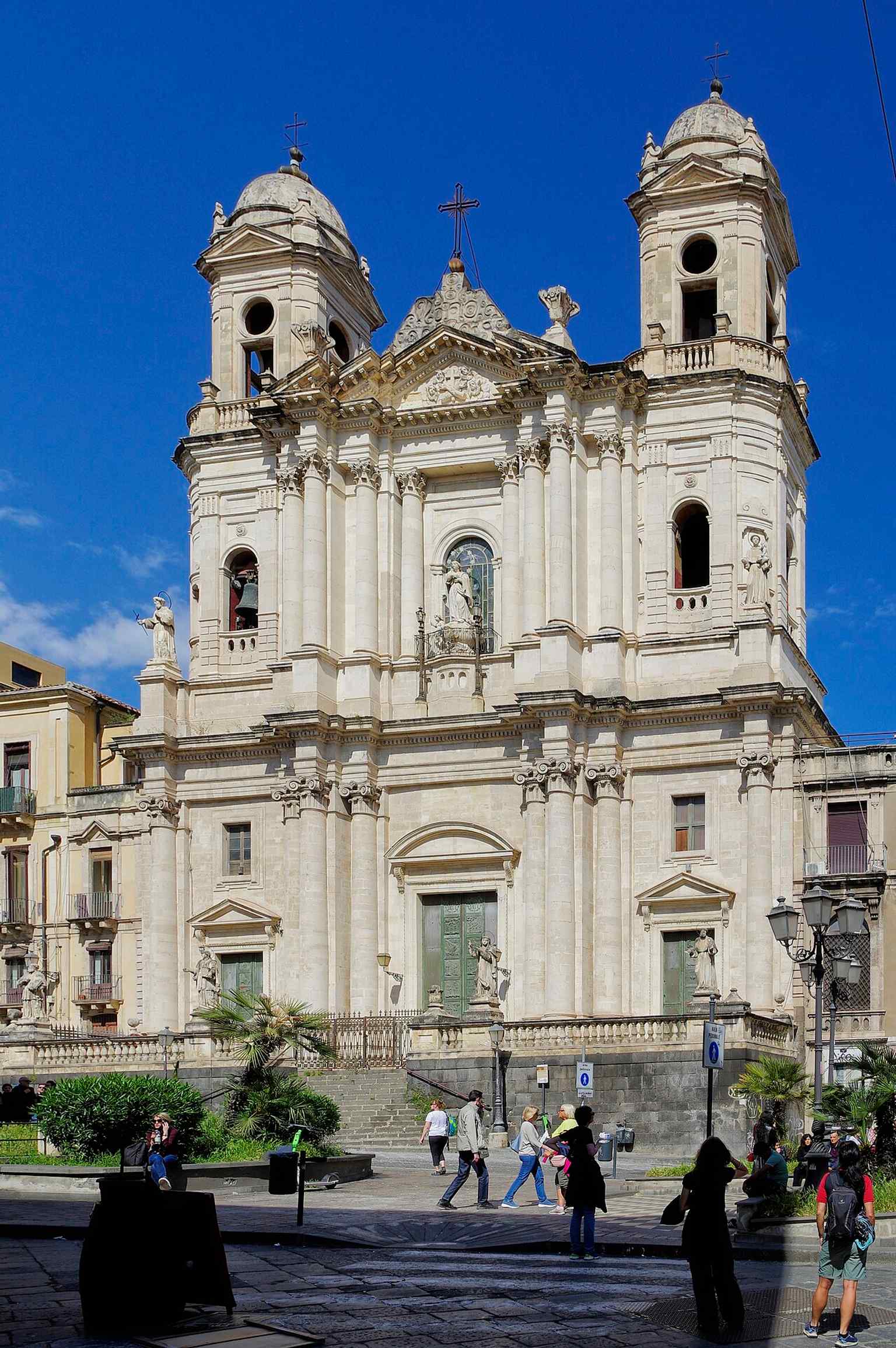
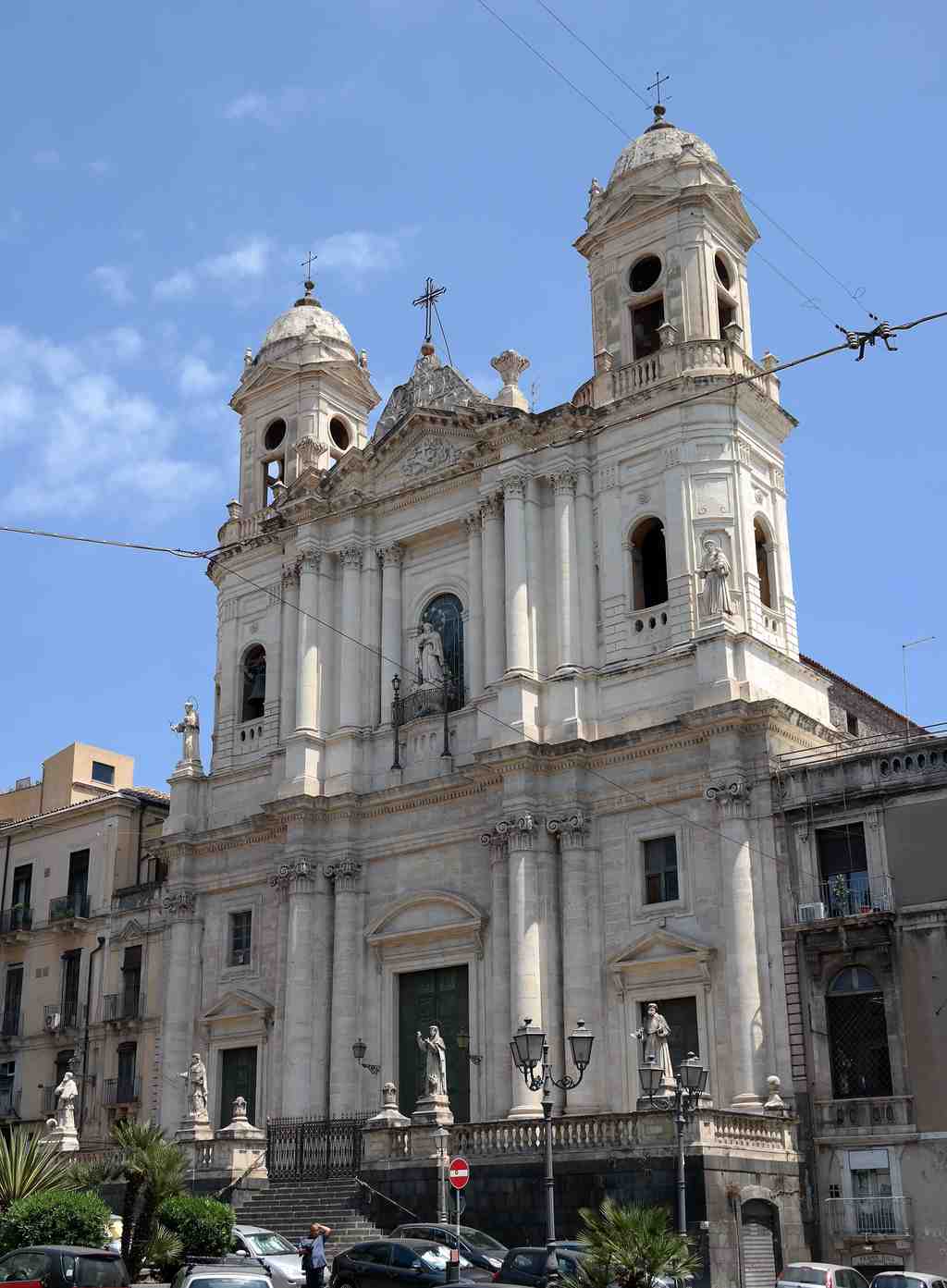
On your right, look for a pale limestone façade with a broad lava-stone staircase, three dark doorways, and two square towers topped with little domes and weather vanes.

This church carries many lives inside it... and not all of them began as Christian stories. Long before the Franciscans arrived, this ground held a pagan temple dedicated to Demeter, the goddess of grain and fertility. So even at the very start, this was sacred ground, layered with prayer after prayer.

The Franciscans first settled in Catania in the mid-thirteenth century. Then, in thirteen twenty-nine, Queen Eleonora of Anjou gave this place its defining heartbeat. She sponsored a new church and convent as a vow of thanks to the Virgin Mary after the danger of an Etna eruption. And her story is tender and heartbreaking. She had lost her husband, King Frederick the Third, and two of her children. After that, she stepped away from courtly splendor, withdrew to a small villa near Belpasso, and gave her last years to prayer and penance.

When Eleonora died in thirteen forty-one, people carried her body here in solemn procession. For more than three centuries, her great marble tomb stood inside as a symbol of royal power and private sorrow held together. Then the earthquake of sixteen ninety-three struck Catania with terrifying force. The original Gothic church and convent fell. The roof crashed down onto Eleonora's tomb and shattered it. Only a fragment survived, and old local stories whisper that the friars hid her remains within the rebuilt walls to protect them.

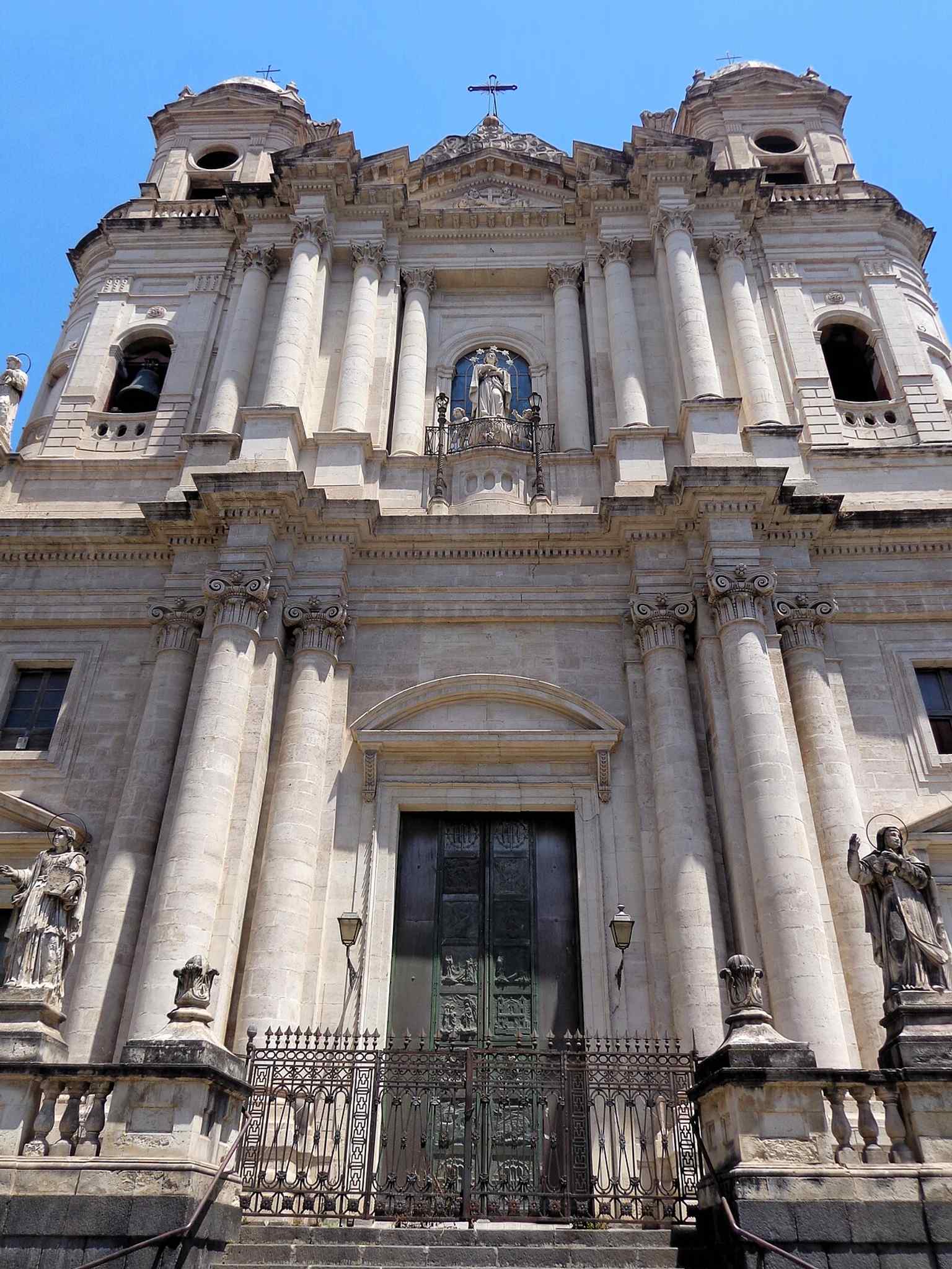
If you want a fuller sense of the front, take a quick look at the image on your screen. You can really see how the rebuilt church presents itself: the staircase of Etna stone, the iron gate, the balustrade, and the statues standing guard above the pillars.
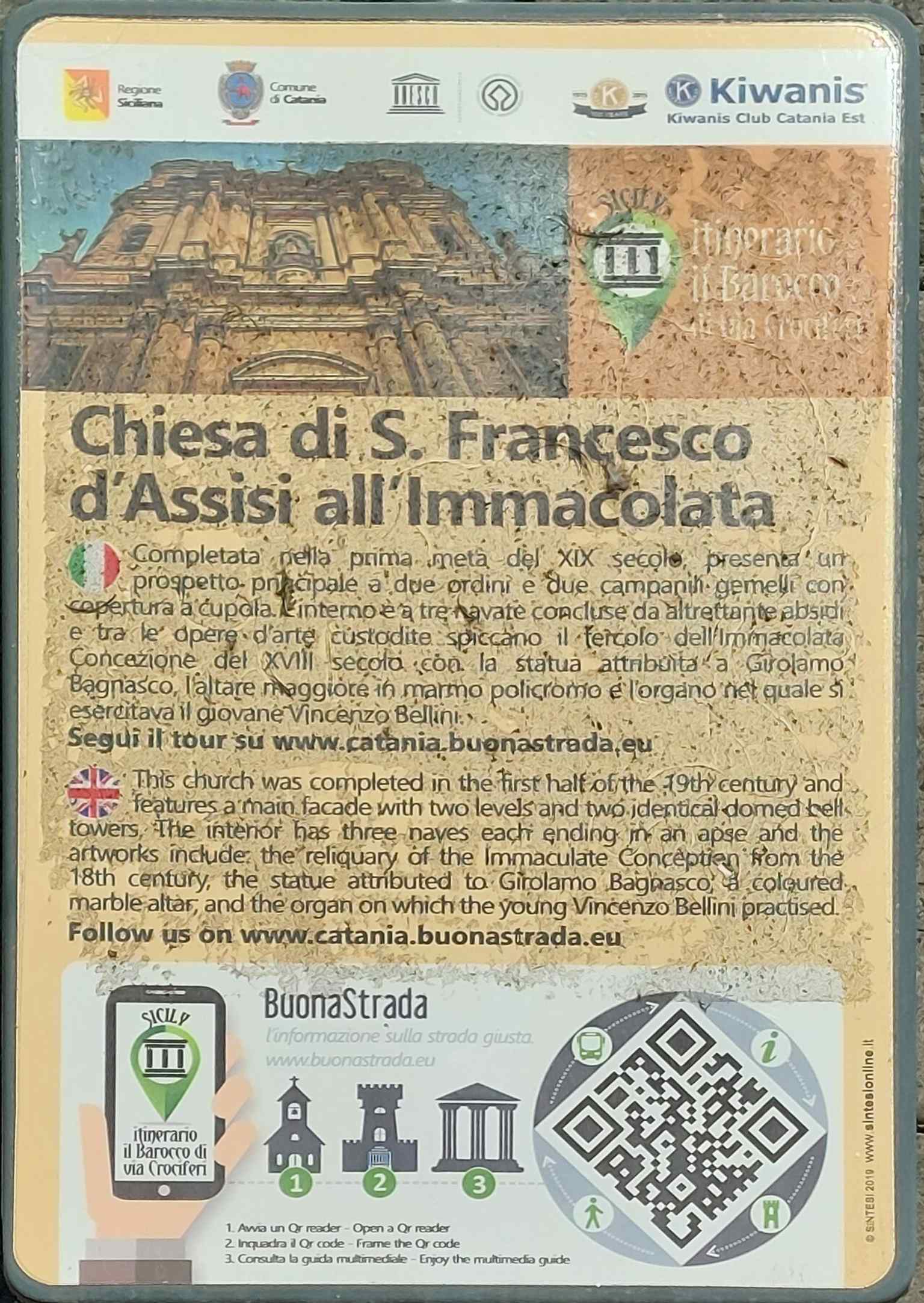
A clear front view of San Francesco all’Immacolata in the heart of Catania, the church rebuilt after the devastating 1693 earthquake.
A clear front view of San Francesco all’Immacolata in the heart of Catania, the church rebuilt after the devastating 1693 earthquake.Photo: Ysogo, Wikimedia Commons, CC BY-SA 4.0. Cropped & resized.

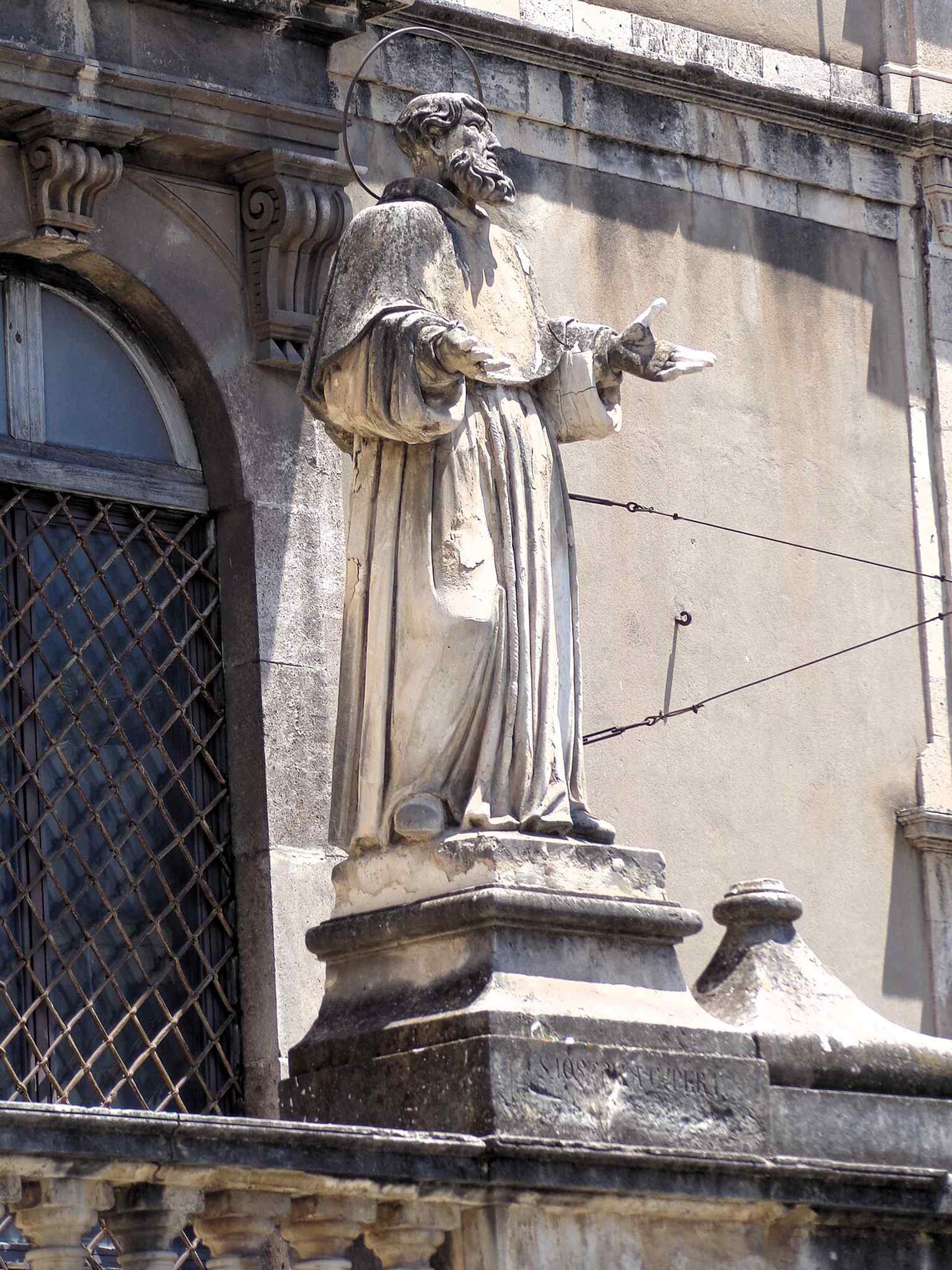
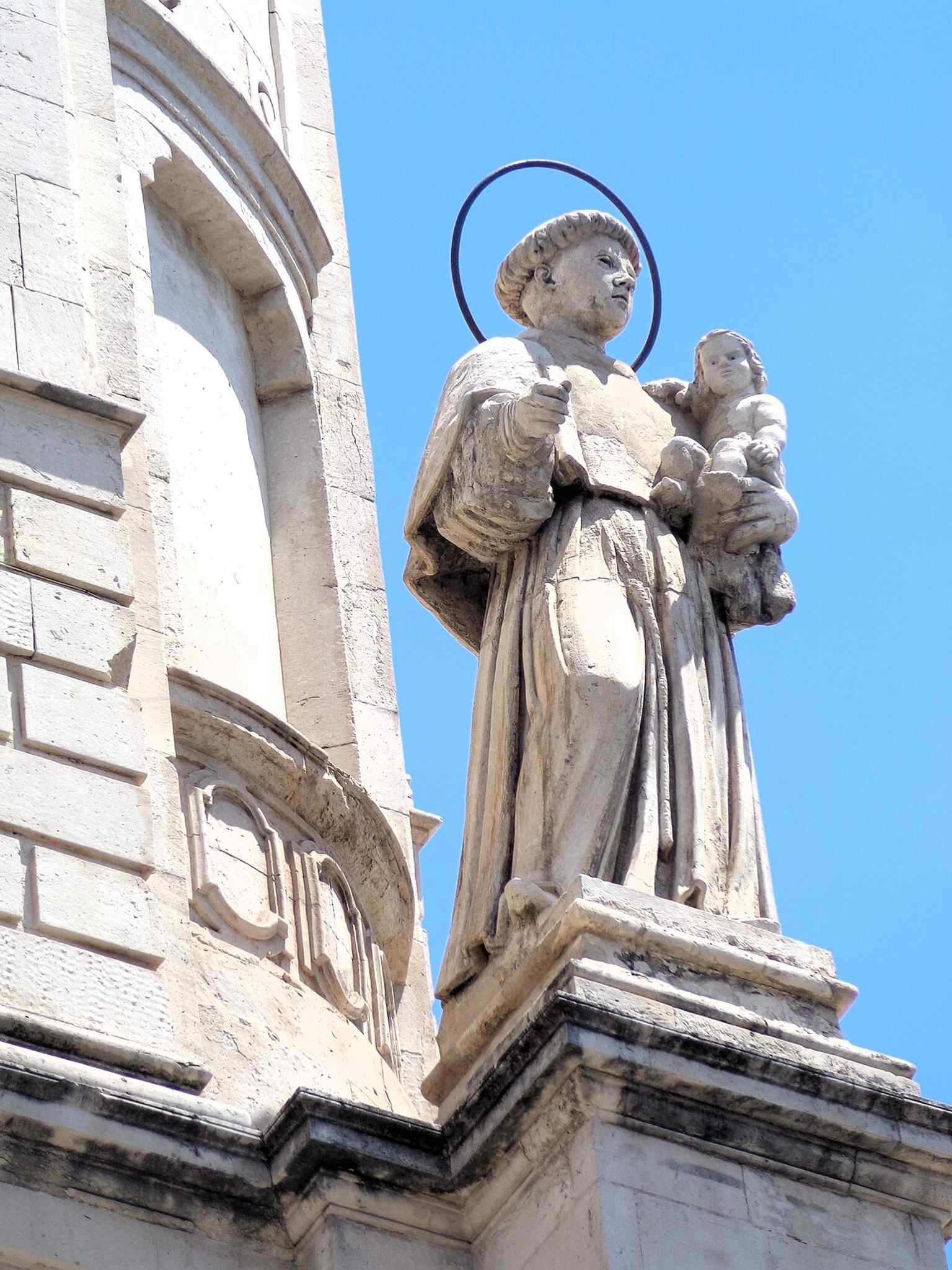
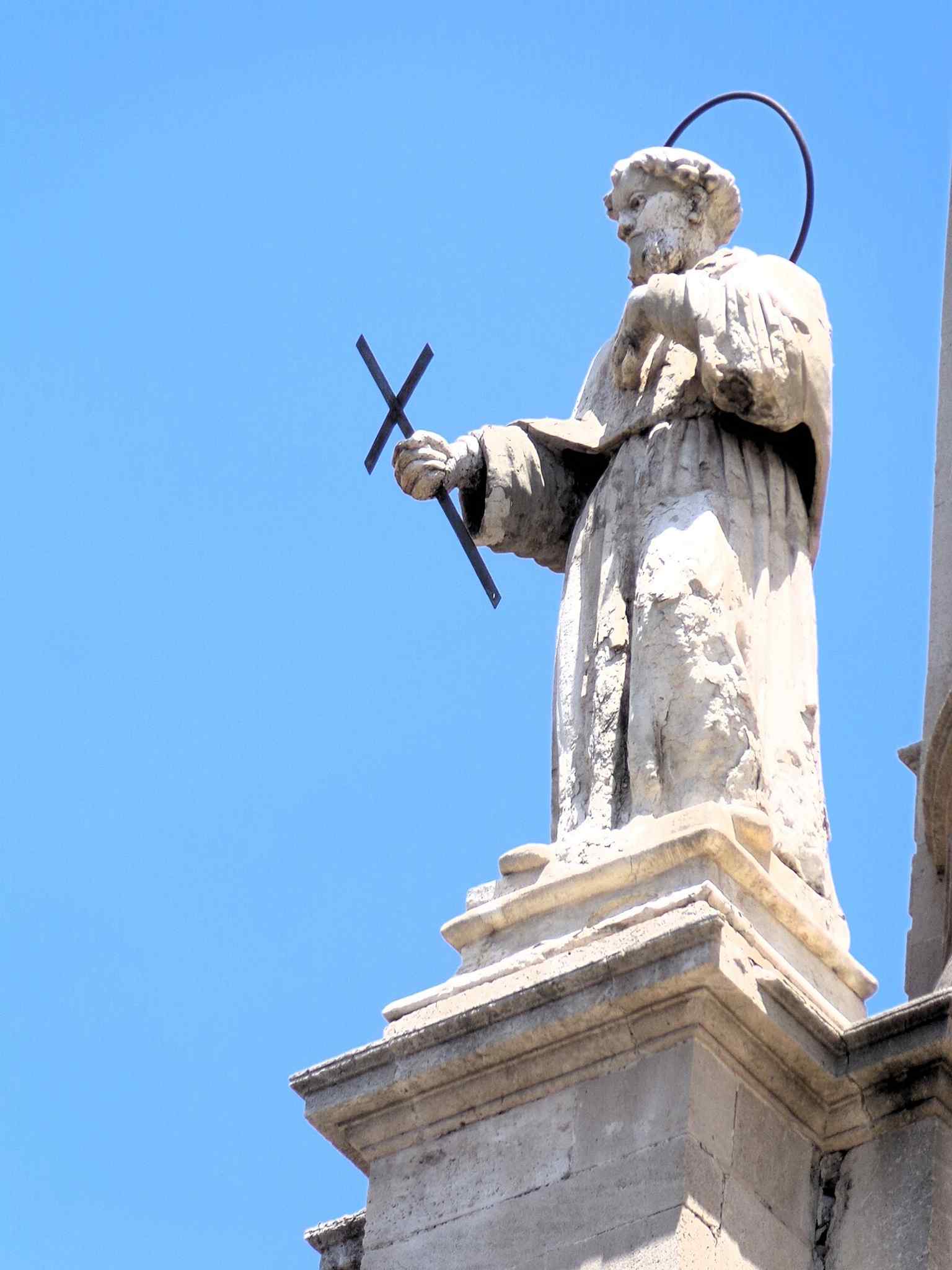
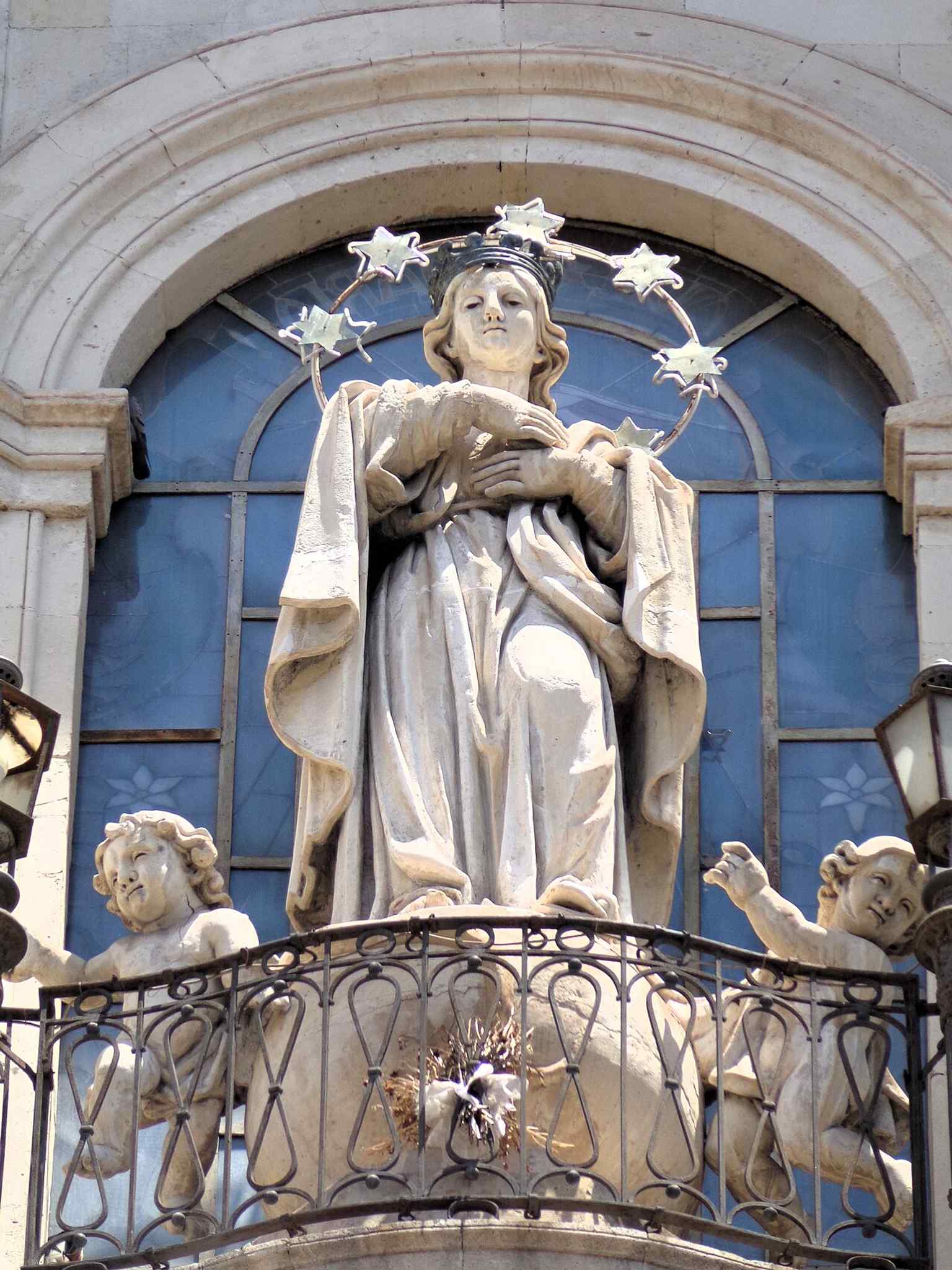
What you see now belongs to that long reconstruction, in the dramatic Baroque style Catania embraced after disaster. Notice how the church rises with dignity rather than haste: the rows of attached half-columns, the three façade statues, and the pediment, the triangular crown at the top, carved with the symbols of Saint Francis. The whole exterior feels like a city telling itself, we are still here.

Inside, the devotion grows even deeper. Around sixteen twenty-four, Catania's senate named the Immaculate Conception the city's co-patron beside Saint Agatha. The Immaculate Conception means Mary's conception without original sin, a belief held very dearly in Catholic tradition. A lay brotherhood called the Confraternity of the Slaves of the Immaculate paid for major feasts here and gained burial rights in the crypt below, placing themselves completely under Mary's protection.

And there is one more intimate thread. If you peek at the interior photo in the app, imagine a child hearing his future in that space. Young Vincenzo Bellini, who lived nearby, practiced on the church's gilded wooden organ here before Europe knew his name. Before the opera houses, there was this church... this room... this beginning.
An interior view that captures the nave and the church’s richly decorated baroque atmosphere, where the Franciscan story unfolds.
An interior view that captures the nave and the church’s richly decorated baroque atmosphere, where the Franciscan story unfolds.Photo: Effems, Wikimedia Commons, CC BY-SA 4.0. Cropped & resized.

This church gathers Catania's grief, faith, and music into one faithful body of stone.

When you're ready, continue on toward the Jesuit College.
The church façade in full, showing the late-Baroque reconstruction that replaced the original medieval building lost in the Val di Noto quake.
The church façade in full, showing the late-Baroque reconstruction that replaced the original medieval building lost in the Val di Noto quake.Photo: Viaggiamocela, Wikimedia Commons, CC BY-SA 4.0. Cropped & resized.
A dramatic black-and-white exterior view that emphasizes the monumental façade and its twin towers over Piazza San Francesco.
A dramatic black-and-white exterior view that emphasizes the monumental façade and its twin towers over Piazza San Francesco.Photo: Berthold Werner, Wikimedia Commons, CC BY-SA 4.0. Cropped & resized.
Another sharp exterior angle on the church, useful for showing its broad façade and urban setting in central Catania.
Another sharp exterior angle on the church, useful for showing its broad façade and urban setting in central Catania.Photo: Effems, Wikimedia Commons, CC BY-SA 4.0. Cropped & resized.
The side view of the church helps reveal the long basilica body behind the ornate front, reflecting the layered rebuilds over centuries.
The side view of the church helps reveal the long basilica body behind the ornate front, reflecting the layered rebuilds over centuries.Photo: Effems, Wikimedia Commons, CC BY-SA 4.0. Cropped & resized.
Inside the basilica: a good view for explaining the three-nave layout and the sculpted, devotional interior spaces.
Inside the basilica: a good view for explaining the three-nave layout and the sculpted, devotional interior spaces.Photo: Effems, Wikimedia Commons, CC BY-SA 4.0. Cropped & resized.
A closer interior detail, ideal for highlighting the church’s decorative program and the craftsmanship of its altars and stuccoes.
A closer interior detail, ideal for highlighting the church’s decorative program and the craftsmanship of its altars and stuccoes.Photo: Effems, Wikimedia Commons, CC BY-SA 4.0. Cropped & resized.
An interior perspective that can help connect the church to its famous devotion to the Immaculate Conception and its historic cult.
An interior perspective that can help connect the church to its famous devotion to the Immaculate Conception and its historic cult.Photo: Effems, Wikimedia Commons, CC BY-SA 4.0. Cropped & resized.
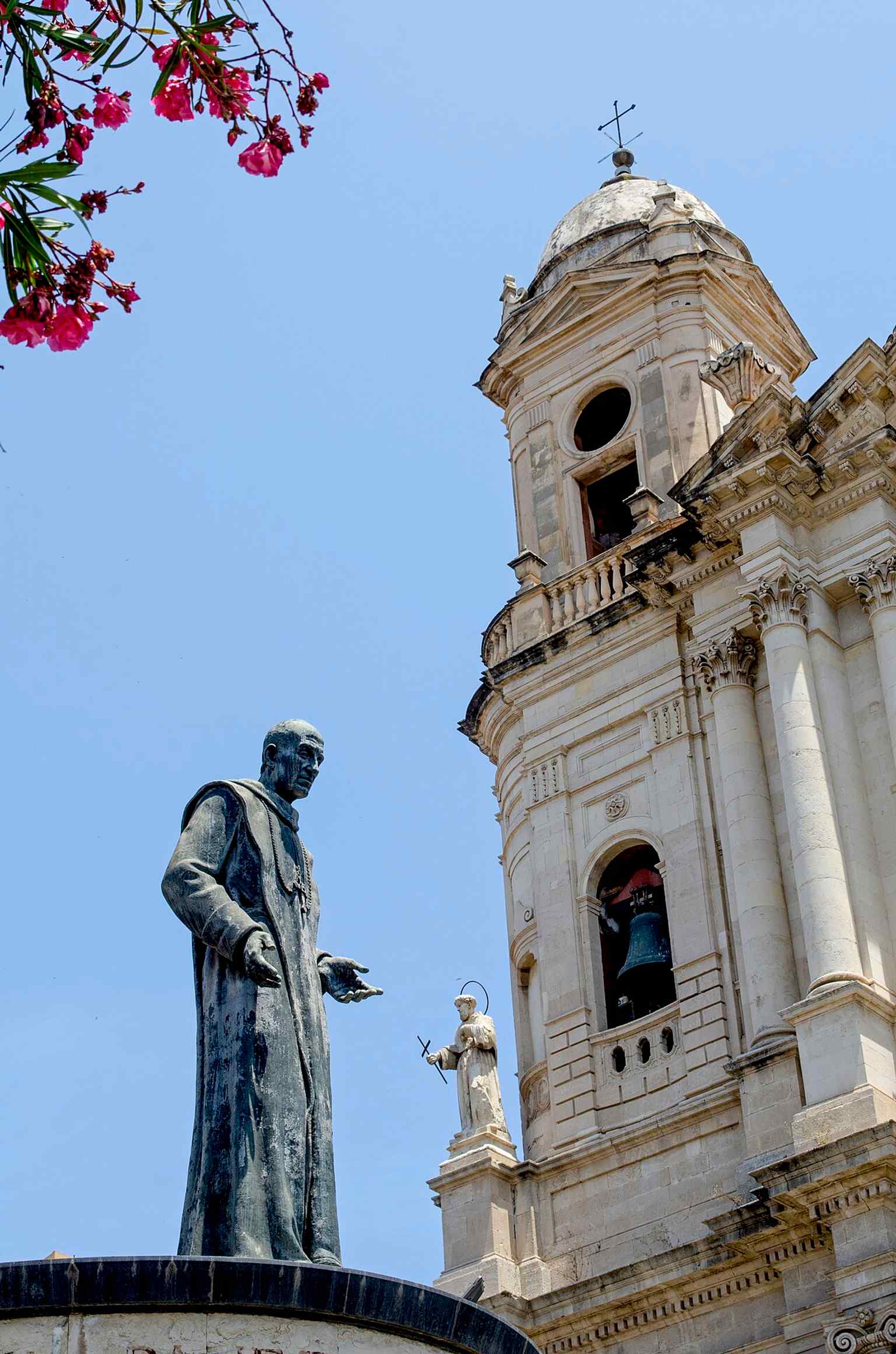
The church together with the monument to Cardinal Giuseppe Benedetto Dusmet, adding a civic-religious layer to the site’s public square.
The church together with the monument to Cardinal Giuseppe Benedetto Dusmet, adding a civic-religious layer to the site’s public square.Photo: Mauripri, Wikimedia Commons, CC BY-SA 4.0. Cropped & resized.
arrow_back Back to Catania Audio Tour: Legends, Learning and Lava Stones
Loved by travellers

Thousands of tours started.
Plenty of opinions.

4.8 across the App Store and Google Play. Here's a few we keep coming back to.

starstarstarstarstar
This was a solid way to get to know Brighton without feeling like a tourist. The narration had depth and context, but didn't overdo it.
Christoph
Christoph
Brighton Tour
starstarstarstarstar
Started this tour with a croissant in one hand and zero expectations. The app just vibes with you, no pressure, just you, your headphones, and some cool stories.
download Get the app

Pop your headphones in.
Step outside.

Free to download. Tours in every city. Start in 60 seconds — no account, no card.

Download on the App StoreGet it on Google Play
starstarstarstarstar_half
4.8
AudaTours app icon
headphones
~ 4 min until your first tour starts
public
1,000+ cities worldwide
all_inclusive
AudaTours
Unlimited

Every tour. Every city. One subscription.

3101 tours2271 cities138 countries50+ languages