
Brindisi Audio Tour: Echoes of Faith and Forgotten Stones
A Roman gateway once guarded this coast, hiding centuries of rebellion and intrigue behind Brindisi’s sunlit facades. Secrets still ripple through these ancient stones, echoing beneath the busy streets. This is your self-guided audio tour—designed to lead you off the beaten track and deep into the stories and spaces most travelers overlook. Unlock legends, scandals, and puzzles hiding in plain sight. Who defied an emperor and altered the fate of Brindisi forever at the Church of San Giovanni al Sepolcro? Why did priceless relics vanish from the Archdiocese in a single stormy night? What does a cryptic inscription in the Ribezzo Museum reveal about a scheming priest with a dangerous secret? Trace the pulse of power and devotion as each step peels back new layers. Move through shadows and sun, and see Brindisi transform through stories of ambition and mystery. Press play and let hidden Brindisi reveal itself.
Tour preview
About this tour
- scheduleDuration 40–60 minsGo at your own pace
- straighten2.3 km walking routeFollow the guided path
- location_on
- wifi_offWorks offlineDownload once, use anywhere
- all_inclusiveLifetime accessReplay anytime, forever
- location_onStarts at Limarie tanks
Stops on this tour
To spot the Limarie tanks, look down and to your left for a series of ancient stone and brick cisterns stretching alongside Brindisi’s old city wall, right by Porta Mesagne, with…Read moreShow less
To spot the Limarie tanks, look down and to your left for a series of ancient stone and brick cisterns stretching alongside Brindisi’s old city wall, right by Porta Mesagne, with chunky rectangular pillars poking up above the ground. So here you are, standing in front of one of Brindisi’s greatest engineering relics: the Limarie tanks! Imagine the scene nearly two thousand years ago-a time when to take a shower, you had to hope the Romans hadn’t forgotten basic plumbing. These tanks weren’t for swimming-unless you were a fish with very specific taste. Instead, they were giant settling pools, the last step in Brindisi’s ancient water system. Picture fresh water, traveling from a well about ten kilometers away, weaving its way on an underground and elevated journey, all to splash down right here at the threshold of Roman Brundisium. The sound of trickling water must have echoed against the city walls, mingled with voices and footsteps from Porta Mesagne. These tanks are ancient, built from carparo, that rough golden limestone you see everywhere in this region. If these stones look worn, they’ve had quite a life! Back in Roman days, this was prime city infrastructure, filtering out all the gunk so only the cleanest water flowed to Brindisi’s fountains. That’s right-imagine being a Roman citizen, strolling up to a sparkling city fountain, never bothering to wonder about the engineering marvels hidden behind the scenes. Here, across 51 meters of structure and more than 11 meters wide, there once stretched at least three mighty settling tanks, all covered by barrel-vaulted ceilings about as tall as a basketball hoop. These ceilings were so solid, they eventually stood taller than the city walls… which, sure enough, became a bit of a problem. Fast-forward to the 500s and 600s, the tanks fell into neglect-because who has time for maintenance when there are Goths and Saracens at the gates? Over centuries, the city changed hands, shrank, and grew again under the Normans and Swabians, who built new cisterns close by. By the 1500s, when Brindisi needed big defensive bastions to face new threats, these tanks got a radical haircut: imagine a barber snipping the dome off your head just to save the castle next door! The tops were removed to keep the tanks from peeking over the walls. They knew how to reuse a space, too. In the 20th century, the tanks saw everything from electricity workshops to restaurants-imagine your spaghetti with a dash of Roman dust. Over the years, restoration gave them back to the city, revealing thick walls, giant pillars, and ancient tile floors with clever little drainage channels. Walk along and notice the remains of the second and third tanks-one lost, the other clinging to the past with only a sliver of wall left. If you catch the angle just right, you might even spot the original water level hole for keeping the flow just perfect, or the ancient “Y” shaped gutters designed to whisk away silt after a heavy rain. It’s not every day you get to hang out with a piece of plumbing this old-and trust me, it beats the average Roman bath!
Open dedicated page →To spot the Church of San Benedetto, just look for the large, honey-colored stone building with rows of tall, arched windows and a sturdy, square bell tower rising on the…Read moreShow less
To spot the Church of San Benedetto, just look for the large, honey-colored stone building with rows of tall, arched windows and a sturdy, square bell tower rising on the right-it's hard to miss! Now, as you stand in front of this ancient Romanesque church, try to picture the world almost a thousand years ago. Monks and nuns once bustled through this very square, the scent of fresh bread and wax candles drifting from the cloisters. The church may look a bit like a fortress-especially with that massive, triple-arched bell tower-but don’t worry, nothing jumps out at you here except history! The roots of San Benedetto go all the way back before the 11th century, thanks to a generous local count named Goffredo and his wife Sichelgaita-now, there's a power couple for you. By the 1700s, the original nuns decided they needed a little real estate upgrade. They built a new monastery just next door, cleverly blocking the façade and moving the main entrance to the side. Talk about bold renovation choices! After the nuns left in the 1800s-by official order, not just because they fancied a new neighborhood-the church changed owners, becoming a parish hub and even taking on a few facelifts in the 1900s. Out went the baroque altars, and in came the neat Romanesque lines you see restored today. Explore the portal along the side, and you’ll find stone carvings of men wrestling dragons-imagine medieval MMA, but with more scales and claws. Inside, keep a lookout for marble columns with capitals bursting with animals: oxen, lions, and rams all mashed together, as if an ancient zookeeper got a little too creative. If you wander into the little museum next door, you’ll spot colorful sculptures, a “Madonna of the Snow,” and even a statue of Saint Benedict made of papier-mâché-just don’t sneeze too hard! Finally, behind the church hides a charming medieval cloister, with columns that look like something out of a stone forest. Beneath these calm arches, traces of Roman buildings wait quietly for the next curious explorer.
Open dedicated page →To spot the Church of Santa Maria degli Angeli, look ahead for a sturdy, honey-colored limestone building with an ornate, baroque façade-just follow the curves and flower details…Read moreShow less
To spot the Church of Santa Maria degli Angeli, look ahead for a sturdy, honey-colored limestone building with an ornate, baroque façade-just follow the curves and flower details above the doorway and you can’t miss it. Now, let’s let the stones and stories of this church really come alive! Imagine yourself standing in Piazza Angeli four hundred years ago, dust swirling around your feet as the foundations for this church were first being laid. Saint Lawrence of Brindisi himself, a tireless and clever Franciscan, decided to build this sanctuary on his own land, a gift for the Poor Clare nuns who lived here. Picture the clatter of construction, the shouts of workers (and probably some accidental hammer-to-thumb situations!), all made possible by a rather regal sponsor-Maximilian I of Bavaria, who funded most of it. Construction started in 1609, and by 1619 the place was bustling with prayers and silent devotion. Though the nuns’ monastery was knocked down in the early 1900s, the church stands proud, built from strong, sandy carparo stone. Its shape from above would look like a Latin cross, and right in front of you is the fabulously baroque façade, decorated with playful cherubs and stone flowers. Don’t miss the wooden door, carved with scenes of saints-Saint Francis, Saint Clare, John and Matthew all huddled together (probably swapping jokes about sandals and miracles). Inside, there’s just one long, echoing nave, but each side is lined with four small chapels, cradling paintings and sculptures. Look for a striking crucifix made by Angelo da Pietrafitta and a painting of Saint Lawrence in the throes of spiritual ecstasy. Here, too, is a dramatic ivory crucifix, once held by Lawrence himself as he rallied Christian soldiers at the 1601 Battle of Székesfehérvár-imagine the tension and the faith as he urged them forward! Hidden in the recesses are personal relics of Lawrence-his prayer book, priestly robes, even a vertebra by his statue. There’s a treasure trove of saints’ bones (spooky, or just remarkably well-preserved, you decide). Overhead, you’ll spot paintings by Diego Oronzo Bianco and a glowing vision of the Immaculate surrounded by angels, painted by Pieter De Witte. This church is more than bricks and mortar-it’s a time machine packed with drama, faith, and the echoes of centuries. Ready to keep walking through Brindisi’s secrets? Let’s go!
Open dedicated page →
Show 11 more stopsShow fewer stopsexpand_moreexpand_less
 4
4Tempio San Giovanni al Sepolcro
Buy tour to unlock all 18 tracksTo spot the Church of San Giovanni al Sepolcro, look for a round, stone building tucked among lush gardens and vines, with a low, tiled roof and old walls standing in contrast to…Read moreShow less
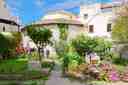
To spot the Church of San Giovanni al Sepolcro, look for a round, stone building tucked among lush gardens and vines, with a low, tiled roof and old walls standing in contrast to the surrounding white houses. As you stand here, close your eyes for a moment and imagine you’re transported back almost a thousand years, the air dense with the anticipation of returning crusaders, and the sound of distant church bells ringing through the winding streets of Brindisi. This unassuming circular church in front of you is more than just old stone and roof tiles - it’s a time capsule bursting with legends, secrets, and centuries of bustling activity. Legend claims San Giovanni al Sepolcro was raised by Bohemond himself on his way back from the Crusades, inspired by the grand, mysterious rotunda built over Christ’s tomb in Jerusalem. Maybe he saw Brindisi as a dash of Jerusalem in his own backyard - after all, the shape of this church follows the octagonal or circular model that was all the rage across medieval Italy, echoing that same holy structure. It’s almost as though the building itself is humming with echoes of distant lands and epic journeys. The church was long connected to the curious-sounding Canonici del Santo Sepolcro, a group with a flair for adventure and, apparently, excellent paperwork. In 1126, a certain Arnone - not to be confused with a big horn - the prior of this church, popped up in church records, wrangling over land disputes with the local nuns, all under the watchful eye of Pope Honorius II. For centuries, papal documents mention the church and its canons, confirming their powers, property, and probably, their growing collection of stories. Over time, rumors swirled: was this a Templar church? Sorry to disappoint any lovers of hidden treasure - there’s no evidence for sword-swinging knights here, just regular holy folks with a taste for drama. Speaking of drama, in 1489, the church’s canons were declared extinct by Pope Innocent VIII. (Not the canons themselves, mind you - just their order!) Their stuff was handed over to the Knights of St. John, who must’ve thought, “Nice place! Hope the roof holds.” Well… about that roof. In 1761, a violent earthquake rattled through Brindisi. Most buildings crumbled, but this church refused to give up its secrets. It lost its roof and frescoes, and the columns shifted so much, even today they lean just a bit - like they’re tired from holding up centuries of history. For decades, the church languished, but in the 19th century, it rose again, even serving as a temporary civic museum, with archaeologists unearthing remnants of a grand Roman house beneath your feet. Before you, this ancient marvel stands proudly, its doorframes guard a riot of fantastical creatures: lions, warriors, twisting vines, and biblical tales carved in stone. The partly-ruined frescoes inside whisper old stories - a Madonna, Saint George, a sorrowful Christ - fragments of faith frozen in time. This is no ordinary church; it’s a wonder that has survived almost everything thrown at it. And if you listen carefully, you might just hear its walls sharing a secret or two.
Open dedicated page →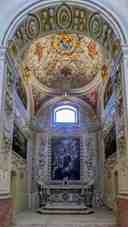 5
5Museo diocesano Giovanni Tarantini
Buy tour to unlock all 18 tracksIn front of you, the Giovanni Tarantini Diocesan Museum almost shimmers with its ornate, baroque interior-just look for a richly decorated chapel where every inch is covered in…Read moreShow less
In front of you, the Giovanni Tarantini Diocesan Museum almost shimmers with its ornate, baroque interior-just look for a richly decorated chapel where every inch is covered in intricate stucco, vivid paintings, golden flourishes, and an arched ceiling alive with carved angels and flowers. Now, let’s step inside this remarkable story. This museum, founded only in 2012, actually calls home the ancient and beautifully restored Church of San Paolo Eremita. And trust me, this isn’t your average dusty collection of old things-it’s more like the attic of history, but with fewer spiders and a lot more silver. But things didn’t always go so smoothly: after opening inside the neighboring Church of Santa Teresa, a huge restoration effort began. Imagine the clatter of tools and the hum of workers’ voices as the whole place was brought back to shining life. Once the church was ready for the spotlight, treasures began their carefully orchestrated parade to their new home. After permission slips from every office in town (including the Archbishop’s, who-between you and me-has better penmanship than I do), the collection was moved under this spectacular roof. This wasn’t just about dusting off heirlooms; it was a mission-preserve, showcase, and share the centuries-deep art and faith of Brindisi’s diocese. Inside, your eyes will flit from the Platea of 1738-an entire inventory of the old convent, complete with its oldest known map-to artifacts that seem to burst out of legend. There’s an eighth-century marble water jar, known as the “Vase of the Epiphany,” which probably traveled all the way here in the 1200s, maybe attending a royal wedding along with the relics of Saint Theodore. That’s right: in 1225, Isabella, Queen of Jerusalem, and Emperor Frederick II had their wedding celebration just steps away from here, and the precious relics were wrapped in a dazzling silk, “oro di Cipro”-gold-stitched, and so fancy it’d make a modern bridal gown jealous. Take a peek at the silver reliquary from the thirteenth century, which once held those relics. Each face of the box gleamed with ornate sheets of silver, probably dazzling anyone with a weak spot for shiny things. And if you listen for just a moment, you might catch the gentle crinkle of ancient parchment -since there’s even a document signed by Frederick II himself in 1219, granting privileges and power like he’s dealing out cards at a royal poker night. But not everything went as planned-some of the centuries-old silver liturgical treasures were stolen in 2023, leaving everyone a little heartbroken. Yet much still remains: decorated missals, ancient charity plates telling sacred stories, and even a traditional “jad” pointer used to read sacred texts. Paintings from famous local artists and brilliant liturgical vestments, woven with bursting cornucopias and wild, curling flowers, complete the display. Finally, you’ll see a section dedicated to San Lorenzo da Brindisi-here you'll spot the actual lectern he used, celebrated vestments, and monastery records, all echoing the story of a visionary leader. With every step around this museum, you’re walking through centuries of faith, artistry, royal drama, and a fair bit of restoration dust-proof that Brindisi treasures its cultural heart, even if treasure sometimes has to move house.
Open dedicated page →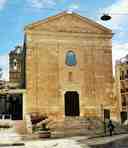 6
6Chiesa di San Paolo Eremita e Museo Diocesano G. Tarantini
Buy tour to unlock all 18 tracksThe Church of San Paolo Eremita stands in front of you with its sturdy, tan stone façade-look up at the simple triangular pediment and the tall, dark door reached by a flight of…Read moreShow less
The Church of San Paolo Eremita stands in front of you with its sturdy, tan stone façade-look up at the simple triangular pediment and the tall, dark door reached by a flight of stone steps, and glance left to spot the bell tower peeking out from behind. Right where you’re standing, things used to get seriously dramatic-a Roman fortress once dominated this very spot, before the Byzantines and Normans came along and put their spin on things. Then, in a twist worthy of a good soap opera, the fortress was abandoned and the Franciscans swooped in, claiming the land as their own. By 1322, thanks to the generosity of a certain Robert of Anjou, a grand new church and convent rose from the stones. Imagine the busy sounds of construction, echoing off ancient walls. The current façade, the one glaring at you now, is actually an early 1800s reboot-apparently the original was a bit overenthusiastic about gravity, threatening to tumble down. The Franciscans eventually moved out, and over time the place became a mixed bag: government offices moved in; nearby, a school sprang up; and, if you peek around, you might spot the remains of those medieval defensive stones at the church’s base. Step inside and the place stretches out into a single broad nave. There’s a treasure trove of baroque altars-one to San Giuseppe from the eighteenth century, another to Sant’Antonio da Padova with a carved wooden statue straight out of 1632, and a painting-packed altar probably by Alessandro Fracanzano. And just when you think you’ve seen it all, the walls reveal faded 14th-century frescoes: saints, scenes of noble feasts, and stories of Saint Mary Magdalene line the right side and the apse like a medieval comic strip. One of my favorites? The legendary statue of the Madonna of the Earthquake, hidden in a northern niche-locals once thought she had miraculous powers during storms. There are chapels funded by eccentric historians, rich family tombs from the 1600s, and even a massive handmade wardrobe from 1725 tucked away in the sacristy, probably groaning under the weight of ancient secrets. After a fresh restoration in 2018, the church now doubles as a diocesan museum, but the bones of Brindisi’s battles, prayers, and old rivalries are still here, just under the surface-and maybe, if you listen closely, you’ll hear the faint ring of the bell tower as you move on.
Open dedicated page →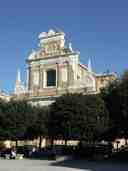 7
7Church of Saint Theresa
Buy tour to unlock all 18 tracksTo spot the Church of Santa Teresa, just look up at the building in front of you with its creamy yellow stone walls, ornate white trim, pointy pinnacles, and swirling baroque…Read moreShow less
To spot the Church of Santa Teresa, just look up at the building in front of you with its creamy yellow stone walls, ornate white trim, pointy pinnacles, and swirling baroque shapes sitting above a row of leafy green trees. Now imagine yourself back in the late 1600s, walking across this very piazza as stones clink and hammers ring, because this church owes its life to a generous priest named Francesco Monetta. Picture it: the city abuzz with activity, workers hustling to finish this graceful Baroque church that would soon become the heart of a quiet Carmelite convent. Back then, the name on everyone’s lips wasn’t even Santa Teresa-it was dedicated to Saint Joachim, and the air would’ve carried hints of incense and the gentle sound of monks shuffling past. Fast forward to 1807, and everything flips! Napoleon’s troops march in, the convent doors slam shut, and suddenly the church is filled not with prayers, but the clatter of army boots as it becomes a military outpost. After years of echoing emptiness, it finally found new life in the 1980s as the State Archives. Step inside today and you’ll find treasures, too: Diego Bianchi’s vivid paintings beside the main altar, a delightful Nativity scene packed with costumes straight from the 1600s, and even statues and marble tributes to the city’s secret benefactors. It’s a place that’s survived wars and silence and come back full of stories-just don’t be surprised if you feel the echo of its many past lives!
Open dedicated page →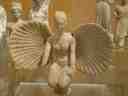 8
8Museo Archeologico Francesco Ribezzo
Buy tour to unlock all 18 tracksStraight ahead, you’ll spot the Francesco Ribezzo Provincial Archaeological Museum by its striking medieval portico with columns and arches, and if you notice unusual ancient…Read moreShow less
Straight ahead, you’ll spot the Francesco Ribezzo Provincial Archaeological Museum by its striking medieval portico with columns and arches, and if you notice unusual ancient anchors or carved sarcophagi outside, you’re in exactly the right place! Welcome to the Francesco Ribezzo Provincial Archaeological Museum-where history isn’t just behind glass, it’s practically waiting to leap out and recite Latin poetry at you! Imagine you’re entering through a magnificent portico, once used by the Knights Templar. Under the shade of those arches, look around: there are heavy bronze anchors, ancient sculptures, marble tombstones, and maybe even a lost fragment or two from a shipwreck. If you listen closely, you might even hear the faint clatter of chisel and hammer from the distant past. The museum owes its name to Francesco Ribezzo, an archaeologist and linguist with a passion for ancient things (and probably dusty shoes). But its journey began in the 19th century, thanks to a local canon named Giovanni Tarantini, who first housed Brindisi’s treasures in the Church of San Giovanni al Sepolcro nearby. When that spot became too cramped-imagine trying to fit a Roman statue through a tiny church door!-the collection moved here, next to the grand piazza Duomo. Rewind to the 1950s: the province of Brindisi, finally separate from Lecce, realized its ancient wonders needed a safe home. Excavations and accidental finds flowed in, ranging from private collectors' quirks to the mysterious prizes pulled up during construction works. When builders started work underneath the museum, they probably expected foundation problems, not priceless relics! With the help of several renowned archaeologists-Ciro Drago, Pietro Romanelli, and their friends-the museum officially unlocked its doors to the public in 1958. Every time someone in Brindisi dug a new cellar or built an addition, who knew? There could be an amphora or a Roman coin sneaking its way into the growing collection. One of the greatest local legends is the discovery of the Bronzes of Punta del Serrone. Picture the year 1992: scuba divers, drifting two miles north of the port, felt something solid underfoot. They reached down and pulled out-wait for it-a gigantic bronze foot! Not your average beachcombing day, right? Soon, over two hundred bronze fragments were dragged up from the deep, from limbs to heads, and even a statue of a Roman consul, Lucio Emilio Paolo. It's likely that an ancient cargo ship jam-packed with artwork tried to reach Brindisi, only to be caught by a sudden storm and forced to dump its statues overboard. Maybe the ship later escaped, or maybe it’s still out there, turning up more surprises for the next lucky diver. Step inside and you’ll wander through airy halls filled with vases shaped like spinning tops and painted with energetic party scenes, plus prize pieces brought up from tombs and temples. On the ground floor is the Marzano Hall, where you’ll see ceramics, clay lamps, coins, and more-most with their own stories of feasts, heroes, and the lively daily life of Brindisi's ancestors. Down below in the oldest rooms, run your eyes along the walls-the writing you see isn’t from today, but from ancient Romans, Greeks, Messapians, and even Hebrew and Byzantine hands. Here, memorials tell stories like the short life of a young girl from the 9th century. Climb up and you’ll pass collections showing how Brindisi evolved, from prehistoric settlements with their painted pottery to the splendor of the Roman city: busts of gods, heads of philosophers, mosaics of mythical beasts, and the mysterious statue of Clodia Anthianilla, Brindisi’s own poetess. And don’t miss the underwater archaeology section, where amphorae, anchors, and barnacle-covered treasures glisten under the lights-proof that Brindisi’s connections once reached across the ancient world. So here you are, in front of a museum that is less a building and more an eternal archaeological adventure, stuffed with stories and treasures from land and sea. Don’t worry if you feel the urge to strike a heroic pose amidst the statuary-you wouldn’t be the first!
Open dedicated page →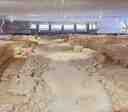 10
10Tempio San Giovanni al Sepolcro
Buy tour to unlock all 18 tracksTo spot San Pietro degli Schiavoni, look for an indoor space beneath the modern Teatro Verdi, where ancient Roman stone walls and pathways are set out in a large, open, and…Read moreShow less
To spot San Pietro degli Schiavoni, look for an indoor space beneath the modern Teatro Verdi, where ancient Roman stone walls and pathways are set out in a large, open, and brightly lit hall. Alright, adventurer, take a deep breath and imagine yourself time-traveling as you gaze at these ancient Roman ruins right beneath Brindisi’s bustling heart. Just a few steps from the lively street, you’re now standing in what was once a busy insula-a small Roman city block, buzzing with the sounds of sandals shuffling and merchants calling out. If you feel a little chill, that's no ghost-just the breeze of history brushing by! Now, picture the neighborhood centuries ago: it was called San Pietro degli Schiavoni, named for the church that welcomed immigrants from Slavic and Albanian lands in the 1400s. This was their safe haven, full of stories of hope, struggle, and new beginnings. Fast-forward to the 1960s-bulldozers roared in, knocking down old houses to build a courthouse. But instead of law books, they uncovered layers of crumbling medieval and Roman life. The ruins of the medieval city were sadly lost, but the moment the ancient Roman insula emerged, excavations sprang into action-saving a real piece of Brindisi’s soul. Now, you’re standing where a steel giant of a theater hovers above the past, specially designed so the ruins would remain untouched and open to explorers like you. Here, time refuses to stay buried, and every stone has a story to tell. Don’t be surprised if you find yourself listening for Roman gossip in the echoes!
Open dedicated page → 11
11Teatro Verdi
Buy tour to unlock all 18 tracksTo spot the Teatro Verdi, look ahead for a large, modern building with sleek glass windows above a striking set of wide, illuminated stairs leading up to its main…Read moreShow less
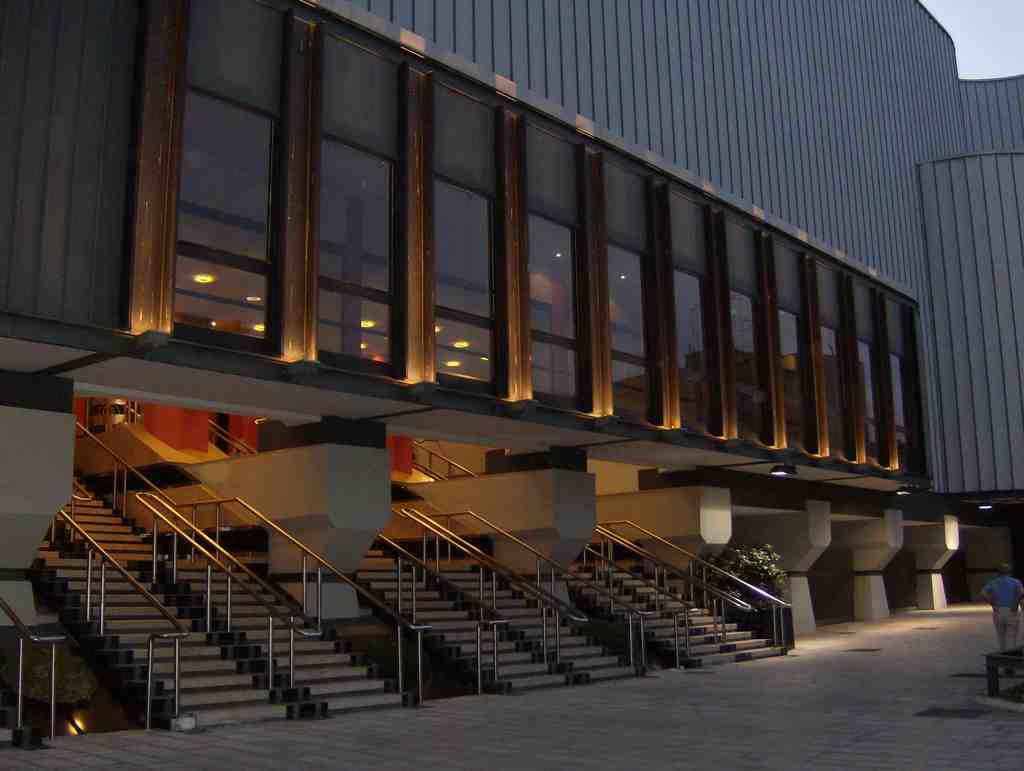
To spot the Teatro Verdi, look ahead for a large, modern building with sleek glass windows above a striking set of wide, illuminated stairs leading up to its main entrance. Welcome to the heart of Brindisi’s artistic scene-Teatro Verdi, the city’s main stage, favorite gathering place for music lovers, drama enthusiasts, and anyone who appreciates a night out with a touch of pizzazz. Right now, you’re standing in front of a marvel of modern design-nicknamed the “suspended theater.” Why? Well, it’s literally floating above Roman ruins! The architects, probably building their own set of dramatic tales, designed it high off the ground so you can glance down through the glass floor panels and see ancient stones awake beneath your feet. Imagine it’s the evening of December 20, 2006. Brindisi is buzzing with excitement, and the very first show ever in this brand-new theater is about to begin. Legendary conductor Riccardo Muti raises his baton, the Orchestra Giovanile Cherubini is ready, and the house is packed. Each seat-out of the theater’s impressive 995, by the way-is filled with residents waiting to see what will take place on one of Italy’s largest stages. This place isn’t just big in spirit! Its stage is 25.5 meters wide, 18 meters deep, towering 20 meters high, and, thanks to a mammoth backstage area, the dreams of set designers probably run wild here. What’s incredible is that this ultra-modern theater is woven right into the ancient center of Brindisi. Stand here and picture the layers beneath-Roman history, centuries-old foundations, and now, 4,500 square meters of performance space, where modern voices and ancient echoes merge in one continuous story. In its first fifteen years, Teatro Verdi became the beating cultural heart of Brindisi. The city’s greatest dramas, comedies, and stars graced this very space, building a tradition of superb performances. Fast forward to 2022: a year of transformation. Stefano Miceli, a musical powerhouse, took on the role of president. He didn’t just shuffle the programs. He revolutionized things, introducing the brand-new Orchestra del Nuovo Teatro Verdi, marking the birth of the theater’s first resident orchestra. The orchestra’s debut rang in the New Year that January, and not a single seat was left empty! Suddenly, Brindisi found itself with a symphony season, an in-house orchestra, a jazz festival called “Verdi in Jazz”-no, not a salad recipe-a spectacular Verdi Gala, and a future that seemed as bright as the illuminated foyer you see when peeking through the glass. But the show, as they say, always has a twist. In 2023, a dramatic change arrived. Stefano Miceli, after creating waves and filling the house night after night, disagreed with the new city leadership and stepped down from his post. Within months, the newly-appointed president, Luca Ward, also handed in his resignation. The orchestra was disbanded, plans for tours-even a China tour!-were put aside, and the local crowd was not happy. Imagine the soundtrack at that moment-probably closer to a dramatic opera than a peppy musical. Today, the Teatro Verdi is still Brindisi’s grand stage for plays and comedy, gleaming proudly over ancient ruins. Yet, the city still talks about the era when the theater hummed with jazz, gala nights, and that homegrown orchestra. The hope for its return lingers, like a suspenseful note at the end of a powerful aria-ready to burst into a standing ovation someday. So, as you enjoy this breathtaking “suspended” theater, think of all the layers-of history beneath your feet, passions above, and maybe, just maybe, a bit of drama still lingering in the air! Intrigued by the artistic activity, new verdi theater foundation or the orchestra of the new verdi theater? Make your way to the chat section and I'll be happy to provide further details.
Open dedicated page →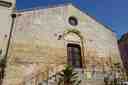 13
13Church of the Holy Trinity and Saint Lucia
Buy tour to unlock all 18 tracksAhead of you stands a simple stone facade with a triangular “hut-shaped” roof, a small round window above a dark wooden door, and a staircase leading right up to the entrance-just…Read moreShow less
Ahead of you stands a simple stone facade with a triangular “hut-shaped” roof, a small round window above a dark wooden door, and a staircase leading right up to the entrance-just look for the light, sandy-colored bricks against the clear sky. Now, imagine Brindisi centuries ago. Here in the heart of the city, this humble church-officially named the Church of the Holy Trinity, though locals also call it Santa Lucia-has quietly watched history unfold. The original building came with a twist: tucked alongside it was a convent of “white ladies,” not ghosts, but pious women in white habits from the Order of Santa Maria di Valleverde, who arrived all the way from Acri back in the 1200s. If you could travel back, you’d see medieval Brindisi bustling outside, while inside these walls, prayers, secrets, and maybe a little bit of holy gossip floated through the air. Over hundreds of years, the church grew and changed. Giant arches were added between its three naves, and new side altars popped up. Although the original convent is gone without a trace, the main building’s resilient facade saw it all. Walk inside today-though the frescoes are faded and weathered, they still spark the imagination: scenes of Saint Peter and stories from his life, and a collection of saints, some mysteriously hard to make out (chalk it up to a little “historical wear and tear”... or maybe a medieval spring cleaning gone wrong!). But the real treasure hides in the crypt below: three naves supported by four columns with astonishing Corinthian capitals, and ancient murals-Saint Nicholas, Saint Blaise, Mary Magdalene bringing ointment, Saint Peter the Apostle, and a special image of the Virgin influenced by distant eastern styles. Standing here, you can almost sense the flow of centuries, the footsteps of the faithful, and the artistic dreams of generations who hoped their stories would-like the church itself-last forever. And hey, if you hear a faint whisper, it’s probably just a “thank you” from one of those white-clad nuns, happy to be remembered.
Open dedicated page →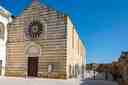 14
14Church of Christ
Buy tour to unlock all 18 tracksKeep your eyes peeled for a striking façade with alternating stripes of white and grey stone, a grand circular rose window above the doorway, and a sharp, pointed roof-if you see…Read moreShow less
Keep your eyes peeled for a striking façade with alternating stripes of white and grey stone, a grand circular rose window above the doorway, and a sharp, pointed roof-if you see these, you’ve found the Church of Christ! Step up and imagine the year 1232: Brindisi is a bustling medieval hub, and Brother Nicola Paglia-maybe wearing sandals and a very serious face-watches as stonemasons hoist blocks to build this church for the newly arrived Dominicans. If the façade looks a bit like a giant layer cake, you’re not alone-it’s those alternating stones and the arching row of little decorative arches along the top. Inside, it’s all soaring space, a single nave stretching forward, capped by a pointy, triumphant arch that would have made local builders stop and whisper, “Fancy!” The original apse was lost centuries ago to make way for the city walls (talk about tough renovation choices). On your right as you enter, a Madonna sits in her niche, carved by an artist with one foot in France and another in Italy-she was just restored, so wave ‘hello.’ Look to the main altar for the vibrant, painted Crucifix, possibly crafted by German hands far from home. The walls whisper Baroque secrets too: two ornate altars, including one dedicated to the Madonna of the Rosary, a gift from a castle commander who probably wanted to impress everyone. Here, history hugs you close and every stone has a story to tell-sometimes serious, sometimes a little mischievous, always unforgettable.
Open dedicated page →
Frequently asked questions
How do I start the tour?
After purchase, download the AudaTours app and enter your redemption code. The tour will be ready to start immediately - just tap play and follow the GPS-guided route.
Do I need internet during the tour?
No! Download the tour before you start and enjoy it fully offline. Only the chat feature requires internet. We recommend downloading on WiFi to save mobile data.
Is this a guided group tour?
No - this is a self-guided audio tour. You explore independently at your own pace, with audio narration playing through your phone. No tour guide, no group, no schedule.
How long does the tour take?
Most tours take 60–90 minutes to complete, but you control the pace entirely. Pause, skip stops, or take breaks whenever you want.
What if I can't finish the tour today?
No problem! Tours have lifetime access. Pause and resume whenever you like - tomorrow, next week, or next year. Your progress is saved.
What languages are available?
All tours are available in 50+ languages. Select your preferred language when redeeming your code. Note: language cannot be changed after tour generation.
Where do I access the tour after purchase?
Download the free AudaTours app from the App Store or Google Play. Enter your redemption code (sent via email) and the tour will appear in your library, ready to download and start.
If you don't enjoy the tour, we'll refund your purchase. Contact us at [email protected]
Checkout securely with 


