
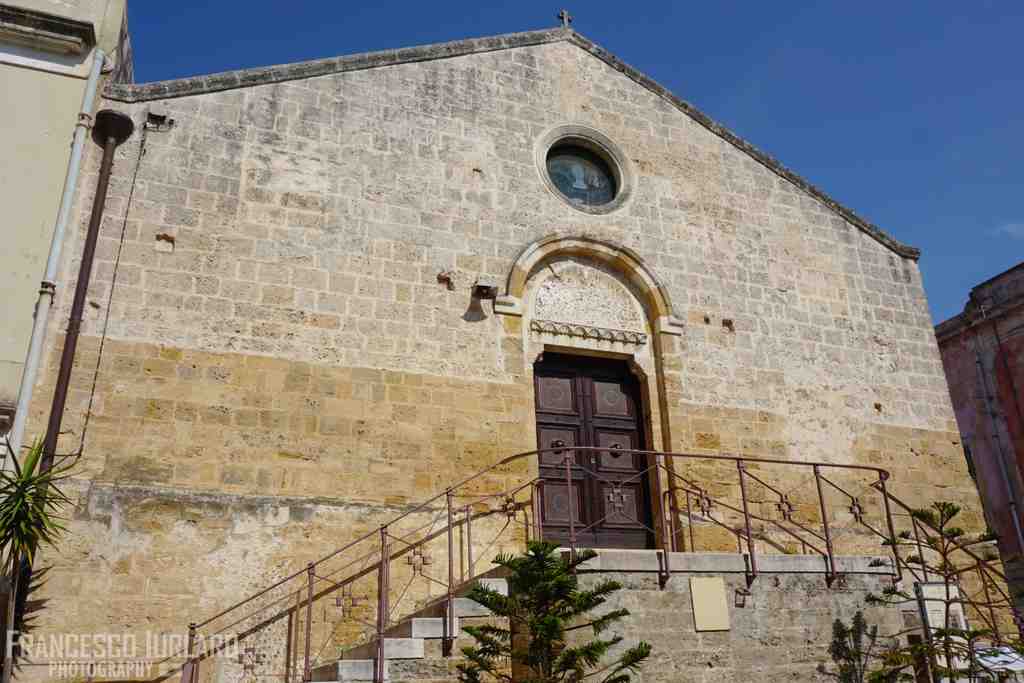
Ahead of you stands a simple stone facade with a triangular “hut-shaped” roof, a small round window above a dark wooden door, and a staircase leading right up to the entrance-just look for the light, sandy-colored bricks against the clear sky.
Now, imagine Brindisi centuries ago. Here in the heart of the city, this humble church-officially named the Church of the Holy Trinity, though locals also call it Santa Lucia-has quietly watched history unfold. The original building came with a twist: tucked alongside it was a convent of “white ladies,” not ghosts, but pious women in white habits from the Order of Santa Maria di Valleverde, who arrived all the way from Acri back in the 1200s. If you could travel back, you’d see medieval Brindisi bustling outside, while inside these walls, prayers, secrets, and maybe a little bit of holy gossip floated through the air.
Over hundreds of years, the church grew and changed. Giant arches were added between its three naves, and new side altars popped up. Although the original convent is gone without a trace, the main building’s resilient facade saw it all. Walk inside today-though the frescoes are faded and weathered, they still spark the imagination: scenes of Saint Peter and stories from his life, and a collection of saints, some mysteriously hard to make out (chalk it up to a little “historical wear and tear”... or maybe a medieval spring cleaning gone wrong!).
But the real treasure hides in the crypt below: three naves supported by four columns with astonishing Corinthian capitals, and ancient murals-Saint Nicholas, Saint Blaise, Mary Magdalene bringing ointment, Saint Peter the Apostle, and a special image of the Virgin influenced by distant eastern styles. Standing here, you can almost sense the flow of centuries, the footsteps of the faithful, and the artistic dreams of generations who hoped their stories would-like the church itself-last forever. And hey, if you hear a faint whisper, it’s probably just a “thank you” from one of those white-clad nuns, happy to be remembered.


