
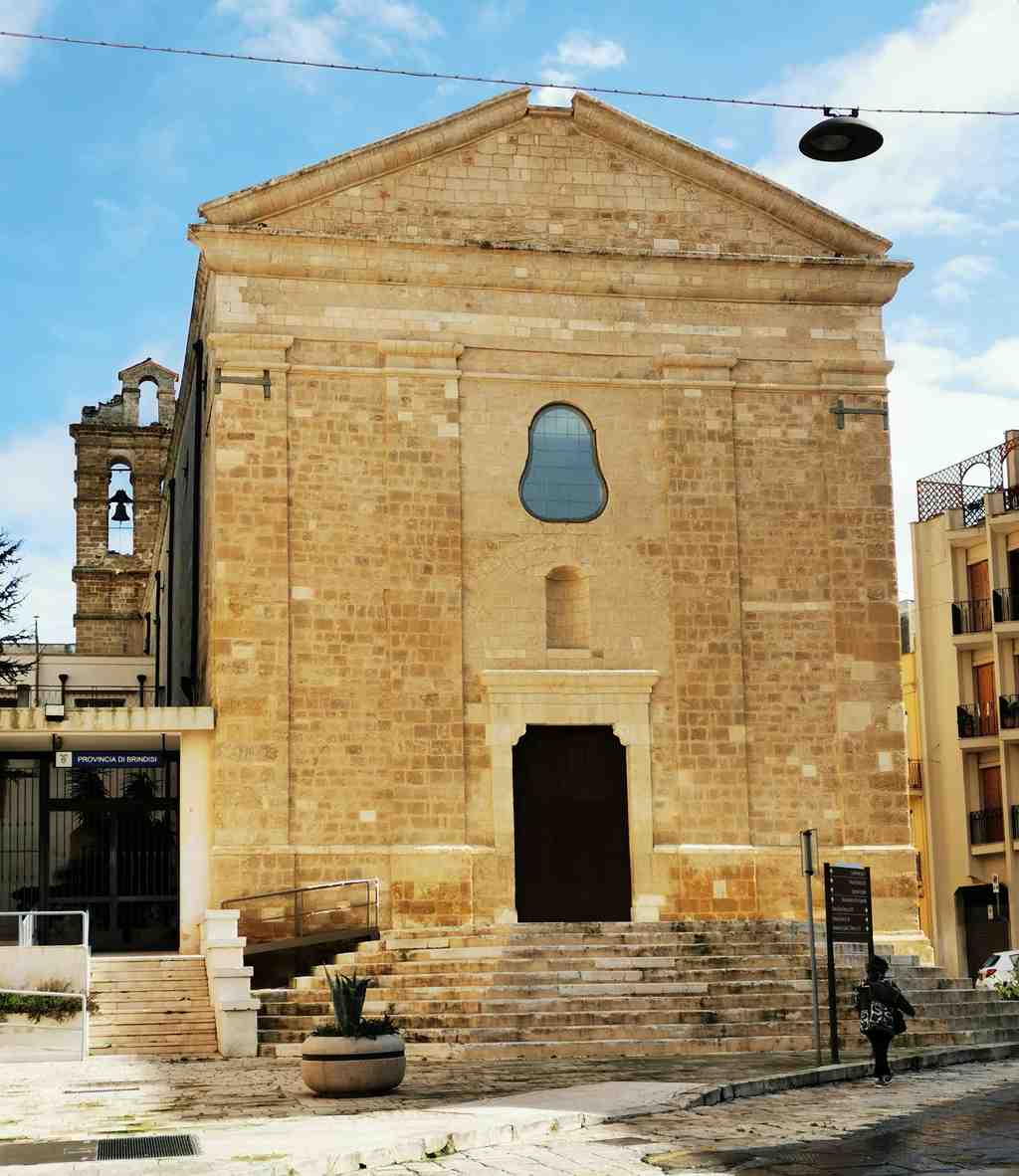
The Church of San Paolo Eremita stands in front of you with its sturdy, tan stone façade-look up at the simple triangular pediment and the tall, dark door reached by a flight of stone steps, and glance left to spot the bell tower peeking out from behind.
Right where you’re standing, things used to get seriously dramatic-a Roman fortress once dominated this very spot, before the Byzantines and Normans came along and put their spin on things. Then, in a twist worthy of a good soap opera, the fortress was abandoned and the Franciscans swooped in, claiming the land as their own. By 1322, thanks to the generosity of a certain Robert of Anjou, a grand new church and convent rose from the stones. Imagine the busy sounds of construction, echoing off ancient walls.
The current façade, the one glaring at you now, is actually an early 1800s reboot-apparently the original was a bit overenthusiastic about gravity, threatening to tumble down. The Franciscans eventually moved out, and over time the place became a mixed bag: government offices moved in; nearby, a school sprang up; and, if you peek around, you might spot the remains of those medieval defensive stones at the church’s base.
Step inside and the place stretches out into a single broad nave. There’s a treasure trove of baroque altars-one to San Giuseppe from the eighteenth century, another to Sant’Antonio da Padova with a carved wooden statue straight out of 1632, and a painting-packed altar probably by Alessandro Fracanzano. And just when you think you’ve seen it all, the walls reveal faded 14th-century frescoes: saints, scenes of noble feasts, and stories of Saint Mary Magdalene line the right side and the apse like a medieval comic strip.
One of my favorites? The legendary statue of the Madonna of the Earthquake, hidden in a northern niche-locals once thought she had miraculous powers during storms. There are chapels funded by eccentric historians, rich family tombs from the 1600s, and even a massive handmade wardrobe from 1725 tucked away in the sacristy, probably groaning under the weight of ancient secrets. After a fresh restoration in 2018, the church now doubles as a diocesan museum, but the bones of Brindisi’s battles, prayers, and old rivalries are still here, just under the surface-and maybe, if you listen closely, you’ll hear the faint ring of the bell tower as you move on.


