
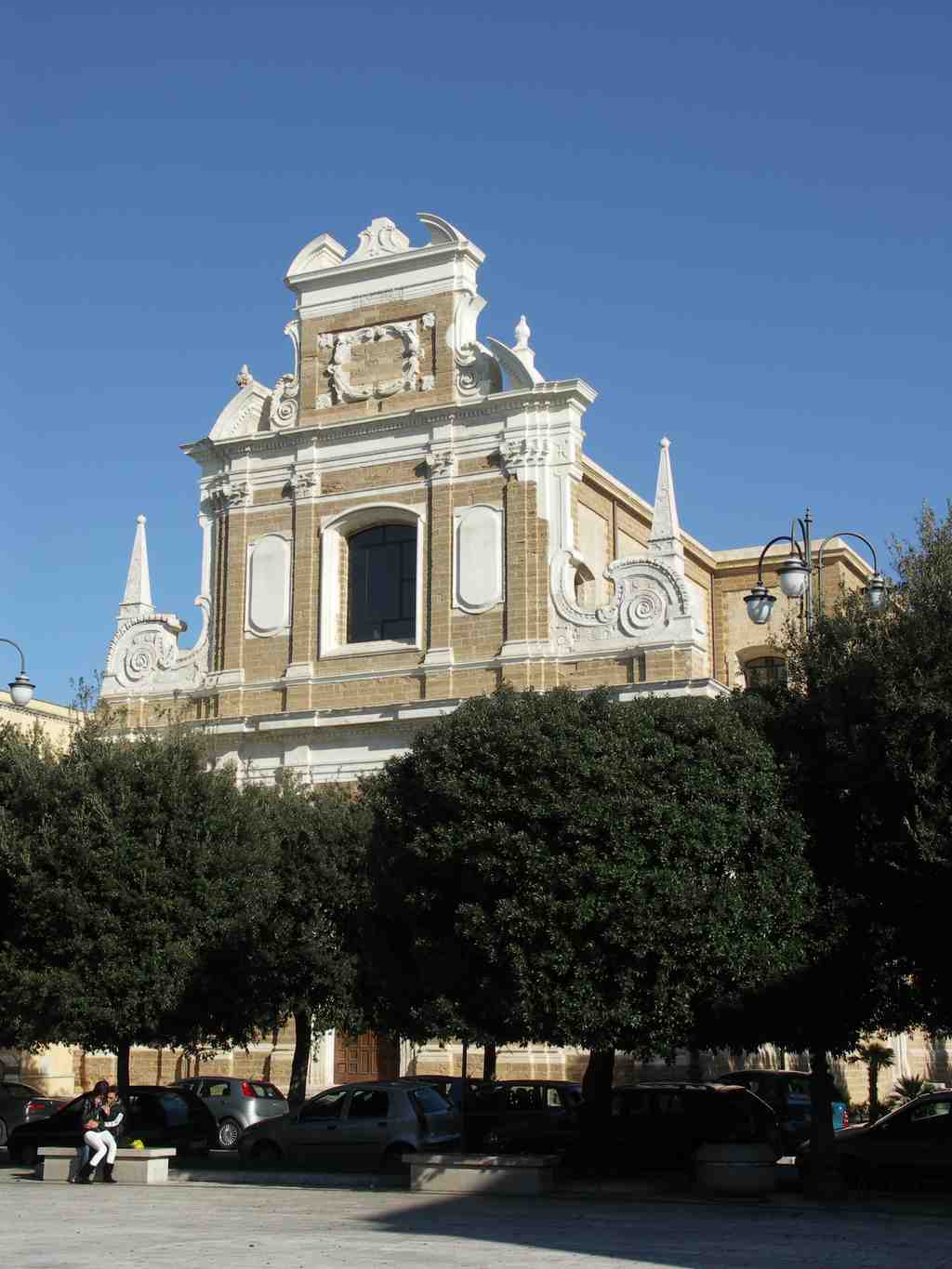
To spot the Church of Santa Teresa, just look up at the building in front of you with its creamy yellow stone walls, ornate white trim, pointy pinnacles, and swirling baroque shapes sitting above a row of leafy green trees.
Now imagine yourself back in the late 1600s, walking across this very piazza as stones clink and hammers ring, because this church owes its life to a generous priest named Francesco Monetta. Picture it: the city abuzz with activity, workers hustling to finish this graceful Baroque church that would soon become the heart of a quiet Carmelite convent. Back then, the name on everyone’s lips wasn’t even Santa Teresa-it was dedicated to Saint Joachim, and the air would’ve carried hints of incense and the gentle sound of monks shuffling past. Fast forward to 1807, and everything flips! Napoleon’s troops march in, the convent doors slam shut, and suddenly the church is filled not with prayers, but the clatter of army boots as it becomes a military outpost. After years of echoing emptiness, it finally found new life in the 1980s as the State Archives. Step inside today and you’ll find treasures, too: Diego Bianchi’s vivid paintings beside the main altar, a delightful Nativity scene packed with costumes straight from the 1600s, and even statues and marble tributes to the city’s secret benefactors. It’s a place that’s survived wars and silence and come back full of stories-just don’t be surprised if you feel the echo of its many past lives!


