
Limerick Highlights Audio Tour: Historic Landmarks and Cultural Treasures
Limerick does not just endure the centuries. It bleeds them into the very stones of its streets where ancient ghosts still stand guard over the River Shannon. Unlock these secrets with a self-guided audio tour designed to peel back the layers of a city defined by rebellion and resilience. You will move beyond the guidebooks to uncover hidden chronicles and illicit scandals that most travelers walk past without a second glance. Why did the city walls groan under the weight of a desperate, bloody betrayal? What lingers within the shadows of the cathedral after the bells fall silent? And why were silver relics buried deep beneath the floorboards of the Hunt Museum? Traverse the rugged ramparts of King John's Castle and follow the echoes of forgotten battles. This is your chance to reclaim the drama of the past. Start your journey here and face the truth of Limerick.
Tour preview
About this tour
- scheduleDuration 110–130 minsGo at your own pace
- straighten4.9 km walking routeFollow the guided path
- location_on
- wifi_offWorks offlineDownload once, use anywhere
- all_inclusiveLifetime accessReplay anytime, forever
- location_onStarts at Limerick Colbert railway station
Stops on this tour
lock_open 3 free previews · 12 unlock with purchase
You are looking at a stately, two-story building constructed of solid grey stone blocks, featuring three prominent arched doorways at its center with a small, circular clock face…Read moreShow less
Open dedicated page →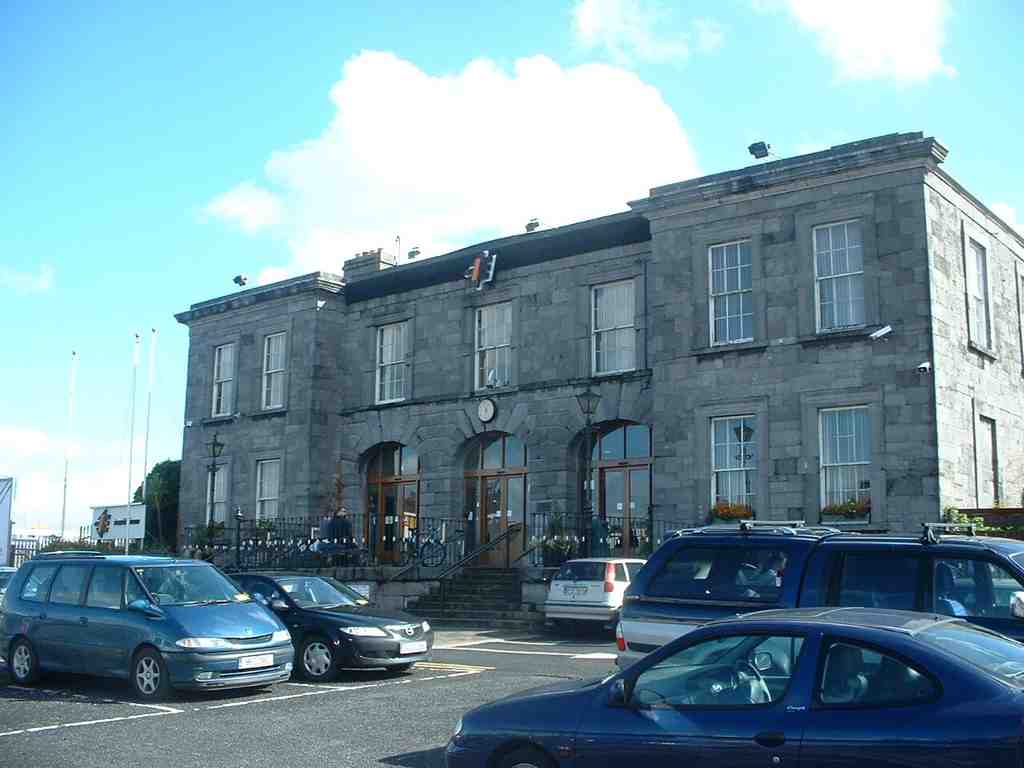
Limerick Colbert railway stationPhoto: Poxyshamrock, Wikimedia Commons, Public domain. Cropped & resized. You are looking at a stately, two-story building constructed of solid grey stone blocks, featuring three prominent arched doorways at its center with a small, circular clock face set right above the middle arch. Welcome to Limerick Colbert, or as the locals call it, Colbert Station.
This place has been the main hub for transit in County Limerick since the twenty-eighth of August, eighteen fifty-eight. It actually replaced an older, temporary station just down the road. The original railway line was laid during the eighteen forties, right at the height of the Great Famine. The construction caused extreme financial difficulties for the railway company, but they pushed through to connect Limerick to the rest of Ireland.
For over a century, it was simply known as Limerick Station. It was not until nineteen sixty-six that it got its current name. It was rebranded to honor Cornelius Colbert, a rebel leader who was executed following the Easter Rising, an armed rebellion launched in nineteen sixteen against British rule.
On a lighter note, if you were a fan of Irish boy bands, you might recognize this spot. Parts of the music video for the Westlife song My Love were filmed right here. Today, it is quite a bit busier than a music video set. The station handles about two thousand five hundred rail passengers every single day, while the adjacent national bus terminal moves around one million people a year.
That immense volume of travelers is exactly why the station recently went through a sixteen million, eight hundred thousand euro redevelopment. If you pull up the gallery on your screen, you can see the beautifully refurbished interior, complete with upgraded flooring and modern retail units. The upgrades have been ongoing for years. In two thousand twenty-four, they opened a brand new bus terminal with twenty bays, connecting it directly to the railway concourse. The old bus station is currently being turned into a huge car park with space for over two hundred and sixty bicycles. They also completely overhauled the train platforms out back, straightening and lengthening them to comply with modern safety standards.
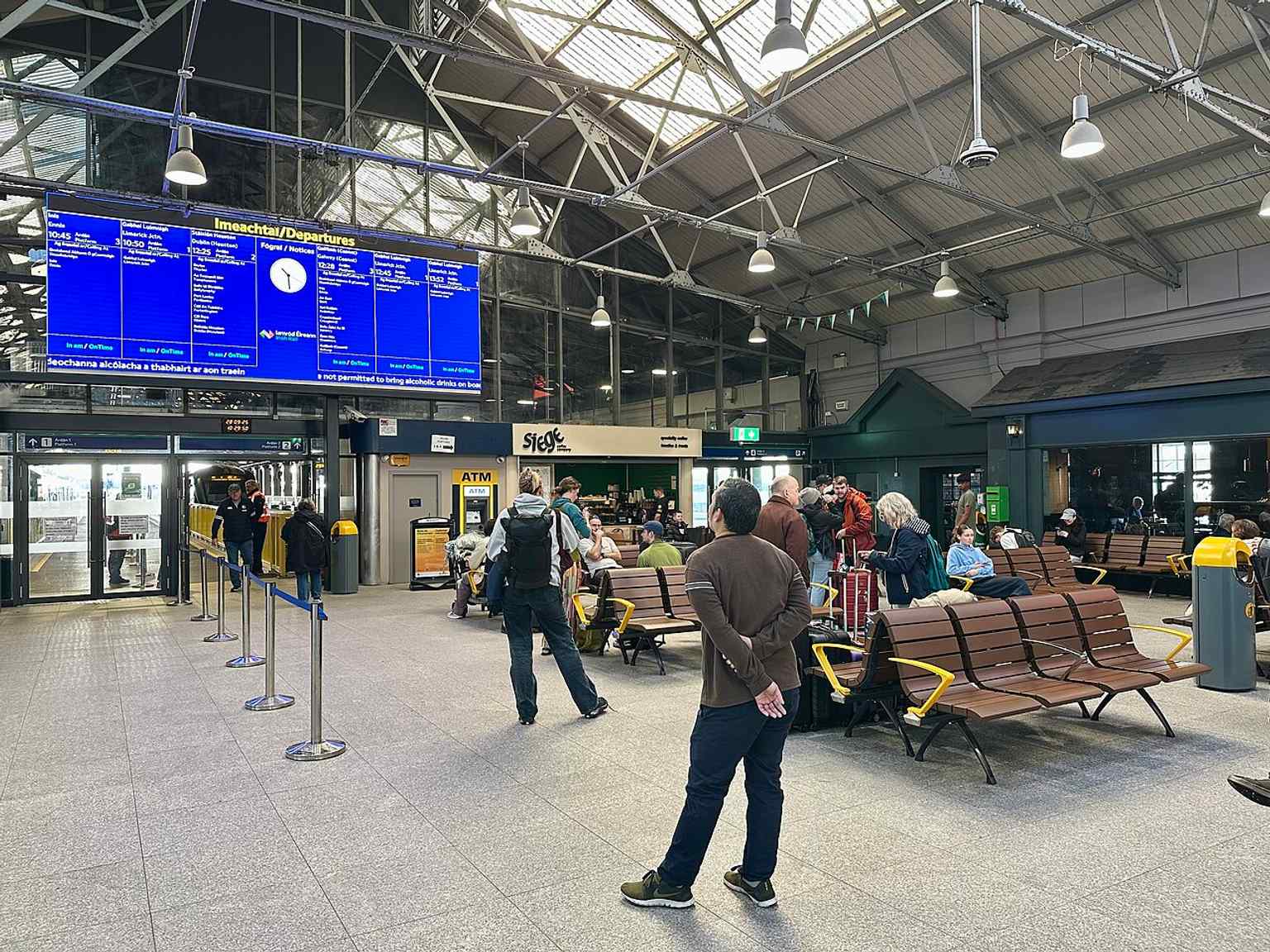
Inside the recently refurbished Colbert Station, which underwent significant interior upgrades in both 2017 and 2024, including new flooring and retail units.Photo: Thoslee, Wikimedia Commons, CC BY-SA 4.0. Cropped & resized. From its origins in the mid nineteenth century to its modern digital screens, Colbert Station has witnessed millions of hellos and goodbyes. Take your time looking around. When you are ready, we can head to the next stop.
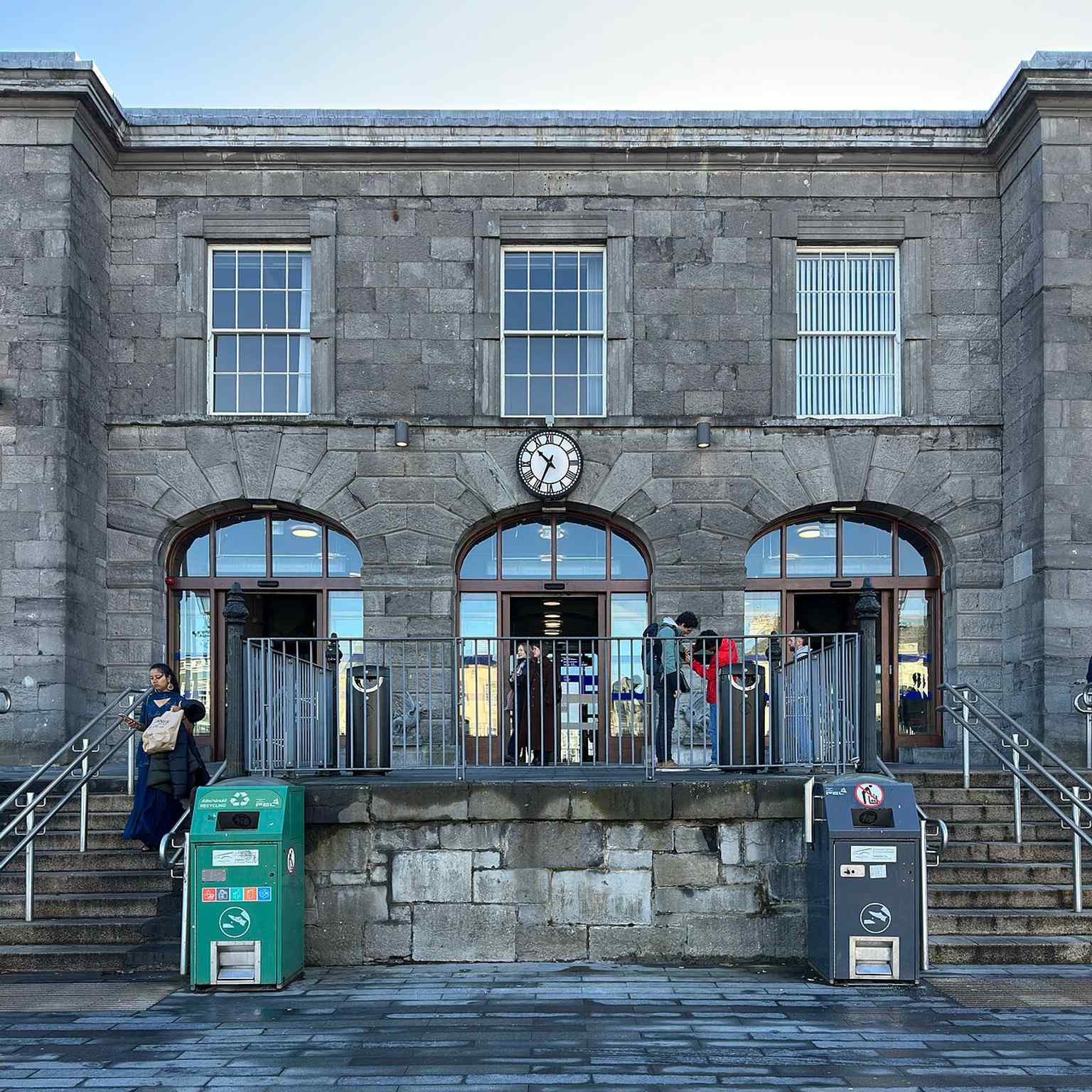
The redeveloped entrance to Colbert Station, featuring the new pedestrian plaza and an improved interface with Parnell Street, completed in 2017.Photo: Thoslee, Wikimedia Commons, CC BY-SA 4.0. Cropped & resized. 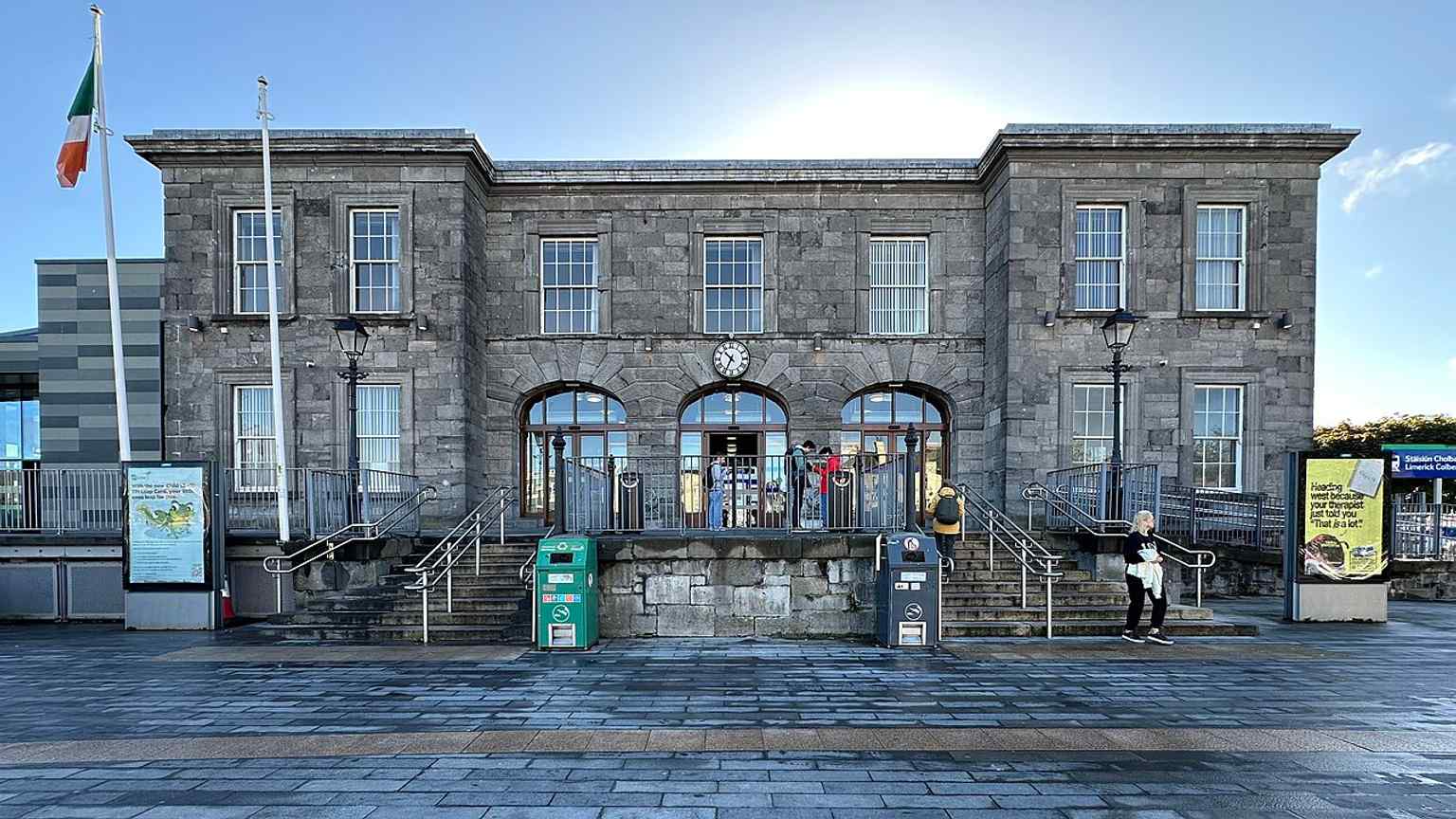
The main facade of Limerick Colbert railway station, which opened on August 28, 1858, and was renamed in 1966 in honor of Easter Rising leader Cornelius Colbert.Photo: Thoslee, Wikimedia Commons, CC BY-SA 4.0. Cropped & resized. 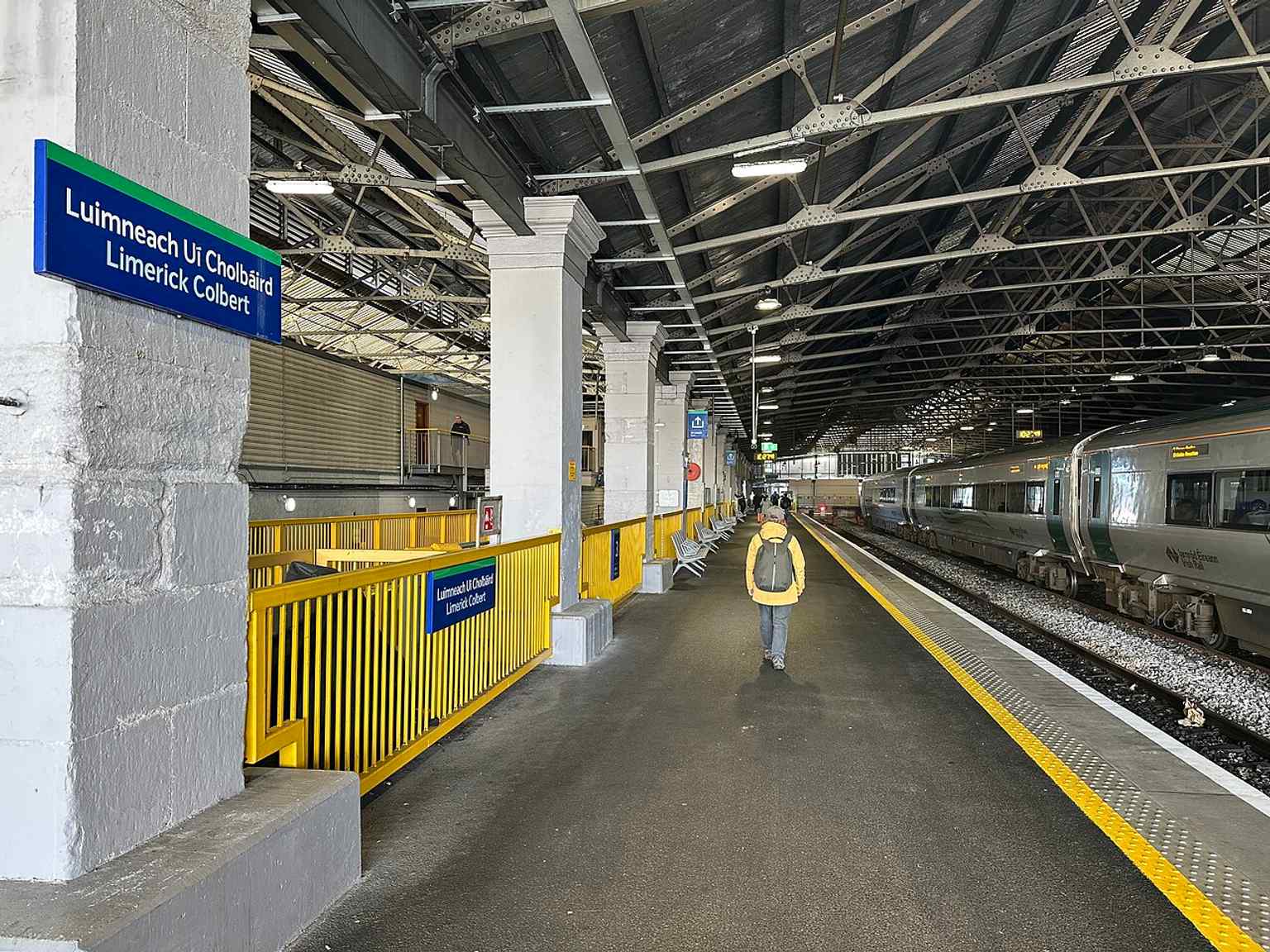
A view of the platforms at Colbert Station, where extensive re-signalling works and platform straightening took place in June 2017.Photo: Thoslee, Wikimedia Commons, CC BY-SA 4.0. Cropped & resized. 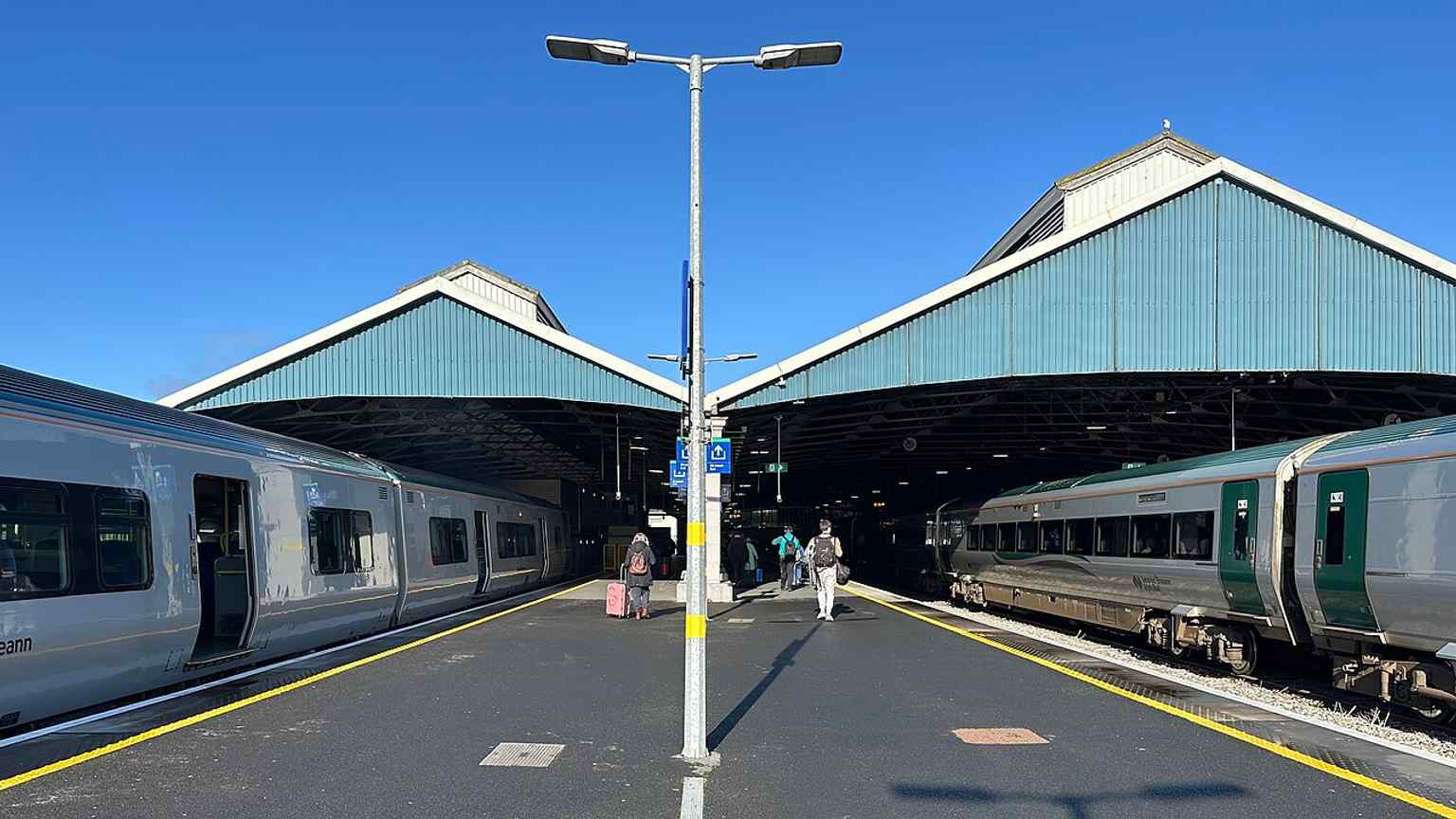
The new Bus Éireann bus station at Colbert, which opened in 2024, features 20 bus bays and digital information screens, serving approximately one million passengers a year.Photo: Thoslee, Wikimedia Commons, CC BY-SA 4.0. Cropped & resized. 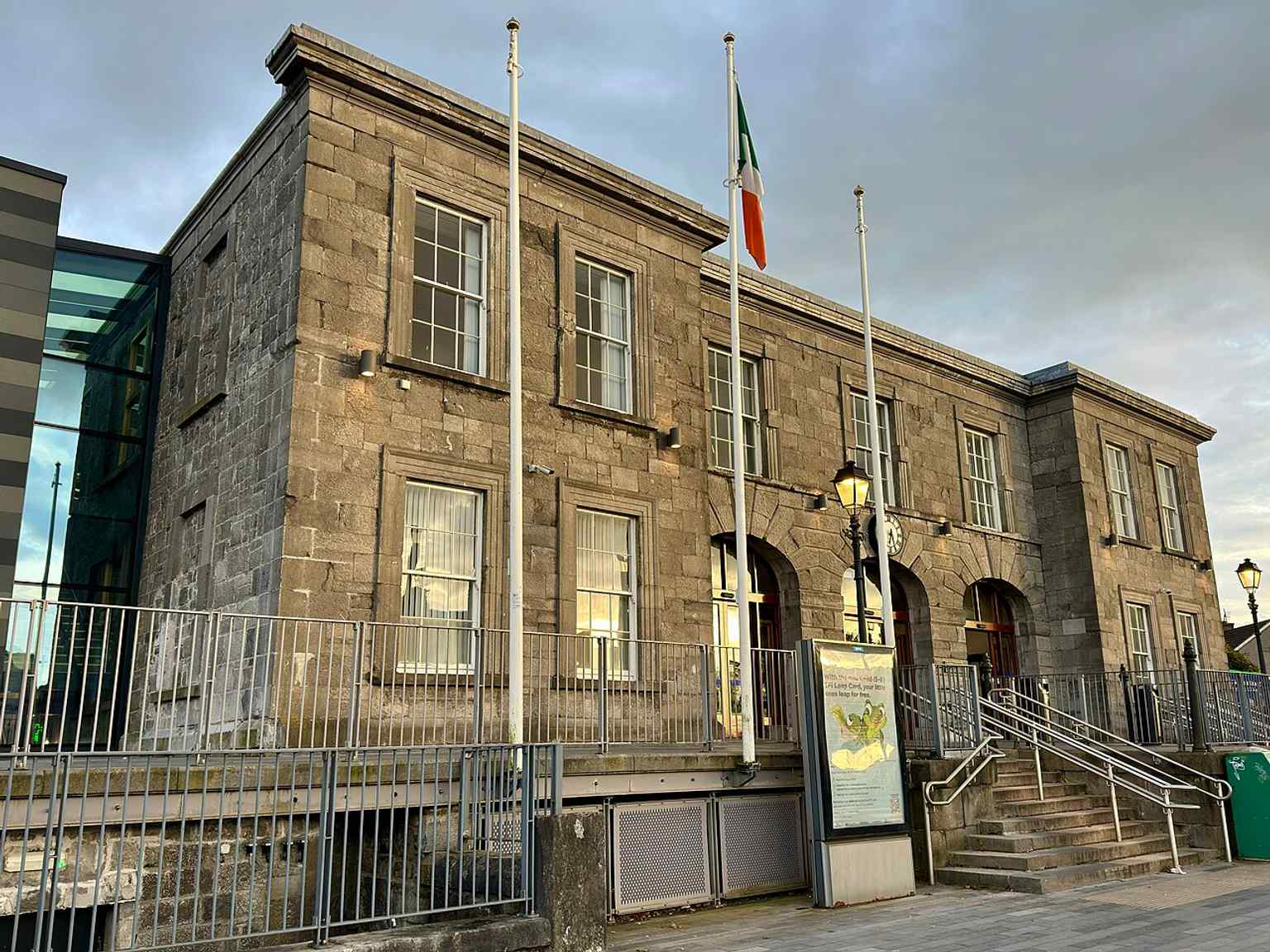
An aerial perspective of Limerick Colbert Station, showcasing the comprehensive redevelopments including the pedestrian plaza and the modern bus and car park facilities.Photo: Thoslee, Wikimedia Commons, CC BY-SA 4.0. Cropped & resized. Just ahead of you, rising from the manicured lawns, is a towering stone pillar resting on a wide square base and crowned with a solitary statue. This is People's Park, but when…Read moreShow less
Open dedicated page →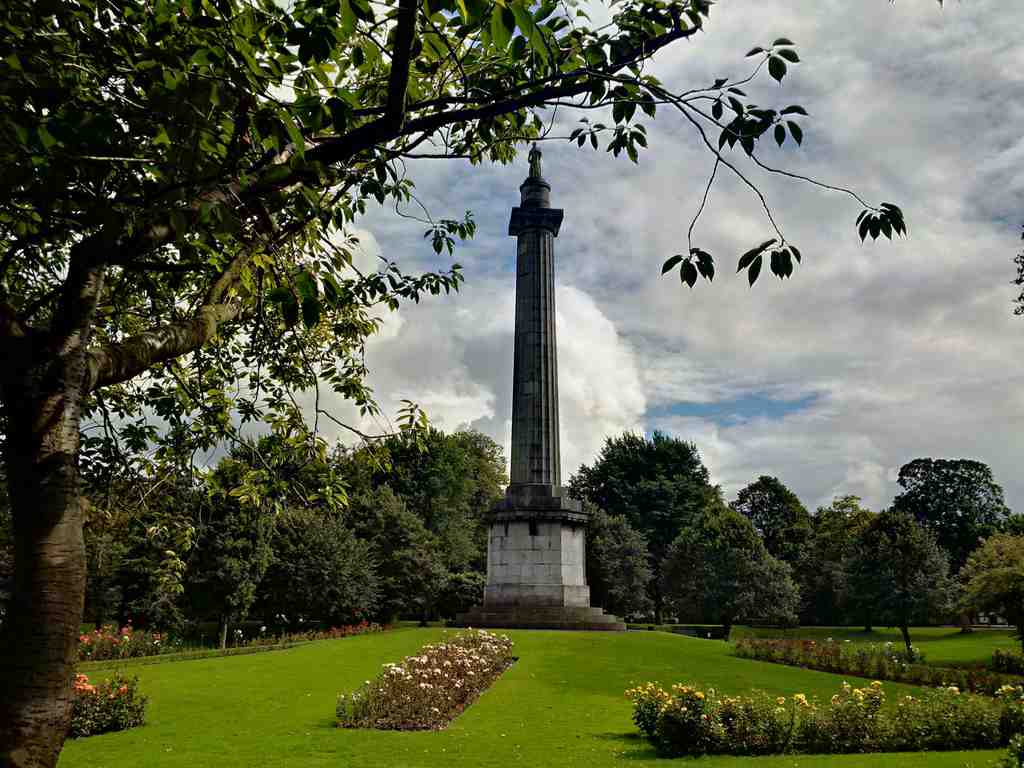
People's Park, LimerickPhoto: GilPe, Wikimedia Commons, CC BY-SA 4.0. Cropped & resized. Just ahead of you, rising from the manicured lawns, is a towering stone pillar resting on a wide square base and crowned with a solitary statue. This is People's Park, but when development began in eighteen thirty-five, the people were entirely left out. The original plan envisioned an exclusive, keyholders-only garden surrounded by grand Georgian townhouses, an architectural style famous for its strict symmetry and elegance, popular during the reigns of the British King Georges. However, when the Great Irish Famine struck, funds dried up, and only one terrace of houses was ever built.
The park finally opened to everyone in eighteen seventy-seven. The Earl of Limerick granted the city a five-hundred-year lease, though it came with a few strict rules. He declared there were to be no political meetings, no religious gatherings, and absolutely no bands playing on a Sunday.
That giant stone pillar you see is the Thomas Spring Rice memorial. Take a glance at your screen to see a close-up of this monument, dedicated to the man who served as the city's Member of Parliament from eighteen twenty to eighteen thirty-two. If you check out the before and after image on your app, you will see how this ornate memorial has stood as a steadfast centerpiece while the park's greenery matured over the last century.
Today, the park is home to a nineteenth-century bandstand and an ornate drinking fountain that happens to be one of only two of its kind on the entire island of Ireland. The gates are open daily from eight A-M to nine P-M, offering plenty of time to explore. Take a moment to wander the paths. When you are ready, we can head over to our next stop.
Show 12 more stopsShow fewer stopsexpand_moreexpand_less
Look to your left for a towering red brick building defined by rows of tall, rectangular sash windows and an ornate white wrought-iron balcony stretching across the first floor.…Read moreShow less
Open dedicated page →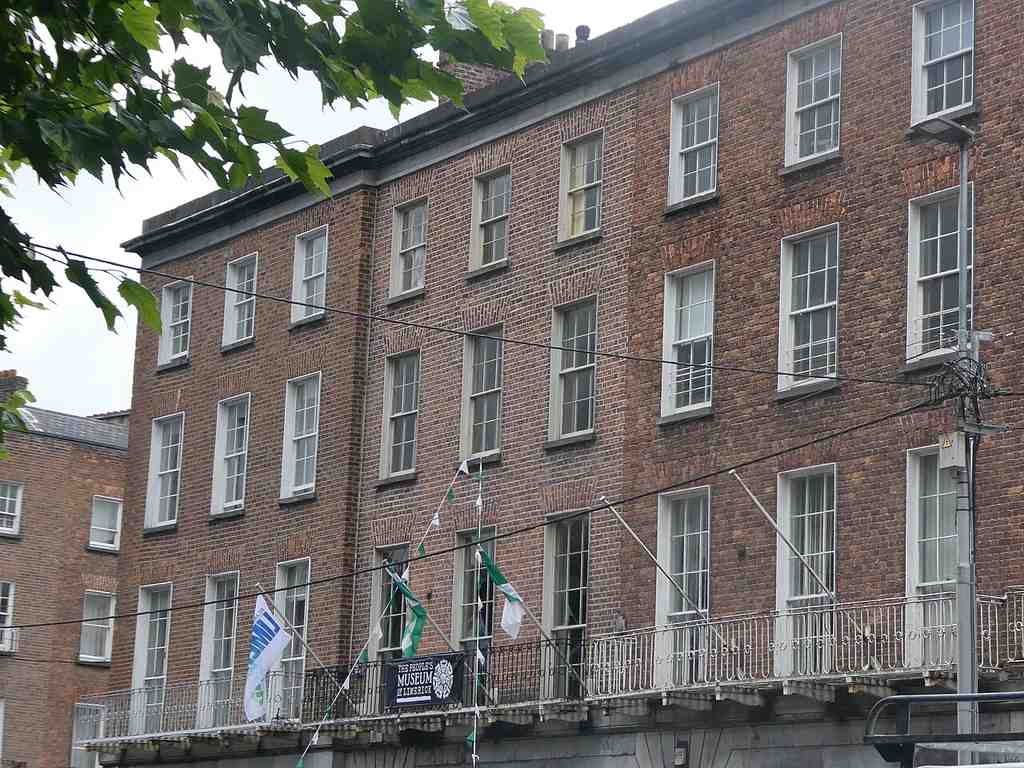
The People's Museum of LimerickPhoto: Sheila1988, Wikimedia Commons, CC0. Cropped & resized. Look to your left for a towering red brick building defined by rows of tall, rectangular sash windows and an ornate white wrought-iron balcony stretching across the first floor. This is a classic example of Georgian architecture, designed by James Pain and built in eighteen thirty-eight. Check out the image in your app to see how perfectly this grand house fits into the square.
Today, it holds the People's Museum of Limerick, opened on the seventh of October, twenty nineteen. Inside, the city's eclectic history comes alive. You will find local military artifacts, profiles of famous residents like author Frank McCourt, and even a room devoted to antique toys. My personal favorite is a captured coat that once belonged to Napoleon's brother, Joseph Bonaparte. It is quite a long way from home.
If you want to browse, the museum is open Wednesday through Saturday from ten AM to four PM, and Sundays from twelve to four PM. This building truly captures the surprising, beating heart of the city. Whenever you are ready, let's stroll on to our next stop.
You are standing before a grand terrace of flat-fronted red brick townhouses, defined by their tall, slender sash windows and an elegant ground-floor facade of smooth grey…Read moreShow less
Open dedicated page →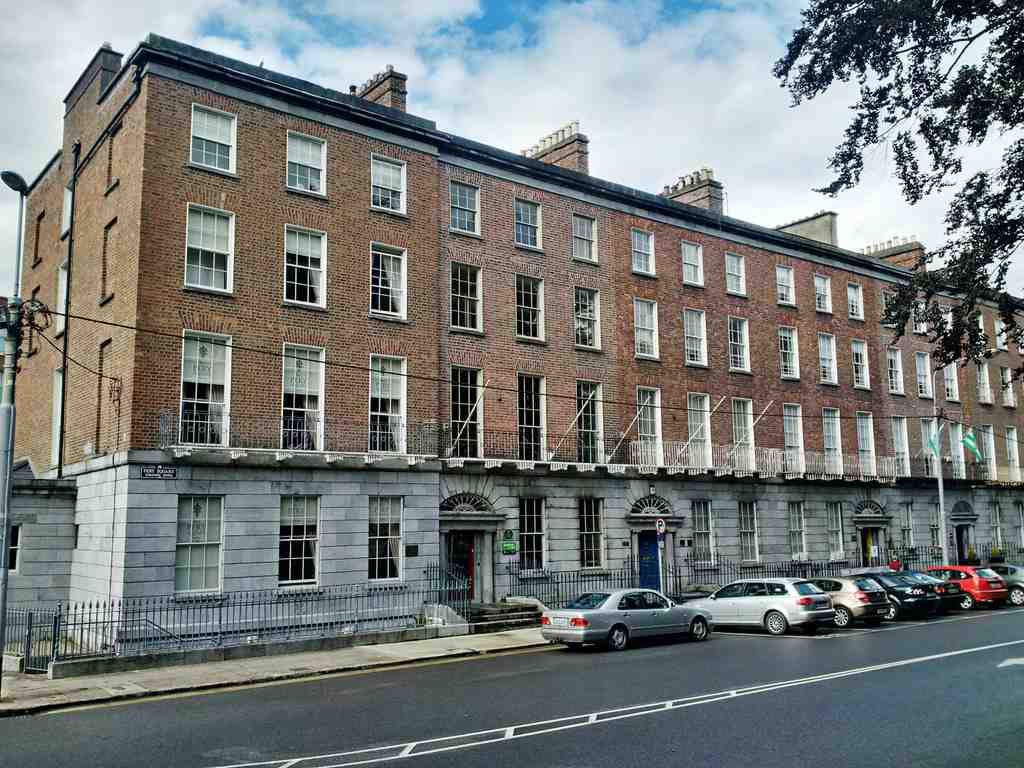
Pery SquarePhoto: GilPe, Wikimedia Commons, CC BY-SA 4.0. Cropped & resized. You are standing before a grand terrace of flat-fronted red brick townhouses, defined by their tall, slender sash windows and an elegant ground-floor facade of smooth grey limestone. If you want a wider view, take a quick glance at your screen to see a photo of this elegant row of buildings, known as Pery Square.
Constructed between eighteen thirty-five and eighteen thirty-eight under the supervision of architect James Pain, this is one of the finest examples of late Georgian architecture in Ireland. It was also the last development of its kind here before the Great Famine brought a crippling economic decline to the country.
But the financing behind these dignified walls is quite a story. The construction actually relied on a high-stakes gambling scheme known locally as the Life and Death Lottery. It was a tontine system, which is an investment pool where buyers purchase shares and nominate a living person to be attached to each share. As those nominated people died, their shares became worthless, and the property value consolidated among the dwindling group of survivors. The original list of eighty-nine lives included high-profile targets like Prince Albert.
This morbid waiting game ran for over seventy years. It finally concluded in nineteen thirteen when the number of surviving lives dropped to six. The ultimate victor was Sophia Vanderkiste, a widow in her seventies. According to local lore, her father had nominated her as a child without her knowledge. She simply awoke one morning to find she had outlived the vast majority of her competition and was the sole owner of numbers one, two, and three Pery Square.
Today, number one operates as a boutique hotel. It opened in two thousand and nine, precisely as the Irish economic boom collapsed, but fought its way through a perilous eighteen percent occupancy rate to survive. Number two is now a museum, beautifully restored by the Limerick Civic Trust.
Before we move on, look toward the War Memorial in the center of the square. When it was proposed in nineteen twenty-eight to honor the dead of World War One, it faced fierce political opposition. One local councillor ominously warned that if it was erected, it would eventually come down. That prediction came true in the early hours of the seventh of August, nineteen fifty-seven, when the monument was blown up using gelignite, a highly explosive jelly. The blast shattered the stone cross and warped the bronze sword, though the city eventually rebuilt it in nineteen sixty.
It is quite a square, blending formal architectural beauty with a rather explosive history. Take a moment to appreciate the square, and when you are ready, we can head over to our next stop.
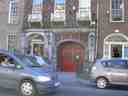
You should see it right in front of you now, a stately brick facade with an ornate stone archway framing a set of bright red doors, and the name Belltable Arts Centre carved…Read moreShow less
Open dedicated page →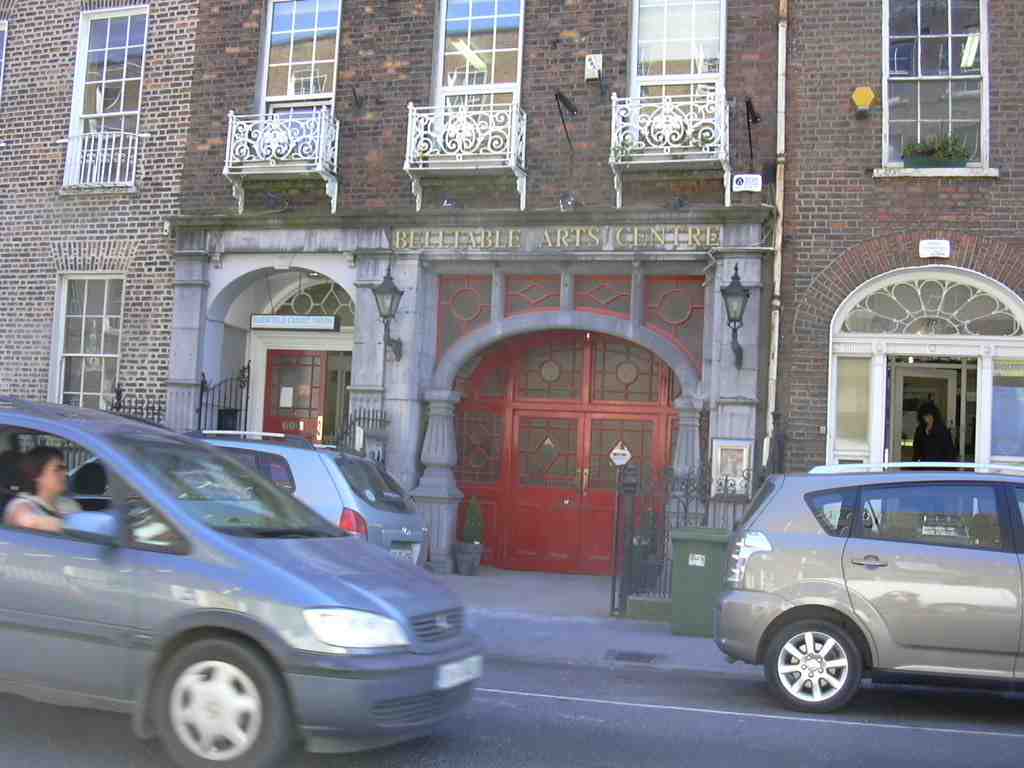
BelltablePhoto: A bit iffy, Wikimedia Commons, Public domain. Cropped & resized. You should see it right in front of you now, a stately brick facade with an ornate stone archway framing a set of bright red doors, and the name Belltable Arts Centre carved directly into the stone above. If you take a look at your screen, you can see how it looked back in two thousand and seven, before a massive and highly controversial renovation.
This building has lived several wildly different lives. It opened in nineteen seventeen as the Coliseum Cinema, run by local merchant Michael Gough. His daughter Lena, a trained opera singer, used to belt out arias between screenings. In nineteen twenty-eight, the Coliseum made history by showing Limerick's first ever talkie, which was the term for those early motion pictures with synchronized sound, specifically a film called The Jazz Singer.
But the glory days did not last. By the nineteen fifties, locals were calling the deteriorating building a flea-pit. It shut down after a bitter strike, and in nineteen fifty-three, the auditorium was bizarrely converted into a shirt factory. Just imagine the sound of sewing machines whirring exactly where orchestras once played.
The venue was reborn as an arts center in nineteen eighty-one. The name Belltable was a diplomatic compromise. The owners wanted to honor Henry Hubert Belltable, a Belgian army officer who founded the local Holy Confraternity. A portrait of the stern officer hung in the venue for years, silently judging the avant-garde performances taking place. Avant-garde, of course, means experimental and unconventional art, something that probably would have baffled a nineteenth-century military man.
And experimental it was. During the Belltable Unfringed festival, acts like Cirque de Legume performed here, ending their show with a stage covered in what they called a grocery store massacre. But the real drama happened off-stage. In two thousand and thirteen, the center went into liquidation after a one million euro refurbishment went three hundred thousand euros over budget. The redesign was a source of local amusement. The artistic director joked that the steep new seating forced actors to look up at the audience, calling it Vatican Two theatre, a clever reference to the modernizing church reforms that flipped traditional hierarchies.
Thankfully, the theatre reopened in two thousand and sixteen. Playwright Mike Finn, whose classic play Pigtown premiered here in nineteen ninety-nine, calls it a hothouse for local talent. Oh, and it might also be a hothouse for the paranormal. Staff have reported a Grey Lady ghost walking up the stairs and vanishing into an empty, locked room.
Whether you are looking for local talent or a basement cafe coffee, just remember the venue is open Monday from twelve PM to five thirty PM, Tuesday through Friday from nine AM to five thirty PM, and closed on weekends. Take all the time you need to appreciate this quirky space, and whenever you are ready, we can head to the next stop.
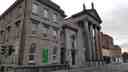
You should see a commanding grey stone building defined by a massive entrance of towering classical columns, topped with stone statues standing watch on the triangular roof. If…Read moreShow less
Open dedicated page →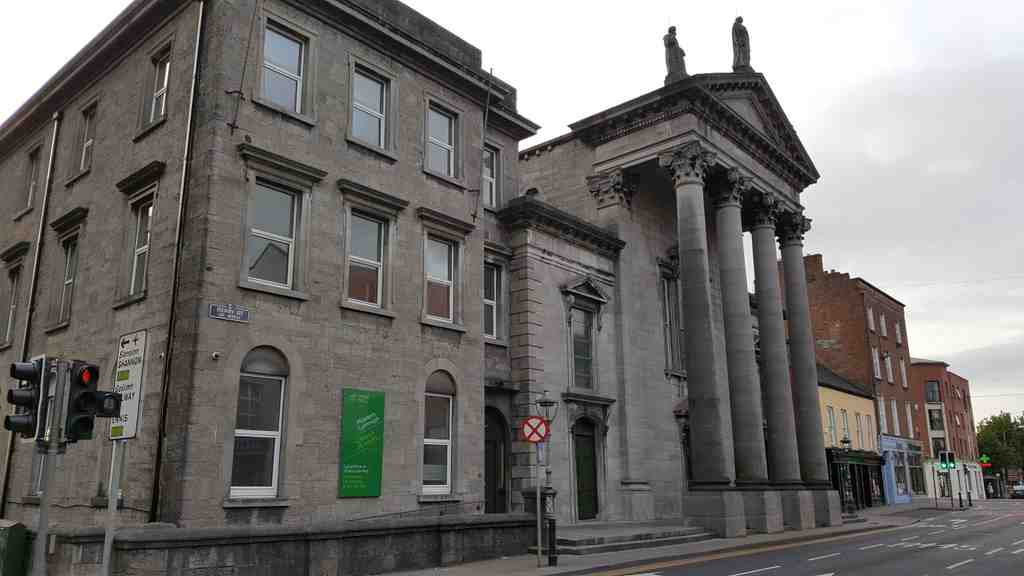
Limerick MuseumPhoto: PinkHolly, Wikimedia Commons, CC BY-SA 4.0. Cropped & resized. You should see a commanding grey stone building defined by a massive entrance of towering classical columns, topped with stone statues standing watch on the triangular roof. If you check out the image on your screen, you can see this grand structure, the old Franciscans Friary, which became the museum's home in May twenty seventeen.
The Limerick Museum is a bit of a wanderer. It was founded in nineteen oh seven and originally housed in the Carnegie Free Library over in Pery Square, which we explored a little while ago. It stayed there until nineteen seventy-five, and then proceeded to move four more times before finally unpacking its bags here.
Today, it holds a staggering sixty-two thousand objects. Inside, the collection is wonderfully eclectic. You can find the largest meteorite ever to fall on the British Isles, which crashed down in nearby Adare. There is a beautifully preserved gentleman's suit from around seventeen oh six, and the leather scabbard used by the revolutionary Lord Edward Fitzgerald when he was arrested in seventeen ninety-eight. It is quite the historical attic. They even have a rare, intact Codd-neck bottle, which was an ingenious Victorian glass bottle designed with a marble inside to seal early carbonated drinks.
The museum is usually open Monday through Saturday from ten A-M to five P-M, closing for a bit on Saturday afternoons and taking Sundays off. It is a fantastic place to lose yourself in the quirky layers of the city's past. Enjoy browsing the quirky collection, and when you are ready, we can wander toward our next stop.
On your left, you will spot a tall stone plinth crowned with dark bronze statues, featuring a life-sized bronze figure standing beside a large plaque. You might assume this grand…Read moreShow less
Open dedicated page →On your left, you will spot a tall stone plinth crowned with dark bronze statues, featuring a life-sized bronze figure standing beside a large plaque. You might assume this grand structure was always meant for the nineteen sixteen Easter Rising, but this plinth has an explosive past. Originally, it held a statue of Viscount Fitzgibbon, a nobleman killed in the Crimean War. That original figure met a sudden end when nationalists blew it up in nineteen thirty. You can check your screen to read about this dramatic history. The replacement took decades. Sculptor Albert Power began the project, but his son James finally finished it in nineteen fifty-four. The top bronze figures depict Mother Ireland alongside local rising participants Tom Clarke, Ned Daly, and Con Colbert. Tap your app for a closer look at those intricate top statues. Since it sits outside on the bridge, the memorial is open twenty-four hours a day. It remains a bold tribute to those who fought for Irish independence. Take a moment to soak this in, and when you are ready, we can head to the next stop.
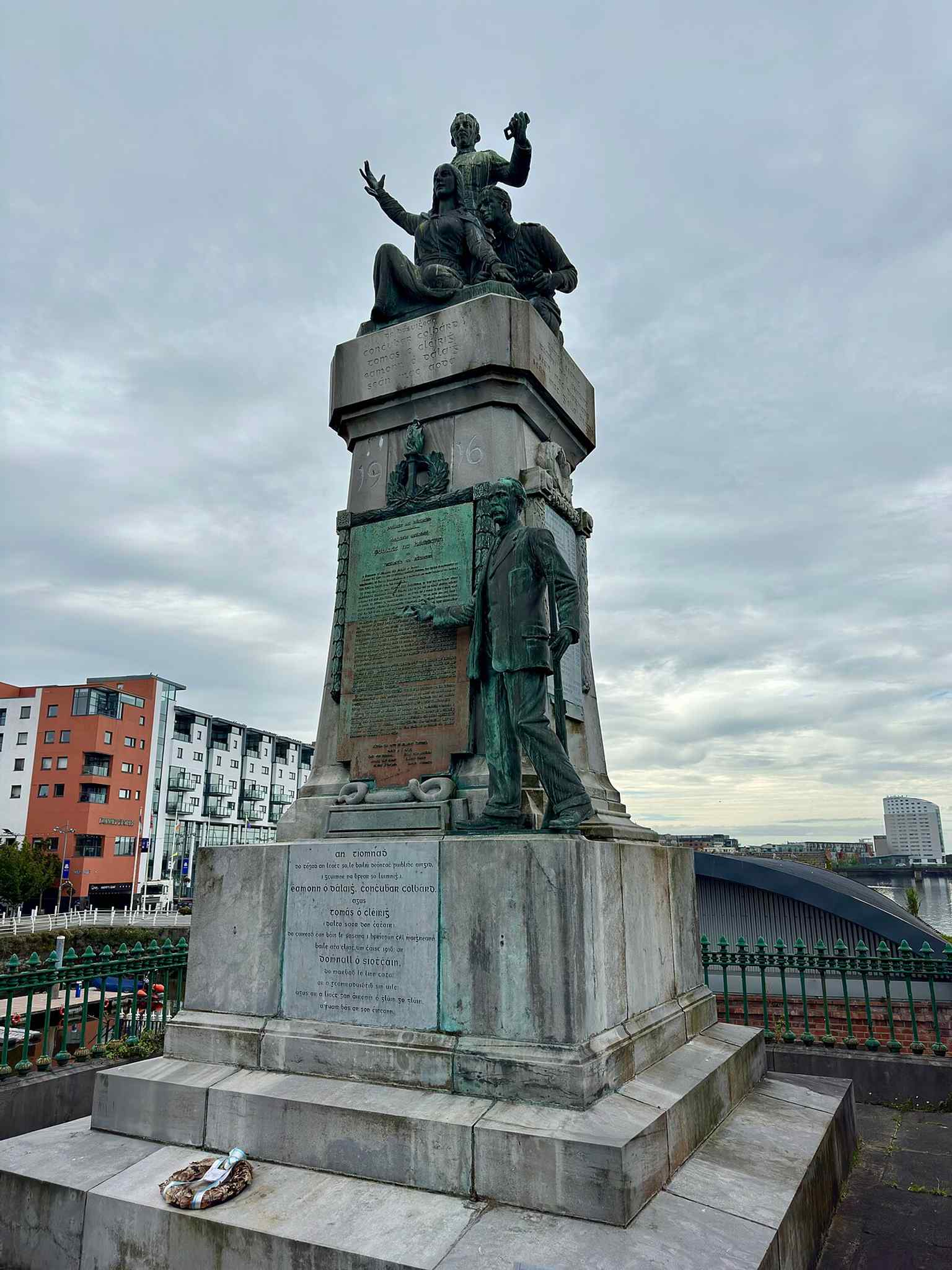
See the 1916 Memorial at Sarsfield Bridge, commemorating the Easter Rising and designed by Albert Power, completed by his son James Power in 1954.Photo: Thoslee, Wikimedia Commons, CC BY-SA 4.0. Cropped & resized. 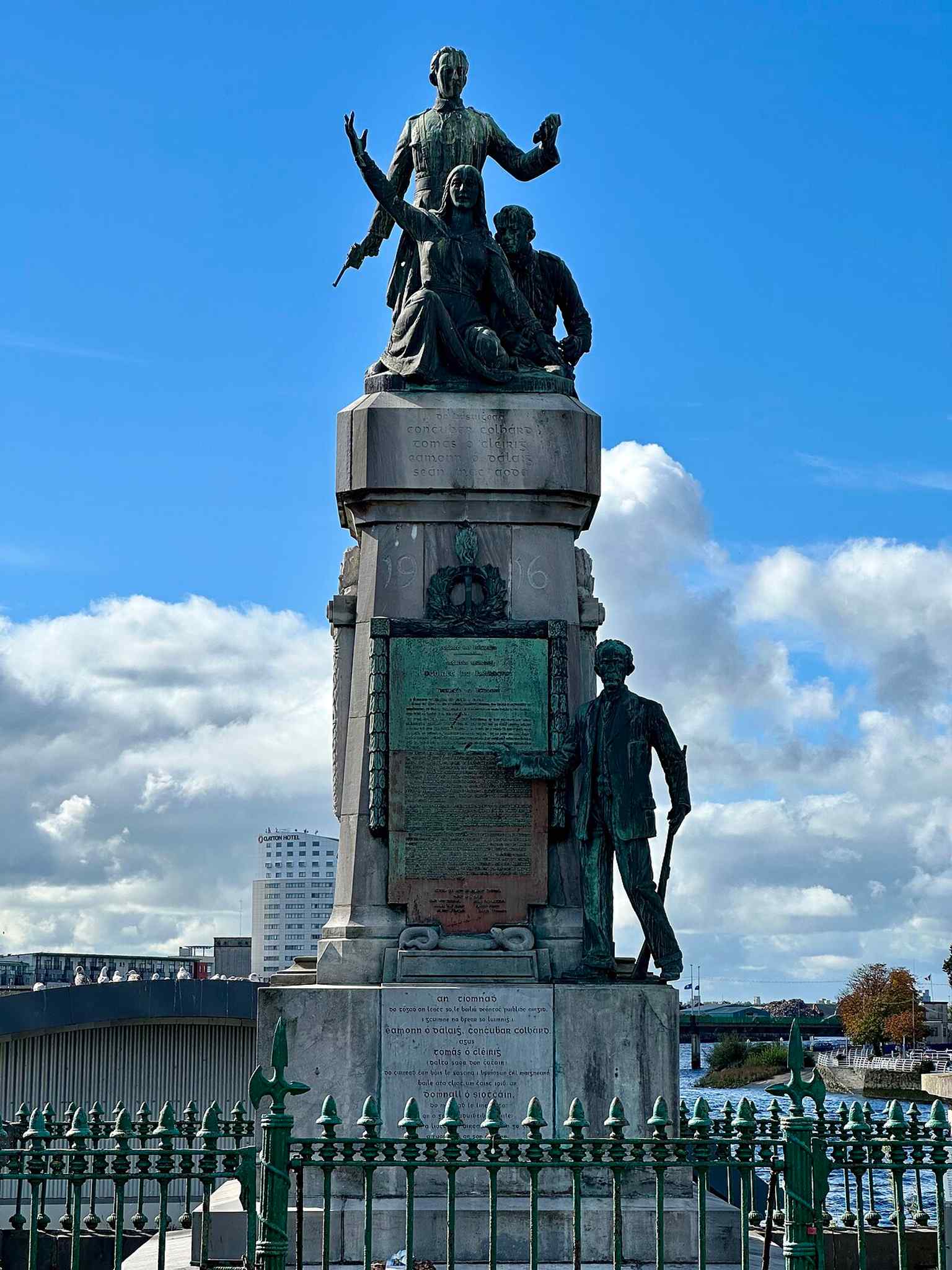
Observe the memorial's bronze statues at the top, representing local Easter Rising participants Tom Clarke, Ned Daly, Con Colbert, alongside a figure of Mother Ireland.Photo: Thoslee, Wikimedia Commons, CC BY-SA 4.0. Cropped & resized. On your left, you will spot the Hunt Museum, a grand rectangular building constructed from solid grey limestone, distinguished by its tall symmetrical windows and two prominent…Read moreShow less
Open dedicated page →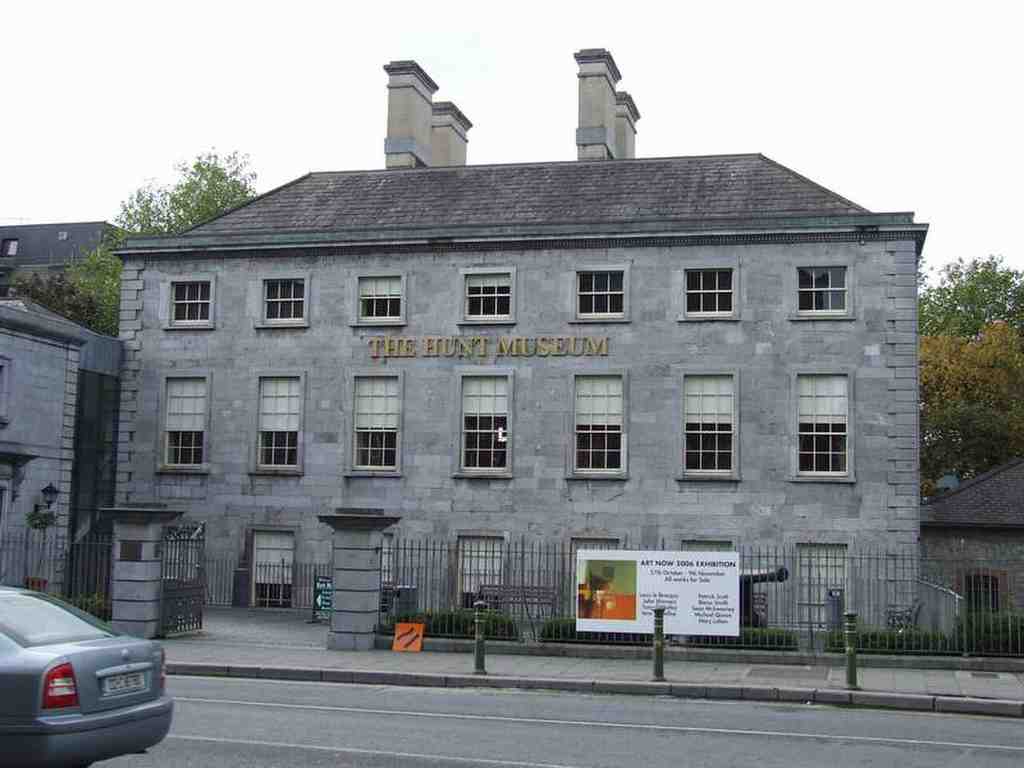
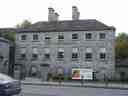
Hunt MuseumPhoto: FreeBird, Wikimedia Commons, Public domain. Cropped & resized. On your left, you will spot the Hunt Museum, a grand rectangular building constructed from solid grey limestone, distinguished by its tall symmetrical windows and two prominent chimneys rising from the roof.
It was designed by Italian architect Davis Ducart in the Palladian style, an architectural movement focused on strict symmetry and classical proportions, and it was completed between seventeen sixty-five and seventeen sixty-nine. Back then, this was the Custom House. While most of Georgian Limerick was being built from red brick, this place stood out in solid limestone. It served as the administrative center for the Revenue Commissioners, which was essentially the local tax and customs authority. Nothing says grand architecture quite like taxes.
Today, it holds the personal collection of John and Gertrude Hunt, a pair of antique dealers and advisors who spent their lives acquiring things that caught their eye. And they had quite an eye. The Irish government actually declined the collection at first, which led to a massive effort by universities, local businesses, and a trust to secure this eighteenth century building as a permanent home. It officially opened here on the fourteenth of February, nineteen ninety-seven.
Inside, there are about two thousand five hundred artifacts ranging from Stone Age Ireland and ancient Egypt to sketches by Pablo Picasso. It is quite the eclectic mix. They also have an extensive textile collection by Irish designer Sybil Connolly. Take a look at your screen to see her famous Heiress Dress, just one of forty five of her pieces donated largely by Gertrude Hunt. John Hunt was particularly fascinated by early Christian art, filling their Treasury Room with religious artifacts gathered from across Europe, including the intricately cast ninth century bronze Antrim Cross.
Now, no grand collection is without a bit of drama. In two thousand and three, the Simon Wiesenthal Center sent a letter claiming the museum held items looted by the Nazis during the Second World War. As you can imagine, this caused quite a stir. The museum firmly denied it, but the accusations led to years of intense scrutiny and two separate inquiries. The whole thing was finally put to rest in two thousand and seven when a comprehensive report concluded the allegations were, to quote the investigator, unprofessional in the extreme. It turned out the accusers had simply misread a name in some letters, confusing an unreliable dealer named Buhl with a very wealthy collector named Buhrle. A simple typo that cost a lot of people a lot of sleep.
On a lighter note, if you check your app, you will see a picture of these colorful, life-sized fibreglass horses that were placed out front in two thousand and eleven. They were painted by local youths, inspired by the wildly popular song Horse Outside by the Limerick group The Rubberbandits. They are brought inside at night, presumably so they do not wander off.
If you want to see the artifacts yourself, the museum is open Tuesday through Saturday from ten A-M to five P-M, and Sundays from eleven A-M to five P-M. Take all the time you need here. When you are ready, we can head to the next stop.
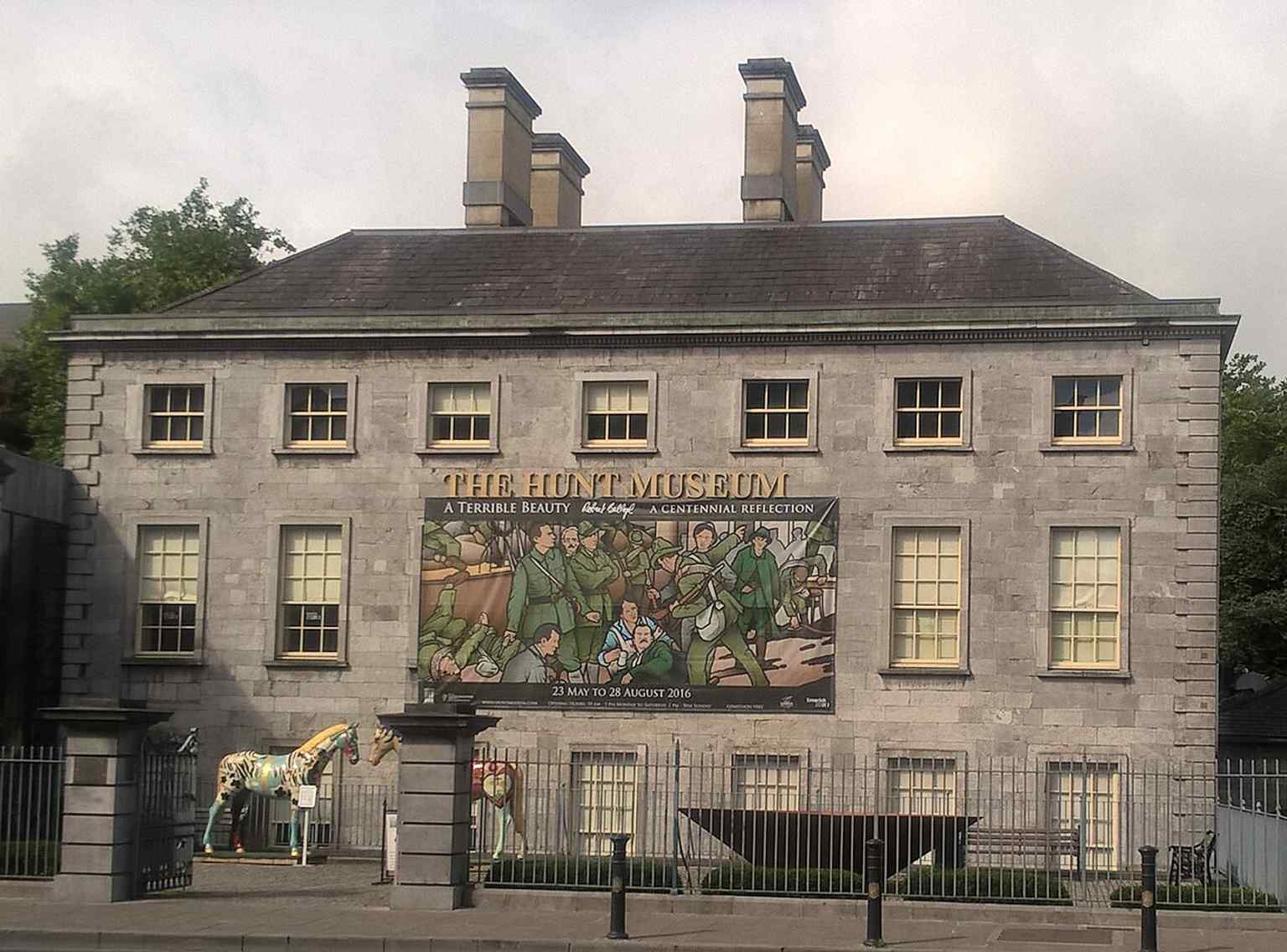
The Hunt Museum is housed in Limerick's 18th-century Custom House, a Palladian-style building, with 'Horse Outside' sculptures inspired by The Rubberbandits song.Photo: Chemical Engineer, Wikimedia Commons, CC BY-SA 4.0. Cropped & resized. 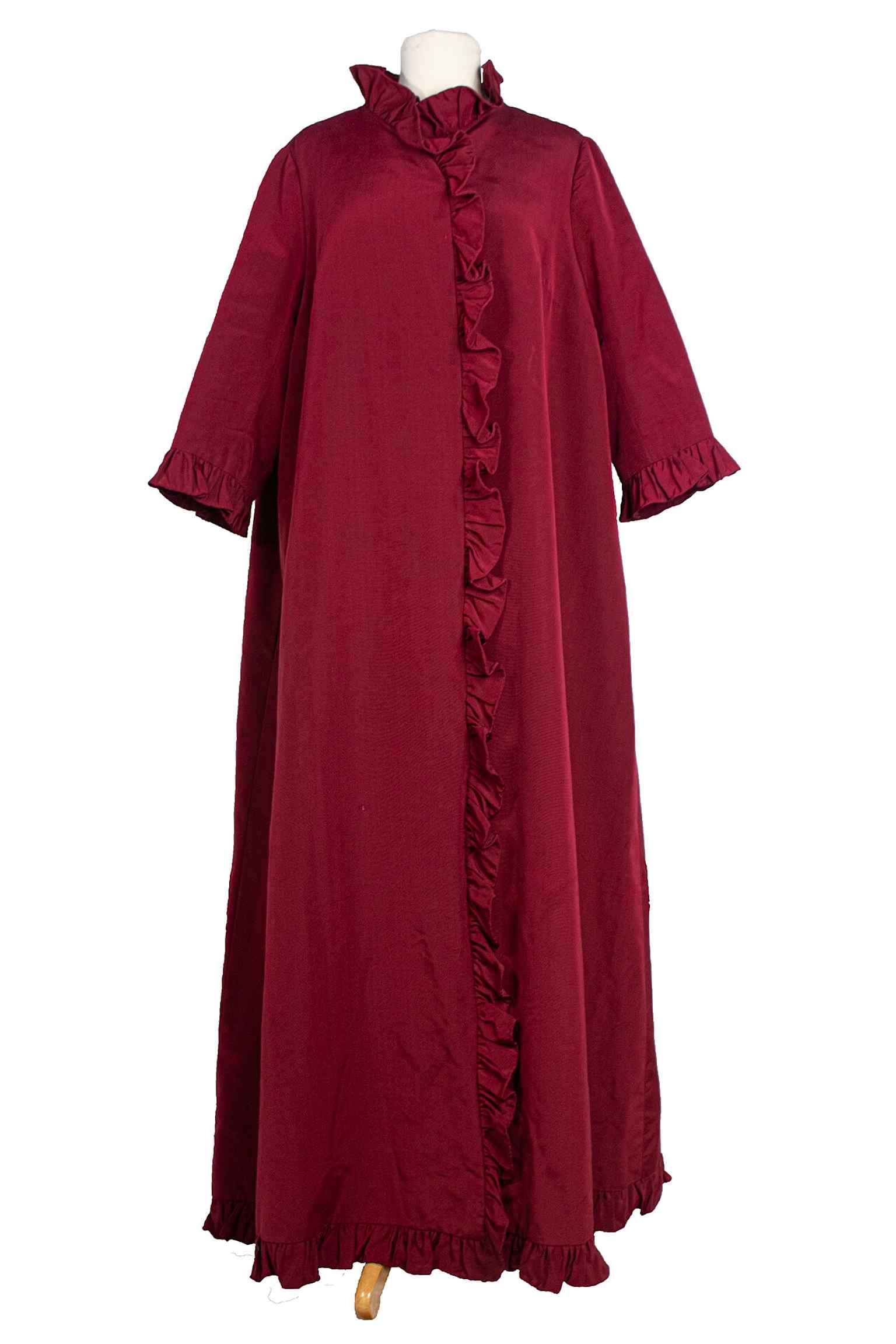
This 'Red Evening Gown' by Irish designer Sybil Connolly is part of her collection, including dresses like the 'Pink Ice Dress', largely donated by Gertrude Hunt.Photo: Hunt Museum and Inés Rivilla López, Wikimedia Commons, CC BY-SA 4.0. Cropped & resized. 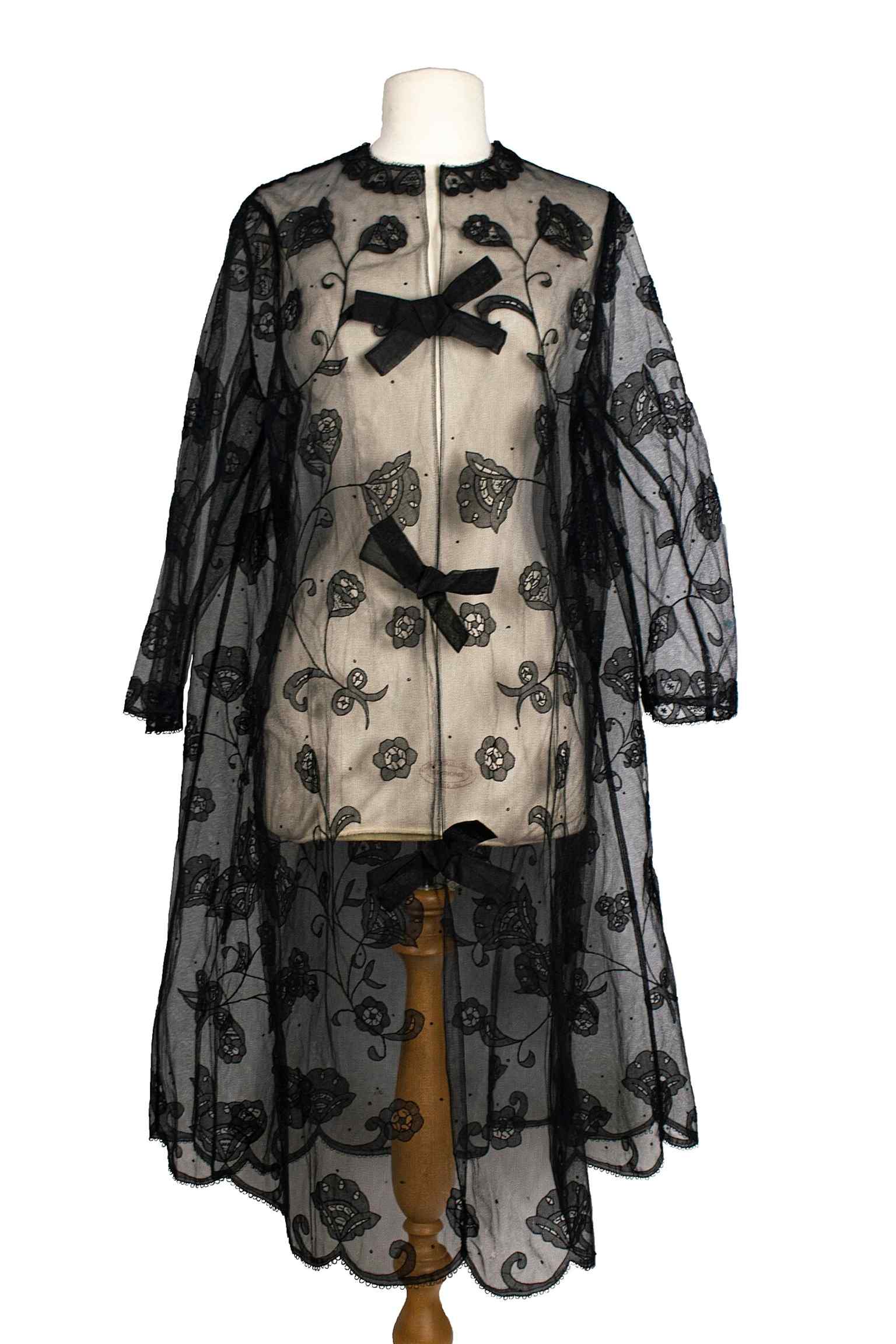
This 'Illusion' kaftan by Sybil Connolly is part of the extensive collection of her designs, including 45 textile pieces, donated to the museum.Photo: Hunt Museum and Inés Rivilla López, Wikimedia Commons, CC BY-SA 4.0. Cropped & resized. On your right stands Saint John's Cathedral, an imposing structure built of rough grey limestone, dominated by a soaring, sharply pointed spire and distinguished by a solitary…Read moreShow less
Open dedicated page →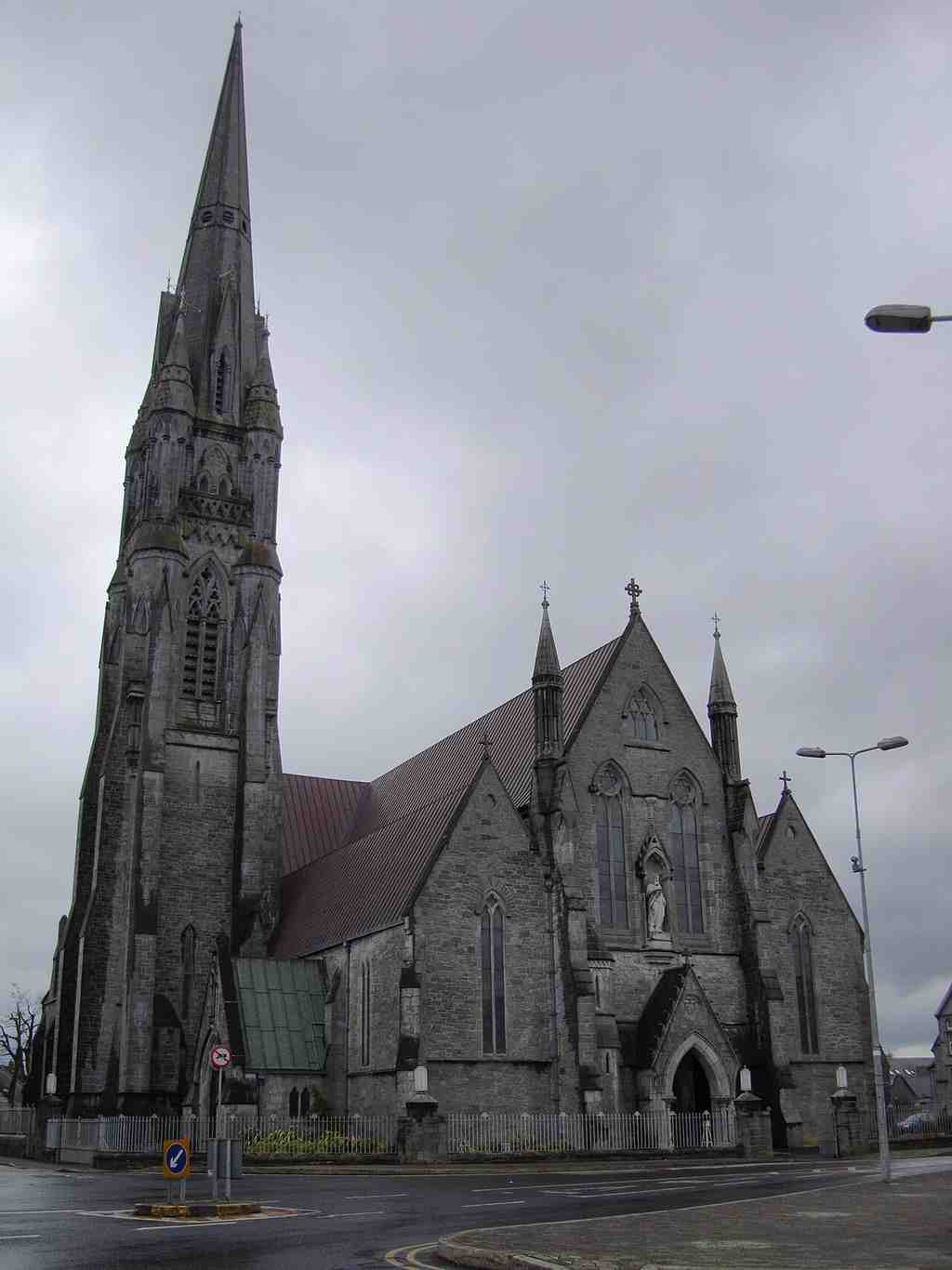
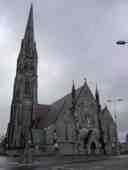
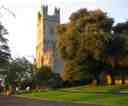
St John's Cathedral (Limerick)Photo: JohnArmagh, Wikimedia Commons, Public domain. Cropped & resized. On your right stands Saint John's Cathedral, an imposing structure built of rough grey limestone, dominated by a soaring, sharply pointed spire and distinguished by a solitary white statue set just above its main entrance. It has quite a presence, does it not? English architect Philip Charles Hardwick designed this Roman Catholic cathedral back in eighteen fifty-six. Hardwick was a fan of the Gothic Revivalist style, an architectural movement bringing back the towering, pointed arches of medieval Europe. But his take here is famously described as severe. Apart from that lone statue on the front facade, there is practically no external decoration on the main body of the church.
They definitely saved the drama for the tower. The spire was added later, starting in eighteen seventy-nine, by architect Thomas Byrne. He ran into serious trouble when a massive storm in September of eighteen eighty-two heavily damaged the construction, delaying the entire project. When finally finished, locals proudly claimed it was the tallest spire in Ireland, reaching ninety-four meters, or three hundred and eight feet. Unfortunately, modern measuring tools ruined the fun. It turns out it is actually only eighty-one meters, making it shorter than Saint Colman's Cathedral in Cobh.
If you check your phone, you can see the inside of the nave, the grand central hall where the congregation gathers, showing original wooden pews and floor tiles from eighteen ninety-four that still survive today. It stands as a quietly powerful monument to nineteenth-century Limerick. Take all the time you need to admire the architecture, and whenever you are ready, we can make our way to the next stop.
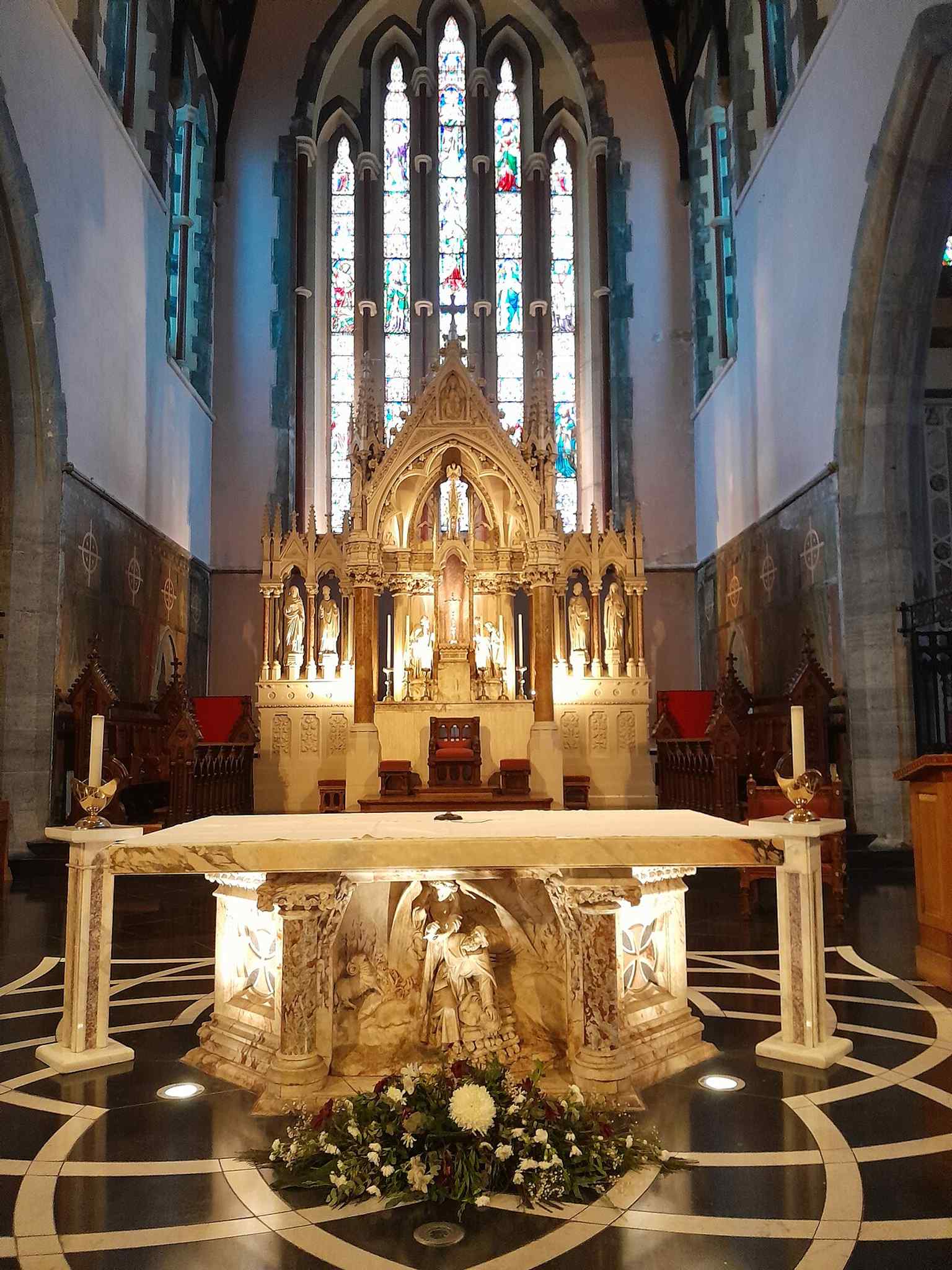
The cathedral's nave, with original pews and floor tiles that have survived since the building's consecration in 1894, offering a glimpse into its rich history.Photo: August Dominus, Wikimedia Commons, CC0. Cropped & resized. 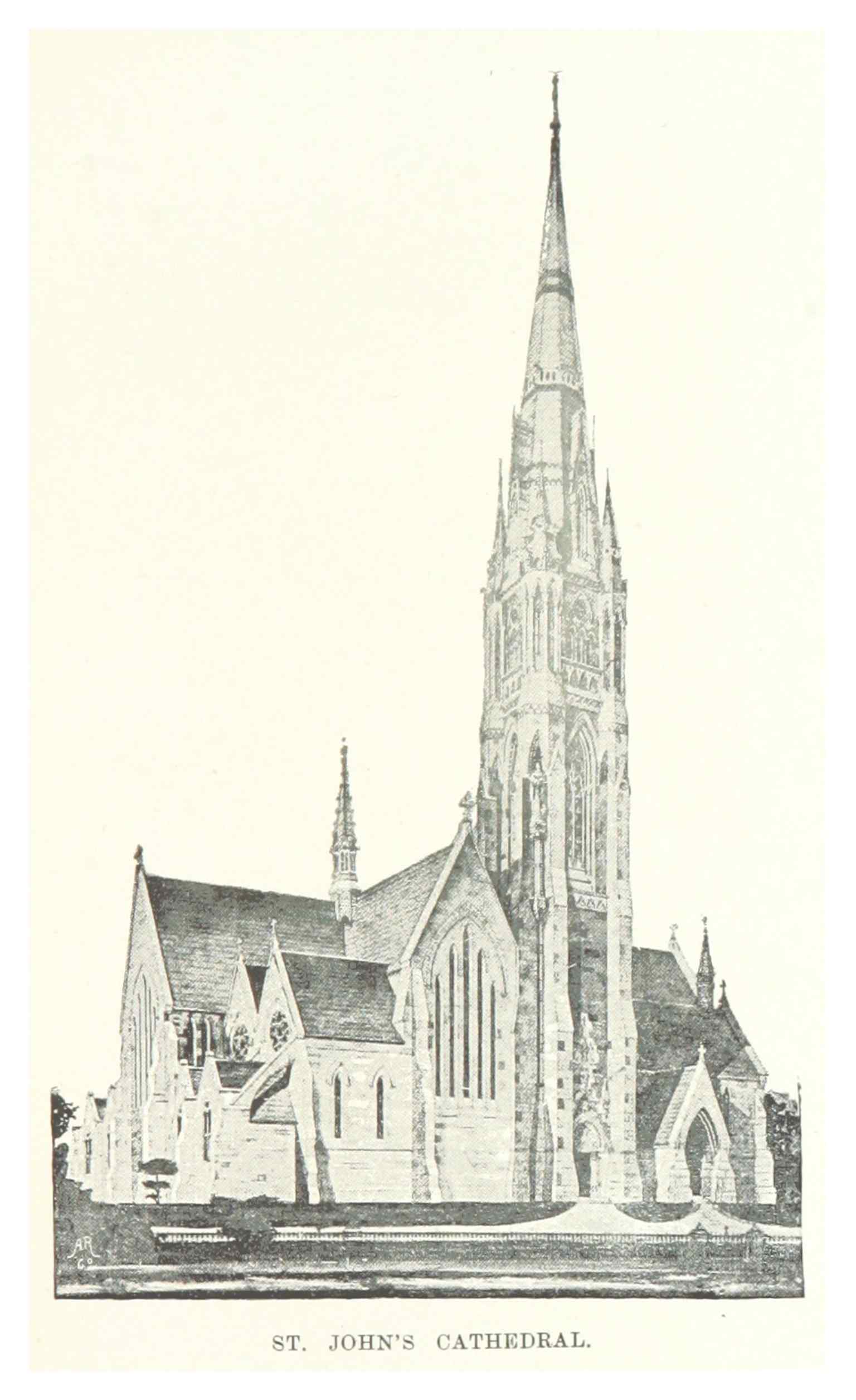
A historical depiction of St. John's Cathedral from 1890, showing the building after its full completion in 1861 and prior to its reconsecration in 1894.Photo: Unknown, Wikimedia Commons, Public domain. Cropped & resized. 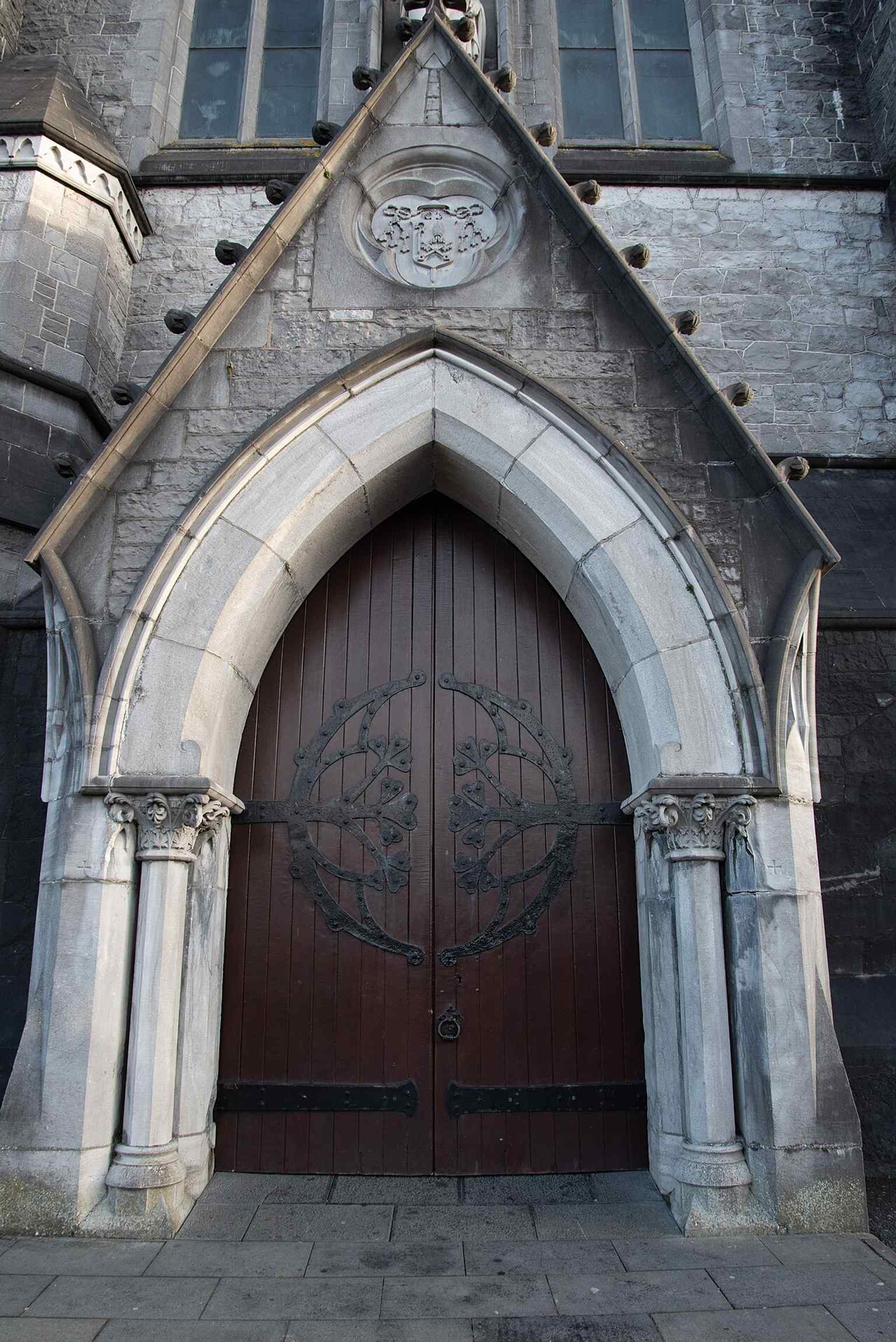
The impressive Gothic Revivalist exterior of St. John's Cathedral, completed in 1861, features a striking spire that was once thought to be the tallest in Ireland.Photo: Olliebailie, Wikimedia Commons, CC BY-SA 4.0. Cropped & resized. 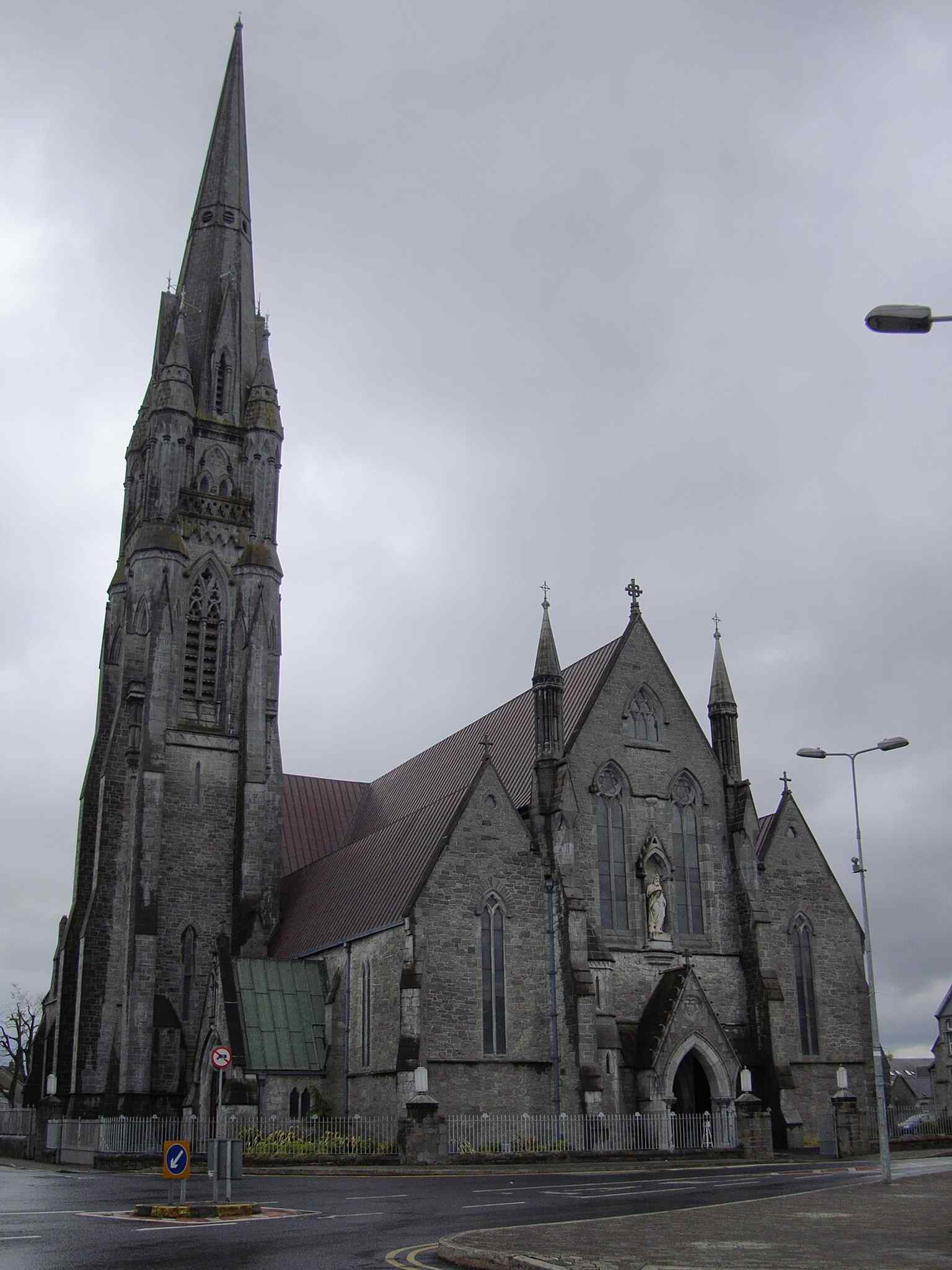
An exterior view that highlights the cathedral's 'severe' architectural style and minimal external decoration, a design approach influenced by Philip Charles Hardwick's mentor, Augustus Pugin.Photo: JohnArmagh, Wikimedia Commons, Public domain. Cropped & resized. 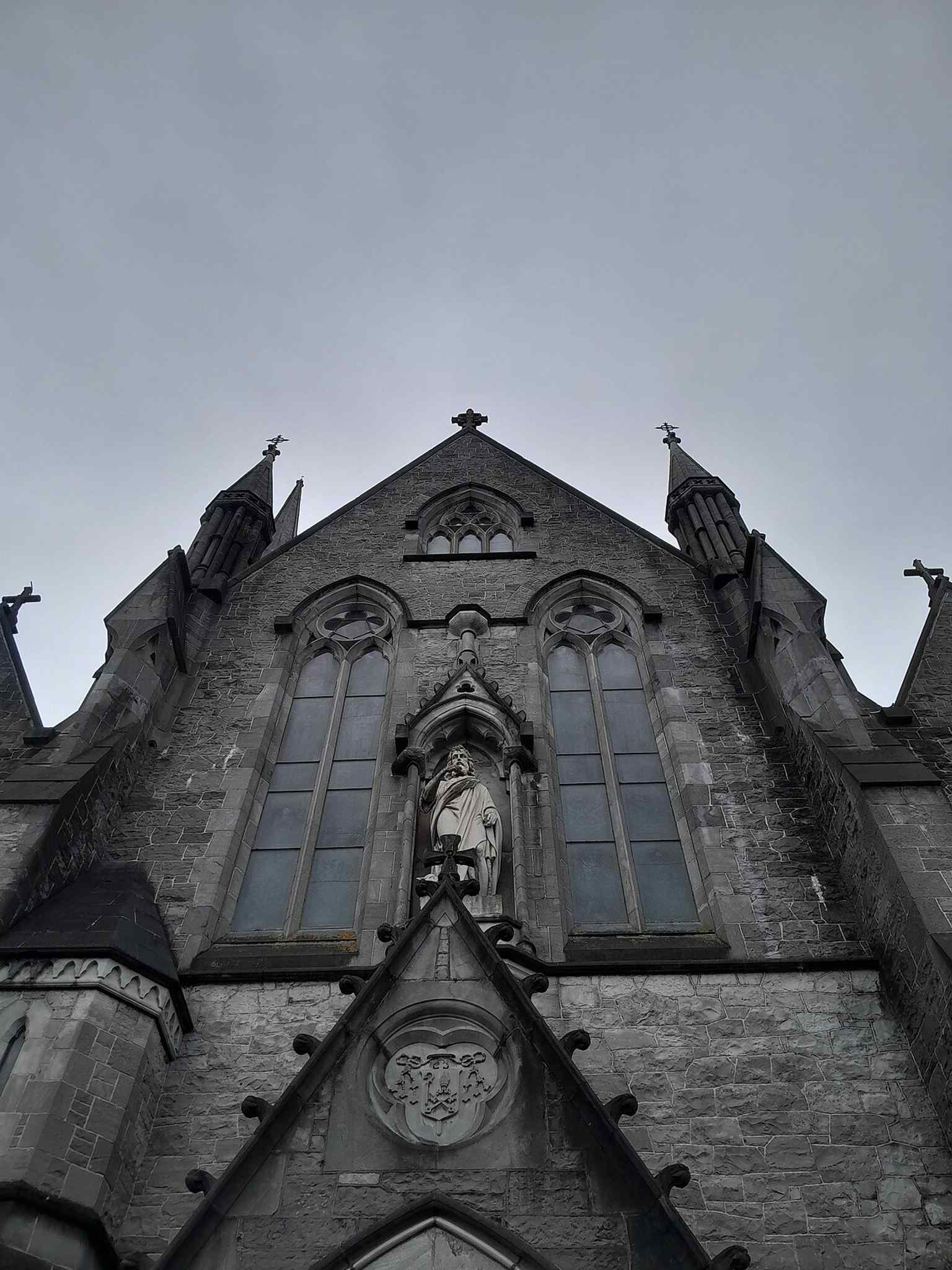
A bright exterior view showcasing the cathedral's local limestone facing and roofline, which underwent restoration work in 2003/2004.Photo: August Dominus, Wikimedia Commons, CC0. Cropped & resized. 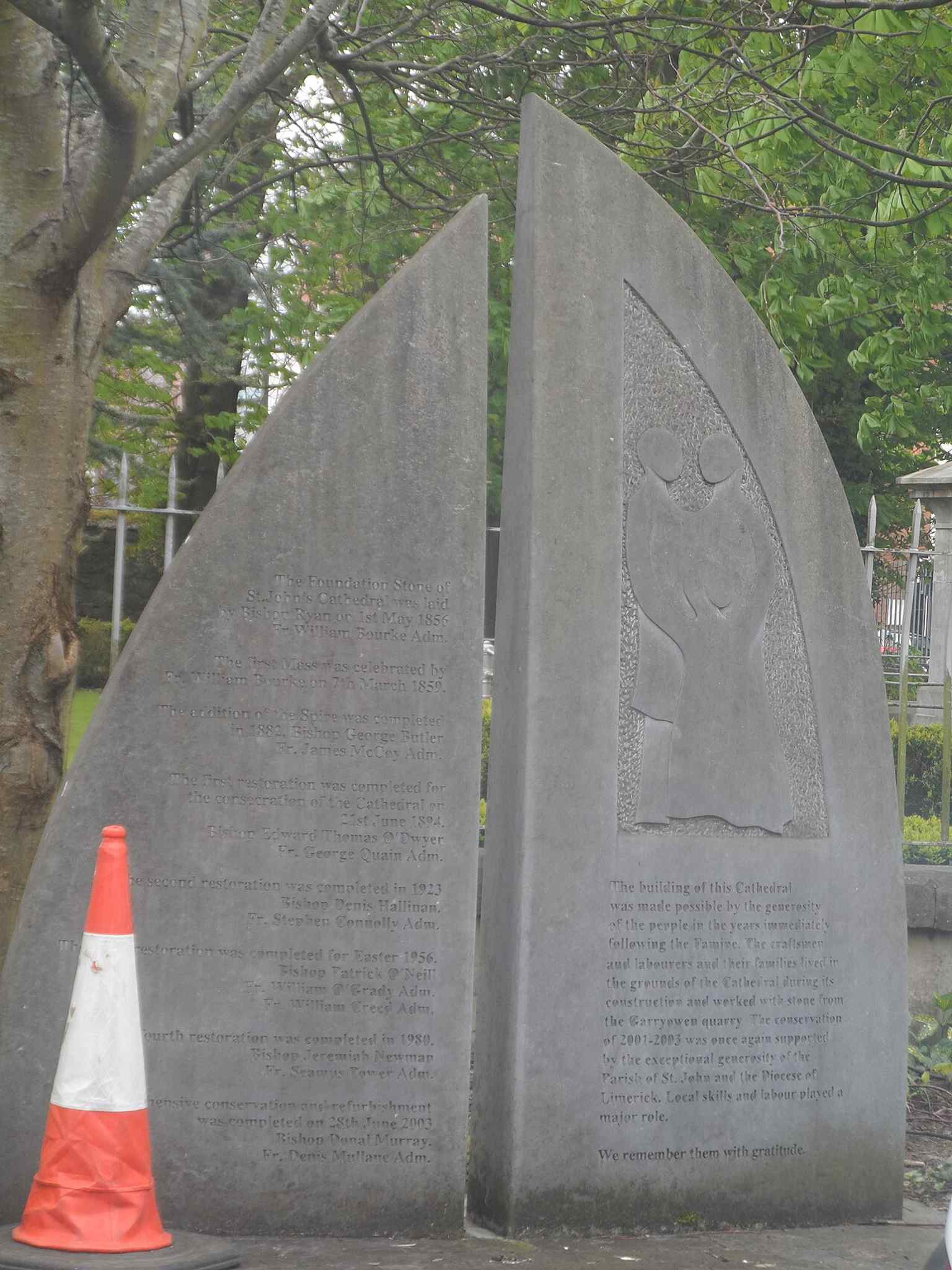
A detailed shot of the local Limerick limestone, the primary material used in the construction of St. John's Cathedral, which gives it its distinctive appearance.Photo: Sheila1988, Wikimedia Commons, CC BY-SA 4.0. Cropped & resized. 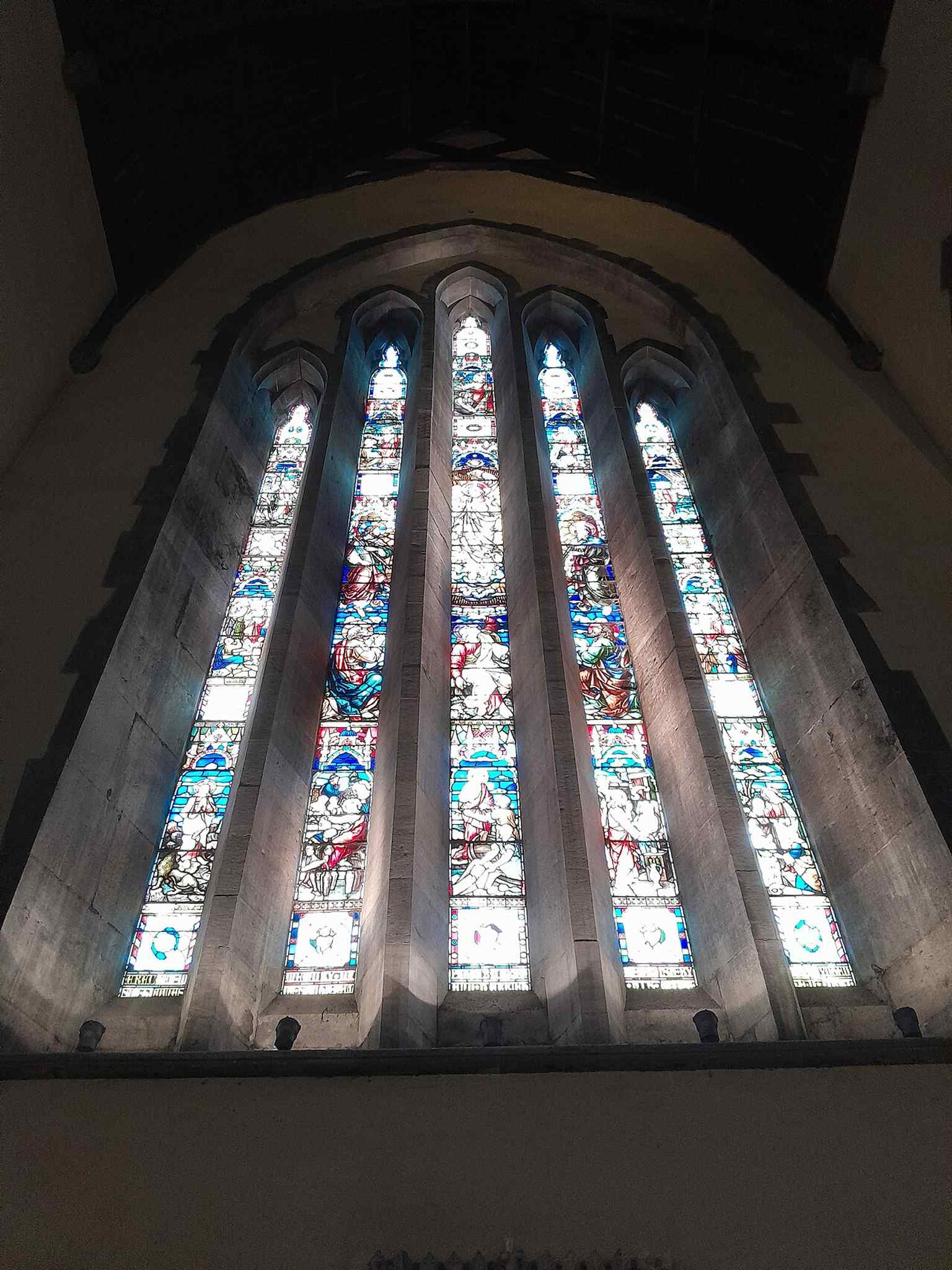
A view of the renovated sanctuary, an area that was reordered by Bishop Edward Thomas O'Dwyer between 1893 and 1894, inspired by St Chad's Cathedral in Birmingham.Photo: August Dominus, Wikimedia Commons, CC0. Cropped & resized. 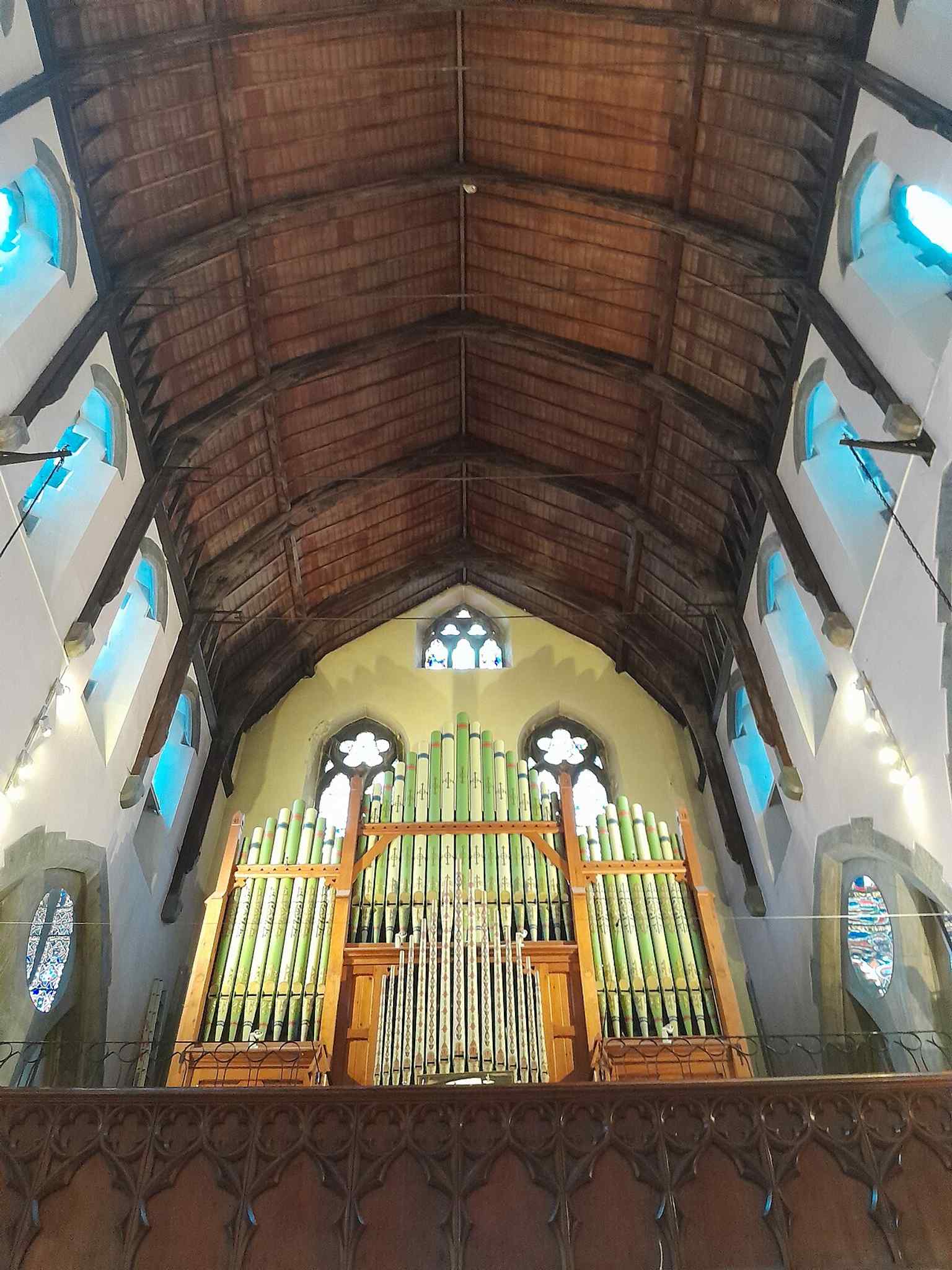
The main altar area, where the altar is constructed using local Limerick marble, a significant feature within the cathedral's interior, though the carving of Abraham's sacrifice is not clearly visible here.Photo: August Dominus, Wikimedia Commons, CC0. Cropped & resized. 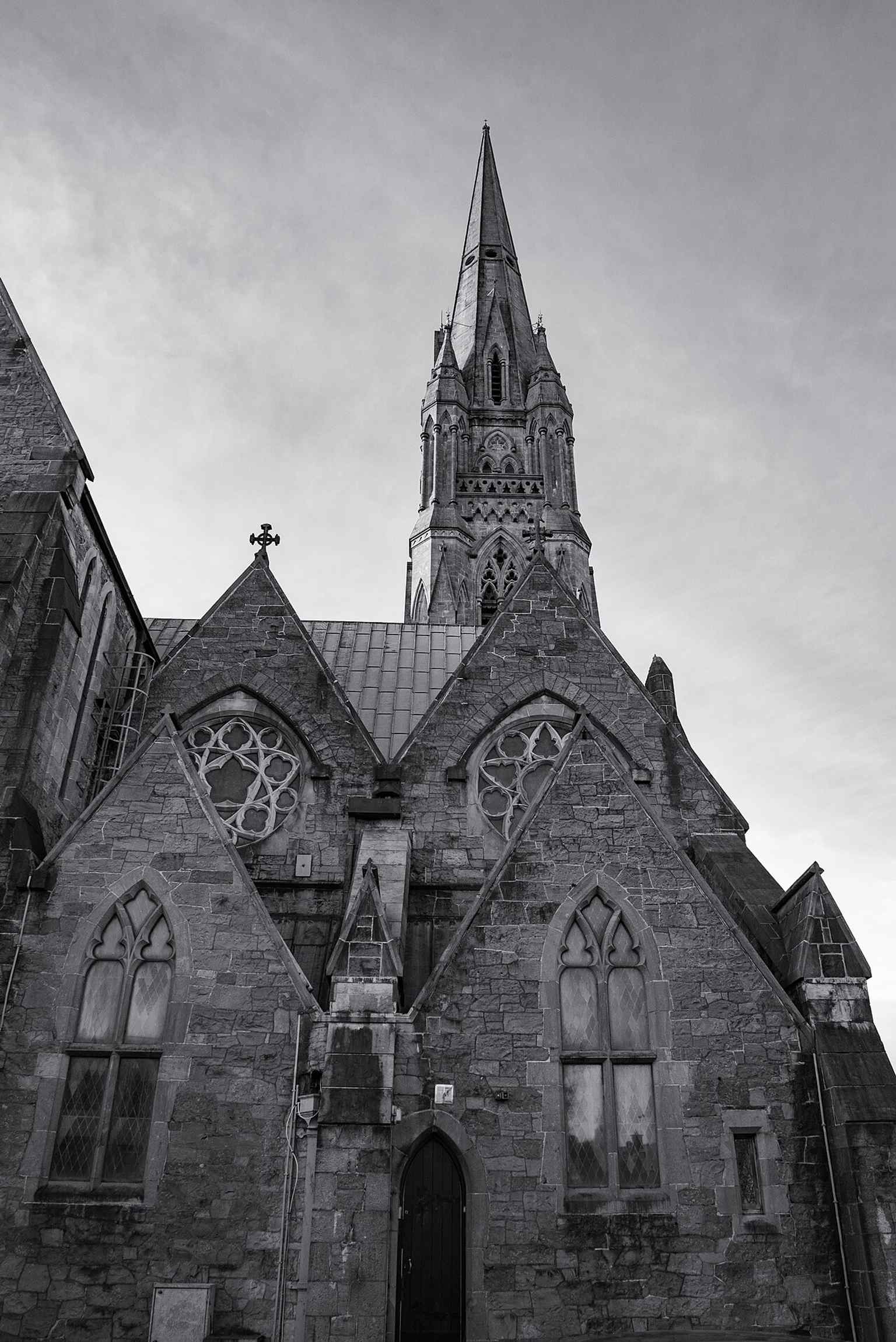
A dynamic exterior perspective of St. John's Cathedral, highlighting the impressive height of its spire, which was constructed between 1879 and 1883 by Thomas Byrne.Photo: Olliebailie, Wikimedia Commons, CC BY-SA 4.0. Cropped & resized. Look to your right for a stadium defined by its tall metal floodlight pylons, a long block wall perimeter, and a large, sloping roof over its main concrete stand. This is Markets…Read moreShow less
Open dedicated page →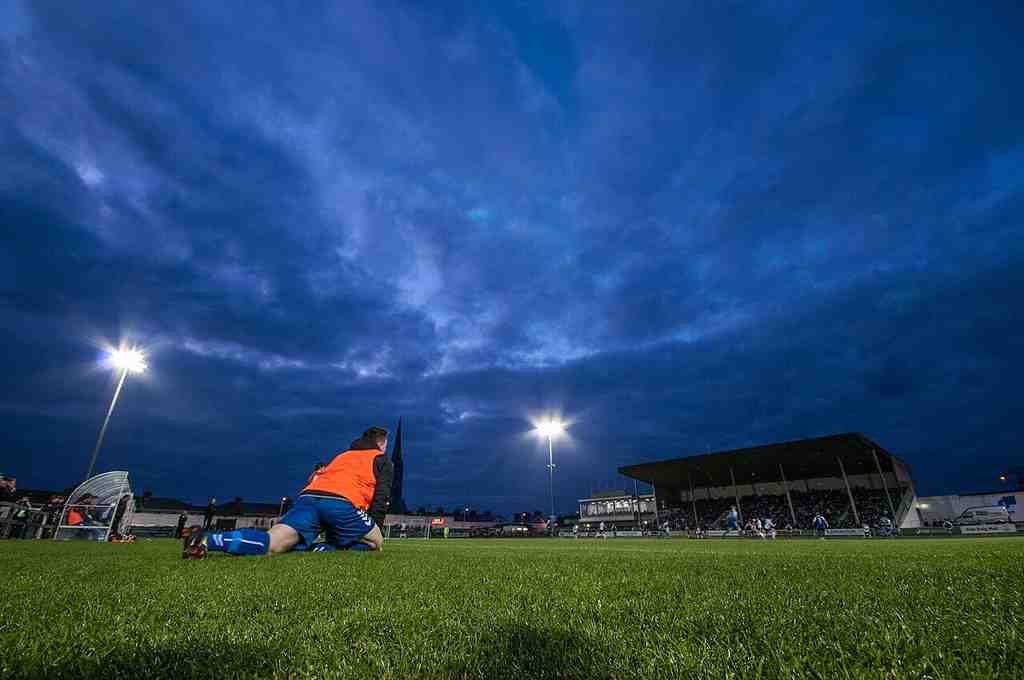
Markets FieldPhoto: Seaninryan, Wikimedia Commons, CC BY-SA 4.0. Cropped & resized. Look to your right for a stadium defined by its tall metal floodlight pylons, a long block wall perimeter, and a large, sloping roof over its main concrete stand. This is Markets Field.
Since we just came from Saint John's Cathedral, you might find it fitting that one of the banked standing areas inside this very stadium is named the Cathedral End. It is a nice little nod to the neighbors. Markets Field is essentially the chameleon of Limerick sports. Today, it is a UEFA, the Union of European Football Associations, category two stadium and the home ground of Treaty United, holding about three thousand five hundred fans. But its soil has soaked up the sweat of almost every sport imaginable.
For decades, this was a rugby fortress for the Garryowen club, serving as their home from eighteen eighty-six until nineteen fifty-seven. Around the early nineteen hundreds, it also served as a Gaelic games ground, hosting intense hurling and Gaelic football matches. But for many locals of a certain generation, Markets Field means only one thing... greyhounds.
From nineteen thirty-seven all the way to two thousand and nine, the roar of the crowd here was directed at mechanical hares and racing dogs. It was a massive operation. In nineteen sixty, the owners installed a new totalisator system, a massive mechanical computer that calculates betting odds and payouts for the track, alongside a brand new stand that cost over sixty thousand pounds. That translates to well over a million euros today. It was also here that a young man named J-P McManus started out as a bookmaker, calculating odds and taking bets from the crowds in the stands. He was so successful he earned the nickname the Sundance Kid, long before he became one of Ireland's most famous billionaires.
Of course, we cannot forget the football history. The legendary Liverpool team played a friendly match here against Limerick F-C, the city's former football club, in nineteen sixty-two. The English giants won that one five to three. Limerick even hosted European cup ties here against Southampton in nineteen eighty-one, and the Dutch side A-Z Alkmaar in nineteen eighty-two.
When the greyhound racing moved to a new venue in two thousand and nine, Markets Field fell quiet. But in twenty eleven, L-E-D-P, the Limerick Enterprise Development Partnership, purchased the ground, backed by funds from none other than that former track bookmaker, J-P McManus. They poured four hundred thousand euros into a brand new playing surface. Take a glance at your app to see a shot of that very pitch gleaming under the lights. That vibrant green grass actually won the F-A-I, the Football Association of Ireland, Pitch of the Year award in twenty sixteen.
Markets Field has survived shifts in culture, changes in ownership, and the rise and fall of entirely different sports. Reflect on that rich sporting history. When you are ready, we can head to the next stop.
Standing on your left is a massive grey limestone church, defined by its square, battlement-topped tower and tall arched windows. This is Saint Mary's Cathedral. Founded in…Read moreShow less
Open dedicated page →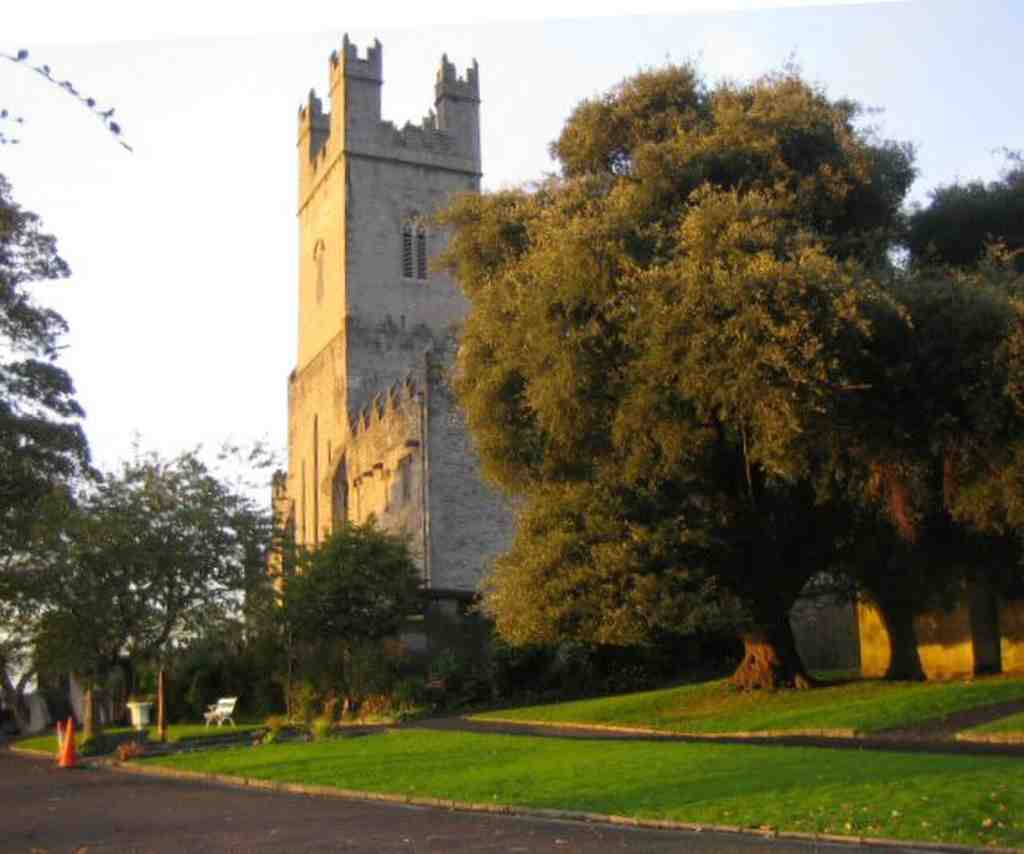
St Mary's Cathedral, LimerickPhoto: Seabhcan, Wikimedia Commons, Public domain. Cropped & resized. Standing on your left is a massive grey limestone church, defined by its square, battlement-topped tower and tall arched windows.
This is Saint Mary's Cathedral. Founded in eleven sixty-eight by the last King of Munster, it holds the title of the oldest building in Limerick still in use today. He actually built it right on top of his own royal palace, which in turn sat exactly where the old Viking meeting place, or Thingmote, used to be. Talk about prime real estate.
If you look at the great west door, you are looking at what many believe was the original main entrance to the king's palace. As you get closer, you might notice deep grooves worn into the stone around that door. According to local lore, soldiers defending the city during its many sieges would furiously sharpen their swords and arrows right there on the masonry.
The cathedral has seen plenty of drama over the centuries. When Oliver Cromwell's parliamentary army captured Limerick in sixteen fifty-one, they decided this sacred space would make an excellent stable for their horses. They even dragged out the cathedral's original thirteen-foot high altar. Check your screen for a look at what that altar looks like today. It is a massive pre-Reformation piece carved from a single block of limestone, and it is the largest such altar in Ireland and the U-K. Thankfully, the massive stone block was finally reinstated in its rightful place in the nineteen sixties.
If you choose to wander inside later, there are a few other remarkable survivors of history to find. For instance, Saint Mary's houses the only complete set of misericords left in Ireland. You can pull up your app to see the intricate carving on one of them. A misericord is a small, cleverly designed wooden ledge attached to the underside of a folding seat in the choir area. When the seat is folded up, the ledge provides a place for clergy to secretly lean and rest their legs during incredibly long, mandatory standing prayers. A little medieval life hack.
You can also find heavy iron cannonballs left over from the Williamite Siege of sixteen ninety-one lodged in the interior walls, and graves of notable figures like Frances Condell, the first female mayor of Limerick, resting in the churchyard.
The cathedral is usually open for visitors from eleven A-M to four P-M, with a five-euro admission charge that goes directly to keeping this ancient building functioning.
It is a remarkable structure that has survived kings, sieges, and literal cavalry to remain a quiet anchor for the city. Take a moment to wander the grounds if you like. When you are ready, we can head to the next stop.
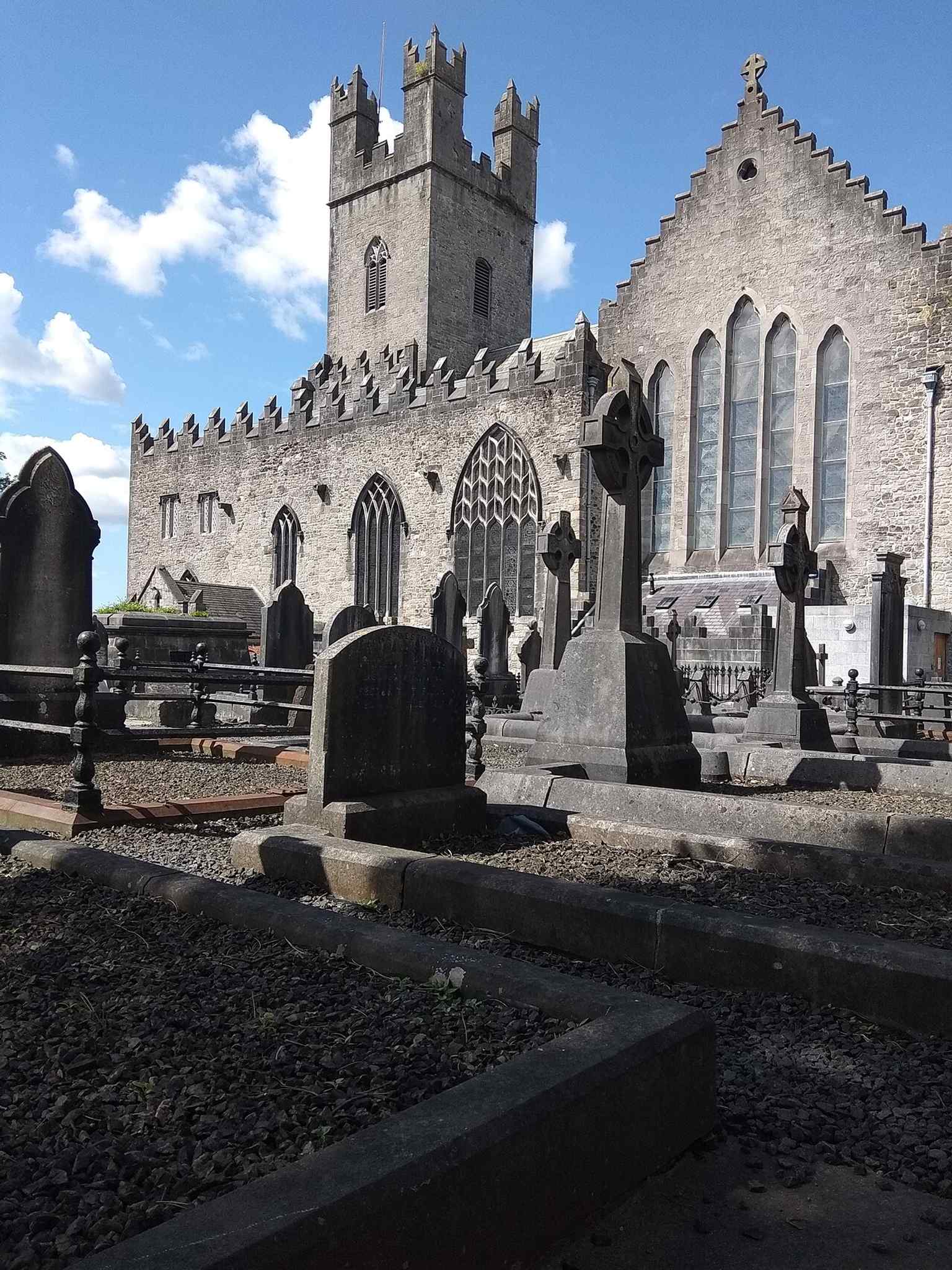
This high-resolution exterior view showcases St. Mary's Cathedral, built in 1168 on the site of Domnall Mór Ua Briain's palace and the Viking "Thingmote."Photo: VictorBellon, Wikimedia Commons, CC BY-SA 4.0. Cropped & resized. Looking to your right, you will see the massive grey limestone walls and thick, round drum towers of the fortress anchored right on the edge of the river. This is King John's…Read moreShow less
Open dedicated page →Looking to your right, you will see the massive grey limestone walls and thick, round drum towers of the fortress anchored right on the edge of the river. This is King John's Castle. Take a look at your screen to see a photo of how it dominates the waterfront. Long before a stone was ever laid here, this very spot on King's Island was a Viking stronghold. Back in the year nine twenty-two, a Viking sea-king named Tomrair mac Ailchi set up camp to raid up and down the River Shannon. His success did not last forever though. Local Irish clans eventually fought back, and the settlement was burned to the ground in eleven seventy-four to keep it out of the hands of the arriving Anglo-Normans, a powerful ruling class of French and English conquerors who were rapidly expanding their territory.
Well, the Normans took the area anyway. By around twelve ten, this formidable stone castle was finished. It was built on the orders of King John of England to serve as a watchdog over the port, protecting the city from independent Gaelic kingdoms to the west and rebellious Norman lords to the east. And it worked perfectly. Limerick grew so wealthy under Norman rule that King John even set up his own mint right inside these walls to produce silver pennies. If you check your app, you can see an eighteen thirty drawing of the castle, capturing the grandeur that once made visiting judges compare Limerick's lofty stone buildings to the magnificent colleges of Oxford.
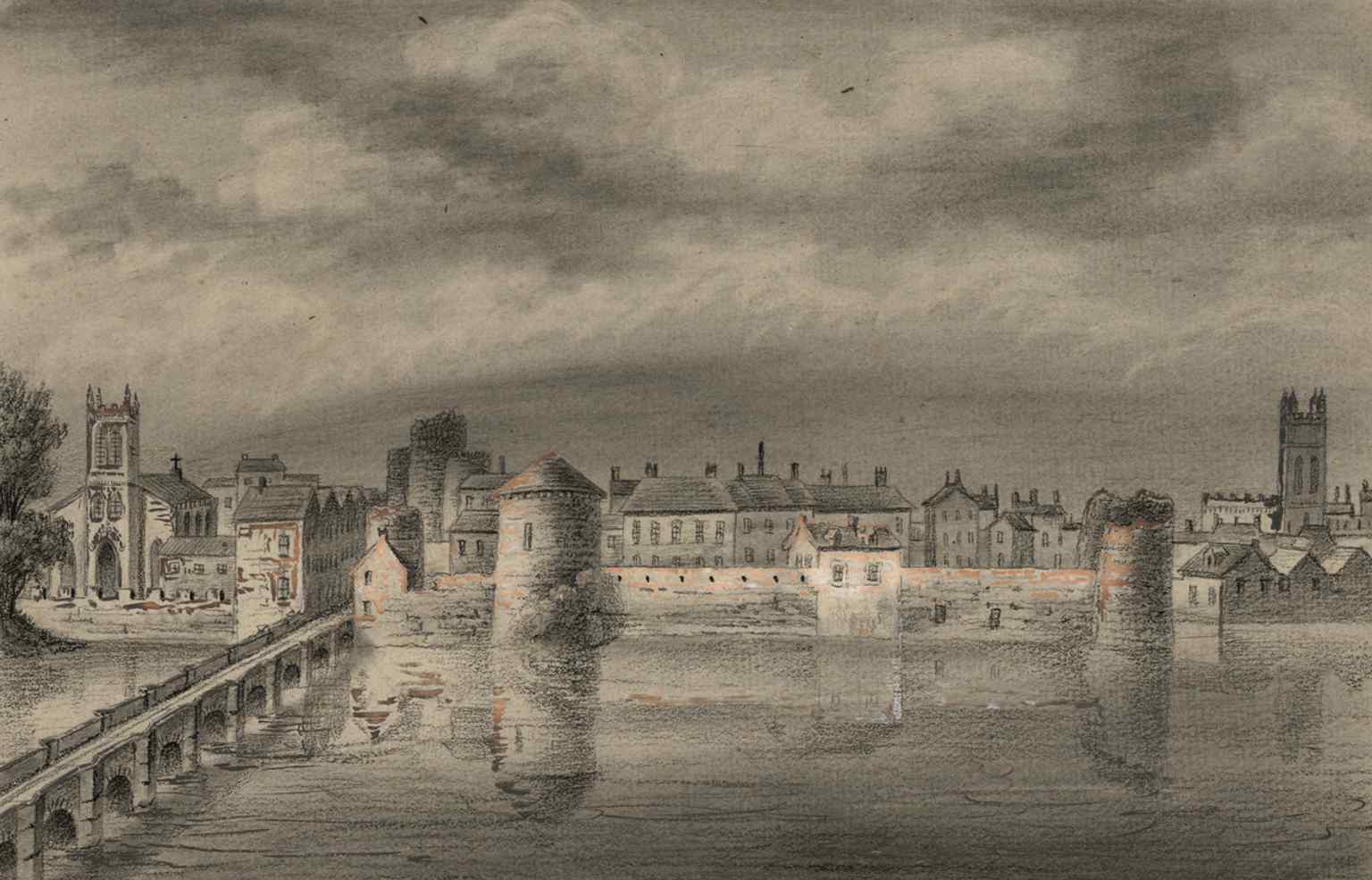
An 1830 drawing by Alphonse Dousseau captures King John's Castle, reflecting its long history as 'a lofty building of marble' as described in 1620.Photo: Alphonse Dousseau, Wikimedia Commons, CC0. Cropped & resized. But this grand fortress also saw its share of brutality. In the seventeenth century alone, it endured five sieges. The most dramatic was the sixteen forty-two siege. Protestant settlers, fleeing a massive Irish rebellion, locked themselves inside. Outside, an Irish Confederate army led by Garret Barry surrounded them. Barry did not have heavy artillery to blast the walls, so he got creative. He had his men quietly dig tunnels right under the castle foundations, digging away the earth to collapse the entire structure from below. The terrified people inside surrendered just moments before the walls gave way. The foundations were so badly damaged from the digging that large sections of the stone wall had to be torn down afterward anyway.
Today, things are a bit more peaceful. Between twenty eleven and twenty fourteen, the site underwent a five point seven million euro renovation. They added a modern visitor center, computer animations, and a cafe right in the courtyard. If you want to explore those interactive exhibits inside, the castle is open Monday through Sunday from nine thirty A-M to six P-M.
It is quite a survivor, standing strong after eight centuries of chaos. Whenever you are ready, we can wander over to the next stop.
Right in front of you is Thomond Bridge, a robust stone crossing defined by seven continuous arches and a sturdy masonry parapet spanning the River Shannon. It sits right beside…Read moreShow less
Open dedicated page →Right in front of you is Thomond Bridge, a robust stone crossing defined by seven continuous arches and a sturdy masonry parapet spanning the River Shannon. It sits right beside the thirteenth-century King John's Castle. The very first bridge here was built near an old fording point, or shallow crossing. That medieval version had fourteen arches instead of seven. It saw some real action during the sixteen ninety-one Siege of Limerick, when a desperate defense of the city failed right on this spot. You can pull up the seventeen fourteen map on your screen to see how strategic this chokepoint was back then. Afterwards, the Treaty Stone was placed nearby to mark the end of the siege. In eighteen thirty-six, the city replaced the old bridge with the structure you see today, cleverly building it directly on top of the original medieval pier foundations. Take a quick look at the comparison image in your app to see how these arches and the castle towers have stood strong together over the last century. Now carrying traffic on the Northern Relief Road, the bridge is open twenty-four hours a day whenever you are ready to cross.
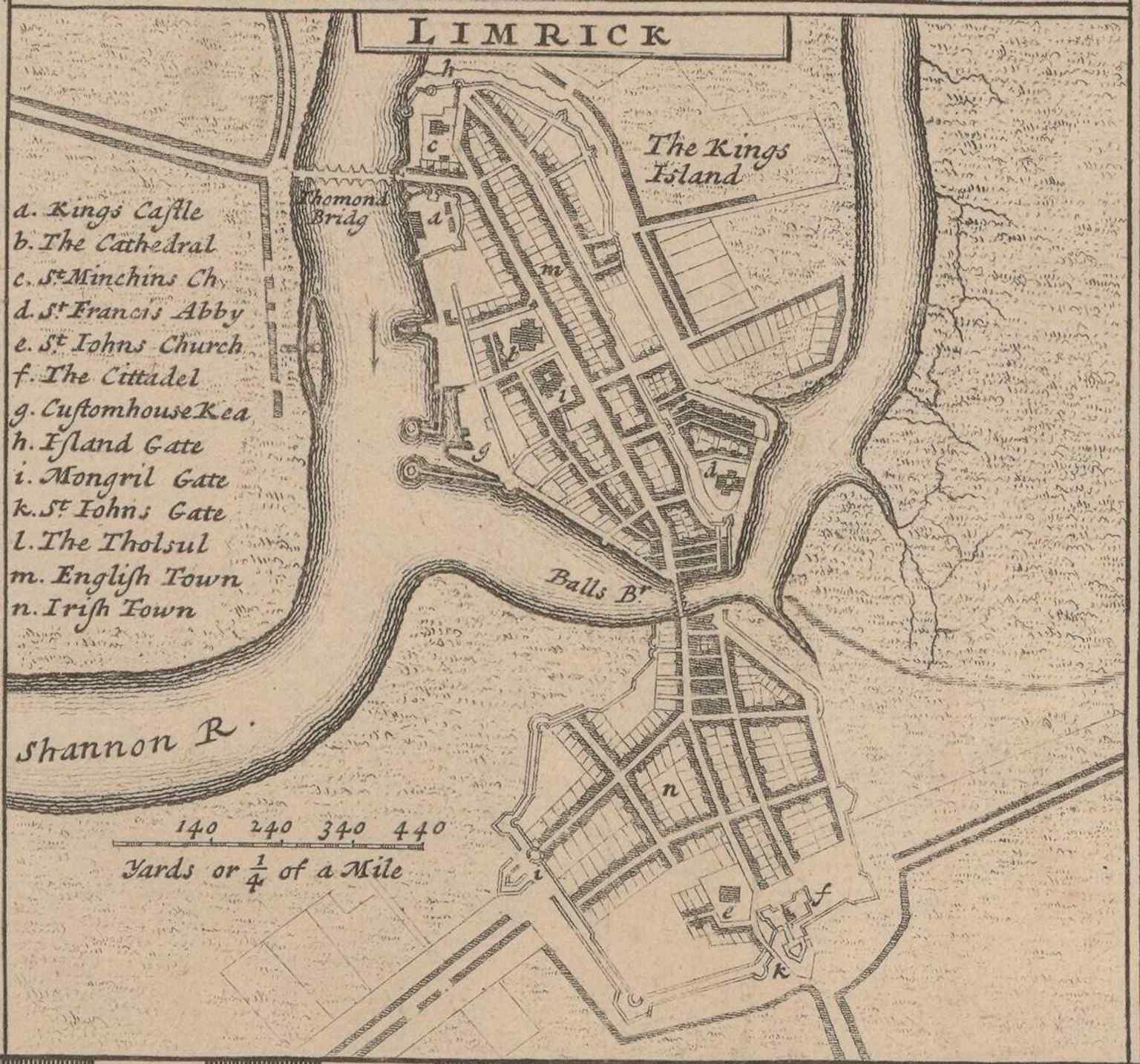
This invaluable 1714 map of Limerick City shows the medieval Thomond Bridge, highlighting its strategic location at the time of the 1691 Siege of Limerick.Photo: Herman Moll, Wikimedia Commons, Public domain. Cropped & resized. 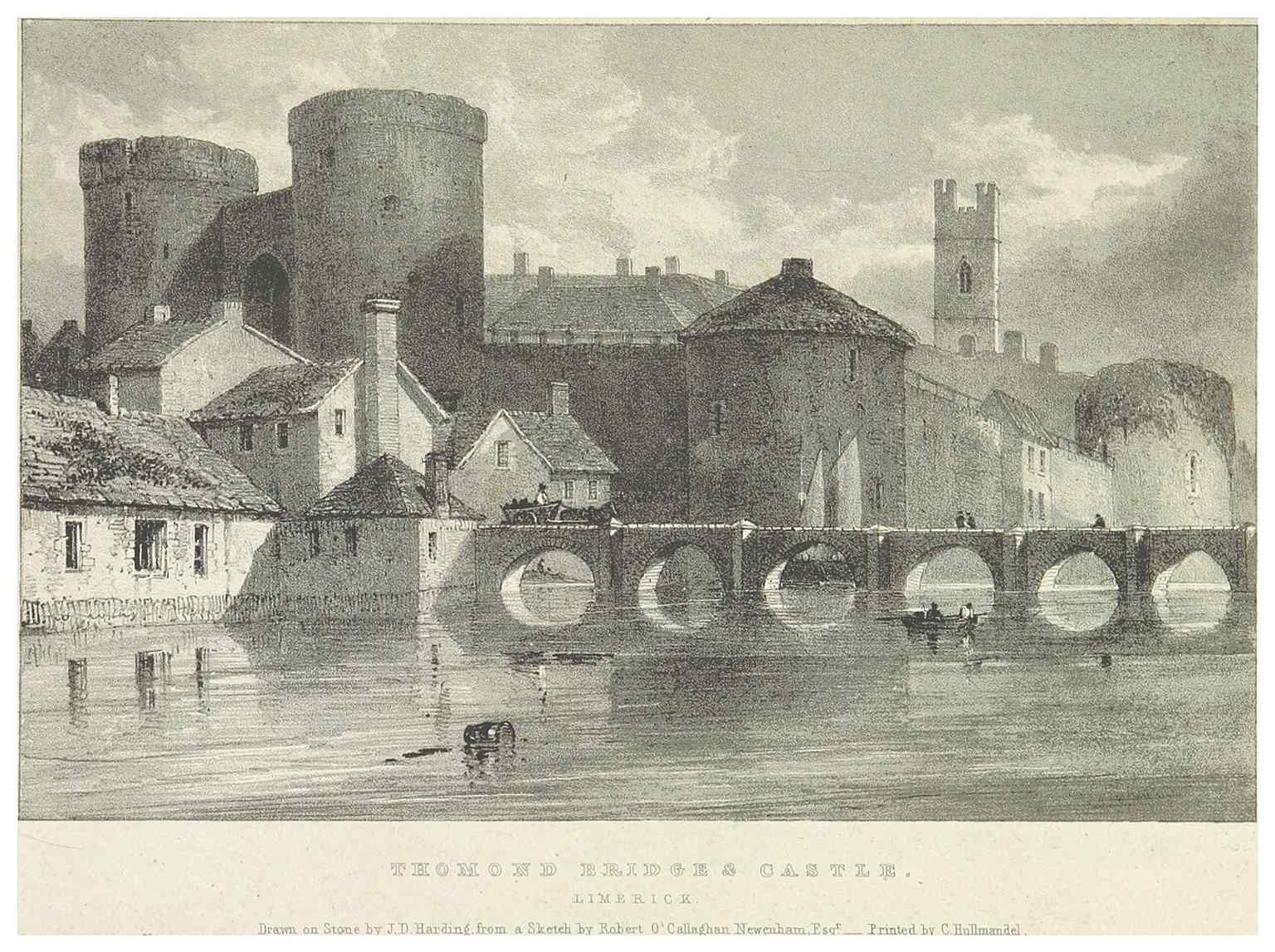
An 1830 artwork depicting the Thomond Bridge and King John's Castle, likely showing the medieval bridge of fourteen arches that stood on this site before its replacement in 1836.Photo: Unknown, Wikimedia Commons, Public domain. Cropped & resized. 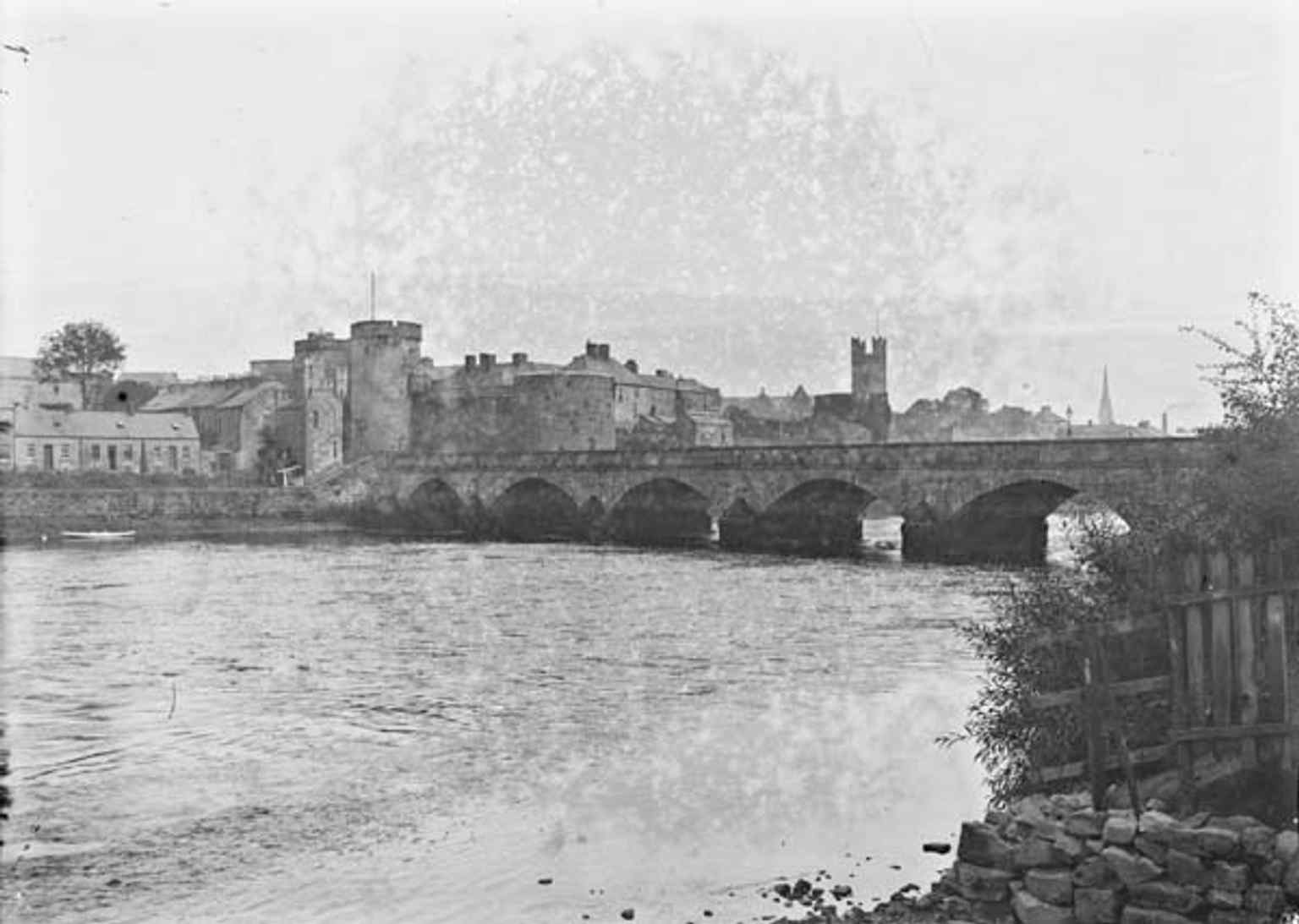
A historical photograph from the early 20th century, showing the seven-arched Thomond Bridge which was built in 1836, incorporating the pier foundations of the earlier structure.Photo: National Library of Ireland on The Commons, Wikimedia Commons, No restrictions. Cropped & resized. 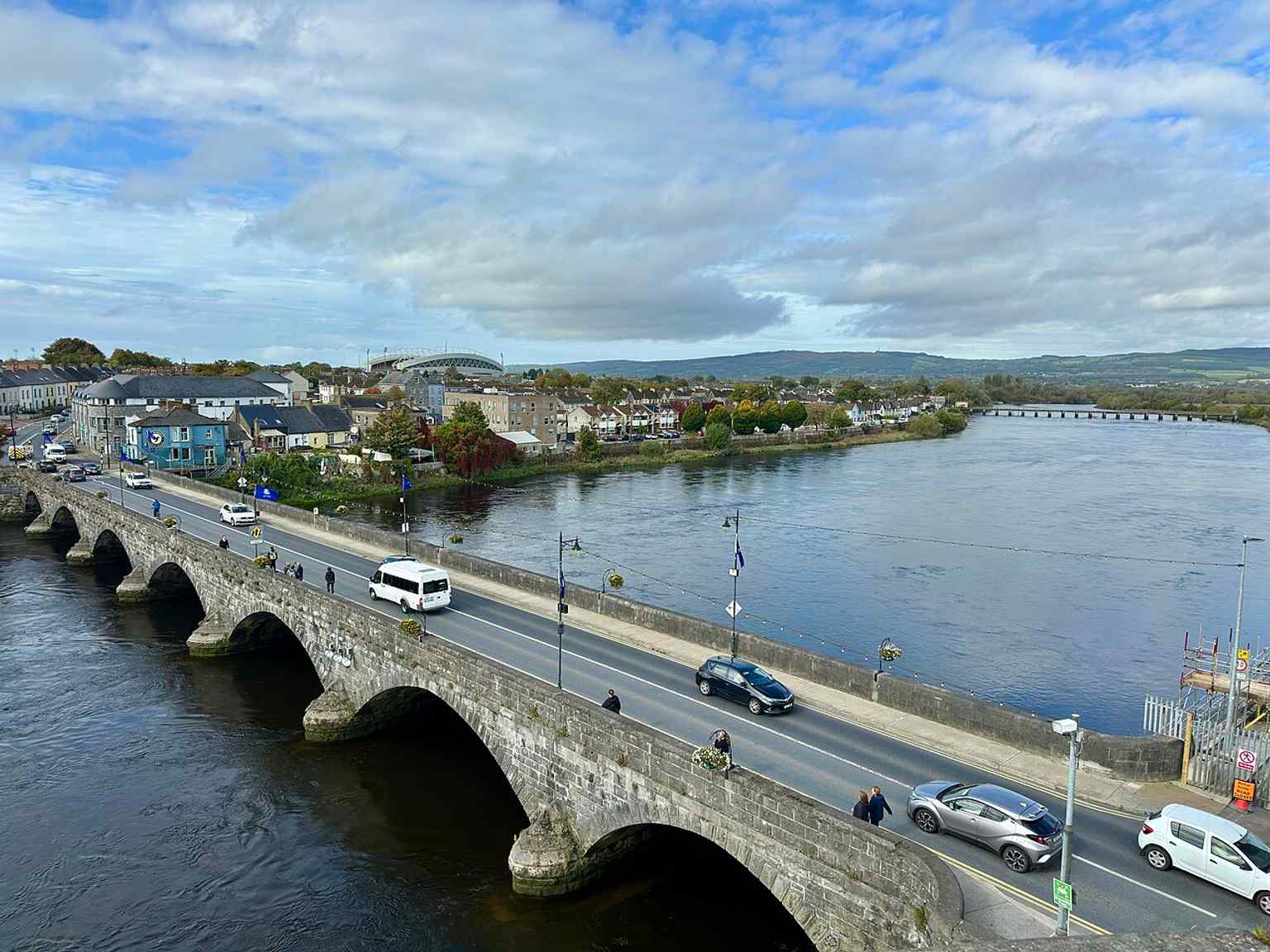
A high-resolution contemporary view of Thomond Bridge, showcasing its seven arches that replaced the earlier fourteen-arched medieval structure in 1836.Photo: Thoslee, Wikimedia Commons, CC BY-SA 4.0. Cropped & resized.

Frequently asked questions
How do I start the tour?
After purchase, download the AudaTours app and enter your redemption code. The tour will be ready to start immediately - just tap play and follow the GPS-guided route.
Do I need internet during the tour?
No! Download the tour before you start and enjoy it fully offline. Only the chat feature requires internet. We recommend downloading on WiFi to save mobile data.
Is this a guided group tour?
No - this is a self-guided audio tour. You explore independently at your own pace, with audio narration playing through your phone. No tour guide, no group, no schedule.
How long does the tour take?
Most tours take 60–90 minutes to complete, but you control the pace entirely. Pause, skip stops, or take breaks whenever you want.
What if I can't finish the tour today?
No problem! Tours have lifetime access. Pause and resume whenever you like - tomorrow, next week, or next year. Your progress is saved.
What languages are available?
All tours are available in 50+ languages. Select your preferred language when redeeming your code. Note: language cannot be changed after tour generation.
Where do I access the tour after purchase?
Download the free AudaTours app from the App Store or Google Play. Enter your redemption code (sent via email) and the tour will appear in your library, ready to download and start.
If you don't enjoy the tour, we'll refund your purchase. Contact us at [email protected]
Checkout securely with 






%20p179%20ST.JOHN'S%20CATHEDRAL.jpg)


.jpg)
%20p179%20LIMERICK%20-%20THOMOND%20BRIDGE%20AND%20CASTLE.jpg)
.jpg)
