
Looking to your right, you will see the massive grey limestone walls and thick, round drum towers of the fortress anchored right on the edge of the river. This is King John's Castle. Take a look at your screen to see a photo of how it dominates the waterfront. Long before a stone was ever laid here, this very spot on King's Island was a Viking stronghold. Back in the year nine twenty-two, a Viking sea-king named Tomrair mac Ailchi set up camp to raid up and down the River Shannon. His success did not last forever though. Local Irish clans eventually fought back, and the settlement was burned to the ground in eleven seventy-four to keep it out of the hands of the arriving Anglo-Normans, a powerful ruling class of French and English conquerors who were rapidly expanding their territory.
Well, the Normans took the area anyway. By around twelve ten, this formidable stone castle was finished. It was built on the orders of King John of England to serve as a watchdog over the port, protecting the city from independent Gaelic kingdoms to the west and rebellious Norman lords to the east. And it worked perfectly. Limerick grew so wealthy under Norman rule that King John even set up his own mint right inside these walls to produce silver pennies. If you check your app, you can see an eighteen thirty drawing of the castle, capturing the grandeur that once made visiting judges compare Limerick's lofty stone buildings to the magnificent colleges of Oxford.
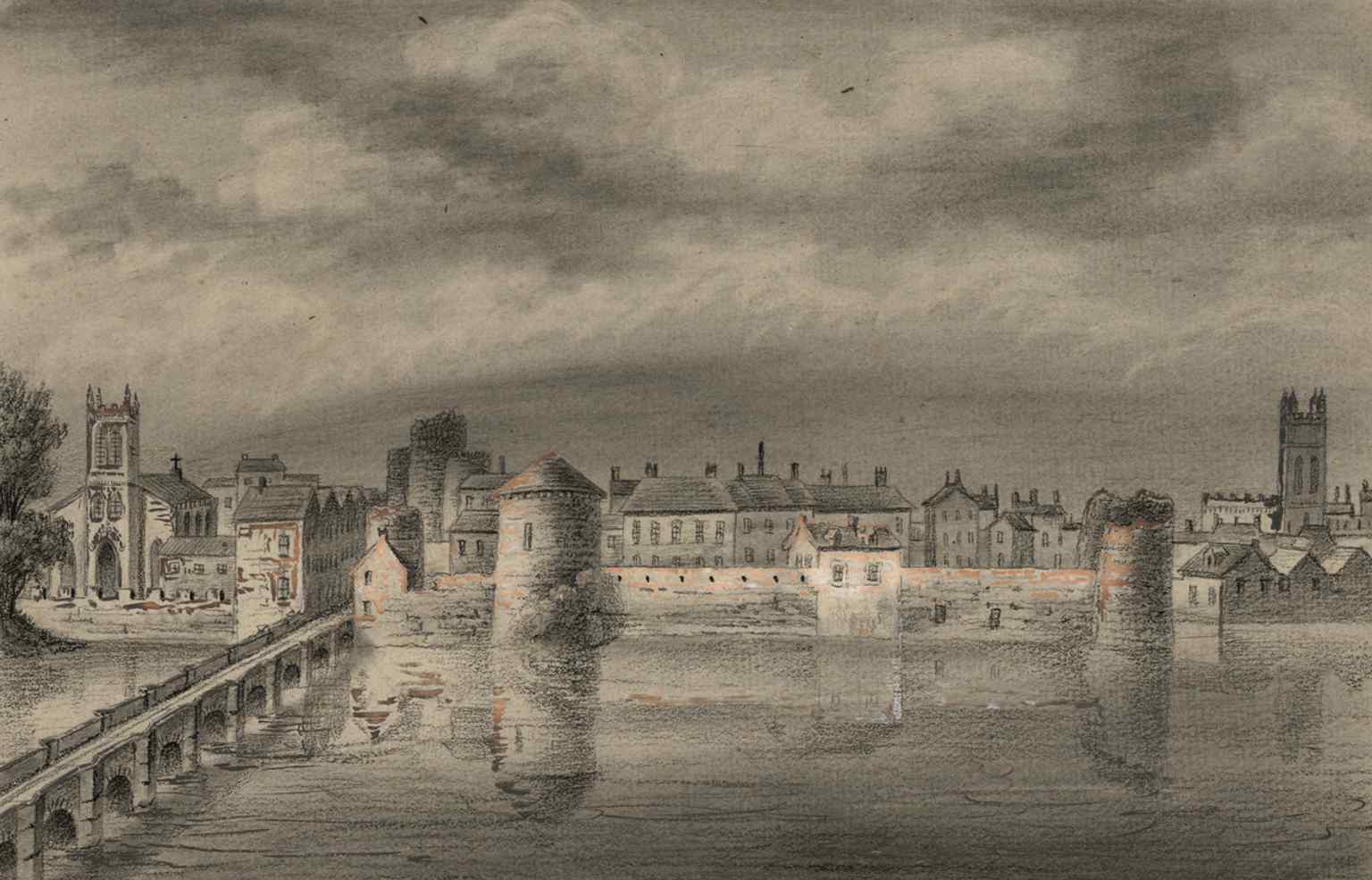
But this grand fortress also saw its share of brutality. In the seventeenth century alone, it endured five sieges. The most dramatic was the sixteen forty-two siege. Protestant settlers, fleeing a massive Irish rebellion, locked themselves inside. Outside, an Irish Confederate army led by Garret Barry surrounded them. Barry did not have heavy artillery to blast the walls, so he got creative. He had his men quietly dig tunnels right under the castle foundations, digging away the earth to collapse the entire structure from below. The terrified people inside surrendered just moments before the walls gave way. The foundations were so badly damaged from the digging that large sections of the stone wall had to be torn down afterward anyway.
Today, things are a bit more peaceful. Between twenty eleven and twenty fourteen, the site underwent a five point seven million euro renovation. They added a modern visitor center, computer animations, and a cafe right in the courtyard. If you want to explore those interactive exhibits inside, the castle is open Monday through Sunday from nine thirty A-M to six P-M.
It is quite a survivor, standing strong after eight centuries of chaos. Whenever you are ready, we can wander over to the next stop.





