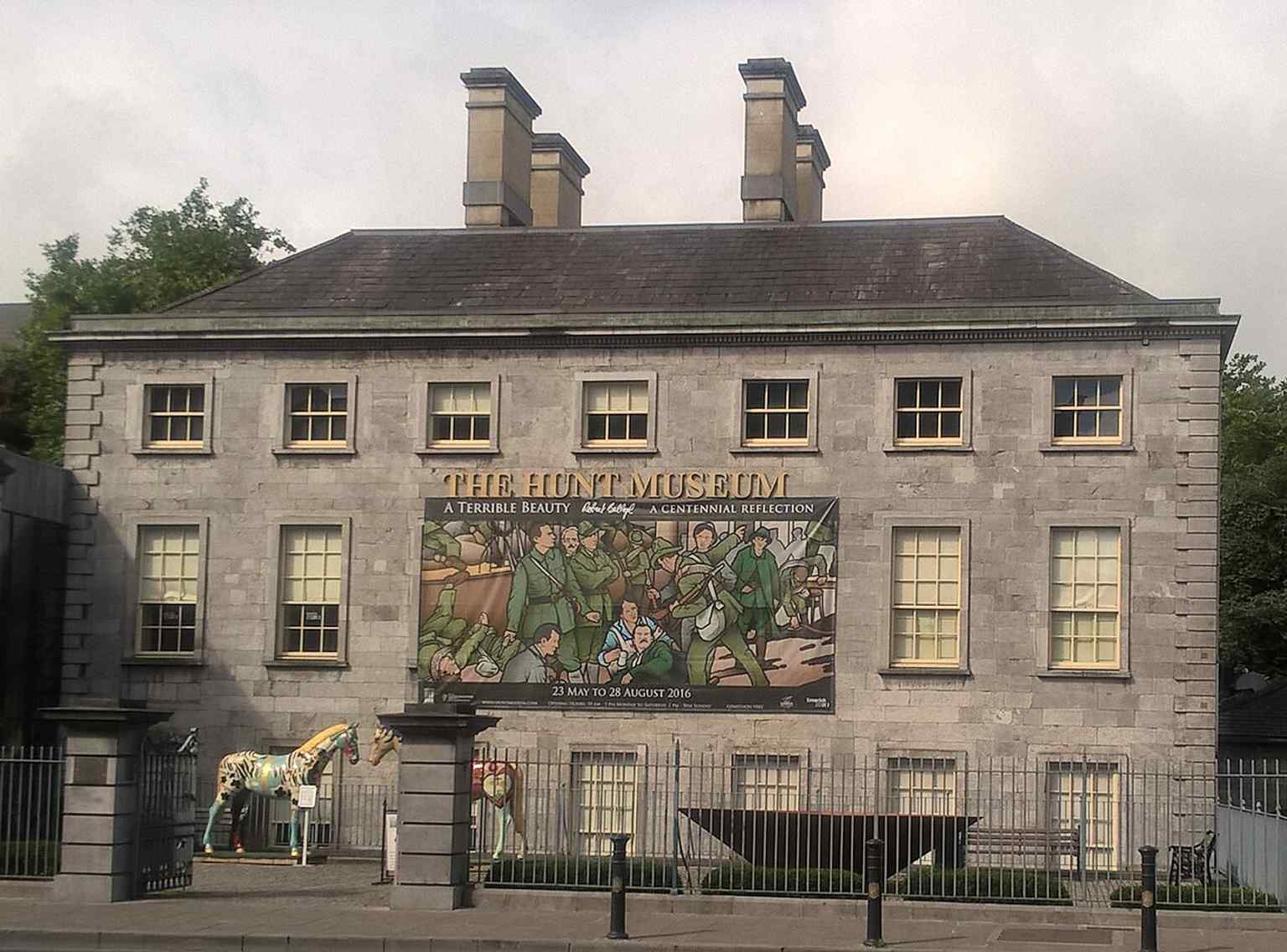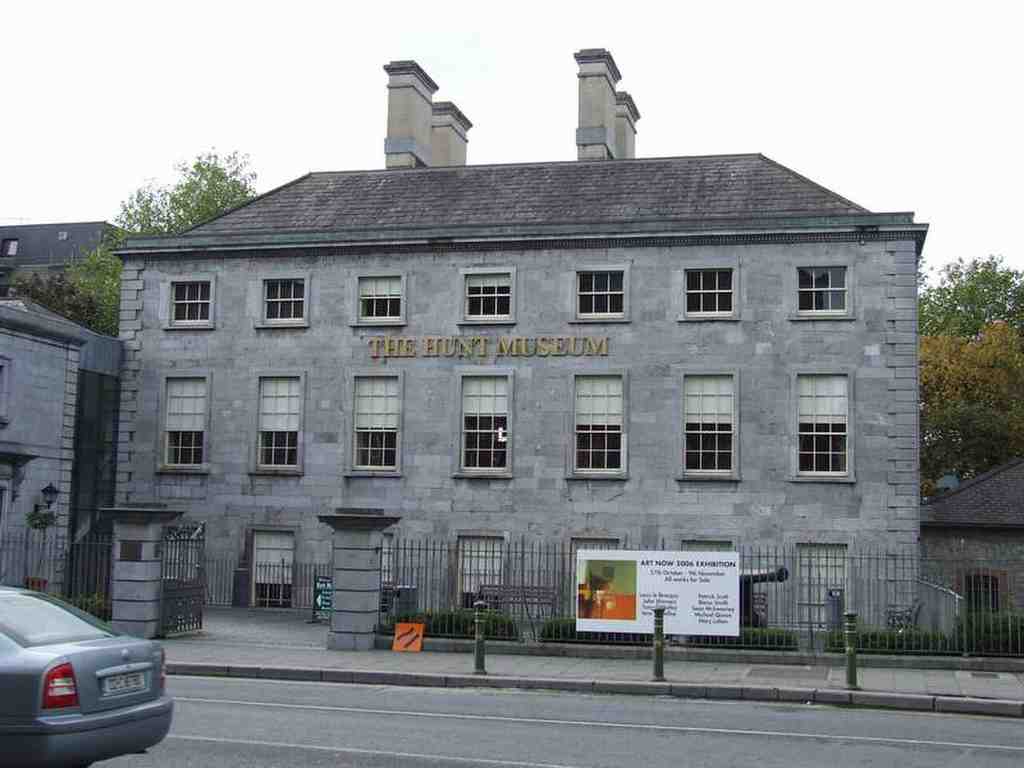
On your left, you will spot the Hunt Museum, a grand rectangular building constructed from solid grey limestone, distinguished by its tall symmetrical windows and two prominent chimneys rising from the roof.
It was designed by Italian architect Davis Ducart in the Palladian style, an architectural movement focused on strict symmetry and classical proportions, and it was completed between seventeen sixty-five and seventeen sixty-nine. Back then, this was the Custom House. While most of Georgian Limerick was being built from red brick, this place stood out in solid limestone. It served as the administrative center for the Revenue Commissioners, which was essentially the local tax and customs authority. Nothing says grand architecture quite like taxes.
Today, it holds the personal collection of John and Gertrude Hunt, a pair of antique dealers and advisors who spent their lives acquiring things that caught their eye. And they had quite an eye. The Irish government actually declined the collection at first, which led to a massive effort by universities, local businesses, and a trust to secure this eighteenth century building as a permanent home. It officially opened here on the fourteenth of February, nineteen ninety-seven.
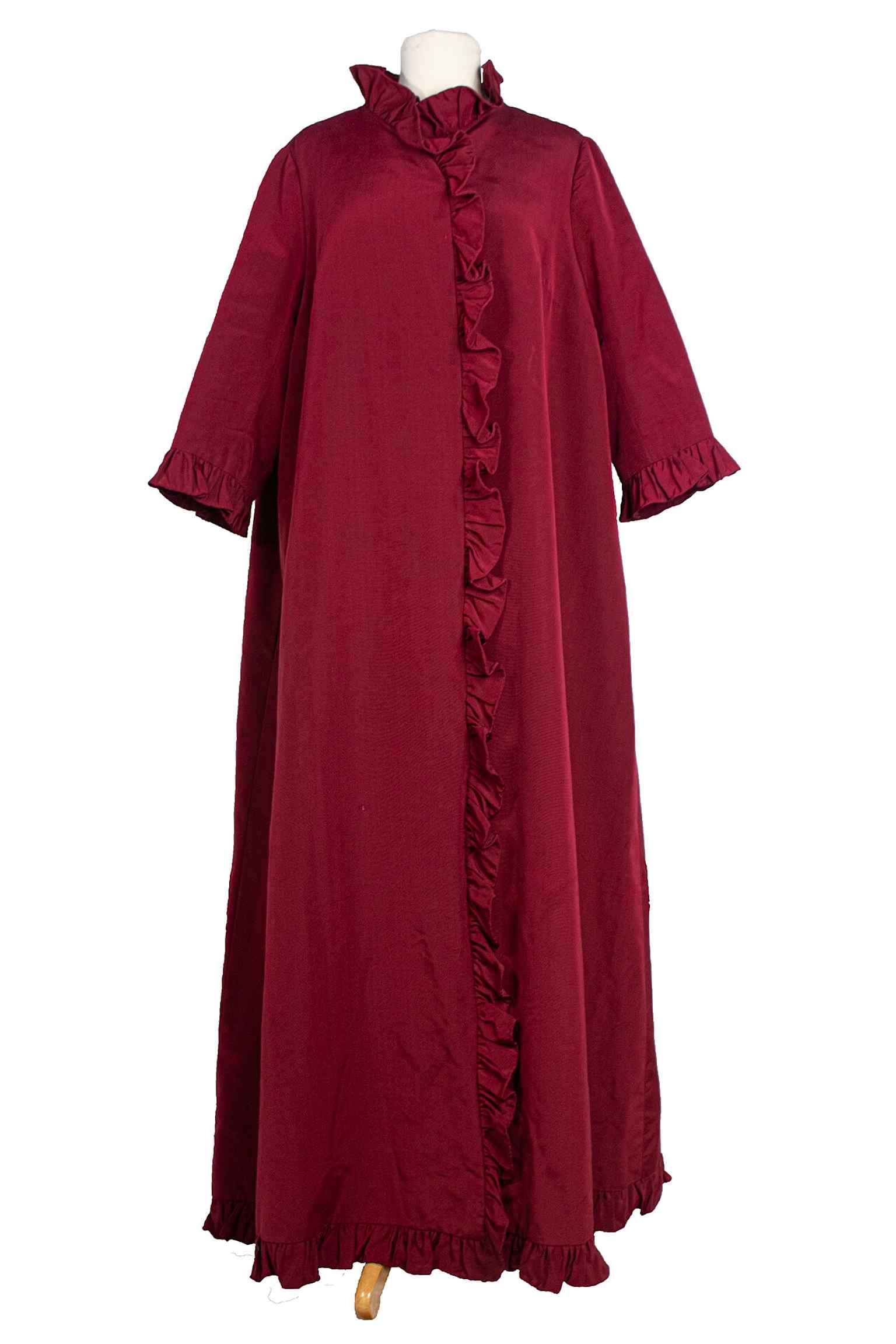
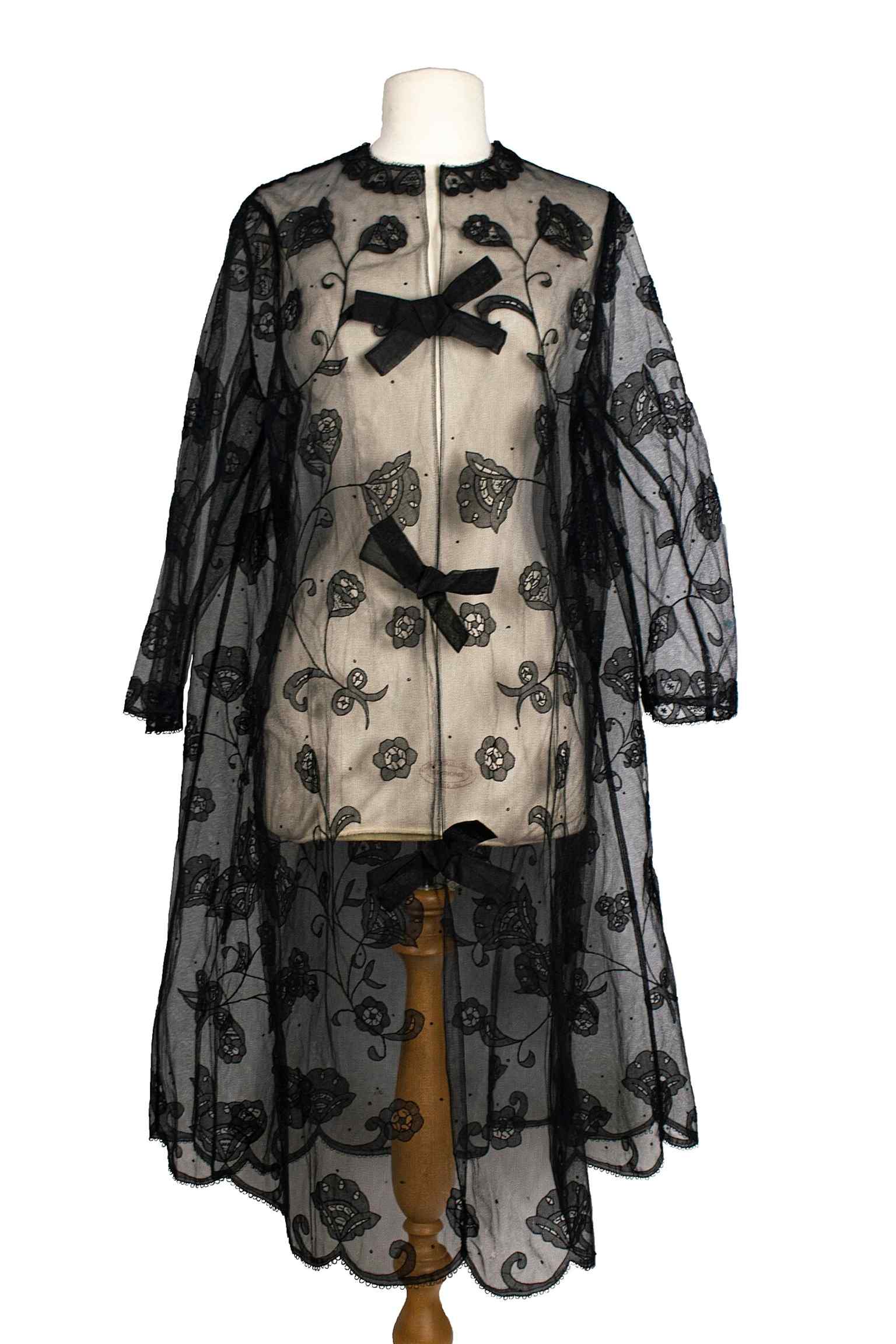
Inside, there are about two thousand five hundred artifacts ranging from Stone Age Ireland and ancient Egypt to sketches by Pablo Picasso. It is quite the eclectic mix. They also have an extensive textile collection by Irish designer Sybil Connolly. Take a look at your screen to see her famous Heiress Dress, just one of forty five of her pieces donated largely by Gertrude Hunt. John Hunt was particularly fascinated by early Christian art, filling their Treasury Room with religious artifacts gathered from across Europe, including the intricately cast ninth century bronze Antrim Cross.
Now, no grand collection is without a bit of drama. In two thousand and three, the Simon Wiesenthal Center sent a letter claiming the museum held items looted by the Nazis during the Second World War. As you can imagine, this caused quite a stir. The museum firmly denied it, but the accusations led to years of intense scrutiny and two separate inquiries. The whole thing was finally put to rest in two thousand and seven when a comprehensive report concluded the allegations were, to quote the investigator, unprofessional in the extreme. It turned out the accusers had simply misread a name in some letters, confusing an unreliable dealer named Buhl with a very wealthy collector named Buhrle. A simple typo that cost a lot of people a lot of sleep.
On a lighter note, if you check your app, you will see a picture of these colorful, life-sized fibreglass horses that were placed out front in two thousand and eleven. They were painted by local youths, inspired by the wildly popular song Horse Outside by the Limerick group The Rubberbandits. They are brought inside at night, presumably so they do not wander off.
If you want to see the artifacts yourself, the museum is open Tuesday through Saturday from ten A-M to five P-M, and Sundays from eleven A-M to five P-M. Take all the time you need here. When you are ready, we can head to the next stop.