Athens Audio Tour: Myths Echoing from Marble and Monuments
Marble columns burn white against the Attic sky but secrets run deeper than stone in Athens. This self-guided audio tour pulls you beyond postcard views and into the city’s tangled heart. Navigate ancient temples and side-street ruins as layers of myth and rebellion reveal corners most travelers never find. Who risked execution to speak a forbidden truth beneath the shadow of the Parthenon? What strange force led builders to break tradition at the Erechtheion, weaving snakes into its legends? Why does a nearly invisible carving at the Temple of Athena Nike still puzzle even the sharpest minds? Stride from windswept heights to silent courtyards. History stirs underfoot with every step and even the forgotten whispers challenge what you thought about Athens. Ready to look past the marble and enter the city’s living memory? Start the journey now.
Tour preview
About this tour
- scheduleDuration 70–90 minsGo at your own pace
- straighten2.6 km walking routeFollow the guided path
- location_on
- wifi_offWorks offlineDownload once, use anywhere
- all_inclusiveLifetime accessReplay anytime, forever
- location_onStarts at Erechtheion
Stops on this tour
lock_open 3 free previews · 9 unlock with purchase
To spot the Erechtheion, look for a unique Greek temple with elegant columns and a row of sculpted maidens-called Caryatids-instead of regular columns, standing gracefully on its…Read moreShow less
To spot the Erechtheion, look for a unique Greek temple with elegant columns and a row of sculpted maidens-called Caryatids-instead of regular columns, standing gracefully on its porch right at the north side of the Acropolis. Alright, welcome to your first stop! Imagine you’re stepping back over two thousand years as the breeze sweeps across the marble-sometimes carrying the whispers of gods, warriors, and… the occasional nosy archaeologist. This remarkable building before you is the Erechtheion, a true oddball in the world of Greek temples. Most temples like a neat, symmetrical look; this one? Not so much! Blame it on the rocky, uneven ground or maybe all the legendary legends packed into one place. Now, back in ancient Athens, this spot wasn’t just the address for one god or goddess-no, it’s where Athena, mighty goddess of wisdom, and Poseidon, the rather moody sea god, seemed to share a timeshare. The joint was built between big wars, during the so-called Peace of Nikias, when Athenians had a breather from sword-clashing to start projects like this. Craftsmen chiseled away at the Pentelic marble, piecing together a building that was as much a puzzle as a temple. Take a good look at those six women on the porch-no, they’re not waiting for the bus. They’re actually the famous Caryatids, holding up the roof like it’s no big deal. Each one is a masterpiece, a little different from her sisters-historians believe they might represent the handmaidens of Athena, ready to serve the goddess, or perhaps mourners for an ancient king. And here’s a quirky fact: one of their sisters went on a long vacation to the British Museum in London, a true world traveler! Over time, the Erechtheion wore many hats. It was a church-complete with an altar and choir in the 7th century, then a bishop’s home during Frankish rule, and later, rumor says, a rather stylish harem for the Ottoman garrison commander! Though, between us, historians aren’t certain about the harem part; maybe it was just a cover story! What makes this temple really wild is all the relics and mythic treasures it once protected. There was the ancient olive tree of Athena, supposedly sprouted right after she claimed Athens as her city. Some believed the very marks on the stone were left by Poseidon’s trident after losing the contest to Athena-talk about a sore loser! There were also tombs and altars everywhere, like little reminders of all the tales Athenians believed: a sacred snake pit here, a saltwater well there, and, just to keep things spicy, a collection of war loot from the battles against the Persians. The place has seen more drama than a Greek soap opera. Fires raged through it, cannons blasted parts to rubble during sieges, and chunks of marble were carried off by everyone from bishops to British lords. In the 1800s, the Athenians finally decided, enough was enough, and began a painstaking process of stitching the building back together-block by block, like the world’s trickiest jigsaw puzzle. So, as you stand in front of these timeless stones and gaze into those ancient marble faces, you’re really peering into layers upon layers of Athens’ story-gods and mortals, cunning architects, invading armies, curious travelers, and legends old enough to make even the Parthenon blush. Ready to march to the next stop? I promise fewer gods, but maybe just as much intrigue!
Open dedicated page →Take a look around-the place you’re standing now has witnessed more drama than a season of Greek tragedies! Welcome to the Areopagus, once the supreme court of ancient Athens,…Read moreShow less
Take a look around-the place you’re standing now has witnessed more drama than a season of Greek tragedies! Welcome to the Areopagus, once the supreme court of ancient Athens, perched high on this rocky hill. Imagine the city spreading before you, torchlights flickering in the cool night air, and the murmurs of tense debates echoing off the stone. The name Areopagus comes from either Ares, the god of war, who was supposedly put on trial here by the gods themselves for killing Poseidon’s son-talk about family drama-or from the “Erinyes,” goddesses of vengeance who had a knack for making people regret their decisions. Picture the gods gathered here in judgment, lightning flashing, verdicts booming through the night. No pressure, right? But the story continues beyond the myths. Jump to 1834, when the Areopagus was reborn as Greece's highest court with a royal decree, ensuring justice prevailed across the country. The first decision came in 1835-imagine the rustle of paper and the weight of history in the air. Over time, the court moved from the grand “Ilion Melathron” to its current home, a stately building that once housed Athens’s notorious prisons. Today, the Areopagus is bustling with judges, including a president, a prosecutor, vice presidents, and dozens of lifelong members who keep justice in check until the age of 67. The court is split into nine sections to handle all sorts of legal battles, from private disputes to criminal mysteries. So, as you look back at the Acropolis, imagine centuries of decisions, legendary trials, and perhaps a few disgruntled gods looking down, hoping their case is next on the docket. Now, who’s ready to lay down the law?
Open dedicated page →To spot the Temple of Athena Nike, look right beside the entrance of the Acropolis, perched proudly on a high stone platform with four elegant columns out front and shining white…Read moreShow less
To spot the Temple of Athena Nike, look right beside the entrance of the Acropolis, perched proudly on a high stone platform with four elegant columns out front and shining white marble glowing in the sunlight. Welcome! You’re standing before a tiny temple with a mighty story-think of it as the pocket-sized superhero of the Acropolis. Take a breath and imagine you’re back in ancient Athens. The city is buzzing below, crisp air swirling around your feet as you stand on this steep bastion, right where the temple gazes out over the land, always watching, always protecting. Around 420 BC, as Athens was locked in a tough war with the Spartans, the people decided to call in both their top goddesses: Athena, the wise protector, and Nike, the bringer of victory. Together, they hoped these two would be the ultimate cheer squad for Athenian triumphs. You’ll notice the design is fully Ionic, the first of its kind up here, with thin, graceful columns instead of the chunky Doric ones. Back then, when citizens entered this open sanctuary-not through a grand doorway, but from the Propylaea’s side wing or a twisty staircase-they did so with hope, prayers, and maybe a nervous glance over the edge (don’t worry, there was a carved parapet to keep the clumsy worshippers from tumbling off). That parapet was decorated with Nikai-winged figures showing off victories and sacrifices to Athena and Nike. Picture rows of marble wings and flowing robes, almost like a cheerleading squad in stone, frozen mid-dance. But hold on-here’s a mystery worthy of Sherlock Holmes: the statue of Nike inside was wingless! Wingless? In ancient times, Nike always had wings, but Athenians decided theirs shouldn’t be able to fly away and take victory with her. No wings, no leaving Athens-problem solved! As you stand here, imagine that beautiful statue, discovered near this spot in the 1800s. She’s bending down to remove her sandal, just as worshippers would do to enter the temple-a brilliant ancient version of “shoes off before you go inside.” Now, picture the friezes that once wrapped around the temple above you, full of drama and action: cavalry clashing, gods like Athena, Zeus, and Poseidon hanging out above the battlefields, warriors frozen forever in the heat of the fight. There’s even a scene with a helmeted warrior just about to be defeated-talk about cliffhanger! These carvings aren’t just decoration: they celebrate real Athenian victories, like the triumph at Plataea, stories that ancient citizens retold with pride (and maybe a slight wink at their rivals). Troubled times battered this temple, too. The Persians smashed the earlier sanctuary, then the Ottomans centuries later tore down the temple itself to build defenses-using its marble like ancient LEGO bricks. Fast forward: in the 1800s and again in recent times, archaeologists and conservators heroically pieced the structure together, block by block, like a very, very difficult jigsaw puzzle. If you wonder why the marble looks a little checkerboard in places, that’s the evidence of its many renovations. You’ll notice fragments of its sculpted friezes are now in museums, so copies fill in for the real deal up here. And if you see a hint of color on what’s left, your eyes aren’t playing tricks-once upon a time, these stones may have been painted, adding vibrancy that’s now lost to the ages. So, before you move on, take a moment to listen to the echoes of victory and loss, of heroes and worshippers, right where you stand. Imagine the prayers, celebrations, disappointments, and hope that all swirled around this small but fierce temple. And next time you slip off your shoes at home, remember-you’re not just being polite, you’re honoring an ancient tradition of victory and respect, straight from the heart of Athens! Intrigued by the architecture, friezes and parapets or the cornice and cyma? Make your way to the chat section and I'll be happy to provide further details.
Open dedicated page →
Show 9 more stopsShow fewer stopsexpand_moreexpand_less
Unlike the grand temples nearby, the Brauroneion didn’t bother with a classic temple building. Instead, its focal point was a stoa-a covered walkway or porch about 38 meters long…Read moreShow less
Unlike the grand temples nearby, the Brauroneion didn’t bother with a classic temple building. Instead, its focal point was a stoa-a covered walkway or porch about 38 meters long and just under 7 meters wide. The sanctuary hugged the southern wall of the Acropolis, reaching out with two side wings as if offering a gentle embrace. Look closely at the ground-some of the very foundations and rock-cut walls from nearly 2,500 years ago are still there. The western end of this sanctuary once rested atop remains from the mighty Mycenaean fortifications, making this place a patchwork of old legends and even older stones. One of the side wings sheltered Artemis’ wooden cult statue, lovingly draped in clothing offerings from women who wanted the goddess on their side. Imagine coming here, draping your finest tunic around the statue, and hoping Artemis would grant you luck. Later, in 346 BC, the sanctuary gained another cult statue, this one sculpted by the famous Praxiteles-an ancient Athenian version of getting an upgrade! According to the ancient travel writer Pausanias, the Brauroneion’s statues were a sight to see. But the real showstopper? A giant bronze horse-yes, you heard right, a massive Trojan Horse made of bronze-but no Greeks hiding inside this time! Peering out of the sculpture were Menestheus, Teucer, and even the sons of Theseus, as though they were ready to jump out and surprise the Trojans all over again. The base of this horse was inscribed with the name of Chairedemos and its sculptor Strongylion, proof that this wasn’t just another ancient tall tale. Right by you are those seven rock-cut steps, once the official entrance, added while building the Propylaea next door. The sanctuary likely got its final shape around 430 BC. Fast-forward a few centuries, and as the Roman Emperors banned non-Christian rituals, the sanctuary’s goddess and her statues gave way to new beliefs. But standing here, you can almost sense the wishes, prayers, and even a little ancient gossip lingering in the air. History hangs out here, sometimes dressed in a cloak, sometimes disguised as a horse!
Open dedicated page →You’ve made it to an incredible point in Athens’ story-where stones and memories echo the thunder of revolution. Imagine the date: June 10th, 1822. It’s a hot, tense morning, and…Read moreShow less
You’ve made it to an incredible point in Athens’ story-where stones and memories echo the thunder of revolution. Imagine the date: June 10th, 1822. It’s a hot, tense morning, and right here, after months of dust, smoke, and desperate shouting, the Acropolis falls back into the hands of the Greeks. But the drama that played out here isn’t just about waving flags and clashing swords. It’s a tale packed with close calls, brave plans, and, believe it or not, a little dark comedy. Let’s rewind. For centuries, this hill had stood under Turkish rule. Since 1456, the Ottomans guarded it like a treasure chest. But in 1821, things got shaken up. The famous Greek Revolution bursts onto the stage, and, quite by accident, Athens becomes a tempting prize. Omer Vrioni, the tough Turkish commander, is called away from Athens, leaving only a small group of Turkish soldiers to defend the city. Can you imagine the relief on the faces of scattered Greek fighters from the nearby islands? They rush into Athens, freeing the city in November 1821 with a cheer. The only problem? The Turks have locked themselves inside the Acropolis-like teenagers grounded in their room but armed and dangerous! The Greeks soon begin the siege. At first, the attacks fail; the walls prove tough as old baklava. So what do the Greeks do? They surround the place, tightening the net, cutting off any way out. It’s messy work, but the defenders inside the fortress begin to suffer-not from hunger, but from lack of water. Imagine, up here under the burning Athenian sun, surrounded by stone, but no fresh water to drink. To make matters worse, the Greeks take over the fortress wells and, unfortunately, fill them not with water, but with all sorts of nasty things-including some not-so-lively livestock. The children and women trapped inside struggle, outbreaks of disease fester in the shadows, and the defenders grow desperate. Help arrives for the Greeks. Reinforcements appear-local farmers, zippy islanders from Kefalonia, Zakynthos, and Naxos, all led by Christodoulos Raftopoulos. There’s even a dash of international flair: a Philhellene from France, Olivier Voutier, shows up with a posse of 30 Germans and a genius named Konstantinos Chormovas, an expert in tunneling. Voutier tries his luck with cannons set up on the nearby Hill of Pnyx, blasting away-though, to be honest, his aim makes one wonder if he needed glasses. When artillery didn’t do the trick, Chormovas gets digging. He tunnels under the third gate of the fortress, planting explosives. The Turks are asked, “Would you like to surrender now?” They answer, “No, thank you.” Boom! The Greeks blow the gate open, and a fierce fight erupts-an all-or-nothing moment where foreign volunteers prove their mettle, and the Greeks finally seize the gate. The defenders retreat further, hope fading with each passing day. By June 1822, negotiations begin. Turkish leaders reluctantly ask for talks-remind me to thank those helpful French and Austrian consuls for their mediation skills. The surrender terms are agreed: the Greeks will guarantee safety, the Turks can take personal belongings and half their treasures, and, if needed, set sail to Asia in European ships. (You know the old Greek saying: “Please pack your valuables, the ferry leaves soon!”) On the morning of June 10th, a procession leads the way-a bishop in full regalia, booming cannons (not always fired safely, as you’ll soon hear), and an air trembling with excitement. The Turkish commander hands the keys to the bishop, who in turn gives them to the Greek military chief. Finally, fresh water is brought in to relieve the suffering Turks, though only about 1,160 of the original 2,500 survive the siege. The celebration is cut short by a tragic twist worthy of a Greek play. Panagiotis Ktenas, the victorious fortress commander, tries to fire a cannon in celebration, slips, and-oops-plummets to his death. His brother quickly takes over, because apparently job openings were filled fast in revolutionary Greece. And so, after 366 years, the Greek flag rises over the Acropolis again. It’s not just a victory for the fighters outside, but a symbol-liberation blooming from centuries of occupation. The Greeks lost around 200 men in the siege. They gained their city, their hope, and the storied rock beneath your feet. And you’ve just walked through a chapter where bravery, chaos, and even a touch of slapstick made Athens Greek again. Don’t worry, the only thing you’ll have to dodge now is the next amazing stop on our tour. Shall we continue? Curious about the the liberation of athens - the beginning of the siege of the acropolis, the evolution of the siege in 1822 or the the fall of the acropolis? Don't hesitate to reach out in the chat section for additional details.
Open dedicated page →Ahead of you, rising from the rocky platform of the Acropolis, you’ll spot an enormous rectangular temple, ringed by tall fluted columns-the Parthenon stands out proudly against…Read moreShow less
Ahead of you, rising from the rocky platform of the Acropolis, you’ll spot an enormous rectangular temple, ringed by tall fluted columns-the Parthenon stands out proudly against the blue sky, perched right on the hilltop so you can’t miss it. Imagine stepping into the heart of ancient Athens, a city buzzing with life and dreams. Crowds, chatter, the cry of vendors, and the clang of stone tools fill the air as artisans shape solid marble under the blazing sun. It’s 447 BC, and the Greeks have just triumphed over the mighty Persians. Here on the Acropolis, as a thank you to Athena-the fearless protector of Athens-they’re raising a monument like no other: the Parthenon. This is no ordinary temple; it’s their ultimate masterpiece, a treasure chest for the city's riches and a symbol of their victory and pride. As you stand here, try to picture the original Parthenon, shimmering white with a golden statue of Athena inside, as tall as a two-story house. The best sculptors and stonemasons in Greece brought giant blocks of marble up this hill, working by sweat, strength, and maybe a little bit of grumbling-one wrong move, and the whole city could hear your mistake! The Doric columns you see, with their gentle curves and perfect lines, weren’t just built straight. The Athenians pulled a clever trick: the columns swell gently in the middle and lean slightly inward, so from down here, they look perfectly straight and balanced to your eyes. Talk about ancient optical illusions! On the outside, the Parthenon is wrapped with 92 carved panels, called metopes, showing wild battles: gods versus giants, Greeks against Amazons, humans versus the wild centaurs. These images told stories of courage and chaos, and just above, a long, detailed frieze captured the grand Panathenaic procession, where Athenians honored Athena with gifts and dances. Imagine the colors-bright reds, blues, and golds-because in its glory days, the Parthenon was painted, almost glowing in the sunlight. But the story doesn’t stop there! For hundreds of years, this temple guarded treasures, gold, and holy objects. Then, in the final days of the Roman Empire, things took a turn. The colossal statue of Athena was stolen and taken to far-off Constantinople, never to return. Later, as times changed, the Parthenon became a Christian church dedicated to the Virgin Mary-prayers echoed under the marble roof, and the old goddess stepped gently aside for new holy songs. During the Middle Ages, it was even a Catholic church and got itself a fancy bell tower in the corner. If walls could talk, the Parthenon would probably need a schedule just to keep up with all the new tenants. The Parthenon’s wildest adventure came in 1687, when-brace yourself-a Venetian cannonball struck, exploding the gunpowder stored inside. Half the temple vanished in smoke and fire, leaving behind the ruin you see now. The Parthenon, battered but proud, still stood, watching empires come and go. In the 1800s, the infamous Lord Elgin “borrowed” many sculptures and shipped them off to England-now called the Elgin Marbles, still the subject of fierce debates. As you stand here today, the Parthenon tells a thousand stories-war, worship, fire, and fate. Breathe in the silence and look up: you’re standing in the shadow of ancient glory, where marble, myth, and memory come together on this sacred hill. And just think: the next time you try to build flat pack furniture, remember-they built the Parthenon without instructions! Want to explore the etymology, function or the architecture in more depth? Join me in the chat section for a detailed discussion.
Open dedicated page →If you could roll the centuries back, you’d see Thrasyllos himself, reading a fancy inscription-a sort of ancient humblebrag-etched into the frieze: he’d sponsored the…Read moreShow less
If you could roll the centuries back, you’d see Thrasyllos himself, reading a fancy inscription-a sort of ancient humblebrag-etched into the frieze: he’d sponsored the prize-winning men’s chorus for the noble tribe of Hippothontis (try saying that five times fast). Flute players, archons, directors: everyone who helped steal the show was named here, as if the Oscars were carved in stone. But wait, there’s more! In 271 BCE, Thrasyllos’s son, Thrasykles, thought, “Why not make Dad’s trophy shelf bigger?” So, he added his own wins, making this spot a family legacy of musical domination right up to the backdrop of the Great Dionysia Games. Apparently, music ran thicker than olive oil in this family. Now, let’s tackle the cave’s legend. Ancient tourists might have peered inside to see sculptures of Apollo and Artemis, mythical siblings in a scene from the tragic tale of Niobe - a bit of mysterious drama to go with all the party atmosphere! Later travelers, like the ancient writer Pausanias, dropped hints about these stories in their notes - the original TripAdvisor reviews, if you will. Move forward in time, and the monument gets a Christian makeover: the cave becomes the Church of Panaghia Spiliotissa, “Our Lady of the Cave,” keeping the space sacred for centuries. During a siege in 1827, the Ottomans blasted away most of the marble. Good news for tiny silver linings - Lord Elgin had already nabbed the Dionysos statue for his marbles collection, so at least that piece survived (although if marble statues had feelings, Dionysos might be homesick for Athens). Today, you’re not just looking at a ruin - you’re standing before a time machine. Restorations have brought much of this masterpiece back, and believe it or not, architects as far afield as 1800s Britain borrowed design ideas from here. Legends, music, war, and a little bit of clever recycling - this monument has seen it all. And best of all, you didn’t need to win a singing competition to visit!
Open dedicated page →Look up toward the slope of the Acropolis and you’ll spot a wide, ancient stone semi-circle carved into the hillside, with rows of weathered seats fanning out around a…Read moreShow less
Look up toward the slope of the Acropolis and you’ll spot a wide, ancient stone semi-circle carved into the hillside, with rows of weathered seats fanning out around a mosaic-paved stage area-that’s the Theatre of Dionysus right in front of you. So, take a moment to imagine it-not as a quiet ruin under the Athenian sun, but alive with the wild energy of 25,000 spectators packed onto these same stone benches, eagerly awaiting the dramatic battles of words and wits that would unfold below. This was the heartbeat of theatre, where the Sanctuary of Dionysus, god of wine and drama, burst to life centuries ago. The cult of Dionysus swept into Athens around 580 BC, and soon after, this sacred slope became home to an extraordinary festival called the City Dionysia. Here, theatrical contests were serious business-so serious that once, when a rowdy crowd got so carried away during a play-off between Aeschylus and Sophocles, the legendary general Kimon had to march his soldiers in and restore order, making sure the best man won. In the earliest days, there were no fancy marble seats-just wooden bleachers and the cool shade of olive trees. Sometimes, crowds were so big that the makeshift seating collapsed under the excitement! This drama moved from the busy Agora to Dionysus’ sanctuary, and soon after, the very first orchestra terrace appeared-just a circular spot in the earth where actors would dance, sing, and shout, sometimes using nothing more than a painted backdrop or a cleverly placed tent as scenery. Imagine innovations like the ekkyklema, a rolling cart for revealing dramatic deaths, or even the mind-blowing flying machines that sent gods zipping overhead during a performance. The golden age of the theatre came a little later with the rise of Pericles. The audience grew, and so did the theatre itself. They built up earthen banks, strong retaining walls, then finally rows and rows of stone benches that climbed the hill. Imagine yourself squeezed between toga-clad neighbors, eyes glued to the action-if you were lucky (or important!), you’d score a throne in the very front row, your name carved right into the marble. Competition for those seats was fierce; some men must have bragged about their spot more than what actually happened on stage! Here, plays by giants like Sophocles, Aristophanes, and Euripides first made their debut, with painted scenery, quick-change stage devices, and a chorus that danced and sang their hearts out in the orchestra. Some believe even foreign visitors, slaves, and-debated hotly indeed-women might have sat amongst the crowd, taking in not just the stage, but the waves of laughter, groans, and shouts that rolled through the audience, sometimes a bit more “participatory” than the performers might have liked. By the days of Lycurgus, Athens was booming and the theatre grew even grander-seating for 25,000, with wedge-shaped sections divided by narrow stairways, and those marble thrones in the front row for bigwigs and priests. Rome eventually swept in, and the Theatre of Dionysus got several upgrades of its own, including a snazzy marble floor and even barriers to keep the crowd safe from, believe it or not, gladiator fights! But as the centuries ticked by, the theatre faded. Stone was pulled out for new buildings, a Christian basilica popped up in the orchestra, and grass crept over the steps. Not until the 1800s did curious archaeologists start to peel back the layers, rediscovering the stories-quite literally-set in stone. Today, you stand where actors and poets once performed to crowds who reacted with a passion so fierce, sometimes order needed to be restored by military force. If you’re wondering what the plays sounded like, the original acoustics might remain a bit of a mystery. But stand in the center, try reciting a line, and who knows-some part of those ancient voices might just carry. Now, what do you say: tragedy, comedy, or maybe a bit of both? Intrigued by the sanctuary and first theatre, periclean theatre or the lycurgan theatre? Explore further by joining me in the chat section below.
Open dedicated page →Take a good look at the space ahead-here stood the Odeon of Pericles, once the lively musical heart of Athens. Imagine the year is 435 BC. Pericles, the superstar statesman with a…Read moreShow less
Take a good look at the space ahead-here stood the Odeon of Pericles, once the lively musical heart of Athens. Imagine the year is 435 BC. Pericles, the superstar statesman with a knack for both politics and party-planning, decides Athens needs a top-tier concert hall. With the Acropolis looming above, he erects this enormous odeon-spanning 4,000 square meters. That’s about two-thirds of a football field, but instead of touchdowns, Athenians got toe-tapping tunes and dramatic choruses. Now, forget the round shapes you might expect from an ancient Greek theater. This odeon stood out because it was square, more pyramid-shaped tent than Roman rotunda, and its roof was legendary. Why? The timber beams came from Persian ships captured at the famous Battle of Salamis. Talk about musical chairs-these timbers went from ships to a stage! Picture the square building, its roof propped up by 90 pillars in neat rows, as crowds sat beneath, waiting for dazzling choruses or sheltering from a stray Athenian rain cloud. There was no fancy changing scenery here; the back wall was permanently adorned with paintings, giving musicians and choruses a dramatic backdrop. Underneath the music and celebration, there were spaces for storing glittering costumes and vases that played their own role in grand religious processions. But trouble struck when the Roman general Sulla besieged Athens. The odeon’s timber roof was so tempting it had to be burned-either to prevent Sulla from building his own staircases or by Sulla himself to smoke out defenders. Later, King Ariobarzanes II of Cappadocia ordered its reconstruction. In the 2nd century, travelers like Pausanias called it the “most magnificent of all Greek buildings.” So, as you stand here, picture this: an epicenter for music, politics, and a bit of ancient recycling-Persian ships turned into a concert hall fit for legends!
Open dedicated page →Look for a set of towering marble columns rising dramatically above the cityscape, standing in an open field to your right with the Acropolis visible in the background-those…Read moreShow less
Look for a set of towering marble columns rising dramatically above the cityscape, standing in an open field to your right with the Acropolis visible in the background-those massive pillars belong to the legendary Temple of Olympian Zeus. Welcome, brave traveler, to what was once the largest temple in all of Greece-the mighty Temple of Olympian Zeus. Picture yourself here over two thousand years ago, as you step through dust swirling around your feet, and marble columns taller than a five-story building tower above you, sparkling in the relentless Athenian sun. Imagine the city bustling just beyond, but here in the temple’s sanctuary, it feels almost magical, as if the king of the gods himself might stroll out to greet you at any moment. Now let’s travel back in time-way back! Work actually began on this temple in the dark days of the 6th century BC, under rulers everyone loved to hate: the Athenian tyrants. Their ambition? To build a temple so enormous it would outshine even the legendary temples of Hera and Artemis. But-classic ancient Athens-a scandal and a coup later, work stopped after just the platform and a few stumpy column bits. Talk about leaving your homework until the last minute! For the next three centuries, Athenians walked by the abandoned foundations and probably grumbled, “Well, that’s a bit much, isn’t it?” Even Aristotle chimed in, saying giant projects like this kept folks so busy they forgot to rebel! Time marched on and the temple sat unfinished, until a Seleucid king with a Zeus complex-Antiochus IV-showed up in 174 BC and decided to revive the project. He wanted marble, and not just any marble, but Pentelic marble, sparkling white and prized around the world! The columns switched from Doric to the more fashionable Corinthian order, with extravagant leafy capitals. But, as fate would have it, Antiochus died, and the workers downed their tools again. The temple languished for another two centuries, suffering even more when a Roman general named Sulla carted off some columns to spruce up his projects back in Rome. That’s ancient upcycling for you. It wasn’t until Emperor Hadrian came to town in the 2nd century AD-a real Greek fanboy if there ever was one-that the Olympieion finally got the finish it deserved. Hadrian not only completed the temple but also filled the precinct with statues-dozens of marble and bronze figures, including a chryselephantine (that’s gold and ivory) statue of Zeus that would make even a Las Vegas designer weep with envy. The grand dedication in 132 AD must have been a spectacular event-imagine the marble plaza echoing with cheers, the scent of incense in the air, and giant statues gleaming in the sun. But, like so much ancient grandeur, the glory didn’t last. A century later, the temple was ransacked by invaders, and nothing was ever quite the same. Over the Middle Ages, Athenians “recycled” a lot of those priceless marbles for everyday buildings. Some even blasted columns to bits with gunpowder, just to make plaster! The Ottoman Turks called the ruins the Palace of Belkis, and local legends swirled that it was the palace of Solomon’s queen. Now, as you look up at these weathered columns, remember: there were once 104 of them! Only 16 remain, stubbornly defying time and gravity. One even lies dramatically on its side, toppled by a great storm in 1852. Today, the temple grounds have hosted everything from concerts to modern celebrations of Zeus, echoing once more with the voices of people who find magic in old stones. So, next time you complain about a construction site taking forever, remember-the Temple of Olympian Zeus took about 638 years to finish. That’s one deadline you wouldn’t want to put on your calendar!
Open dedicated page →If you’re wondering how to spot the Arch of Hadrian, just look ahead for a grand marble gateway, perfectly symmetrical, standing tall above the road with a single, massive arched…Read moreShow less
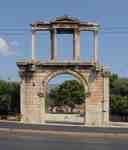
If you’re wondering how to spot the Arch of Hadrian, just look ahead for a grand marble gateway, perfectly symmetrical, standing tall above the road with a single, massive arched opening below and a second tier of columns above-it’s almost as if a Roman emperor expected to drive his chariot straight through! Here we are, standing before the Arch of Hadrian-also known as Hadrian’s Gate. Imagine the scene nearly 1900 years ago: the noise of ancient traffic, the shouts of merchants, and the distant scent of incense floating from nearby temples. Now, right in front of you, this marble arch stretches 18 meters into the sky. Even the marble’s color tells a story-it’s not the dazzling white of the Parthenon, but a softer, almost golden tone, full of ancient scars and city dust, bearing countless years under the Athenian sun. Built without cement or mortar, each piece of marble was locked in place with clever clamps. You’re standing where an ancient road once linked the heart of Athens to the grand Temple of Olympian Zeus. Picture crowds gathering here in 131 AD, the city buzzing with excitement, because today was no ordinary day: Emperor Hadrian himself, Rome’s most enthusiastic admirer of Greek culture, was making his grand entrance. To greet him, the people of Athens-or perhaps the powerful Panhellenes, an association of all Greek cities-constructed this monumental gateway to honor his love for their city and his generous gifts. The arch has two fascinating inscriptions, each on opposite sides. Facing the Acropolis, the carved letters declare, “This is Athens, the city of Theseus”-the mythical founder. But, take a few steps through and read the other side, where it boldly proclaims, “This is the city of Hadrian, and not of Theseus.” Well, talk about stepping up your name game! Some ancient Athenians must have raised their eyebrows at that confidence. For years, people puzzled over these plaques. Did the arch divide old Athens from a new section founded by Hadrian-something like a city expansion plan, Roman-style? Archaeologists discovered otherwise: the city's true ancient wall isn’t here, but 140 meters away. Instead, Hadrian’s arch claims all of Athens as the emperor’s to refound-a grand gesture if ever there was one. You can decide if that’s humble bragging, or just the bold flair of a man who really wanted his name remembered. This arch isn’t just a doorway. Its details are lush: fluted pillars, ornate Corinthian capitals, and a top level where columns and pilasters divide the space like a stage set-except instead of actors, there may once have been statues of Theseus and Hadrian themselves, gazing at each other from opposite ends. Some think the upper central opening once held painted reliefs or even thin screens-Queen Amalia, much later, reportedly ordered their removal for a better view. That’s royal redecorating for you! The arch survived centuries exposed to wind, rain, and the slow creep of car exhaust, coming into our era impressively intact-much of it untouched, at full height, while Athens hummed and changed all around it. The debate over who paid for this gateway is almost as lively as ancient Athenian democracy itself. Was it built by proud local Athenians with less than top-quality marble as a sign of community spirit, or by the Panhellenes, showing off their unity and love for the emperor? The answer still lies somewhere in the city’s memory. So, as cars whizz by and modern Athens carries on, this mighty arch stands like a marble time machine-still watching over every traveler entering or leaving, just as it has for nearly two millennia. Just imagine passing beneath it; in ancient times, you might be entering one city or another, and today, you’re stepping straight into history’s spotlight under the marble gaze of Hadrian himself.
Open dedicated page →Right in front of you, you’ll spot a tall, round marble monument perched on a hefty square stone base, ringed with elegant columns-just look for a mini ancient “temple” standing…Read moreShow less
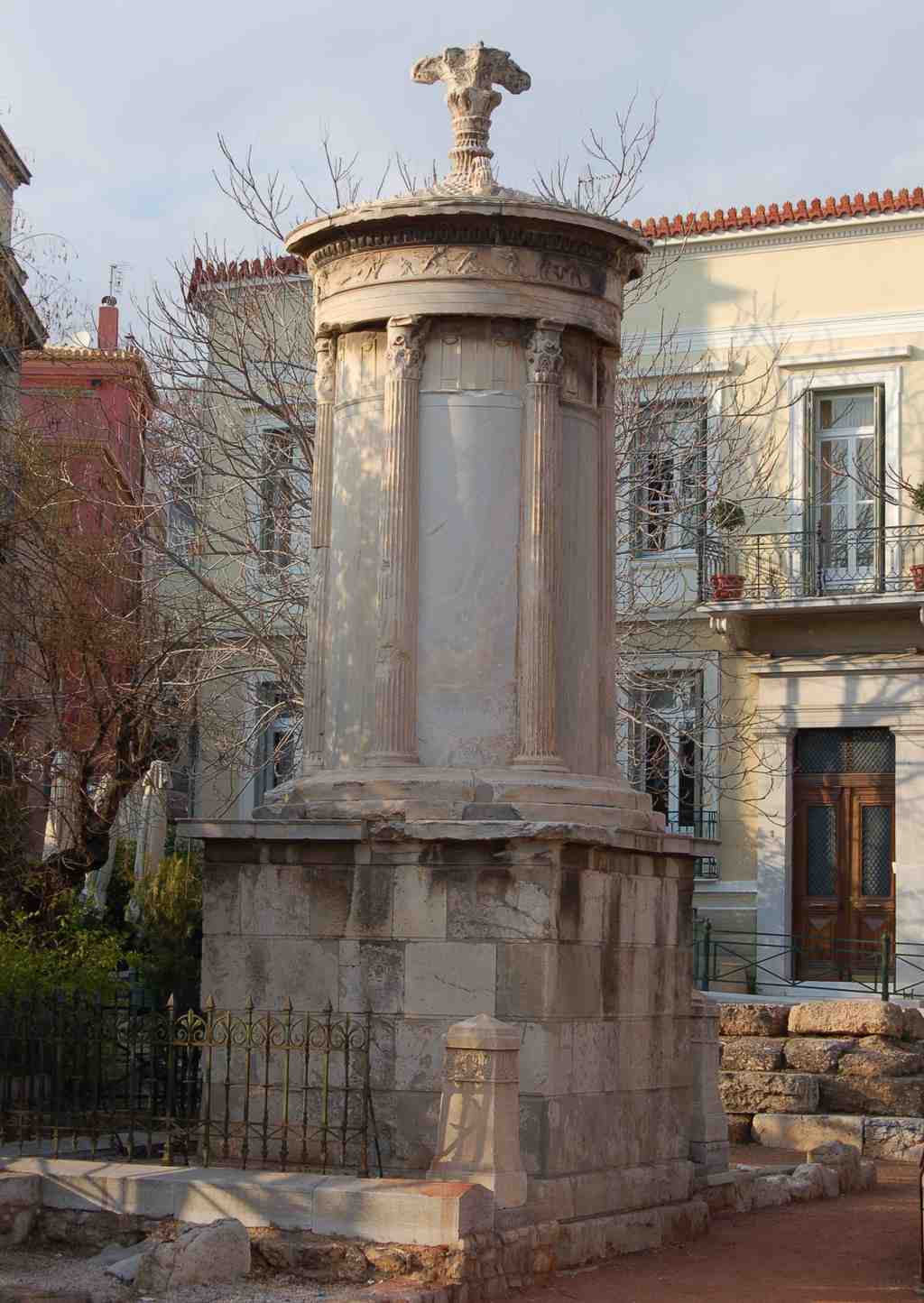
Right in front of you, you’ll spot a tall, round marble monument perched on a hefty square stone base, ringed with elegant columns-just look for a mini ancient “temple” standing proudly at the corner of Lysikratous, Vyronos, and Shelley streets, surrounded by modern Athens. Welcome to the Lysicrates Monument-the ancient world’s version of a theater trophy shelf, with a dash of drama and a pinch of irony. Imagine Athens in 334 BC: the city is buzzing, the streets strung with laughter, and every block echoes with ambitious performers and sponsors. Now, here stands good old Lysicrates, a well-to-do citizen, who’s just scored himself the most prestigious bragging rights in town: the first prize in Athens’ dramatic contests. But being wealthy isn’t enough; to really show off, he sponsors a chorus in a big festival and wins. Rather than just patting himself on the back, Lysicrates decides to go big and immortalize his triumph-so he builds this monument to show off the gleaming bronze tripod trophy that once sat on top. Picture it shining in the sun, shouting to all passersby, “Yes, I’m the guy who made theater history this year!” The monument itself is no shy wallflower. It’s a marble cylinder surrounded by six Corinthian columns-one of the earliest times that style makes an appearance-and if you wander close, you’ll notice sculpted tripods decorating the spaces between the scroll-topped column capitals, like little reminders of prizes won. Carved all along the top is a frieze with a story you might not expect: Dionysus, the god of theater and wine, is captured by pirates, but surprise! He turns the tables, turning the pirates into dolphins-clearly Dionysus liked dramatic endings as much as the Athenians did. Above it all sat the bronze tripod, once held by cheeky statues of a satyr and dolphin, though sadly, only the base remains now. Centuries rushed by and the poor monument saw it all. By 1669, it was snatched up by Capuchin monks and became the world’s most artistic reading room and library. If that sounds dull, just wait: the monks decided to create an entrance by yanking out half a column-talk about home renovation! When the Greek Revolution hit, the monastery was destroyed, books went up in smoke, and the monument was left to weather rain and time. Victorian travelers found it fascinating-some even tried to cart it away, but turns out, ancient monuments aren’t exactly “carry-on luggage.” The British Lord Elgin, yes, that guy with the Parthenon Marbles, negotiated for it, but the monument stubbornly stayed where it was, surviving the storm-literally and historically. But the story doesn’t end in Athens. Engravings of this very monument made their way across Europe and inspired scores of copycat structures-the Scots built versions in Edinburgh, lords put them in English gardens, and even the Americans channeled the Lysicrates style into grand domes from Philadelphia to Tennessee. If you visit the Royal Botanic Gardens in Sydney, you’ll spot another knock-off Down Under! Such was its fame that they even award a tiny bronze model of it today to architects who keep classical design alive in a modern world. So, as you gaze at this seemingly modest “lantern,” you’re staring at centuries of dramatic tales (and I mean that literally), a stage for gods and pirates, actors and architects, revolutionaries and monks. Not bad for a monument that started as a very fancy “look what I won!” display, right?
Open dedicated page →
Frequently asked questions
How do I start the tour?
After purchase, download the AudaTours app and enter your redemption code. The tour will be ready to start immediately - just tap play and follow the GPS-guided route.
Do I need internet during the tour?
No! Download the tour before you start and enjoy it fully offline. Only the chat feature requires internet. We recommend downloading on WiFi to save mobile data.
Is this a guided group tour?
No - this is a self-guided audio tour. You explore independently at your own pace, with audio narration playing through your phone. No tour guide, no group, no schedule.
How long does the tour take?
Most tours take 60–90 minutes to complete, but you control the pace entirely. Pause, skip stops, or take breaks whenever you want.
What if I can't finish the tour today?
No problem! Tours have lifetime access. Pause and resume whenever you like - tomorrow, next week, or next year. Your progress is saved.
What languages are available?
All tours are available in 50+ languages. Select your preferred language when redeeming your code. Note: language cannot be changed after tour generation.
Where do I access the tour after purchase?
Download the free AudaTours app from the App Store or Google Play. Enter your redemption code (sent via email) and the tour will appear in your library, ready to download and start.
If you don't enjoy the tour, we'll refund your purchase. Contact us at [email protected]
Checkout securely with