
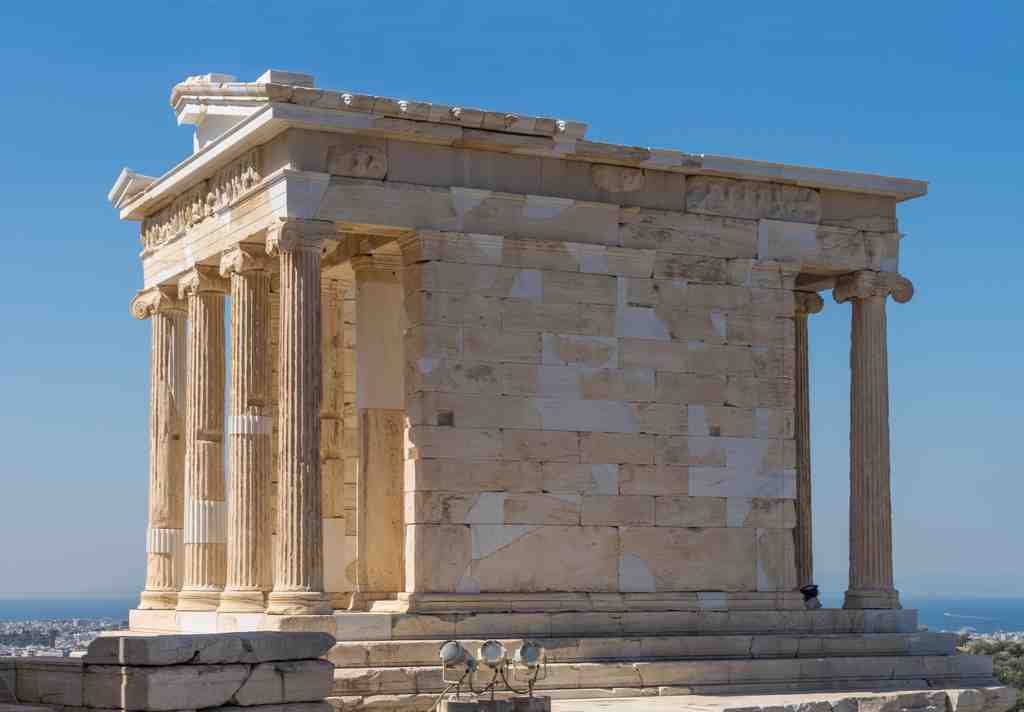
To spot the Temple of Athena Nike, look right beside the entrance of the Acropolis, perched proudly on a high stone platform with four elegant columns out front and shining white marble glowing in the sunlight.
Welcome! You’re standing before a tiny temple with a mighty story-think of it as the pocket-sized superhero of the Acropolis. Take a breath and imagine you’re back in ancient Athens. The city is buzzing below, crisp air swirling around your feet as you stand on this steep bastion, right where the temple gazes out over the land, always watching, always protecting.
Around 420 BC, as Athens was locked in a tough war with the Spartans, the people decided to call in both their top goddesses: Athena, the wise protector, and Nike, the bringer of victory. Together, they hoped these two would be the ultimate cheer squad for Athenian triumphs. You’ll notice the design is fully Ionic, the first of its kind up here, with thin, graceful columns instead of the chunky Doric ones.
Back then, when citizens entered this open sanctuary-not through a grand doorway, but from the Propylaea’s side wing or a twisty staircase-they did so with hope, prayers, and maybe a nervous glance over the edge (don’t worry, there was a carved parapet to keep the clumsy worshippers from tumbling off). That parapet was decorated with Nikai-winged figures showing off victories and sacrifices to Athena and Nike. Picture rows of marble wings and flowing robes, almost like a cheerleading squad in stone, frozen mid-dance.
But hold on-here’s a mystery worthy of Sherlock Holmes: the statue of Nike inside was wingless! Wingless? In ancient times, Nike always had wings, but Athenians decided theirs shouldn’t be able to fly away and take victory with her. No wings, no leaving Athens-problem solved! As you stand here, imagine that beautiful statue, discovered near this spot in the 1800s. She’s bending down to remove her sandal, just as worshippers would do to enter the temple-a brilliant ancient version of “shoes off before you go inside.”
Now, picture the friezes that once wrapped around the temple above you, full of drama and action: cavalry clashing, gods like Athena, Zeus, and Poseidon hanging out above the battlefields, warriors frozen forever in the heat of the fight. There’s even a scene with a helmeted warrior just about to be defeated-talk about cliffhanger! These carvings aren’t just decoration: they celebrate real Athenian victories, like the triumph at Plataea, stories that ancient citizens retold with pride (and maybe a slight wink at their rivals).
Troubled times battered this temple, too. The Persians smashed the earlier sanctuary, then the Ottomans centuries later tore down the temple itself to build defenses-using its marble like ancient LEGO bricks. Fast forward: in the 1800s and again in recent times, archaeologists and conservators heroically pieced the structure together, block by block, like a very, very difficult jigsaw puzzle.
If you wonder why the marble looks a little checkerboard in places, that’s the evidence of its many renovations. You’ll notice fragments of its sculpted friezes are now in museums, so copies fill in for the real deal up here. And if you see a hint of color on what’s left, your eyes aren’t playing tricks-once upon a time, these stones may have been painted, adding vibrancy that’s now lost to the ages.
So, before you move on, take a moment to listen to the echoes of victory and loss, of heroes and worshippers, right where you stand. Imagine the prayers, celebrations, disappointments, and hope that all swirled around this small but fierce temple. And next time you slip off your shoes at home, remember-you’re not just being polite, you’re honoring an ancient tradition of victory and respect, straight from the heart of Athens!
Intrigued by the architecture, friezes and parapets or the cornice and cyma? Make your way to the chat section and I'll be happy to provide further details.




