
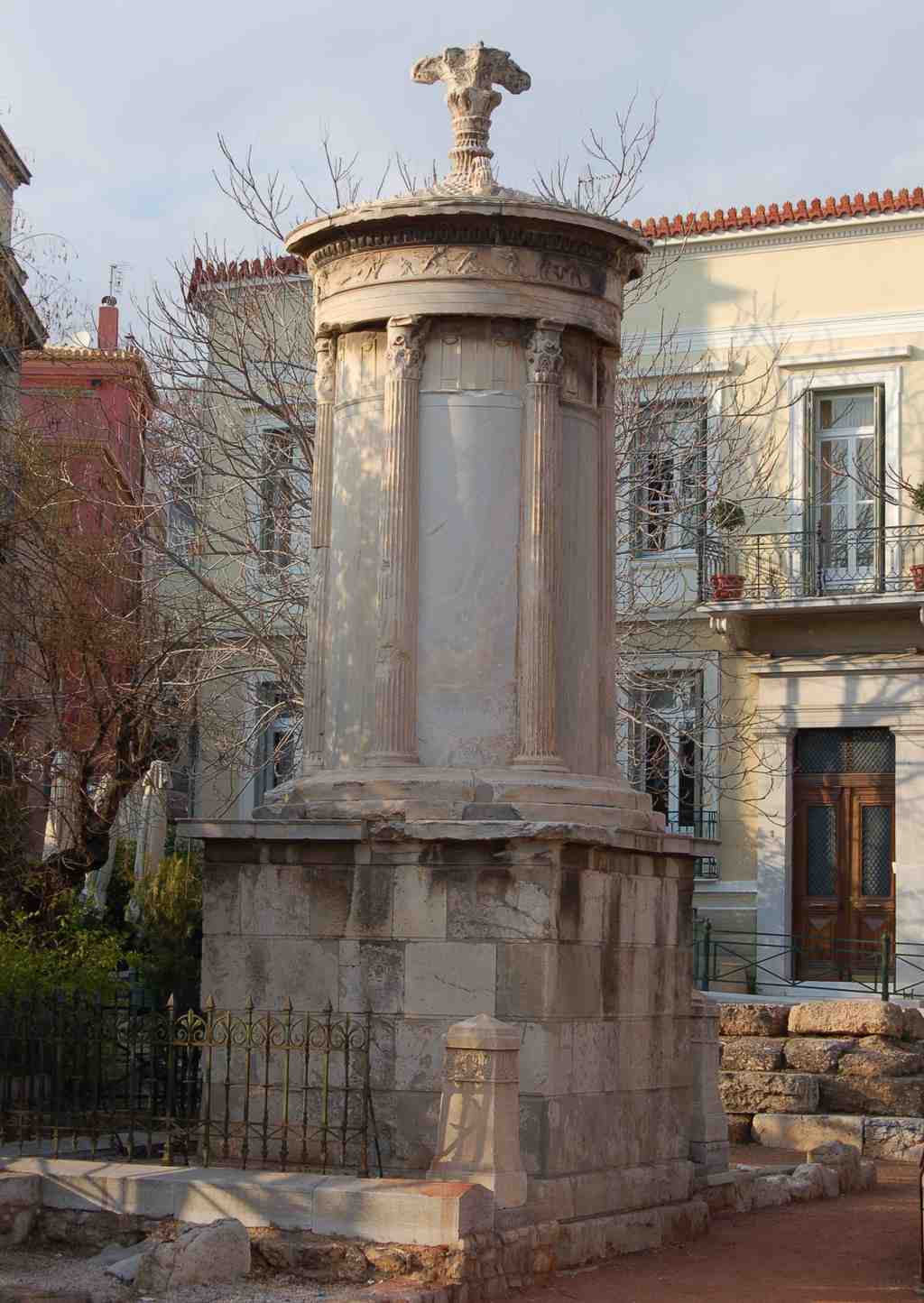
Right in front of you, you’ll spot a tall, round marble monument perched on a hefty square stone base, ringed with elegant columns-just look for a mini ancient “temple” standing proudly at the corner of Lysikratous, Vyronos, and Shelley streets, surrounded by modern Athens.
Welcome to the Lysicrates Monument-the ancient world’s version of a theater trophy shelf, with a dash of drama and a pinch of irony. Imagine Athens in 334 BC: the city is buzzing, the streets strung with laughter, and every block echoes with ambitious performers and sponsors. Now, here stands good old Lysicrates, a well-to-do citizen, who’s just scored himself the most prestigious bragging rights in town: the first prize in Athens’ dramatic contests. But being wealthy isn’t enough; to really show off, he sponsors a chorus in a big festival and wins. Rather than just patting himself on the back, Lysicrates decides to go big and immortalize his triumph-so he builds this monument to show off the gleaming bronze tripod trophy that once sat on top.
Picture it shining in the sun, shouting to all passersby, “Yes, I’m the guy who made theater history this year!” The monument itself is no shy wallflower. It’s a marble cylinder surrounded by six Corinthian columns-one of the earliest times that style makes an appearance-and if you wander close, you’ll notice sculpted tripods decorating the spaces between the scroll-topped column capitals, like little reminders of prizes won.
Carved all along the top is a frieze with a story you might not expect: Dionysus, the god of theater and wine, is captured by pirates, but surprise! He turns the tables, turning the pirates into dolphins-clearly Dionysus liked dramatic endings as much as the Athenians did. Above it all sat the bronze tripod, once held by cheeky statues of a satyr and dolphin, though sadly, only the base remains now.
Centuries rushed by and the poor monument saw it all. By 1669, it was snatched up by Capuchin monks and became the world’s most artistic reading room and library. If that sounds dull, just wait: the monks decided to create an entrance by yanking out half a column-talk about home renovation! When the Greek Revolution hit, the monastery was destroyed, books went up in smoke, and the monument was left to weather rain and time.
Victorian travelers found it fascinating-some even tried to cart it away, but turns out, ancient monuments aren’t exactly “carry-on luggage.” The British Lord Elgin, yes, that guy with the Parthenon Marbles, negotiated for it, but the monument stubbornly stayed where it was, surviving the storm-literally and historically.
But the story doesn’t end in Athens. Engravings of this very monument made their way across Europe and inspired scores of copycat structures-the Scots built versions in Edinburgh, lords put them in English gardens, and even the Americans channeled the Lysicrates style into grand domes from Philadelphia to Tennessee. If you visit the Royal Botanic Gardens in Sydney, you’ll spot another knock-off Down Under! Such was its fame that they even award a tiny bronze model of it today to architects who keep classical design alive in a modern world.
So, as you gaze at this seemingly modest “lantern,” you’re staring at centuries of dramatic tales (and I mean that literally), a stage for gods and pirates, actors and architects, revolutionaries and monks. Not bad for a monument that started as a very fancy “look what I won!” display, right?




