
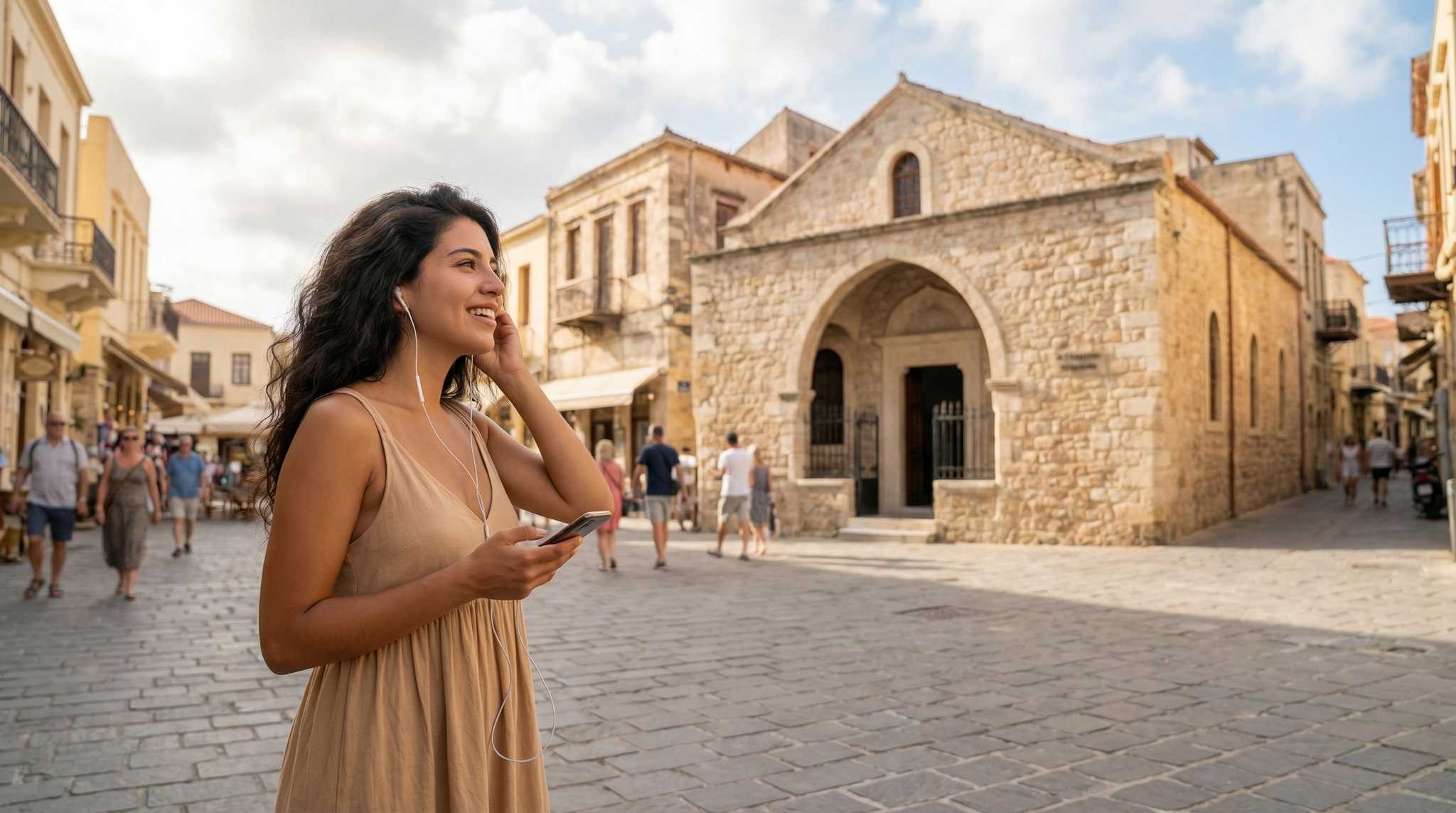
Chania Audio Tour: Echoes of Faith and Stone through Timeless Streets
Discover the captivating charm of Chania on this delightful tour! Begin with a visit to the historic Etz Hayyim Synagogue, a symbol of resilience and culture nestled in the heart of the old town. Then, immerse yourself in ancient history at the Archaeological Museum of Chania, where stunning artifacts bring Crete’s rich past to life. Wander through the enchanting Splantzia Square, a vibrant hub brimming with local flavor and timeless beauty. This journey through Chania promises a perfect blend of history, culture, and authentic island atmosphere that will leave you inspired.
Tour preview
About this tour
- scheduleDuration 60–80 minsGo at your own pace
- straighten2.6 km walking routeFollow the guided path
- location_on
- wifi_offWorks offlineDownload once, use anywhere
- all_inclusiveLifetime accessReplay anytime, forever
- location_onStarts at Presentation of the Virgin Mary Holy Metropolitan Church
Stops on this tour
lock_open 3 free previews · 5 unlock with purchase
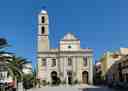
To spot the Presentation of the Virgin Mary Holy Metropolitan Church, look for a grand, light-stone building with a tall bell tower on the left side and three large doorways,…Read moreShow less
To spot the Presentation of the Virgin Mary Holy Metropolitan Church, look for a grand, light-stone building with a tall bell tower on the left side and three large doorways, right in the heart of Athinagora Square-if you see a church with flags out front and a clock on its tower, you’re in the right spot! Now, imagine you’re standing here not just in the present, but with centuries of history swirling around you like the gentle Mediterranean breeze. This isn’t just any church; it’s the survivor of soap and storms, of saints and sultans! If these stones could talk, they’d start with a whisper about a tiny church here in the 11th century. Then came the Venetians, who traded in piety for practicality and built a warehouse right on top. Fast-forward to the Ottoman era; the warehouse transformed yet again-this time into a soap factory! You could say the building got a “clean” start, though probably not the sort of lathering the faithful had in mind. But the real twist came in 1850, when the Turkish authorities handed the building over to the Christians of Chania. Suddenly, walls that once stored soap bells echoed with hymns instead. By 1861, the bishop was here to bless the opening, and a rescued icon from the original church-kept safe like a family heirloom-was placed in the narthex, where you can still see it today. The new church’s north aisle honors Saint Nicholas, a tribute to his lost church in Splantzia, which had been turned into a mosque. Inside, marvel at the shimmering silver covers glinting among the icons, all masterpieces by Cretan artists like Revelakis, Vivilakis, and others. Glance up-see how the dome’s fresco of the Virgin Mary stretches “wider than the heavens,” as painted by Giannakakis? Above the entrance, an epigram in Greek greets visitors: “Ye who walk here see the church of the Mother of God, built by faithful children of the Church finding refuge … like frightened birds in the middle of a storm under the wing of the heavenly protecting veil.” And as if this place hadn’t faced enough drama, it was damaged in the 1897 war-but, like a scene from a fairy tale, Tsar Nicholas II of Russia swooped in to pay for repairs and donated that beautiful bell you see today. So next time November 21 rolls around and the people of Chania celebrate the Presentation of the Virgin, remember you’re standing in a place that has seen it all-from soap bubbles to sacred bells-under the watchful eye of the Virgin Mary herself.
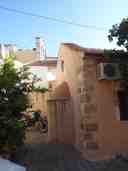
Open dedicated page →To spot the Holy Church of Agioi Anargyroi, look for a small, peach-colored building with stone corners and a tiled roof tucked away between plants and bicycles, just off the…Read moreShow less
To spot the Holy Church of Agioi Anargyroi, look for a small, peach-colored building with stone corners and a tiled roof tucked away between plants and bicycles, just off the narrow pathway in front of you. Take a deep breath-can you smell the faint scent of old stone and blooming flowers? Imagine this little church, the Holy Church of Agioi Anargyroi, surrounded by the echoes of a bustling Christian community inside the maze of Chania’s old town. This might not look like a grand cathedral, but don’t let its size fool you! During the dramatic turnover from the Venetian rulers to the Ottomans, this was the one, the only church in Chania that kept its doors open. It even served as the main cathedral for the whole region after the Ottomans took over the city. Picture old streets humming with tension, but inside here, faith and tradition stubbornly carried on. Over time, they didn’t just leave it alone-a couple more aisles were added, one for Saint Savvas (now dedicated to Saint Artemios) and another for Saint Charalambos. All around were cozy community buildings, keeping the church at the heart of local life. Step closer and you’d see treasures inside, like dramatic icons painted by Ambrosios Emporos, a local priest and artist-a particular favorite of mine is his moving depiction of the Dormition of the Virgin, plus his mysterious vision of the Second Coming. Imagine flickering candlelight illuminating these masterpieces, and you’ll understand why this place feels like a secret sanctuary that’s witnessed centuries of Chania’s history. Not bad for a “little” church, huh?
Open dedicated page →
Show 5 more stopsShow fewer stopsexpand_moreexpand_less
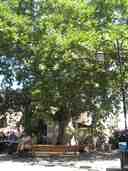
Just ahead, you’ll spot Splantzia Square by the giant, leafy plane tree spreading its shade over benches and café tables-just head for the heart of the square where crowds tend to…Read moreShow less
Just ahead, you’ll spot Splantzia Square by the giant, leafy plane tree spreading its shade over benches and café tables-just head for the heart of the square where crowds tend to gather under its branches. Welcome to Splantzia Square, a place where history isn’t just living-it’s sprawling right above you in the shape of that enormous plane tree! Take a look around. You’re now standing on ground that’s seen Venetian monks, Turkish sultans, Christian priests, and even coffee-sipping beys. Now, brace yourself, because beneath this peaceful shade, Splantzia once pulsed as the very heart of Chania during Ottoman rule. Back then, it was the main neighborhood for Muslims-the city had 780 Turkish quarters, compared to just 150 Greek ones! Imagine the colorful chaos of voices, spices, prayers, and footsteps echoing through these streets. Peer northwest and you’ll see the humble church of Saint Roch, built way back in 1630, probably as the city prayed for relief from the plague. The people of Chania believed Saint Roch would protect them from this dreadful disease. Below its old stone ledge there’s still a Latin inscription: “To the Greatest and Best God, and to Saint Roch, 1630.” Saint Roch’s little church has survived many lives, from sacred spot to Turkish military post, and then the local police station! Who says an old church can’t have a solid résumé? On the east side of the square, things get even more intriguing. There stands the church of Saint Nicholas-though, it started life as a Venetian Dominican monastery before 1320. When the Ottomans took Chania in 1645, they dramatically transformed this very church into the city’s grandest mosque, named after the Sultan himself. A brand-new minaret was raised, complete with two balconies (those are called “serifiyedes,” go on, try saying it three times fast!). And here’s a neat fact: in the early days of Turkish rule, a holy Dervish burst in, climbed the bell tower, and spun his sacred sword to all four corners of the horizon, calling the faithful to prayer. That sword was so precious it was carried to the homes of the sick or women in labor, believed to have healing powers! When Christians took back the church in 1928, the original bell tower was long gone, replaced by a modern one you’ll see today. Now, look again at the thick trunk of the plane tree. It’s not just a tree; some say it’s the square’s ancient witness. Under its shade, people with fancy titles-beys and rulers-once sipped coffee in an octagonal pavilion. But not all stories are sweet; in the early days of the Greek Revolution, this tree saw resistance, tragedy, and courage. Brave Christian freedom fighters, clergy included, were hanged right here as a warning to others. There’s a plaque beneath the branches, a small glimpse into moments of enormous sacrifice. Look carefully between the church and the tree, and you’ll notice a gated, mysterious underground passage. This is the ancient cistern, built first by the Venetians, reaching down twenty-six steps. During Ottoman and Venetian times, it served both ritual and practical uses, storing enough water to keep Chania alive for half a year! When the river’s course shifted, it turned obsolete-so much for Venetian engineering. So, next time someone says it’s “just a square,” tell them it’s where swords rang, prayers rose, secrets hid below ground, and a plane tree has watched it all, season after season. Go ahead, find a seat, take in the atmosphere, and imagine the countless stories drifting through these leaves.
Open dedicated page →Look for a tall, bright white church with elegant arches and a striking blue dome rising above the nearby rooftops-it's easy to spot once you catch that pop of color in the sea of…Read moreShow less
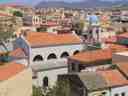
Look for a tall, bright white church with elegant arches and a striking blue dome rising above the nearby rooftops-it's easy to spot once you catch that pop of color in the sea of terracotta tiles. Ready for a story? Imagine Chania in the late 1800s, buzzing with voices from all over Europe and the Mediterranean. The first Catholic bishop of Crete, Aloisio Cannavo, arrives with grand dreams and, I dare say, a fantastic hat collection. He builds this church in 1879 to unite the entire Catholic community of the island, perhaps hoping to gather everyone for a truly massive Sunday feast. The church that stands before you-the Assumption Cathedral-grew into a beacon for Roman Catholics on Crete, with bells that have shared both joyful news and solemn moments with the city for nearly a century and a half. And here’s a twist: although Crete is better known for its Greek Orthodox character, this cathedral has always practiced the Roman or Latin rite, linking Chania to Western Europe and even the Vatican itself. It became the heart of the Roman Catholic Diocese of Crete, a diocese that was first formed way back in 1213 during the era of crusaders-talk about old roots! The Capuchin Order still cares for it, so if you spot a friar, maybe give a friendly “Yassou!” Fun fact: in 2004, the cathedral celebrated its 125th birthday, which in church years is like reaching wise old-grandparent status.
Open dedicated page →To spot the Etz Hayyim Synagogue, look for a stone gateway with a blue sign at the top, Hebrew writing above the doorway, and a white wall with a potted plant by the entrance-it’s…Read moreShow less
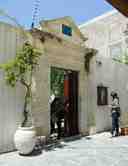
To spot the Etz Hayyim Synagogue, look for a stone gateway with a blue sign at the top, Hebrew writing above the doorway, and a white wall with a potted plant by the entrance-it’s tucked away on a quiet lane, but you can’t miss this welcoming old doorway. Welcome to one of Chania’s most surprising secrets-the Etz Hayyim Synagogue, the only synagogue left standing on the whole island of Crete. Step a little closer and imagine yourself walking not just into a building, but into centuries of memory, courage, and survival. Long ago, where you’re standing now, there was a Catholic church dedicated to Saint Catherine, built in the 1400s. But in the chaos of the 16th century, when cannons thundered and walls shook during the Ottoman siege, the church was destroyed. You’d think that was the end of the story-cue the dramatic music-but plot twist! Local Jewish families, with a little Venetian help, rebuilt the area around 1560, turning rubble into a place of prayers and laughter and song. For hundreds of years, the Jewish quarter here bustled with life, and this humble building became the beating heart of a close-knit community. By World War II, about 270 Jews still called Chania home. Then came 1944, a night heavy with fear: the entire Jewish community was rounded up by the Germans and forced onto a ship named Tanais, along with Christian Resistance fighters and Italian prisoners. Their destination was likely a concentration camp. But fate took a devastating turn-the ship was torpedoed near Milos, and all aboard were lost. The old stones here witnessed the start of a tragedy no one could have scripted. After the war, the synagogue was abandoned. It became a warehouse, a barn, even a dump-imagine goats munching where once there was chanting! But the building refused to fade into dust. By the 1990s only its cracked walls and courage stood, until Nikos Stavroulakis, part Indiana Jones and part kind-hearted librarian, led a restoration quest. Donations poured in from around the world, and all kinds of craftspeople-woodworkers, masons, dreamers-came together. Reopened in 1999, the aroma of fresh wood and hope filled the air again. Today, as you stand here, you’re outside a building that holds layers of joy, heartbreak, and stubborn resilience. And not just stone and history-step inside, and you’ll sense a living story of prayer and reflection, a message of survival and reconciliation. Etz Hayyim is more than a landmark; it’s Chania’s tree of life, reminding us that even when the world seems to forget, some stories refuse to die-they just wait to be rediscovered.
Open dedicated page →Look for a large, modern building with a sleek glass canopy and a wall of reddish-brown tiles on your left-you’ll see the sign in Greek and English right by the entrance. And…Read moreShow less
Look for a large, modern building with a sleek glass canopy and a wall of reddish-brown tiles on your left-you’ll see the sign in Greek and English right by the entrance. And here you are, at the Archaeological Museum of Chania-a time machine that doesn’t need a seatbelt! As you stand before this crisp, modern structure, imagine the wild tales it could tell. The museum’s new home opened in 2022 on Skra Street, but its story starts much earlier, in a place full of echoes and secrets. Once upon a time, the old museum lived in a grand Venetian monastery on Chalidon Street, where Franciscan friars whispered prayers and perhaps, on stormy nights, the stones whispered back. The building survived the mighty earthquake of 1595, shaking but not falling-proving early on it would stand the test of time. Over centuries, the old monastery transformed again and again: first, a holy church; next, an Ottoman mosque named for Yussuf Pasha, where the call to prayer mingled with salty sea air; then, after World War II, a military storehouse loaded with secrets before finally becoming a home for ancient wonders in 1962. Now, in this shiny, new setting, the museum is packed with treasures. You’ll get eye-to-eye with the past: coins and jewelry from Minoans and Romans, clay tablets with mysterious inscriptions, and a sparkling mosaic floor showing Dionysos and Ariadne locked in their eternal dance. If you listen closely, maybe you’ll hear an epic party in their honor, because Dionysos was never the quiet type. There’s a Cycladic vessel with curves so modern, it’s practically stylish even after millennia, and an impressive bust of Emperor Hadrian, who probably wishes he had Instagram. Don’t miss the Minoan sarcophagus from Armeni-resting peacefully as if waiting for you to uncover its secrets. Every artifact here, from every city around Crete, offers a piece of the puzzle, a whisper from a world long gone but never forgotten. Welcome to Chania’s treasure trove-history really does live here!
Open dedicated page →

Frequently asked questions
How do I start the tour?
After purchase, download the AudaTours app and enter your redemption code. The tour will be ready to start immediately - just tap play and follow the GPS-guided route.
Do I need internet during the tour?
No! Download the tour before you start and enjoy it fully offline. Only the chat feature requires internet. We recommend downloading on WiFi to save mobile data.
Is this a guided group tour?
No - this is a self-guided audio tour. You explore independently at your own pace, with audio narration playing through your phone. No tour guide, no group, no schedule.
How long does the tour take?
Most tours take 60–90 minutes to complete, but you control the pace entirely. Pause, skip stops, or take breaks whenever you want.
What if I can't finish the tour today?
No problem! Tours have lifetime access. Pause and resume whenever you like - tomorrow, next week, or next year. Your progress is saved.
What languages are available?
All tours are available in 50+ languages. Select your preferred language when redeeming your code. Note: language cannot be changed after tour generation.
Where do I access the tour after purchase?
Download the free AudaTours app from the App Store or Google Play. Enter your redemption code (sent via email) and the tour will appear in your library, ready to download and start.
If you don't enjoy the tour, we'll refund your purchase. Contact us at [email protected]
Checkout securely with 




