
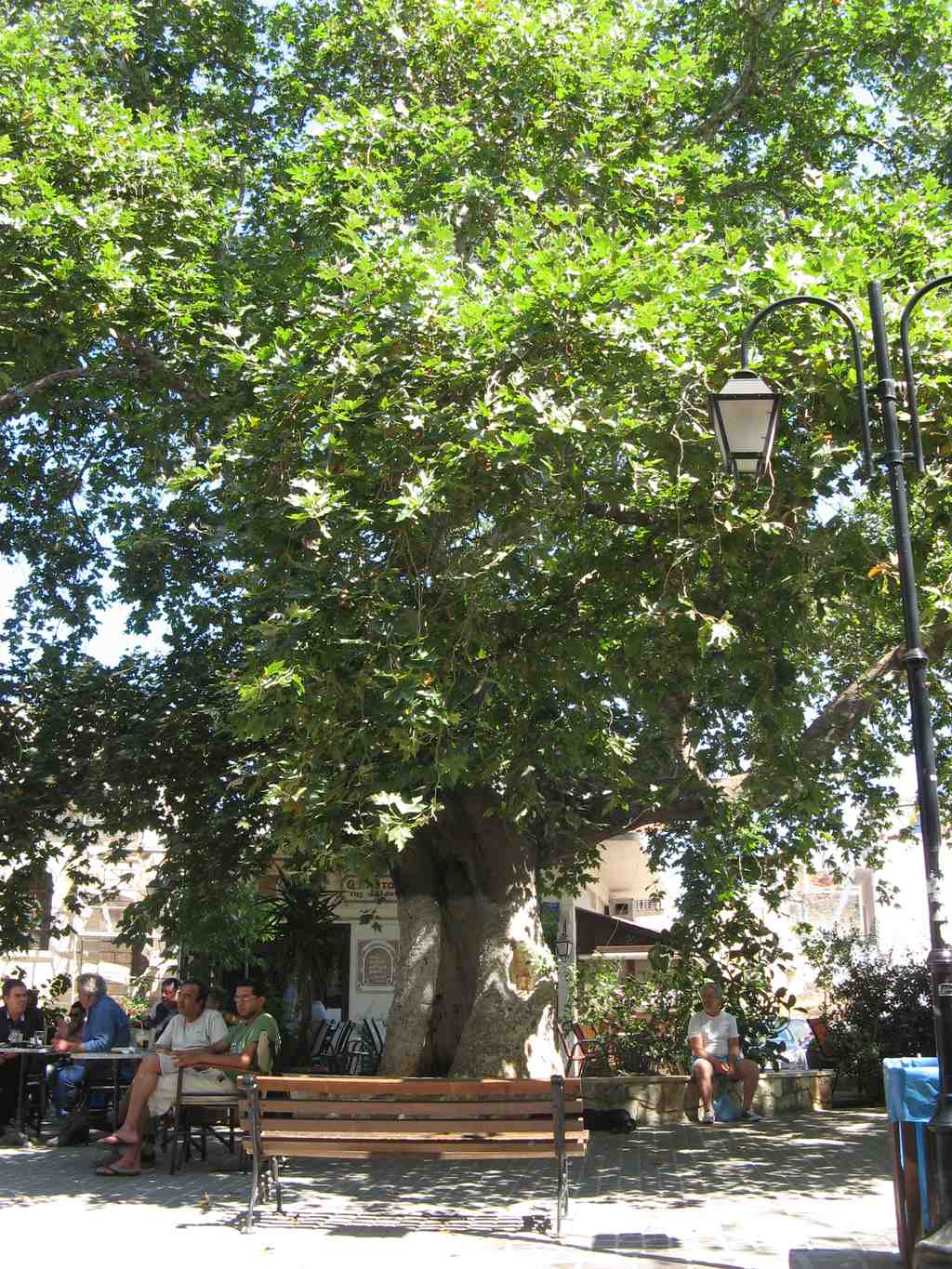
Just ahead, you’ll spot Splantzia Square by the giant, leafy plane tree spreading its shade over benches and café tables-just head for the heart of the square where crowds tend to gather under its branches.
Welcome to Splantzia Square, a place where history isn’t just living-it’s sprawling right above you in the shape of that enormous plane tree! Take a look around. You’re now standing on ground that’s seen Venetian monks, Turkish sultans, Christian priests, and even coffee-sipping beys. Now, brace yourself, because beneath this peaceful shade, Splantzia once pulsed as the very heart of Chania during Ottoman rule. Back then, it was the main neighborhood for Muslims-the city had 780 Turkish quarters, compared to just 150 Greek ones! Imagine the colorful chaos of voices, spices, prayers, and footsteps echoing through these streets.
Peer northwest and you’ll see the humble church of Saint Roch, built way back in 1630, probably as the city prayed for relief from the plague. The people of Chania believed Saint Roch would protect them from this dreadful disease. Below its old stone ledge there’s still a Latin inscription: “To the Greatest and Best God, and to Saint Roch, 1630.” Saint Roch’s little church has survived many lives, from sacred spot to Turkish military post, and then the local police station! Who says an old church can’t have a solid résumé?
On the east side of the square, things get even more intriguing. There stands the church of Saint Nicholas-though, it started life as a Venetian Dominican monastery before 1320. When the Ottomans took Chania in 1645, they dramatically transformed this very church into the city’s grandest mosque, named after the Sultan himself. A brand-new minaret was raised, complete with two balconies (those are called “serifiyedes,” go on, try saying it three times fast!). And here’s a neat fact: in the early days of Turkish rule, a holy Dervish burst in, climbed the bell tower, and spun his sacred sword to all four corners of the horizon, calling the faithful to prayer. That sword was so precious it was carried to the homes of the sick or women in labor, believed to have healing powers! When Christians took back the church in 1928, the original bell tower was long gone, replaced by a modern one you’ll see today.
Now, look again at the thick trunk of the plane tree. It’s not just a tree; some say it’s the square’s ancient witness. Under its shade, people with fancy titles-beys and rulers-once sipped coffee in an octagonal pavilion. But not all stories are sweet; in the early days of the Greek Revolution, this tree saw resistance, tragedy, and courage. Brave Christian freedom fighters, clergy included, were hanged right here as a warning to others. There’s a plaque beneath the branches, a small glimpse into moments of enormous sacrifice.
Look carefully between the church and the tree, and you’ll notice a gated, mysterious underground passage. This is the ancient cistern, built first by the Venetians, reaching down twenty-six steps. During Ottoman and Venetian times, it served both ritual and practical uses, storing enough water to keep Chania alive for half a year! When the river’s course shifted, it turned obsolete-so much for Venetian engineering.
So, next time someone says it’s “just a square,” tell them it’s where swords rang, prayers rose, secrets hid below ground, and a plane tree has watched it all, season after season. Go ahead, find a seat, take in the atmosphere, and imagine the countless stories drifting through these leaves.




