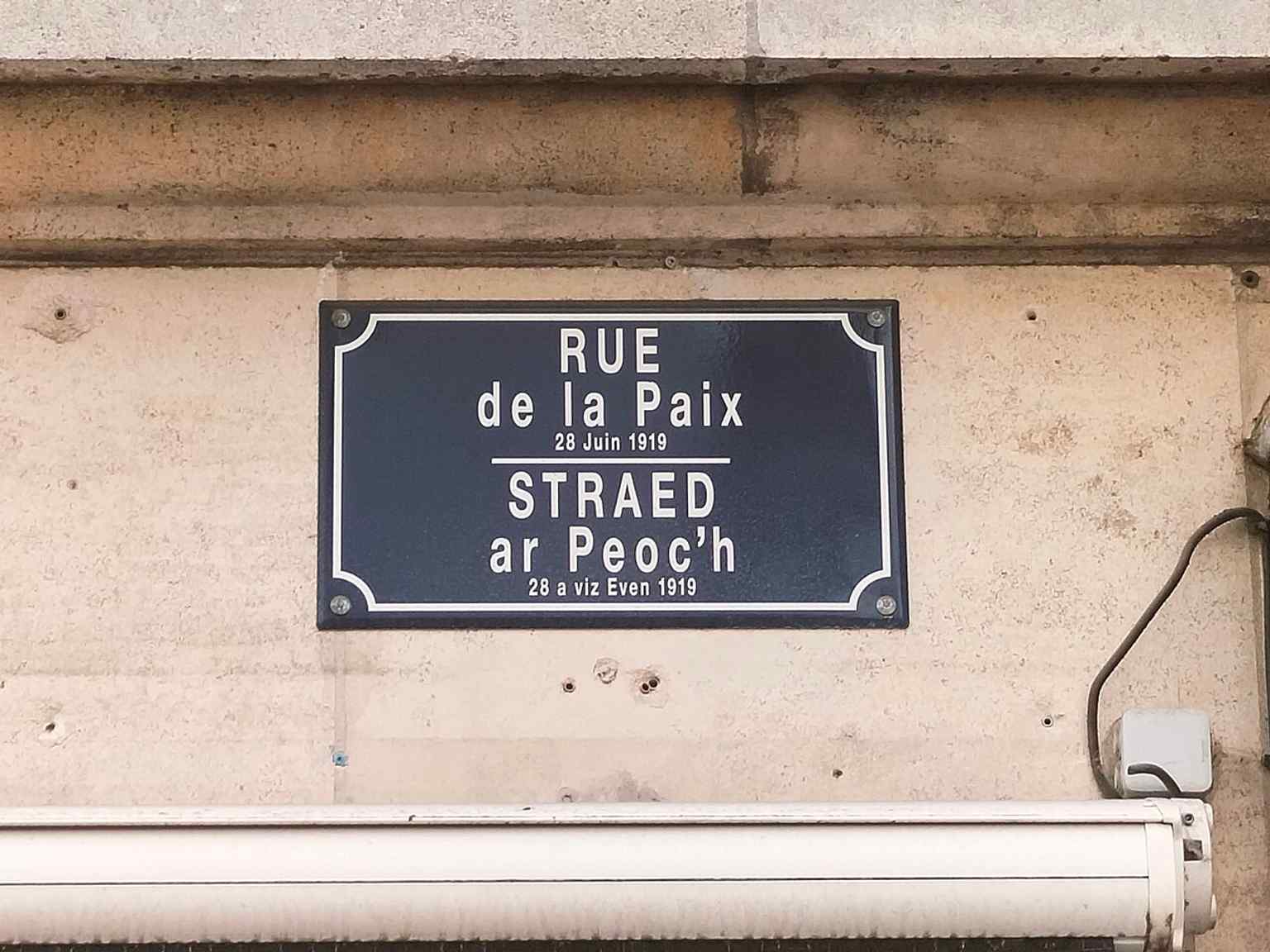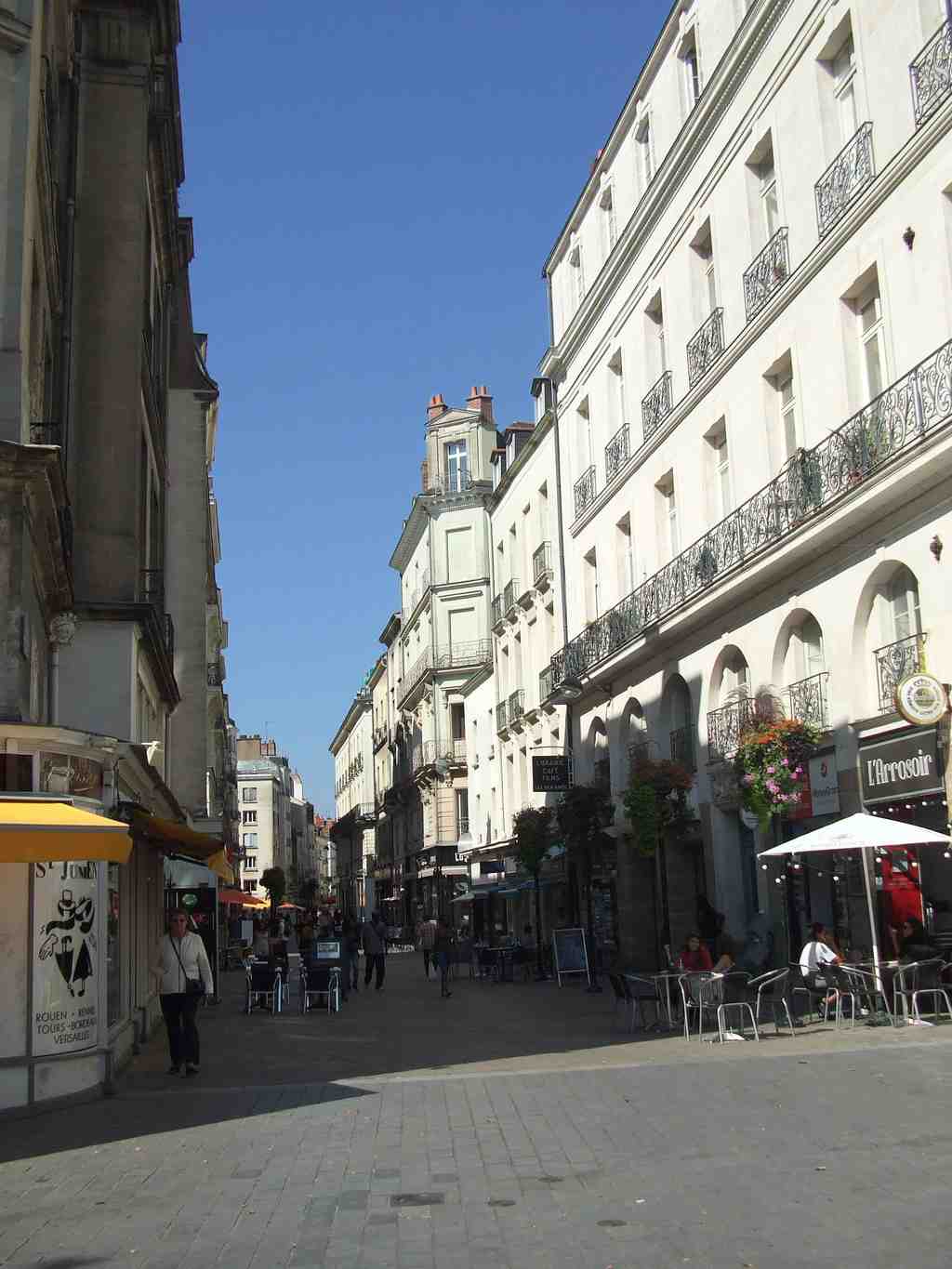
Look for a straight street lined with pale stone facades, its surface shifting from asphalt to cobbles, and marked by the blue enamel Rue de la Paix street plaque.
Rue de la Paix sounds gentle... almost restful. But this street carries one of Nantes's sharpest little ironies. It took its present name in nineteen nineteen, on the day the Treaty of Versailles sealed the end of the First World War. Peace entered the map here not as a mood, but as a decision, a public act of memory. If you glance at the plaque on your screen, you can feel how ordinary that memory now looks in daily life.
And yet locals know something most visitors miss: this was, for centuries, the city's essential line of bridge, the route that let people cross the Loire between the old heart of Nantes and the southern bank at Pirmil. So this quiet name sits on top of an old strategic spine. In times of trade, everything pressed through here. In times of danger, control of passages like this mattered just as much as walls or cannons. By the time of the fighting we touched on in seventeen ninety-three, routes through Nantes were never innocent.
Before it became Rue de la Paix, this was Rue de la Poissonnerie, the Fishmongers' Street. The name came from the municipal fish market on the eastern tip of the old Île de la Saulzaie, today's Île Feydeau. To reach it, people crossed the Pont de la Poissonnerie, first in wood, then rebuilt in stone in sixteen seventy. Imagine the crush here: carts jamming wheel to wheel, merchants shouting prices, passersby squeezed against low wooden houses, and the smell of fresh fish hanging stubbornly over everything. The city eventually pushed to widen the crossing, not for beauty, but because the bottleneck had become dangerous.
In the eighteenth century, Nantes tried to discipline that old chaos. Officials began straightening the street from seventeen forty-one onward, replacing a crooked, noisy medieval passage with the cleaner line you see now. But the old street still peeks through in strange details. At the corner with Rue Belle-Image, architect Louis Chesniau designed a building in eighteen forty-three with upper windows blocked from the start. Why? A tax on doors and windows. To save money, he gave the facade blind openings and left tenants with less light and air. It is such a Nantes story, really: policy shaping stone, and stone quietly shaping lives.
Commerce kept rewriting the street too. At numbers one through eight stood the Première Maison, opened in eighteen forty-five by Pierre Ganuchaud and later driven forward by Georges Ganuchaud. He turned clothing into a local empire and became a force in civic life, though the prosperity had harder edges: young girls worked there in the nineteen thirties for meager wages. Then, on the sixteenth of September, nineteen forty-three, American bombing destroyed the store in minutes. A century of family ambition vanished into rubble.
That is Rue de la Paix in a single breath: peace named after war, commerce built on an ancient crossing, memory surviving in a line of stone and traffic. And behind these practical routes stood an older seat of power, much of it rubbed almost invisible. Walk about two minutes to Bouffay Square, and we will step into that missing political heart.