
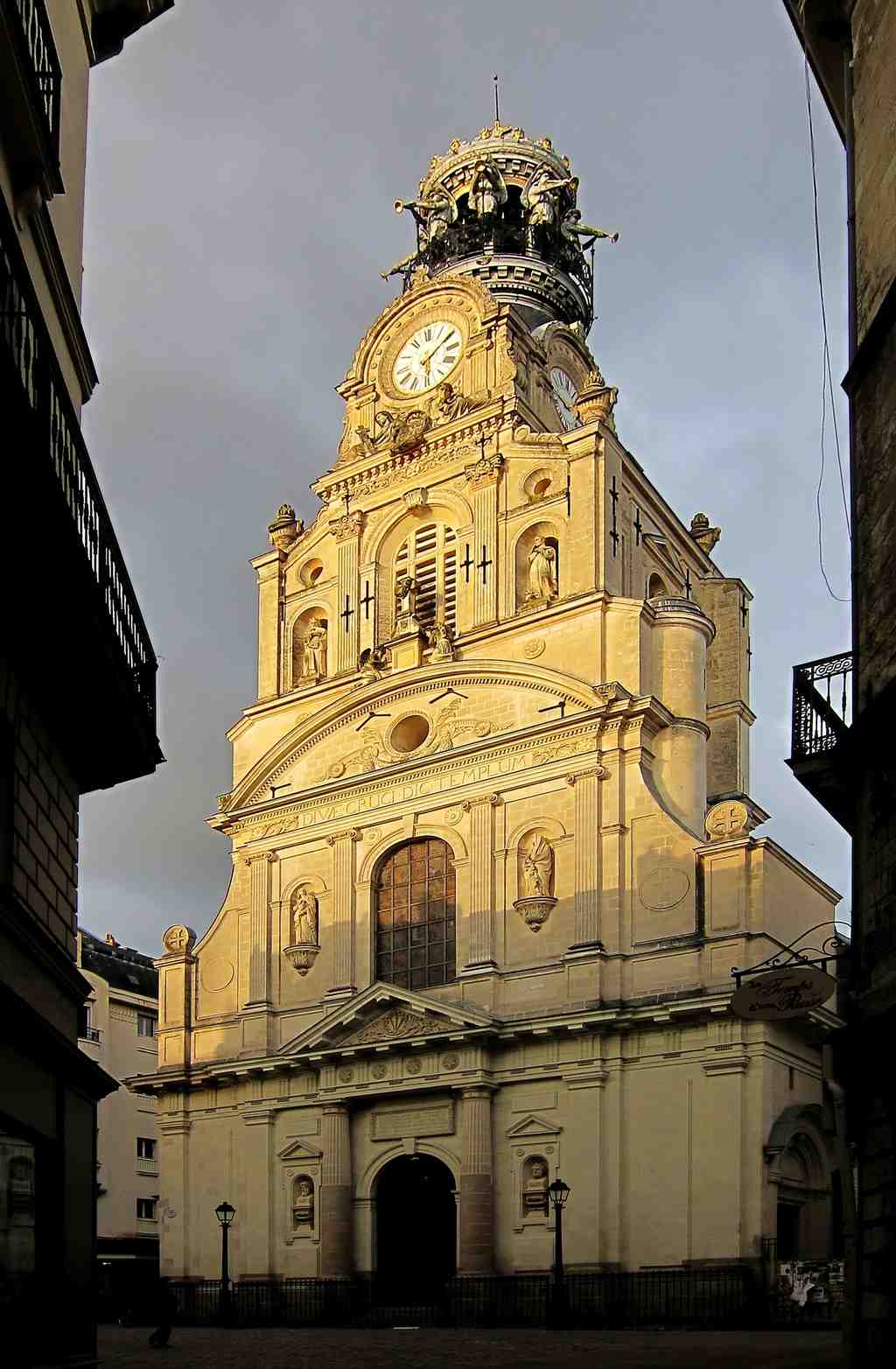
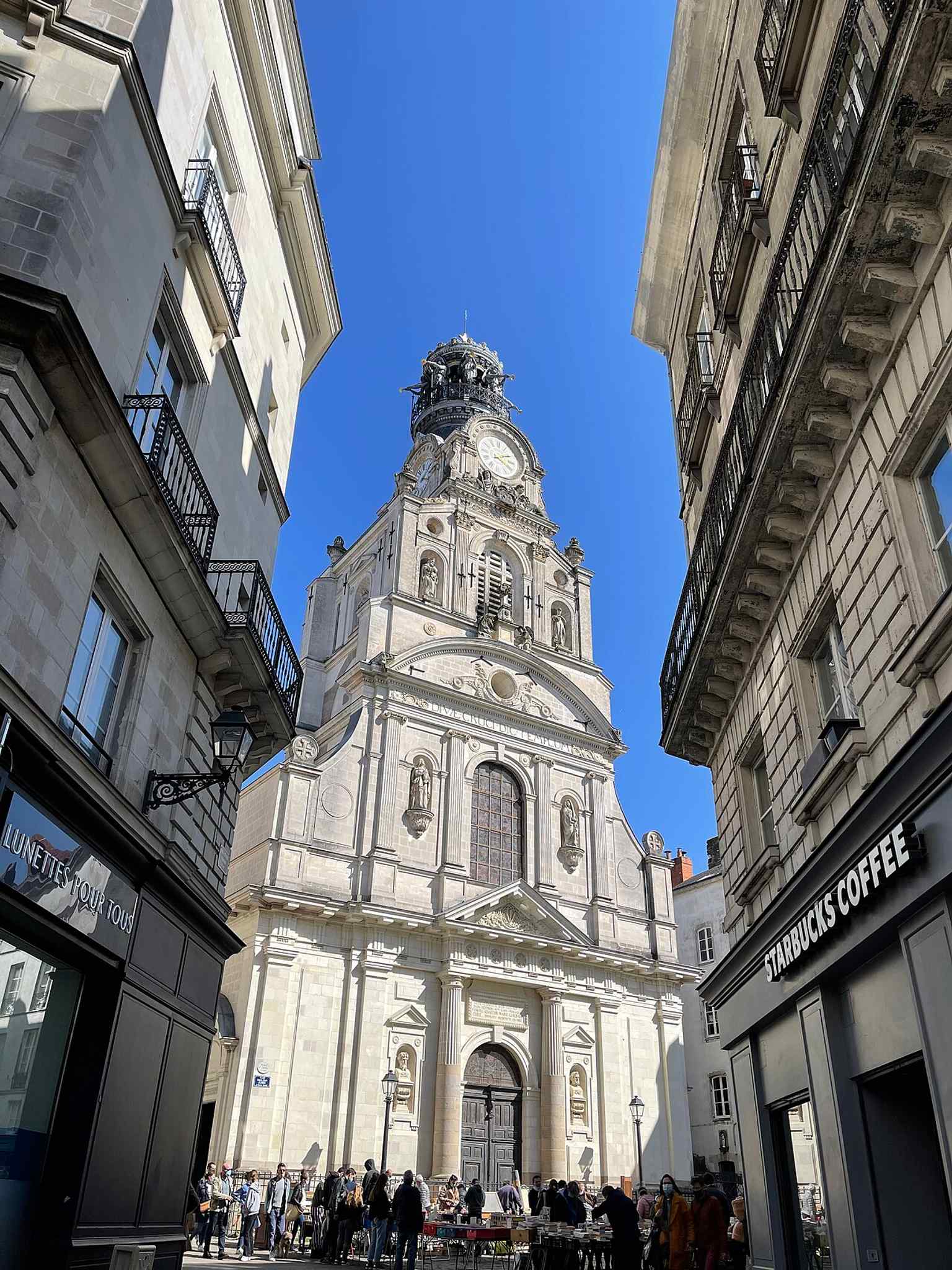
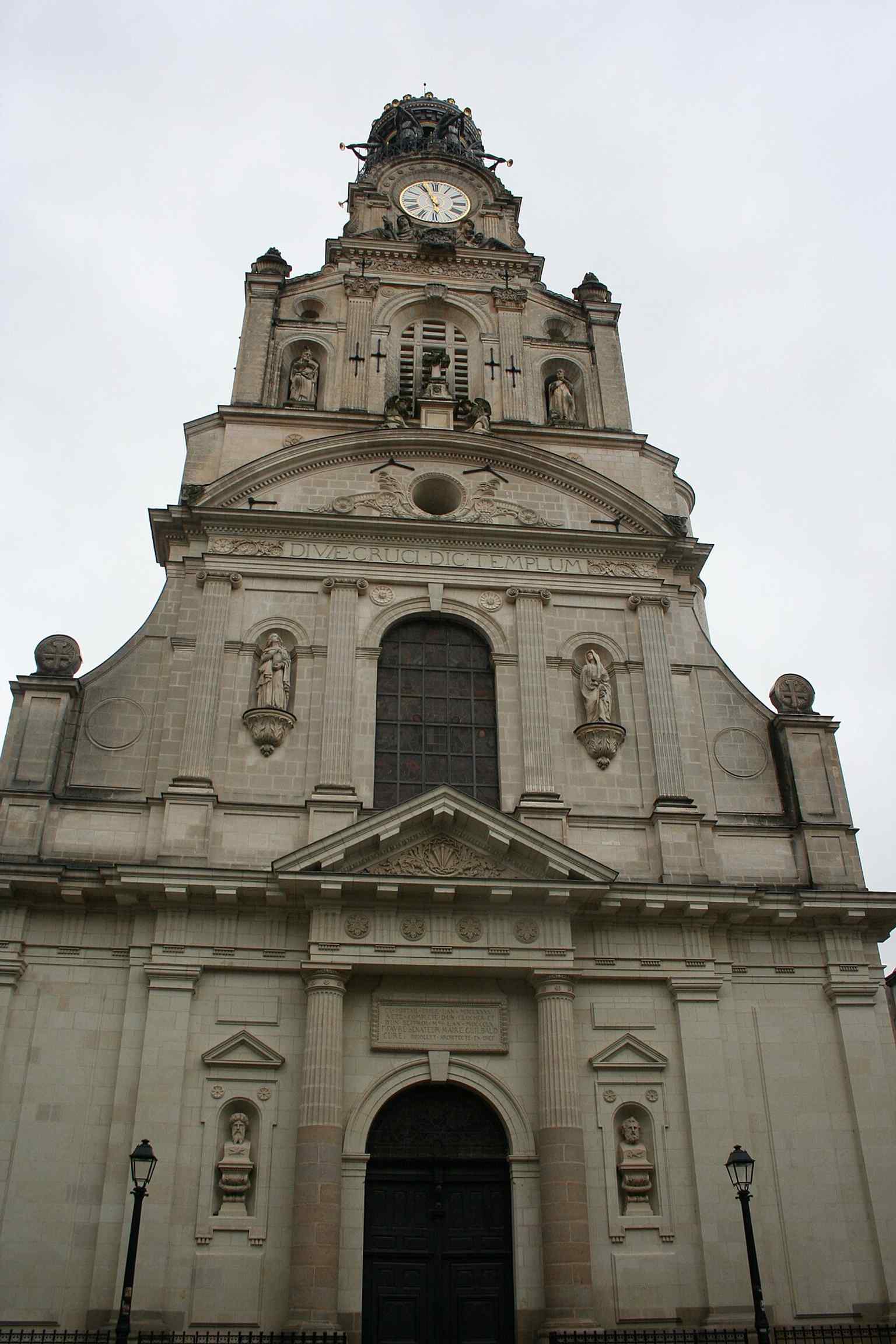
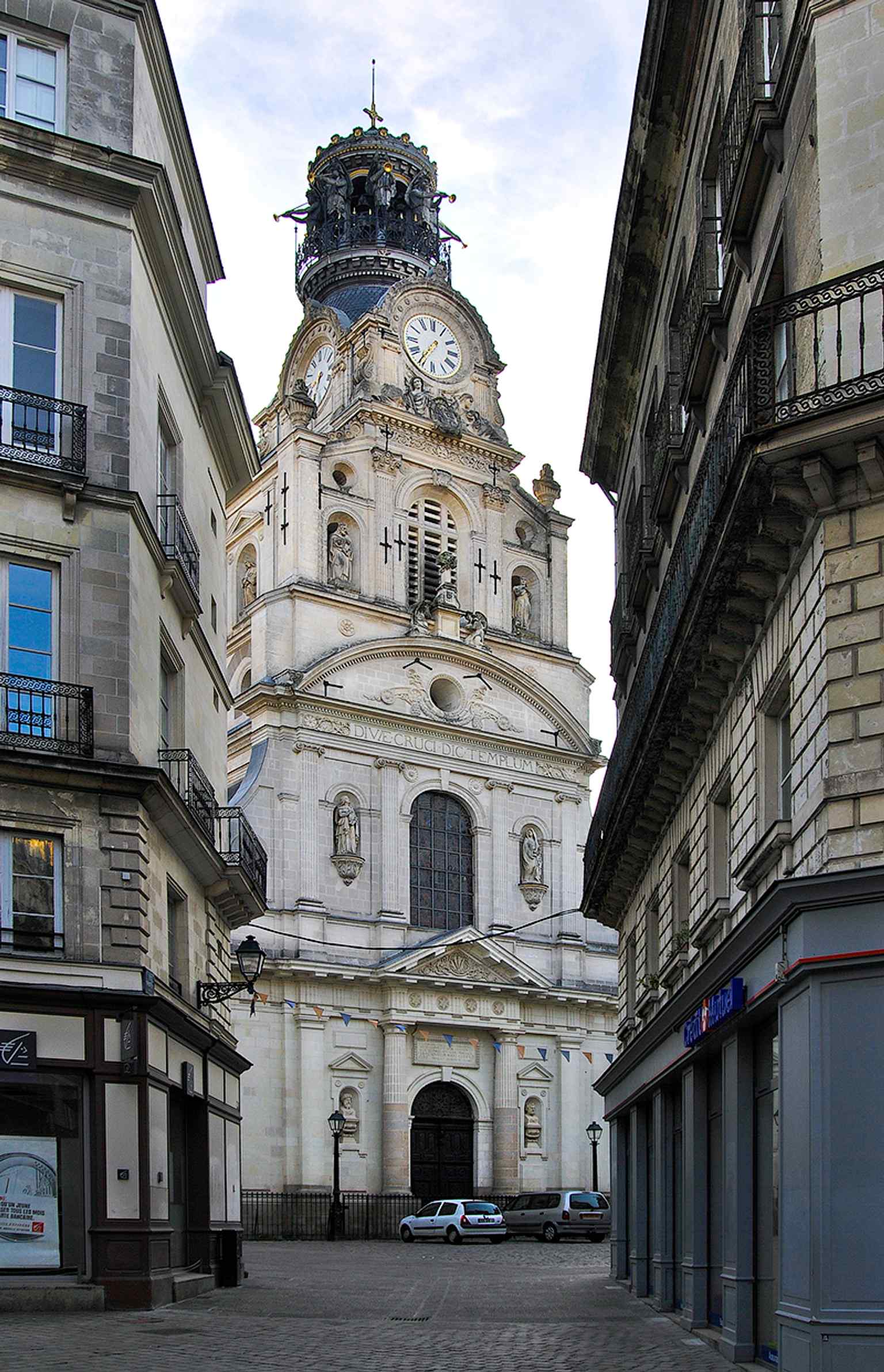
On your left, look for a pale stone façade shaped like a small classical temple, with a triangular pediment and, high above it, a lantern-like belfry carrying an old clock and trumpet-blowing angels.
Sainte-Croix can feel almost modest at first... and then you notice how many lives have been folded into it. This has been the parish church of the Bouffay quarter since eleven thirty-eight. Long before this façade took shape, Benedictine monks from Marmoutier held a priory here, and their Saint-Martin chapel stood roughly where the choir - the space around the altar - stands now. For a time, the building even served the neighboring Bouffay castle.
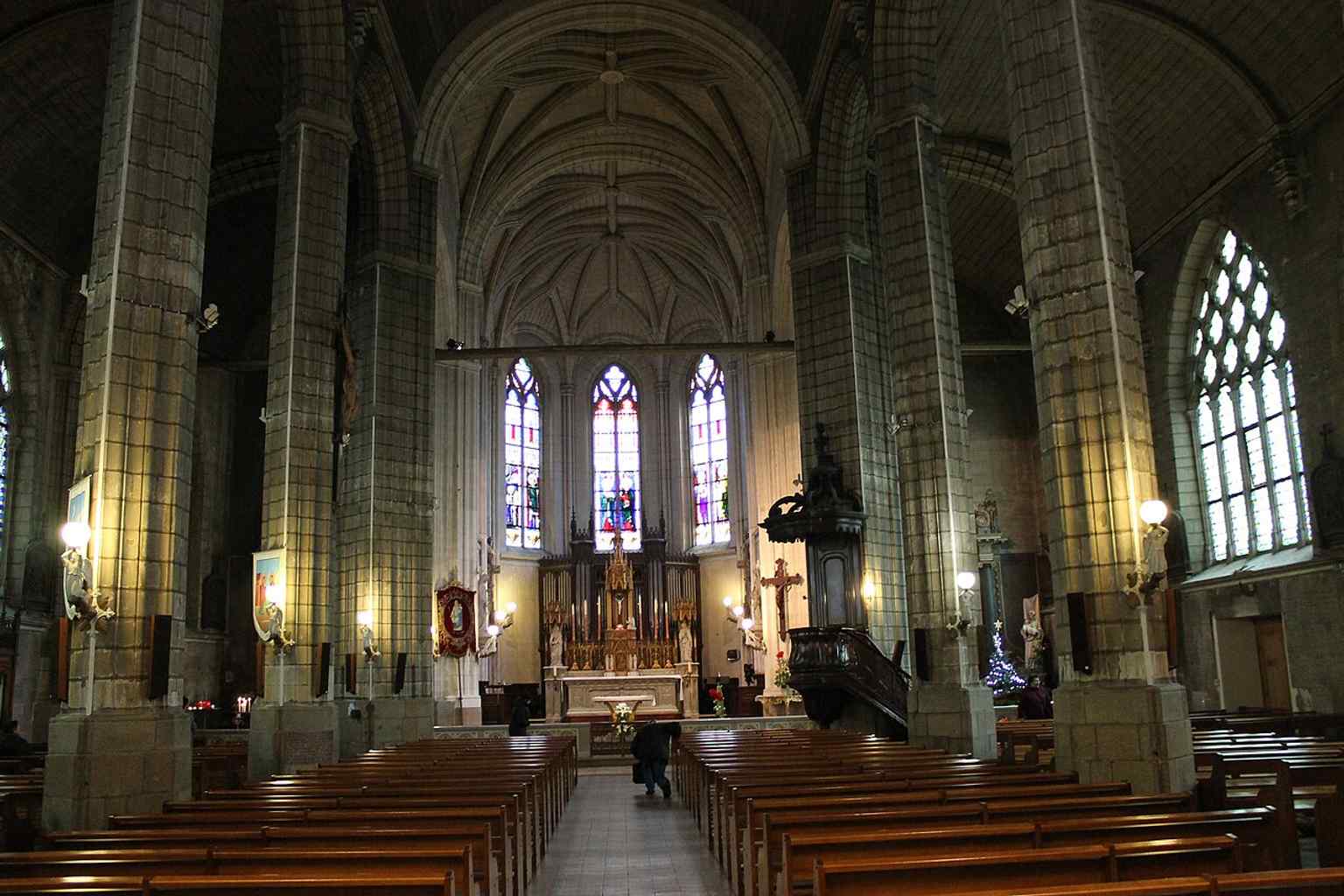
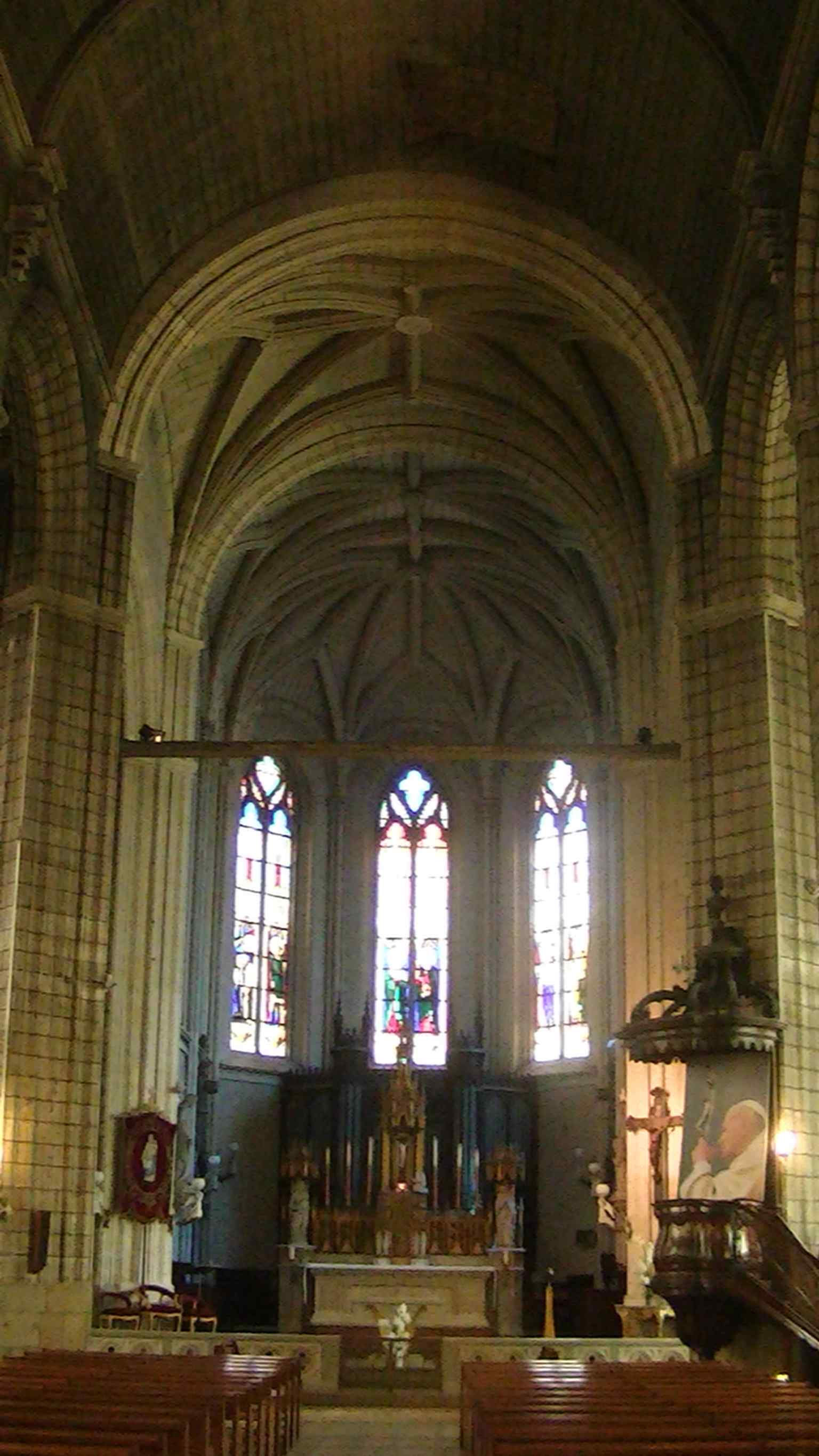
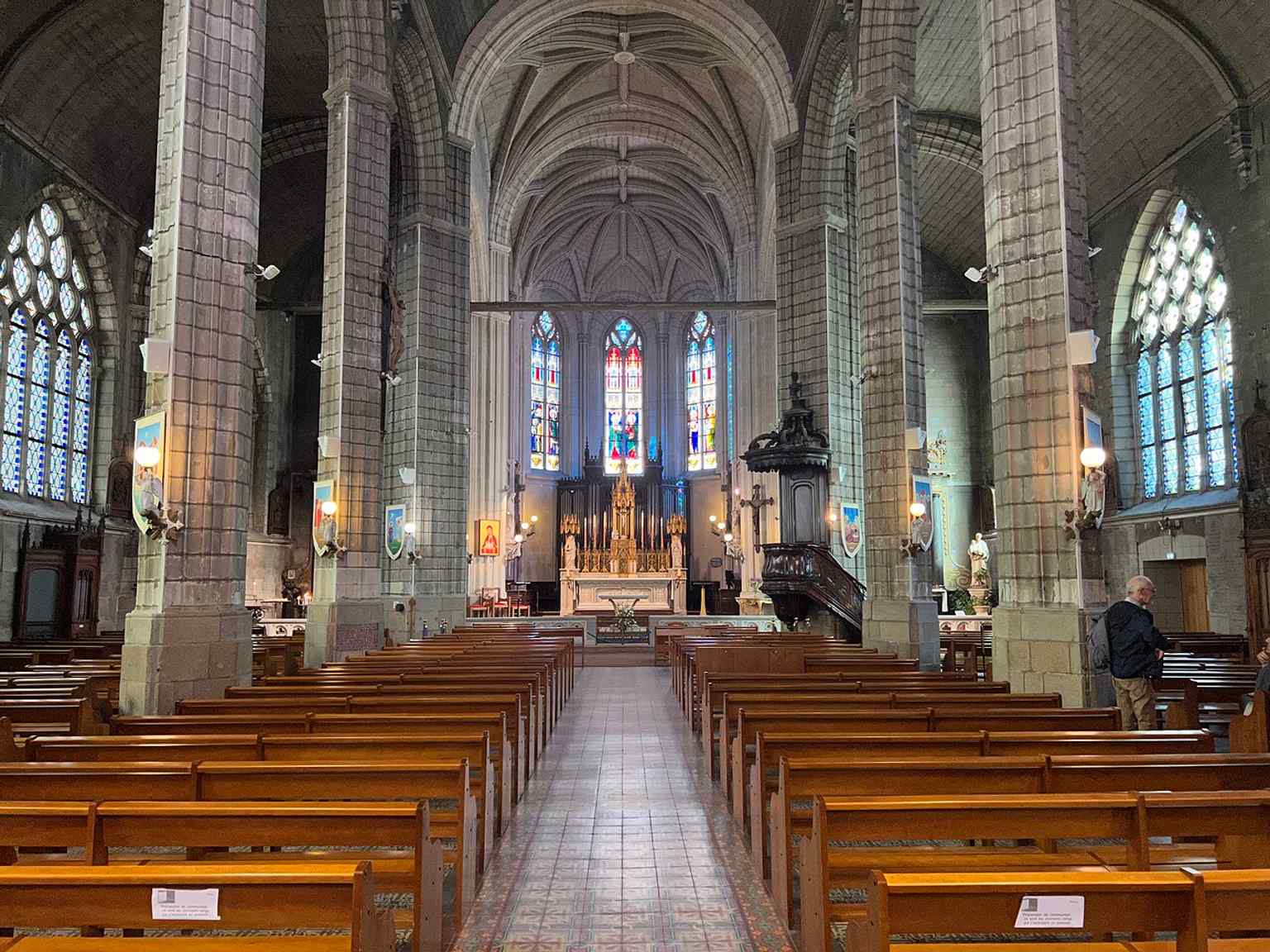
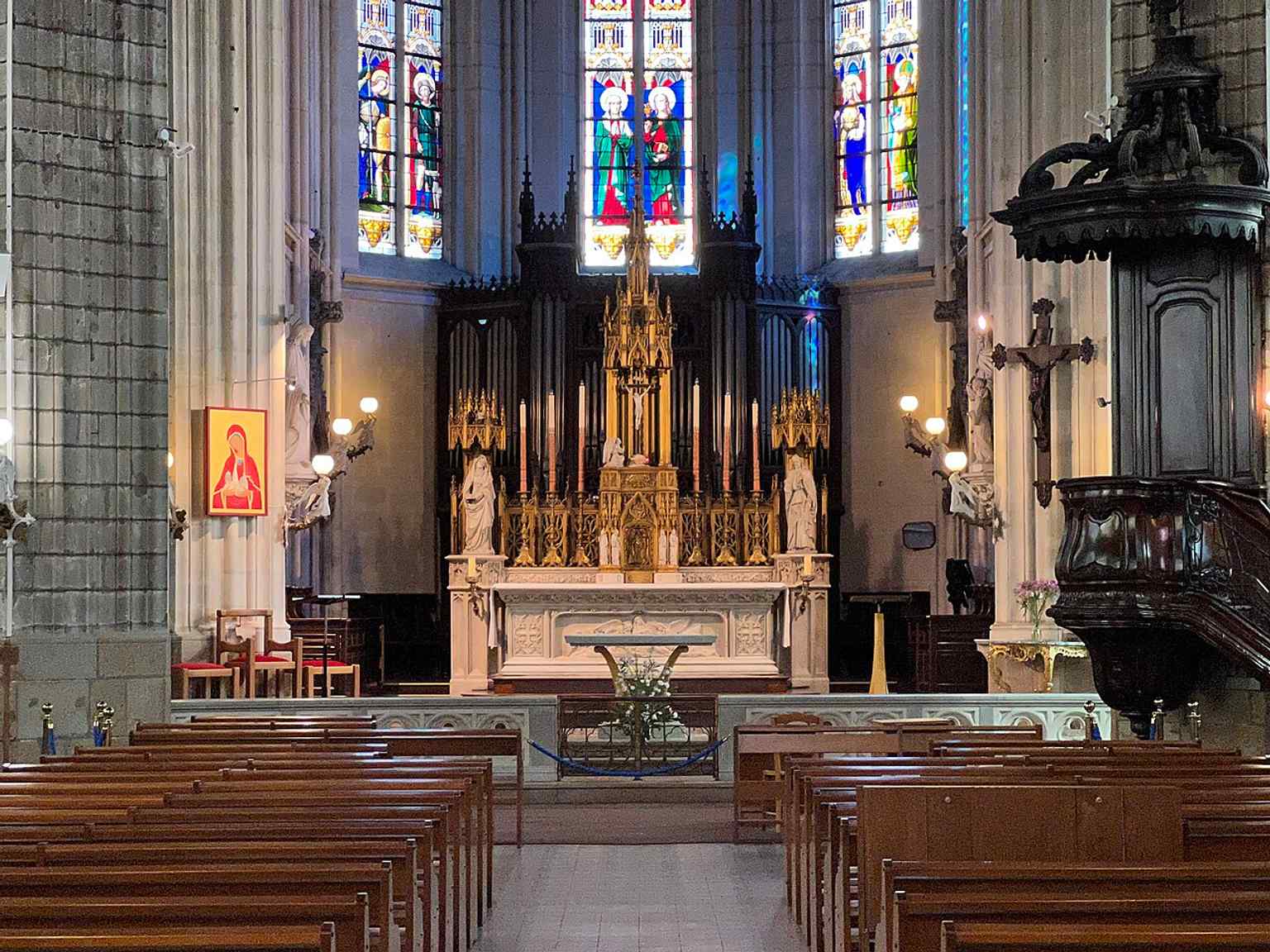
The church you see today grew in layers. Seventeenth-century builders raised the nave, the long central hall of the church, and gave the square a classical front with columns and a pediment borrowed from ancient temples. In the nineteenth century, the architect Théodore Nau reshaped the choir in a more flamboyant Gothic style, with pointed lines and ribbed vaults. If you glance at your screen, you can see that meeting of styles inside: one church, speaking in more than one historical voice.
And then there is the little line in a parish register that changes the whole mood of the place. Sainte-Croix preserves the record of the birth and baptism of Jules Verne. I love that detail. Not a monument yet, not the author of submarines and moon voyages, just a baby entered into the careful handwriting of a local church. But what a city to begin in... a port city of crossings, vanished places, ruined towers, and stories hidden under newer streets. Nantes taught people that the solid world could shift. For a child like Verne, that kind of city could turn stone into possibility.
But Sainte-Croix also carries a harder truth. During the Terror, revolutionaries turned this church into a prison and a political club. Jean-Baptiste Carrier stood here and spoke from the pulpit - the raised platform meant for preaching - while prisoners were still locked inside. One official wrote that the place had become so foul that no one dared enter.
It is one of those moments when a city shows how easily a place of prayer can be twisted by power.
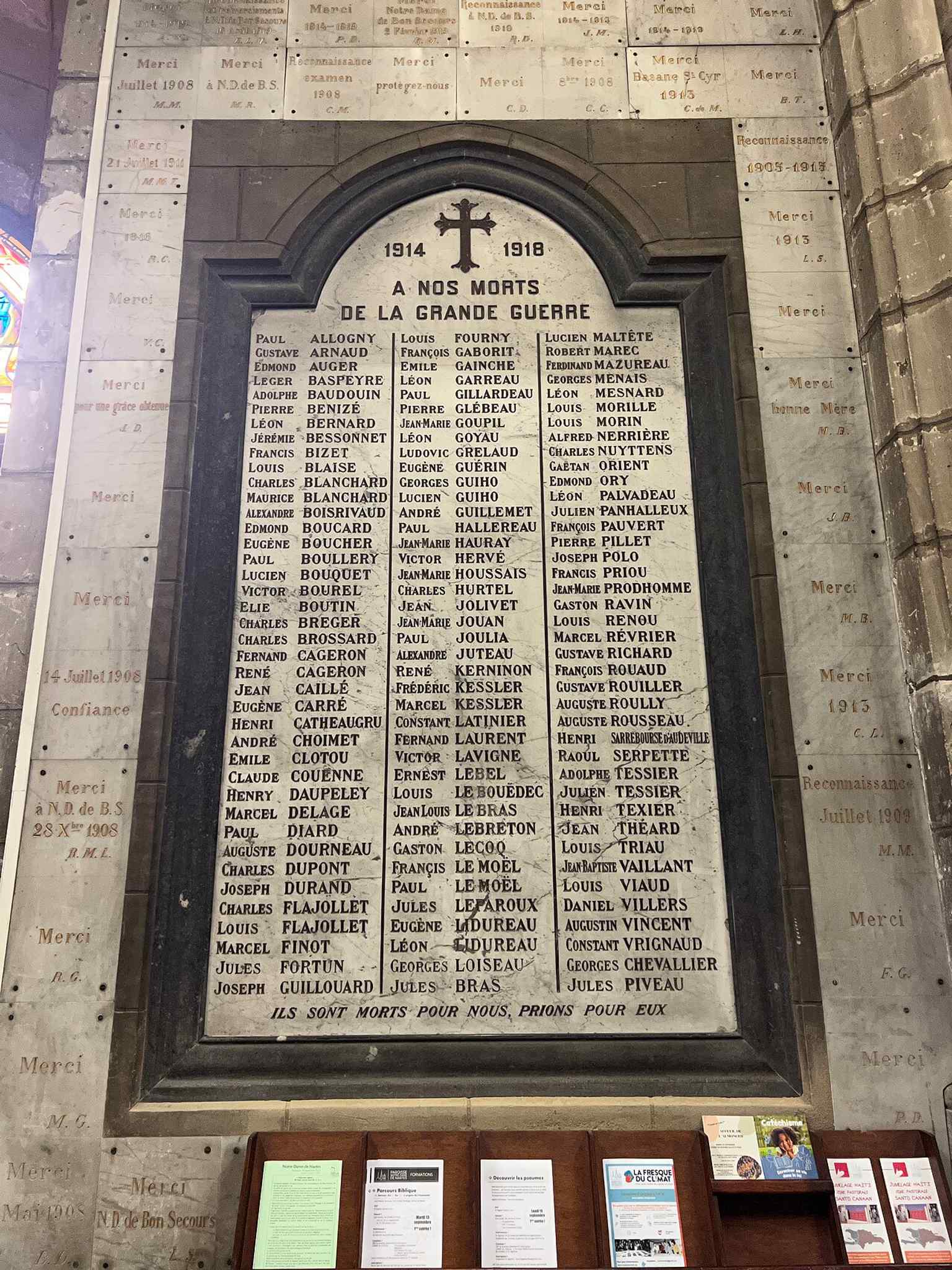
And yet people kept bringing their hopes here. In fourteen forty-three, Alain Resmond helped found the sanctuary of Notre-Dame de Bon-Secours for neighbors who did not want to cross the Poissonnerie bridge just to attend Mass. Later, when that separate chapel was destroyed in seventeen ninety-three, parishioners saved the Virgin’s statue and kept it in a family home until nineteen twenty, when they returned it to the parish. Even war could not finish the story: bombing in nineteen forty-three damaged the church, and the statue itself suffered before restoration. Another image on your phone shows the ex-votos - small offerings of thanks - that still cover the walls with private gratitude.
Before you leave, lift your eyes to the top again. In eighteen sixty, Henri-Théodore Driollet set the old civic belfry above the church front, using the city clock from the lost Bouffay tower and a lantern for the bell called la Bouffay, cast in sixteen sixty-three. It was a compromise, almost an argument in stone: city and parish sharing one skyline.
In a moment, head toward Rue de la Paix. The streets ahead were shaped by bridges, routes, and the constant movement of people, goods, and ideas - the traffic that taught Nantes to imagine worlds beyond itself. If you want to return later, Sainte-Croix is generally open from about eight thirty to seven, and from ten on Sundays.






%2001.jpg)

%20-%202022-09-19%20-%203.jpg)
%20-%202022-09-19%20-%201.jpg)
%20-%202022-09-19%20-%202.jpg)
