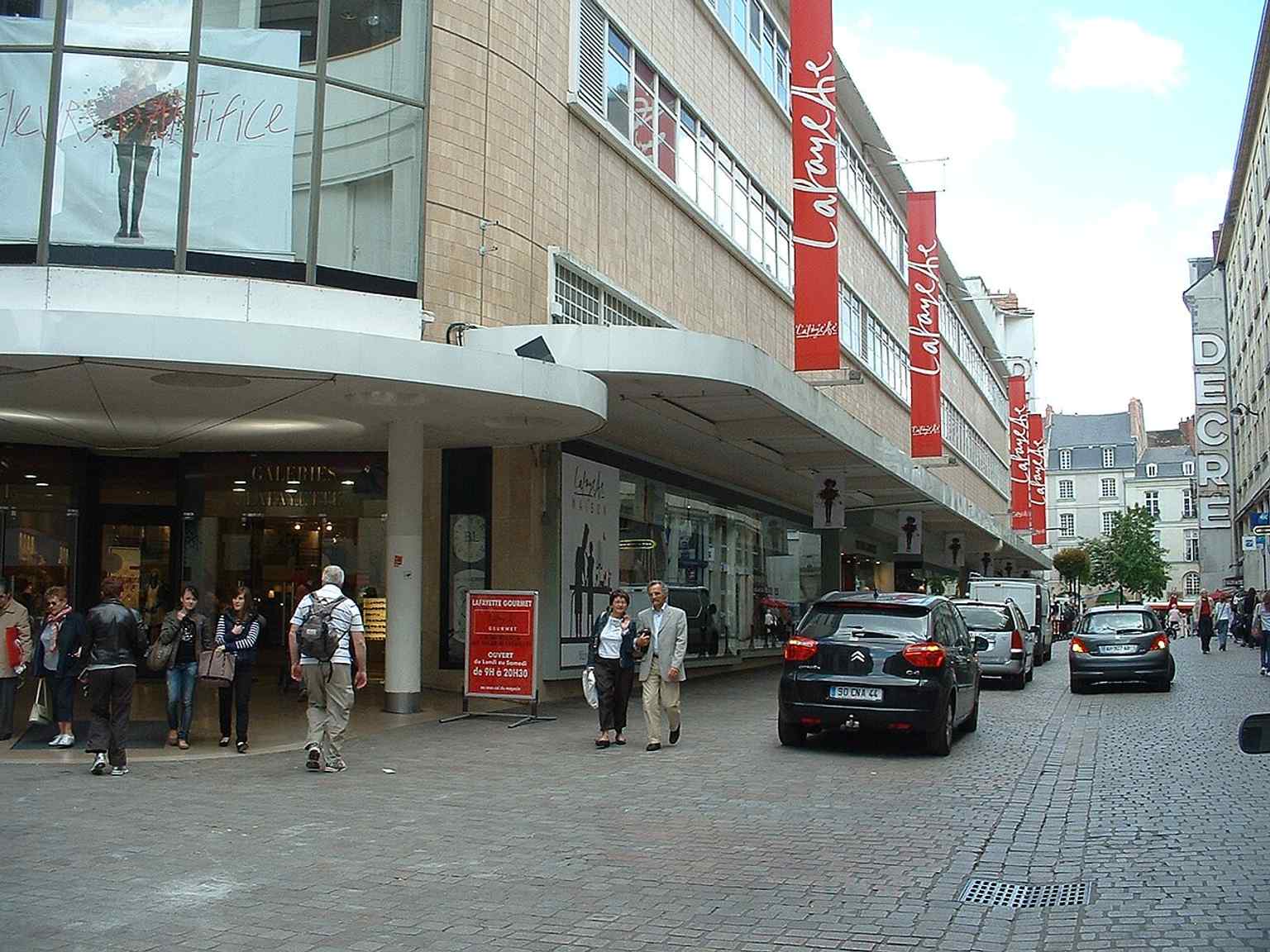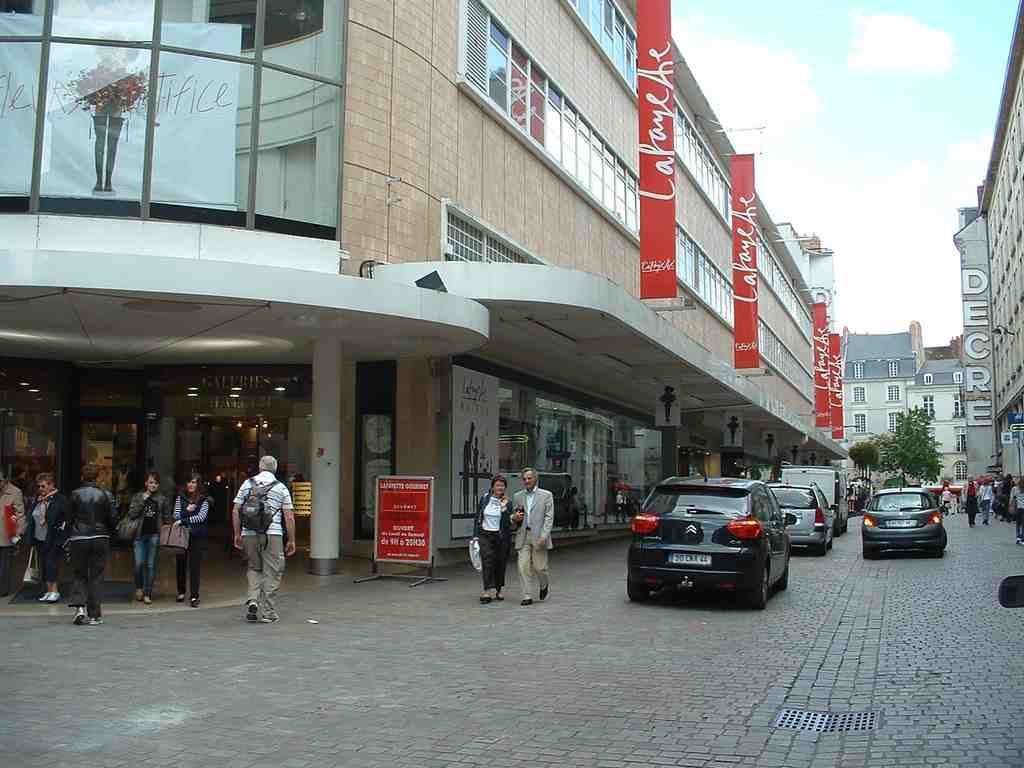
Look for the broad stone-and-glass corner block, rounded at the angle of rue de la Marne and rue du Moulin, with the old Decré name still preserved on the façade.
This corner changed the meaning of shopping in Nantes. Before Decré, trade here followed older rhythms: smaller shops, direct exchange, the pull of port streets and passageways. Then Jules-César Decré arrived in eighteen fifty-seven, a twenty-three-year-old from Jublains in Mayenne with almost nothing except nerve and experience from the Grand Bazar de Motté. His family roots stretched even farther back, to the Aosta Valley in Italy, where earlier generations worked as traveling merchants. You can feel that inheritance here: motion, ambition, the instinct to turn a street corner into a destination.
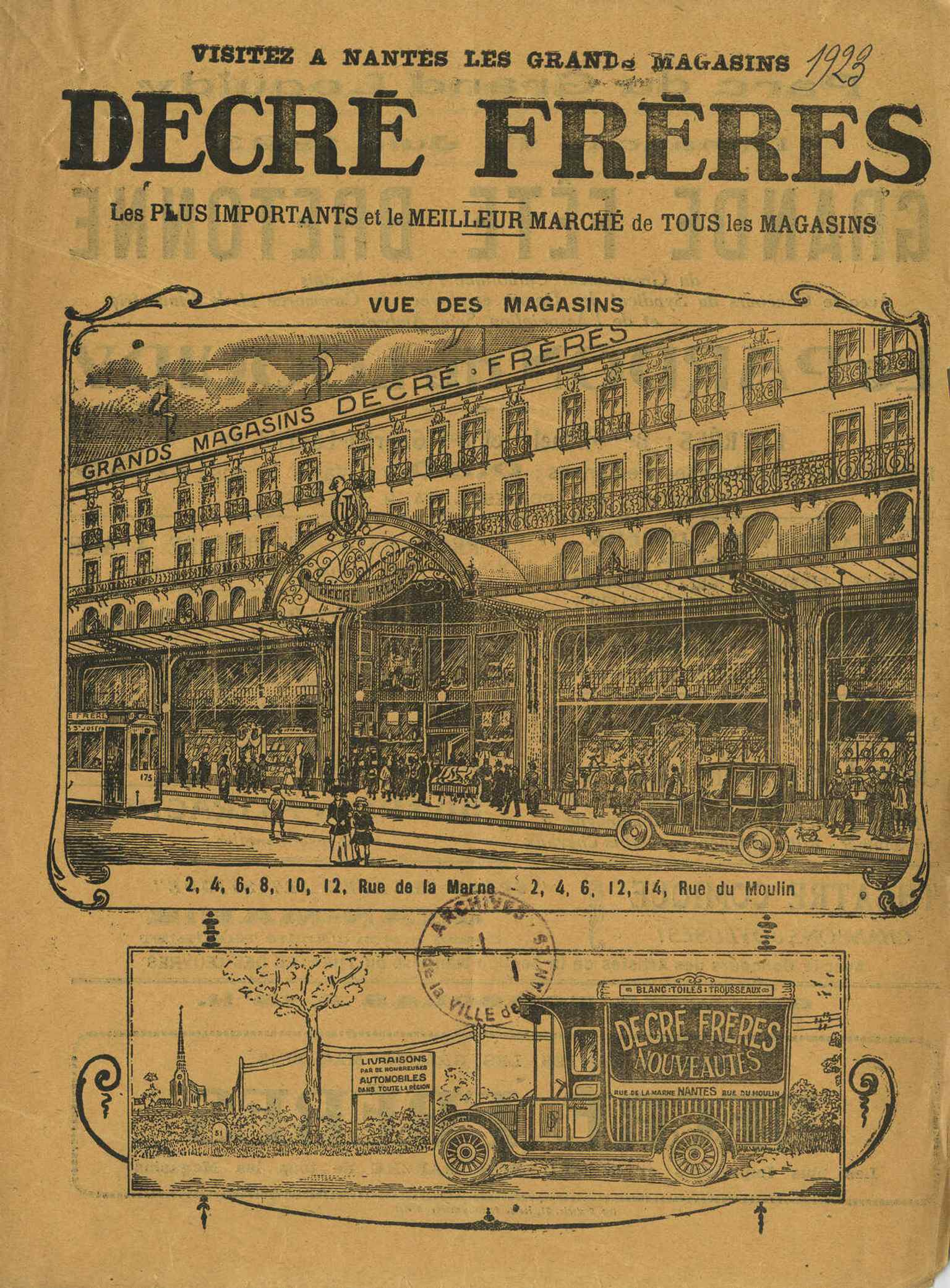
In eighteen sixty-seven, Jules-César opened his own shop right here, at number six on what is now rue de la Marne. Over the years he bought neighboring businesses and kept expanding, until a family store began to behave like a stage set for modern desire. After his wife, Eugénie, died in nineteen oh seven, his sons and then his grandsons carried the business forward. They printed catalogues, offered home delivery, and added a food department. Shopping stopped being only a practical errand. It became display... anticipation... a little performance of longing.
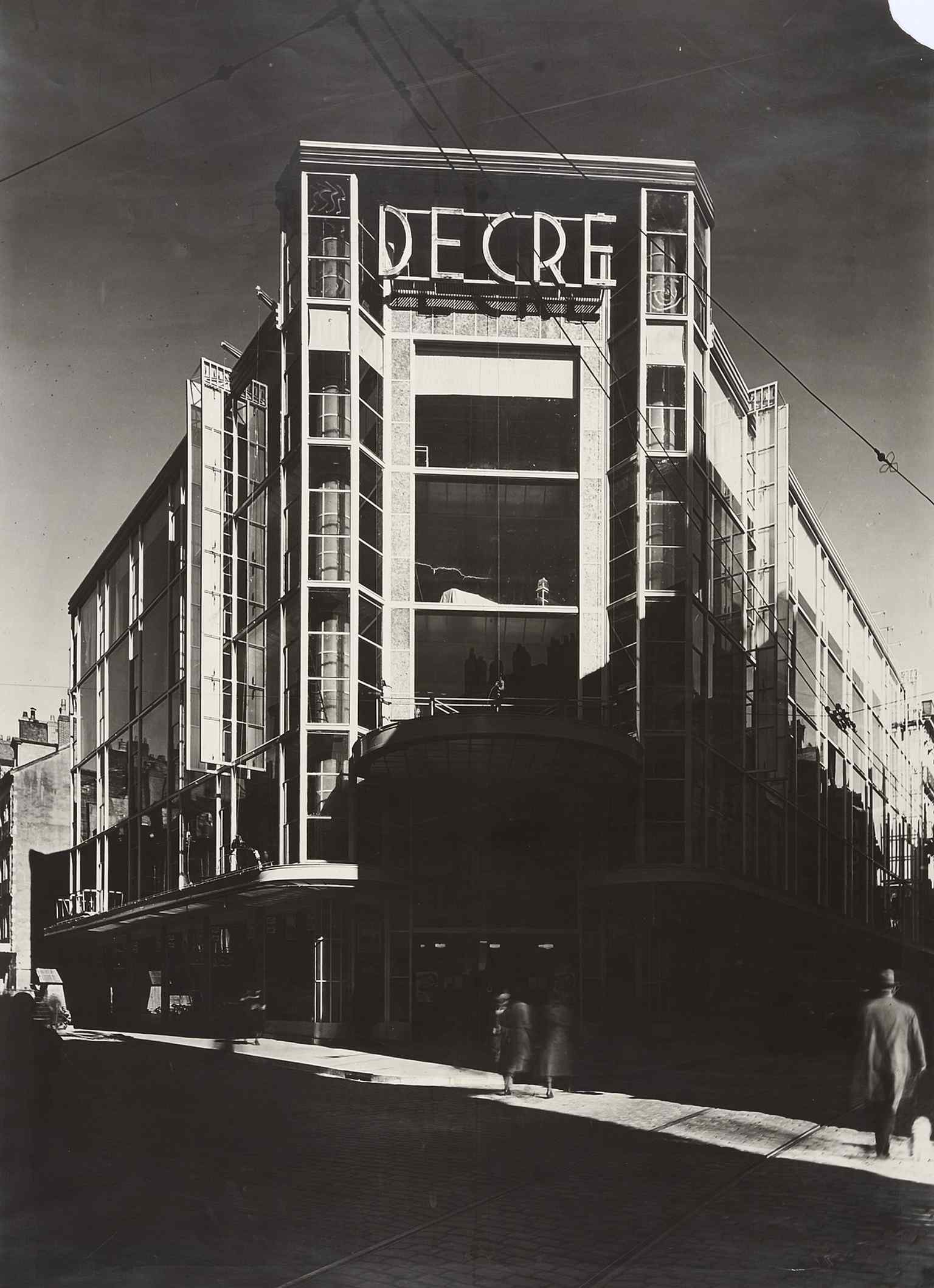
Then came the leap that made Nantes stare. In nineteen thirty-one, the Decré family opened what people called the largest department store in Europe. Seven floors of glass and steel rose here in only ninety-seven days, using prefabricated parts, meaning sections prepared in advance and assembled at astonishing speed. Inside, customers found not just goods but a whole miniature city: two restaurants, a terrace, a hair salon, a cinema with three hundred seats, a puppet theater, a travel agency, even a post office. Architect Henri Sauvage even devised a moving platform on rails to wash the vast glass façade, so the building could remain transparent by day and brilliant after dark.
If you glance at the before-and-after image in the app, you can watch this address reinvent itself from the older Decré Frères storefront into the bold modern landmark Nantes came to know.
But this glittering story carries a scar. During the bombing of the sixteenth of September, nineteen forty-three, the store was destroyed, and the great glass palace fell into a charred metal skeleton. Jean-Philippe Decré never forgot the sound of the squadrons overhead; he compared it to a steam train rushing through a station, followed by a hurricane of steel. That memory turns the whole place inside out. The proud theater of consumption became a wreck almost overnight.
And still, Nantes rebuilt. By nineteen fifty-one, Louis-Marie Charpentier, Charles Friesé, and Victoire Durand-Gasselin had drawn this site back into the city’s life. The family later tried to grow without hollowing out the center, even keeping one suburban hypermarket deliberately smaller so it would not damage downtown trade. It was an honorable choice... and a costly one. Competitors built bigger, the family grip weakened, and by nineteen seventy-nine the business passed to Nouvelles Galeries, then to Galeries Lafayette.
In a moment, we’ll leave this theater of goods and head toward Holy Cross Church, where modern Nantes begins to open into the imaginative world that also shaped Jules Verne. If you want to return later, the venue currently keeps daily hours from noon to three, then from six to ten.