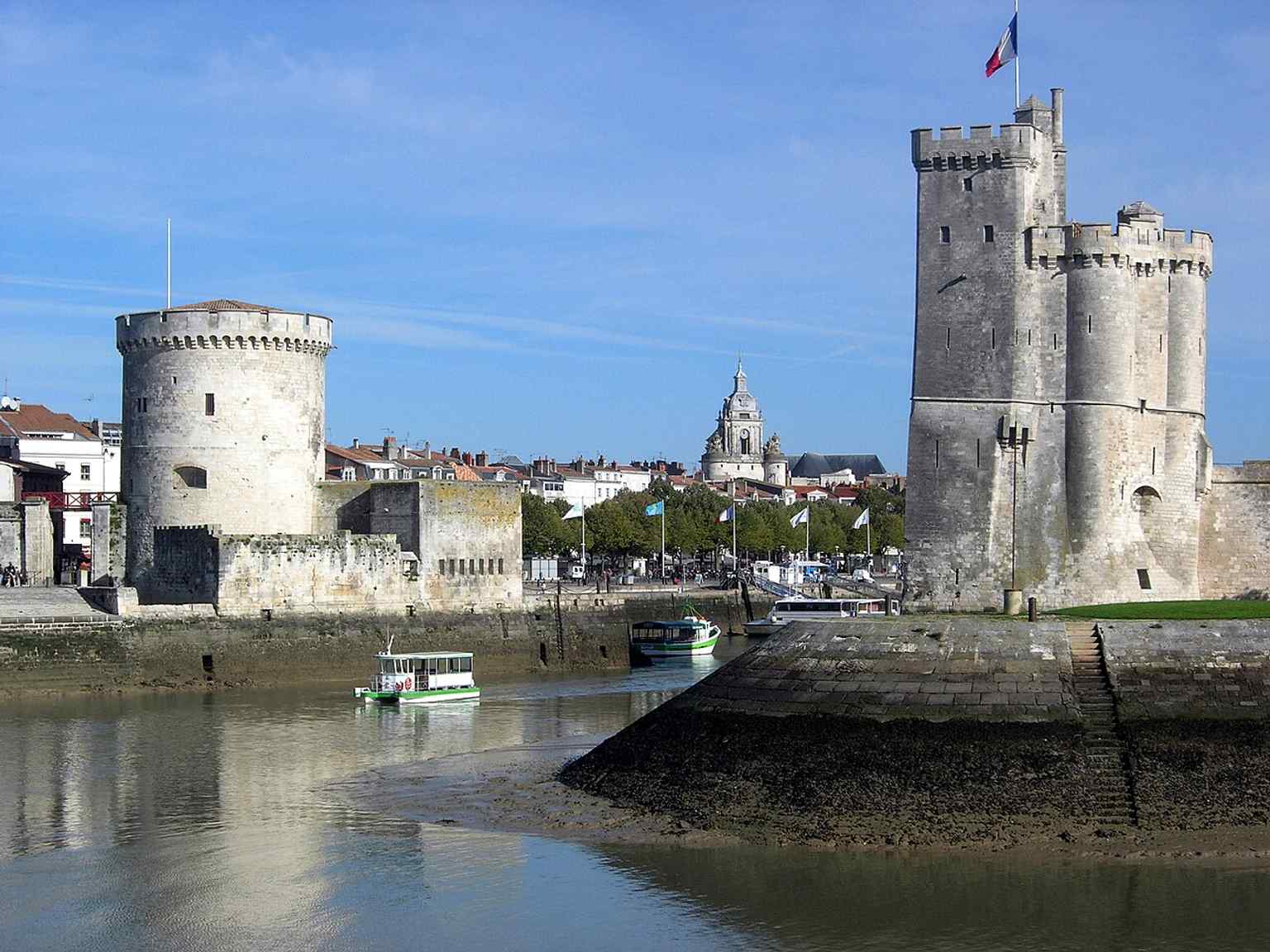
Here, the whole city gathers itself into one basin.
In front of you is La Rochelle’s oldest port, and also its neatest summary: towers for control, water for trade, channels for survival, and now masts, cafés, museum ships, and people admiring the view as if this place had always been this agreeable. It took quite a lot of effort, argument, hunger, mud, and engineering to become agreeable.
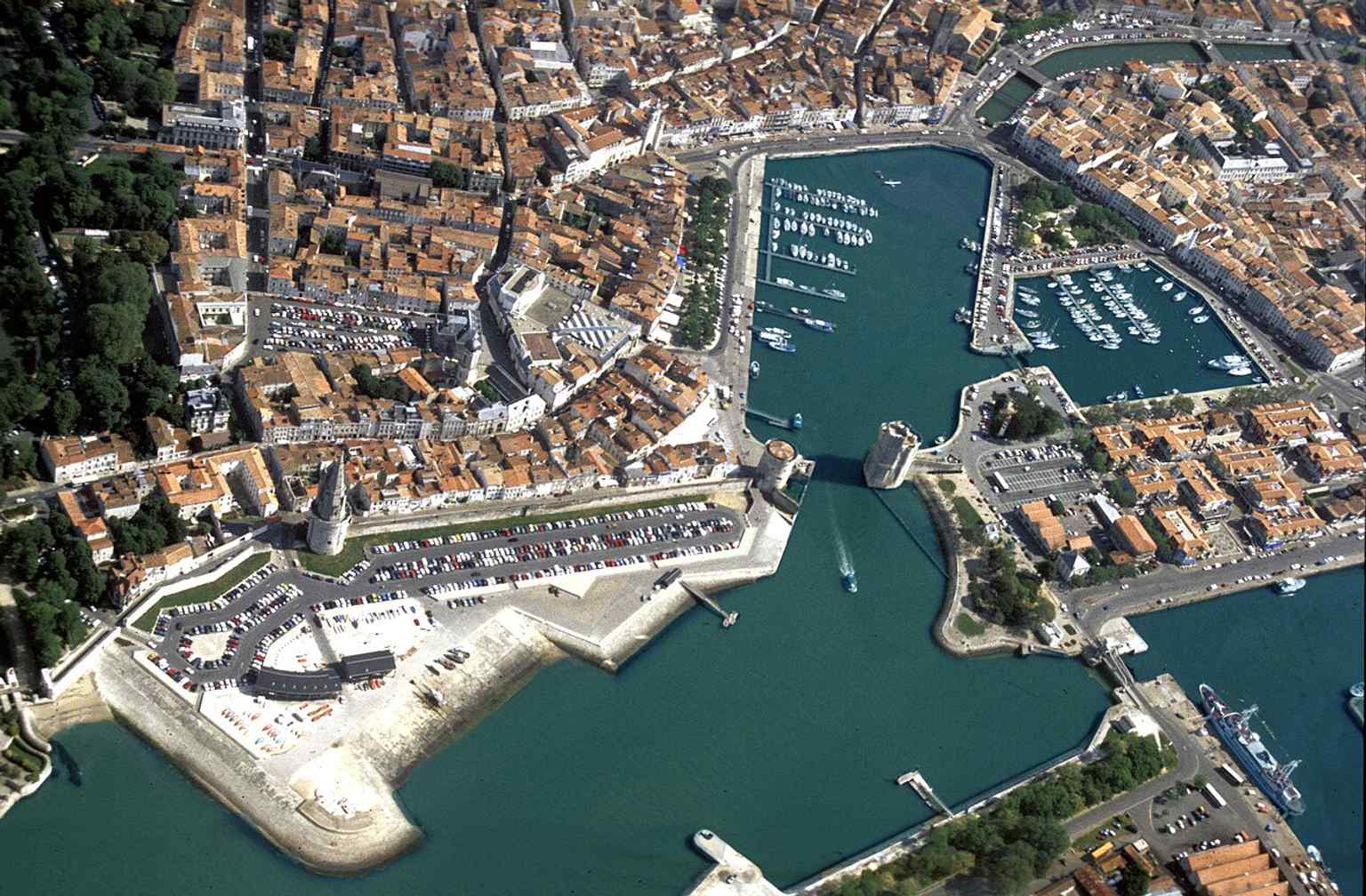
This harbor replaced an earlier port that sat inland near Château Vauclair, on the town’s old ditches. That first harbor proved too shallow, too awkward, and too vulnerable to silting for the growing trade in wine and salt. So from the thirteenth century onward, the people of La Rochelle cut this basin open toward the Atlantic instead. That decision changed everything. Between the twelfth and fourteenth centuries, La Rochelle grew into an important Atlantic port with ties to the Templars, and later one of the great French ports during the Hundred Years’ War and the age of Atlantic expansion.
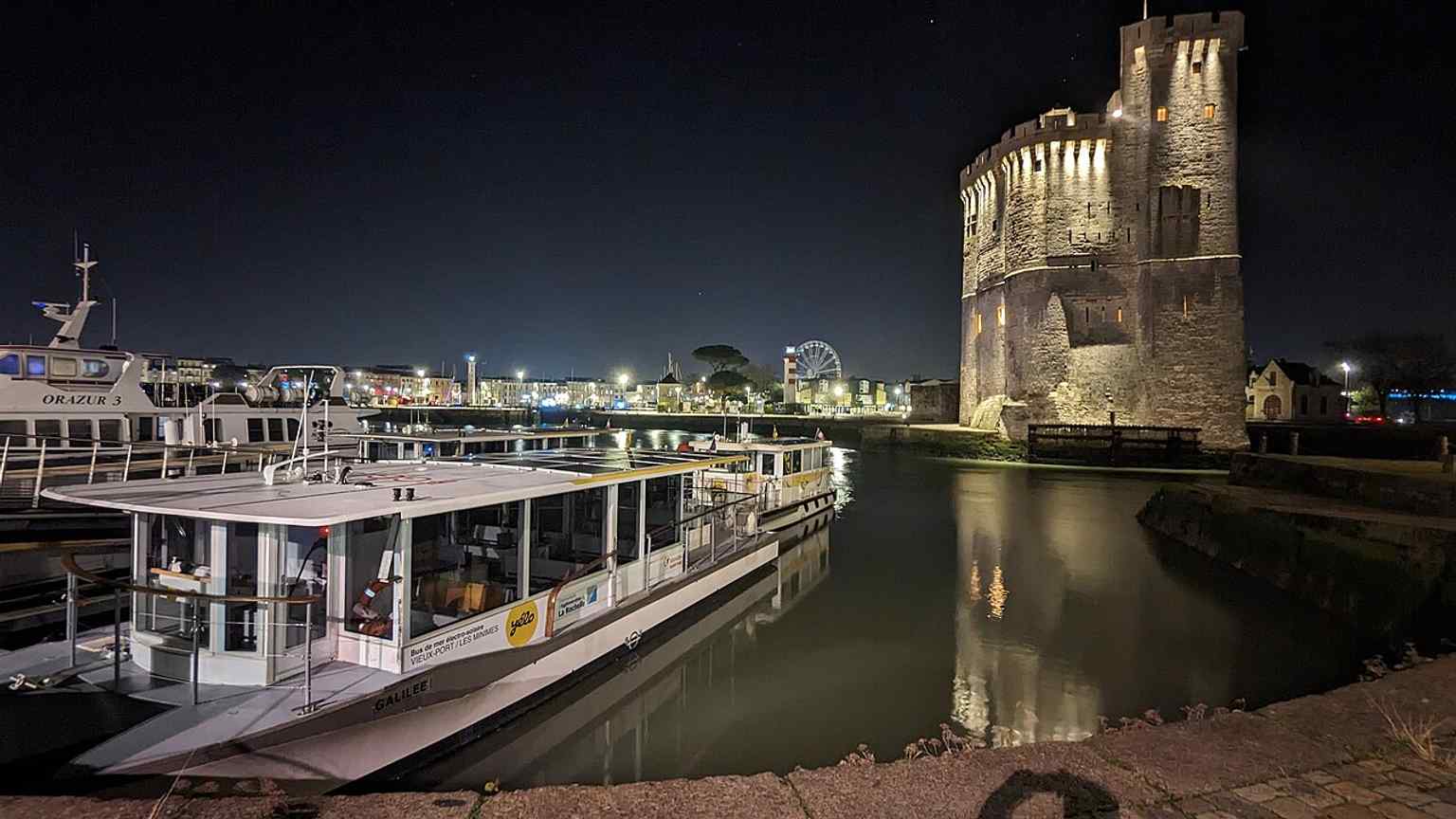
If you glance at your screen, the aerial view shows the harbor’s full cast in one frame: Saint Nicholas Tower, the Chain Tower, and the Lantern Tower, all holding the entrance like a stone handshake. Beautiful, yes... but never innocent. Those towers defended the channel, closed it when needed, and from the Renaissance into the eighteenth century they also held Huguenot prisoners and foreign sailors. This port welcomed the world and inspected it at the gate.
It also carried a darker cargo. In the second half of the eighteenth century, La Rochelle tied much of its economy to the slave trade. In seventeen eighty-four, thirteen of the kingdom’s fifty-two slave-trading expeditions left from here, and every one of those thirteen ships carried enslaved people to the colonies. So when you look across this water, you are looking at elegance and profit, but also at a system that implicated clerks, notaries, laborers, shipyards, and merchants all around the port. The Museum of the New World prepared us for that truth. Here, it lands harder.
The sea made La Rochelle rich, and it repeatedly tried to ruin it. Richelieu’s siege in sixteen twenty-seven and sixteen twenty-eight cut off the harbor and starved the city into surrender. Later, silting nearly did the job more quietly. Around seventeen thirty, Monsieur de Tigné complained that ships of only fifty to sixty tons could barely enter. Cardinal Fleury sent nearly two hundred thousand livres to clear the port... roughly several million euros in modern value, which is one way to say that mud was taken very seriously.
And people kept fighting that mud. In nineteen eighty-nine, Mayor Michel Crépeau even saved the dredger T-D-six from the scrapyard for one symbolic franc, because this harbor’s machinery mattered too. Memory, here, includes the tools.
Today the Vieux-Port holds about three hundred twenty berths and belongs to a much larger marina system stretching to Les Minimes. Fishing boats gave way to pleasure craft, museum vessels, and racing yachts. Off toward the old fishing basin, the trawler Manuel Joël tells a more intimate story: built in nineteen fifty-four in La Rochelle for Mister Tarand, crewed by six men, she worked the waters south and west of Ireland and later the Bay of Biscay before restoration gave her a second life.
And that may be the real genius of this port. It never became just one thing. Fortress, market, prison gate, slaving port, fishing harbor, yacht basin, museum backdrop... all of it remains legible at once.
Ports display wealth in public. The next stop shows how people turned that wealth into a face they could live behind. Head on toward the Henri the Second House, about seven minutes inland.