
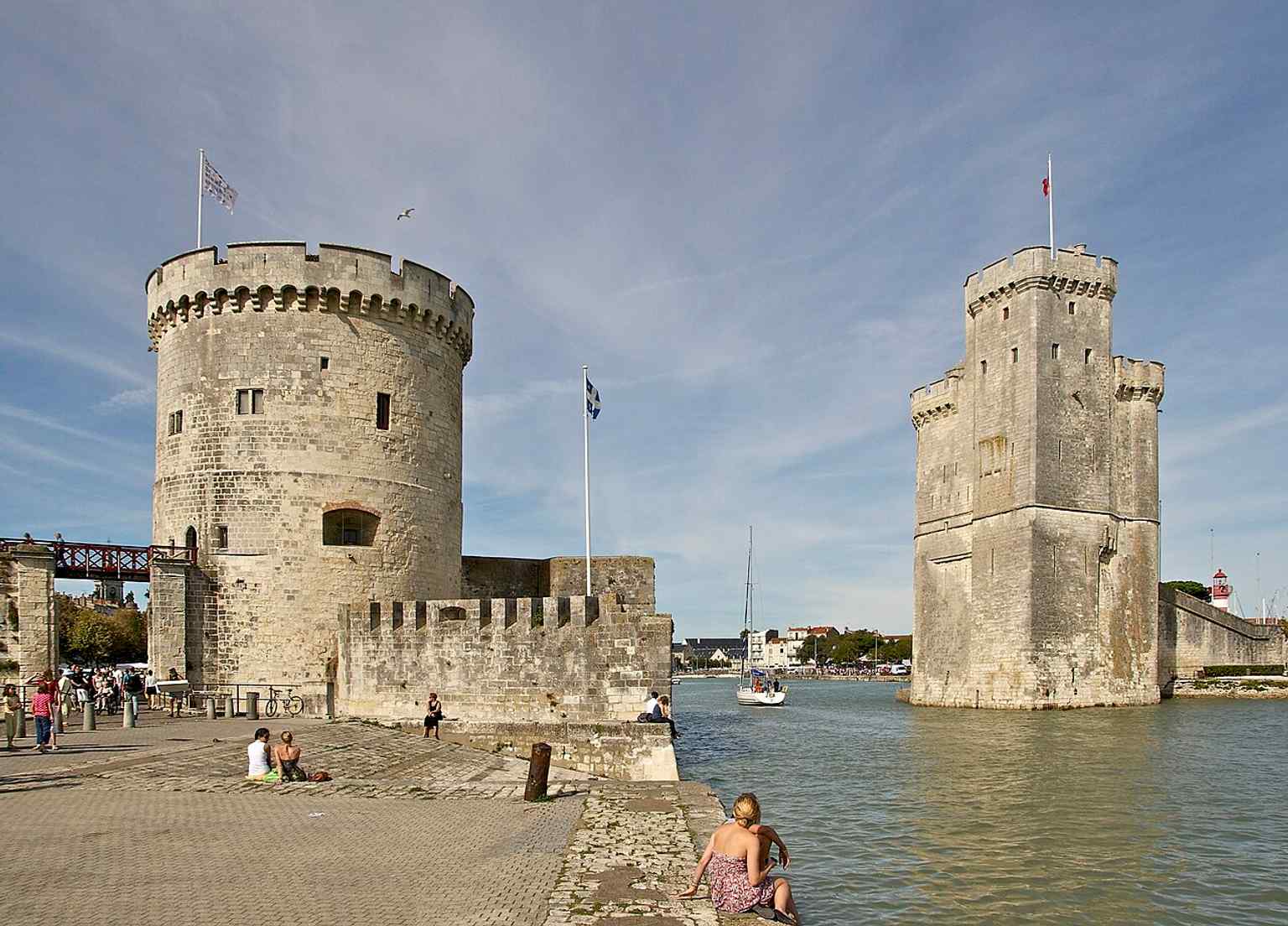
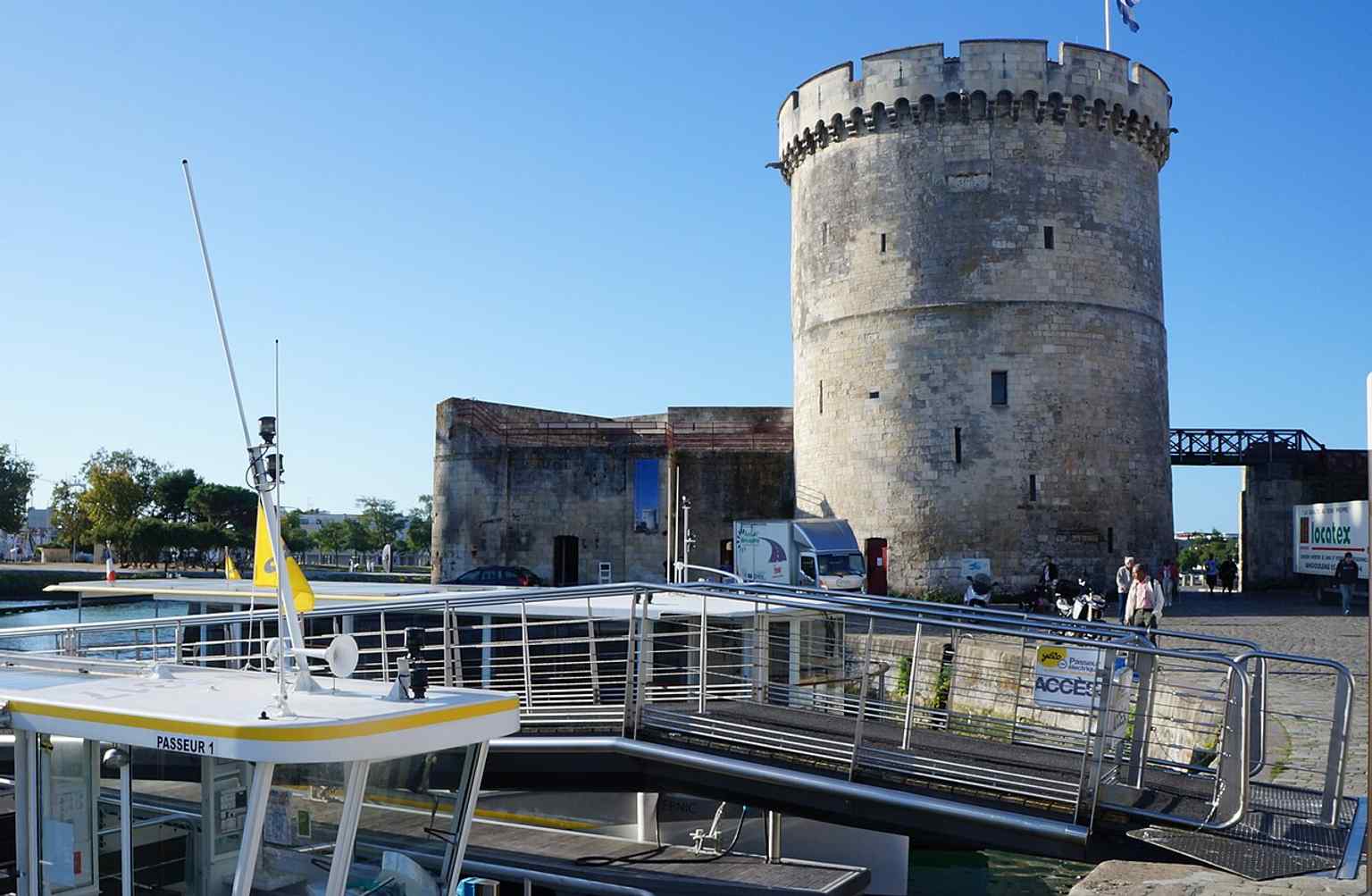
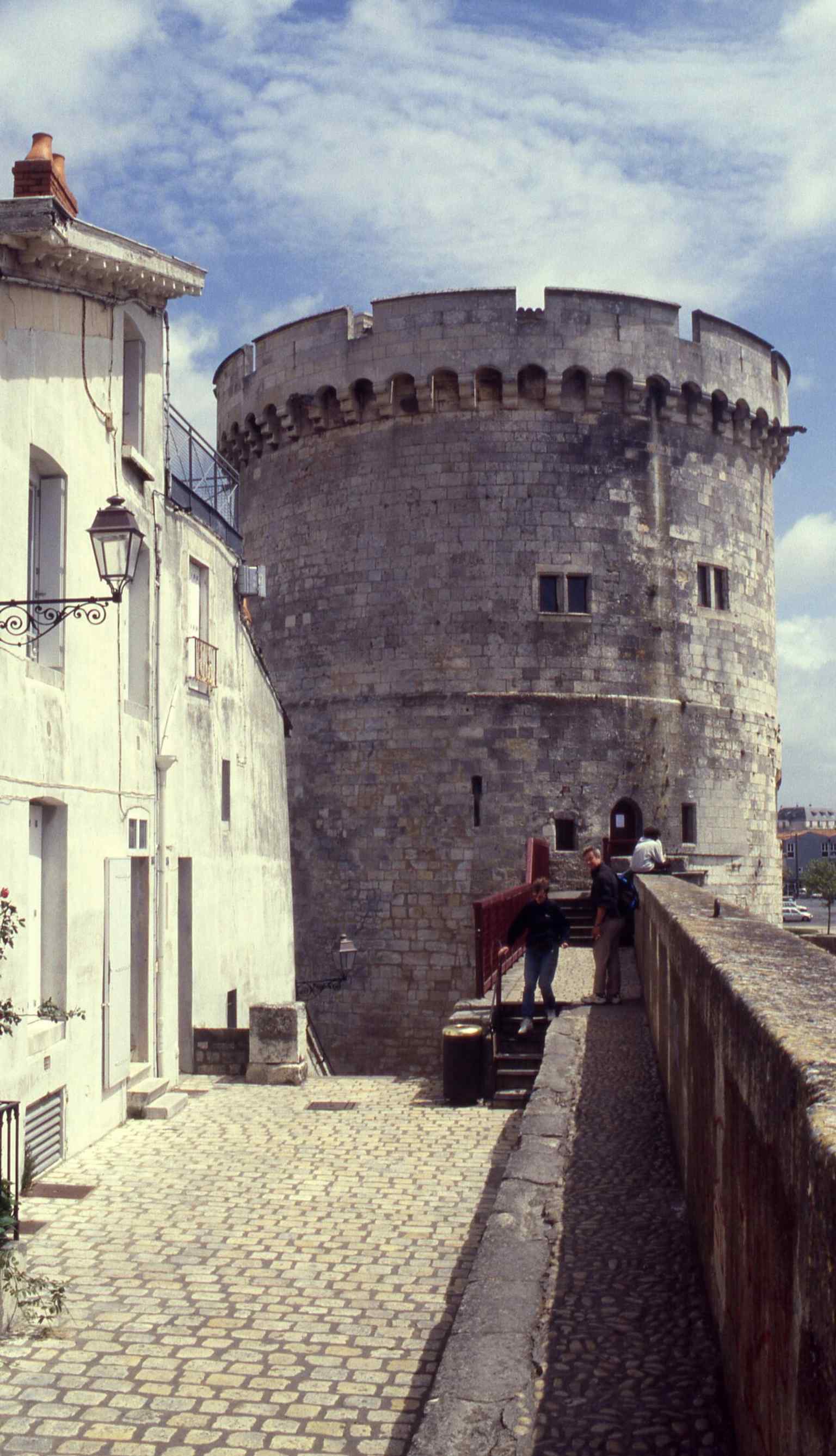
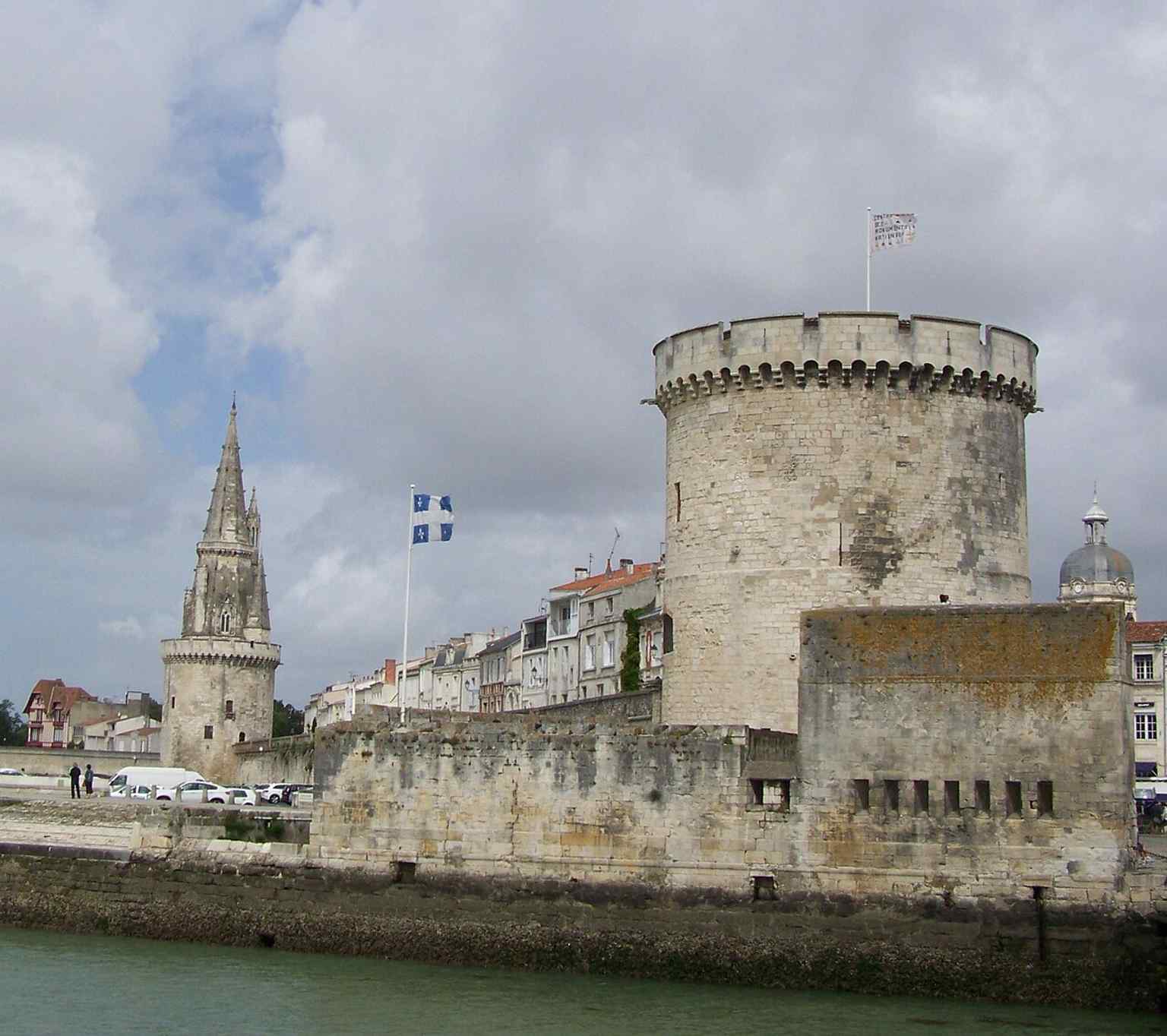
On your right stands a broad round tower of pale stone, thick and muscular, with restored machicolations, or defensive stone overhangs, at the top and a strangely clipped roofline that hints it once rose higher.
This is the Chain Tower, the harbor’s old bouncer. Together with Saint-Nicolas across the water, it formed the grand gate of La Rochelle’s Vieux-Port. And not metaphorically, either: a heavy iron chain stretched from this side to the other, and when the city wanted the port closed, the sea stopped being a highway and became a locked door. Nothing says confidence quite like putting a barrier across the water.
Here’s the detail most people miss. There were actually two Chain Towers here. The smaller one housed the capstan, a powerful winch used to haul the chain tight. The larger one, the tower you’re looking at, held the captain, his family, and the garrison. A two-level gallery linked the two. So this wasn’t just a tower. It was a little machine for controlling who entered, who paid, and who waited outside.
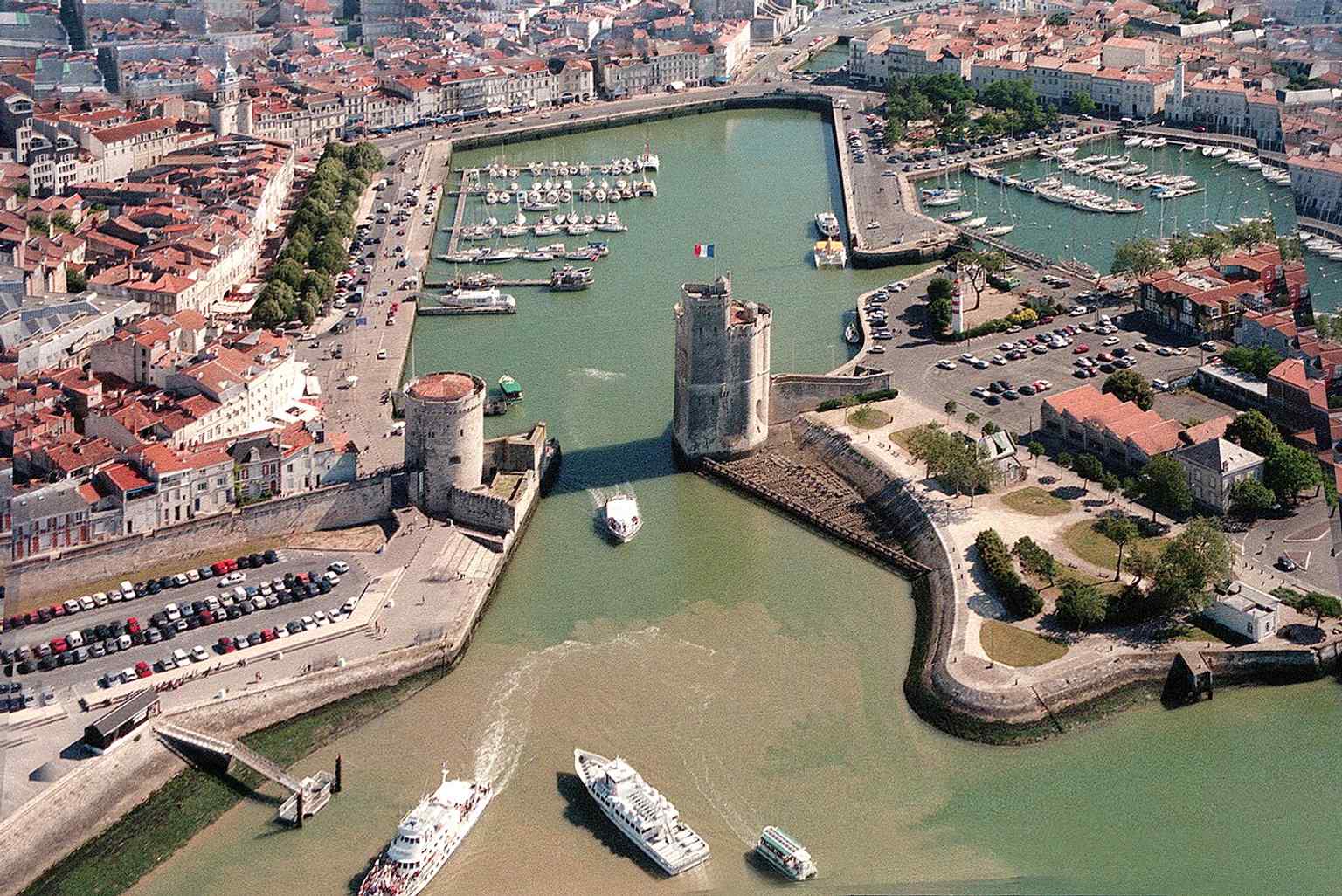
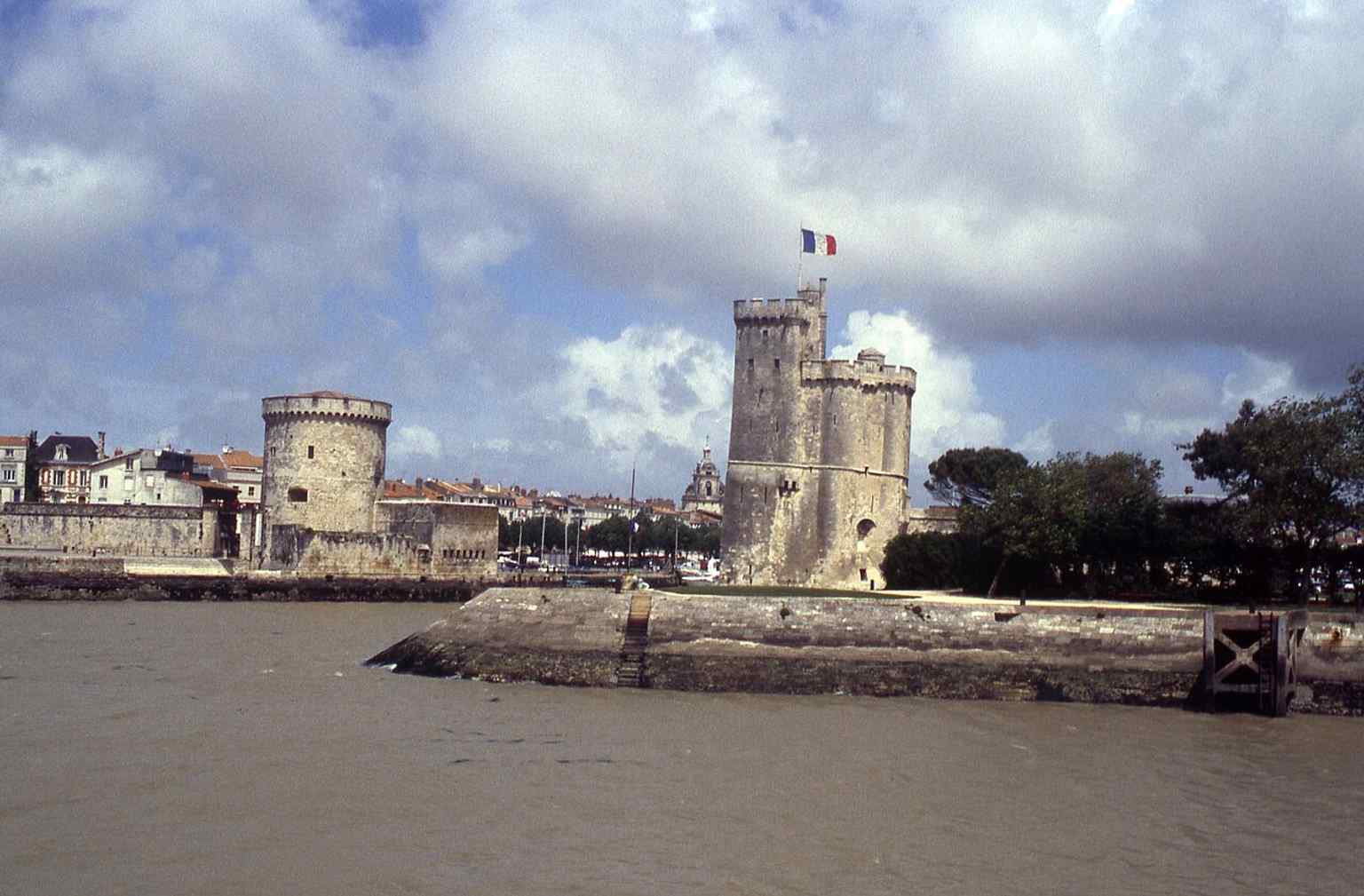
If you glance at the image on your screen showing this tower with Saint-Nicolas, you can see how the trick worked. Between those two masses of stone, La Rochelle could turn commerce on or off.
That power impressed kings. In fourteen seventy-two, Louis the Eleventh climbed up here, looked out over the city’s wealth, and scratched words into a windowpane with the diamond on his ring: “Oh, the great folly.” He meant his own political mistake in letting this valuable port slip into his brother’s hands. It is a wonderfully royal scene: a king standing in a tower, staring at prosperity, and realizing he had blundered.
The men posted here took the job very seriously because the city made sure they did. The mayor appointed the captain every year. He swore loyalty in person and had to live here with his family, without sleeping elsewhere at night, so he could answer any threat at once. He also collected port dues and managed the chain. So yes, the harbor gate came with paperwork. Medieval cities loved a receipt.
This tower also kept sharper memories. During the Protestant stronghold years, La Rochelle stored weapons here and even held part of the prize cargo seized by Huguenot privateers. The embalmed body of François de Coligny, seigneur d’Andelot, rested here for years after his death, turning the tower into a chamber of mourning as well as defense.
Then came the blast that changed its silhouette. In sixteen fifty-one, during the Fronde, royal troops attacked the harbor towers. As defenders fled toward Saint-Nicolas, they ignited the powder inside. The explosion tore off the roof, smashed the upper works, and left this place open to the sky for nearly three centuries. That blunt top you see now is part restoration, part scar.
One more thing to look for, low and easy to overlook: the original chain itself was found in the harbor in the nineteenth century, and part of it can still be seen at the foot of the tower. Stone tells the big story here, but iron delivers the punchline.
If you check the aerial image in the app, the full composition becomes clear: Lantern Tower behind, Saint-Nicolas opposite, and this tower gripping the mouth of the port. That wider view matters, because the next stop is the harbor itself, where all this authority had to face the messy business of ships, trade, ambition, and departure.
If you want to come back inside later, the tower is generally open daily from ten to twelve forty-five, then from two to six-thirty.






.JPG)
