
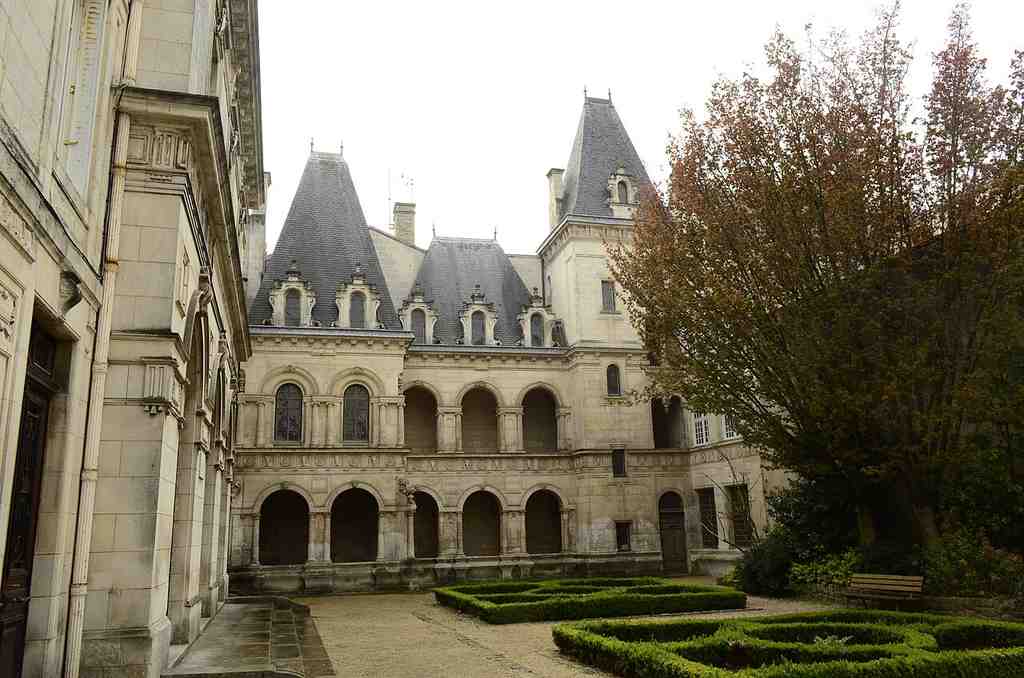
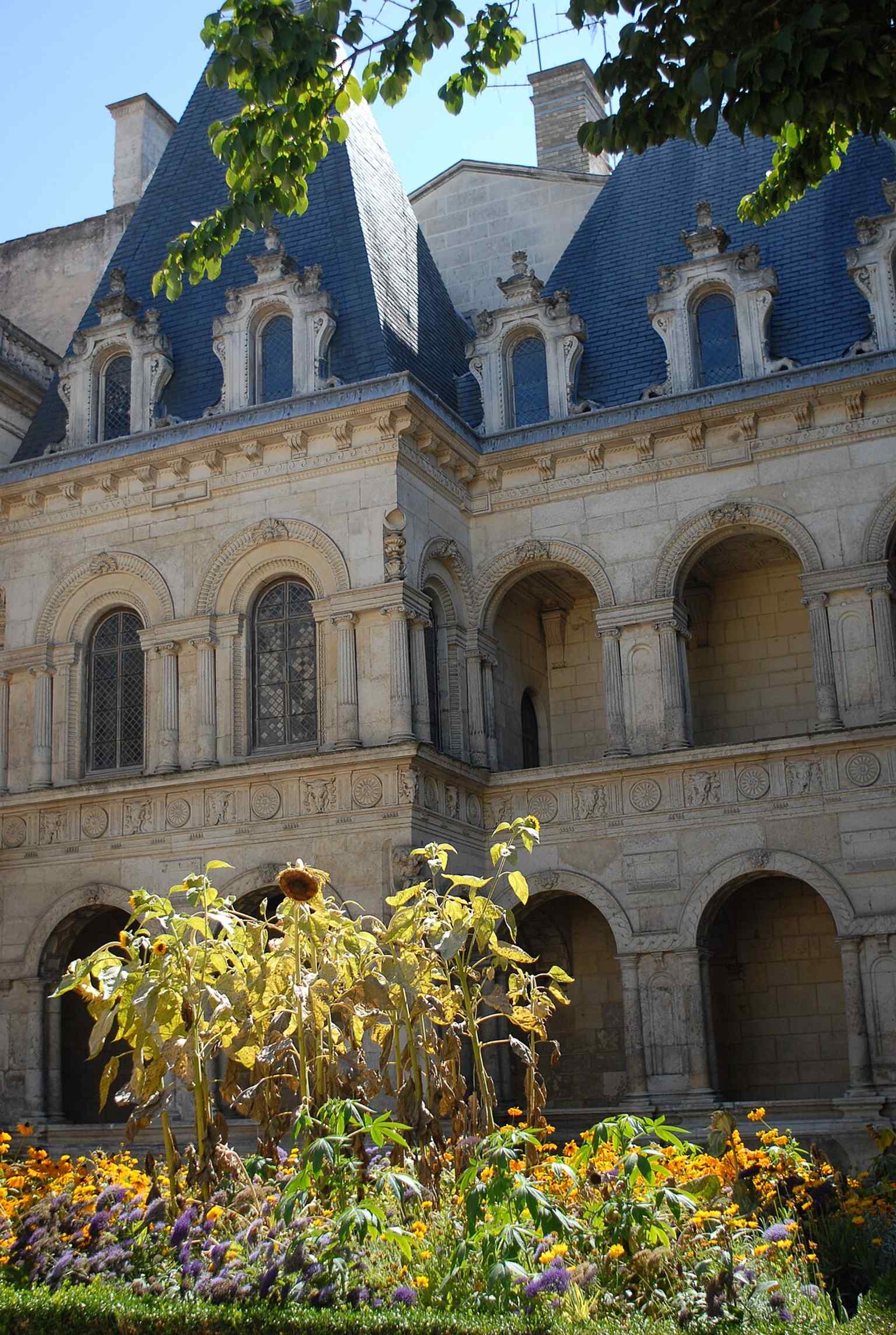
On your right, look for a pale stone Renaissance facade with stacked arcaded galleries, two pavilions of uneven height, and little grimacing diablotins carved into the ornament.
This is the Henri Two House... except it is also the Hôtel Pontard, and also the House of Diane de Poitiers. Which is a very La Rochelle trick: give one building three identities and let everyone argue politely for centuries.
Hugues Pontard, the king’s prosecutor, raised it around fifteen fifty-five, probably with plans by Léonard de La Réau, on the site of an older residence linked to Jean Chaudrier. Pontard wanted status written in stone. And he got it... sort of. What you see is famously less a deep, comfortable home than a theatrical front: two galleries with barely any depth, arranged to fool the eye into reading noble grandeur. A trompe-l’oeil, in plain English, is architecture playing dress-up.
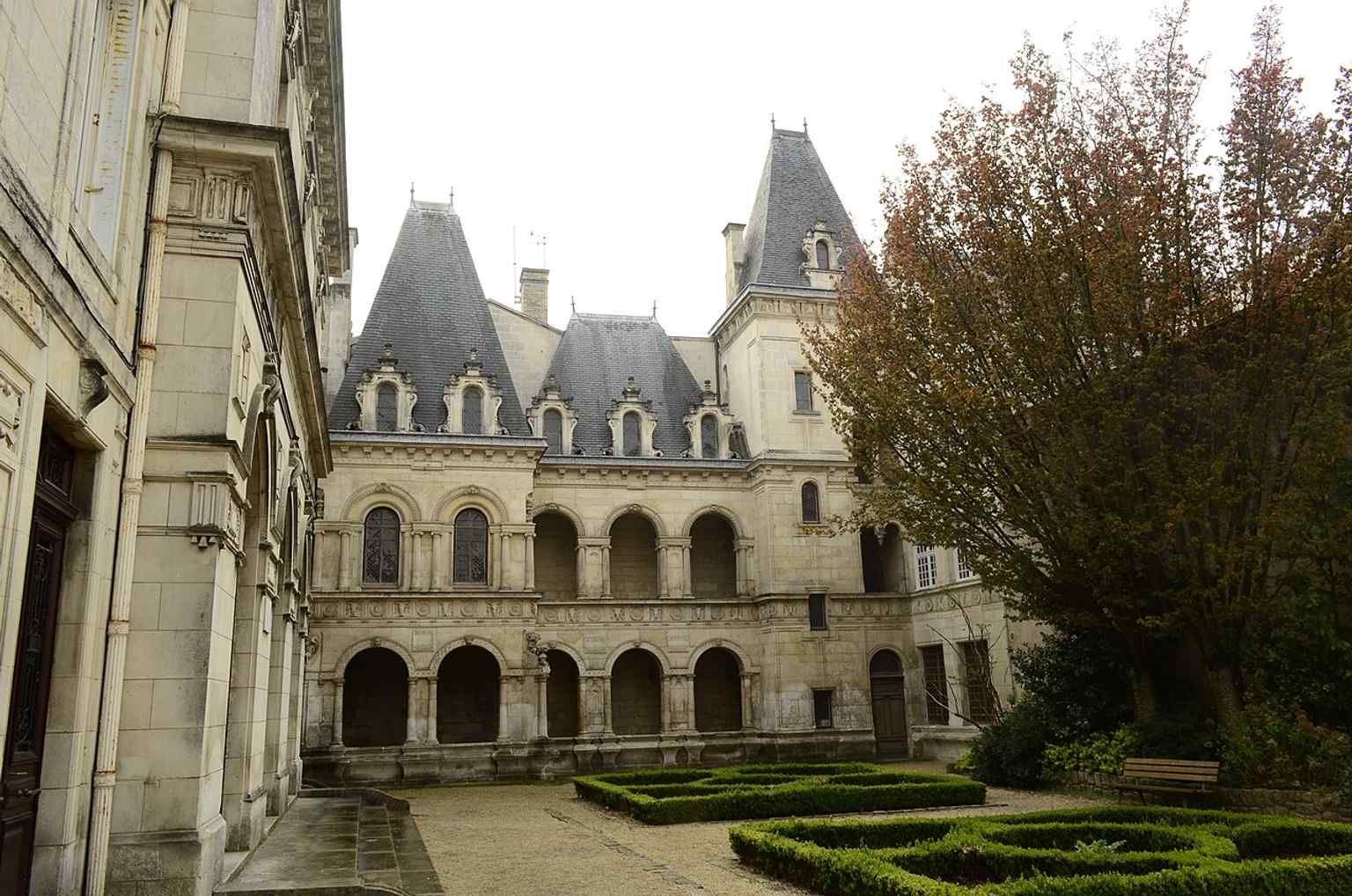
If you glance at the image in the app, you can really see that stage-set quality in the facade’s flat elegance. It performs certainty. The family behind it had rather less. Before this house even rose, Pontard had already spent time in the Conciergerie in Paris in fifteen forty-five and fifteen forty-six for protecting people accused of heresy. In other words, the fault line we traced at the Protestant temple had already reached his doorstep.
Then his son François Pontard pushed things further. At just twenty-seven, he became mayor in fifteen sixty-seven, and by January fifteen sixty-eight he helped pull La Rochelle into the Protestant camp, welcoming Condé, Jeanne d’Albret, and the young Henri of Navarre. After the Peace of Longjumeau, the governor banished him. So yes... the handsome facade concealed a family balancing ambition, belief, and danger.
Later this address turned inn, finance office, city seat, history collection, and since two thousand thirteen, the Centre Intermondes for contemporary artists from around the world. If you check the front view on your screen, the ornament almost looks too polished to trust. That may be the point.
From here, we head toward the Musée des Beaux-Arts, where taste and memory get arranged a little more officially. And conveniently, this exterior is accessible at any hour.






