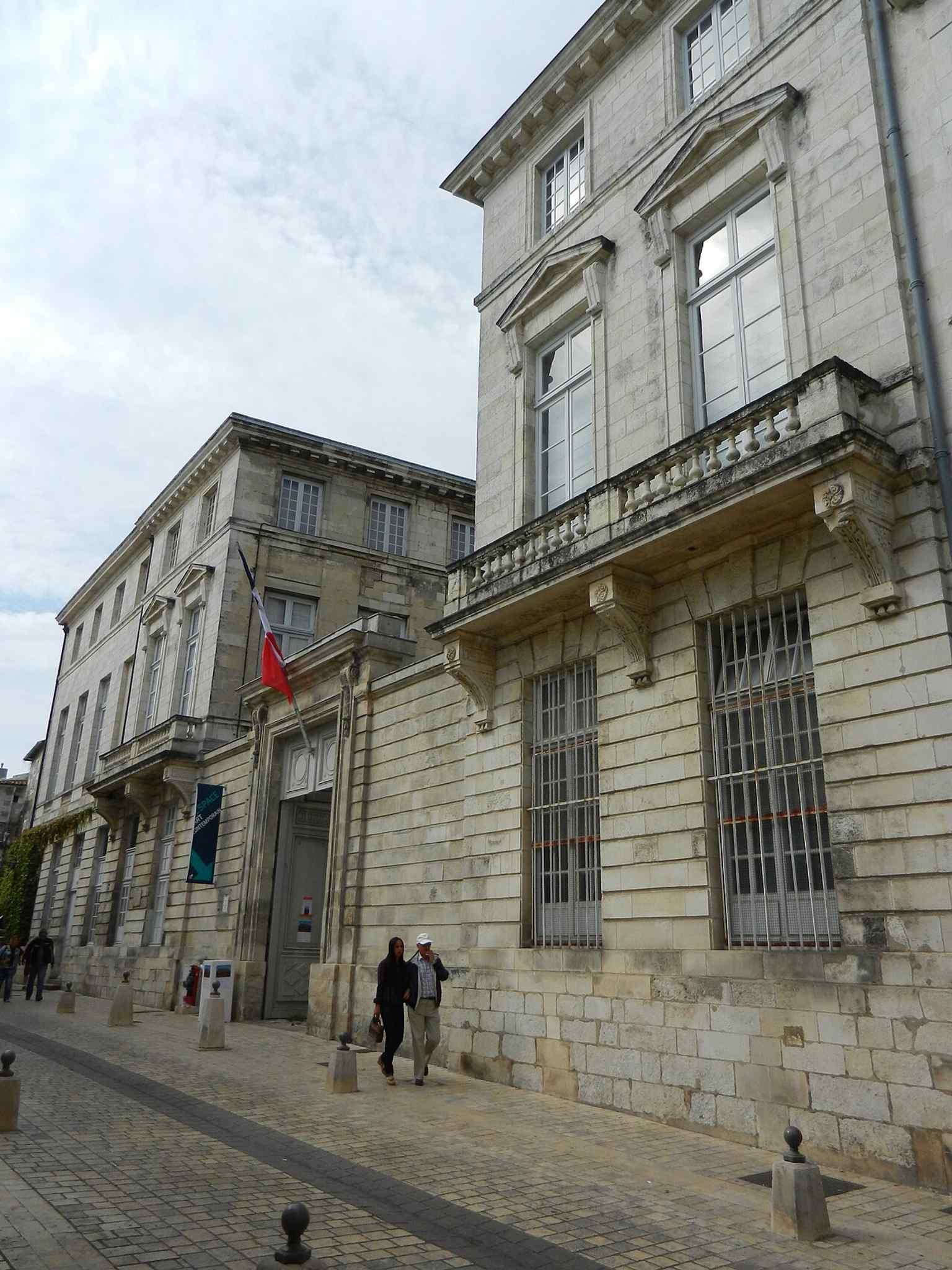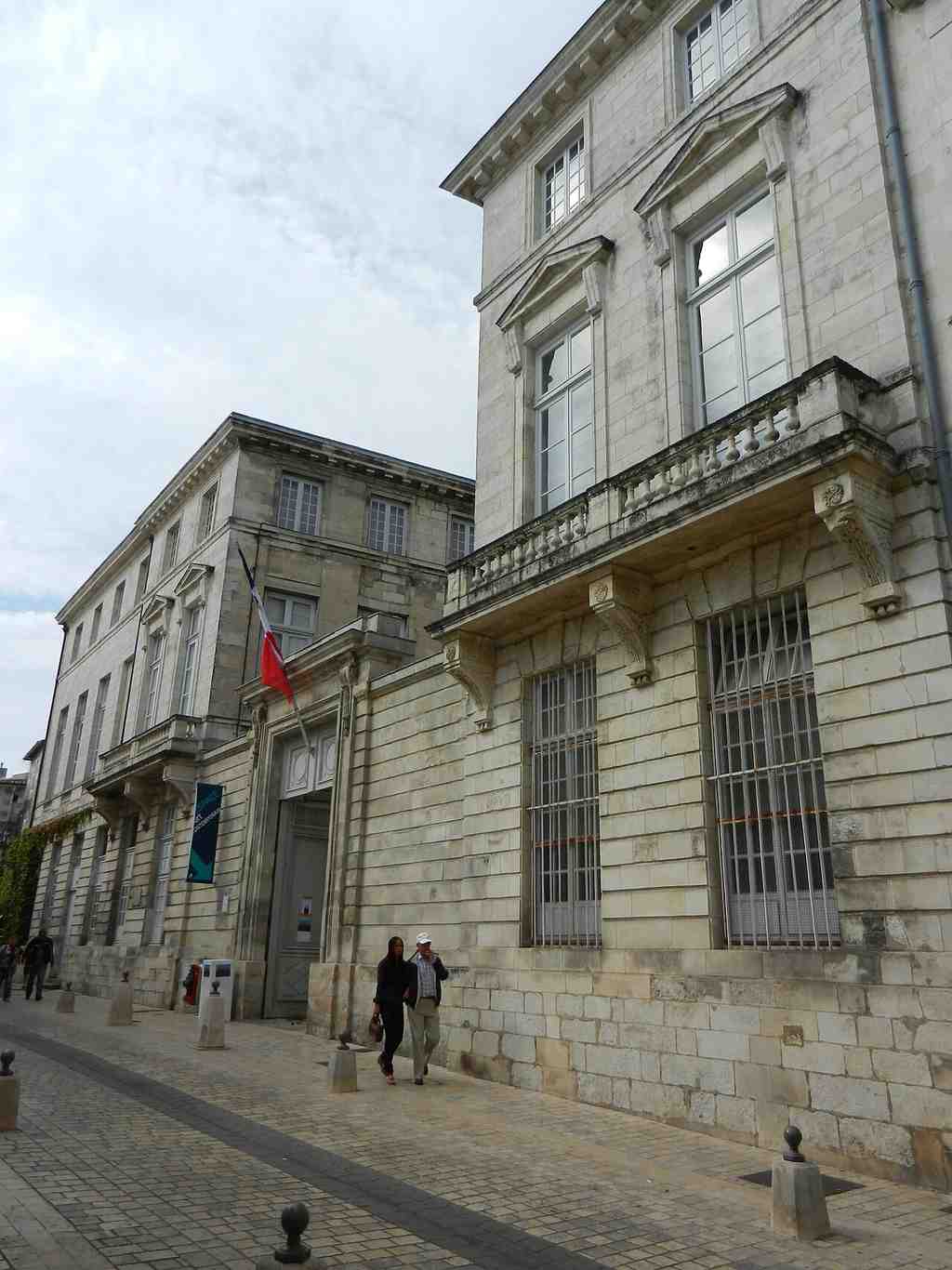
On your left, look for a pale stone, rectangular palace front with tall regular windows and a formal arched portal framed by classical pilasters.
This building is a fine example of a city refusing to waste a good address. It began as a grand private house in the early seventeenth century. In sixteen hundred, Paul Legoux, treasurer to the House of Navarre, bought the property. Before that, an earlier residence here, called the Grand-Logis or Palais-Royal, welcomed heavyweight guests: Sully in sixteen oh four, Condé in sixteen fifteen, Louis the Thirteenth in sixteen twenty-eight, and Anne of Austria in sixteen thirty-two. People described it as the finest, most comfortable, and best-aired house in La Rochelle... which proves real-estate bragging is an old profession.
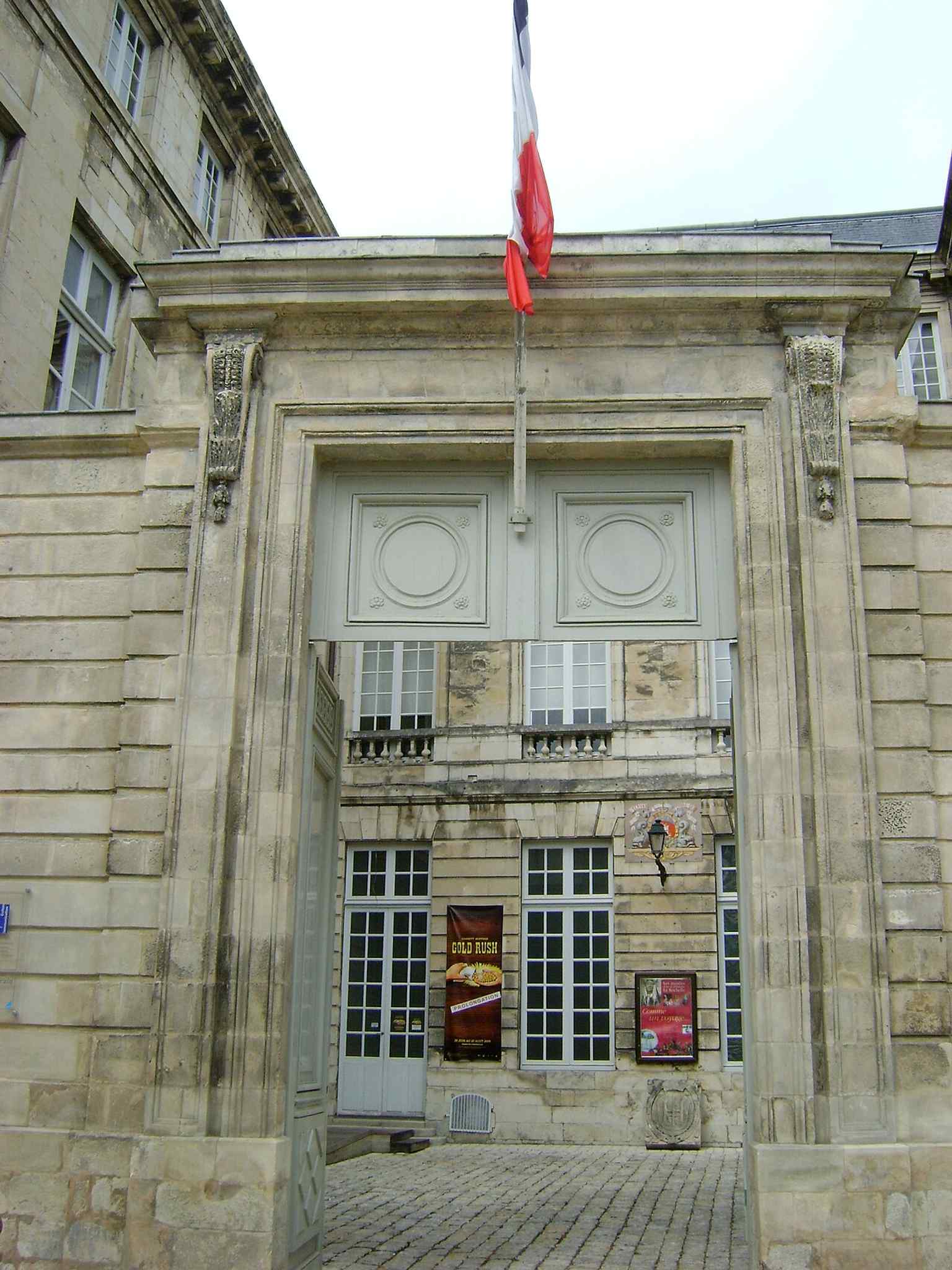
Then the building changed loyalties. In sixteen seventy-three it became a seminary, a school for training clergy. In sixteen ninety-six, Bishop Henri de Laval installed the bishopric here, making it the bishop’s official residence. Later, between seventeen sixty-nine and seventeen seventy-four, François-Joseph-Emmanuel de Crussol d’Uzès ordered a full rebuild. Architect Gilles Nassivet drew the plans, and François Chapuy carried them out. What you see now comes from that moment: a neoclassical palace, meaning calm, balanced, and very sure of itself. If you glance at the image on your screen, the entrance makes that point nicely
The Revolution changed the owner again. The city took over, and in seventeen ninety-five the municipal library moved in. Then, in eighteen forty-five, the fine arts museum settled on the second floor above the books. That layering matters. This place did not simply become a museum; it inherited earlier roles of power, learning, and public order.
And La Rochelle kept editing the story. The library left in nineteen ninety-eight for the Michel-Crépeau media library. Contemporary art moved into the space in nineteen ninety-nine. Stone fragments from vanished buildings ended up here too, in a collection of carved stone fragments, so even lost architecture found a second life indoors.
The museum itself began early, with local citizens. In eighteen forty-one, the Société des Amis des Arts started buying works; by eighteen forty-four, the museum existed. Its first curators, the painters Édouard Pinel and Tibulle Mary Furcy de Lavault, shaped a collection that felt unmistakably Rochelais. More recently, from two thousand eight to two thousand eighteen, community groups helped choose and arrange displays themselves. A small museum, perhaps, but not a timid one.
Since a structural alert in two thousand eighteen, the building has been under major repair and rethinking. Still, the museum never really went silent. It kept acquiring works and lending them to places like the Louvre and museums farther afield in Europe.
That may be the real lesson here: a city curates itself the way this building changed hands, room by room, purpose by purpose. Next, we go looking for something older than all this careful arrangement... Château Vauclair, where La Rochelle’s deeper beginnings still murmur underneath the later city.