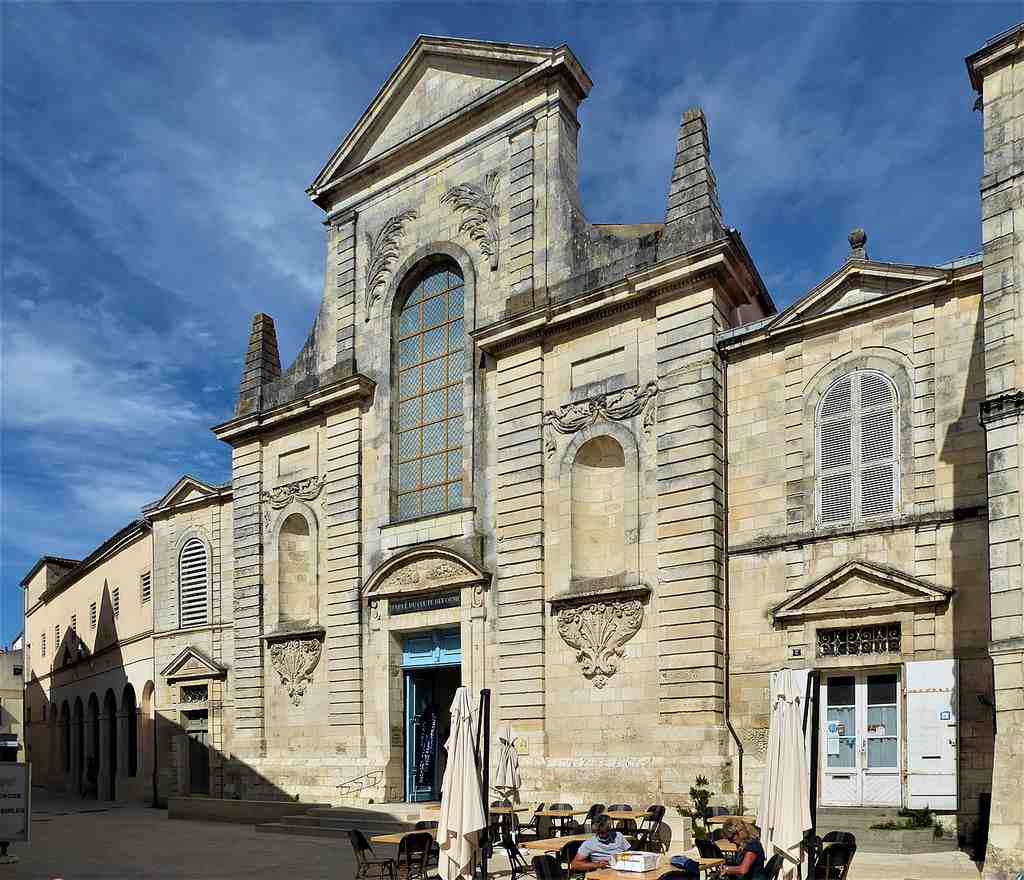
On your right, look for a pale stone facade with a central arched doorway, a tall gabled front, and two empty niches set beneath a carved garland.
This place carries one of La Rochelle’s sharpest reversals. La Rochelle’s Protestant community was not a tiny fringe group meeting in borrowed corners. It was numerous, organized, and deeply woven into the city’s public life. By fifteen forty-six, the Reformation had already taken hold here, and in fifteen sixty-one Protestants opened La Rochelle’s first public worship hall on this very street.
That first room filled fast. Another hall, Gargoulleau, had to share the load, and between fifteen sixty-three and fifteen sixty-six it recorded one thousand six hundred and fifty-nine baptisms. That is not a footnote. That is a city changing its mind in public. La Rochelle became one of the major Protestant strongholds of France, and when the Edict of Nantes recognized certain Protestant rights in fifteen ninety-eight, the city stood as a protected stronghold, with several places of worship, including the Grand Temple, dedicated in sixteen oh three.
If Saint-Sauveur hinted at the Catholic answer to all this, here you are standing in the middle of the other half of the struggle.
After the blockade and surrender of sixteen twenty-eight, royal authorities moved quickly. The site went to Catholic orders, and Father Joseph celebrated mass here in front of the king. The shift was not abstract. Madame de Rohan, one of the great Protestant figures of the city, and her daughter Anne were taken away under guard to Niort and kept there until June of sixteen twenty-nine. A building changed hands, and so did lives.
What you see now mostly comes from the Catholic rebuilding that followed. The Recollect friars settled here, and in sixteen ninety-one they added a cloister and church. The facade still speaks the language of the Counter-Reformation, the Catholic effort to win hearts back after Protestant expansion: decorative palms, rich stone brackets, and those two niches, now empty, as if the statues stepped out and never returned. If you glance at the image on your screen, the facade’s formal, almost theatrical balance is easier to read there.
Then came another blow. In sixteen eighty-five, Louis the Fourteenth revoked the Edict of Nantes, and Protestants lost their legal places of worship. Many Huguenots, French Protestants, left La Rochelle for Holland, Germany, England, and the Atlantic world. Some eventually helped found New Rochelle near New York. By eighteen oh two, only about a thousand Protestants remained in the city.
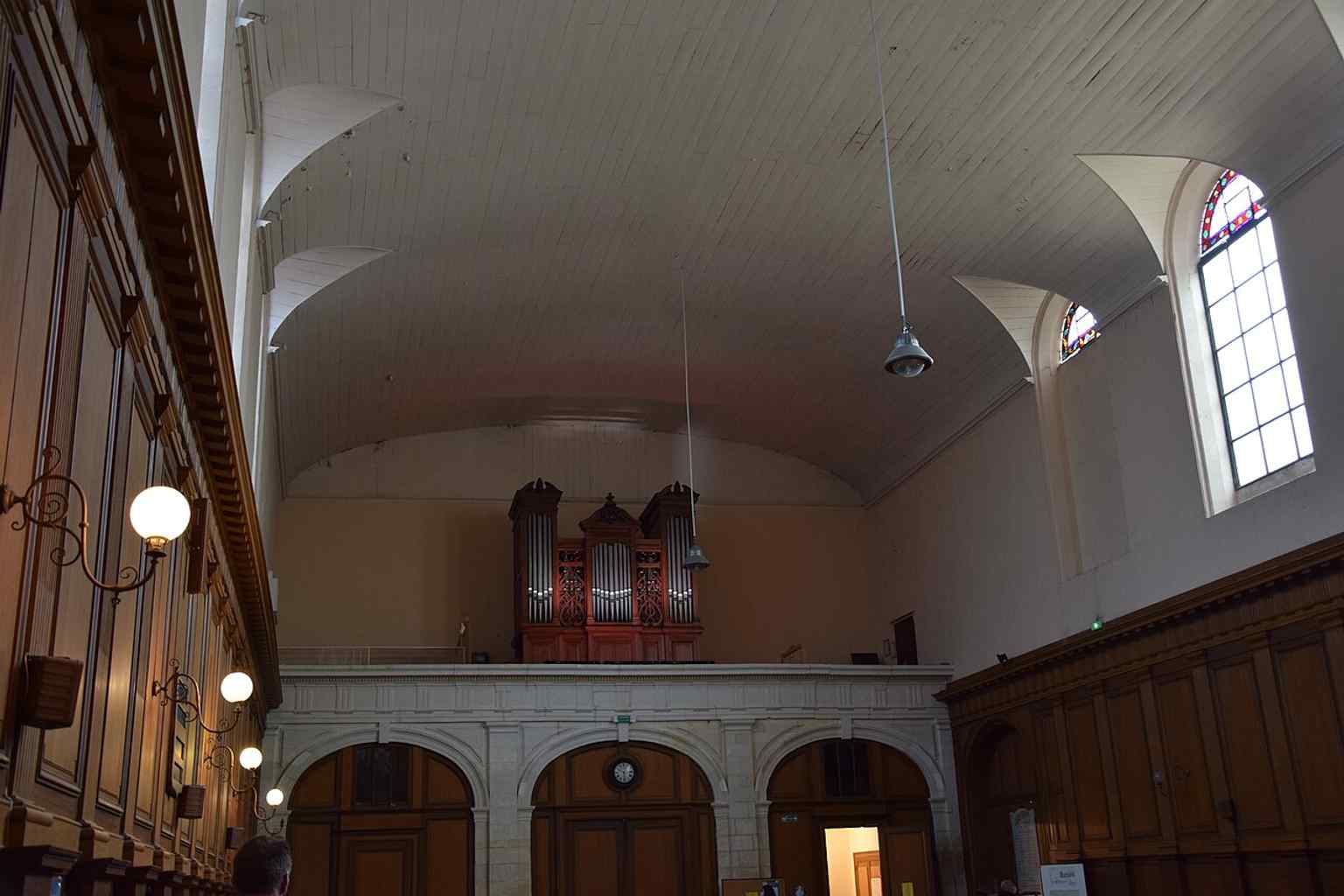
And still, they found a way back. In seventeen ninety-three, a merchant named Sieur Ranson bought this confiscated former church on behalf of Protestant families. Efficient... though not immediate. The building still served as a meeting hall for the local Jacobins, the Revolution’s political club, until seventeen ninety-eight. Only then did it fully return to Reformed worship. Later, Protestants reshaped the interior again, adding woodwork, a pulpit, and eventually the large organ that still gives the place its voice.
So here is the question this facade leaves hanging: what happens when a whole city ties its faith to its identity, and then loses that fight?
Because belief alone never tells the full story in La Rochelle. Trade routes, exile, and the wider Atlantic were reshaping this city too. The Museum of the New World, about a four-minute walk from here, picks up that thread.