
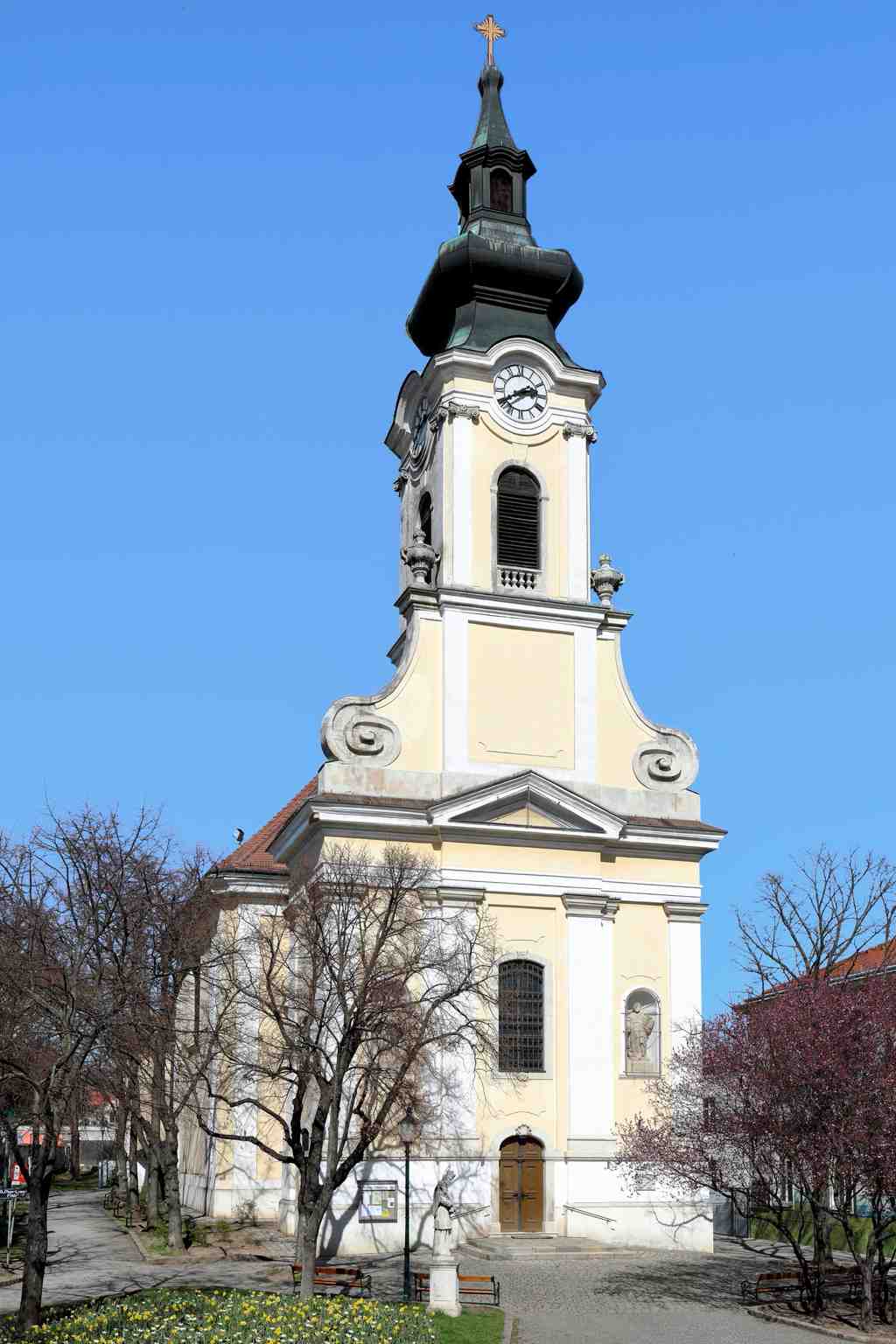
Look to your right at this pale yellow and white stucco building, distinguished by its gracefully curved upper facade and the dark bulbous onion dome capping the clock tower. This is the Oberlaa Parish Church. Like many structures in this part of Europe, an earlier version of it was completely leveled during the Turkish siege of 1683. When the architect Mathias Gerl was finally hired to rebuild it in the 1740s, he chose the elaborate Baroque style. You can see those characteristic dramatic flourishes right on your screen.
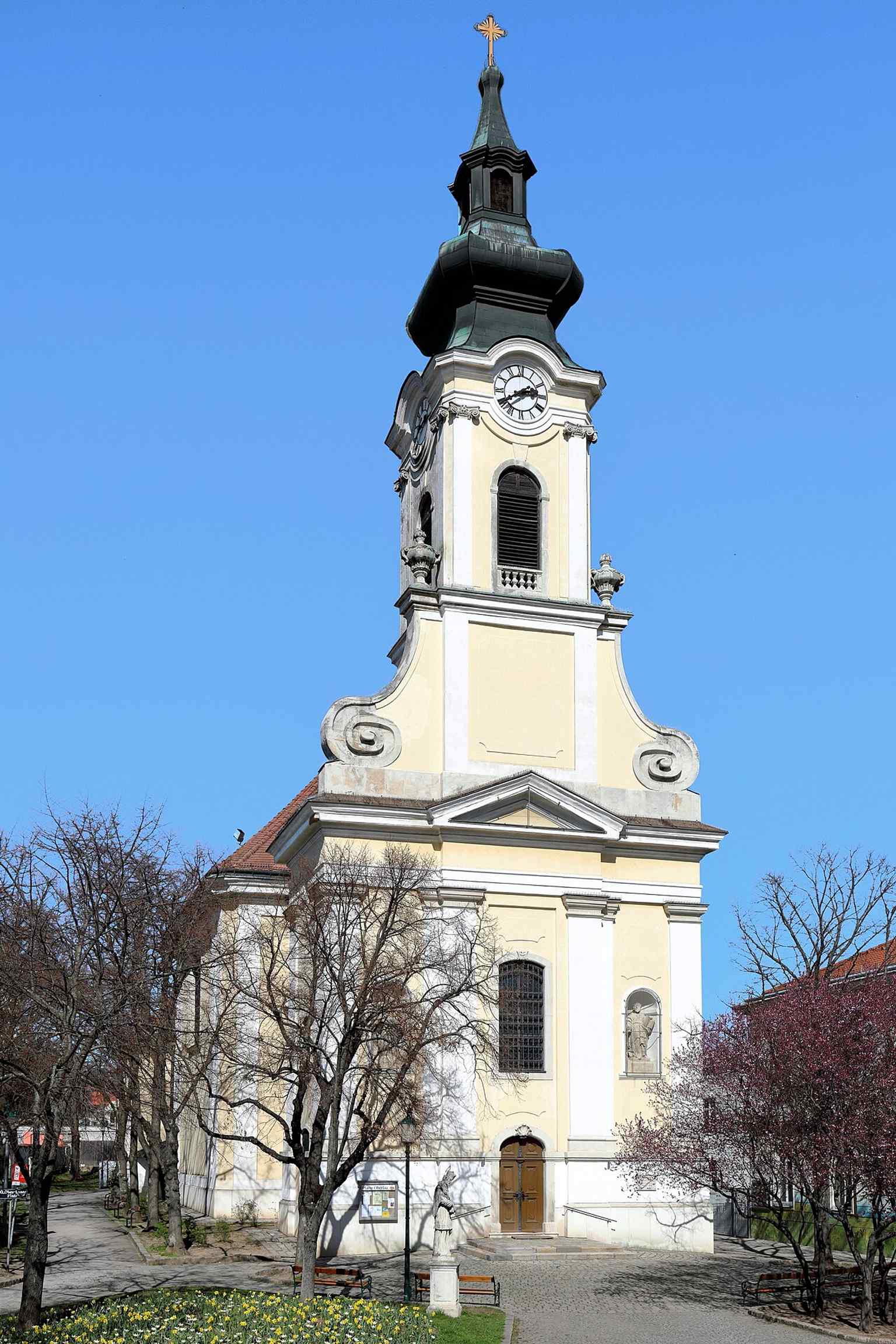
But monumental architecture is famously unforgiving on a budget. To finance this massive undertaking, the parish relied entirely on the Donati family. The local Catholic deans, Anton Donati and his successor Franz Anton, willingly drained their entire family fortune, originally accumulated in the Trentino region, to see this structure completed. It was an act of extreme devotion that essentially left the prominent family in financial ruin.
They did manage to get a small return on their investment, though. Gerl made a highly unusual engineering choice for the era. Instead of the standard east west orientation where the congregation faces east toward Jerusalem, he built the church on a strict north south axis. At the north end sits the high altar, featuring a grand painting of Saint Egidius. And if you look closely at the painted saint, he happens to bear the exact facial features of Anton Donati. It is perhaps the most expensive selfie in eighteenth century history.
The sheer cost of faith had lasting consequences. The financial toll was so severe that the church remained unconsecrated for over thirty years after the exterior was finished. They simply lacked the funds to complete the interior furnishings. The building finally received its official blessing in 1781, timed to coincide with Franz Anton Donati's fiftieth anniversary in the priesthood.
The people of Oberlaa have always carried a heavy burden to maintain this sacred ground. Through centuries of war, the congregation simply outlasted invading empires, repairing what was broken and continuing their traditions. They even honor the area's ancient hardships. Just a few years ago, the remains of five unknown medieval pilgrims were carefully reburied near the apse, which is the semi circular vaulted area at the rear of the building, ensuring their legacy remained protected.
If the doors are unlocked, step inside to view the magnificent interior. Take a moment to appreciate what this structure cost its creators, and then let us walk toward the Oberlaa Cemetery, just a three minute stroll away, where the ultimate toll of this neighborhood is recorded in stone.


%20-%20Kirche%20hl.%20%C3%84gydius.JPG)