AudaTours logoAudaTours

Stop 3 of 15

Palais Attems

Palais Attems
Palais Attems
Palais AttemsPhoto: Andi oisn, Wikimedia Commons, CC BY-SA 3.0. Cropped & resized.

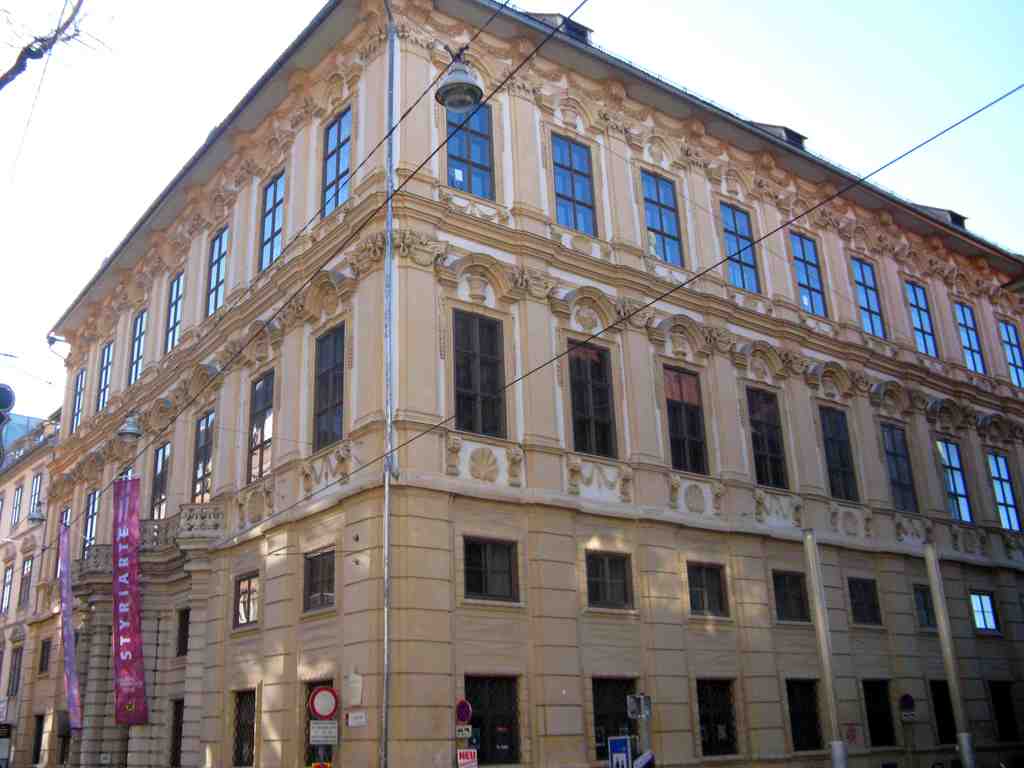
On your right, look for a pale Baroque palace with a heavy round-arched stone portal, tall windows capped by curved brow-like hoods, and a carved sandstone coat of arms above the entrance.

This is Palais Attems, widely regarded as the most important aristocratic palace in Styria, and it wears that title with very little need for boasting. Count Ignaz Maria Attems, whose family came from Friuli in northern Italy, patiently bought up six town houses here between the late sixteen hundreds and the early seventeen hundreds. Then he asked the architect Johann Joachim Carlone to turn that patchwork of houses into a true city palace. Carlone worked from about seventeen oh two, drawing on grand palaces from Genoa, and by seventeen sixteen Graz had acquired a residence that announced ambition in stone.

Even from where you stand, you can read the message. The lower level forms a sturdy base, with windows framed in rough-cut rusticated stone. Above that, the upper storeys become more elegant, divided by tall pilasters, those flat decorative columns attached to the wall, and dressed with stucco vases and curved window crowns. The great portal on Sackstrasse pushes outward like a stage entrance. If you glance at the details around it on your screen, you can see how richly the stone was handled, right down to the family alliance coat of arms of Attems and Wurmbrand above the arch. That coat of arms mattered. It told every visitor that this house was not merely comfortable. It was dynastic, political, and carefully choreographed. Over the portal sits a stone-balustraded balcony, and behind those doors the count assembled what became the greatest private art collection in Styria: paintings, tapestries, weapons, armour, and a substantial library. Later generations kept adding to it. Count Franz Dismas Attems enriched the interiors with wall panelling and tiled stoves between the seventeen thirties and seventeen fifties. His son, Ignaz Maria the Second, returned from travels across Europe with yet more art, and completed the Rococo furnishing. Aristocrats, one gathers, rarely believed they had quite enough ceiling painting.
A closer façade detail from the Sackstraße side, where the ornate portal and sculpted stonework mark the representative entrance.
A closer façade detail from the Sackstraße side, where the ornate portal and sculpted stonework mark the representative entrance.Photo: FOSO-ART, Wikimedia Commons, CC BY-SA 3.0 at. Cropped & resized.

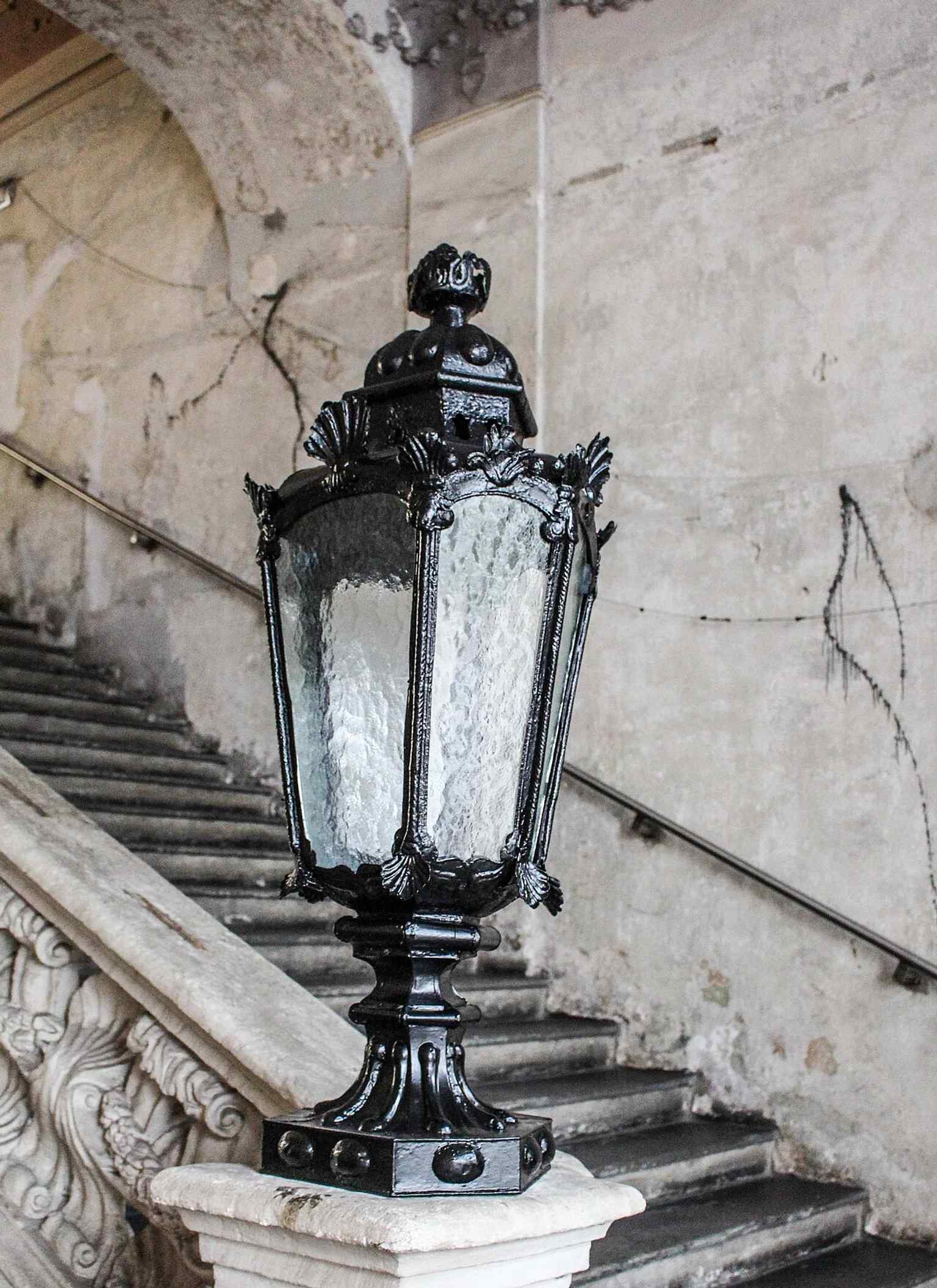
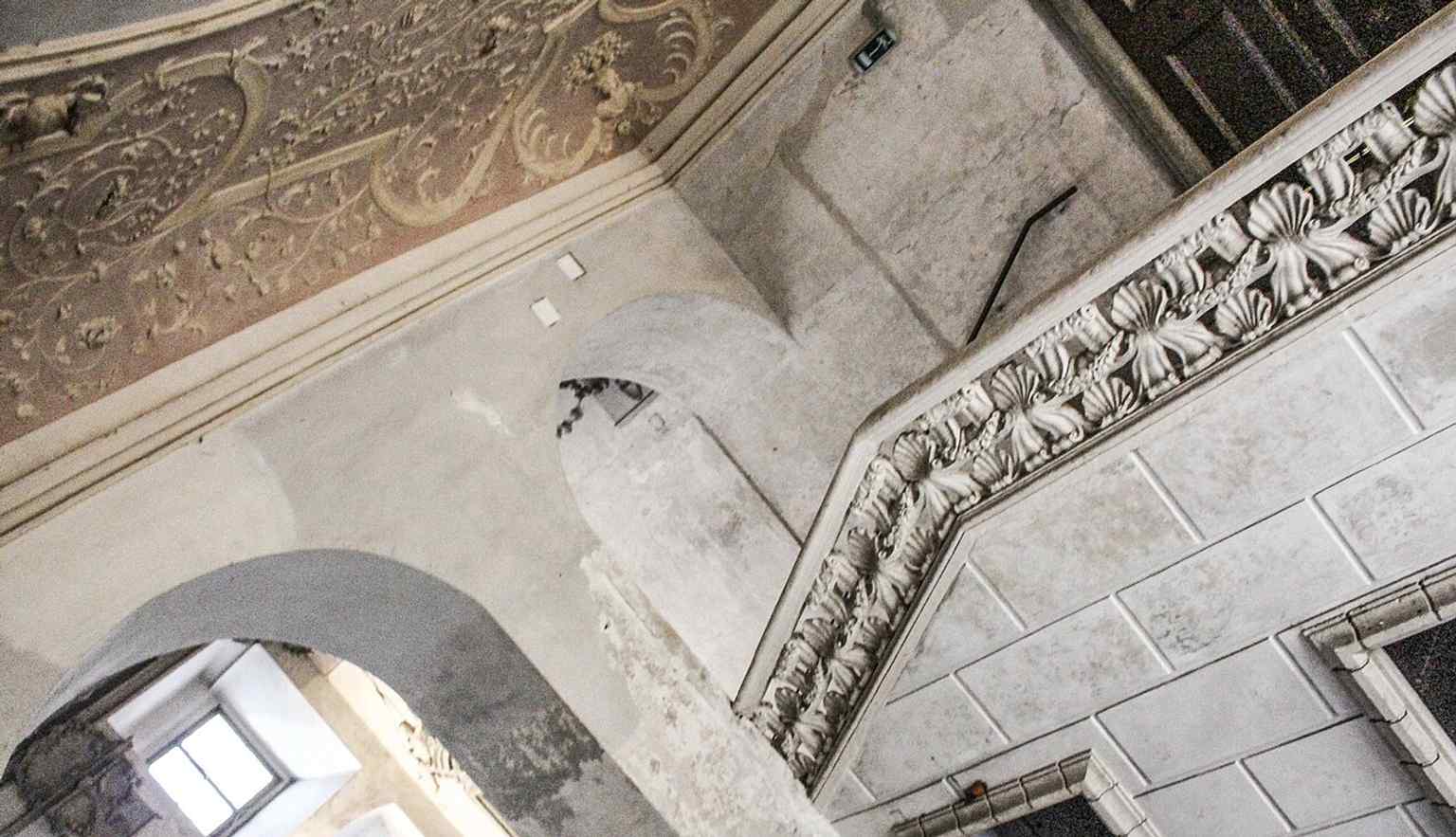
You cannot see the full sequence from the street, but the interior was designed to impress from the first step. If you open the image in the app, you can look into the ground-floor vestibule, where delicate stucco spreads across the ceiling and twin staircases rise with pierced stone balustrades and lanterns. Upstairs, the state rooms became famous. One ceiling celebrated the apotheosis, the glorification, of the House of Attems. Another room, the so-called Monkey Hall, featured bronze half-figures of monkeys emerging from the ceiling around painted scenes of Apollo and the arts. Nearby stood the Bird Room, alive with mythological scenes and birds of every kind.
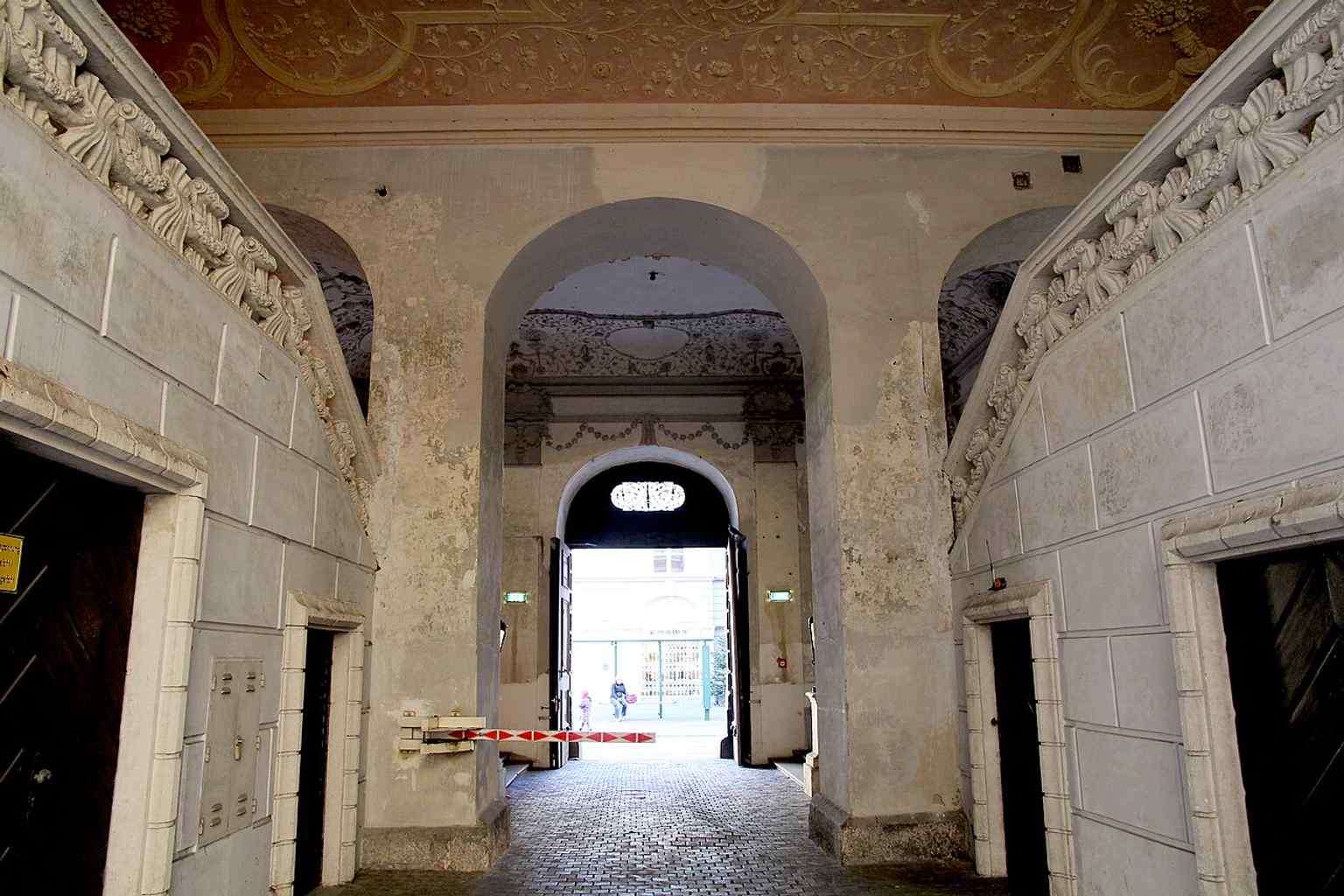
Ground-floor interior looking toward Sackstraße, illustrating the palace’s entrance sequence and the richly finished lower level.
Ground-floor interior looking toward Sackstraße, illustrating the palace’s entrance sequence and the richly finished lower level.Photo: E.mil.mil, Wikimedia Commons, CC BY-SA 3.0 at. Cropped & resized.

Then history lost its manners. After the First World War, the family declined. In nineteen thirty-three, some gallery rooms finally opened to the public, but the Second World War brought disaster. Bomb damage in nineteen forty-five struck the palace, and many treasures vanished through plunder or forced sale. Even the servants’ liveries were stolen. By the late nineteen fifties the palace stood empty, and in the early nineteen sixties the family sold it to the state of Styria. Careful restoration followed, first outside, then within, over many years.

Today the building serves culture again, housing offices for festivals and literary life rather than powdered footmen and family ceremony.

Palais Attems reminds you how grandeur can survive, even after its treasures do not.

When you are ready, continue gently on toward Schloßbergplatz.
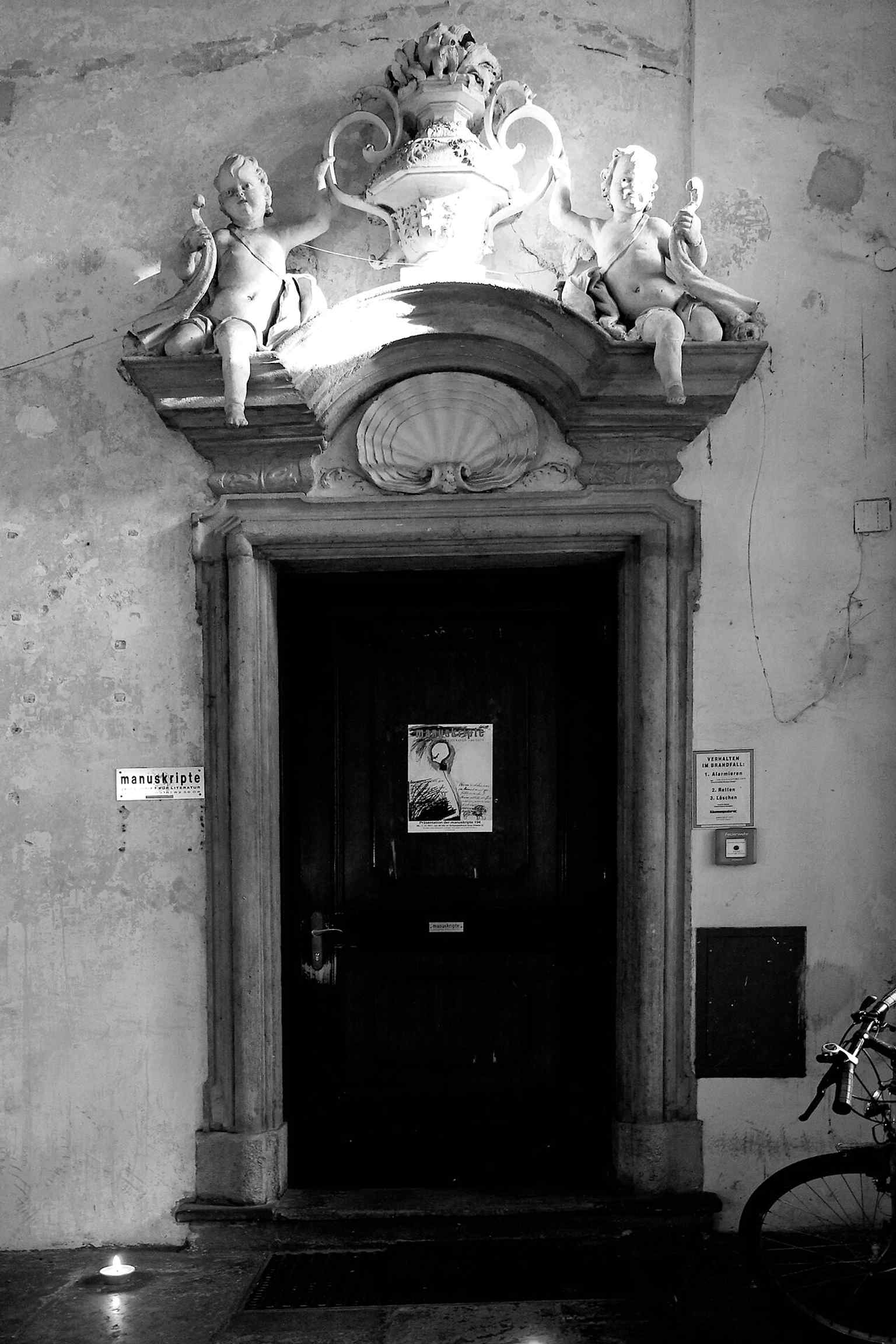
A close look at an Erdgeschoss detail, matching the source’s emphasis on sumptuous interior ornament and stucco work.
A close look at an Erdgeschoss detail, matching the source’s emphasis on sumptuous interior ornament and stucco work.Photo: E.mil.mil, Wikimedia Commons, CC BY-SA 3.0 at. Cropped & resized.
Another ground-floor detail that helps show the decorative craftsmanship used throughout the palace interiors.
Another ground-floor detail that helps show the decorative craftsmanship used throughout the palace interiors.Photo: E.mil.mil, Wikimedia Commons, CC BY-SA 3.0 at. Cropped & resized.
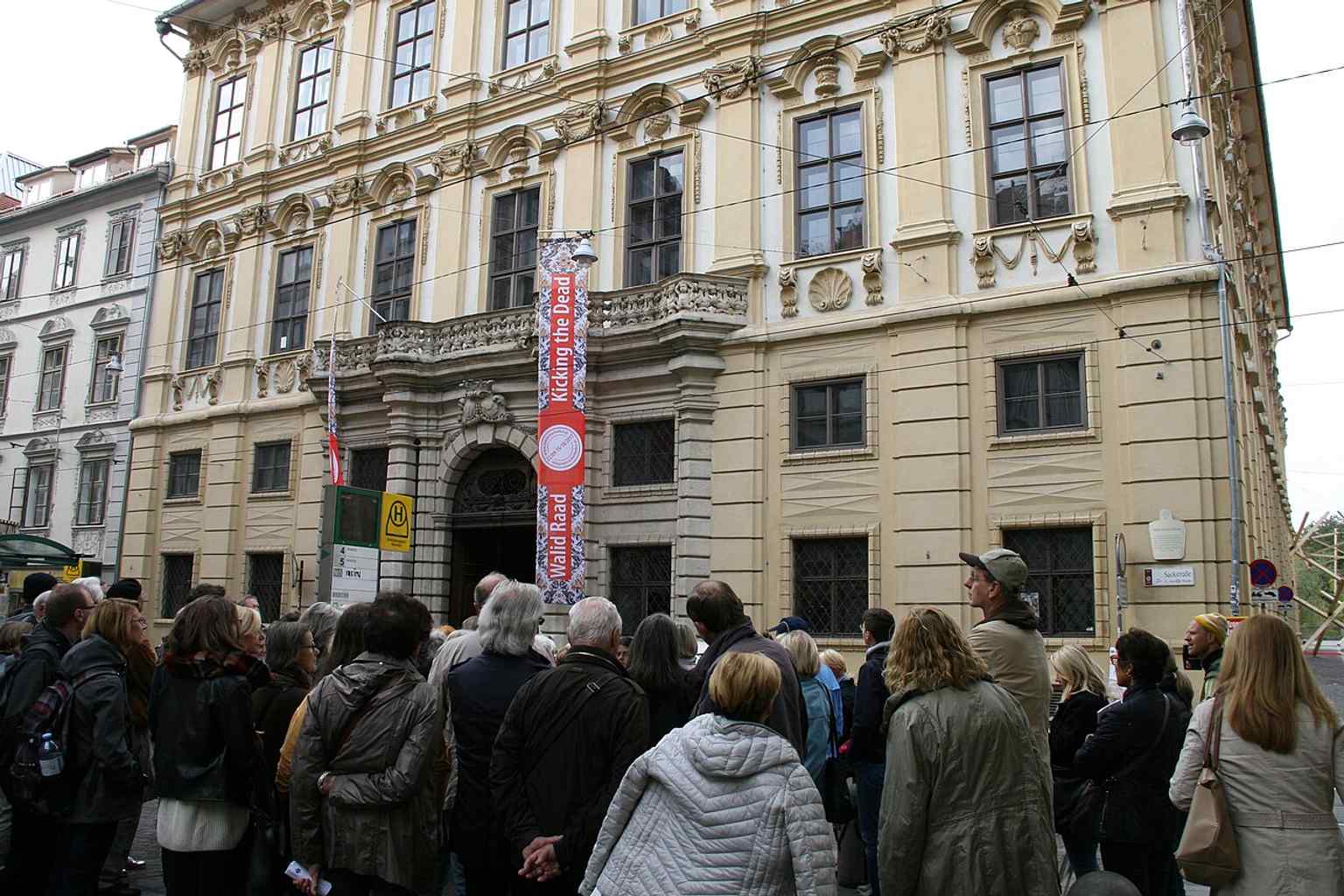
A guided-tour style historical image of the former Palais Attems, fitting the building’s role as a landmark in Graz’s old town.
A guided-tour style historical image of the former Palais Attems, fitting the building’s role as a landmark in Graz’s old town.Photo: Martgraz, Wikimedia Commons, CC BY-SA 4.0. Cropped & resized.
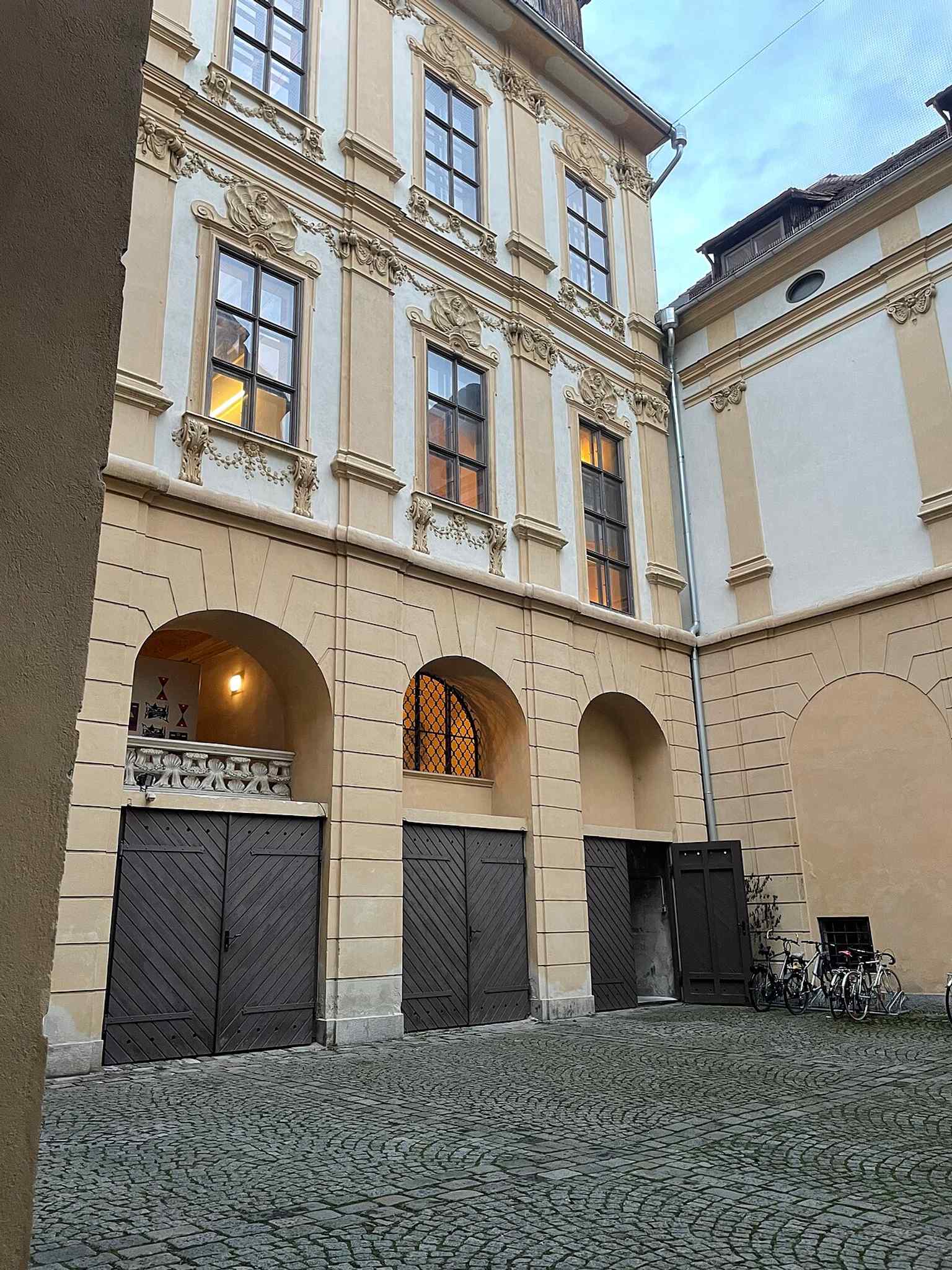
Recent courtyard view showing the palace today and its preserved Baroque enclosure around the interior court.
Recent courtyard view showing the palace today and its preserved Baroque enclosure around the interior court.Photo: 0Lucky Luke, Wikimedia Commons, CC BY-SA 4.0. Cropped & resized.
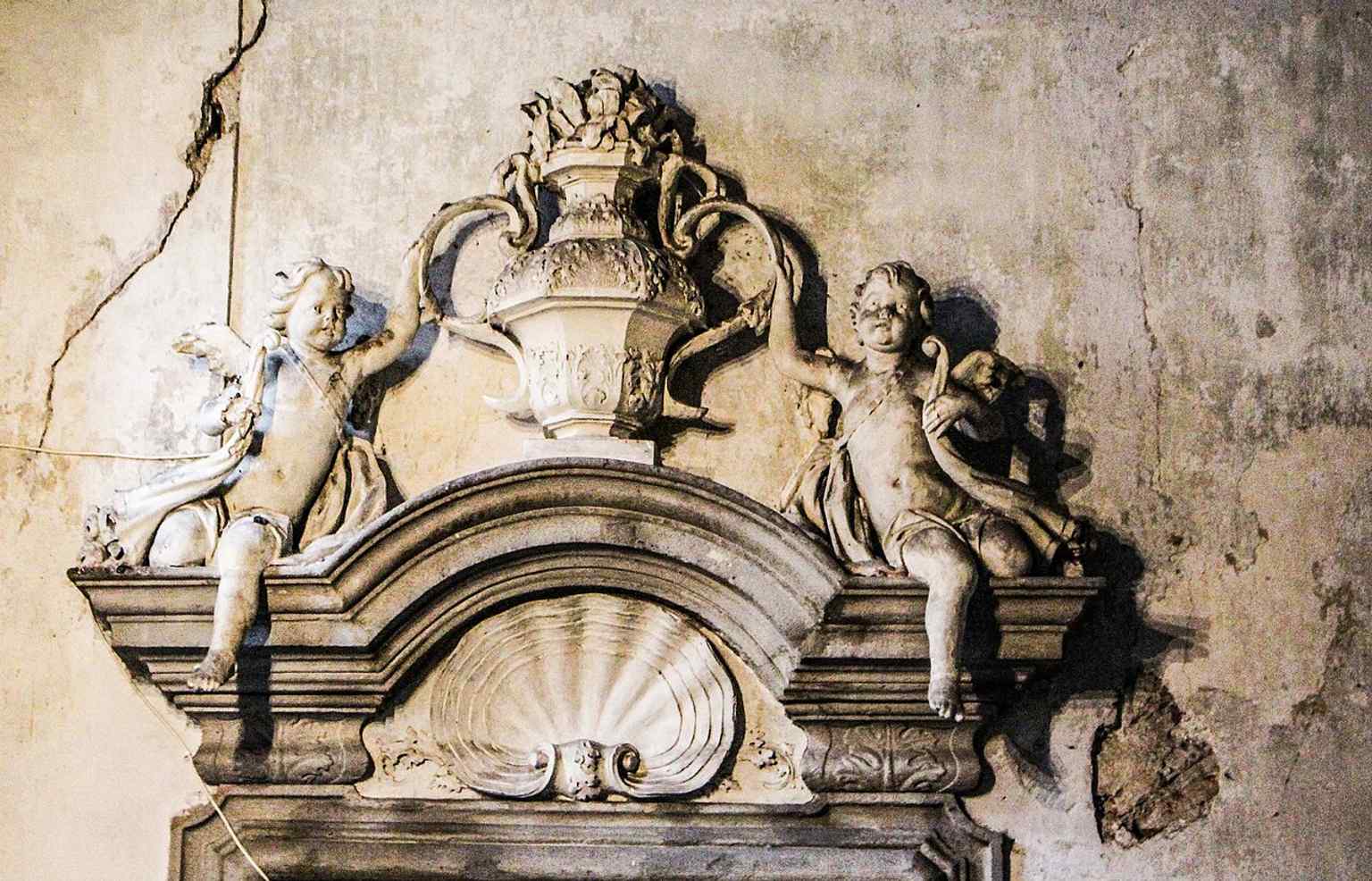
Architectural detail from the palace exterior, likely part of the elaborate Baroque decoration that distinguishes the façade.
Architectural detail from the palace exterior, likely part of the elaborate Baroque decoration that distinguishes the façade.Photo: FOSO-ART, Wikimedia Commons, CC BY-SA 3.0 at. Cropped & resized.
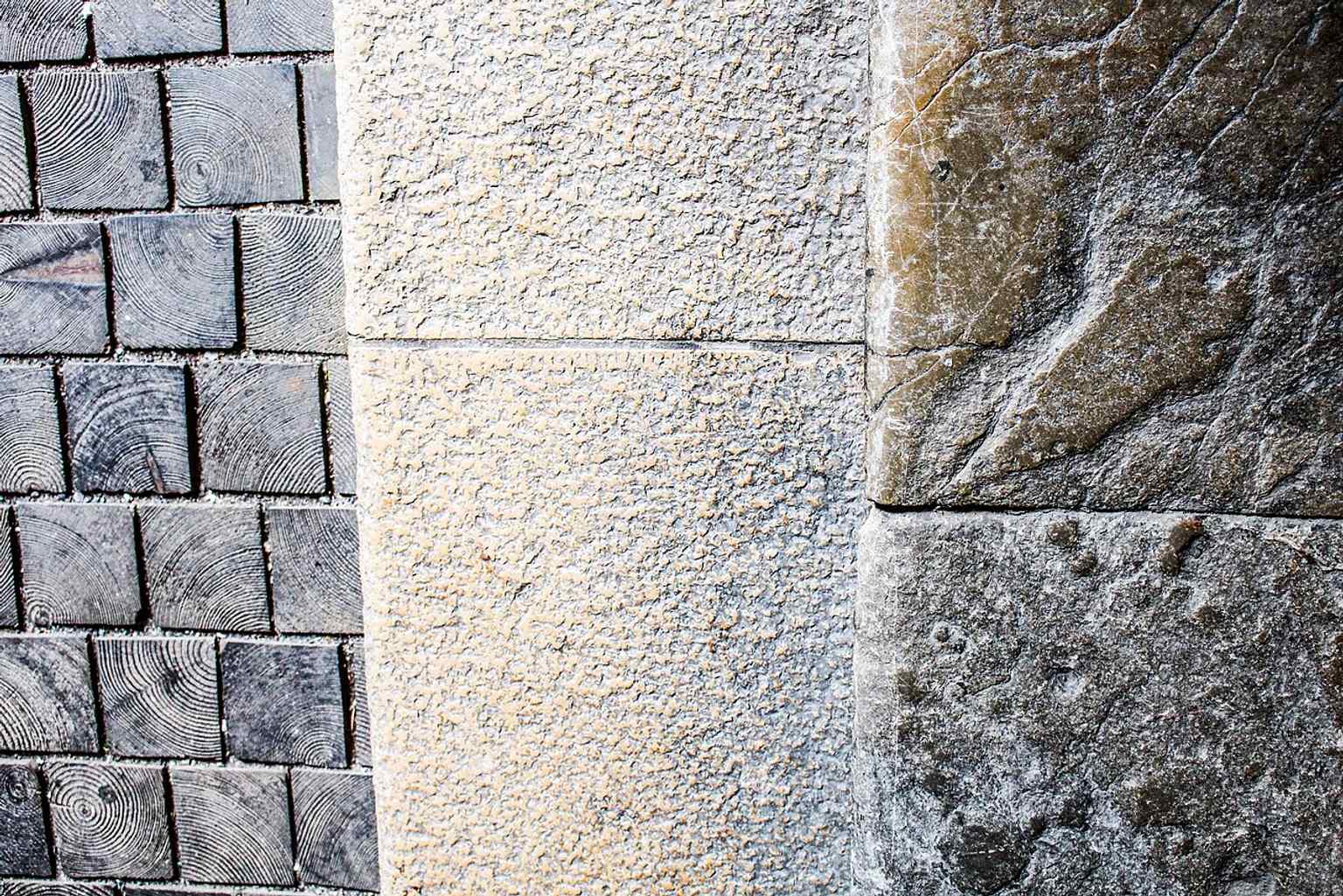
Facade detail showing the decorative surface treatment that links the palace to northern Italian Baroque influences.
Facade detail showing the decorative surface treatment that links the palace to northern Italian Baroque influences.Photo: FOSO-ART, Wikimedia Commons, CC BY-SA 3.0 at. Cropped & resized.
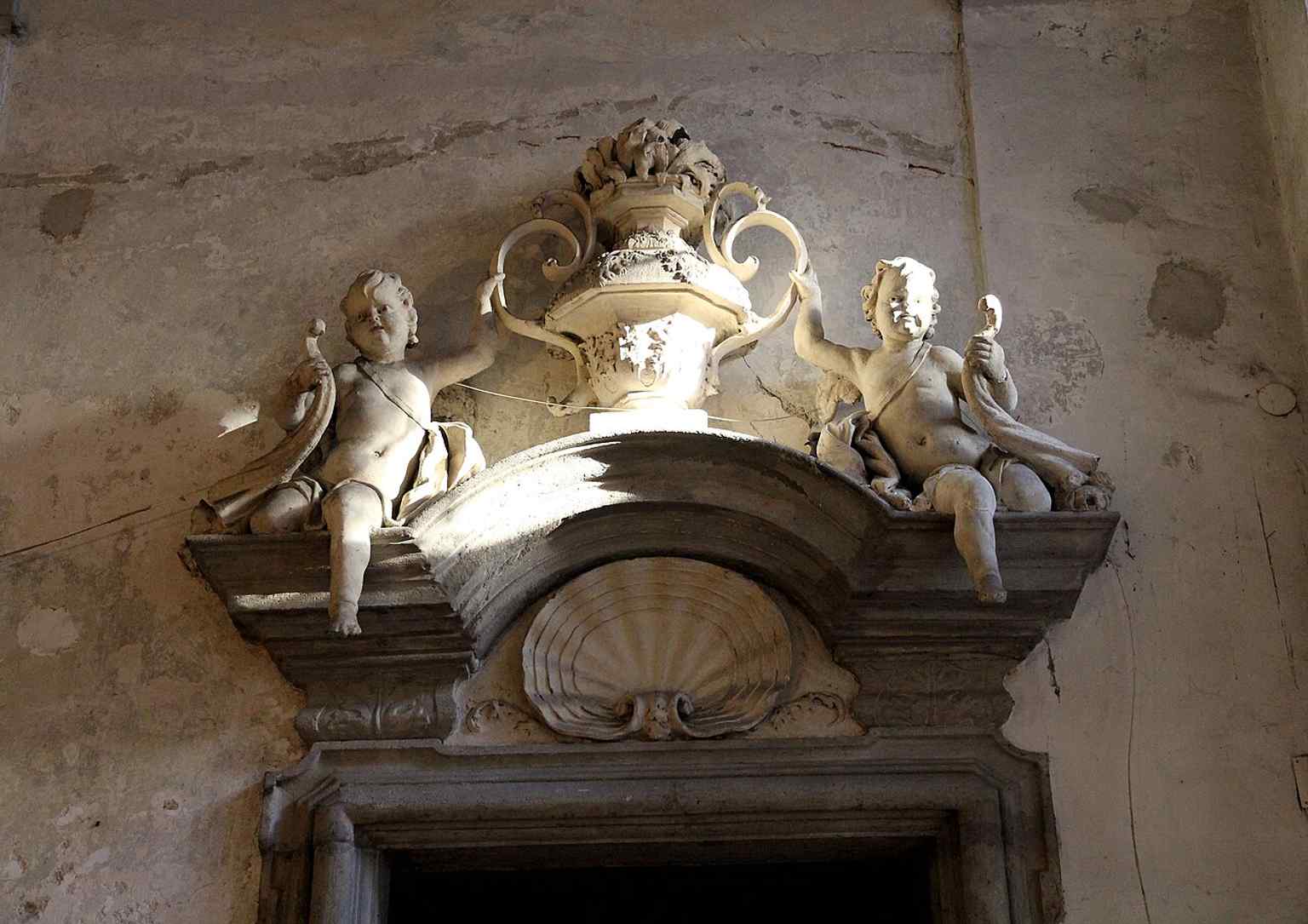
An additional close-up of palace decoration, helping illustrate the varied sculptural and stucco details across the building.
An additional close-up of palace decoration, helping illustrate the varied sculptural and stucco details across the building.Photo: FOSO-ART, Wikimedia Commons, CC BY-SA 3.0 at. Cropped & resized.
arrow_back Back to Graz Audio Tour: Echoes of Empire and Art in Innere Stadt
Loved by travellers

Thousands of tours started.
Plenty of opinions.

4.8 across the App Store and Google Play. Here's a few we keep coming back to.

starstarstarstarstar
This was a solid way to get to know Brighton without feeling like a tourist. The narration had depth and context, but didn't overdo it.
Christoph
Christoph
Brighton Tour
starstarstarstarstar
Started this tour with a croissant in one hand and zero expectations. The app just vibes with you, no pressure, just you, your headphones, and some cool stories.
download Get the app

Pop your headphones in.
Step outside.

Free to download. Tours in every city. Start in 60 seconds — no account, no card.

Download on the App StoreGet it on Google Play
starstarstarstarstar_half
4.8
AudaTours app icon
headphones
~ 4 min until your first tour starts
public
1,000+ cities worldwide
all_inclusive
AudaTours
Unlimited

Every tour. Every city. One subscription.

3101 tours2271 cities138 countries50+ languages