AudaTours logoAudaTours

Stop 9 of 15

Mausoleum Kaiser Ferdinands II.

Mausoleum Kaiser Ferdinands II.
Mausoleum of Emperor Ferdinand II
Mausoleum of Emperor Ferdinand IIPhoto: Marco Almbauer, Wikimedia Commons, Public domain. Cropped & resized.

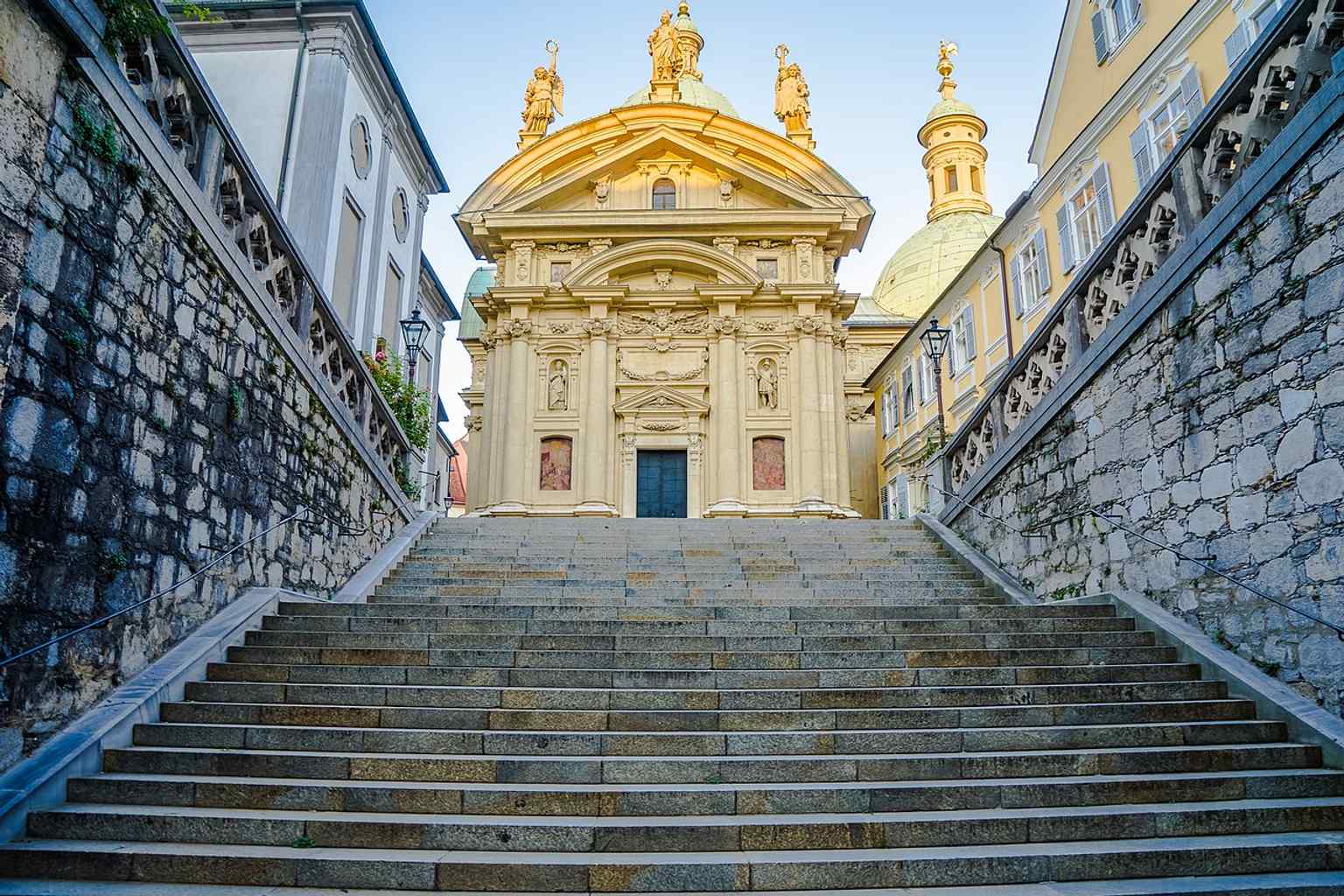
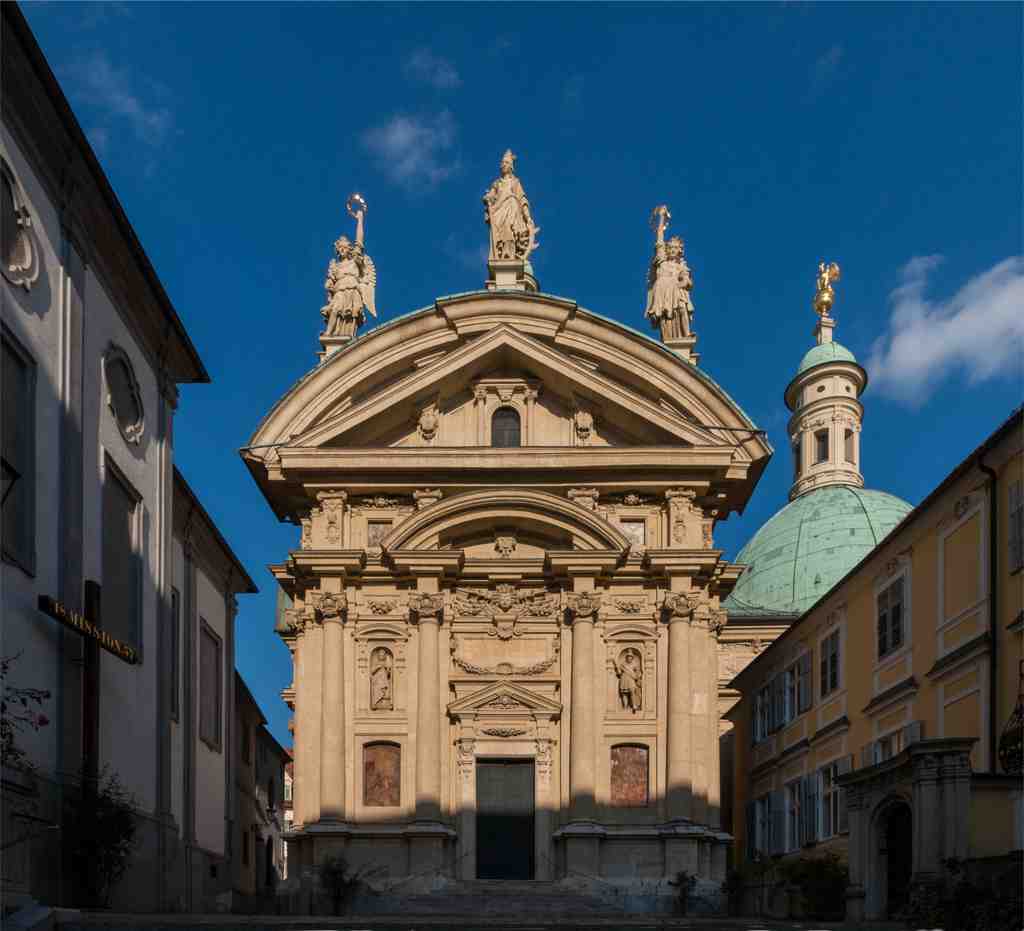
On your right, look for the pale stone façade above a broad stair, with a slender round tower rising behind it and the oval dome of the burial chapel joined to the church.

This is the Mausoleum of Emperor Ferdinand the Second, though what stands before you is not a single building so much as a carefully staged union of two. At the front is the Church of Saint Catherine. Attached to it is the emperor’s burial chapel, built for Ferdinand and his family. Work began in sixteen fourteen, when Ferdinand chose this site beside the cathedral, on ground that had once held an older cemetery chapel dedicated to Saint Catherine. He handed the task to his court artist, Giovanni Pietro de Pomis, an Italian master who painted, designed, and oversaw the whole enterprise.

De Pomis gave the complex a very deliberate meaning. The church follows a cross-shaped plan, an open declaration of Christian faith. The burial chapel takes an oval form, meant to symbolize resurrection. That oval was no small matter. The chapel’s dome is considered the first of its kind outside Italy, a bold import from the south. And there is a charming Graz connection here: Johannes Kepler, who once lived and taught in this city, helped work out the mathematics of the ellipse. The side view in the app makes the idea wonderfully clear: a church and a tomb joined into one ceremonial composition. The style is Mannerist, a style poised between the balance of the Renaissance and the drama of the Baroque. You can feel that in the façade. It is disciplined, but it also performs. Saint Catherine once presided over the front in stone, flanked by angels, while panels and figures around her told the story of those she converted. That was not simply pious decoration. Catherine was the patron saint of learning, which linked this place to Graz’s Jesuit university, and her story also suited Ferdinand’s Counter-Reformation message, the Catholic effort to reclaim souls and authority in a divided age.
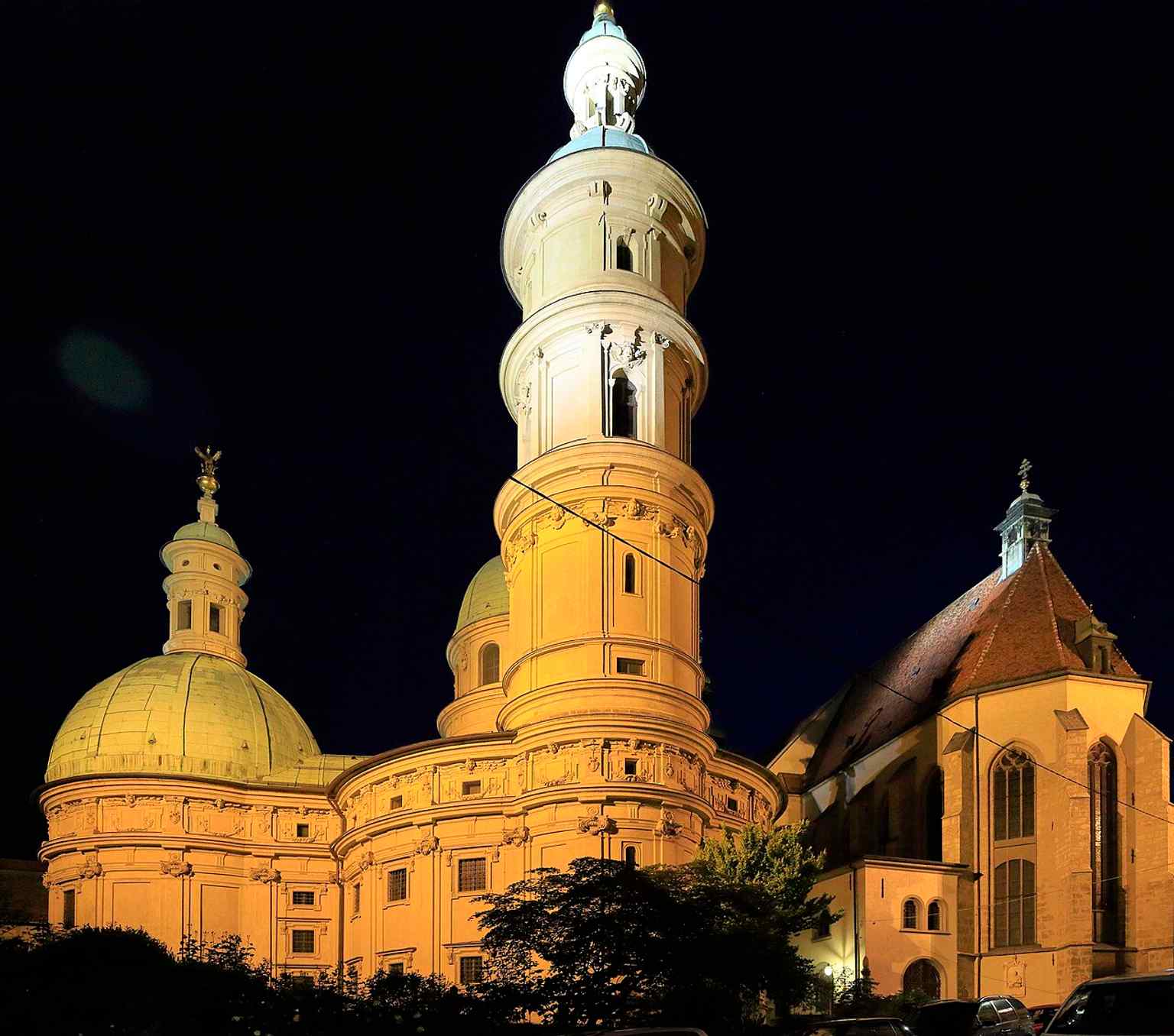
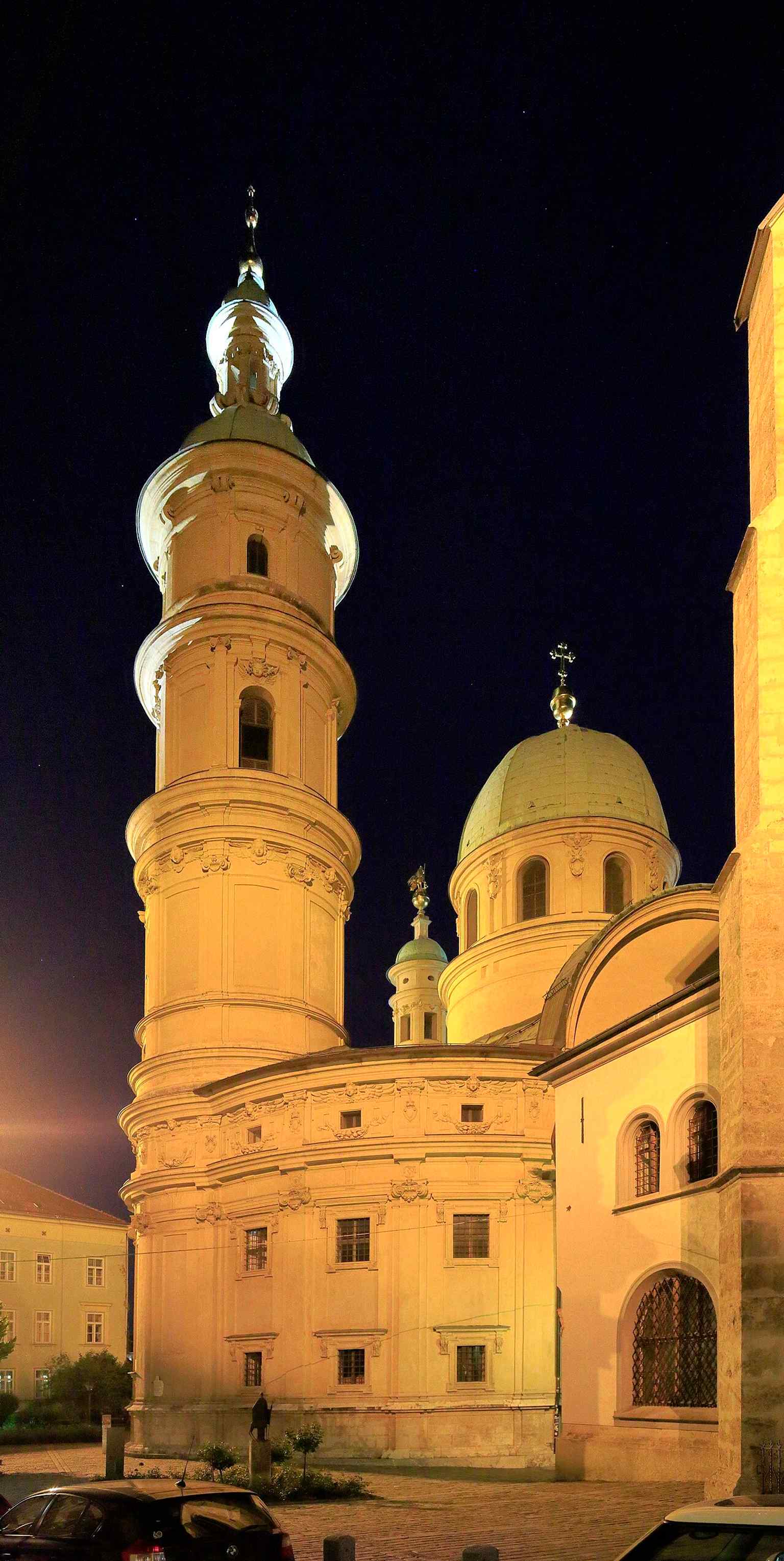
A side view from Burggasse showing the Katharinenkirche attached to the grave chapel, reflecting the complex’s two-part design built between 1614 and 1714.
A side view from Burggasse showing the Katharinenkirche attached to the grave chapel, reflecting the complex’s two-part design built between 1614 and 1714.Photo: Falk2, Wikimedia Commons, CC BY-SA 4.0. Cropped & resized.

And yet, for all its confidence, this project moved in fits and starts. Ferdinand rose to become emperor and shifted his court to Vienna. Attention wandered. Money slowed. Building stopped and started again. De Pomis died in sixteen thirty-three before he could finish the work. Pietro Valnegro took over, completed the graceful campanile, the bell tower, and later generations carried the scheme forward. Only in seventeen fourteen, a full century after the first plans, did the entire complex finally reach completion.

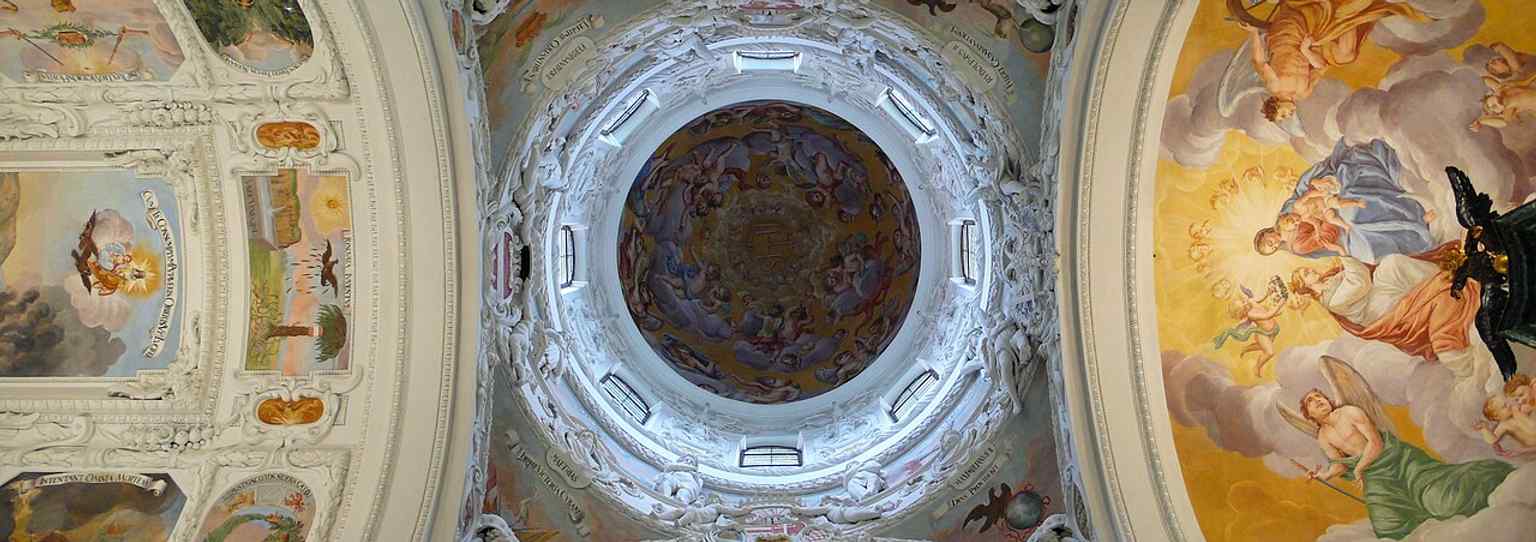
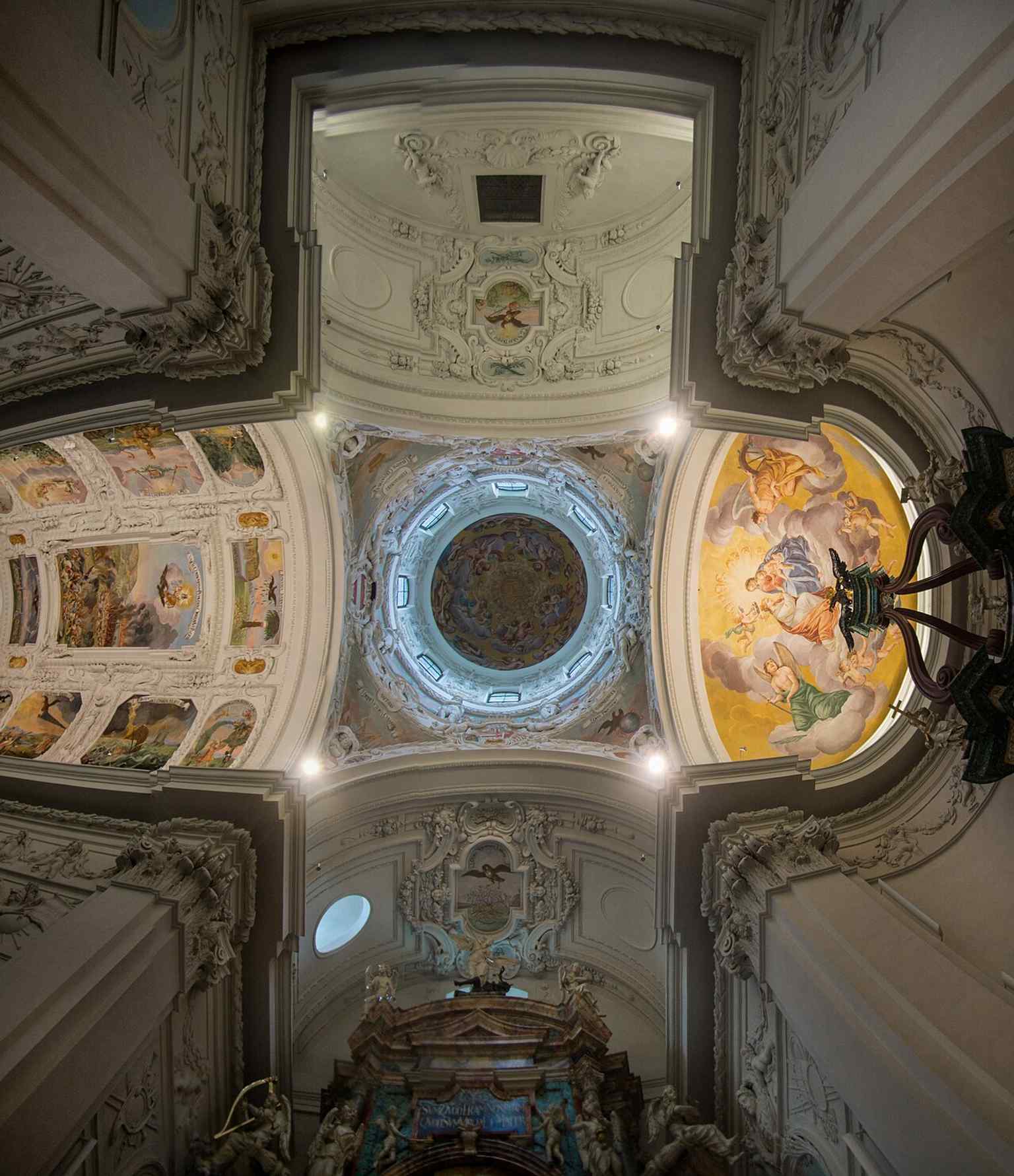
Take a look at the interior image in the app and you will see how later artists clothed the inside in Baroque splendour. Johann Bernhard Fischer von Erlach helped shape that later phase, and the church’s central hall, the nave, became a painted celebration of Habsburg triumph.
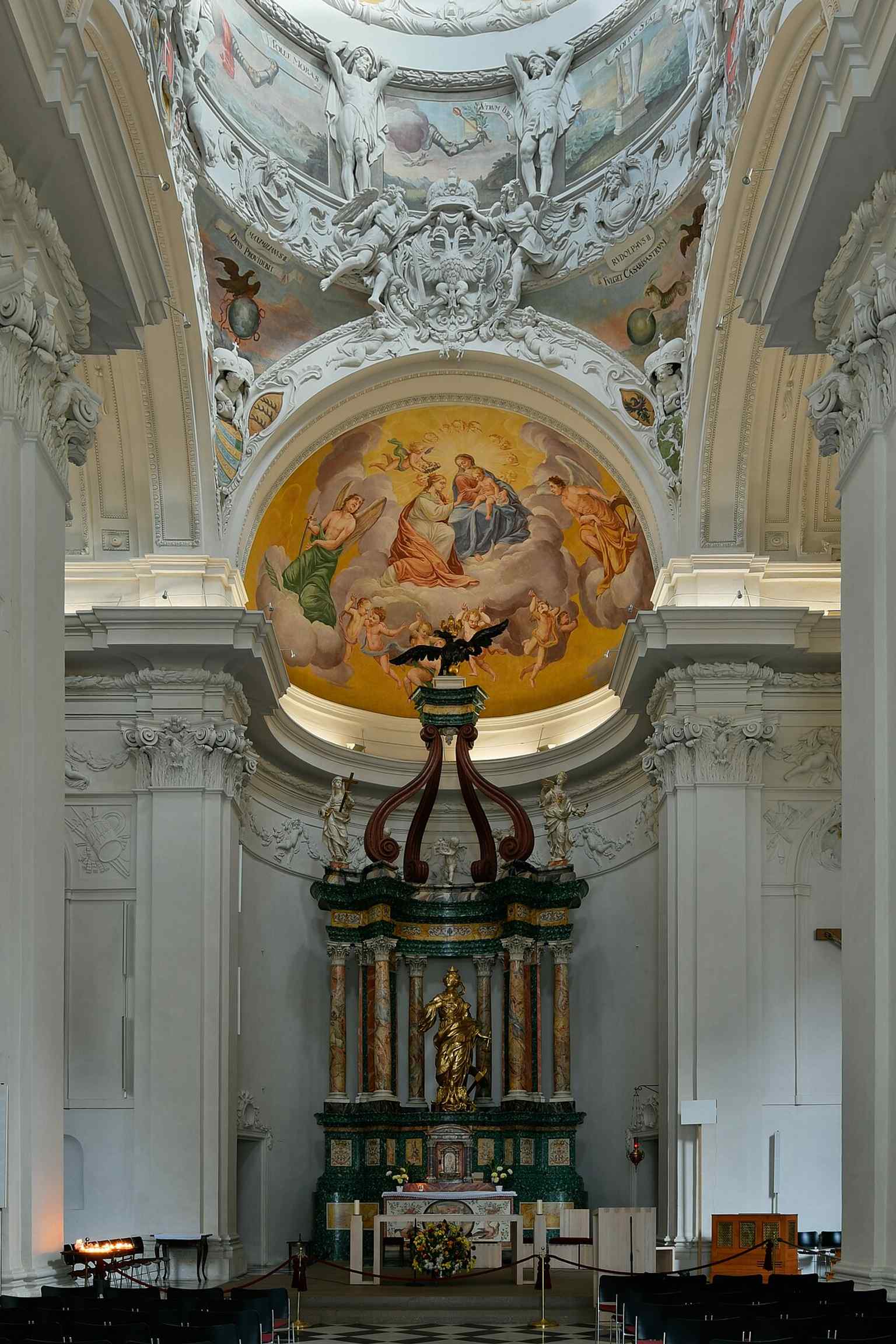
Inside the Katharinenkirche, the richly decorated nave and altar space reflect the Baroque redesign carried out after decades of interruption.
Inside the Katharinenkirche, the richly decorated nave and altar space reflect the Baroque redesign carried out after decades of interruption.Photo: Isiwal, Wikimedia Commons, CC BY-SA 4.0. Cropped & resized.

Beneath the chapel lies the crypt, where Ferdinand the Second rests in a wall tomb beside members of his family, making this the largest Habsburg mausoleum ever built. If you plan to look inside later, it is usually open from Tuesday to Sunday, from nine in the morning until six in the evening, and closed on Mondays.

Here, the Habsburgs turned death into a statement of power. When you are ready, continue to the cathedral beside it, where that same world speaks in a quieter voice.
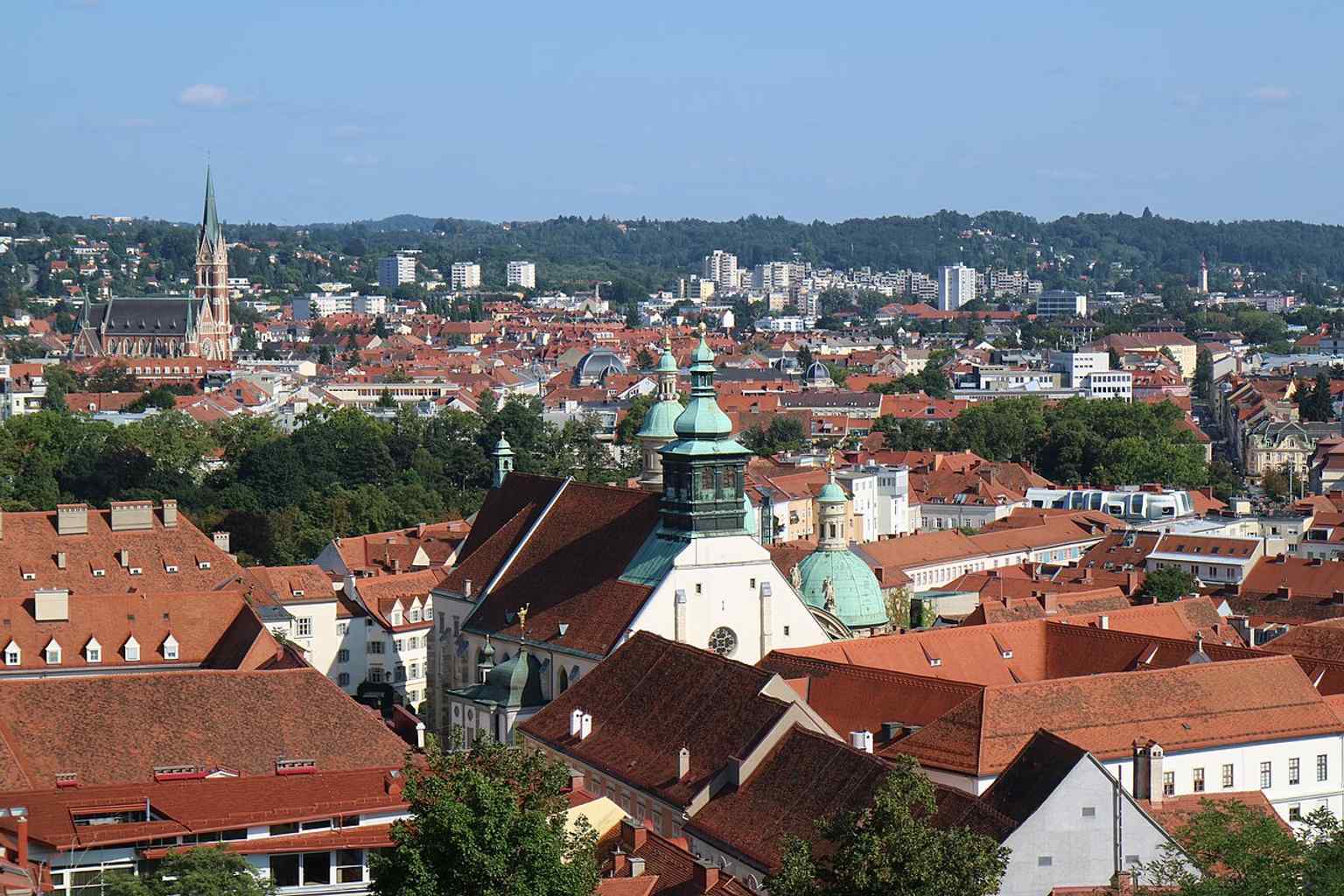
A classic skyline view of Graz’s city crown, with the Cathedral, the Mausoleum, and the Katharinenkirche all visible together.
A classic skyline view of Graz’s city crown, with the Cathedral, the Mausoleum, and the Katharinenkirche all visible together.Photo: Clemens Stockner, Wikimedia Commons, CC BY-SA 4.0. Cropped & resized.
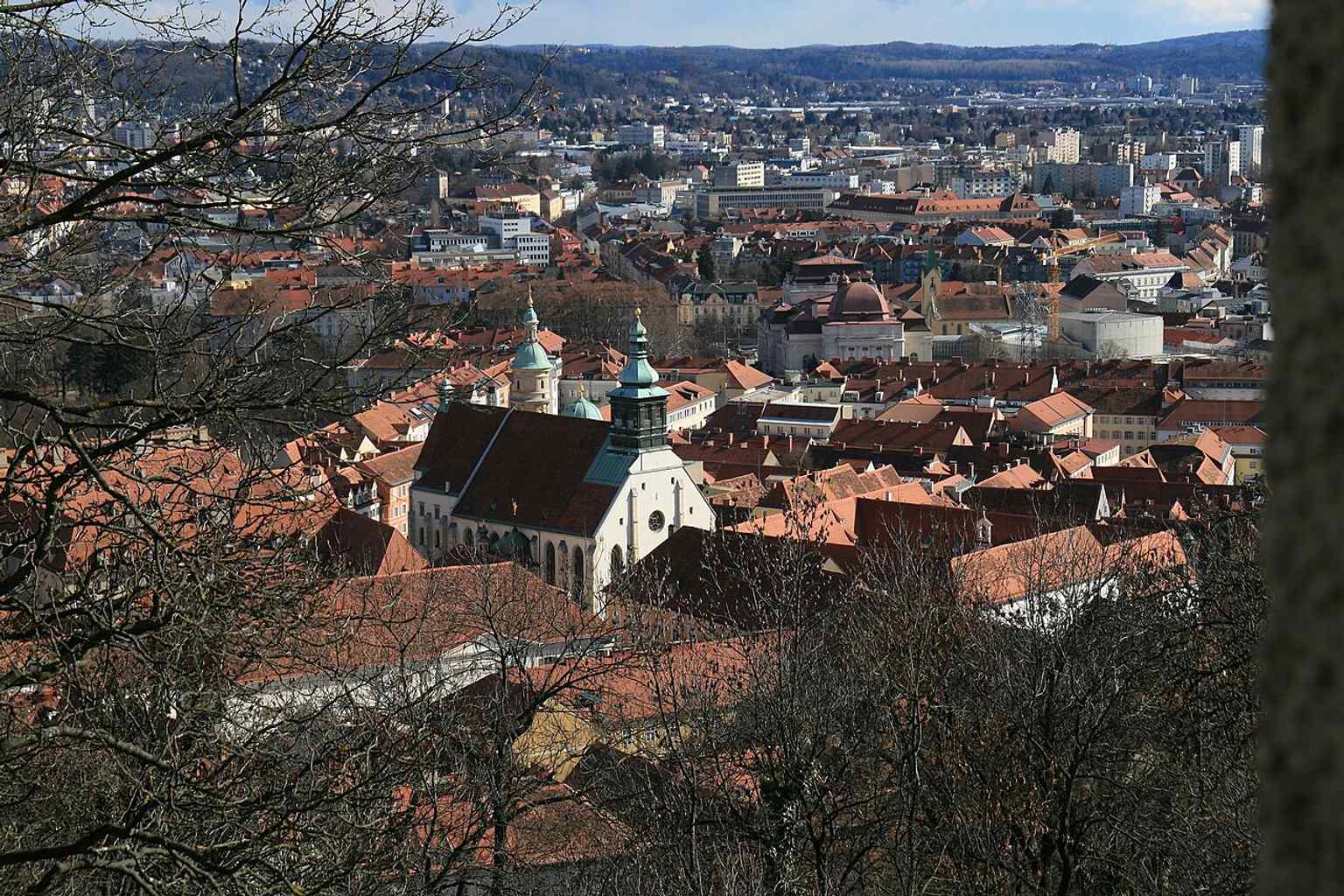
Seen from Schlossberg, the Cathedral and the twin-domed Mausoleum show how Ferdinand II’s tomb became part of Graz’s landmark silhouette.
Seen from Schlossberg, the Cathedral and the twin-domed Mausoleum show how Ferdinand II’s tomb became part of Graz’s landmark silhouette.Photo: Manfred Werner - Tsui, Wikimedia Commons, CC BY-SA 3.0. Cropped & resized.
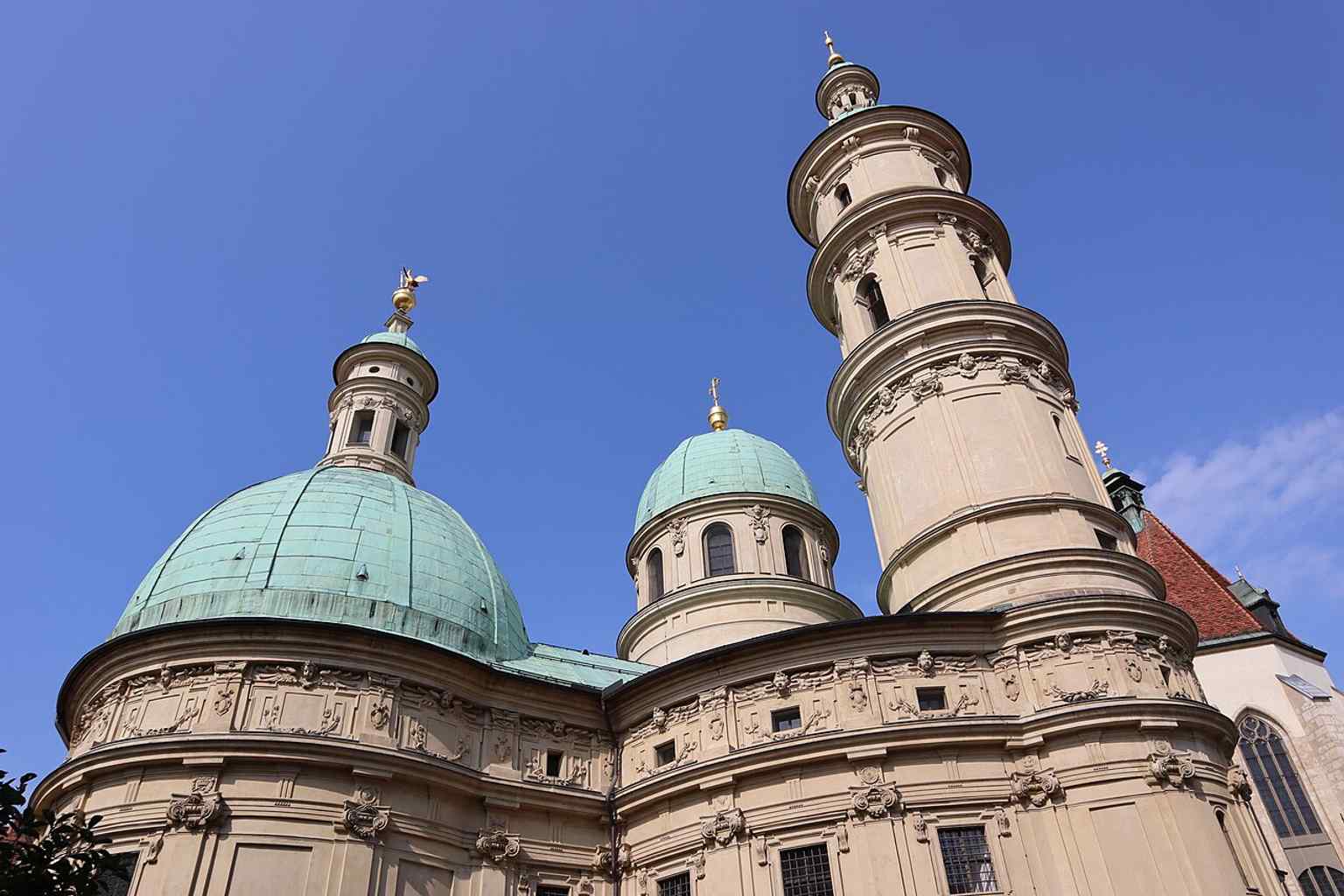
The west side view highlights the smaller mausoleum dome beside the church, a key clue to the building’s unusual dual structure.
The west side view highlights the smaller mausoleum dome beside the church, a key clue to the building’s unusual dual structure.Photo: Falk2, Wikimedia Commons, CC BY-SA 4.0. Cropped & resized.
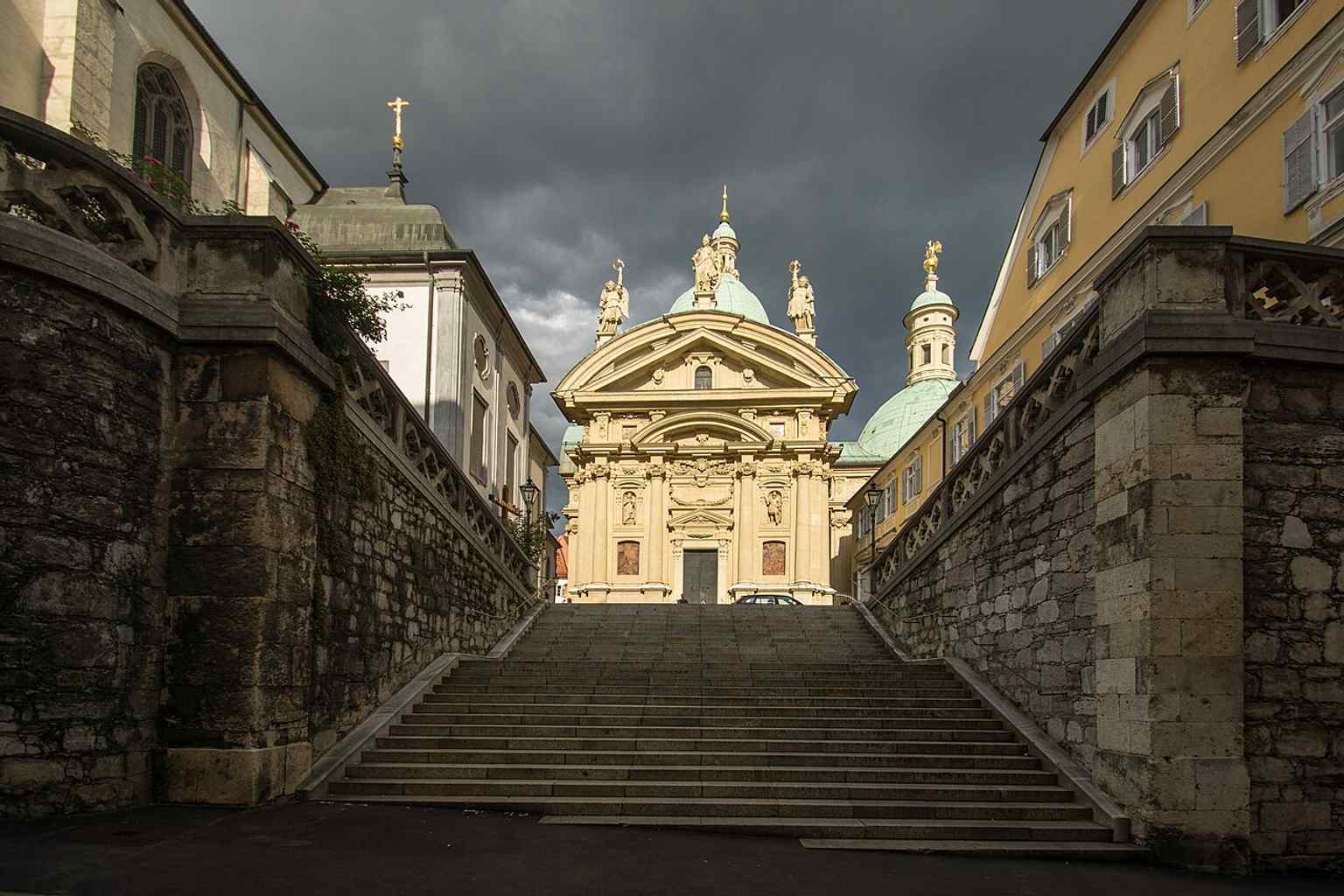
The broad front approach with the grand staircase gives a strong sense of the Mausoleum’s ceremonial character as a Habsburg memorial.
The broad front approach with the grand staircase gives a strong sense of the Mausoleum’s ceremonial character as a Habsburg memorial.Photo: HatschiKa, Wikimedia Commons, CC BY-SA 3.0 at. Cropped & resized.
The staircase in warm evening light emphasizes the monumental entrance, leading up to one of Austria’s most important Mannerist church complexes.
The staircase in warm evening light emphasizes the monumental entrance, leading up to one of Austria’s most important Mannerist church complexes.Photo: Petermeir, Wikimedia Commons, CC BY-SA 4.0. Cropped & resized.
A front-facing exterior view that clearly shows the church façade and the attached mausoleum, useful for orienting visitors on the site.
A front-facing exterior view that clearly shows the church façade and the attached mausoleum, useful for orienting visitors on the site.Photo: Anna Saini, Wikimedia Commons, CC BY-SA 4.0. Cropped & resized.
The entrance façade and stairway capture the building’s representative front, where Catholic and dynastic symbolism meets in stone.
The entrance façade and stairway capture the building’s representative front, where Catholic and dynastic symbolism meets in stone.Photo: Pedro J Pacheco, Wikimedia Commons, CC BY-SA 3.0 at. Cropped & resized.
A close look at the dome roof, where the Mausoleum’s cupola once symbolized the Habsburg claim to imperial power.
A close look at the dome roof, where the Mausoleum’s cupola once symbolized the Habsburg claim to imperial power.Photo: Pedro J Pacheco, Wikimedia Commons, CC BY-SA 3.0 at. Cropped & resized.
arrow_back Back to Graz Audio Tour: Echoes of Empire and Art in Innere Stadt
Loved by travellers

Thousands of tours started.
Plenty of opinions.

4.8 across the App Store and Google Play. Here's a few we keep coming back to.

starstarstarstarstar
This was a solid way to get to know Brighton without feeling like a tourist. The narration had depth and context, but didn't overdo it.
Christoph
Christoph
Brighton Tour
starstarstarstarstar
Started this tour with a croissant in one hand and zero expectations. The app just vibes with you, no pressure, just you, your headphones, and some cool stories.
download Get the app

Pop your headphones in.
Step outside.

Free to download. Tours in every city. Start in 60 seconds — no account, no card.

Download on the App StoreGet it on Google Play
starstarstarstarstar_half
4.8
AudaTours app icon
headphones
~ 4 min until your first tour starts
public
1,000+ cities worldwide
all_inclusive
AudaTours
Unlimited

Every tour. Every city. One subscription.

3101 tours2271 cities138 countries50+ languages