AudaTours logoAudaTours

Stop 7 of 15

Grazer Landhaus

Grazer Landhaus
Graz country house
Graz country housePhoto: Chb, Wikimedia Commons, CC BY-SA 3.0. Cropped & resized.

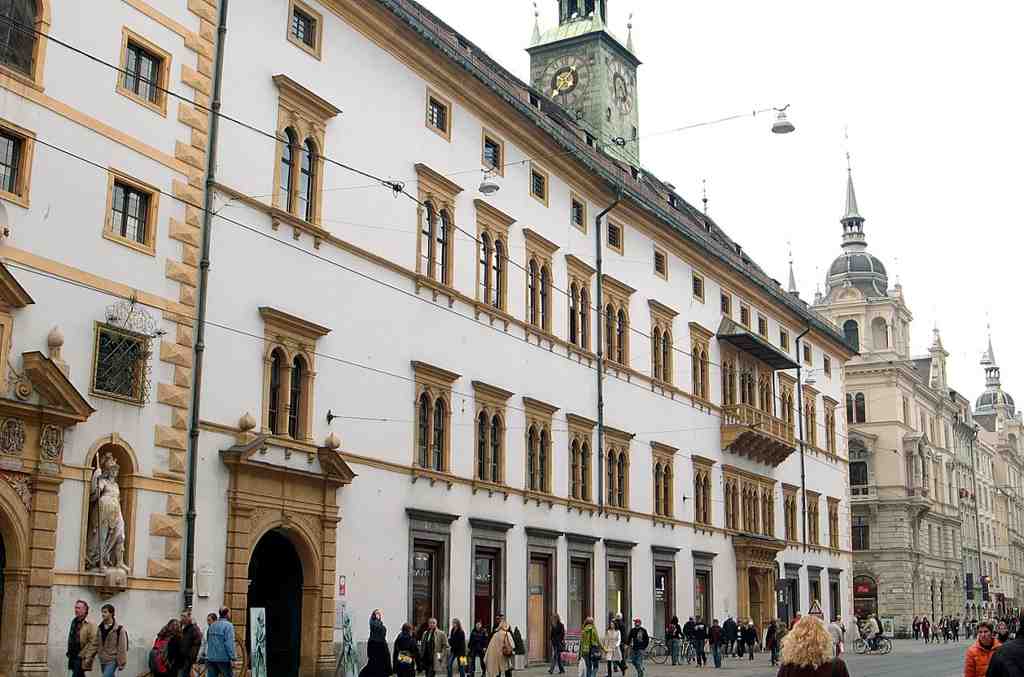
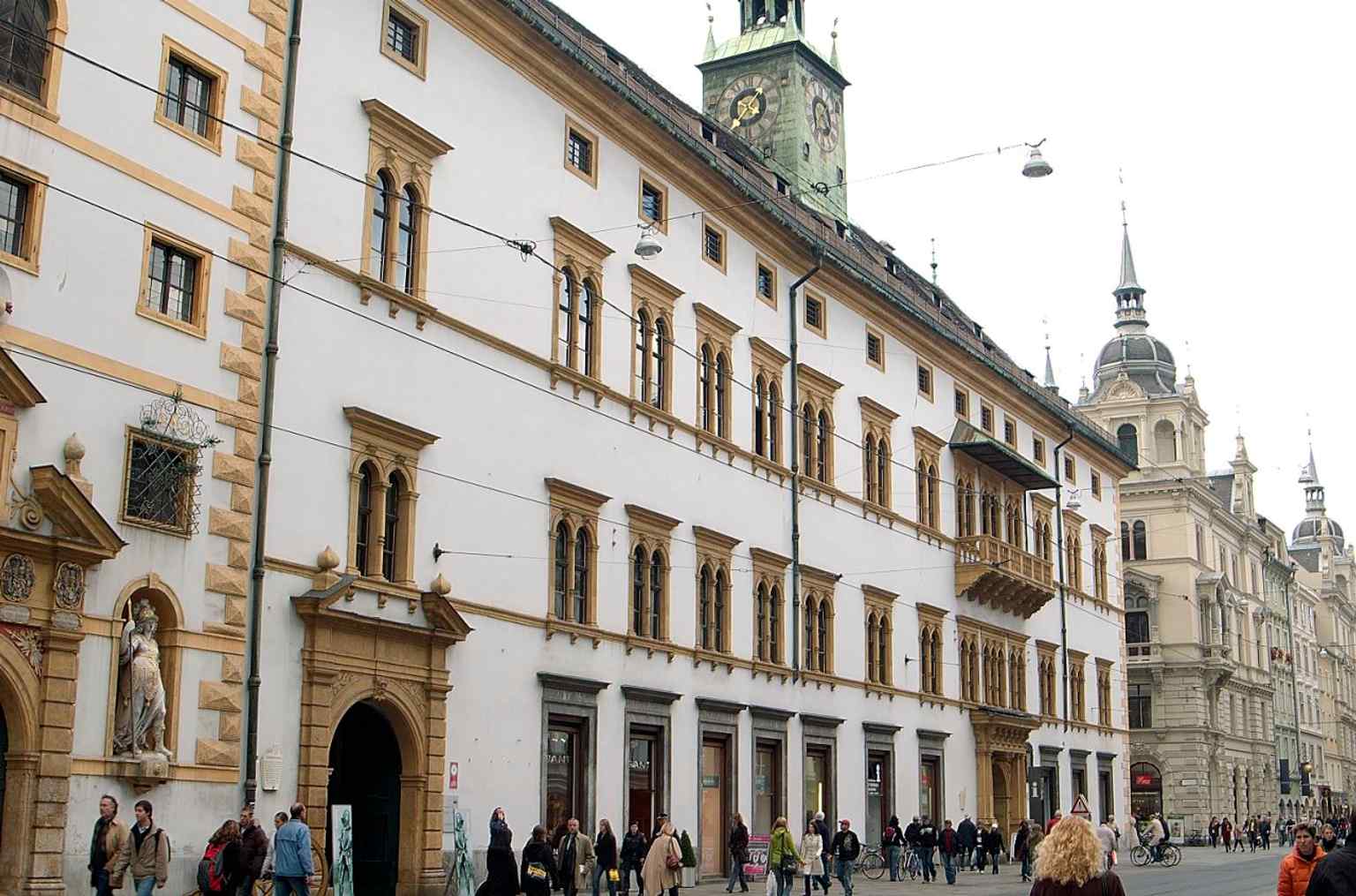
On your left is a pale stone Renaissance façade with round-arched windows, a broad arched portal, and a balcony with a stone balustrade above the entrance.

This is the Graz Country House, the Landhaus, and it carries itself with the confidence of a building that helped invent civic grandeur in Graz. Between fifteen twenty-seven and fifteen thirty-one, local builders began shaping this complex into something far more ambitious than the ordinary town houses that stood here before. Then, from fifteen fifty-seven, the Italian architect Domenico dell’Allio gave the main wing on Herrengasse its lasting character. The result became the first Renaissance building in the Styrian capital, and still one of the most important Renaissance civic buildings in Central Europe.

Its story is political as much as architectural. In fourteen ninety-four, the Styrian estates - that is, the regional body of nobles, clergy, and town representatives - bought property here for their offices and a chapel. They soon needed more room. By the mid-sixteenth century, those estates had openly taken on a Protestant identity, while the Catholic rulers held their own power nearby at the Burg. So this was not merely office space. It was a statement in stone: orderly, learned, Italianate, and unmistakably self-assured.

Even from out here, you can read some of that ambition. The round-arched portal dates to the Renaissance, and above it sits a balcony on heavy stone brackets, with a copper canopy whose underside carries painted grotesques from the restoration of eighteen ninety. Near the entrance hangs one of the building’s most charmingly stern details, the Rumortafel, a copper plaque from fifteen eighty-eight that forbade “rumoring and fighting” under threat of punishment. Apparently, even distinguished assemblies needed reminding not to behave like tavern brawlers.

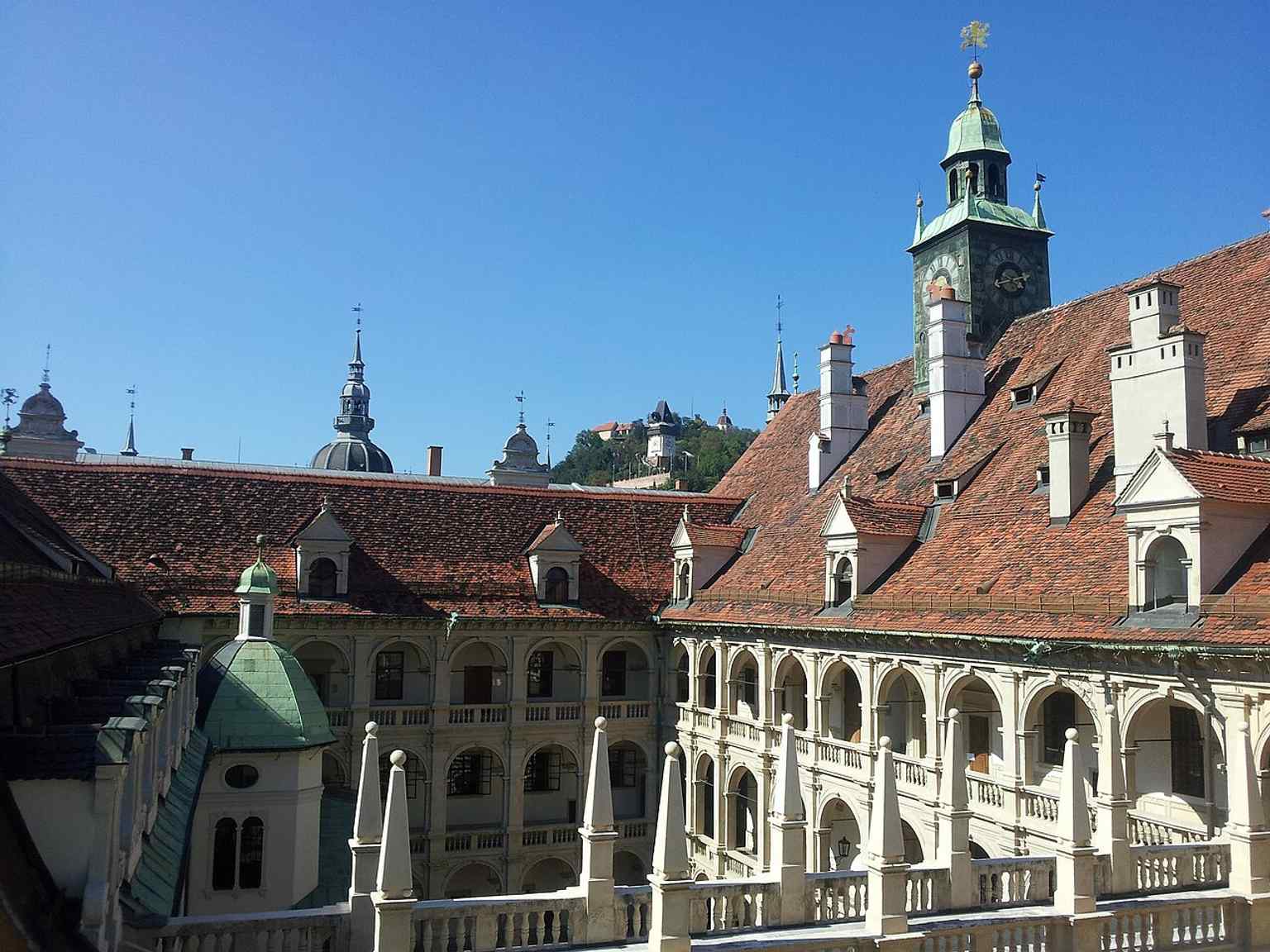
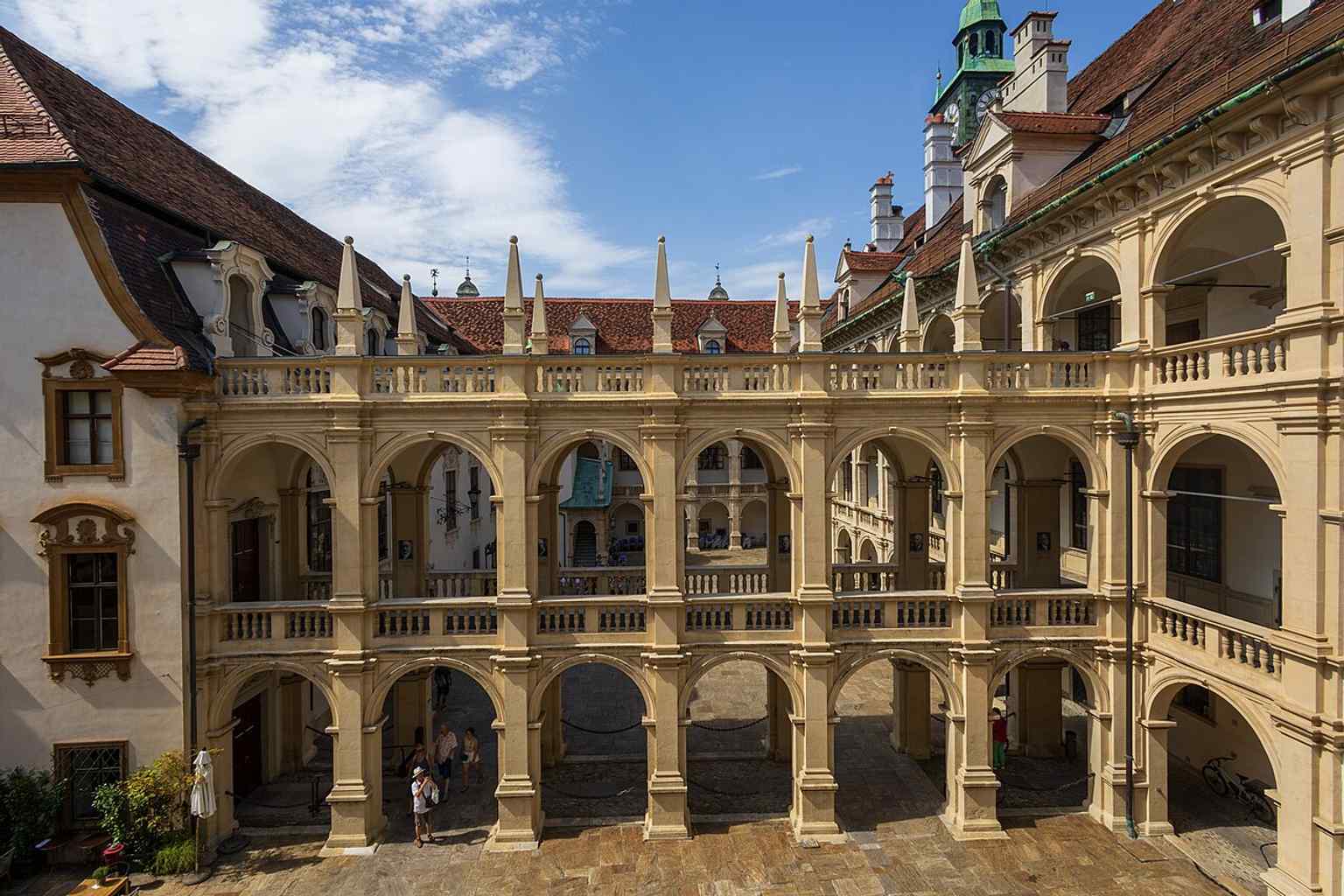
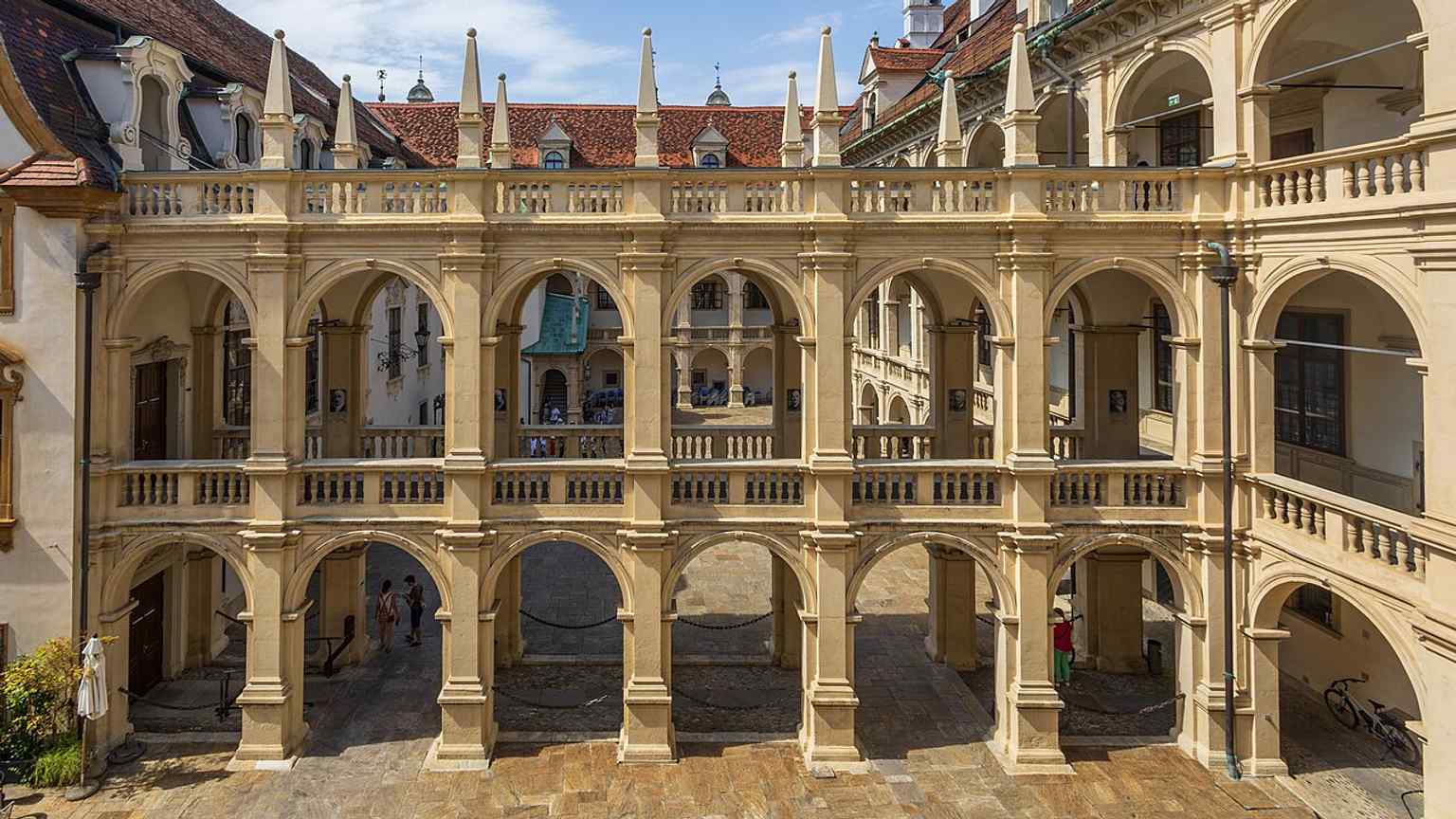
What the street cannot fully reveal is the marvel behind this façade. The courtyard picture shows the great courtyard: three storeys of arcades, with rhythmic arches, flat classical supports called pilasters, and galleries that seem to turn stone into lacework. That airy court remains one of the Landhaus’s defining spaces. Today it hosts events, but its proportions still whisper of power, ceremony, and careful control.
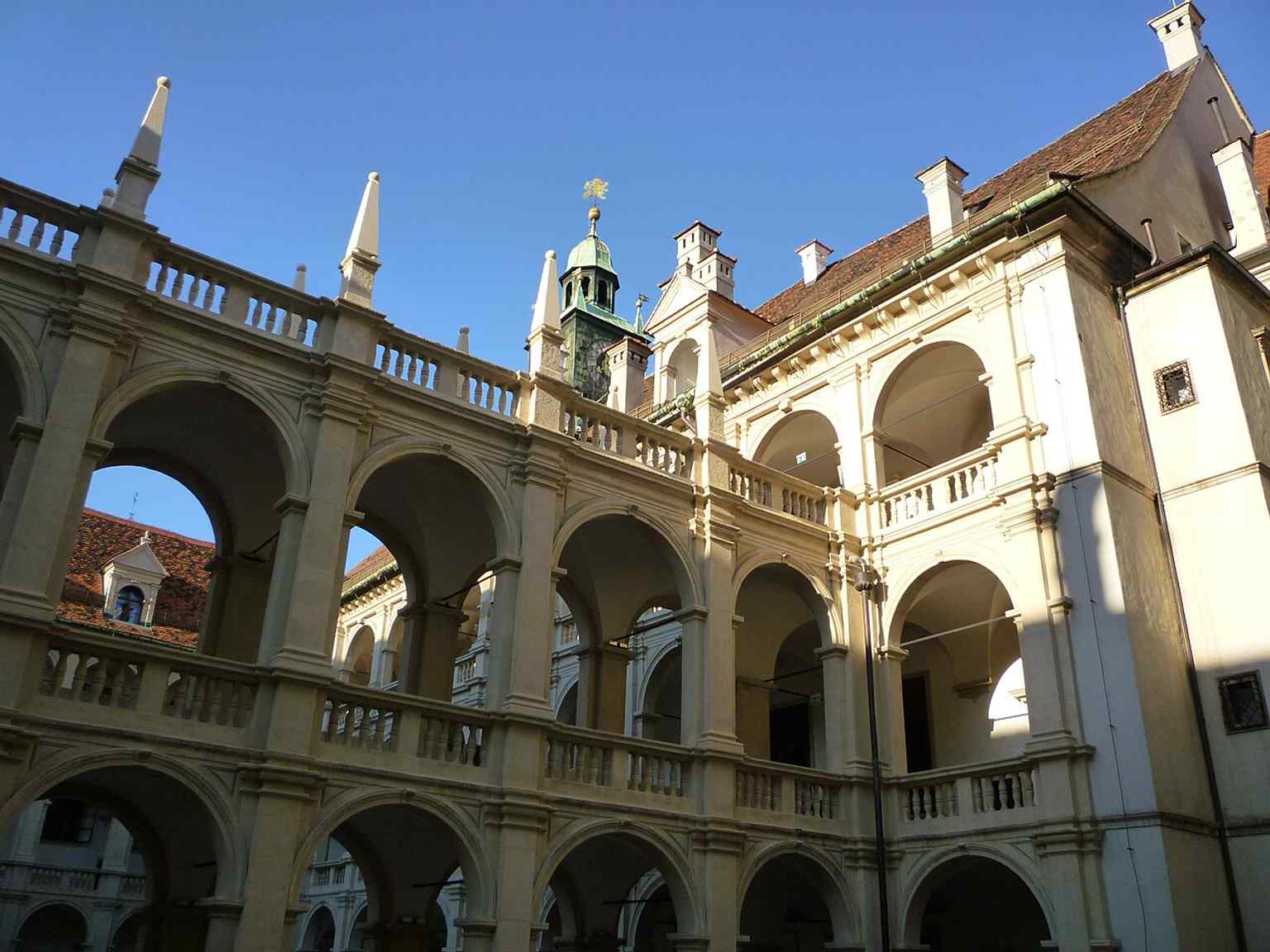
The great arcaded courtyard, one of the Landhaus’s defining features, where Renaissance arches frame the open space used for events today.
The great arcaded courtyard, one of the Landhaus’s defining features, where Renaissance arches frame the open space used for events today.Photo: Uoaei1, Wikimedia Commons, CC BY-SA 3.0 at. Cropped & resized.

At the courtyard’s centre stands an extraordinary fountain from fifteen ninety. If you’d like a closer look, the app shows its bronze canopy supported by baluster forms, satyr figures, and dolphin bodies, all crowned by an armoured warrior. It is a splendid example of Mannerism - a late Renaissance style that delighted in elegance, invention, and just a touch of theatrical excess.
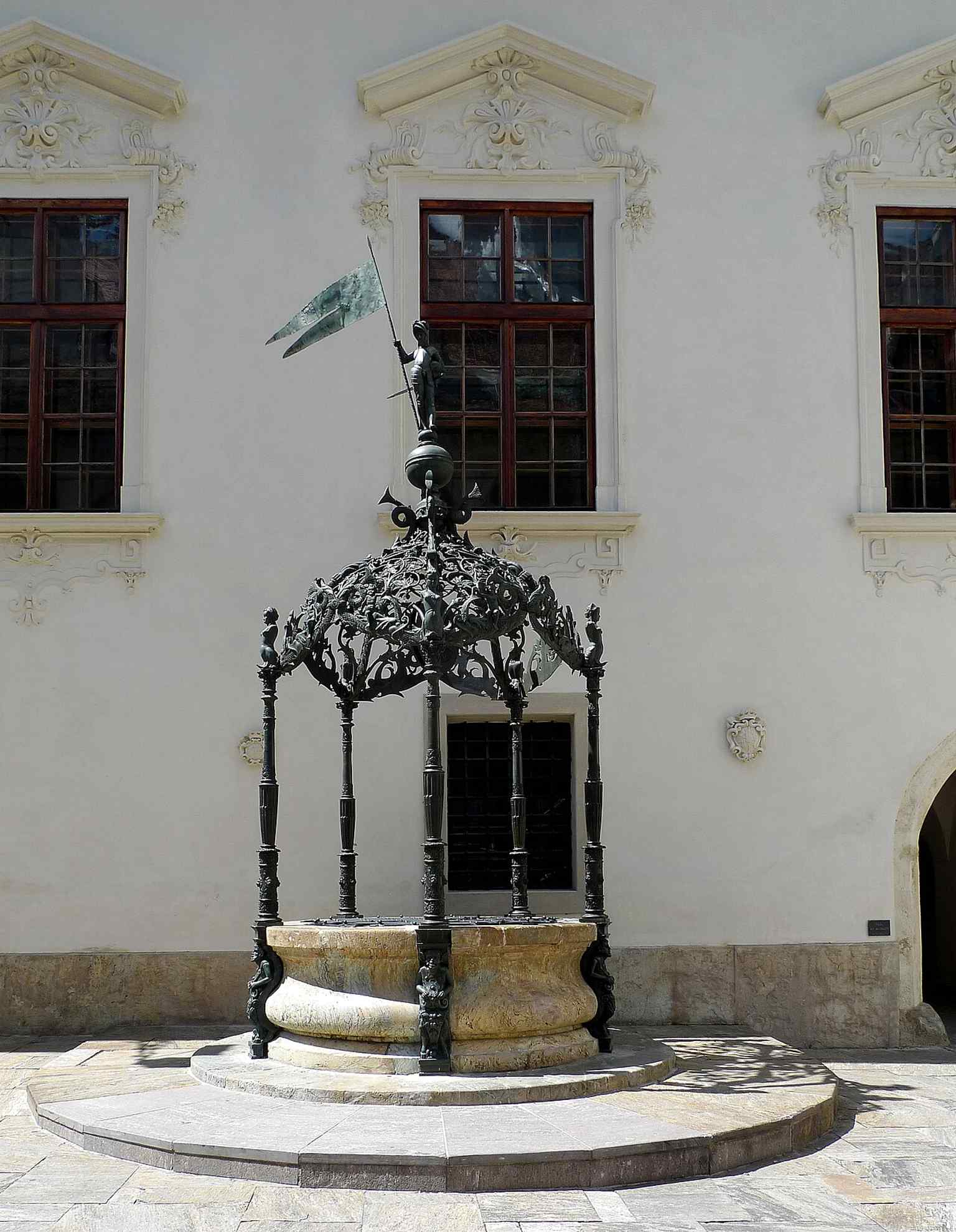
The Landhaus fountain in the courtyard — one of the notable bronze works in Graz, linked in the source text to a 1590 mannerist design.
The Landhaus fountain in the courtyard — one of the notable bronze works in Graz, linked in the source text to a 1590 mannerist design.Photo: E.mil.mil, Wikimedia Commons, CC BY-SA 3.0 at. Cropped & resized.

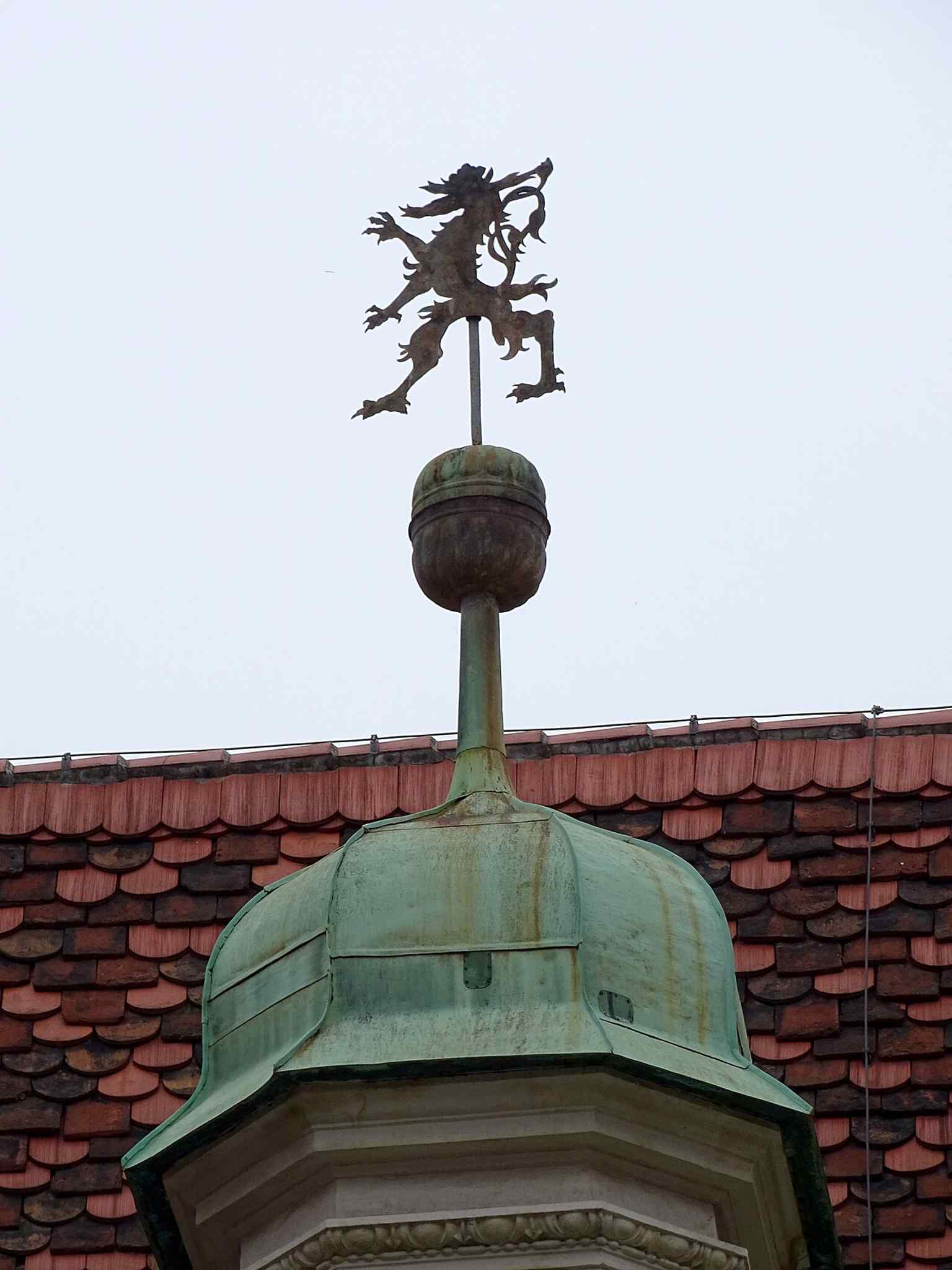
The complex kept growing over centuries: a Knight’s Hall in the earlier wings, a chapel added in the seventeenth century, and the Baroque Landstube, which now serves as the chamber of the Styrian parliament. Up above, the copper-clad roof turret still carries the Styrian panther, and its bell, cast in the sixteen-eighties, survived every wartime order to melt down metal.

The exterior is accessible at all hours, so you can always return for another unhurried look.

The Landhaus is Graz in concentrated form: disciplined, political, and unexpectedly graceful.

When you’re ready, continue toward the Hauptplatz, where the city’s public life spreads into the open.
A wide city-center view with the armory, Graz Country House, and town hall side by side — a useful overview of the historic Herrengasse ensemble.
A wide city-center view with the armory, Graz Country House, and town hall side by side — a useful overview of the historic Herrengasse ensemble.Photo: Matthias Süßen, Wikimedia Commons, CC BY-SA 4.0. Cropped & resized.
The Landhaus complex in its urban setting, showing the armory on the left and the country house in the middle, matching its role as part of Graz’s historic civic core.
The Landhaus complex in its urban setting, showing the armory on the left and the country house in the middle, matching its role as part of Graz’s historic civic core.Photo: Chb, Wikimedia Commons, CC BY-SA 3.0. Cropped & resized.
Seen from the Zeughaus, this angle highlights how the Country House forms part of a larger Renaissance civic complex around the courtyards.
Seen from the Zeughaus, this angle highlights how the Country House forms part of a larger Renaissance civic complex around the courtyards.Photo: Gugganij, Wikimedia Commons, CC BY-SA 3.0 at. Cropped & resized.
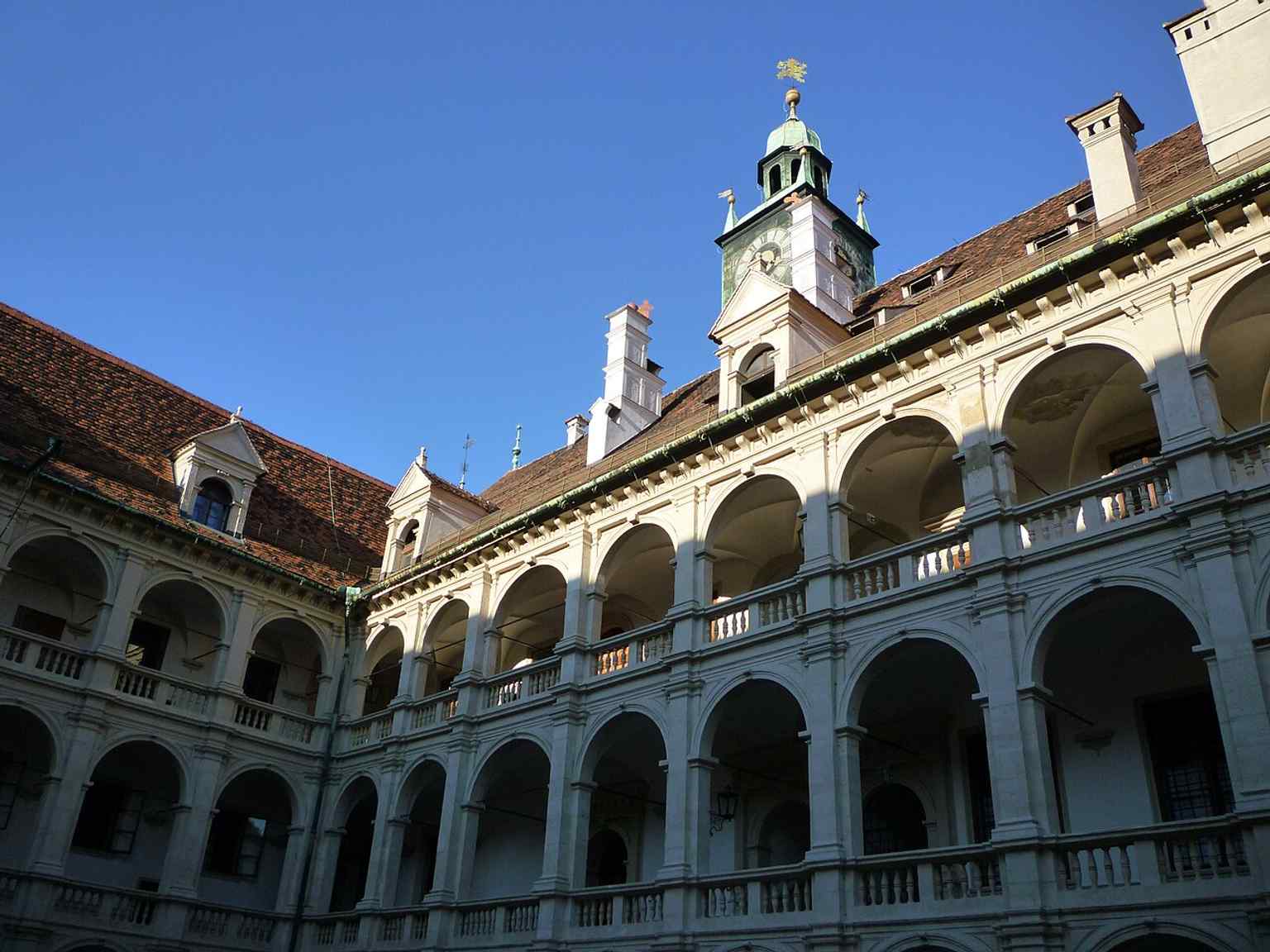
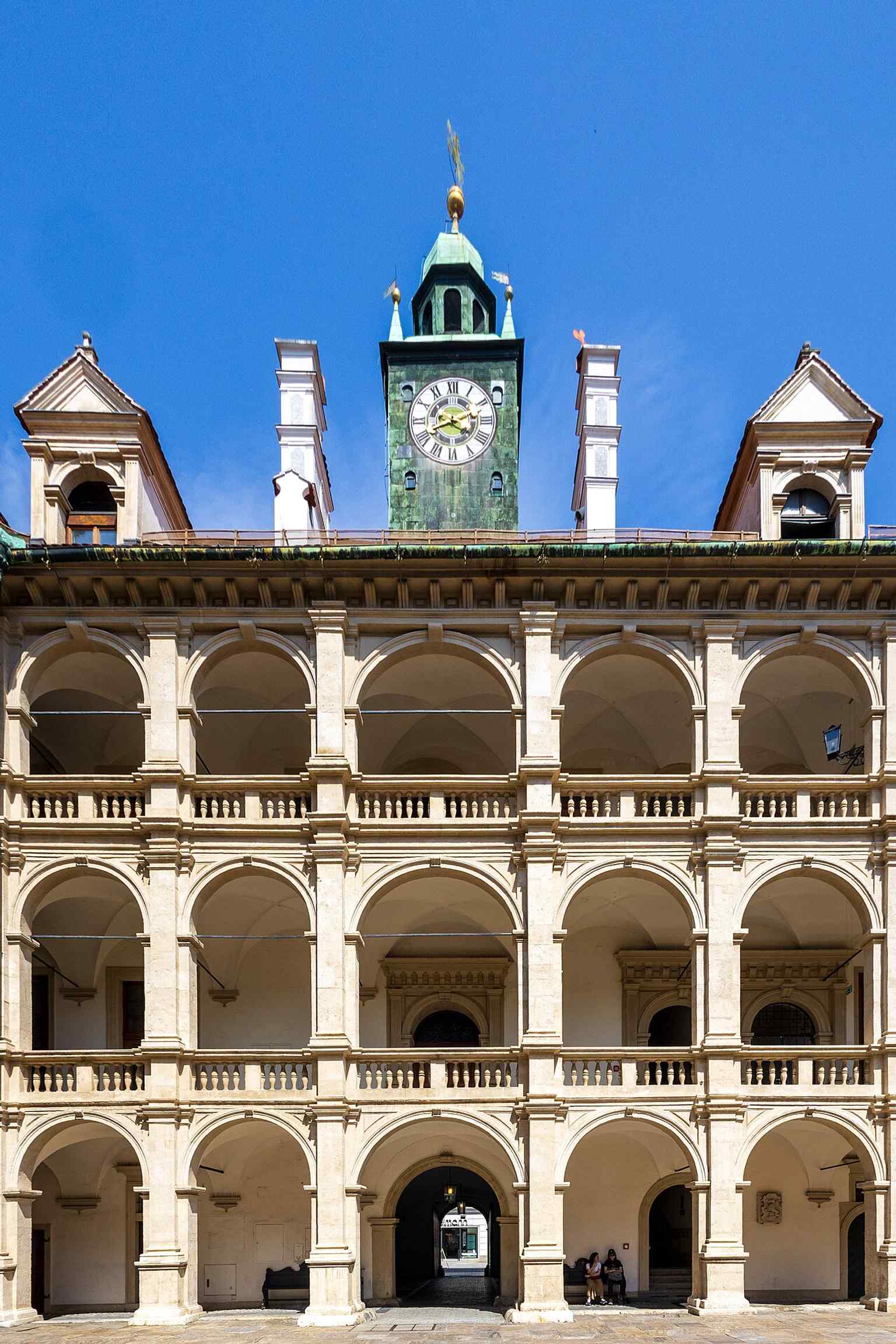
Another view into the main courtyard, useful for showing the three-storey arcades that make the Graz Country House so distinctive.
Another view into the main courtyard, useful for showing the three-storey arcades that make the Graz Country House so distinctive.Photo: Uoaei1, Wikimedia Commons, CC BY-SA 3.0 at. Cropped & resized.
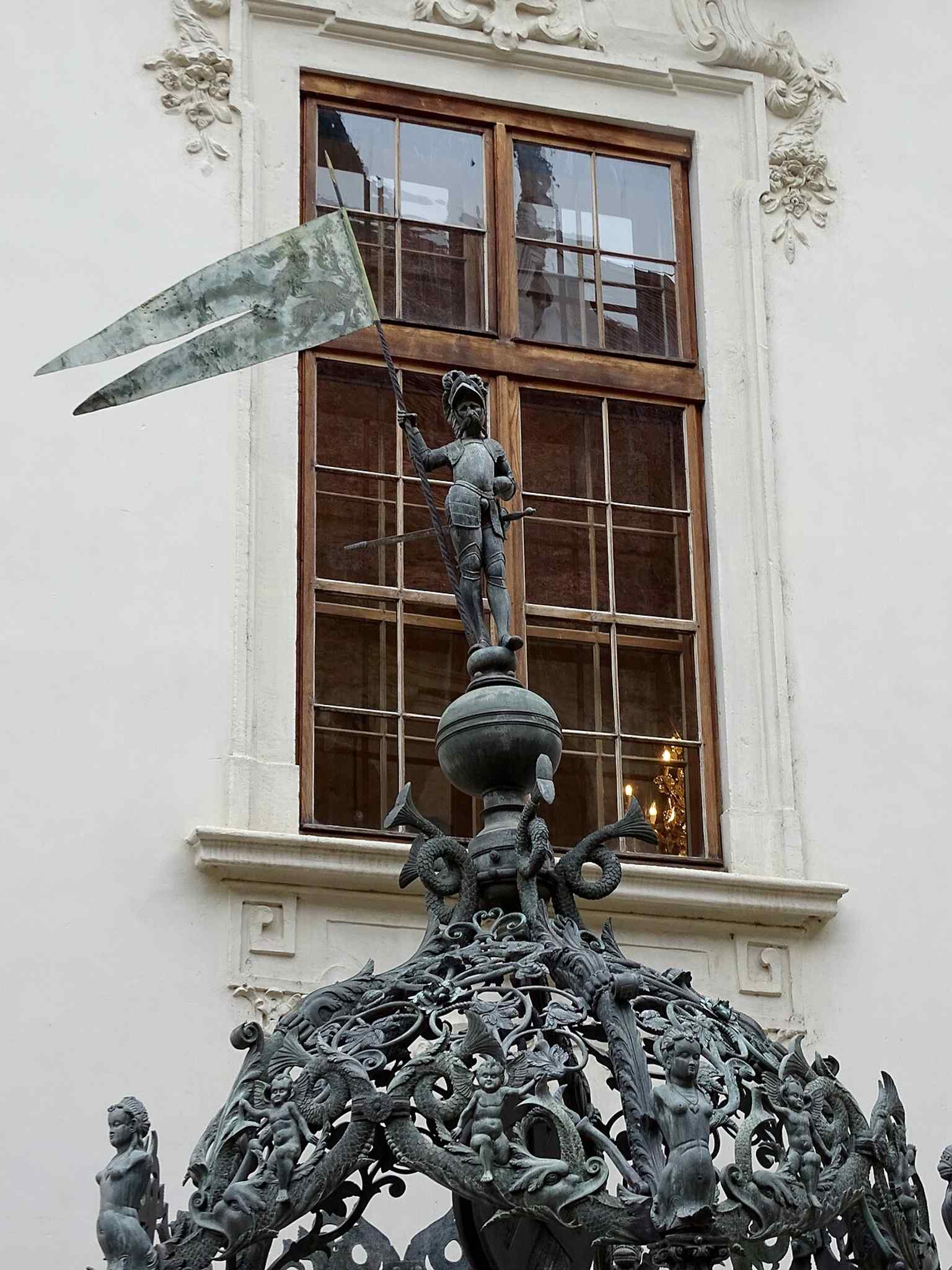
A close-up of the armored figure atop the courtyard fountain, echoing the source’s description of the fountain laurel crowned by a warrior.
A close-up of the armored figure atop the courtyard fountain, echoing the source’s description of the fountain laurel crowned by a warrior.Photo: Liuthalas, Wikimedia Commons, CC BY-SA 4.0. Cropped & resized.
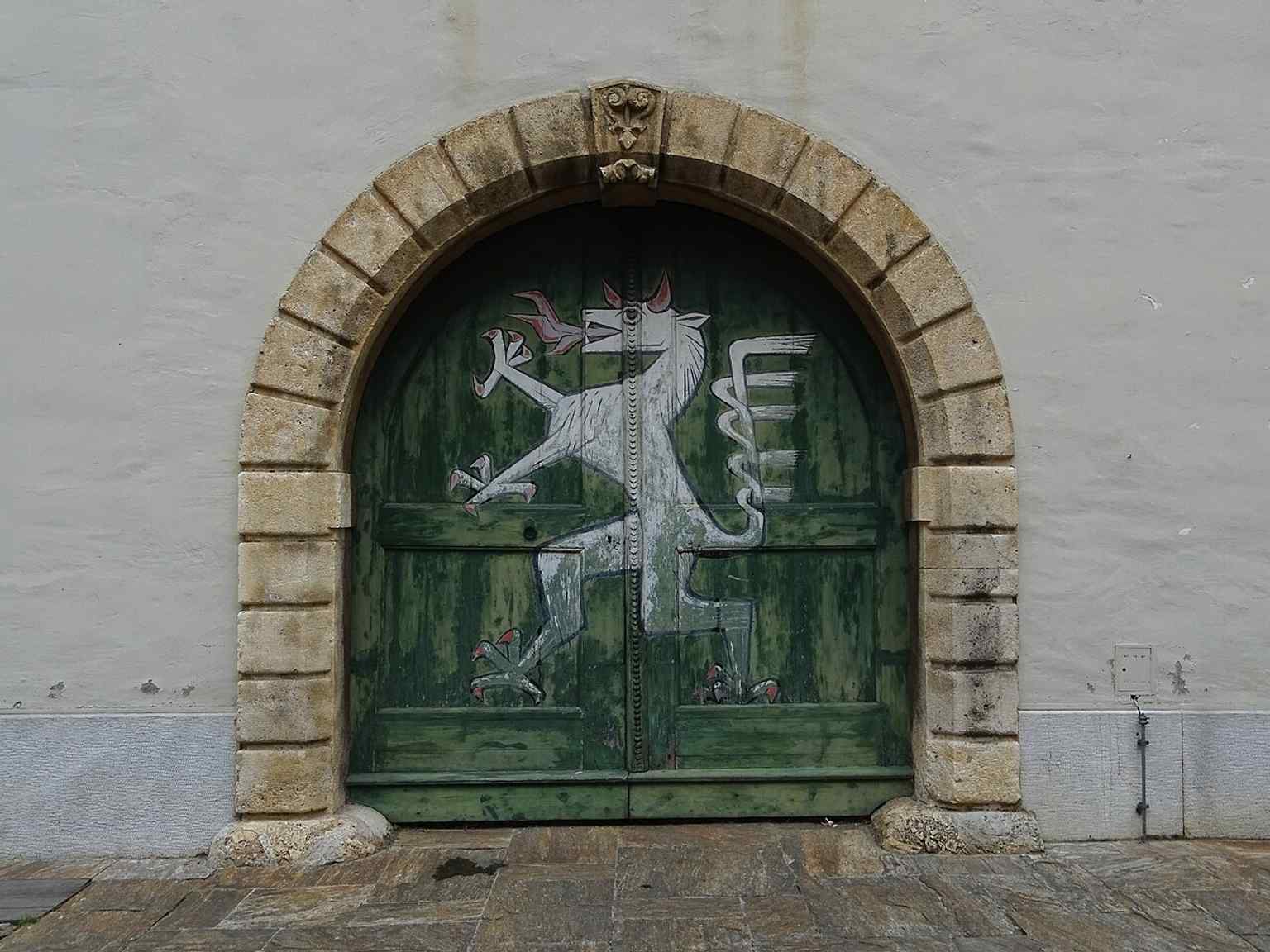
The steirischen Panther over a courtyard portal, a recurring regional symbol also mentioned in the building’s façades and roof details.
The steirischen Panther over a courtyard portal, a recurring regional symbol also mentioned in the building’s façades and roof details.Photo: Liuthalas, Wikimedia Commons, CC BY-SA 4.0. Cropped & resized.
The Panther on the chapel roof, a small but striking detail that reflects the Landhaus complex’s layered Renaissance and later additions.
The Panther on the chapel roof, a small but striking detail that reflects the Landhaus complex’s layered Renaissance and later additions.Photo: Liuthalas, Wikimedia Commons, CC BY-SA 4.0. Cropped & resized.
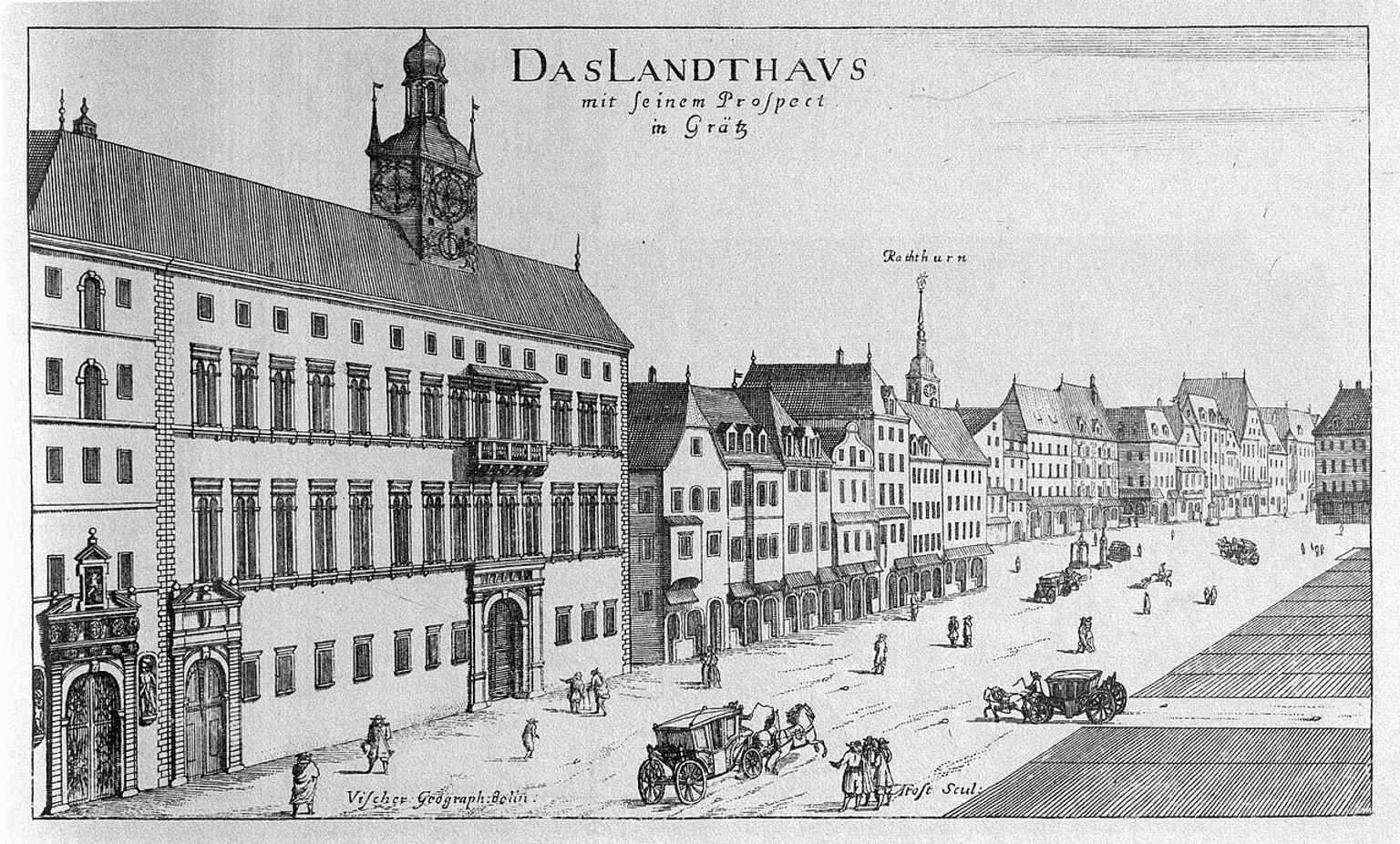
An early engraved view of Graz’s Landhaus from 1681, valuable for showing how the Renaissance complex was documented centuries ago.
An early engraved view of Graz’s Landhaus from 1681, valuable for showing how the Renaissance complex was documented centuries ago.Photo: Georg Matthäus Vischer, Wikimedia Commons, Public domain. Cropped & resized.
A clean modern exterior view of the Country House, useful for introducing the building’s Renaissance façade and Herrengasse presence.
A clean modern exterior view of the Country House, useful for introducing the building’s Renaissance façade and Herrengasse presence.Photo: Matthias Süßen, Wikimedia Commons, CC BY-SA 4.0. Cropped & resized.
The courtyard-side exterior of the Landhaus, showing the monument as a whole rather than just one façade.
The courtyard-side exterior of the Landhaus, showing the monument as a whole rather than just one façade.Photo: Matthias Süßen, Wikimedia Commons, CC BY-SA 4.0. Cropped & resized.
Contemporary art installed in the Zeughaushof, showing how the Landhaus courtyards are still used as exhibition spaces today.
Contemporary art installed in the Zeughaushof, showing how the Landhaus courtyards are still used as exhibition spaces today.Photo: Liuthalas, Wikimedia Commons, CC BY-SA 4.0. Cropped & resized.
arrow_back Back to Graz Audio Tour: Echoes of Empire and Art in Innere Stadt
Loved by travellers

Thousands of tours started.
Plenty of opinions.

4.8 across the App Store and Google Play. Here's a few we keep coming back to.

starstarstarstarstar
This was a solid way to get to know Brighton without feeling like a tourist. The narration had depth and context, but didn't overdo it.
Christoph
Christoph
Brighton Tour
starstarstarstarstar
Started this tour with a croissant in one hand and zero expectations. The app just vibes with you, no pressure, just you, your headphones, and some cool stories.
download Get the app

Pop your headphones in.
Step outside.

Free to download. Tours in every city. Start in 60 seconds — no account, no card.

Download on the App StoreGet it on Google Play
starstarstarstarstar_half
4.8
AudaTours app icon
headphones
~ 4 min until your first tour starts
public
1,000+ cities worldwide
all_inclusive
AudaTours
Unlimited

Every tour. Every city. One subscription.

3101 tours2271 cities138 countries50+ languages