AudaTours logoAudaTours

Stop 6 of 15

Franciscan Church, Graz

Franciscan Church, Graz
Franciscan Monastery Graz
Franciscan Monastery GrazPhoto: E.mil.mil, Wikimedia Commons, CC BY 3.0. Cropped & resized.

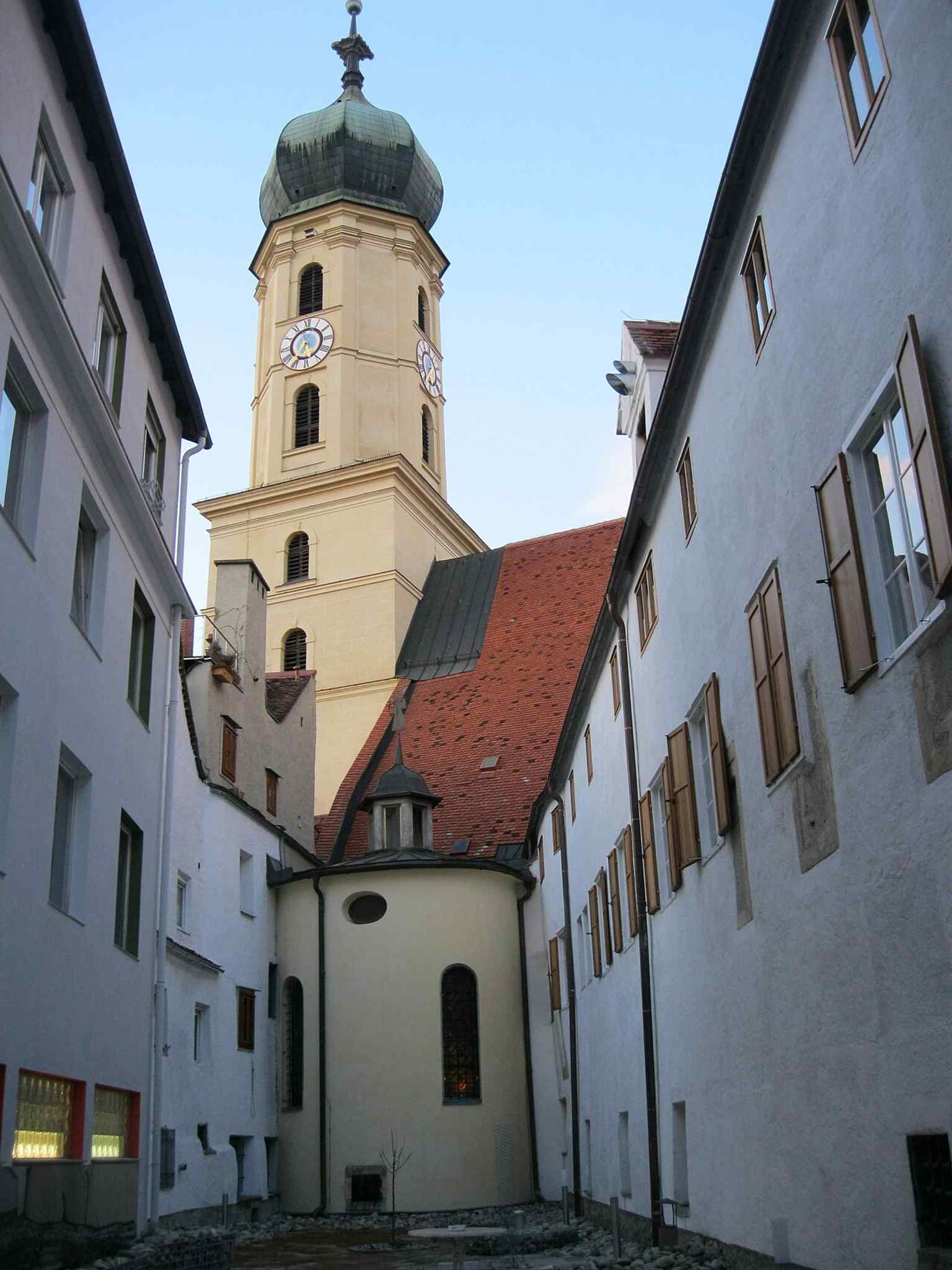
On your left, look for a pale stone church front joined tightly to lower monastery buildings, with a tall square tower topped by a rounded onion dome as its unmistakable marker.

This Franciscan monastery has stood by the Mur for so long that it feels less like a single building than a settled habit of the city. The first Franciscan brothers arrived in Graz around the year twelve thirty or twelve thirty-nine. We even know the names of two of them: Albert and Marchward. They belonged to the Order of Friars Minor, which simply means the “lesser brothers” - men who aimed to live humbly, with very little, in service to ordinary people. Their house here became the first religious foundation of its kind within Graz itself.

The church beside the convent began as a plain, towerless mendicant church - that is, a church for an order that lived on alms rather than land and wealth. A papal indulgence, granted by Pope Alexander the Fourth in either twelve fifty-seven or twelve seventy-seven, helped raise funds for the building. In the early fourteen hundreds, the brothers added a longer, elevated choir at the east end, the part of the church reserved for clergy and liturgical singing. Then, after fifteen fifteen, they reshaped the church into a three-aisled Gothic hall church, financed by donations, and finished the work by fifteen nineteen.

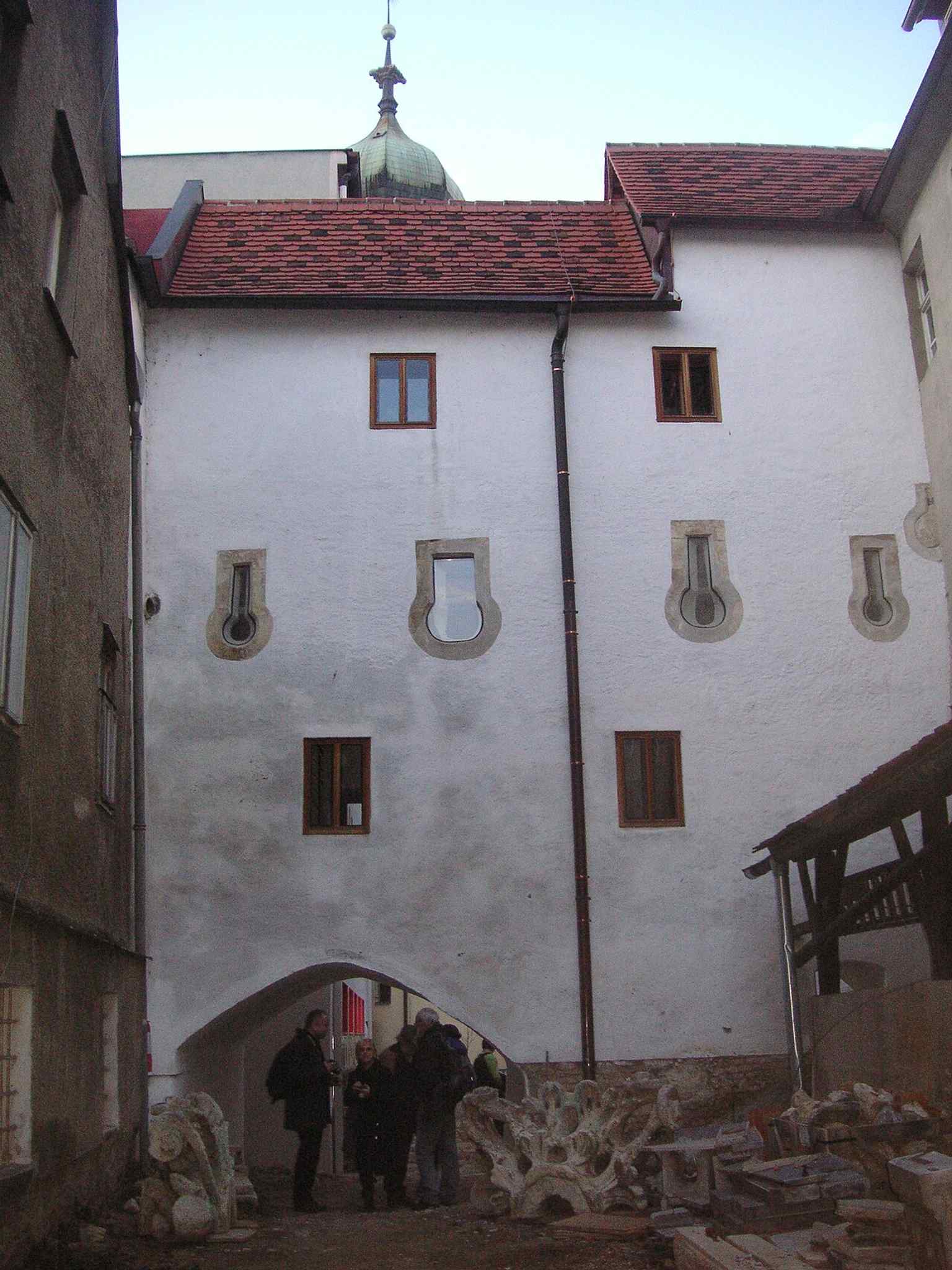
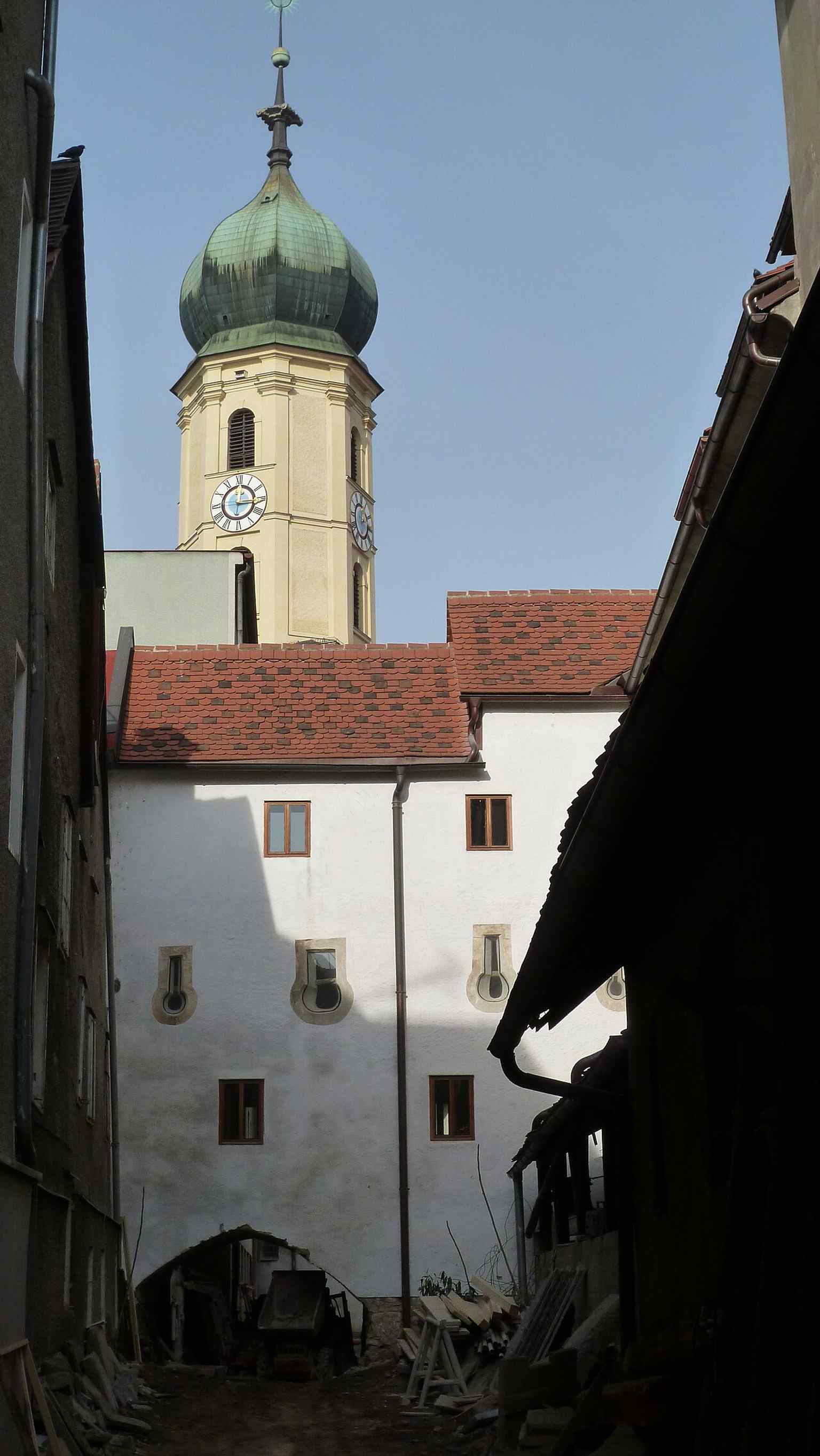
The tower you notice now came later, between sixteen thirty-six and sixteen forty-three. It was not built merely to look handsome. It served as a Wehrturm, a defensive tower, part of a city edge that once needed watching. The accompanying image shows the loopholes and stern masonry that hint at that tougher side of the monastery. Around seventeen forty, builders replaced the original pointed roof with the onion dome you see today, giving the tower a softer silhouette without erasing its vigilance.
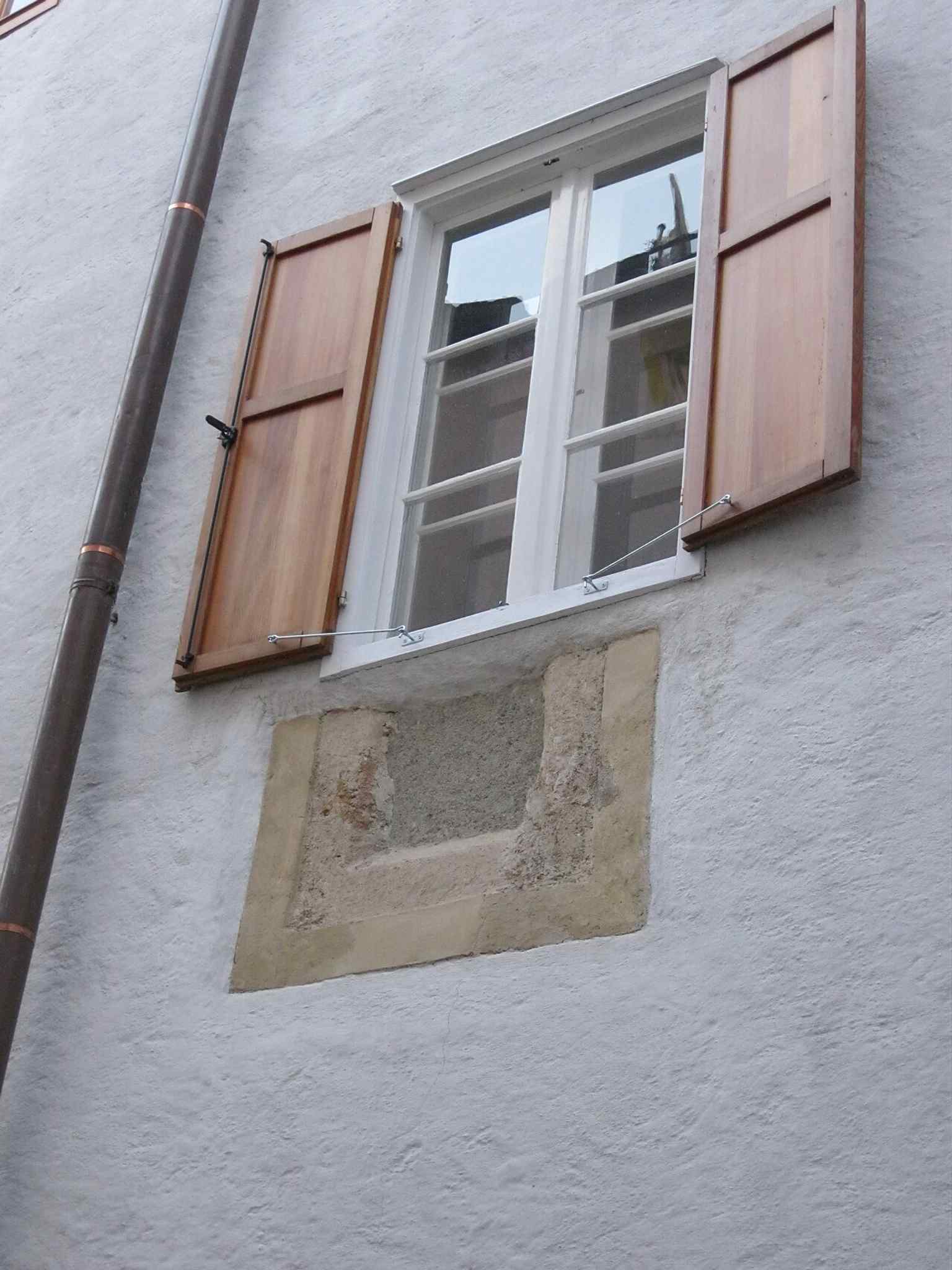
The wall’s loopholes and masonry hint at the building’s defensive past, including the former Wehrturm mentioned in the history.
The wall’s loopholes and masonry hint at the building’s defensive past, including the former Wehrturm mentioned in the history.Photo: Hubertl, Wikimedia Commons, CC BY-SA 4.0. Cropped & resized.

This place survived a surprisingly close call in the reign of Emperor Joseph the Second. Around seventeen eighty-five, many monasteries faced closure if rulers judged them unproductive. The Franciscans here escaped that fate by taking on parish work. Their church, dedicated to the Assumption of Mary, had already become a parish church in seventeen eighty-three, and that practical service helped save the whole community.

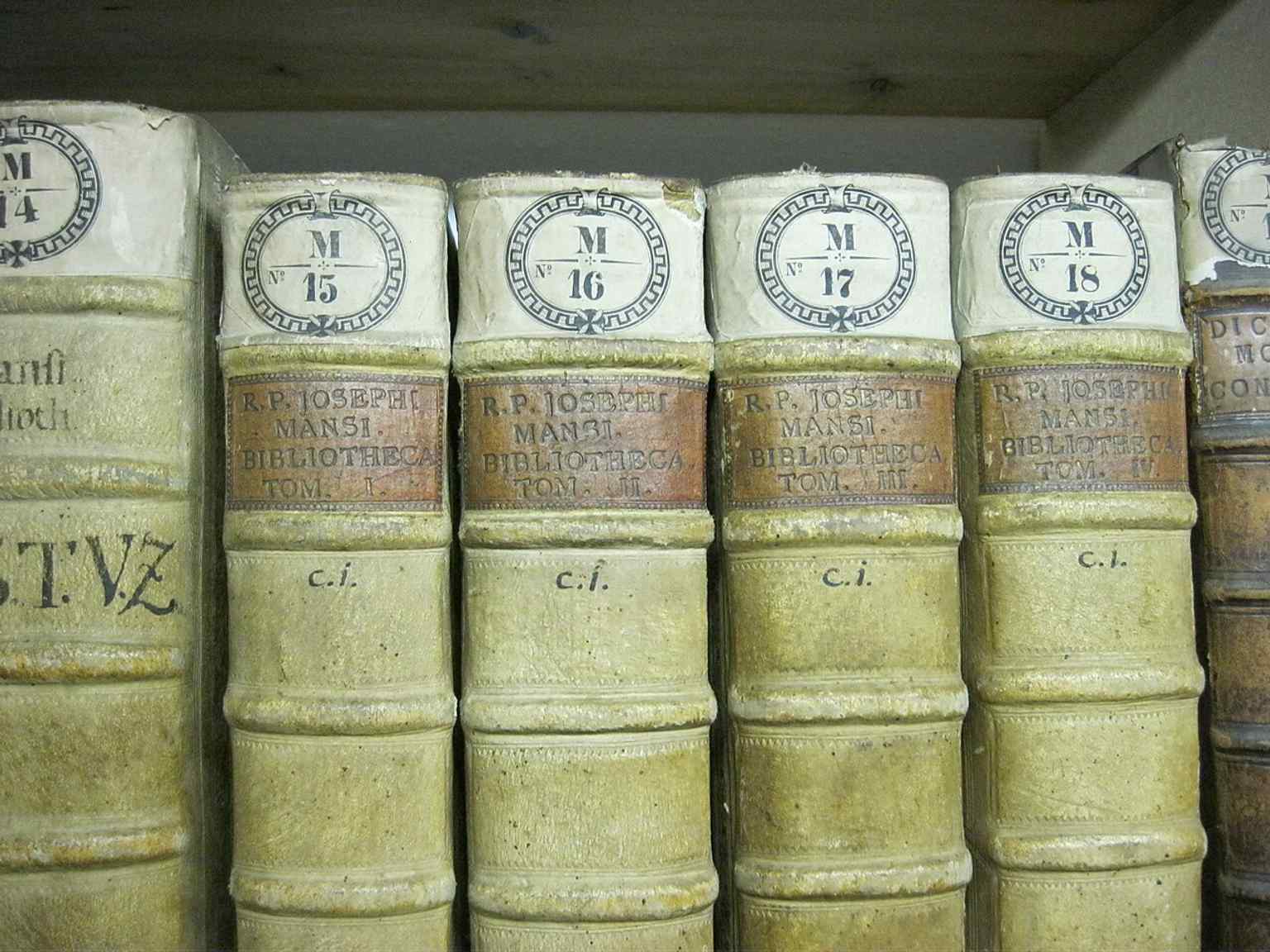
There is another treasure here, though you would not guess it from the street. The monastery library began in fourteen sixty-three and later became the central repository for the older book collections of the Viennese Franciscan province. If you fancy a look, the app shows shelves of it here. The collection holds about thirteen thousand titles up to the seventeenth century, including eight hundred and eighteen incunabula - books printed in the earliest age of printing - along with parchment leaves of the Vulgate from around the year nine hundred, and even fragments of Parzival and Willehalm in Middle High German. Quite a formidable memory for a house founded on poverty.
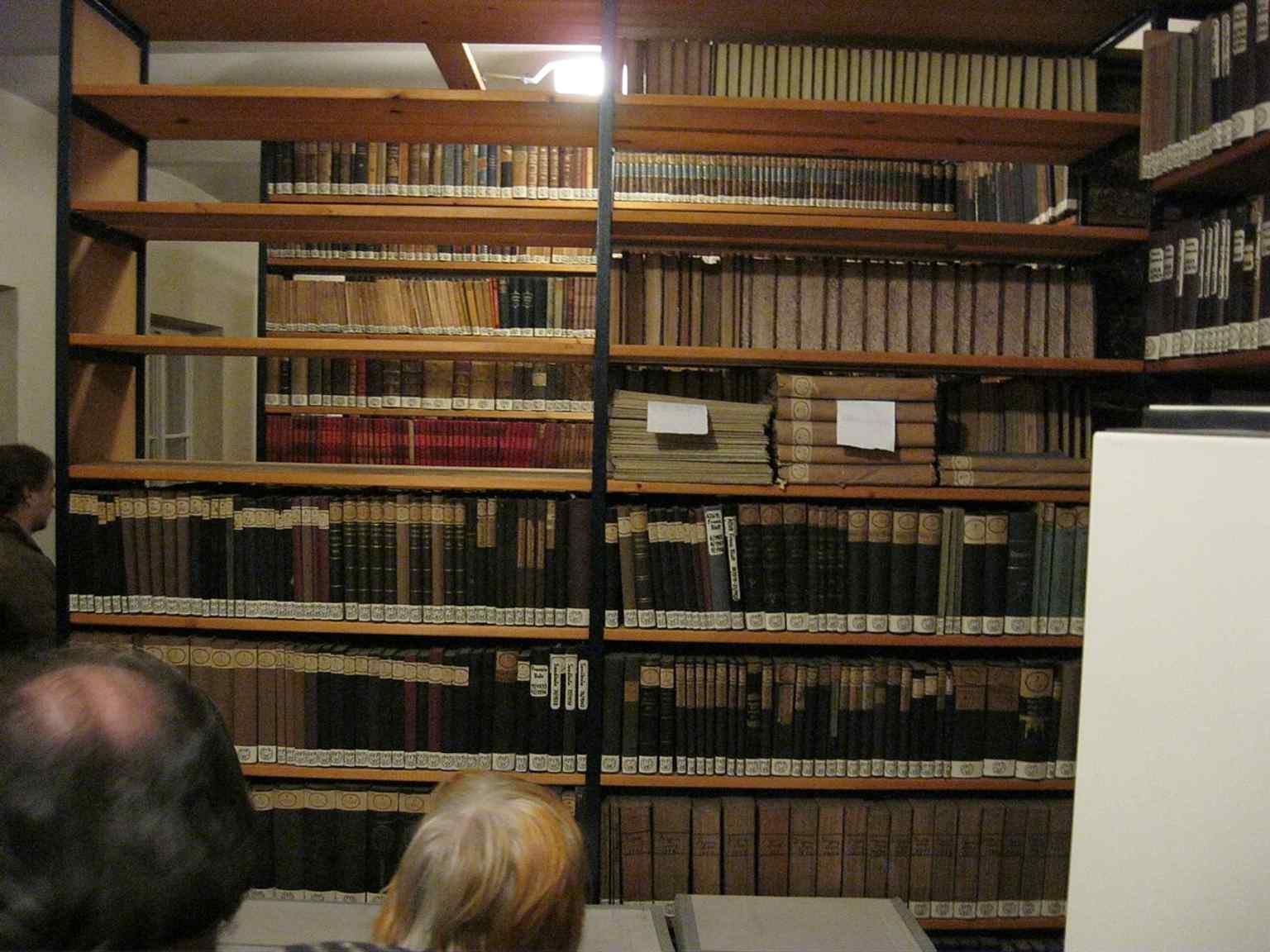
The monastery library holds one of Styria’s most valuable book collections, with rare early prints and manuscripts gathered from several Franciscan houses.
The monastery library holds one of Styria’s most valuable book collections, with rare early prints and manuscripts gathered from several Franciscan houses.Photo: Hubertl, Wikimedia Commons, CC BY-SA 4.0. Cropped & resized.

Even the ground plan keeps a little mystery. It sits at an odd angle to the nearby streets, perhaps because the site once lay on a small island between branches of the Mur; another theory says the church aligns with the sunrise on the feast day of Saint Francis, the fourth of October. Either way, the friars left Graz a building that does not quite obey the grid, and is more interesting for it.

If you plan to return, the monastery is generally open daily from seven AM until four forty-five PM.

A house of humility, learning, and quiet endurance - not a bad legacy at all. When you are ready, continue on toward the Graz Country House.
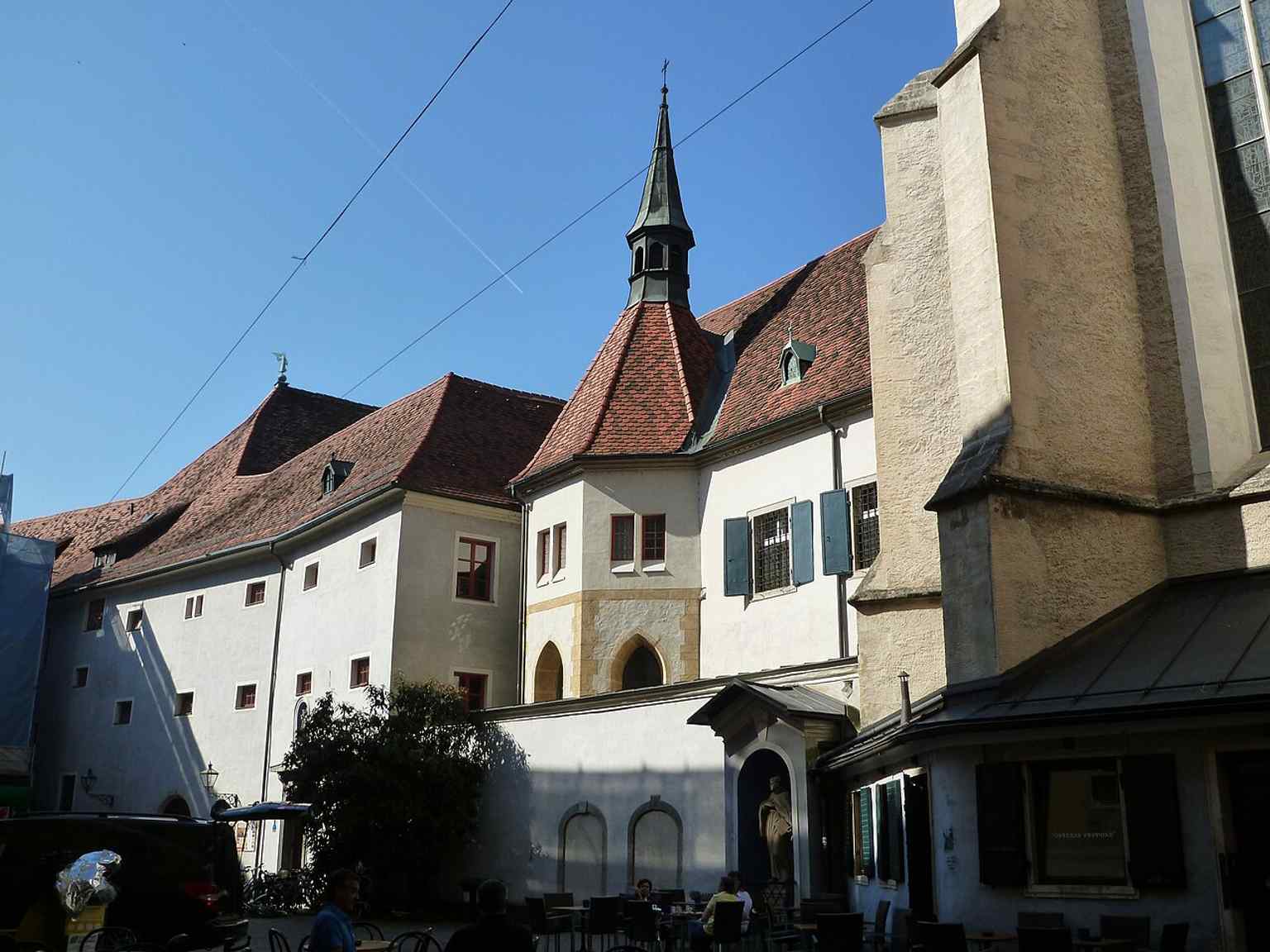
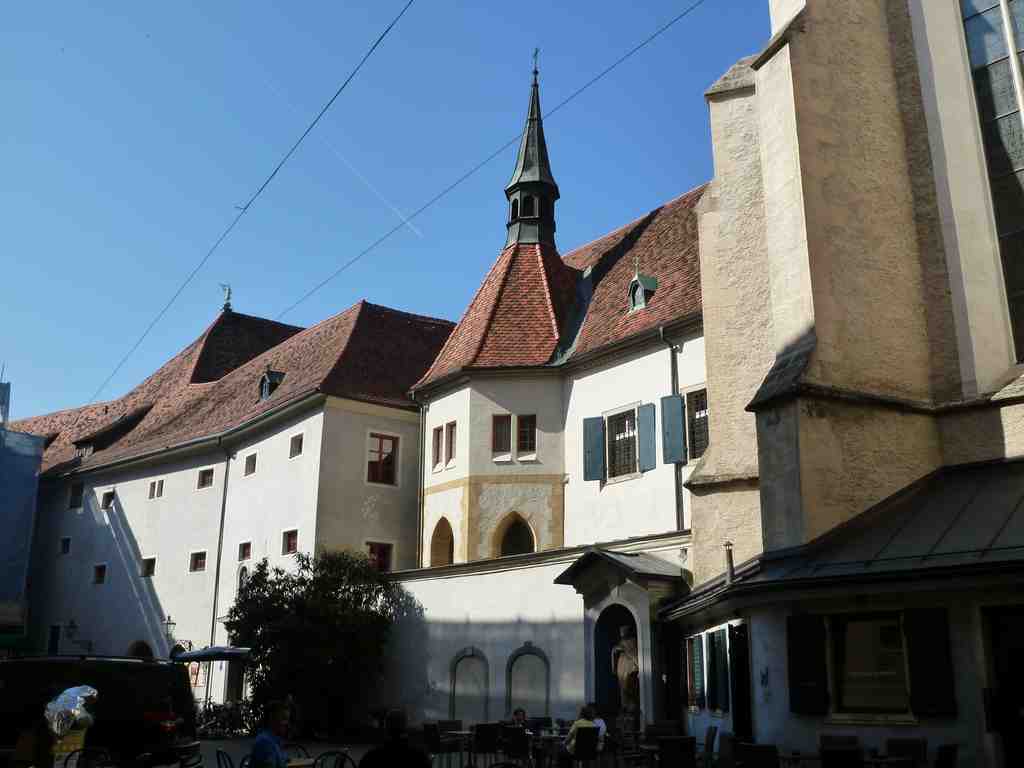
The monastery’s sunlit east side shows how the church and convent are tightly woven into Graz’s old city wall system.
The monastery’s sunlit east side shows how the church and convent are tightly woven into Graz’s old city wall system.Photo: E.mil.mil (talk), Wikimedia Commons, CC BY 3.0. Cropped & resized.
A wider view of the convent and former fortifications, matching the monastery’s location beside surviving sections of the medieval city wall.
A wider view of the convent and former fortifications, matching the monastery’s location beside surviving sections of the medieval city wall.Photo: E.mil.mil (talk), Wikimedia Commons, CC BY-SA 3.0 at. Cropped & resized.
The back side of the monastery beside the old city wall recalls how this Franciscan site once stood on the edge of the medieval city.
The back side of the monastery beside the old city wall recalls how this Franciscan site once stood on the edge of the medieval city.Photo: Hubertl, Wikimedia Commons, CC BY-SA 4.0. Cropped & resized.
The former defensive tower at the rear of the complex reflects the 17th-century fortification role of the monastery.
The former defensive tower at the rear of the complex reflects the 17th-century fortification role of the monastery.Photo: Liuthalas (talk), Wikimedia Commons, CC BY-SA 3.0 at. Cropped & resized.
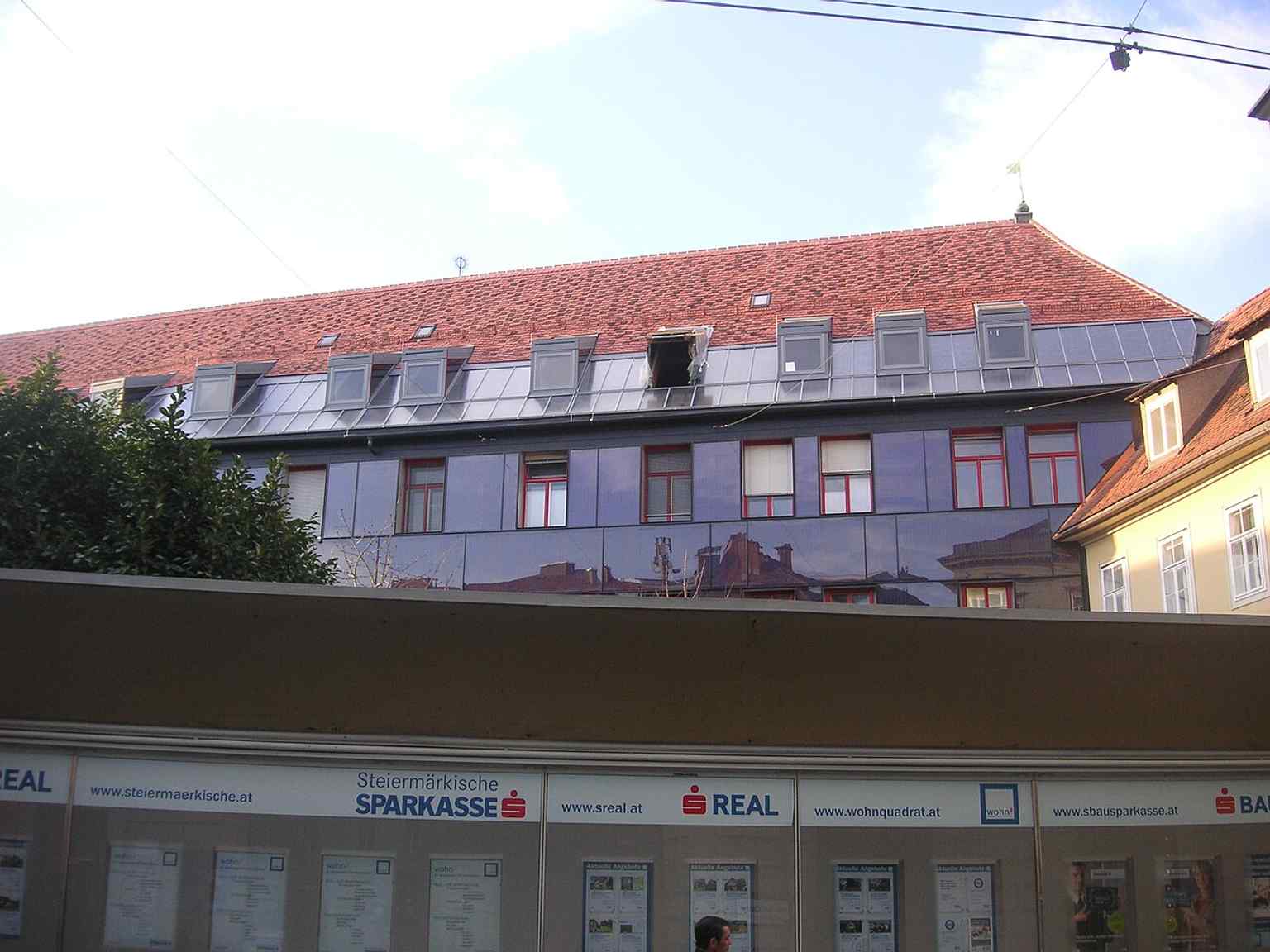
Modern solar panels on the long facade show the monastery’s recent technical upgrades, added without fully covering the old sundial.
Modern solar panels on the long facade show the monastery’s recent technical upgrades, added without fully covering the old sundial.Photo: Liuthalas (talk), Wikimedia Commons, CC BY-SA 3.0 at. Cropped & resized.
Rows of carefully preserved shelves and cases underline the library’s role as the central archive for the Austrian Franciscan province.
Rows of carefully preserved shelves and cases underline the library’s role as the central archive for the Austrian Franciscan province.Photo: Hubertl, Wikimedia Commons, CC BY-SA 4.0. Cropped & resized.
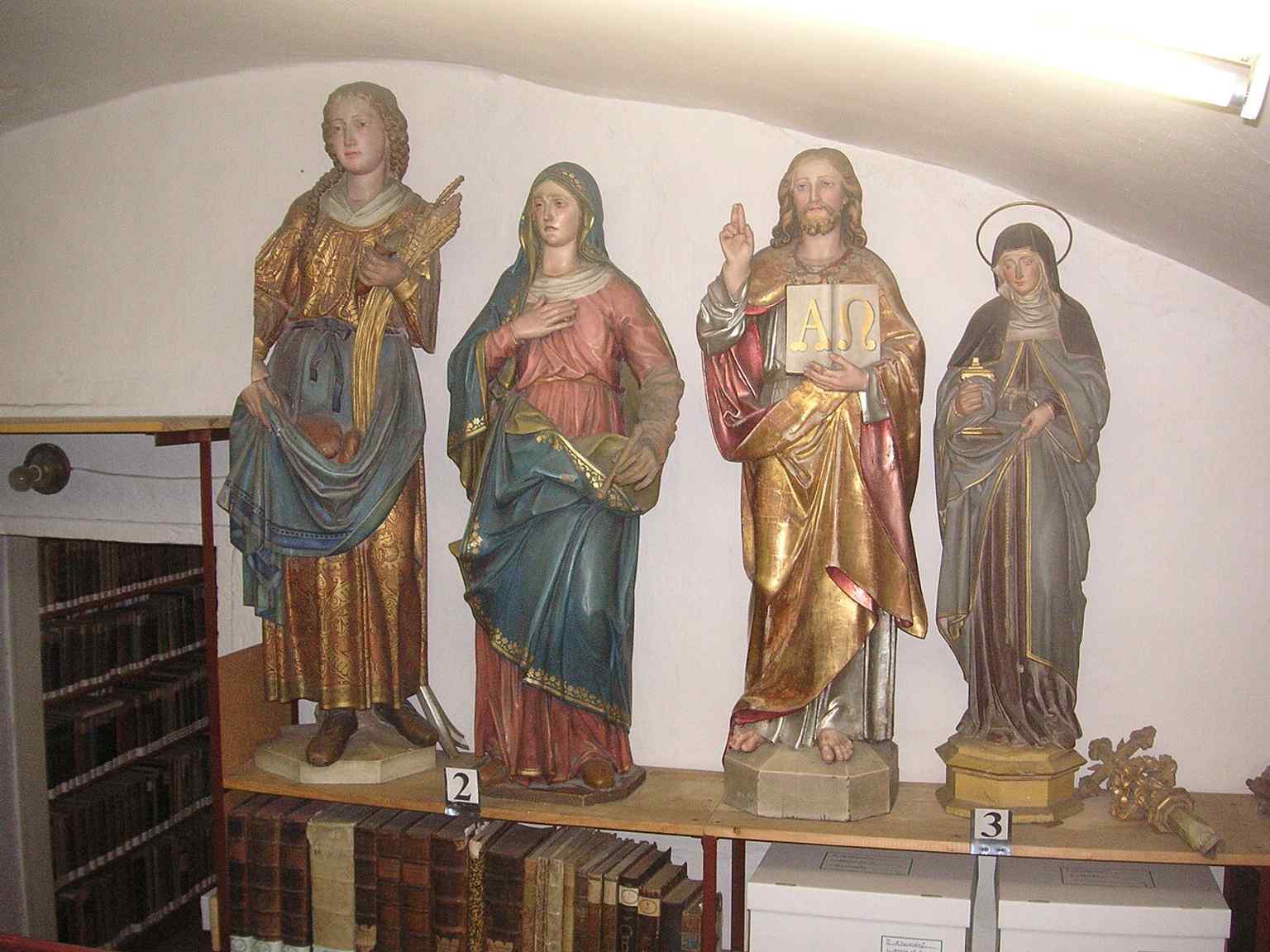
Statues in the library add a devotional layer to a room that safeguards thousands of rare theological and historical volumes.
Statues in the library add a devotional layer to a room that safeguards thousands of rare theological and historical volumes.Photo: Liuthalas (talk), Wikimedia Commons, CC BY-SA 3.0 at. Cropped & resized.
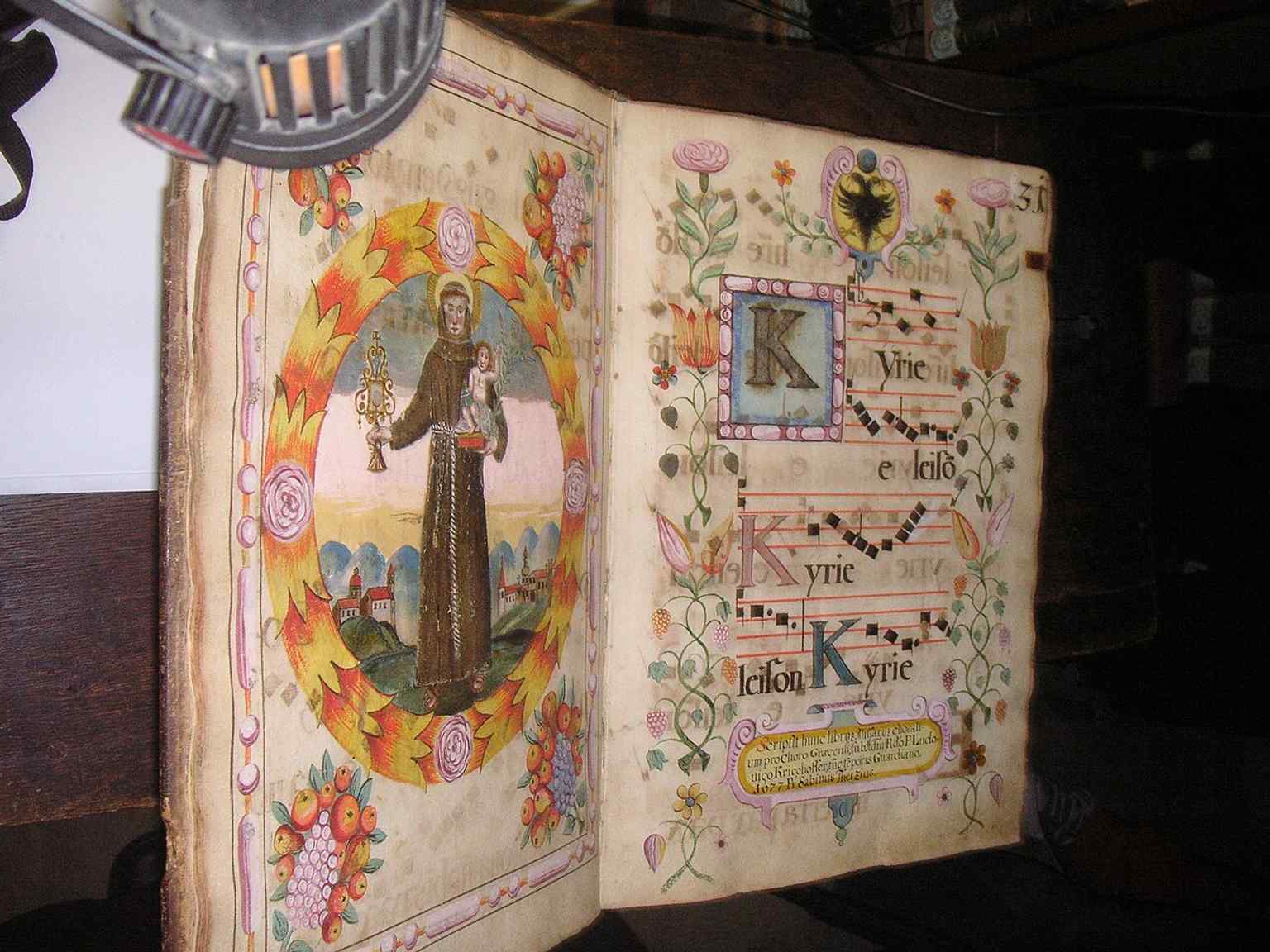
A close look at a book in the Franciscan library connects to the convent’s long scholarly tradition, which reaches back to the 15th century.
A close look at a book in the Franciscan library connects to the convent’s long scholarly tradition, which reaches back to the 15th century.Photo: Liuthalas (talk), Wikimedia Commons, CC BY-SA 3.0 at. Cropped & resized.
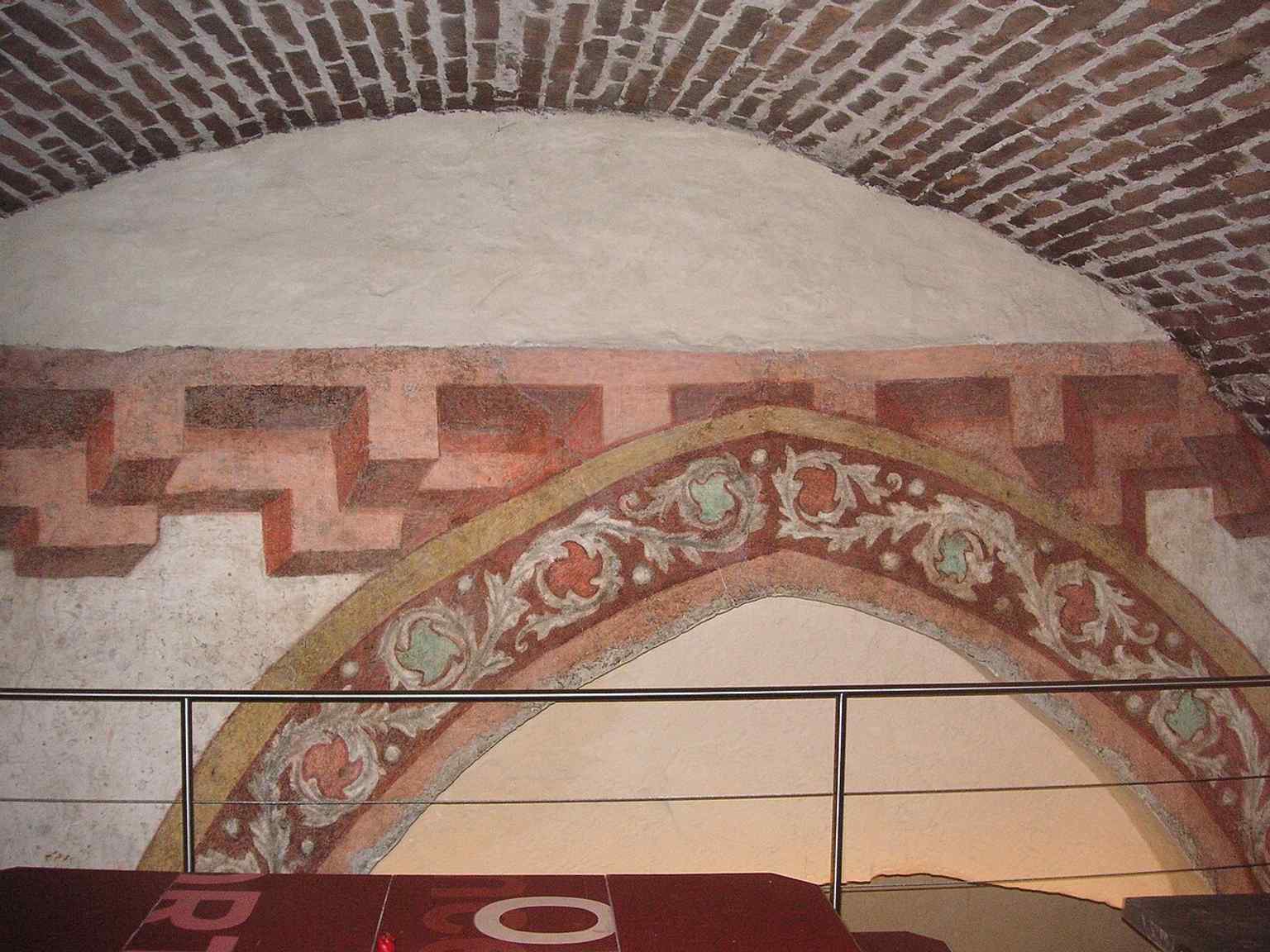
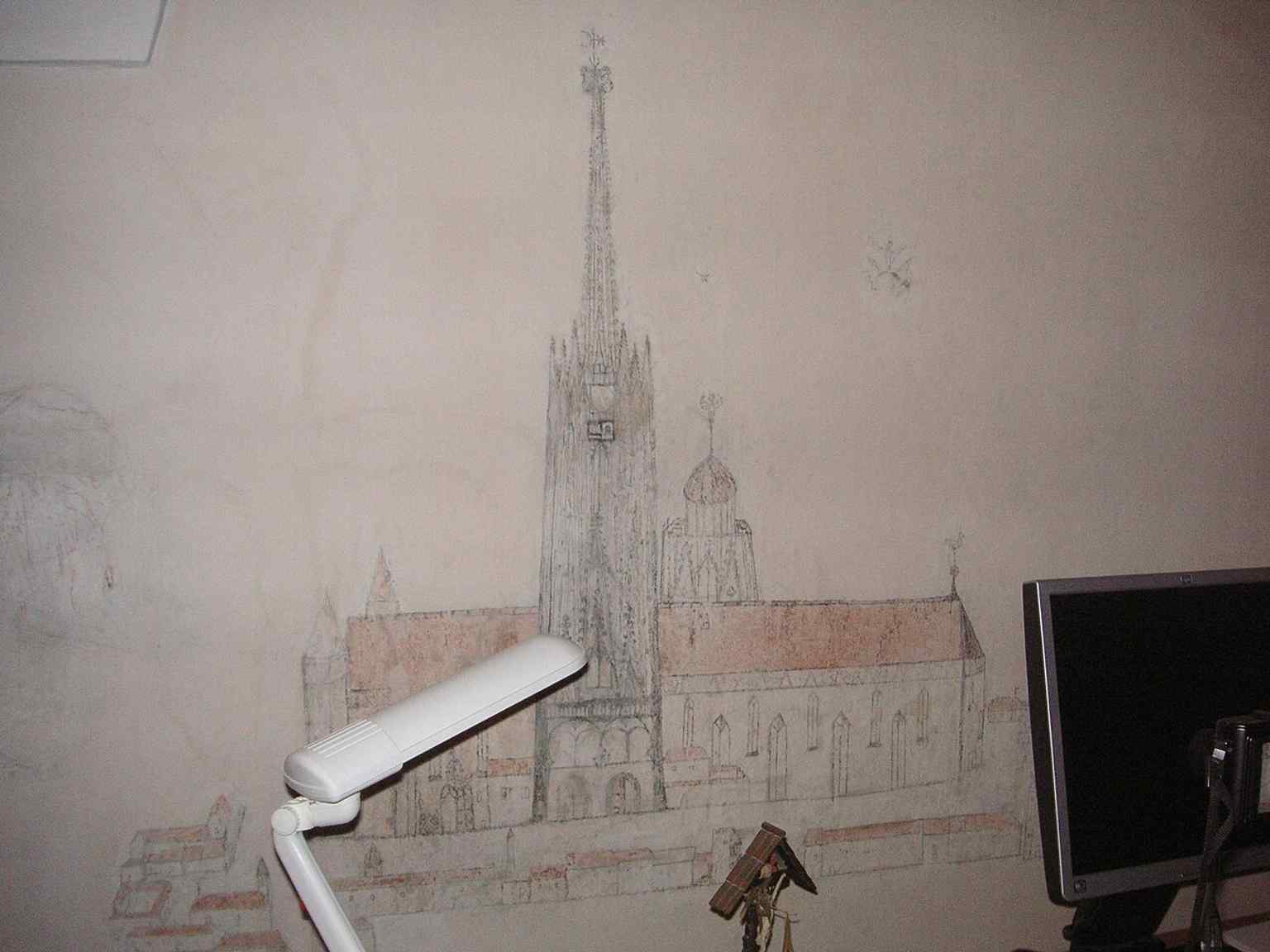
Frescoes in the cellar reveal hidden historic layers beneath the monastery, beyond the public church and library spaces.
Frescoes in the cellar reveal hidden historic layers beneath the monastery, beyond the public church and library spaces.Photo: Liuthalas (talk), Wikimedia Commons, CC BY-SA 3.0 at. Cropped & resized.
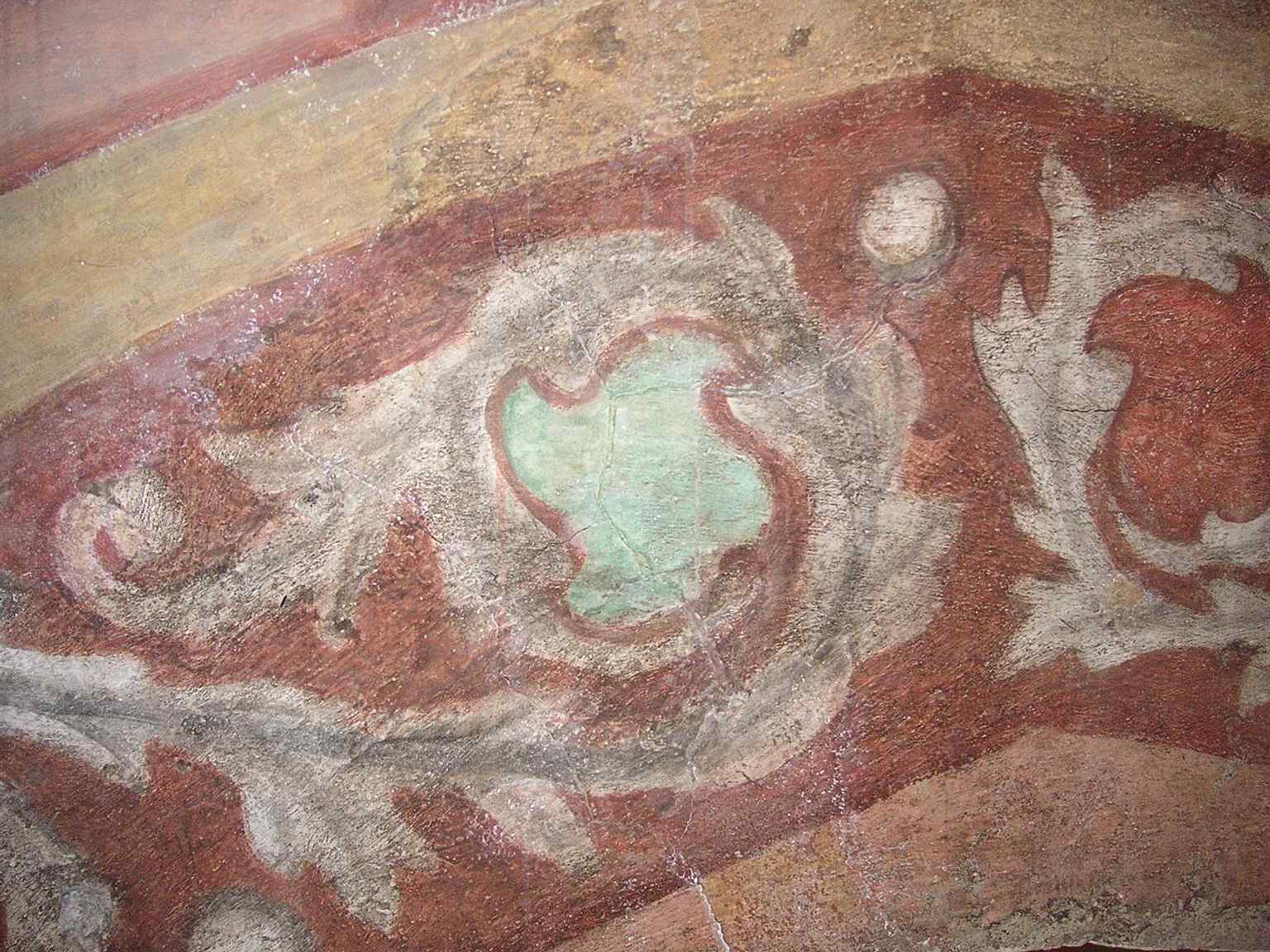
A close-up of cellar frescoes highlights the preserved decorative details tucked away inside the Franciscan complex.
A close-up of cellar frescoes highlights the preserved decorative details tucked away inside the Franciscan complex.Photo: Liuthalas (talk), Wikimedia Commons, CC BY-SA 3.0 at. Cropped & resized.
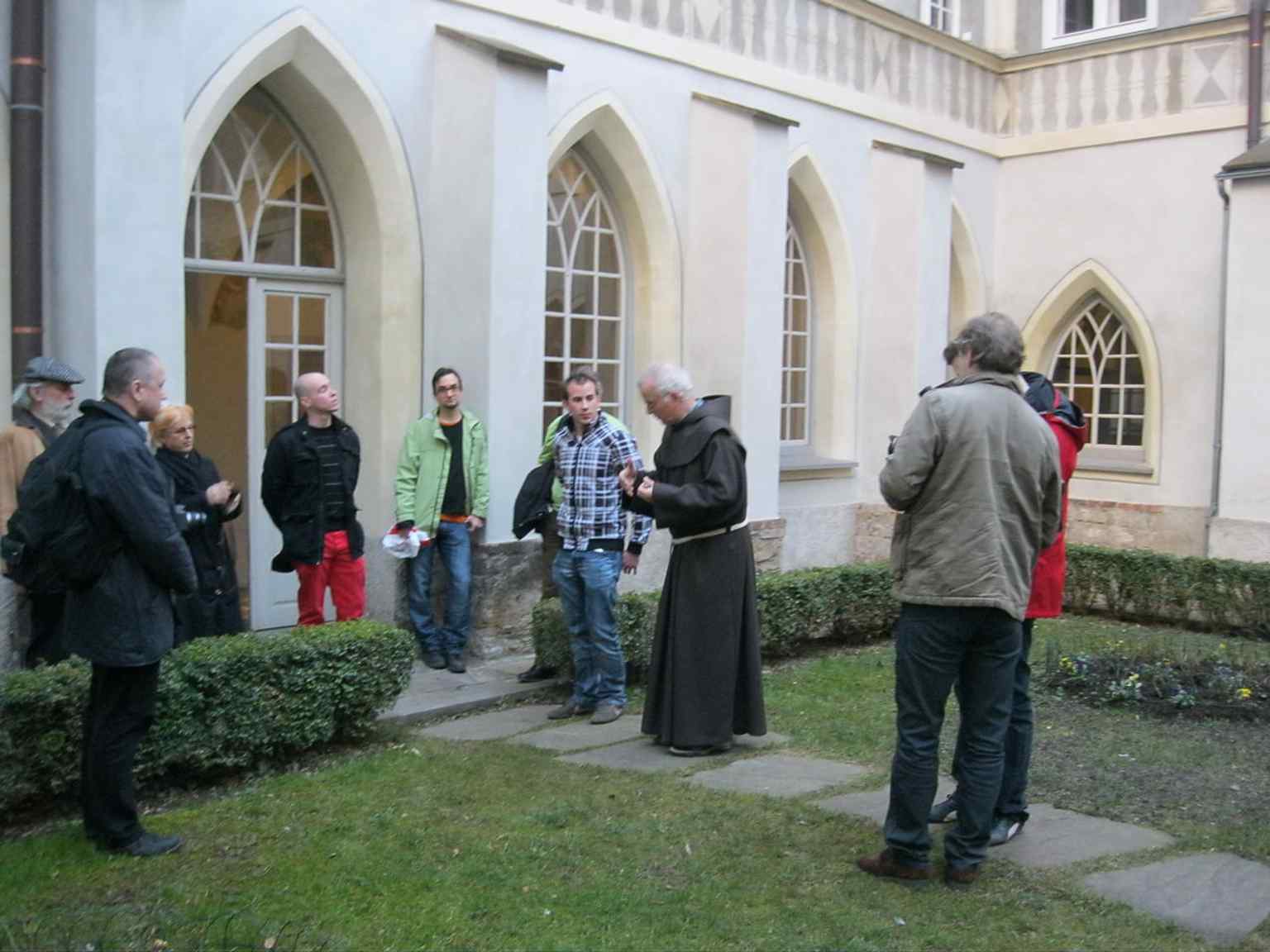
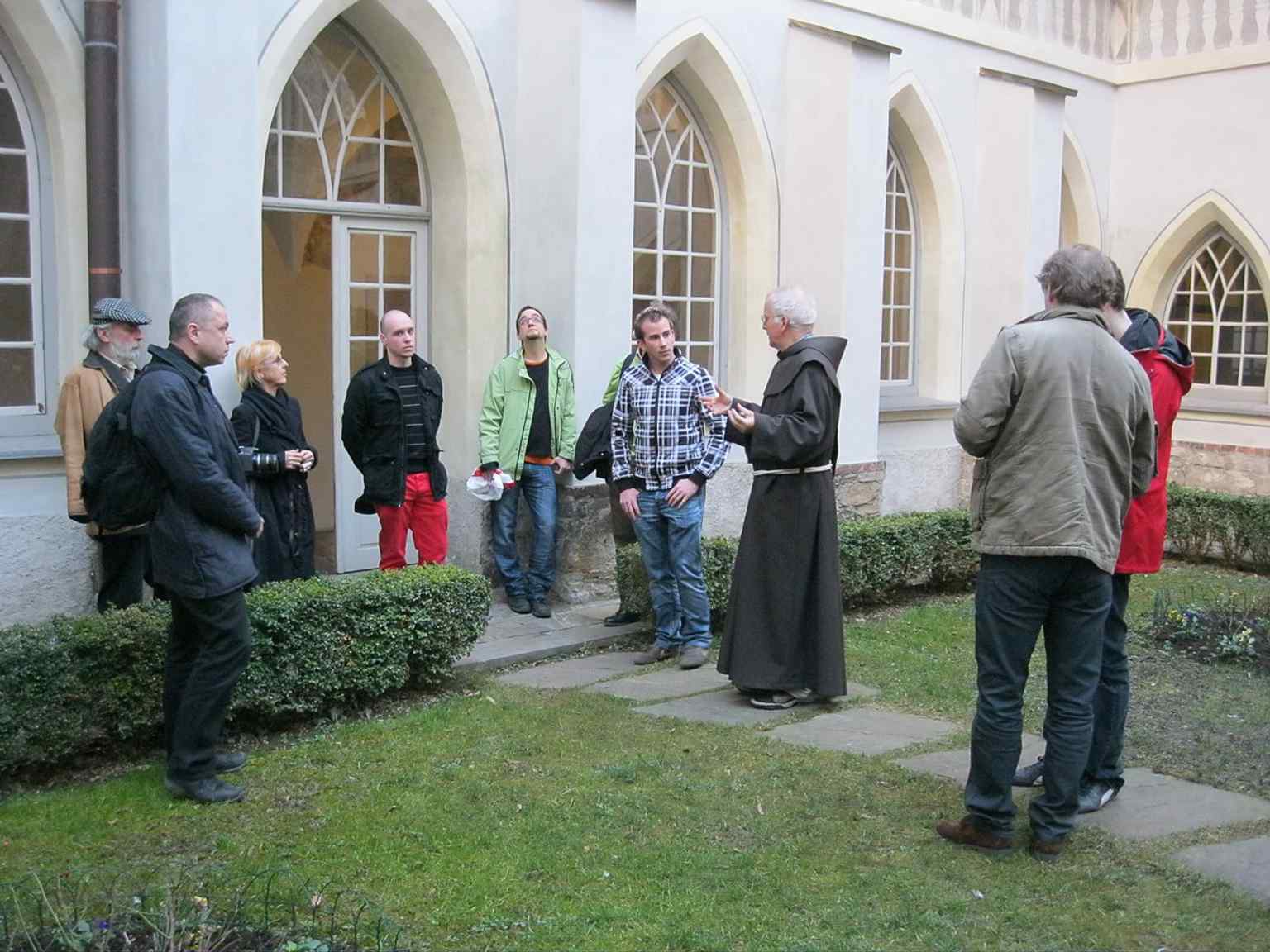
The painted workroom shows that the convent still contains lived-in monastic spaces, not just church and library rooms.
The painted workroom shows that the convent still contains lived-in monastic spaces, not just church and library rooms.Photo: Liuthalas (talk), Wikimedia Commons, CC BY-SA 3.0 at. Cropped & resized.
A 2012 documentation photo of the protected monastery offers a clear record of the Franciscan complex as a heritage monument.
A 2012 documentation photo of the protected monastery offers a clear record of the Franciscan complex as a heritage monument.Photo: Hubertl, Wikimedia Commons, CC BY-SA 4.0. Cropped & resized.
Another 2012 heritage survey view helps document the monastery as Graz’s first Franciscan settlement and an important protected site.
Another 2012 heritage survey view helps document the monastery as Graz’s first Franciscan settlement and an important protected site.Photo: Hubertl, Wikimedia Commons, CC BY-SA 4.0. Cropped & resized.
arrow_back Back to Graz Audio Tour: Echoes of Empire and Art in Innere Stadt
Loved by travellers

Thousands of tours started.
Plenty of opinions.

4.8 across the App Store and Google Play. Here's a few we keep coming back to.

starstarstarstarstar
This was a solid way to get to know Brighton without feeling like a tourist. The narration had depth and context, but didn't overdo it.
Christoph
Christoph
Brighton Tour
starstarstarstarstar
Started this tour with a croissant in one hand and zero expectations. The app just vibes with you, no pressure, just you, your headphones, and some cool stories.
download Get the app

Pop your headphones in.
Step outside.

Free to download. Tours in every city. Start in 60 seconds — no account, no card.

Download on the App StoreGet it on Google Play
starstarstarstarstar_half
4.8
AudaTours app icon
headphones
~ 4 min until your first tour starts
public
1,000+ cities worldwide
all_inclusive
AudaTours
Unlimited

Every tour. Every city. One subscription.

3101 tours2271 cities138 countries50+ languages