
Darwin Audio Tour: Historic Heartbeat of Darwin
Saltwater crocodiles glide beneath city lights while secrets slumber behind colonial verandas and neon marquees. Darwin isn’t just tropical heat and ocean breeze—it’s a place where the wild and the uncanny collide. Unlock this self-guided audio tour and trace the winding path from Crocosaurus Cove to the mysterious stories etched at Lyons Cottage, the haunting echoes of drama inside Star Theatre, and hidden tales in the city's bustling heart. Discover what most never hear whispered through these streets. Why did one cinematic night inside the Star Theatre end in a city-wide uproar? What strange coded messages slipped through the lattice at Lyons Cottage? Who smuggled something very unexpected into Crocosaurus Cove on a dare gone awry? Follow twisting footpaths from jaw-dropping natural predators to scandal-soaked stages and shadowy colonial corners. Each stop peels back another layer, revealing Darwin’s electric mix of chaos, charm, and survival. Are you ready to meet the real Darwin behind its sun-soaked surface? Press play—if you dare.
Tour preview
About this tour
- scheduleDuration 70–90 minsGo at your own pace
- straighten2.6 km walking routeFollow the guided path
- location_on
- wifi_offWorks offlineDownload once, use anywhere
- all_inclusiveLifetime accessReplay anytime, forever
- location_onStarts at Brown's Mart
Stops on this tour
lock_open 3 free previews · 7 unlock with purchase
You are looking at a rectangular building constructed from rugged, light-colored stone, featuring a simple sloped roof and distinctive semi-circular arched windows and doors along…Read moreShow less
Open dedicated page →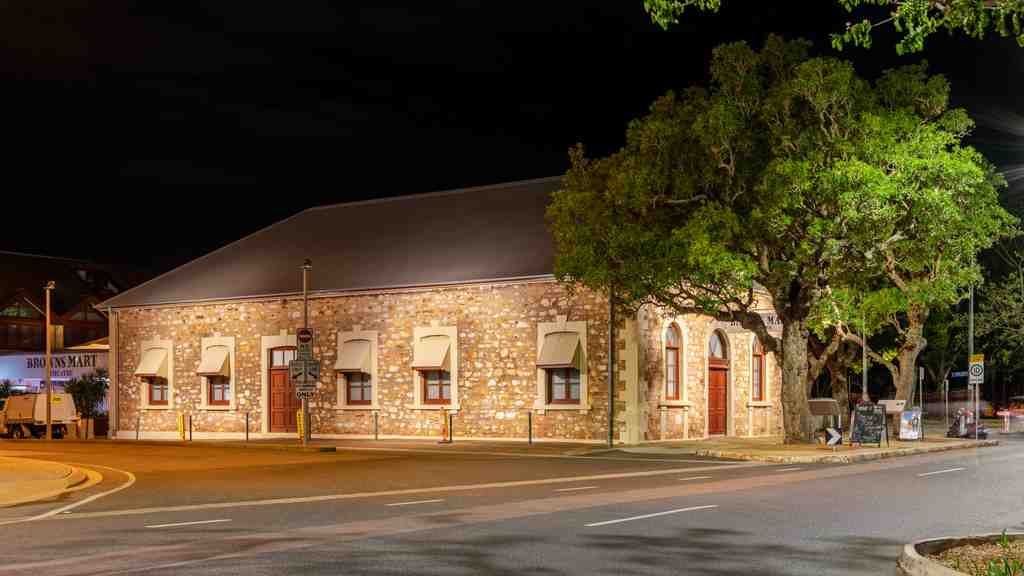
Brown's MartPhoto: Dietmar Rabich, Wikimedia Commons, CC BY-SA 4.0. Cropped & resized. You are looking at a rectangular building constructed from rugged, light-colored stone, featuring a simple sloped roof and distinctive semi-circular arched windows and doors along its facade.
For well over a century, people have called this place Brown's Mart, after a local trader named Victor Voules Brown, but historical records tell a different, hidden story. It was actually commissioned and built in 1885 by Vaiben Louis Solomon, an influential figure from an Orthodox Jewish family who built it as an emporium, and who would later become the Northern Territory's very first politician.
If you take a look at your screen, you can see this beautiful stone structure in all its enduring glory.
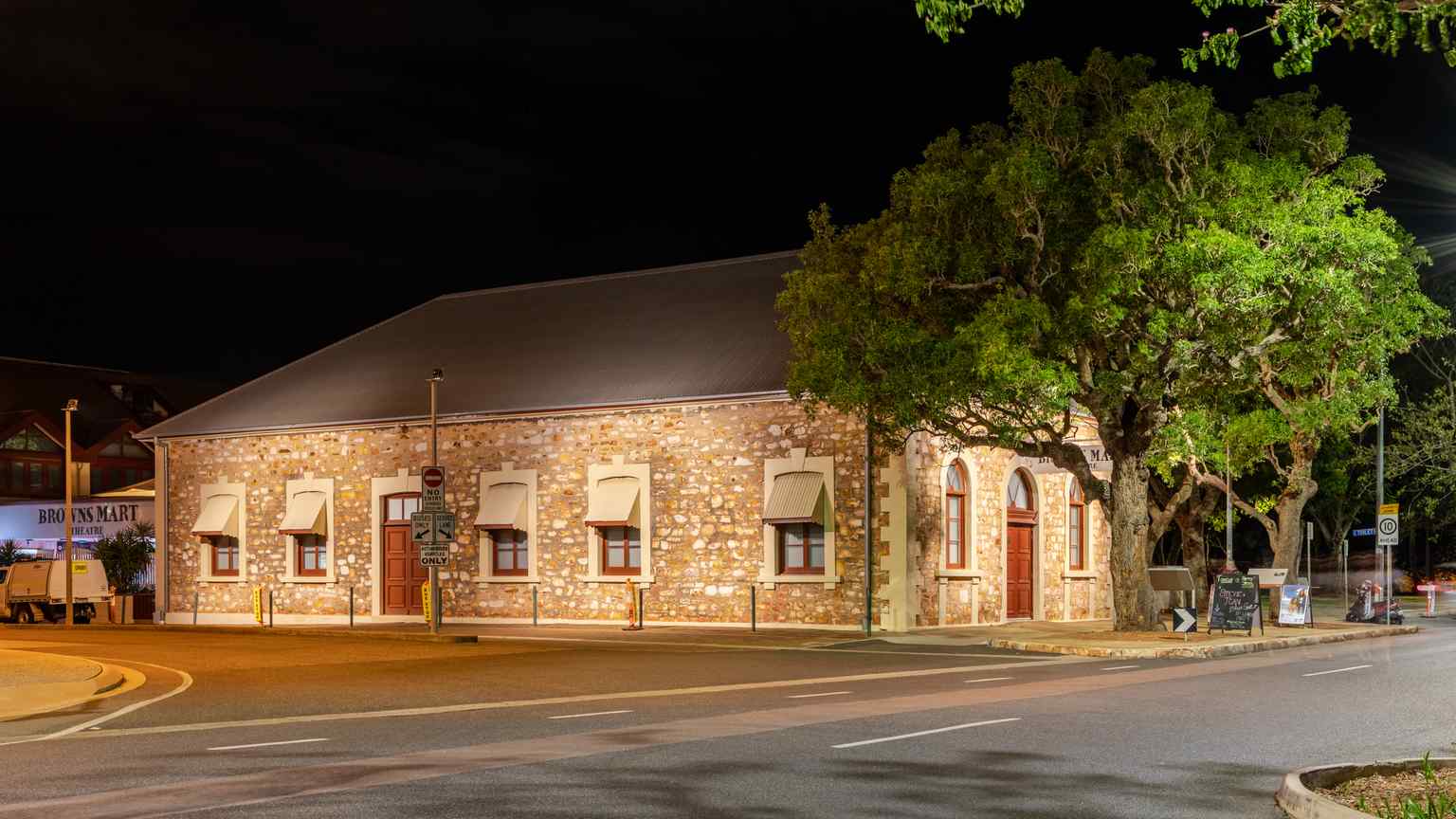
This 2019 image shows Brown's Mart, now the Home of Territory Performing Arts, a historic building that has resiliently survived cyclones and wartime bombing since its construction in 1885.Photo: Dietmar Rabich, Wikimedia Commons, CC BY-SA 4.0. Cropped & resized. The building was crafted using porcellanite, which is a hardened, local clay rock that gave it a sturdy presence, unlike the flimsy corrugated iron mostly seen in early settlements. Those heavy stones were manually hewn by Chinese laborers. Decades later, when the building faced the very real threat of demolition, it was the memory of those hardworking Chinese laborers that locals fought to protect, successfully arguing that the building should remain standing as a living memorial to their sheer physical effort.
The survival of this stone structure mirrors the unyielding adaptability of Darwin itself. Over the decades, these walls have housed a mining exchange, a banking branch, and even a bustling naval workshop where torpedoes were repaired during the constant threat of the Second World War. Time and time again, the town repurposed whatever it had to survive the harsh frontier, completely reinventing this space to suit the era. No matter what nature or conflict threw its way, this building stood firm, shifting its identity right alongside the people who needed it.
Well, mostly firm. In 1972, a passionate amateur theater group saved the building from the wrecking ball to create an arts hub. They were armed with an eight thousand dollar grant, which is roughly ninety thousand dollars today. The group commissioned an architect to design a dedicated theater layout and an administration block. They had just finished stage one, including a highly prized new air conditioning system, when a devastating cyclone hit on Christmas Day in 1974. The brutal storm completely tore the roof right off the building, leaving the brand new theater exposed to the elements. But the community refused to let it die. They painstakingly reconstructed the venue, and performances triumphantly resumed.
Today, it is a profoundly personal space for storytelling, hosting works by local artists that explore everything from migrant grief to the celebration of finding a new home. The people of this frontier have always found ways to rebuild and to entertain themselves, no matter how harsh the environment around them might be. Speaking of finding an escape through entertainment, we are now going to head toward our next stop, the Star Theatre, which is just a short three minute walk away.
Show 7 more stopsShow fewer stopsexpand_moreexpand_less
On your right is a modern waterfront parkland, but the image on your screen shows the landmark that once stood exactly here, a rugged, earth-mound hill featuring a rounded crest…Read moreShow less
Open dedicated page →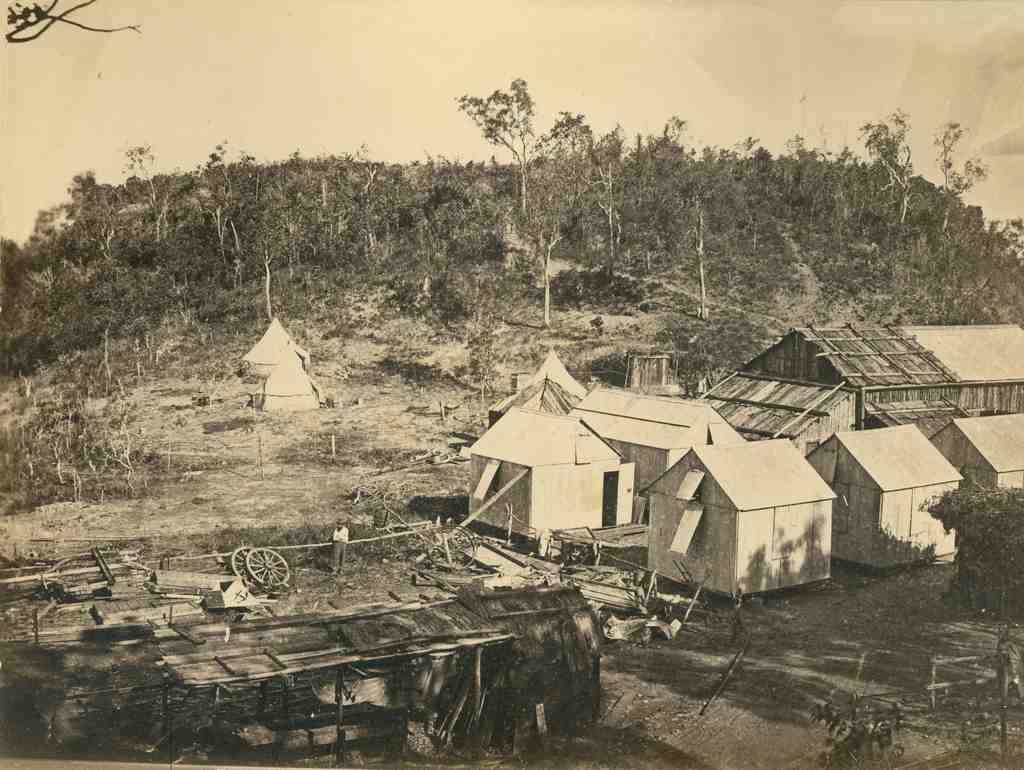
Fort HillPhoto: Unknown author, Wikimedia Commons, Public domain. Cropped & resized. On your right is a modern waterfront parkland, but the image on your screen shows the landmark that once stood exactly here, a rugged, earth-mound hill featuring a rounded crest and simple, slanted-roof timber cabins. This vanished place was Fort Hill. In 1869, George Goyder and about one hundred and fifty men waded ashore here, pitching tents and building rough log cabins in the gully to map the land and mark the start of permanent European settlement.
But this land already belonged to the Larrakia people, the traditional custodians of these coastal waters. The sudden arrival of the expedition sparked a tragic friction, and the fatal spearing of a young man named John William Ogilvie Bennett became a heavy symbol of this deep colonial conflict. Bennett was a twenty-three-year-old draughtsman... a skilled worker who drew the technical maps. While compiling an atlas at a nearby camp, he and his companion were attacked.
His companion survived, but Bennett suffered a fatal wound to his lung. He was rushed back here, where a doctor named Dr. Peel attempted to surgically remove the wooden spear tip under chloroform, a common early anesthetic gas. Tragically, the young man did not survive. He was carried to the top of Fort Hill, becoming the earliest European burial in the settlement. His original wooden headstone noted, rather heartbreakingly, that he had treated the local people with familiar kindness.
Bennett was not left alone for long. He was soon joined in that very same grave by Richard Hazard, a forty-two-year-old camp cook who succumbed to severe rheumatism, a deeply painful inflammation of the joints.
For decades, their shared grave stood on the hill as a lonely monument. Yet, a settlement built on constant transformation rarely leaves its landscape untouched. During the Second World War, the military excavated massive, steel-lined tunnels straight into the side of Fort Hill to hide oil from Japanese bombers. The budget ballooned from two hundred and twenty thousand pounds to eight hundred and fifty thousand pounds... equivalent to tens of millions of dollars today. But in a bitter irony, by the time the tunnels were finished in 1945, the bombing threat was gone. The tunnels never held a single drop of oil.
Eventually, even the earth itself was consumed. In 1965, the entire hill was leveled and pushed into the sea to create a massive iron-ore wharf for exporting minerals.
The blood spilled here at Fort Hill set the tone for a turbulent century, leading to the seat of colonial power. Let us reflect on that as we make our way to Government House, which is about an eight-minute walk from here.
Look to your right at the stark white concrete facade of Parliament House, characterized by its distinctly layered grid-like shape and the massive flat parasol roof stretching out…Read moreShow less
Open dedicated page →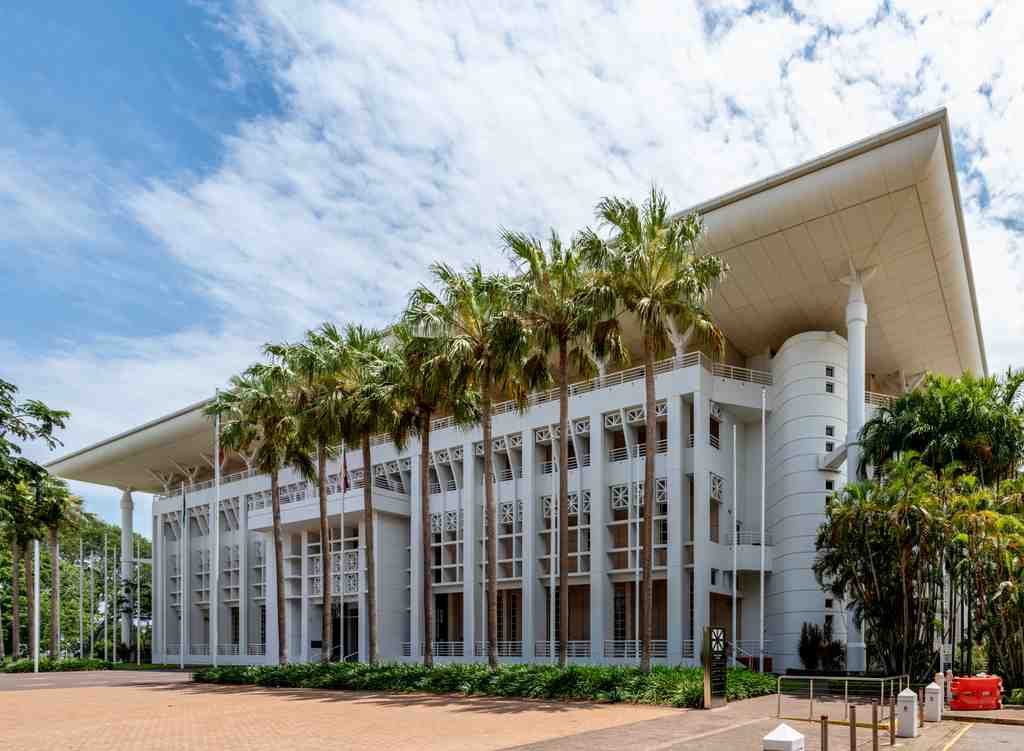
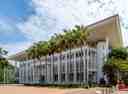
Parliament House, DarwinPhoto: Dietmar Rabich, Wikimedia Commons, CC BY-SA 4.0. Cropped & resized. Look to your right at the stark white concrete facade of Parliament House, characterized by its distinctly layered grid-like shape and the massive flat parasol roof stretching out over the top. It is an imposing, deeply modern building. If you glance at your screen, you can see why locals quickly gave this layered, postmodern tropical design a rather cheeky nickname. They call it the Wedding Cake.
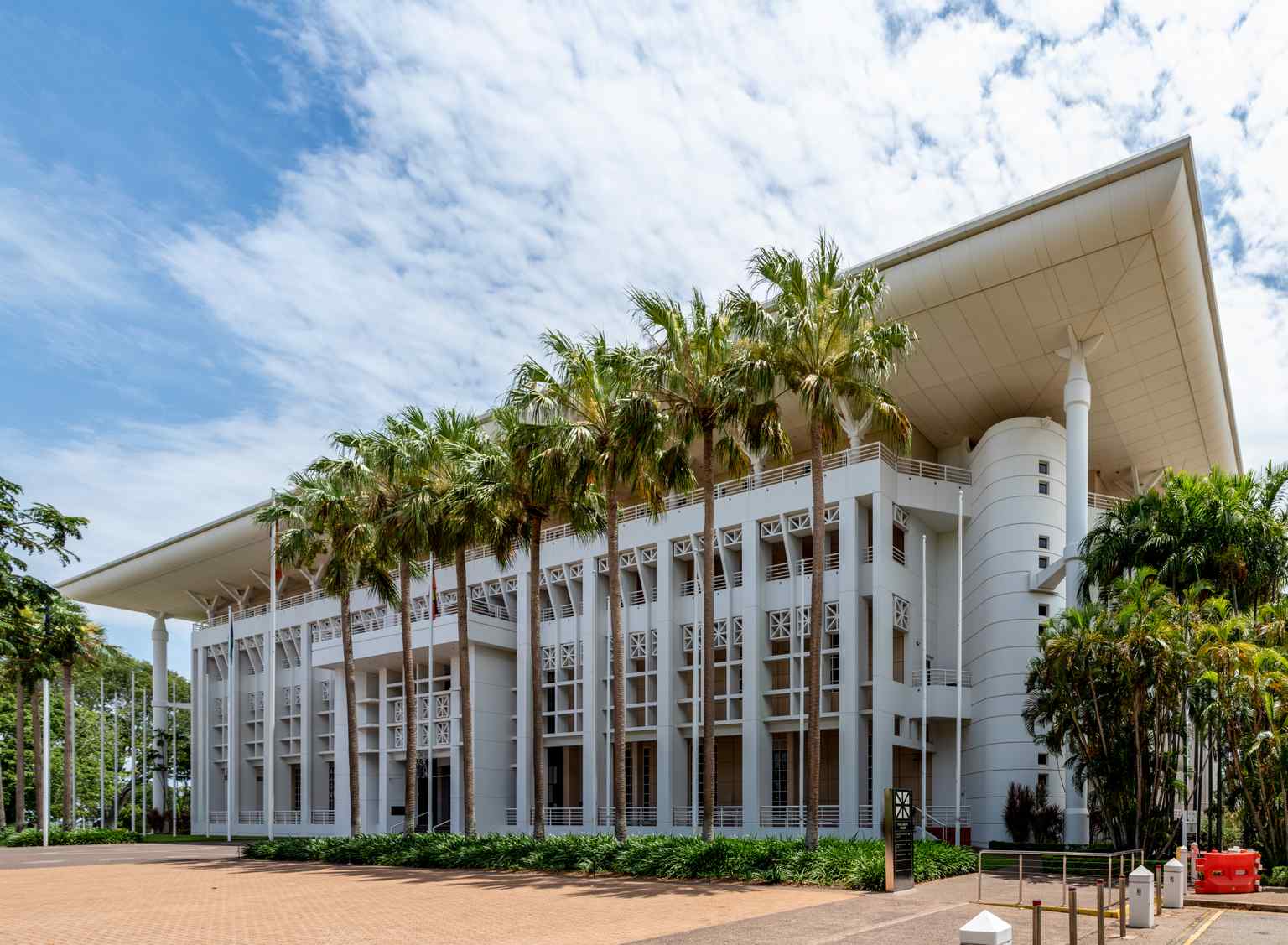
The striking 'Wedding Cake' facade of Parliament House, Darwin, a playful nickname for its stark white, layered postmodern tropical architecture.Photo: Dietmar Rabich, Wikimedia Commons, CC BY-SA 4.0. Cropped & resized. But long before these grand white columns rose, the ground beneath your feet held a very different kind of power. Thinking back to the distant authority we discussed earlier, back in 1873, this exact spot was the Palmerston Post and Telegraphic Office. It was the crucial junction linking Australia’s undersea cable from Java to the Overland Telegraph. For decades, it was the solitary thread connecting an isolated frontier town to the rest of the world.
That historic post office stood until a dark day in February 1942. During the very first Japanese air raid on Darwin, a bomb scored a direct hit right here. If you step inside today, you will find a plaque on the floor marking where the bomb fell, along with a jagged piece of actual shrapnel recovered that same afternoon, forever anchoring this modern political building to the grim realities of wartime loss.
For decades after, the Northern Territory's government was nomadic. The Legislative Assembly even spent years meeting in a temporary concrete building nearby. But a frontier town never stops reinventing itself. Between 1990 and 1994, they built this permanent home for about one hundred and seventy million dollars.
The ambition came at a heavy human cost. In March 1991, a construction crane collapsed. Two workers, Peter Malmstedt and Andrew Snow, lost their lives. Their sacrifice is honored nearby on the Speaker's Green, where a beautiful mosaic fountain of a Sturt's Desert Rose blends a symbol of the territory's resilience with a permanent expression of public grief.
Nature has always been a formidable architect here. The grand parasol roof you see on your app does not just diffuse eighty percent of direct sunlight, it is heavily fortified against extreme forces. In 1974, the devastating cyclone we learned about earlier shredded the previous government buildings here. In a true display of frontier grit, the politicians met just eight days after the devastating storm, passing urgent laws under a roof full of holes with live electrical wires dangling around them.
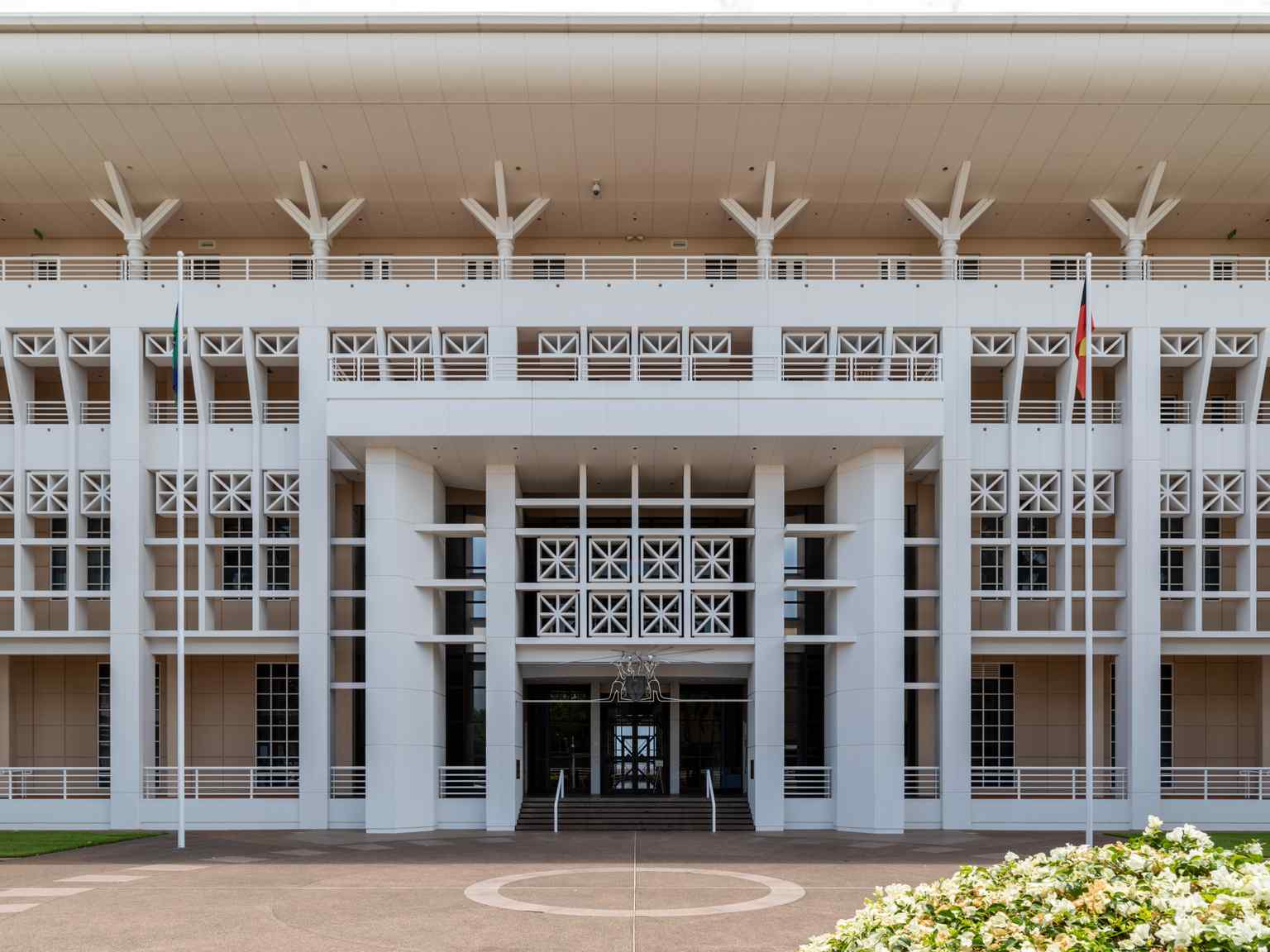
Parliament House's innovative cyclone-resistant design, featuring a parasol roof and facade that diffuses 80% of direct sunlight, built after previous buildings were damaged by Cyclone Tracy.Photo: Dietmar Rabich, Wikimedia Commons, CC BY-SA 4.0. Cropped & resized. Today, this seat of self-governance still sees its share of passion. In 2015, over two hundred angry residents, some even riding on horseback, stormed these front steps. They were loudly protesting hydraulic fracturing, a controversial drilling method to extract gas from the earth, on their lands. It was a dramatic scene that proved the fierce spirit of the Darwin Rebellion is still very much alive.
The building is open every day of the week from morning until evening if you would like to explore the historic lobby or the Northern Territory Library inside. But for now, from these grand halls of power, I invite you to step down into a quiet space just ahead honoring the women who truly sustained this land, as we transition right next door to Damoe Ra Park.
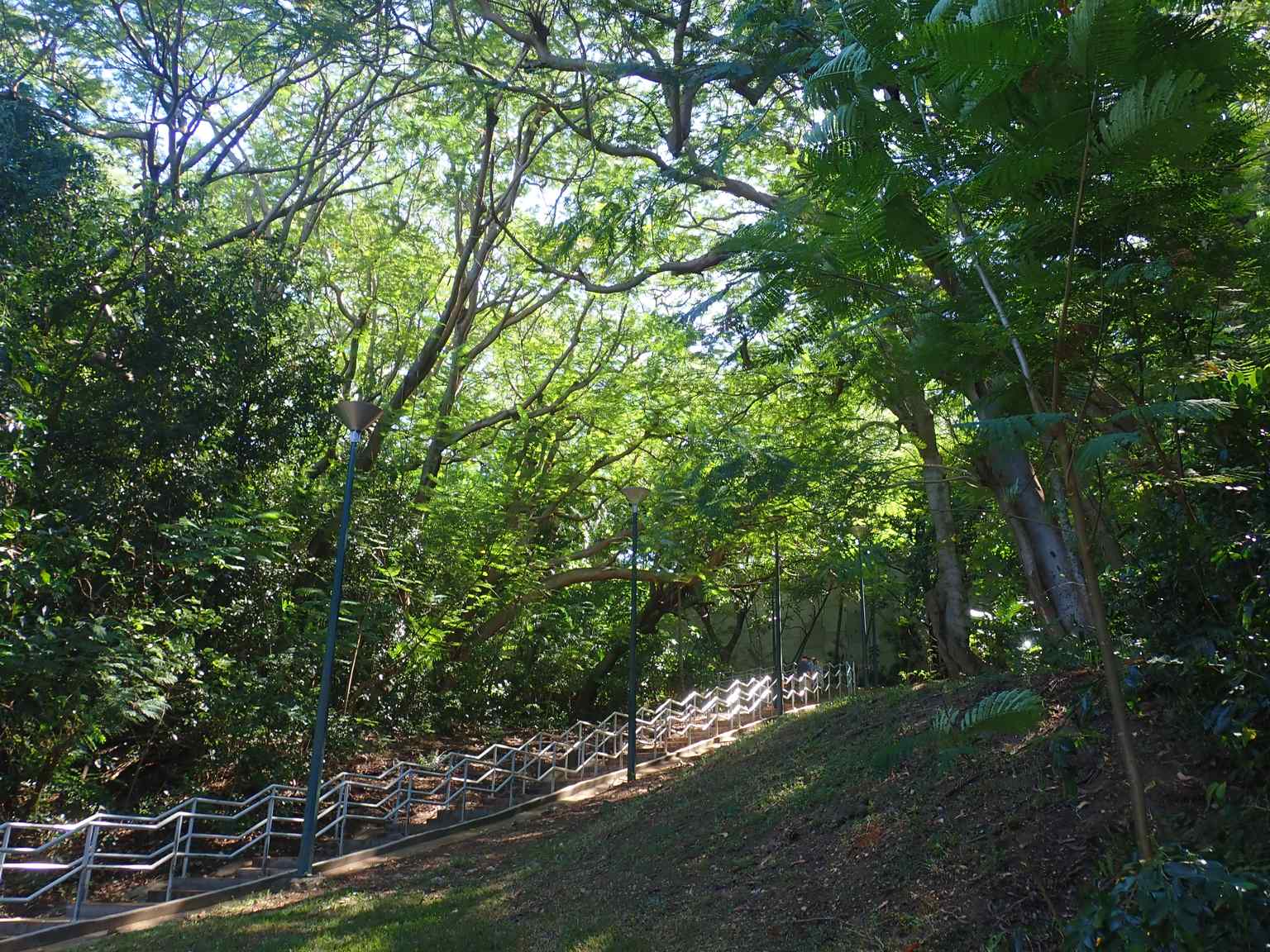
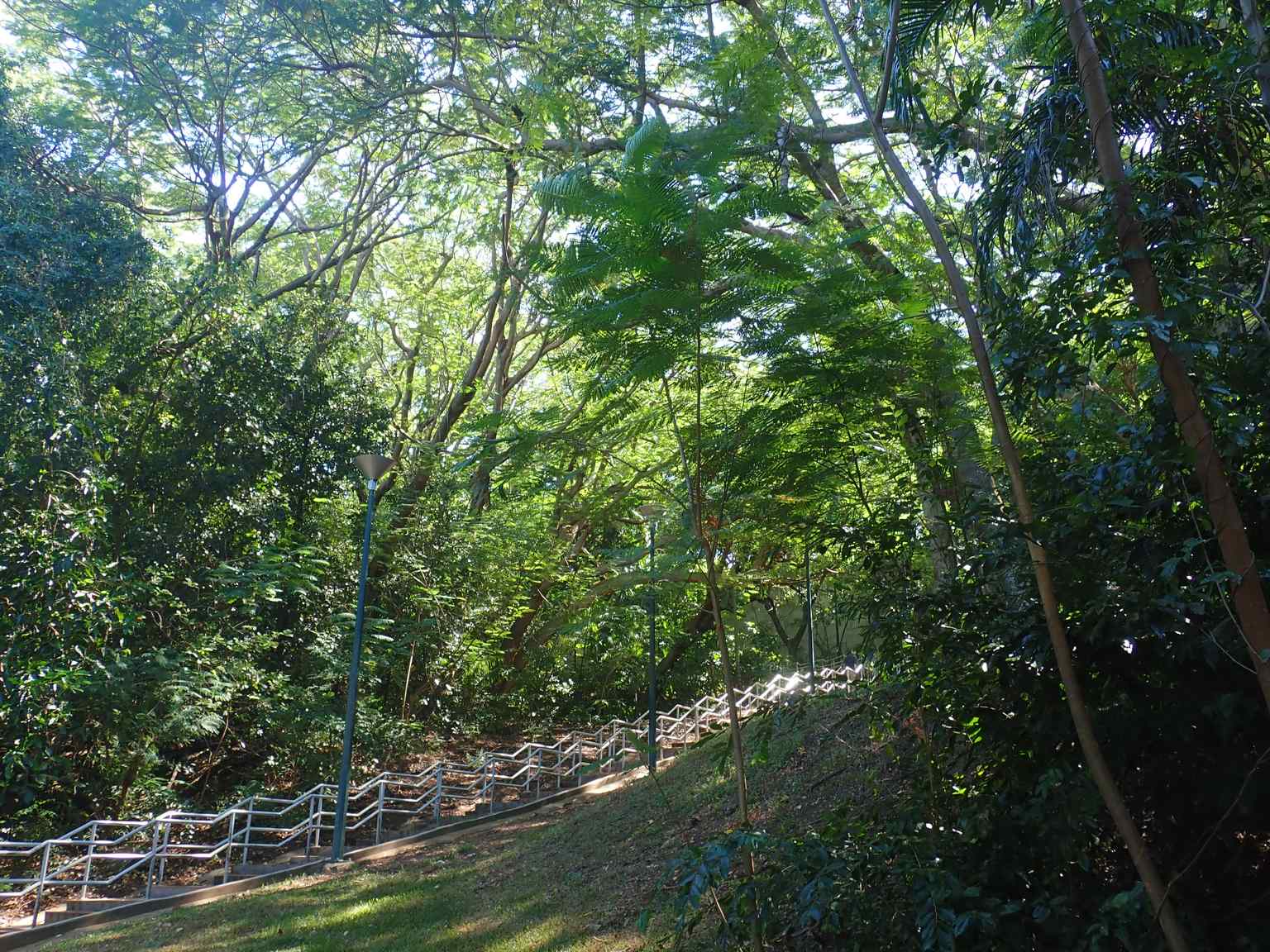
You'll know you've arrived when you see the long flight of steep concrete steps bordered by zigzagging metal handrails winding down the hillside next to tall, slender light…Read moreShow less
Open dedicated page →You'll know you've arrived when you see the long flight of steep concrete steps bordered by zigzagging metal handrails winding down the hillside next to tall, slender light poles.
Descending these 135 steps feels like stepping away from the modern world and into the enduring strength of the Larrakia People. This is Damoe-Ra Park. The name, formally gifted by Larrakia Elder Topsy Juwaning Secretary, translates to eye, or spring. It points directly to a sacred freshwater source on the nearby beach, a precious lifeline that sustained both the traditional owners and early European settlers.
Here under the canopy, a memorial pathway honors the astonishing hidden diversity of Northern Territory women. Take a look at your screen to see the original mosaic tiles installed in 2004. Each tile holds the story of a pioneer who shaped this rugged frontier. Women like Eileen Fitzer, who earned an MBE, a prestigious British honor, in 1980 for providing vital nursing care in incredibly remote camps alongside her policeman husband. Her isolated frontier life was vividly captured in her own hand-embroidered cloths, which were later featured in a museum exhibition called Threads of History.
The mosaic pathway in Damoe-Ra Park honours the women of the Northern Territory, a central feature created through collaborative artistry and officially opened in 2004.Photo: MargaretRDonald, Wikimedia Commons, CC BY-SA 4.0. Cropped & resized. We also remember trailblazers like Cynthia Molina. Arriving in 1972, she co-founded the Asian-Australian Association, becoming a community leader and the first Filipina in the territory to receive the Order of Australia.
But nature in this territory is completely uncompromising. Decades of extreme weather and unfortunate vandalism took a heavy toll on the pathway. If you check your app again, you can see how intricate these mosaics once were before the harsh environment cracked them. Recognizing this profound cultural loss, a public revitalization began recently, commissioning one hundred thousand dollars in resilient new artwork. It is a relentless cycle of reinvention, ensuring these tributes survive the elements for generations to come.
A closer look at the intricate mosaic pathway, which has faced challenges from Darwin's harsh climate and vandalism, prompting future revitalisation plans.Photo: MargaretRDonald, Wikimedia Commons, CC BY-SA 4.0. Cropped & resized. As you walk the mosaic pathway, look closely at the space where the tiles lay, and feel the presence of the incredibly diverse stories of Northern Territory women. Enjoy the peaceful quiet here, keeping in mind the park is open daily from seven in the morning until seven in the evening. Whenever you feel ready to leave this sanctuary and return to the bustling streets above, we will head toward our next stop, Lyons Cottage, which is a six-minute walk away.
On your right, you will see a wide entrance sheltered beneath a corrugated metal ceiling, anchored by a vibrant red wall displaying a large white crocodile skeleton logo and a…Read moreShow less
Open dedicated page →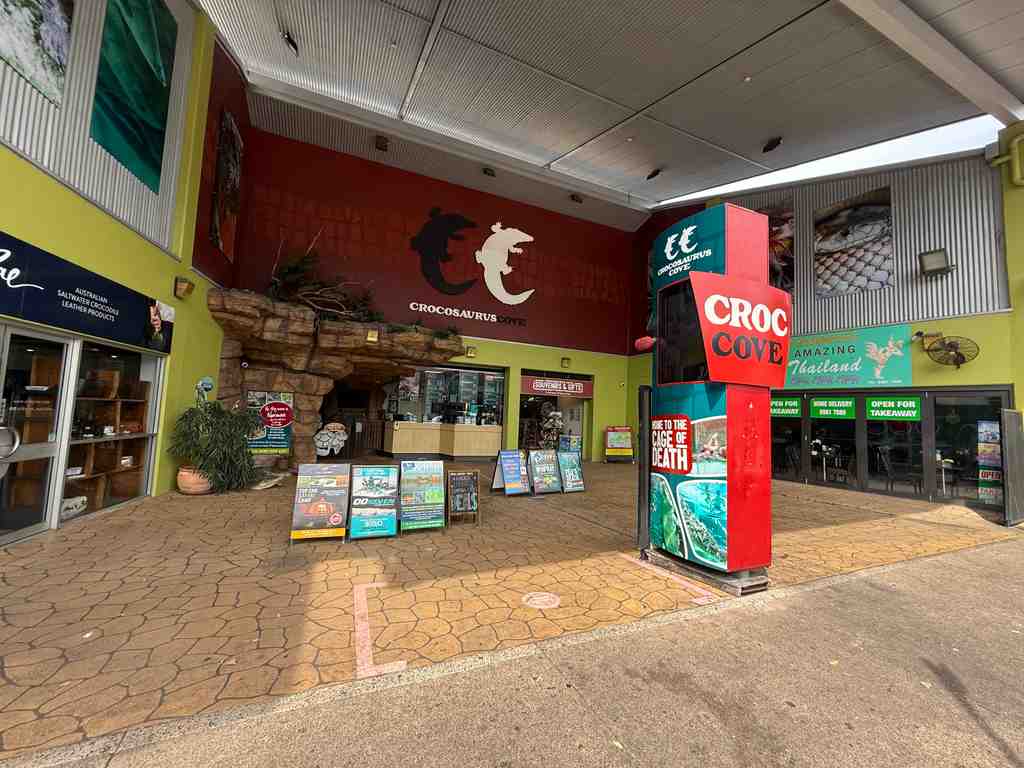
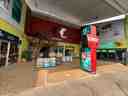
Crocosaurus CovePhoto: Mutante, Wikimedia Commons, CC BY-SA 3.0. Cropped & resized. On your right, you will see a wide entrance sheltered beneath a corrugated metal ceiling, anchored by a vibrant red wall displaying a large white crocodile skeleton logo and a tall red rectangular sign pillar.
This is Crocosaurus Cove. In most cities, the wild is pushed to the edges, kept safely out of sight. But here in Darwin, a place always shaped by its untamed extremes, they spent thirty two million dollars to bring the apex predators right into the heart of downtown. Opened in two thousand and eight by Mick Burns and Doug Gamble, this inner city wildlife attraction transformed a vacant concrete block into a monument to man versus nature.
It is a massive herpetarium, which is a zoo specifically designed for reptiles and amphibians, and it houses the world's largest display of Australian reptiles. This includes the extremely rare Oenpelli python, the longest snake in the Northern Territory. But as the name suggests, the real stars are the crocodiles. If you look at your screen, you can see an underwater view of one of these massive saltwater crocodiles.
These ancient creatures have huge personalities. Take a male named William, who was originally a notorious nuisance crocodile nicknamed Houdini. He earned that name because he used to stalk beachgoers and outsmart traps by stealing the bait and climbing right out. He was too aggressive for a normal crocodile farm, so they brought him here. When he finally met his mate in two thousand eleven, the same year the British royals married, the facility naturally named the scaly pair William and Kate. Take a peek at your screen to see a couple of the young crocodiles they have successfully bred together.
Then there was Burt, a seven hundred kilogram giant who actually starred in the nineteen eighty six movie Crocodile Dundee. Burt was famously cranky, cementing his status as a confirmed bachelor by reportedly eating three of his former girlfriends at a previous farm. He later became a psychic of sorts, predicting the two thousand sixteen Australian federal election by leaping out of the water to snap at a fish dangled under a politician's picture. He even fiercely shredded a pink buoy thrown into his pool by two intoxicated teenagers who foolishly broke in at four in the morning.
The Cove is also famous for its Cage of Death, where paying visitors are lowered into the water inside a four centimeter thick acrylic cylinder. The plastic is engineered to withstand the highest bite force of any living animal, but the machinery is not flawless. In two thousand fifteen, the monorail system broke down, leaving a tourist suspended over hungry crocodiles for thirty claustrophobic minutes. Staff had to use a power drill to cut the roof off the cage just to rescue her.
Bringing the wild into the city is not without controversy. Activists have heavily criticized the owner for his dual role in farming crocodiles for luxury handbags, arguing that tourist photo opportunities are exploitative. The facility has also been vulnerable to human cruelty, like a tragic break in by children in late two thousand twenty four that resulted in the heartbreaking deaths of two turtles.
Despite the ongoing debates, this place stands as a vivid symbol of the city itself. Darwin does not try to pave over the wild. Instead, it invites the danger in, learning to look the ancient beasts right in the eye and live alongside them rather than conquer them. And if you want to brave a visit yourself, the doors are open every day from nine in the morning until six in the evening.
Frequently asked questions
How do I start the tour?
After purchase, download the AudaTours app and enter your redemption code. The tour will be ready to start immediately - just tap play and follow the GPS-guided route.
Do I need internet during the tour?
No! Download the tour before you start and enjoy it fully offline. Only the chat feature requires internet. We recommend downloading on WiFi to save mobile data.
Is this a guided group tour?
No - this is a self-guided audio tour. You explore independently at your own pace, with audio narration playing through your phone. No tour guide, no group, no schedule.
How long does the tour take?
Most tours take 60–90 minutes to complete, but you control the pace entirely. Pause, skip stops, or take breaks whenever you want.
What if I can't finish the tour today?
No problem! Tours have lifetime access. Pause and resume whenever you like - tomorrow, next week, or next year. Your progress is saved.
What languages are available?
All tours are available in 50+ languages. Select your preferred language when redeeming your code. Note: language cannot be changed after tour generation.
Where do I access the tour after purchase?
Download the free AudaTours app from the App Store or Google Play. Enter your redemption code (sent via email) and the tour will appear in your library, ready to download and start.
If you don't enjoy the tour, we'll refund your purchase. Contact us at [email protected]
Checkout securely with 





%2C%20Browns%20Mart%20Theatre%20--%202019%20--%204401-3.jpg)
%2C%20Parliament%20House%20--%202019%20--%204336-8.jpg)
%2C%20Parliament%20House%20--%202019%20--%204343.jpg)

