
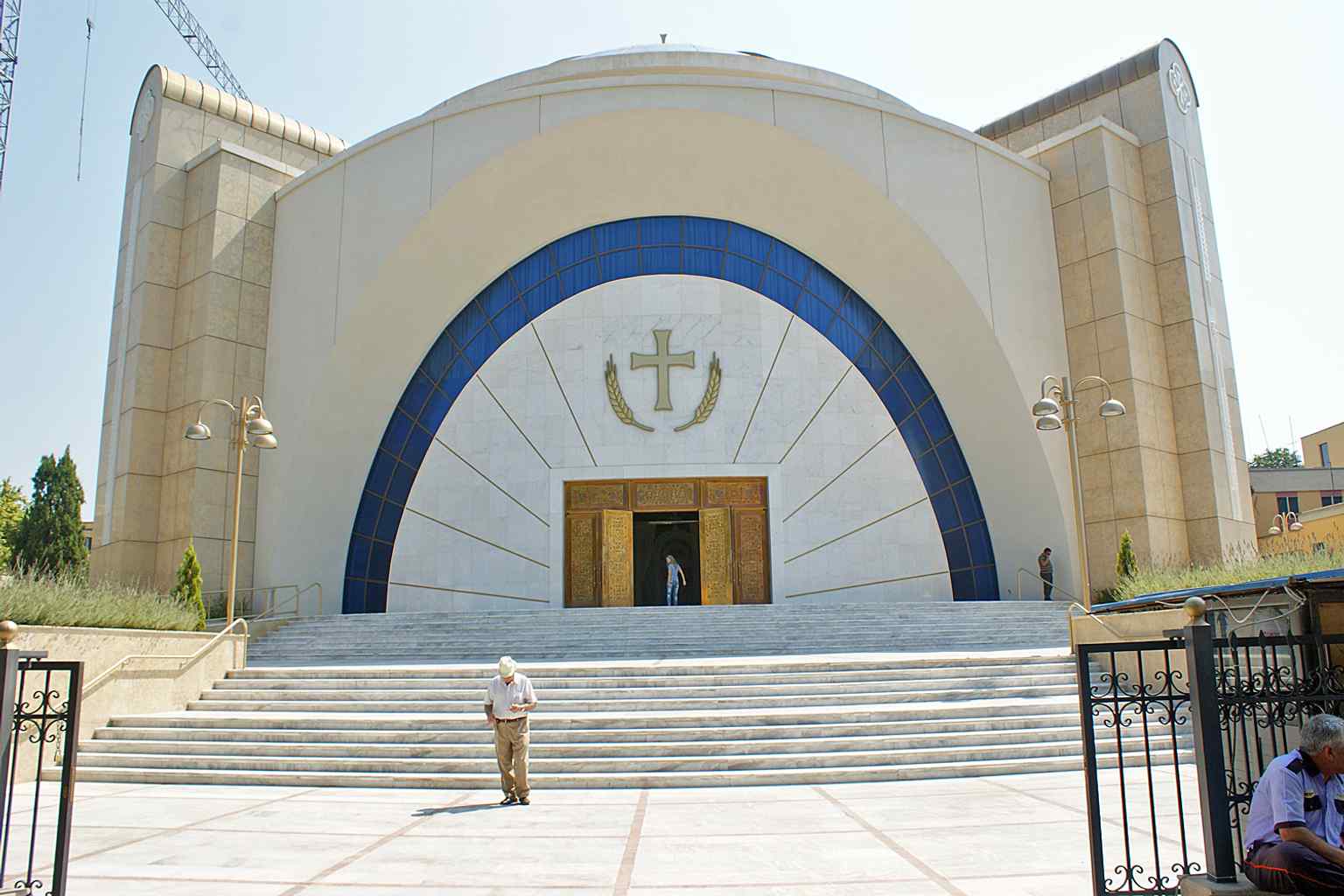
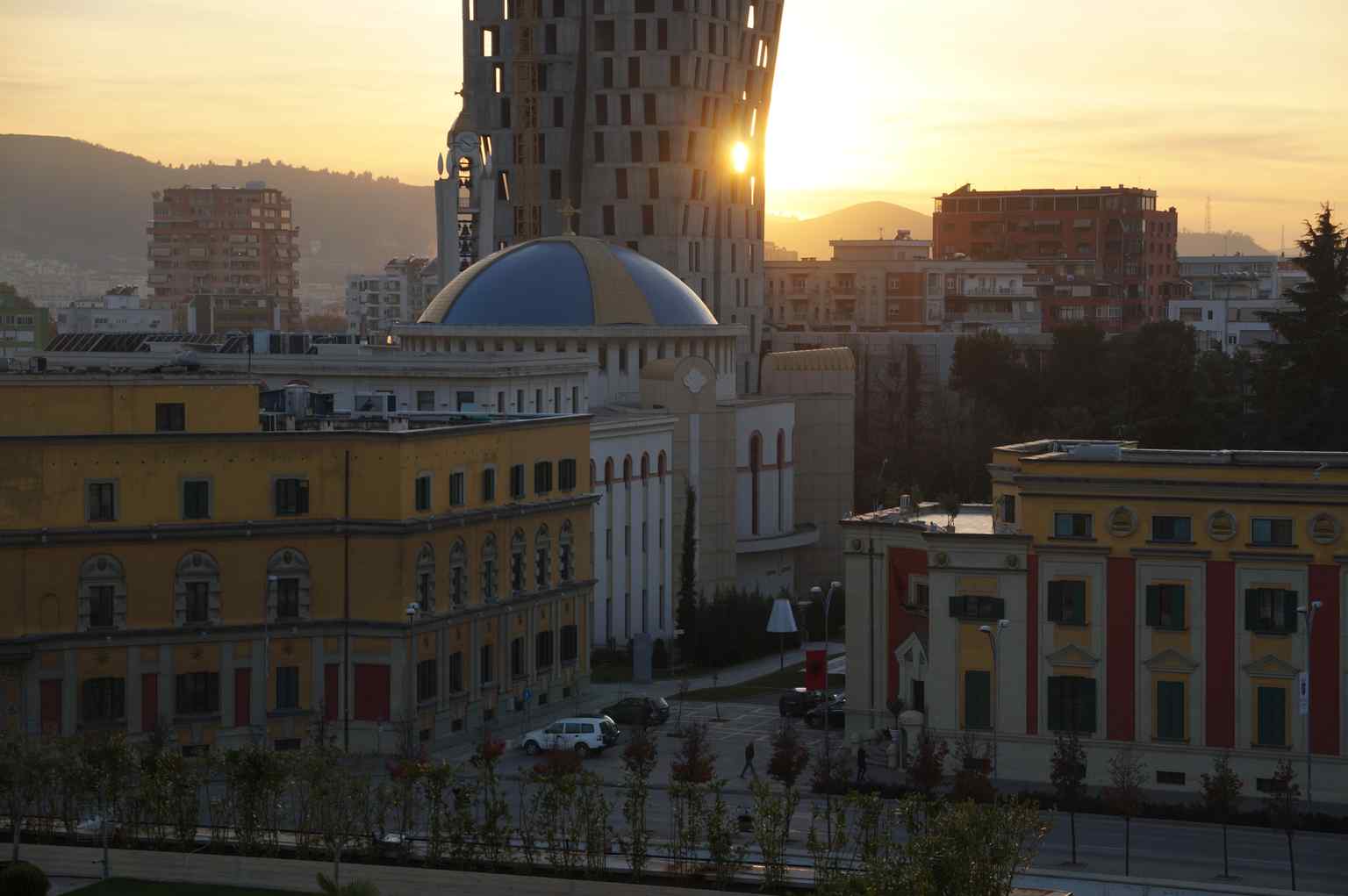
On your left stands the Resurrection Cathedral, a massive circular sanctuary built of smooth pale stone beneath a sweeping blue dome, accompanied by a soaring, freestanding bell tower.
Take a moment to look at that unique tower, reaching forty six meters into the sky. It was actually designed by Archbishop Anastasios himself, composed of four towering pillars meant to look like Paschal candles. In the Orthodox tradition, these tall ceremonial candles represent the light of the four Evangelists proclaiming resurrection. What a powerful metaphor for a country that spent decades actively tearing down places of faith.
This grand cathedral officially opened in two thousand twelve, marking the twentieth anniversary of the revival of the Albanian Orthodox Church. It stands as a profound testament to cultural resilience. Faith here was once silenced, but it was never truly extinguished. Now, its song rings out from sixteen bronze bells housed high up in that winding staircase.
If you check your screen, you will see that the space beneath our feet is just as vibrant as the sanctuary above. Two underground levels house an amphitheater that seats hundreds, serving as a dynamic center where lectures and theater thrive.
A vibrant life has poured back into these spaces, proving that what is broken down can be built anew. Let us continue our walk now toward the National Historical Museum, just six minutes away, to see exactly how Albania curates the complex chapters of its past. By the way, the cathedral welcomes visitors daily from nine to two, and four to seven.






.JPG)