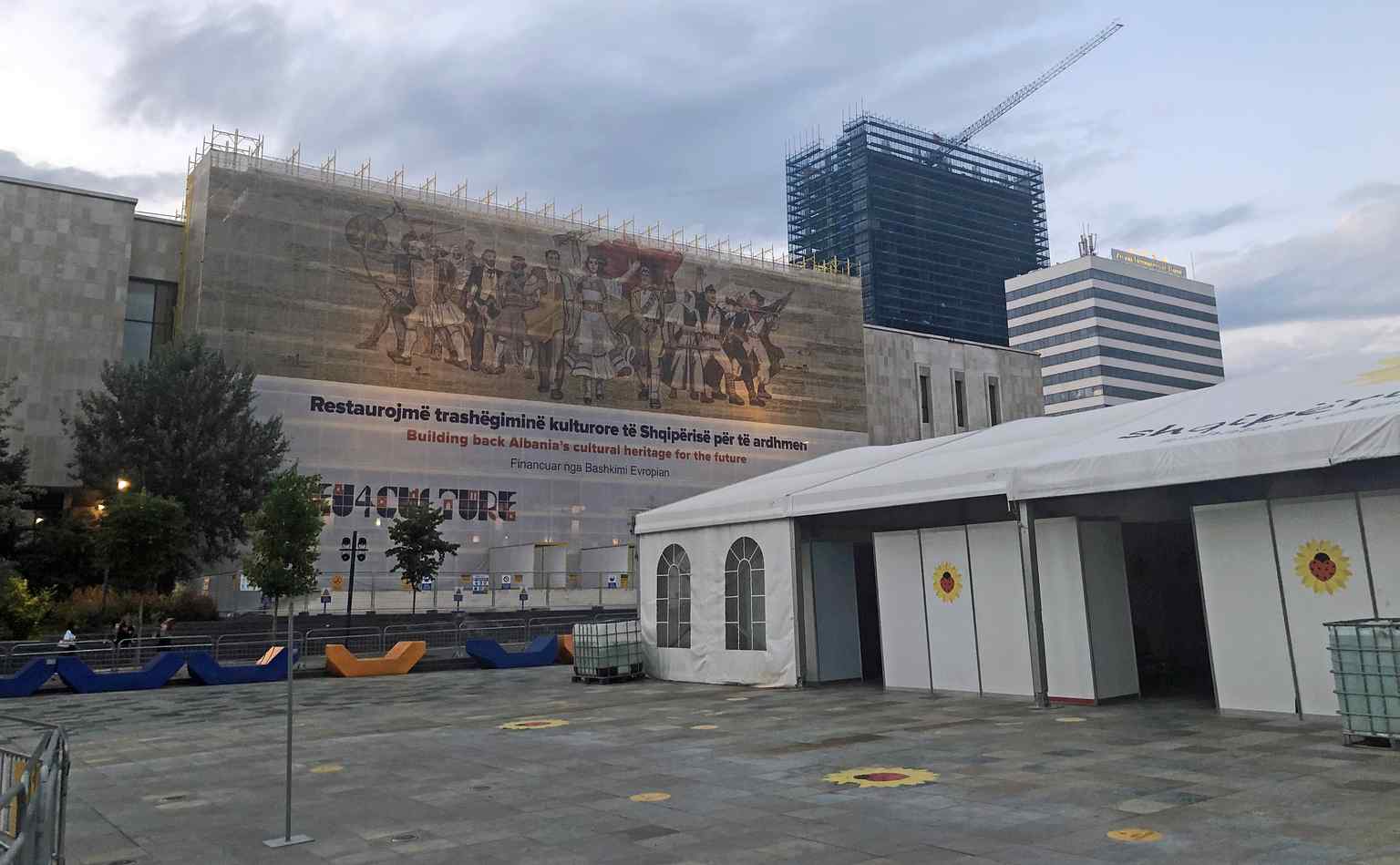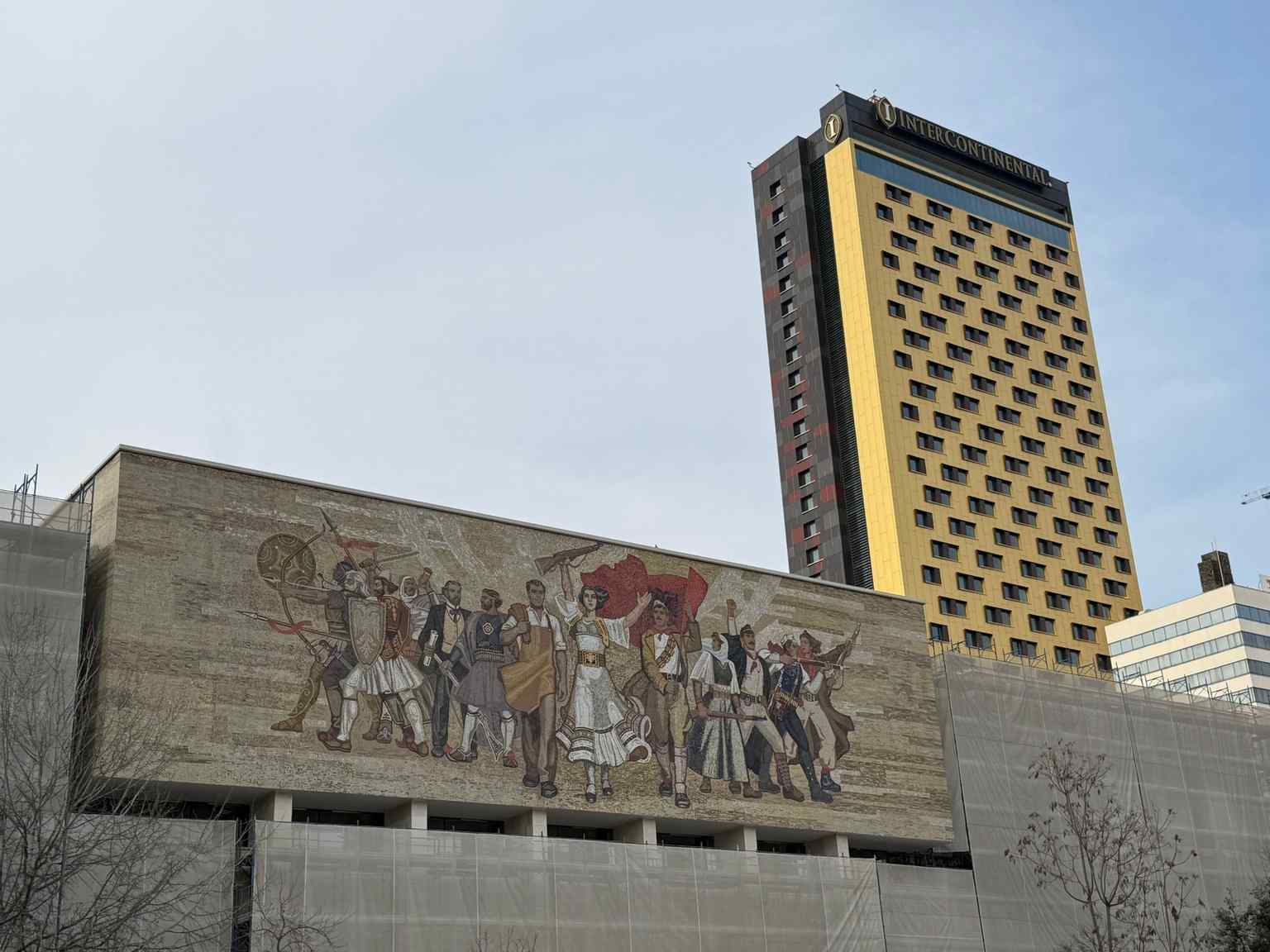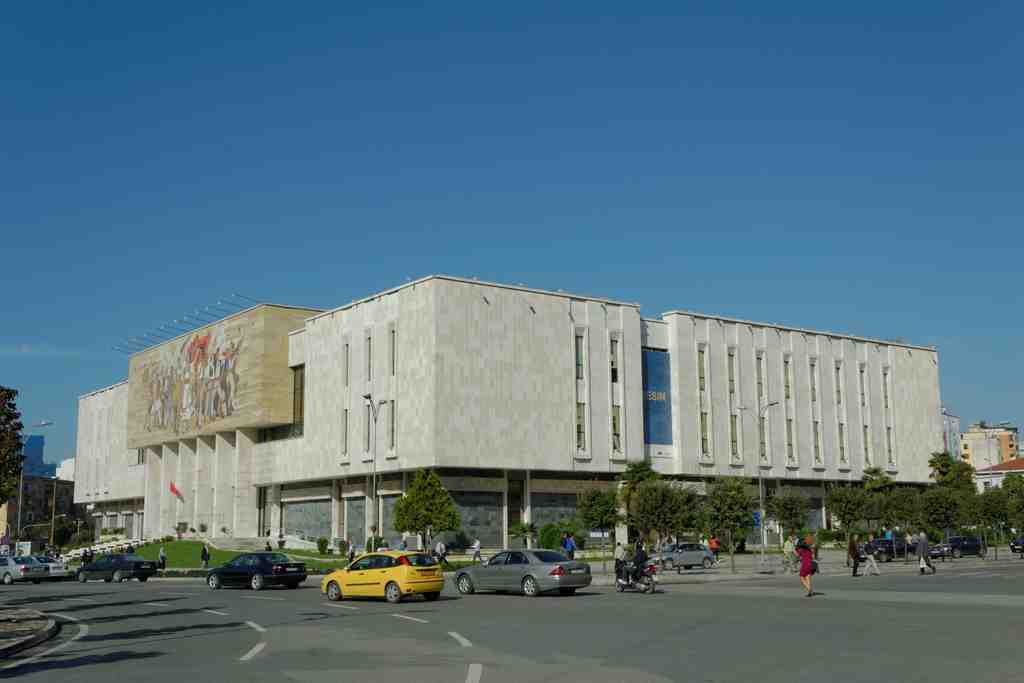
Look to your left, where the National Historical Museum stands as a massive rectangular block of pale smooth stone, unmistakably marked by the vibrant, monumental mosaic projecting outward over its main entrance.
It is quite a sight, isn't it. This immense structure, inaugurated on October 28th, 1981, is the largest museum in Albania. It is a formidable vault, holding around four thousand seven hundred fifty artifacts spanning from the fourth millennium BC to the late twentieth century. The grand mosaic crowning the facade tells a very specific story of victorious Albanians marching forward through time. If you look at your screen, you can see how this iconic piece was beautifully revived during a recent restoration. It is a prime example of socialist realism, which was an artistic style favored by communist regimes to glorify the state and the working class.
But while the exterior reflects the fierce, rigid political shifts of the twentieth century, the interior quietly guards the deep, ancient layers of this land. These pieces have endured the relentless turning over of empires. Think about how delicate human memory is, and yet, how incredibly resilient. For example, deep inside the Antiquity Pavilion rests the stunning Mesaplik Mosaic. It was unearthed from the soil in 1979 by the archaeologist Damian Komata. Imagine his profound awe, brushing away the damp earth to reveal a sprawling canvas of small, colorful stone cubes measuring over two meters wide.
The stones form elaborate zoomorphic shapes-patterns based on animal forms. But the absolute focal point of the mosaic is a human figure. It is a man depicted in profile, wearing a fascinating cap with a sort of antenna and a double ribbon. And, most wonderfully, he is smiling. Beside his face is a column of ancient text reading Aparkeas. Scholars believe this was the name of the ktitor, which is a historical term for the wealthy patron who funded the artwork's creation.
That simple stone smile has outlasted the Romans, the Byzantines, the Ottomans, and the harsh dictatorships of recent memory. It is a quiet, powerful reminder that while sweeping ideologies rise and attempt to overwrite the past, the true, enduring spirit of a culture often remains hidden just beneath the surface, waiting patiently to be brought back into the light.
We are very lucky to have institutions that guard these fragile pieces of the human puzzle. However, not every historical treasure in this city was so carefully protected. Sometimes, the drive to build a new society meant tearing down the old one completely. If you look ahead, our next stop is the Palace of Culture, just a three minute walk away. It stands on ground where history was actively and intentionally destroyed to make way for the future. Let us walk over there now and uncover what was lost.