
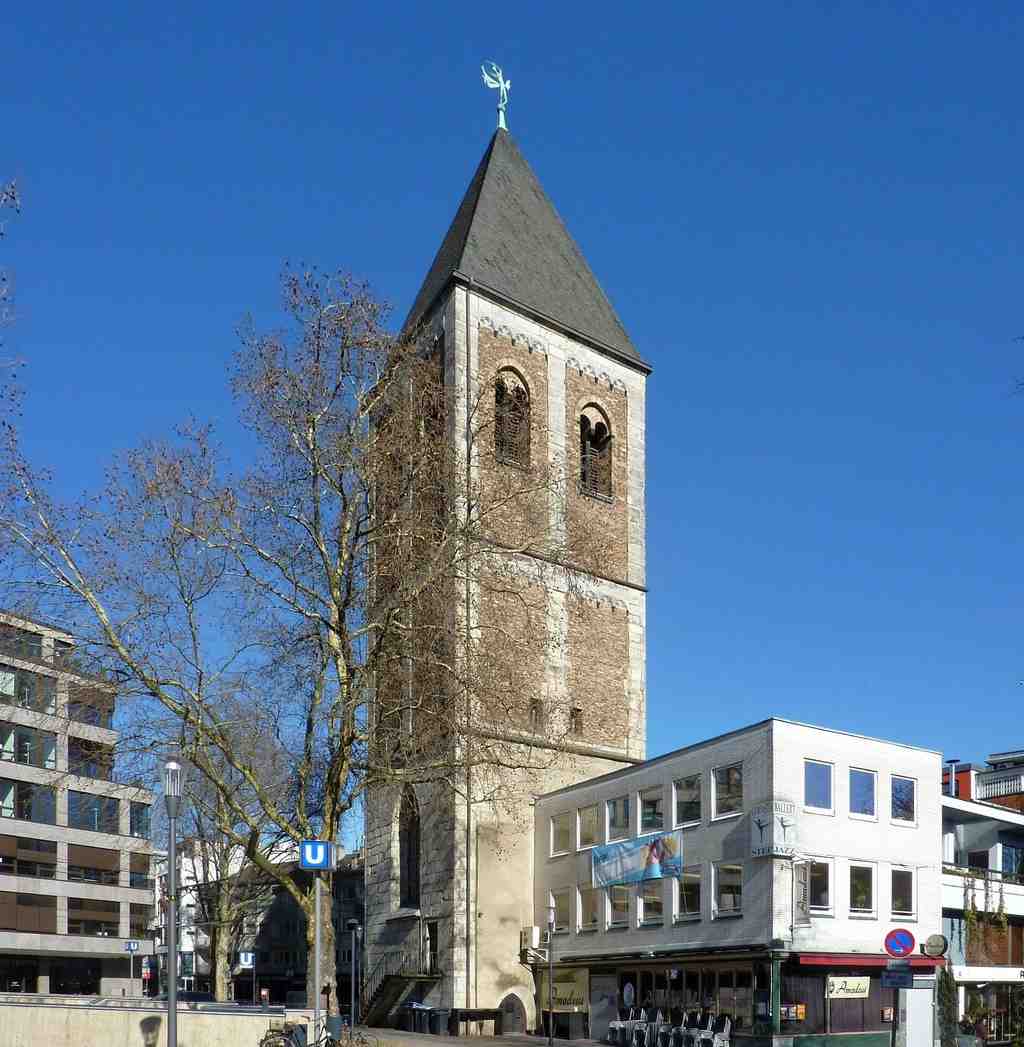
Schauen Sie nach links und Sie werden einen hohen, quadratischen Steinturm sehen, der mit einem niedrigen, pyramidenförmigen dunklen Dach und einer kleinen Wetterfahne aus Metall an seiner Spitze gekrönt ist. Dies ist der Turm von Klein St. Martin.
Er sieht sofort aus wie ein Puzzleteil, dem das Bild fehlt, und genau das ist er auch. Dieses einsame, vierstöckige Bauwerk aus hellem, rauem Stein ist das einzige überlebende Fragment einer weitläufigen, fünfschiffigen Pfarrkirche, die die frühen Bürger direkt an die alte römische Stadtmauer bauten.
Im fünfzehnten Jahrhundert, um 1460, baute die örtliche Gemeinde ihre Kirche um und fügte einen massiven gotischen Turm hinzu. Er diente als kühnes Zeichen für den wachsenden Wohlstand und die Macht der einfachen Bürger von Köln. Öffnen Sie das erste Bild in Ihrer App. Das moderne, gedrungene Dach, das Sie heute sehen, ist eine ziemliche Veränderung gegenüber dem hoch aufragenden, nadelartigen gotischen Turm, der einst die Skyline in frühen Stadtpanoramen beherrschte.
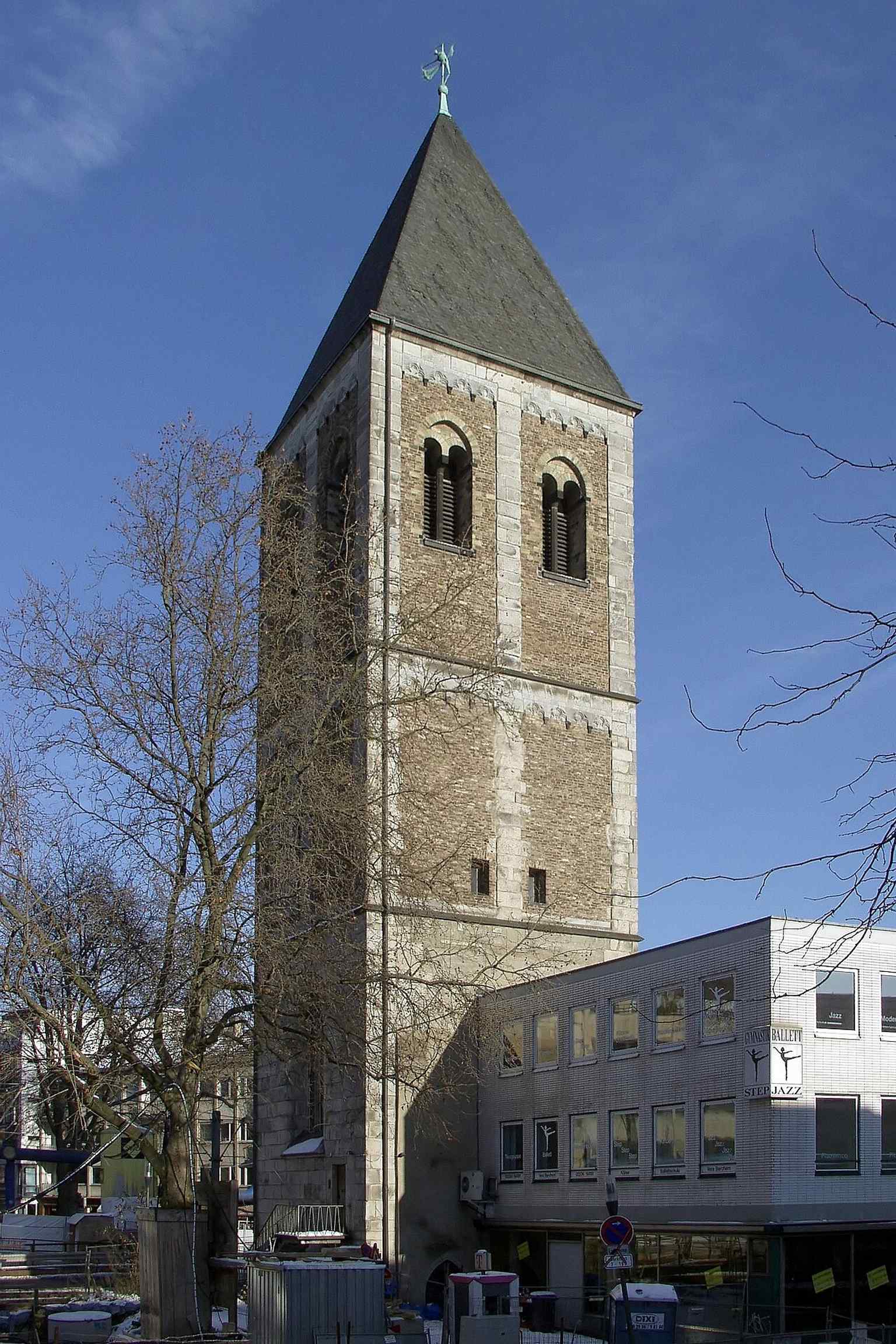
So, why is only the tower left standing today? The French emperor Napoleon forced the church to close in eighteen hundred and two. City officials auctioned off the main building for ordinary storage, and demolition crews eventually tore it down in eighteen twenty-four. But the tower survived because of a disaster next door. In sixteen thirty-seven, the west tower of the neighboring Saint Maria im Kapitol church collapsed. The congregation desperately needed a strong place to hang their massive bells, including the official fire alarm bell for the city. They moved them right here into Little Saint Martin. When the city tore down the main nave, the long central hall where the congregation originally gathered, almost two centuries later, they left this tower standing purely to act as a surrogate belfry.
In eighteen thirty-six, workers hauled three new bells weighing a combined six thousand kilograms up into the belfry. But their history ended in tragedy. During an intense firestorm in the Second World War in nineteen forty-two, the heat inside the tower grew so fierce that the bronze bells simply melted away. The fire burned out the tower completely.
When the city rebuilt the structure after the war, architects decided against recreating the grand Gothic spire. Instead, they capped it with the blunt Romanesque pyramid roof you see now. At the very top sits a weather vane that artist Elmar Hillebrand shaped to depict Saint Martin himself. Today, the belfry remains entirely empty.
This orphaned stone pillar stands as a quiet monument to a vanished congregation and silenced bells. Take all the time you need here, and when you are ready, we will make our way toward the Wallraf-Richartz-Museum.





.jpg)
