
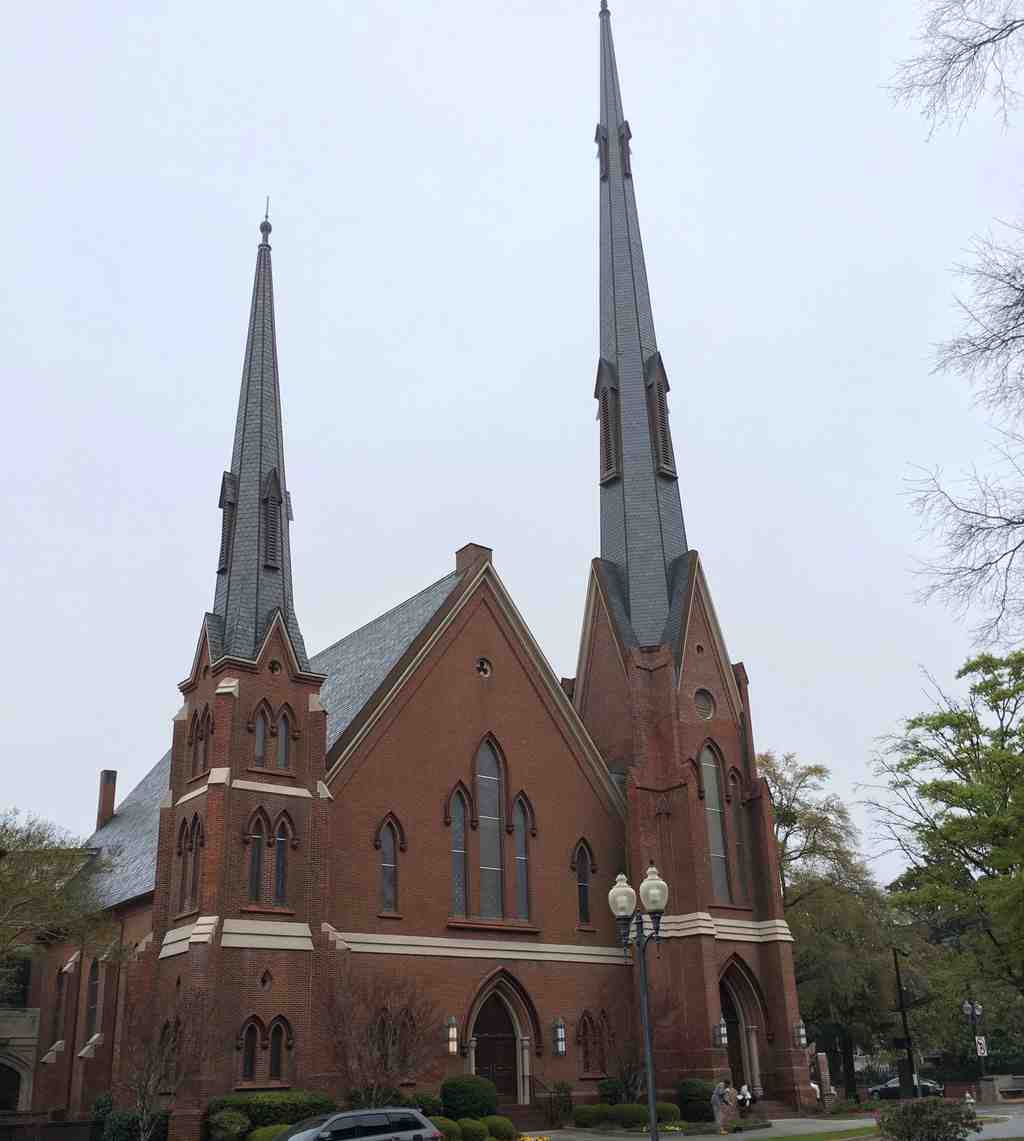
Look to your left and you will see a towering structure of deep red brick, shaped in the sweeping arches of the Early English Gothic style, dominated by a soaring 197-foot steeple pointing directly into the sky.
It is an absolute masterpiece of mid-nineteenth-century design. The church hired prominent Philadelphia architect Samuel Sloan to design the building, utilizing a style famous for pointed arches and tall, vertical lines meant to draw the eye heavenward. But to truly understand this place, we have to look past the beautiful brickwork and into the dirt. We have to look at the unseen builders. Long before this grand structure was finished, the true foundation of the church relied on the labor and faith of its early, diverse members. By 1864, over a third of the total congregation was African American, though they had begun holding separate worship services at their own request much earlier. When construction on this plot began, the physical base of the church was built using tons of heavy stone ship ballast... rocks used to weigh down and stabilize sailing vessels... hauled up from the riverbank by hands whose names are largely lost to history.
The timing of construction was disastrous. The exact day South Carolina seceded from the Union, the archways were being framed. Work ground to a halt, leaving the unfinished walls boarded up. The initial budget of twenty thousand dollars, roughly seven hundred and fifty thousand today, ballooned to six times that amount.
During this agonizing delay, a Confederate blockade runner named the Kate slipped up the river, unwittingly leaving behind a horrific yellow fever epidemic. The pastor of the church, Dr. John Lamb Prichard, faced desperate pleas from his family to evacuate. He refused. He bravely stayed to nurse the dying until the fever claimed his own life in November 1862.
When the sanctuary finally opened years later, the congregation was drowning in debt. To survive, they resorted to renting out their handmade pews. For up to five hundred dollars a year... about ten thousand dollars today... wealthy families bought exclusive seating rights.
But the history of these grounds holds even darker shadows. Right next door stood the armory of the Wilmington Light Infantry. In 1898, a white mob gathered there before sparking the horrific massacre. Decades later, in a powerful historical twist, this church bought that very armory building for its offices. In 2019, they hosted the dedication for a memorial marker outside, publicly confronting the site's painful legacy.
It is a building that has weathered terrifying storms... quite literally rebuilding its towering steeple after hurricane winds snapped it clean off... while slowly wrestling with its complex past. As we shift from the physical stones that anchor a building to the spiritual bonds that hold a community together, let us take a short two-minute walk toward our next destination, the Temple of Israel.




