
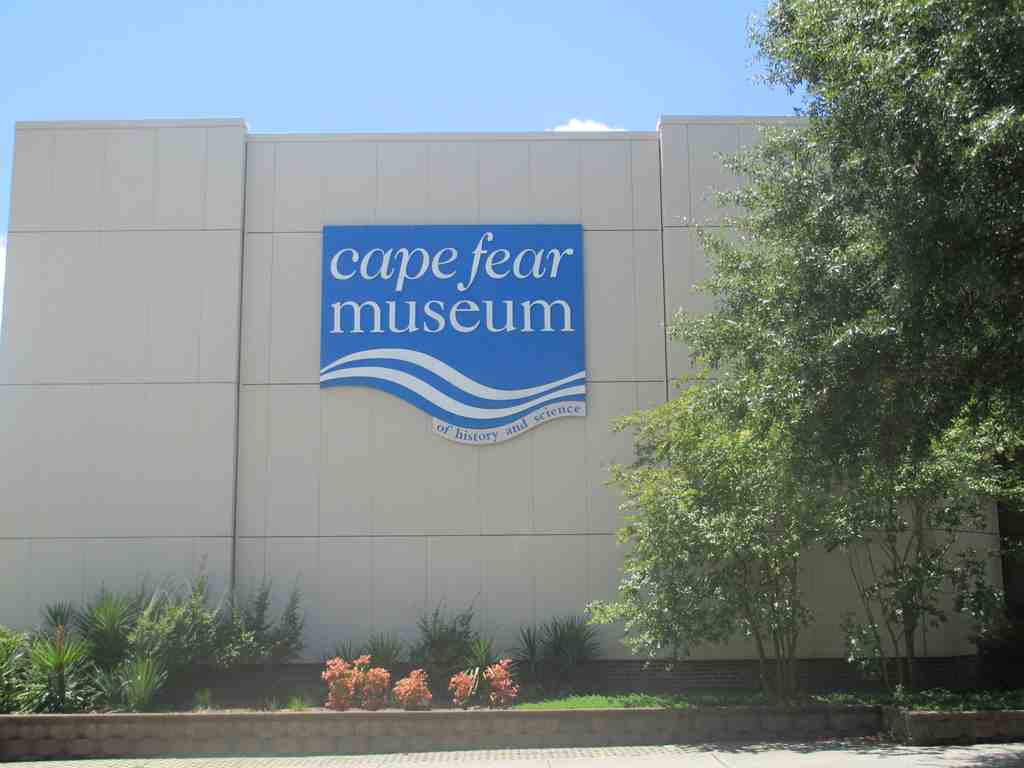
You are standing in front of a massive, rectangular building wrapped in pale concrete panels, easily spotted by the large blue sign with white wavy lines reading Cape Fear Museum.
This structure looks incredibly clean and institutional, does it not? Yet this place perfectly captures how a city's crisp, polished exterior can completely mask a much darker, intensely guarded past. When an organization decides what goes into the display cases, they also get to decide what gets intentionally buried out of sight.
The museum actually began in a single room back in 1898, founded by the United Daughters of the Confederacy. This was a highly influential women's group dedicated to preserving a very specific, sympathetic version of the South's Civil War history. They set up their first exhibits on the second floor of an armory belonging to the Wilmington Light Infantry, which was an all-white local militia.
That timing and location are profoundly unsettling. The museum's opening that March is deeply entangled with a truly pivotal, tragic event in the city's timeline: the 1898 Wilmington Massacre. Just months after the women arranged their artifacts, those same militia commanders led a violent overthrow of the local multiracial government. It remains the only successful illegal government overthrow in United States history. The infantry even used a newly purchased Colt rapid-fire machine gun to terrorize Black citizens and directly target Black churches. The very space meant to preserve history was an active headquarters for destroying a thriving community.
The museum's collection was eventually moved out, and by 1970 it settled into this building. This structure itself is an old 1930s Works Progress Administration armory, built during the federal government's massive economic relief program for the unemployed. But the intense fight over whose history gets told did not stay in the nineteenth century.
In the early 2000s, neo-Confederate activists managed to sway the museum's board of trustees. They aggressively tried to censor exhibits and force a Lost Cause narrative, an ideological movement that falsely frames the Confederate rebellion as heroic and actively downplays the horrors of slavery. Dr. John Haley, a university history professor and the only professional historian on the board, fought back hard against this censorship. The ideological battle grew so intensely disruptive that the county government eventually had to step in and strip the board of its governing power completely.
Today, the museum holds over fifty two thousand artifacts that tell a much broader story of the region. If you step inside, you will find incredibly diverse items. You will see a towering, twenty foot tall fossilized skeleton of a giant ground sloth that was surprisingly uncovered during local road construction in 1991. You will also find basketball legend Michael Jordan's very first pay stub from a local restaurant. Soon, this massive collection is moving. By 2026, the museum will relocate to a brand new seventy seven million dollar facility downtown, while this historic armory will shift to a dedicated research and collections center.
As we leave this site of contested memories and hidden truths, it makes you wonder about the other beautiful, towering facades around us. Who actually laid the bricks and shaped the wood for the city's most magnificent spaces? Keep that question in your mind as we take an eight minute walk to our next stop, the First Baptist Church.




