
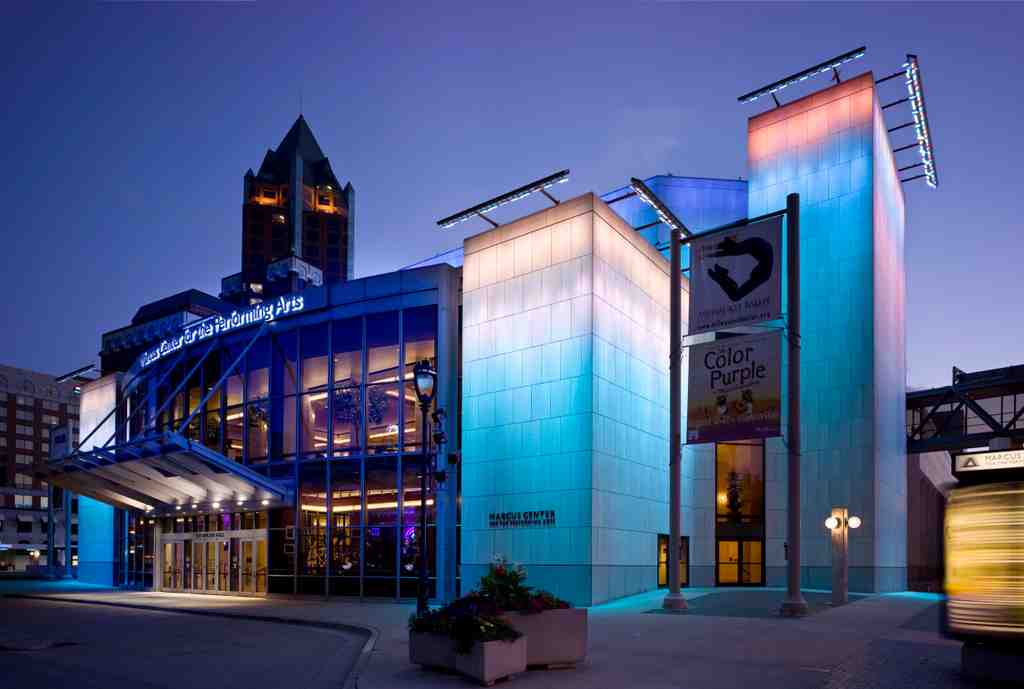
Look to your left for the large, blocky towers made of light stone flanking a massive glass-walled lobby with a sweeping metal canopy stretching over the main entrance. That is the Marcus Performing Arts Center. Though the story of this place is a lot heavier than the ballets and Broadway shows they put on inside.
Back in September 1969, the opening night of this venue was an absolute blowout, with balcony tickets going for a hundred dollars, which is about seven hundred bucks today. But while the wealthy sipped champagne inside, protesters marched right outside these doors, demanding basic rights and arguing this lavish complex was just a playground for the rich that completely ignored the needs of the city's poor and minority communities. These protests add another layer to the city's history of hidden turmoil, highlighting a deep tension between the shiny, expensive new Milwaukee and the people left out of the frame.
The original building was designed by a famous Chicago architect named Harry Weese in a style called Brutalism. Now, Brutalism usually involves massive, heavy, raw concrete forms that look almost like fortresses. But Weese wanted something more elegant, so he originally wrapped this entire building in luminous white Italian travertine marble. It was supposed to be clean and muscular.
But cities rarely sit still. Over the years, the building's identity was totally altered. In 1994, that pristine white marble was stripped off and replaced with the limestone and huge glass additions you see now. You can check your screen to see a clearer view of this altered exterior. Architecture critics absolutely hated the change. One critic famously complained that the renovation turned a fresh mint into a milk dud. Later on, they added bright LED lighting arrays to the building. Some critics dismissed those lights as cheap costume jewelry meant to distract from the lost original design.
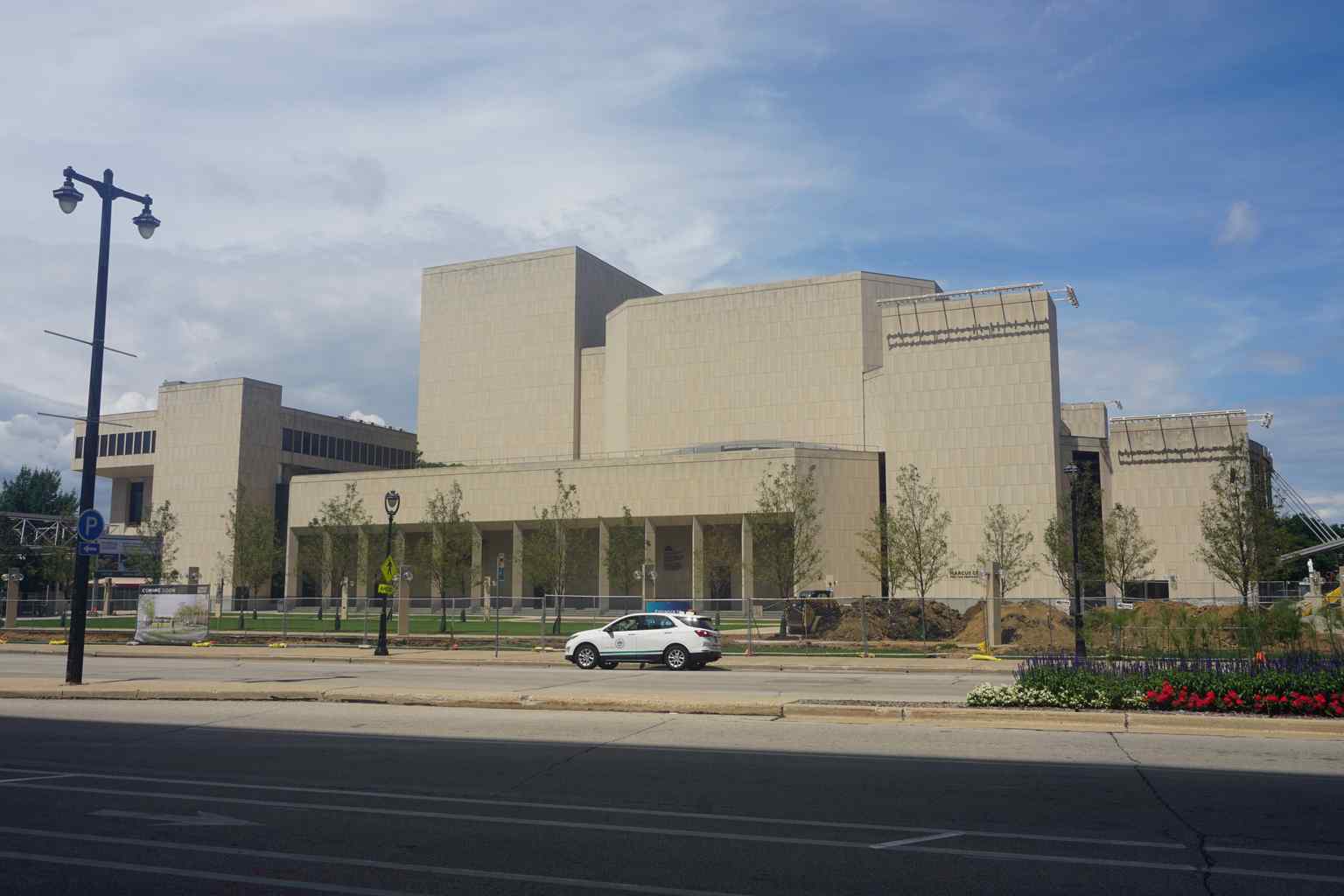
The fights over this space did not stop at the walls, either. Surrounding the center used to be a meticulously organized grove of thirty six horse chestnut trees, designed by a renowned landscape architect named Dan Kiley. In 2018, the center decided to tear the grove down to make way for an open public lawn. Preservationists fought a bitter, incredibly tense battle to save the modernist grove, even winning a temporary historic designation. But the victory did not last. The center quickly cut down four trees, the city ultimately overturned the historic status, and the whole grove was quietly demolished. You can take a look at the historic before and after image in your app to see how the plaza transformed from that dense tree grove into the open stone gathering area there today.
It is a venue constantly shaped by clashing visions and fierce public debates. By the way, if you need to hit the box office, it is open Monday through Friday from noon to four in the afternoon.
Now, let us transition from the performing arts to the arena where sports and public art collided. We are heading over to the UW-Milwaukee Panther Arena, which is about an eight minute walk away.





.jpg)