
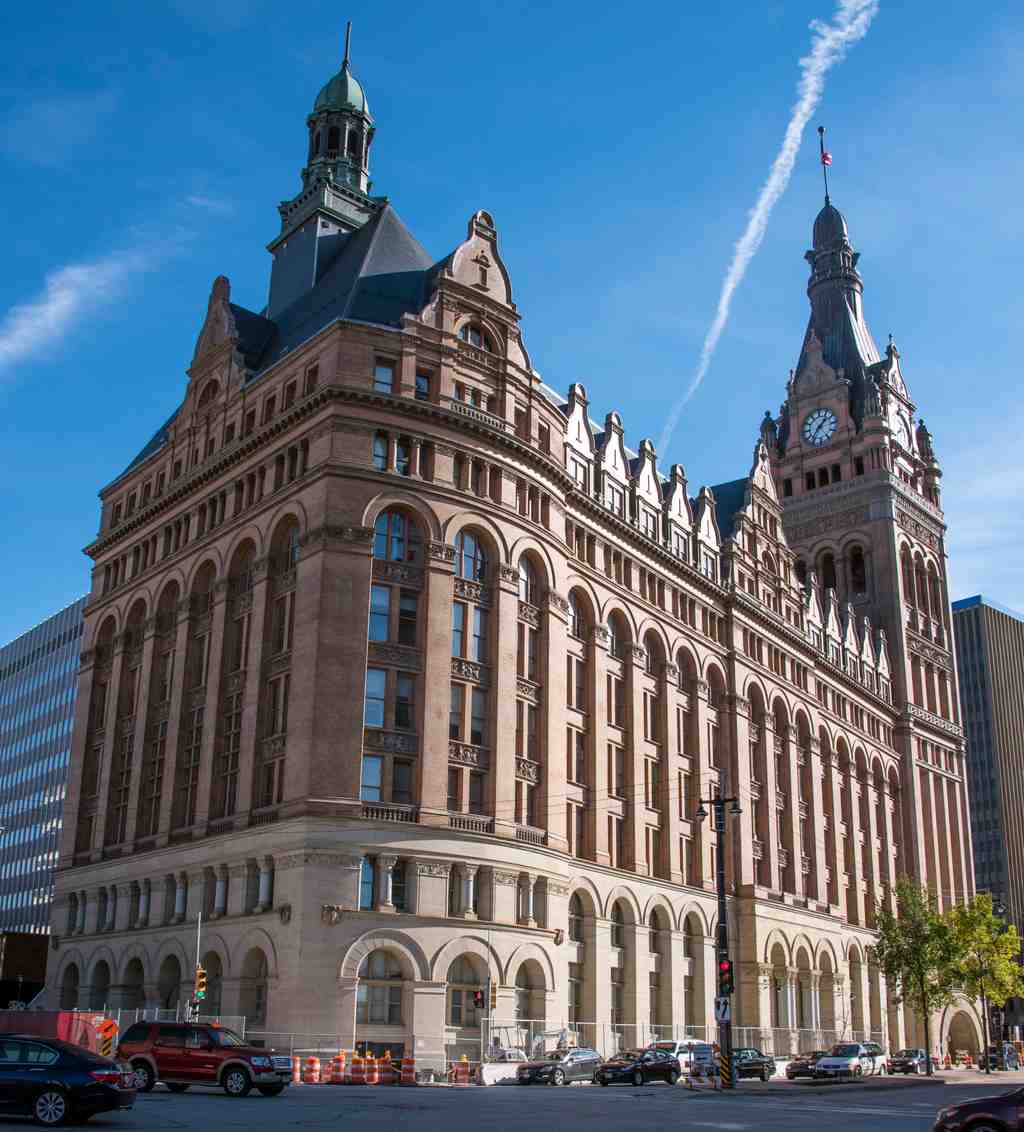
On your left is Milwaukee City Hall, a massive brick and stone fortress anchored by a soaring clock tower topped with a green copper spire and rows of elegant arched windows. This towering Flemish Renaissance Revival building, an architectural style known for its ornate gables and intricate European brickwork, was finished in 1895 and stood as the tallest building in the city until the 1970s.
This place is the absolute epicenter of Milwaukee's constant cycle of bold visions and messy public battles. During the first half of the twentieth century, this very building was the headquarters for a totally unique American political movement known as Sewer Socialism. I know, it is an amazing name. Instead of preaching radical revolution, Milwaukee's socialist mayors focused completely on pragmatic things like municipal water systems, sanitation, public parks, and running a brutally honest, penny-pinching government. They just wanted things to work.
Which makes the modern history of this building deeply ironic. Those frugal early mayors would have probably lost their minds over the taxpayer burden that happened here recently. From 2006 to 2008, the city launched a massive 76 million dollar restoration project to save the aging exterior. They installed fully grouted terra cotta, which is a type of baked clay used for decorative architectural details. But they clearly did not factor in the brutal freeze and thaw cycles of a Wisconsin winter. The solid clay cracked under the pressure.
The situation hit a breaking point on a February night in 2011. A massive piece of a decorative terra cotta urn broke clean off the facade and plummeted directly onto Market Street. That near-disaster forced the city to wrap this beautiful historic landmark in ugly metal scaffolding and plywood just to protect the pedestrians below from falling debris. It sparked an absolute nightmare of a lawsuit, eventually clawing back about 16 million dollars from the contractors in settlements.
And the drama did not stop at the roof. The building is literally resting on a swamp. The foundation is supported by over two thousand wooden piles made of white pine driven deep into the marshy ground. By 2014, those ancient wooden supports started to rot, and the northeast side of the building actually sank nearly two inches. The city had to pump in even more millions just to stop the whole thing from sinking into the mud.
It is wild how much effort goes into keeping a structure like this standing. Even back in 1929, the top of that 350 foot bell tower caught fire, and the flames were so high that the fire department did not even own ladders tall enough to reach it. They just had to stand on the street and watch the roof burn until it could be rebuilt later.
Consider the irony here. A 76 million dollar restoration meant to preserve history ended up cracking under pressure and raining debris onto the sidewalks. When does preservation become more costly than simply starting over?
Think about that as we head toward our next stop, which offers a very different kind of architectural statement. Oh, and if you want to peek at the soaring eight-story atrium inside, the doors are open Monday through Friday from eight in the morning until four forty five in the afternoon. Let's keep moving and make the short three minute walk over to the Marcus Center.




