
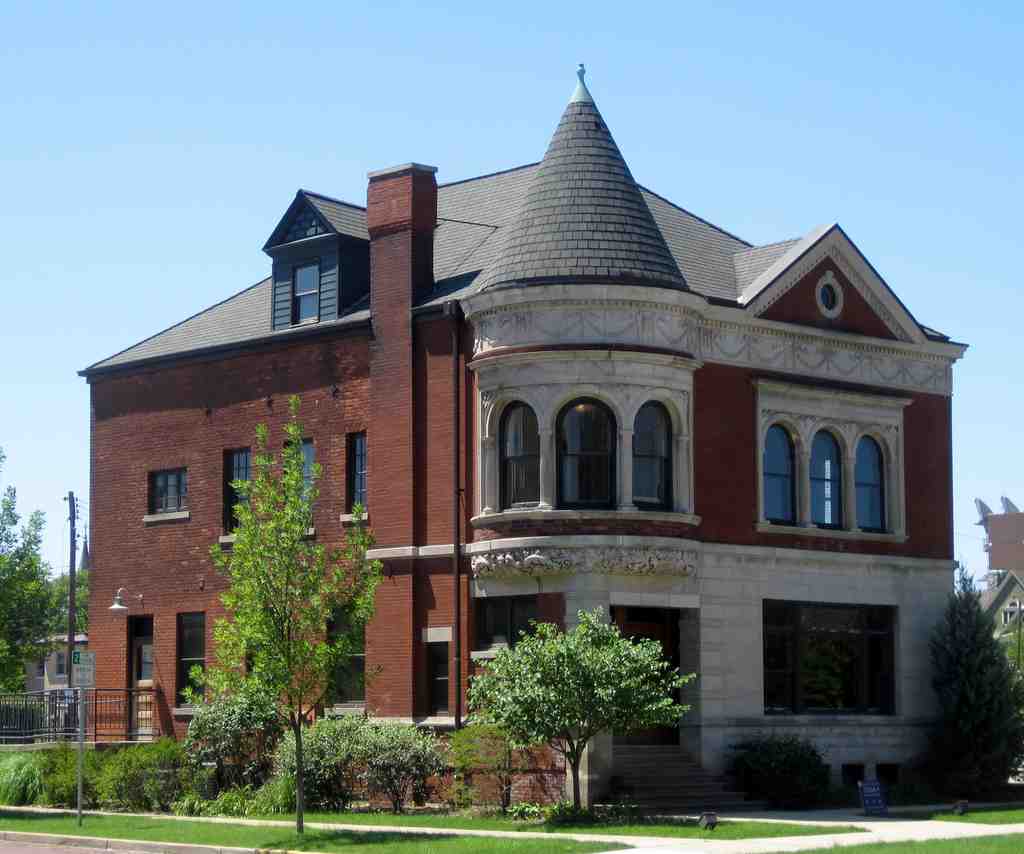
On your left is a two-story red brick and limestone building distinguished by a prominent round turret topped with a conical roof and a wide frieze, a sculpted horizontal band carved with garlands. In 1892, a man named Albert H. Kelley decided that a steady paycheck was simply too boring. He resigned from a highly secure position as Assistant Cashier at the prestigious Studebaker Brothers Manufacturing Company to peddle mail-order patent medicines, which were essentially unregulated over-the-counter remedies. It was an audacious roll of the dice. Yet under his leadership, the South Bend Remedy Company gained worldwide recognition, largely for a flagship product called Magnolia Blossom.
He used his profits to build the structure in front of you in 1895. Notice how it refuses to look like a laboratory. If you check your app you will see it was built to masquerade as an elegant private residence. Kelley specifically designed it as the end unit of an intended series of row houses that were never actually built. It remains the only commercial building in South Bend intentionally disguised as a private home.
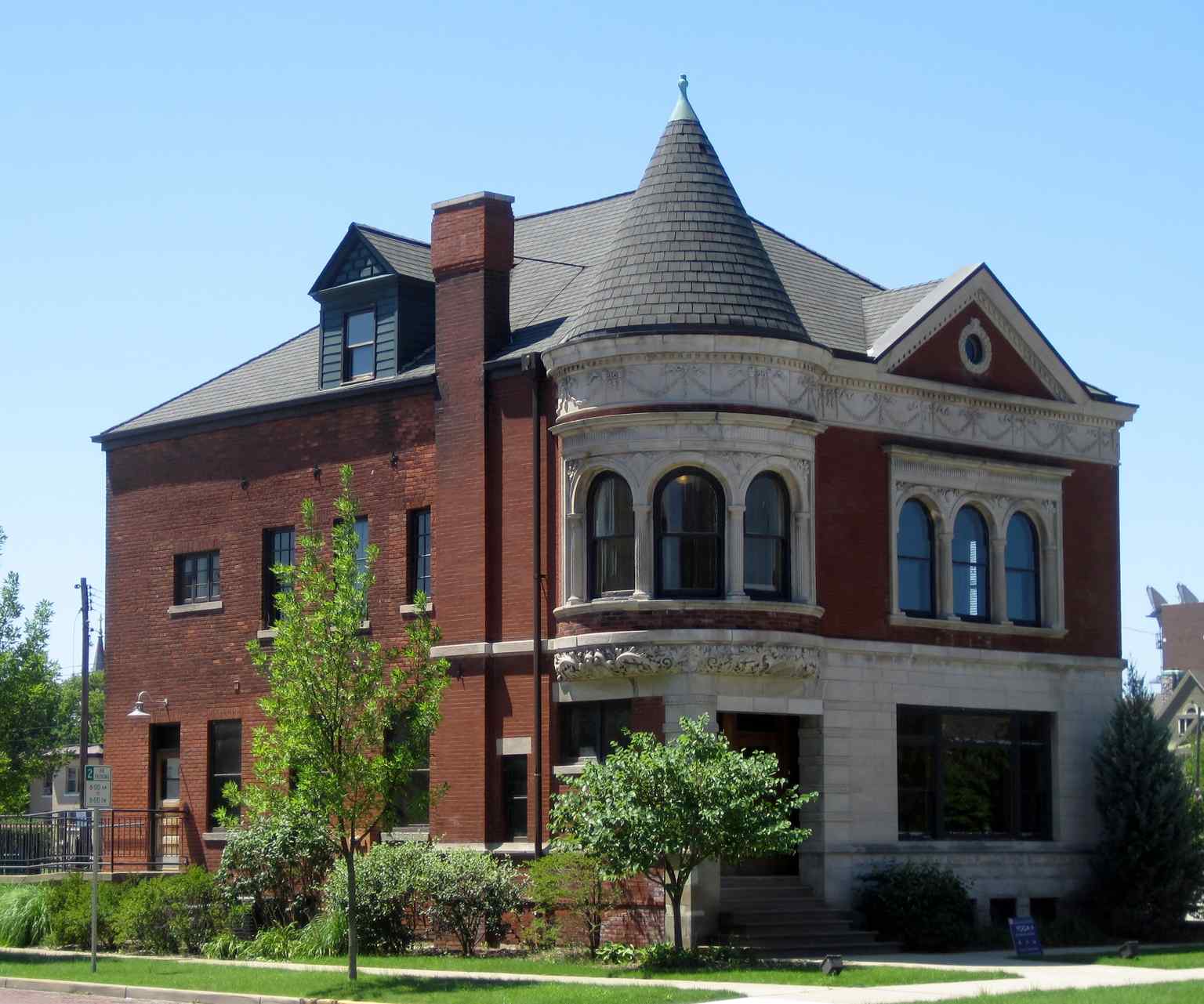
Behind that residential facade hid a sprawling mail-order operation, though Kelley kept things surprisingly domestic inside. He even installed an extravagant bathroom with striking yellow and black glazed tile that miraculously survived for decades.
The medicine empire faded after Kelley died in 1924, and the company permanently closed in 1928. Surviving multiple physical relocations to avoid demolition, this structure stands today as the sole physical survivor of the city's once-booming patent medicine industry.
Now, let us walk four minutes to First Presbyterian Church, a grand structure funded by the very industrial titans Kelley originally walked away from.





