
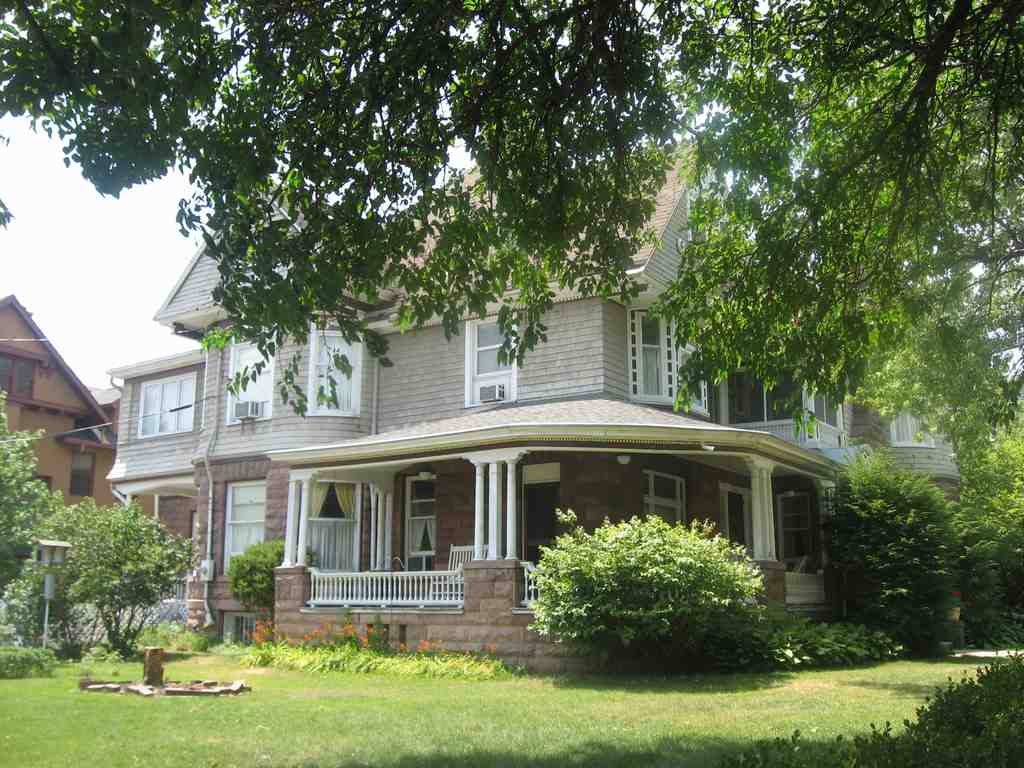
Take a look at the house in front of you, easily recognizable by its first floor of rough cut sandstone blocks, the second story clad in wood shingles, and a wraparound porch leading to a distinctive round corner tower with a conical roof. Take a glance at your screen to see it in its full historical glory.
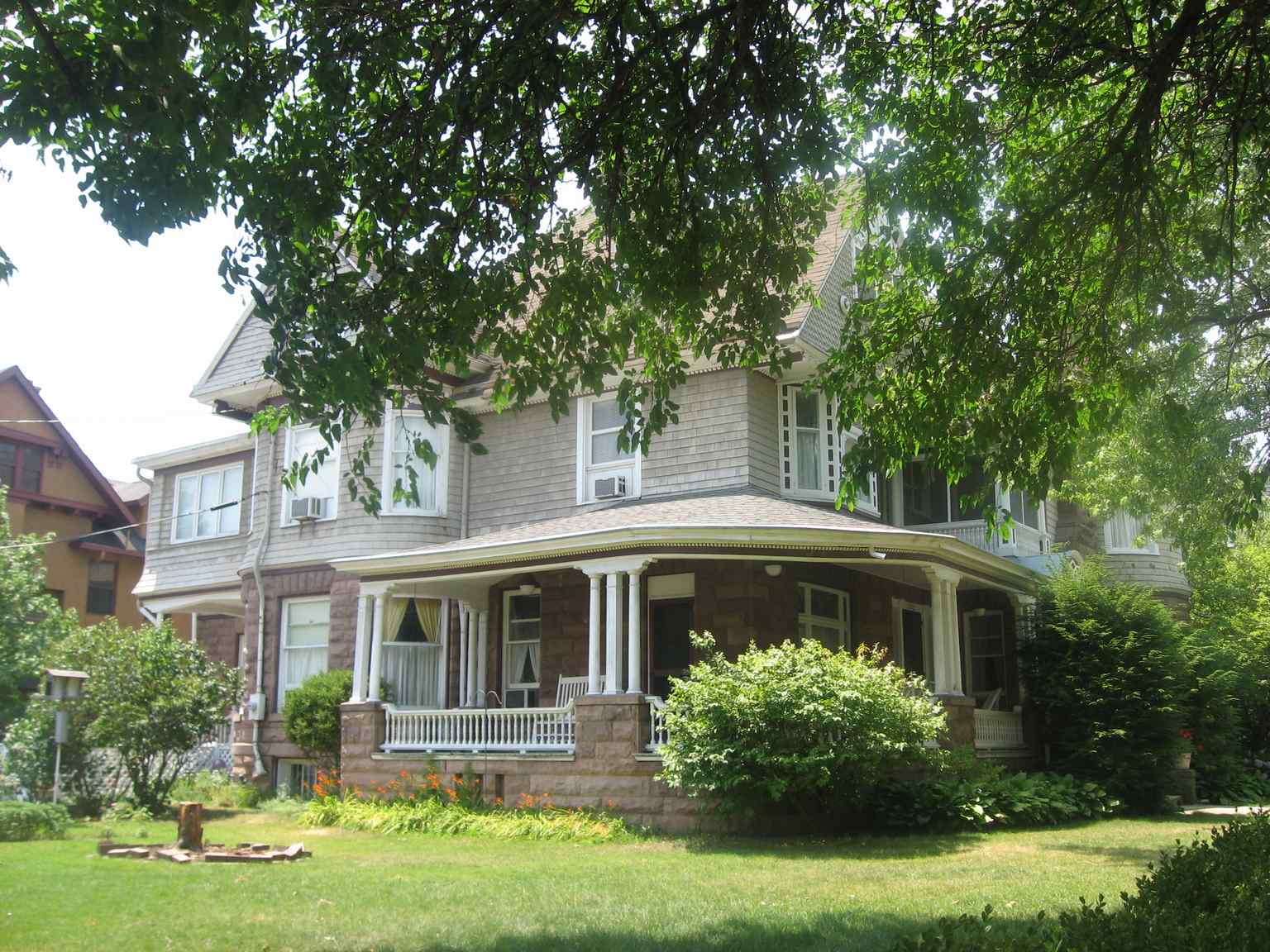
There are hidden personal stories embedded in the masonry of this town. To most, this is just a lavish Victorian mansion built in 1895. But this grand construction was actually a highly calculated, incredibly expensive way to reclaim ancestral land. Frances Helen Rose was a descendant of the original property owners, who held title to this specific plot way back in 1851. By building a masterpiece here, her husband, Dr. George P. Morey, was securing her family legacy in stone.
Dr. Morey, a Civil War veteran, did not do things by halves. He built an outstanding example of Queen Anne architecture, a design style famous for its asymmetrical shapes, varied textures, and dramatic towers. He was also a pragmatist. Behind the mansion, he built an investment property mixing Craftsman and English Vernacular styles. He rented those apartments out to local lawyers and doctors to ensure the family financial machinery kept humming.
But his real investment was in the details of the main house. Dr. Morey purchased a spectacular stained glass window that had recently won a medal at an international exhibition. He paid 2,800 dollars for it... roughly 74,000 dollars today. He engineered the house to feature this window on a western wall, specifically to capture the glow of the setting sun.
It was an immense emotional and financial gamble, and fate, it seems, has a dark sense of humor. Frances Helen Rose died in July 1896, living in her reclaimed dream home for only a few months. Adding to the shadow over the property, their young daughter, Frances Claire, died soon after.
But the house survived its tragic start. Dr. Morey eventually gifted it to his surviving daughter, Helene, and her new husband, William Keyes Lamport. Lamport happened to be a founding partner of an influential advertising firm that ran national campaigns for Evinrude Outboard Motors. The house stayed in the family until the 1950s, later serving as an office and famously as a bed and breakfast known as The Inn of West Washington. During that era, the public finally got to step inside and experience the opulent details firsthand.
Architecture is rarely just wood and stone. Sometimes, it is an elaborate mechanism for securing a place in the world. Speaking of buildings that are hiding their true nature behind an elegant facade... let us head over to the South Bend Remedy Company Building, which is just a three minute walk away.





